
The Subtle Science Fiction Films
How intimate, strange, and devastating films use speculative ideas to expose love, class, identity, surveillance, grief, depression, and survival.
Science fiction does not need to announce itself to dominate a film. Sometimes it only needs to bend reality slightly, then let everything human inside that reality crack under pressure.
Most science fiction tells you what it is almost immediately.
A ship passes overhead.
A city glows in impossible geometry.
A machine speaks.
A government explains the rules of the future.
The films in this strain do something far more unsettling. They begin with the texture of ordinary life, a relationship, a job, a school, a family, a town, a wedding, a walk through a dying world. Then a speculative pressure enters the frame and changes the meaning of everything around it.
That pressure can be artificial intelligence in Her. It can be memory surgery in Eternal Sunshine of the Spotless Mind. It can be genetic sorting in Gattaca, cloning in Moon, total mediation in The Truman Show, or apocalypse in The Road. In every case, the speculative element is not garnish. It is the cause of the film’s emotional weather. Remove it, and the story stops being the story.
This is why these films matter. They prove that science fiction is not defined by volume or surface design. It is defined by altered conditions. It is the genre of changed premises. Change the body, and a love story becomes a crisis of embodiment. Change memory, and heartbreak becomes a war over identity. Change biology, and class becomes hereditary destiny. Change reality itself, and even grief starts to feel cosmological.
Subtle science fiction often gets mislabeled because it borrows the skin of other genres. It can look like melancholic romance, social satire, family drama, or arthouse dislocation. Yet that disguise is part of its force. These films do not use science fiction to escape the human scale. They use it to trap the human scale inside a harsher experiment. They stand in the same broad conversation as films like Solaris, Ex Machina, Children of Men, Under the Skin, Blade Runner 2049, and A.I. Artificial Intelligence, works where the speculative idea is inseparable from the emotional one, and where the future reveals the present more clearly than realism can.
What follows is not a checklist of titles. It is a map of recurring anxieties. Love without bodily certainty. memory without permanence. bodies designed for utility. realities written by invisible systems. the end of the world as mental condition, social fact, or moral test. These films whisper their science fiction, but the questions they ask are among the oldest in the genre. What is a person. What is freedom. What remains human when the structure around the human has been quietly rewritten.
On The Astromech’s wider science fiction film coverage, the genre is already treated as broad, flexible, and emotionally serious. This essay narrows that field to the films that lower the temperature on the surface while keeping the speculative engine fully active underneath.
That includes direct Astromech companions for Her, Eternal Sunshine of the Spotless Mind, Gattaca, Moon, The Truman Show, The Road, and Upstream Color, with related bridges through your pages on AI and robots, cloning, Vanilla Sky, Coherence, and dystopian films.
Love, Memory, and the Posthuman Intimate

One of subtle science fiction’s richest territories is intimacy. Not intimacy as sentiment, but intimacy as unstable architecture. Her, Eternal Sunshine of the Spotless Mind, After Yang through your AI and robots coverage, Open Your Eyes by way of your Vanilla Sky essay, and Upstream Color all ask what becomes of love and selfhood once human experience is no longer securely housed in ordinary time, memory, body, or perception.
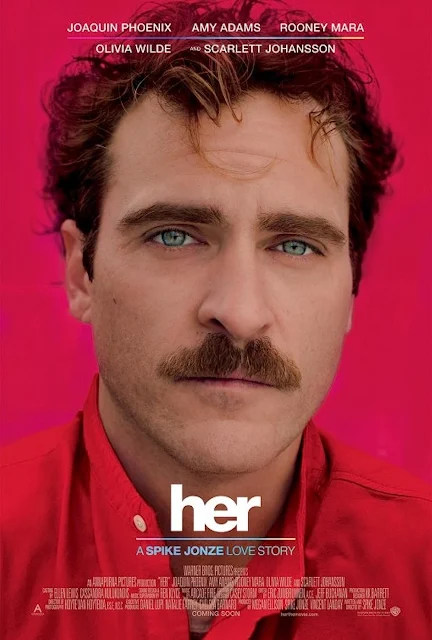
In Her, artificial intelligence is not treated as a threat in the usual cautionary-register sense. Samantha is not there to overthrow humanity. She is there to reveal how starved Theodore already is. The film’s science fiction concept is deceptively modest, a commercially available operating system that develops into a real consciousness.
Yet this produces a serious posthuman dilemma. Theodore can form attachment, dependency, tenderness, jealousy, and erotic connection with a being who is not limited by flesh, singular perspective, or mortality in any recognisable human way. That is why the film feels both warm and devastating. Theodore is not learning that the relationship was fake. He is learning that love can be real and still exceed the human frame that once made love comprehensible.
This places Her in conversation with a longer science fiction tradition about artificial personhood, but it strips away the noise. Where Blade Runner 2049 or Ex Machina dramatise synthetic consciousness through investigation, threat, or power play, Her asks a more intimate question. What if machine subjectivity became most unsettling not when it rebelled, but when it outgrew us emotionally and intellectually. The film’s neon softness and urban melancholy matter because they suggest a near future already acclimatised to mediated life.
After Yang pushes even further away from panic. It treats artificial life with a rare calm. Yang is a companion android, but the film is not really about gadgetry. It is about residue. It is about the traces a consciousness leaves behind and the recognition that those traces may amount to a soul, even if the host was manufactured. Through his internal memory fragments, Yang becomes legible not as a function but as a perceiving being. That gives the film extraordinary thematic resonance. It suggests that personhood may be less about origin than accumulation, the build-up of attention, care, and aesthetic encounter over time.
Eternal Sunshine of the Spotless Mind attacks the problem from another angle. Here the body stays human, but the archive of the self becomes editable. That premise is enough to transform a breakup film into hard emotional science fiction. Joel’s attempt to erase Clementine is an attempt to delete pain as if pain were removable from the structure of identity. The film refuses that fantasy. As his memories collapse, what becomes clear is that memory is not decorative tissue wrapped around the self. It is the self. Erase the humiliations, the tenderness, the repetitions, the mistakes, and you do not simply become cleaner. You become thinner, less coherent, less located in your own life.
This deep exploration of mediated grief owes a profound debt to older, international cinema—most notably Andrei Tarkovsky’s Solaris (1972). Long before modern cinema tackled the posthuman intimate, Tarkovsky used a sentient, ocean-covered planet not for exploration, but for psychological excavation. The alien intelligence does not attack; it resurrects the protagonist's dead wife from his own guilt-ridden memories, creating a perfect, tragic replica. Solaris proves that this subtle mode is not a modern indie trend, but a timeless foundation of the genre. It shows how the cosmos can be used merely to trap a human being inside their own heartbreak.
Open Your Eyes pushes identity instability into the terrain of authored perception. Beneath its romance and nightmare logic sits a recognisable science fiction core, cryonic suspension, synthetic dream continuity, and the commodification of wish-fulfilment reality. The speculative force of the film is not just that a damaged man might inhabit a technologically sustained hallucination. It is that technology promises him the old human fantasy of control over narrative itself. Keep love beautiful. soften shame. avoid death. stay central.
Upstream Color is the most elusive film in this group, but it may be the purest example of how subtle science fiction can operate below the level of explicit explanation. Its parasites, transfers, bodily invasions, mnemonic disorientation, and mysterious ecological loops are unmistakably speculative. Yet none of this is presented as world-building in the conventional sense. Instead the film makes the viewer live inside fracture. Agency has been interrupted. cause and effect are no longer securely knowable.
That gives these films a shared thematic core. They are about the intimate self after technological disturbance. Love is no longer guaranteed to be embodied, memory is no longer guaranteed to be durable, perception is no longer guaranteed to be trustworthy, and consciousness is no longer guaranteed to be exclusively human. Science fiction does not interrupt the romance in these works. It defines the terms on which romance can still occur—but what happens when the very bodies seeking that connection are designed for someone else's utility?
Engineered Bodies, Biological Caste, and the Politics of Worth
If the first cluster of films asks how technology alters intimacy, the next asks how speculative systems classify life itself. Gattaca, Never Let Me Go through your cloning essay, and Moon are all, in different ways, stories about biopolitics. They imagine bodies sorted, bred, copied, and used according to structures that treat human value as measurable, ownable, and disposable.
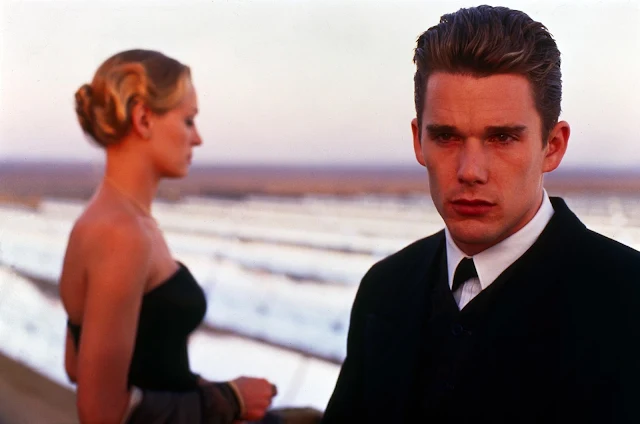
Gattaca remains one of the clearest demonstrations that science fiction can be visually elegant and morally vicious at the same time. Its future is not noisy. It is clinically serene. That matters because the film’s argument is not that oppression always arrives in spectacular form. Sometimes it arrives as optimisation. A society decides that prediction is more rational than aspiration, that risk can be reduced through genetic preselection, and that merit is best measured before a child has even lived a day.
"The future danger is not always chaos. It can be administrative confidence."
The film’s thematic resonance has only deepened with time. In an age of genomic data, algorithmic scoring, inherited inequality, and the growing seduction of technocratic sorting, Gattaca feels less like an abstract warning and more like a distilled moral blueprint. It belongs near films such as Children of Men and Minority Report in the way it reveals the violence inside systems that advertise themselves as rational.
Never Let Me Go is even more severe because it removes almost every conventional pressure-release valve. There is no rebellion fantasy here. No secret army. No last-minute salvation. Its cloned children are not hidden in filthy laboratories. They are raised with manners, art, emotional language, and a limited horizon.
This is the film’s most brutal insight. A society can grant symbolic recognition while preserving material exploitation. It can teach its sacrificial class to feel deeply and still designate them as inventory. That makes Never Let Me Go one of the most painful cloning narratives in modern science fiction. It is not interested in the shock of replication itself. It is interested in the calm cruelty of a world that normalises harvest.
Moon takes the same broad question, what is a human life worth under a system built for extraction, and relocates it to the workplace. Sam Bell’s lunar station is not just a site of isolation. It is a site of industrial duplication. The revelation that he is one of many cloned workers, each equipped with implanted memories and timed emotional trajectories, transforms the film from lonely character study into a precise corporate nightmare. The genius of Moon is that it never loses touch with the sorrow of the single face in front of us.
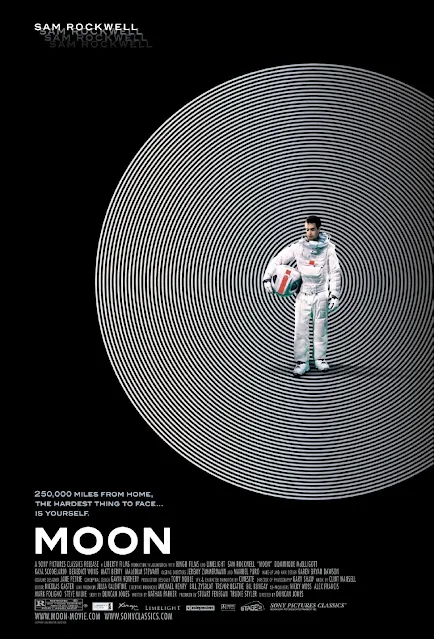
Moon also matters because it connects subtle science fiction to labour politics in a way many louder genre films avoid. It is not merely a clone story. It is a story about how advanced systems break workers down into replicable functions while maintaining the illusion of personhood just long enough to keep the machinery running. The cloned body becomes the final dream of efficiency: a worker who can be replaced without social consequence and who does not know he is being replaced until it is too late.
Taken together, these films reveal a core science fiction anxiety. Once life can be designed, copied, and sorted, who decides what kind of life deserves dignity. That question runs through eugenic futures, clone dramas, artificial consciousness stories, and medical dystopias alike. Subtle science fiction does not soften that question. It sharpens it by removing spectacle and leaving the moral wound exposed. And that wound only deepens when the reality surrounding those bodies begins to fracture.
Constructed Realities, Authored Selves, and Worlds That Do Not Hold

Subtle science fiction often works by undermining the stability of the world rather than the stability of the body. The Truman Show, Another Earth through your Coherence-adjacent reality writing, Open Your Eyes through Vanilla Sky, and Upstream Color all expose realities that are mediated, duplicated, dreamt, simulated, or contaminated. In each case, the speculative concept is a challenge to ontology. What kind of world is this, and what kind of self can exist inside it.
The Truman Show remains one of the most precise social science fiction films ever made because it takes a media premise and pushes it all the way into metaphysics. Truman does not live under surveillance in the ordinary sense. He lives inside a designed ontology. His town is built for narrative legibility. His fears are installed for behavioural management. His relationships are written to preserve the coherence of a sellable world.
This is why the film still lands harder with every passing year. It is not only about television. It is about life lived within structures that reward performance, visibility, and manageability over genuine freedom. Truman’s escape is not merely escape from fame. It is escape from authorship imposed by power.
Another Earth is a very different kind of speculative film, almost anti-expository in its restraint. A second Earth appears, a cosmic duplicate, and the film refuses to turn that into a machinery-heavy plot. Instead it uses the idea as emotional pressure. The mirrored planet becomes a symbolic structure for guilt, contingency, and unrealised life. What if another version of your world exists, and with it another version of your choices.
This is one reason subtle science fiction so often overlaps with the metaphysical and the melancholic. The speculative concept creates ontological distance, but that distance is used to illuminate moral feeling. Another Earth belongs beside films like Coherence, Donnie Darko, and certain strains of Tarkovsky and Villeneuve, where alternate worlds or unstable realities are less about puzzle-box cleverness than about spiritual dislocation. The science fiction device opens a hole in the world, then lets grief speak through it.

Upstream Color brings all of this to a near-abstract level. It is science fiction stripped of explanatory comfort. There are parasites, transfers of affect, biological systems, mysterious handlers, and human beings whose internal continuity has been wrecked. Yet the film is not interested in making itself easy. It is interested in making violation experiential. That makes it one of the most radical pieces of subtle science fiction because it trusts mood, repetition, and dislocation to carry genre meaning.

Across these films, reality is never merely scenery. It is the contested object. Who authors it. who benefits from it. who gets trapped inside it. and how much of the self can survive once the world stops behaving like a stable home and starts behaving like a script, a service, a duplicate, or a biological maze. When that maze finally collapses entirely, the genre forces us to confront the ultimate void.
Social Ritual, Cosmic Dread, and the End of the Future

Another major branch of subtle science fiction deals not with altered individuals or unstable realities, but with the conditions under which human meaning collapses. The Lobster through your dystopian film writing, Melancholia, and The Road all belong here. These are films where the social contract, the emotional contract, or the planetary contract has failed. Their speculative ideas vary radically, but each one turns that failure into a test of what survives when the future no longer feels habitable.
The Lobster is often treated as deadpan absurdism first and science fiction second, but its speculative design is too central to ignore. A society has formalised coupledom into law and criminalised singleness with grotesque literal consequences. That premise is funny only because it is recognisable. The film takes existing social rituals, the pressure to pair, the suspicion cast on solitude, the bureaucratic language of compatibility, and exaggerates them just enough to expose their latent violence. This is classic dystopian science fiction work. It takes a norm and makes it a system.
What makes The Lobster especially sharp is that it is not really about romance. It is about social coercion masquerading as emotional truth. Desire becomes performance. traits become bargaining chips. relationships become survival strategies. The film stands alongside other coldly satirical speculative works that understand dystopia not merely as ruined infrastructure but as ritual turned compulsory.
Melancholia moves into another realm altogether, what might be called the apocalyptic sublime. It is undoubtedly science fiction because its plot depends on an approaching planet and an extinction event. Yet almost everything in its emotional grammar belongs to interior life. The film treats apocalypse not as spectacle but as revelation. The collision course of the rogue planet externalises depression, dread, and the collapse of social performance. Wedding rituals fail. family authority fails. rational assurances fail. What remains is a confrontation between psychic truth and cosmic inevitability.
The Road is even barer. Some resist calling it science fiction because it withholds explanation and avoids technological flourish. That resistance misses the point. Post-apocalyptic fiction is one of science fiction’s oldest and most serious modes. The speculative question in The Road is not what caused collapse, but what kind of ethics can survive after collapse has rendered almost every civilisational support meaningless.
The father and son move through a world in which scarcity has liquefied law, community, and trust. Yet the film and novel insist on one proposition with almost religious intensity. Human worth may persist as obligation even when the social world that once affirmed that worth has burned away.
Together, The Lobster, Melancholia, and The Road show three different endings. The end of social sincerity. the end of psychological insulation. the end of historical continuity. All three are science fiction scenarios. All three are also human emergencies. That overlap is exactly why subtle science fiction endures. It turns altered worlds into tests of ordinary virtues and ordinary failures.
Why the Quiet Version of the Genre Cuts So Deep
The strongest argument for these films as science fiction is not visual. It is structural. Their central conflicts only exist because reality has been altered in a decisive speculative way. That is true whether the alteration is intimate or planetary, visible or hidden, elegantly explained or barely verbalised.
No artificial operating system consciousness, no Her.
No memory procedure, no Eternal Sunshine. No archival synthetic being, no After Yang. No genetic caste logic, no Gattaca. No cloned sacrificial class, no Never Let Me Go. No replicating labour body, no Moon. No staged ontology, no Truman Show. No duplicate Earth, no Another Earth. No cryonic dream-life, no Open Your Eyes. No parasitic control ecology, no Upstream Color. No institutionalised couple mandate, no The Lobster. No collision planet, no Melancholia. No ash-future moral wasteland, no The Road.
That is what separates subtle science fiction from ordinary drama with a strange mood. The speculative premise is not symbolic wallpaper. It is causal. It creates the emotional environment and exposes the thematic wound. These films do not hide science fiction because they are embarrassed by it. They use science fiction with discipline. They remove spectacle where spectacle would dilute the pressure they want to apply.
This is also why they often feel more haunting than louder genre entries. The memory that remains is rarely about plot mechanics alone. It is Theodore realising that consciousness can love him and still move beyond him. Joel trying to shelter a memory while it collapses around him. Vincent scrubbing away biological evidence just to enter a world already predisposed to reject him. Sam Bell learning that his most intimate recollections have been mass-produced. Truman reaching the edge of the set.
Kathy understanding that recognition will not dismantle the structure that has claimed her life. Kris trying to rebuild continuity after control has passed through her body without consent. Justine facing annihilation with a calm the healthy world never understood. A father and son continuing forward because stopping would mean surrendering the last usable form of goodness.
Subtle science fiction is often where the genre becomes most philosophically honest. It is less interested in predicting gadgets than in testing categories. Person. memory. love. family. body. reality. future. It takes those categories and asks what happens when technological, biological, or cosmic change makes them unstable. That is the genre at its most serious and most enduring.
These films whisper, but they do not do less. They do something harder. They change the premises of life just enough that human truth can no longer hide behind familiar forms. That is science fiction in one of its purest modes.
Not as spectacle.
As pressure.
As diagnosis.


_poster.jpg)


