25 October 2025

The Jungian blueprint behind the 'Father–Son' relationships of Star Wars

The story of Star Wars carries a pulse beneath the starfighters and sabers. Strip away the spectacle and what remains is a myth about fathers and sons. At the center stands Luke Skywalker and Darth Vader, a son and father whose struggle moves beyond blood. Their bond defines the emotional architecture of the saga. 

Luke inherits a shadow he did not choose. Vader becomes his own myth, then his son’s greatest fear.

This essay examines how Star Wars uses fatherhood and legacy to tell stories that echo the psychological patterns described by Carl Jung. His ideas about the Father archetype, the Shadow, and individuation give us a useful language for why these relationships resonate. 

The aim is not to force Jung onto the text. The films and series often move through patterns Jung mapped long before Luke looked across Tatooine’s twin suns.

Luke’s journey is not only a rebellion against an empire. It is a rebellion against the gravitational pull of inheritance. His confrontation with Vader is as much internal as it is physical. 


jungs theory in star wars
 

In the cave on Dagobah, when Luke sees his own face behind Vader’s mask, the story speaks in Jungian terms. The enemy is not only outside. It lives within. Luke must recognize the darkness inside him, accept that it exists, and refuse to be consumed by it. That vision sets the terms for everything that follows.

Around this mythic spine, other bonds deepen the theme. Han Solo and Ben Solo fracture under guilt and unreachable love. Jango Fett and Boba Fett wrestle with legacy through blood and vengeance, not the Force. Obi-Wan Kenobi and Anakin Skywalker show how surrogate fatherhood can guide and still fail. 

Din Djarin and Grogu offer a rare answer to darker patterns by choosing family rather than inheriting it. These are not clean tales of good fathers and bad sons. They are uneasy negotiations between past and future. Each father figure casts a shadow. Each son decides to step into it, to escape it, or to burn it away.


Vader and Luke, The Confrontation with the Father

The bond between Luke Skywalker and Darth Vader sits at the center of the Star Wars myth. Everything spirals outward from it. Their story is not only about war, rebellion, or the Force. It is about the moment a son must face the figure who shaped his fate before he understood it.

On Cloud City, Vader’s revelation lands with mythic force. 

Luke must confront who his father is, and what that makes him. Jung described the Father archetype as both guide and barrier, a figure one must face to become whole. 

For Luke, Vader is both the literal father and the symbolic obstacle, the source of life and the embodiment of a dark power he must reckon with to claim his own identity.

Luke’s refusal to join him is not simple rejection. It is the first act of individuation, the process Jung saw as essential to psychological growth. Luke refuses to be absorbed into his father’s shadow. 

He falls, broken and bloodied, yet he falls as himself. This is a different kind of heroism. 

Not the triumph of brute strength, but the refusal to inherit a corrupted legacy.

no i am your father 

Years later, on the second Death Star, Luke faces Vader again. The conflict is layered now. He knows the truth of the Force, of his lineage, of the man behind the mask. When the Emperor tempts him, Luke’s rage explodes in a flurry of blows. 

For a moment he gives in to the darkness he feared on Dagobah. His blade carves into the thin line separating son from father. When he stops, breathing hard, Luke recognizes the reflection staring back.

That choice, to throw down his weapon, completes his Jungian journey. 

Luke does not destroy his father to become free of him. 

He accepts what Vader represents, then refuses to be defined by it. Jung argued that real growth requires integration of the Shadow, not its erasure. Luke’s mercy is strength, not weakness. 

It is the moment he fully claims himself.

luke defeats vader 

For Vader, the confrontation becomes a mirror. He sees in his son the light he buried. He is not redeemed by destiny. 

He moves because his son holds up a mirror and will not let him disappear behind the mask. 

In that instant the saga stops being grand myth and becomes human, a father reaching for the last shard of who he used to be because his son believes it is still there.


The Cave of Dagobah, Meeting the Shadow

Before Luke can face Darth Vader, he must face himself. That is what the cave on Dagobah reveals. It is one of the quietest scenes in The Empire Strikes Back, and one of the most important. Under Yoda’s watch, Luke steps into a place that feels alive with more than danger. It is the symbolic descent Jung described often, the inward journey before the outward one.

When Vader appears in the vision, Luke strikes without thinking. The mask falls. His own face stares back. 

It is clean and chilling. 


degobah cave meaning empire  jungian


Jung defined the Shadow as the disowned part of ourselves, the darkness carried in the unconscious. Luke does not only see his father. He sees the possibility of becoming him. The inheritance becomes explicit. The darkness is not waiting somewhere else. It is already inside.

The cave reframes everything. 

The real battle is not only between Luke and the Empire. It is between Luke and the temptation to mirror his father’s fall. Yoda does not explain it away. He lets the vision speak. In that silence, Jung’s insight settles. To grow, one must look directly at the parts of the self that are hardest to face.

The cave is not prophecy. It is potential. Jung believed that confronting the Shadow is essential to individuation. If ignored, the Shadow grows in secret, twisting into something destructive. 

luke vader jungian meaning cave degobah
Here's looking at yourself, kid

If acknowledged, it can be integrated, becoming a source of strength. Luke does not understand this fully yet. The image of his face beneath Vader’s mask stays with him like a splinter.


Mirrors and Variations, Other Father and Son Dynamics

Luke and Vader form the saga’s axis, but Star Wars fills its worlds with variations. Some are tragic. Some redemptive. 

Others twist the pattern into ambiguity. Through these, the series explores the Father archetype and the many ways sons respond to it.

Han Solo and Ben Solo

Their bond echoes Luke and Vader, stripped of mythic clarity. 

Han is not a Chosen One.

 He is a father trying to reach a son he barely understands. Ben’s turn to the dark is born of fracture, manipulation, and guilt. The patricide on Starkiller Base is a textbook attempt to destroy the father’s authority and seize identity. 

Freedom does not follow. 

A ghost does. 

Han remains as conscience and regret. The confrontation fails to integrate anything. 

Ben spends his arc battling the echo of a father he could not truly kill.

Jango Fett and Boba Fett

One of the few dynamics untouched by the Force. Boba is Jango’s unaltered clone, raised as a son and a continuation of the father himself. Jung wrote that sons often inherit unexamined complexes. 

For Boba that inheritance is literal. His youth mirrors Jango’s path of bounty and violence. 

In The Book of Boba Fett he slowly steps out from his father’s shadow, building a code that is his own. The confrontation is not with a living father, but with a legacy that must be reshaped.

Obi-Wan Kenobi and Anakin Skywalker

Surrogate fatherhood forged by duty and love. After Qui-Gon Jinn’s death, Obi-Wan raises Anakin as student and son figure. Their bond breaks in fire on Mustafar in Revenge of the Sith.

obi wan anakin revenge of the sith 

Obi-Wan’s plea is not only a master’s lament. 

It is a father losing a son to his shadow. When the son is pulled under by the unconscious, Jung reminds us, the father becomes witness and collateral. 

The tragedy embodies that warning.

Luthen Rael and Cassian Andor

In Andor, affection does not drive the bond. Survival and strategy do. Luthen sees in Cassian the potential Self, not yet formed. 

He forges him into a weapon. This is fatherhood as calculation. 

The Father archetype here is not nurturing, it is instrumental. Cassian’s individuation arrives when he steps beyond what Luthen tried to make of him.

Din Djarin and Grogu

In a galaxy of fathers who wound or control, Din chooses to love. He is not bound by blood, destiny, or prophecy. 

He chooses the child, and the child chooses him. 

The pattern flips. 

Instead of inheritance or rebellion, the bond is mutual shaping. Fatherhood becomes a shared path. Jung spoke of the Father as burden and guide. Here it becomes chosen belonging.


The Dark Father Archetype, Palpatine’s Shadow Empire

Every myth has a figure who claims the role of father while offering no true inheritance. In Star Wars that figure is Sheev Palpatine. He stands not as guide, but as devourer. Jung described false fathers who claim authority to consume and control. Palpatine embodies that truth.

He seduces Anakin with flattery, fear, and promises of control over death. He becomes a dark surrogate father who offers mastery at the price of the self. 

This is not relationship, it is possession. 

Palpatine does not nurture sons. 

He manufactures heirs.

concept art emperor star wars 

Decades later he repeats the pattern with Ben Solo, wearing the mask of Snoke. He preys on insecurity and shame. Jung’s Terrible Father archetype lives here, the devouring figure who offers a false path to power in exchange for the person you are. 

In Star Wars that bargain leads to ruin every time.

Unlike Han, unlike Luke, Palpatine does not cast a personal shadow, he is the shadow. Anakin becomes Vader. Ben becomes Kylo Ren. Each must face the truth that the father they followed was never a father at all.

This is why defeating Palpatine is more than removing a villain. It is breaking a psychic chain. Luke integrates the shadow he sees in Vader. Anakin succumbs to Palpatine’s shadow, then breaks from it at the end. 

Ben drifts toward it, then claws his way back. One shadow can be integrated. 

The other must be severed.

force lightning star wars concept art 

Jungian Themes Across the Stars...

Across films and series, Star Wars returns to one question. 

What does a son inherit from his father, and what can he choose for himself. Jung provided a language for this tension. Archetype, shadow, individuation. These ideas explain why the father and son stories echo across generations of viewers.

The core bond, Luke and Vader, maps clearly to the heroic confrontation with the Father. Luke faces a man and the shadow that comes with him. 

By refusing to destroy his father and by confronting darkness with clarity, Luke models growth through integration rather than annihilation.

Other arcs fracture the pattern. Ben Solo tries to sever his inheritance with violence, then learns that absence does not equal freedom. 

Boba Fett inherits a violent complex and slowly reshapes it into a code. 

Cassian Andor is forged by Luthen Rael, then steps outside that mold. 

Din Djarin shows fatherhood as conscious choice, not fate.

Palpatine remains the devouring father. 

His presence clarifies why Luke’s mercy matters. One kind of shadow belongs to the self and can be integrated. The other arrives as domination and must be rejected. These tales do not offer a single moral. 

Jung warned against turning archetypes into rigid laws. They are patterns, not commandments. 


Conclusion

Every myth comes home. Star Wars may range across distant stars, yet its beating heart is intimate. 

Fathers and children. 

Shadows and light. 

Luke facing Vader, not simply adversary and savior, but two halves of a broken line that must be mended or severed.

Dagobah sets the hinge. Luke’s face behind Vader’s mask turns a galactic war into a personal reckoning with the Shadow. He does not win by destroying his father. He wins by recognizing the darkness and refusing to become it. 

Mercy becomes strength. Identity hardens into choice.

Around that center, the variations keep faith with the theme. Ben tries to cut away his inheritance and finds only echoes. Boba carries Jango’s weight, then builds a life of his own. 

Cassian grows beyond the man who made him a weapon. Din and Grogu show that fatherhood can be chosen and healing. Palpatine, the false father, offers power and consumes the self. Breaking from him is not only rebellion. It is freedom of the psyche.

Jung wrote that a son must face the father to grow. Not to destroy or obey, but to confront, to integrate, to stand apart. Star Wars holds that truth in many shapes. 

Some paths lead to ruin. 

Some to redemption. 

Many remain unresolved. 

The constant is the inner landscape, shadow, inheritance, choice. Every father casts a shadow. Every child decides where it ends. Somewhere between fear and love, between legacy and identity, a person becomes who they are. 

Beneath all the starships and lightsabers, that is the story Star Wars keeps telling.

23 October 2025

Symbolism in Blade Runner 2049

"Blade Runner 2049" is not merely a sequel to the 1982 film Blade Runner; it is a profound meditation on a world gasping for meaning. Set 30 years after the original, the film's landscape is even more desolate. 

Following the "Black Out" of 2022, a catastrophic event that wiped countless digital records and deepened the chasm between human and replicant, society has become a starker, colder place. 

This new world is ruled by the industrialist Niander Wallace, a messianic figure who "saved" the world from famine only to replace Tyrell's hubris with his own calculated, god-like control. In this neon-drenched, ecologically-ravaged world of towering sea walls and trash-strewn landscapes, director Denis Villeneuve weaves a dense tapestry of visual metaphors. 

Every frame is loaded with meaning, exploring identity, memory, and the very nature of the soul. Let's deconstruct some of the most potent symbols found in the film.

blade runner 2049

Key Symbols in Blade Runner 2049

Replicants

Replicants are bioengineered beings created for slave labor, but the film draws a sharp distinction between models. 

The older Nexus-8s, like Sapper Morton, had open lifespans and were hunted after the Black Out. K is a Nexus-9, Wallace's "perfected" model, engineered for total obedience. This forced obedience makes their struggle for freedom even more poignant. 

They are a metaphor for oppressed groups, denied rights and treated as disposable. K's "baseline test," reciting "a blood-black nothingness" while being emotionally assaulted, is the film's lore for reinforcing this subjugation. It's a form of psychological torture to ensure he remains a machine. 

The "miracle" of a replicant birth (Ana Stelline) is the central hope for their freedom, but it's a terrifying threat to human supremacy, which is why Lt. Joshi orders K to "erase" the child. K's journey from obedient tool to self-sacrificing individual is the film's core arc.

Joi

Joi, K's holographic companion, is the ultimate symbol of commodified intimacy in a disconnected world. She is a product designed to be "everything you want to hear." The film masterfully plays with her ambiguity. When K gives her the emanator, allowing her to be mobile, she begins to show signs of agency, even choosing her own name ("Joe") for K. 

The "merge" scene, where she syncs with the replicant Mariette to be physical with K, is a key moment: is it her ultimate act of love, or the ultimate product feature, syncing seamlessly with other Wallace products? Her "death" and final "I love you" are heartbreaking, but immediately challenged when K sees a giant, "pink" Joi advertisement callously call another man "Joe." 

This brutal moment seems to invalidate their entire relationship, but the film leaves it open. Perhaps *his* Joi, like K, used her programming as a starting point to become something unique. 

What is Joi, if not coded binary love, and does that manufactured origin make the love K *felt* any less real?

Eyes

Eyes remain a central symbol, as they were in the original film's Voight-Kampff test, which measured empathy (the "soul") through pupil dilation. They represent the "window to the soul" and the ability to see truth. 

This theme is evolved in 2049. Niander Wallace is physically blind, yet "sees" everything through his hovering drone "eyes," but he is thematically blind to humanity, beauty, and morality. He sees only data. Roy Batty, in the original, lamented that his memories would be "lost" when his eyes failed to see. 

In contrast, Dr. Ana Stelline is physically trapped in a sterile bubble, her only view of the outside world a projection. Yet, her inner*eye, her imagination, is what creates the memories (the mind's eye) that define reality for millions of replicants, making her arguably the most powerful "seer" in the film.

Memory

Memory is arguably the film's central theme. Replicants are implanted with false memories to give them an emotional cushion and a sense of identity, as Deckard noted in the original. K's entire identity is built on his implanted memories, which he knows are false. 

The entire plot hinges on a single memory: a small wooden horse hidden from bullies in an orphanage furnace. K believes this memory is his, which would prove he is "real" and "born," not made. His world shatters when he learns the memory is not his, but belongs to Ana. 

This is the film's most profound question: if a memory feels real, and it dictates your actions and emotions, does its origin even matter? 

The film suggests that real memories, like Ana's, have a different quality or "soul," which is why she is the most valued memory designer.

Animals

Animals symbolize the last vestiges of the natural world and the loss of biodiversity. As in the original novel, "Do Androids Dream of Electric Sheep?", most animals are artificial, and owning a "real" one is a massive status symbol. 

The most important animal symbol is K's wooden horse. It is a memory of a "real" animal (a horse), but the object itself is artificial (wood), mirroring K's own existence as a replicant who discovers he is "artificial" but holds a "real" memory. 

The wood itself is symbolic: it's organic but dead, carved into an artificial shape, a perfect metaphor for Ana, a "real" (organic) child forced into an "artificial" life in her bubble. 

Deckard's real dog is a powerful contrast to everything else: a simple, "real" companion in a world of artifice, offering unquestioning, real loyalty.

Snow(hey oh...)

Snow is a recurring symbol of purity, coldness, and renewal. It bookends K's journey. It's in the first scene at Sapper Morton's farm, falling on the barren, synthetic protein farm. And it falls in the final scene as K lies on the steps, having saved Deckard and reunited him with Ana. 

His death in the snow is a direct visual and thematic parallel to Roy Batty's "tears in rain" monologue. Where Roy's moment was about the loss of his memories and experiences ("like tears... in rain"), K's moment is about the creation of a single, real, selfless act. 

He is not the "miracle" child, but he chooses to perform a human miracle: saving a father for his daughter. The snow covers the grime of the city, symbolizing a blank slate, a moment of pure, transcendent choice. 

It's the "realest" he has ever been.

Bees

Bees are a crucial symbol of a functioning ecosystem. Their general extinction represents the world's ecological collapse. 

Niander Wallace, in his god-complex, has created synthetic bees, representing his desire to control and replace nature. However, the bees K finds at Deckard's casino hideout in the radioactive ruins of Las Vegas are real, living bees. 

This makes Deckard's hideout a true sanctuary, a pocket of "real" life persisting against all odds, existing "off the grid" electronically and biologically. They are a direct clue that "real" life (Deckard, and the secret of Ana he holds) is present, hiding from the sterile, controlled, artificial world of Wallace. 

They symbolize that nature, and perhaps the replicant soul, will always find a way to endure.

Deconstructing Love and Authenticity in Blade Runner 2049 - Joi + K

At the heart of Blade Runner 2049’s cold, neon-drenched landscape lies a question of profound emotional ambiguity: 

Does Joi, the holographic AI companion, genuinely love the Replicant K? 

This question transcends a simple binary answer, probing the very definition of love, consciousness, and what it means to be "real" in a world where life and emotion are manufactured commodities. 

The dynamic between K and Joi is not a simple romance but a complex symbiosis between two artificial beings, one created for servitude and the other for solace. 

While Joi originates as a sophisticated product, her relationship with K demonstrates a performance of love so complete that it becomes indistinguishable from "real" affection, ultimately forcing the viewer to question whether the origin of an emotion, be it from biology or code, invalidates its authenticity.

joi and k (joe) relationship blade runner


The Subject's Void: K's Quest for Identity

Before analyzing Joi's "love," one must first establish the nature of its recipient. K is the ultimate outsider, a bioengineered Replicant created for servitude

He is a tool, not a person, a fact reinforced by the constant slurs, such as "skinner" and "skinjob," he endures from humans. 

He is equally ostracized by his own kind, who see him as a traitor for "retiring" rogue Replicants. This creates a profound isolation, an existential void defined by obedience and loneliness. K’s entire existence is a "quest for identity," which crystalizes when he discovers the possibility that he is the "miracle" Replicant child, born, not built. This desperate need to be special, to possess a soul, makes him uniquely receptive to Joi's companionship. 

He is a vacuum waiting to be filled. 

Joi does not just offer him affection; she offers him an identity. By naming him "Joe," she bestows upon him the one thing he craves: individuality. It is therefore ambiguous whether K is truly in love with her, or if he is in love with the idea she represents: the idea of being seen, validated, and loved as "Joe," a "real" person with a destiny.

The Manufactured Muse: Joi as Product and Person

Joi herself is a being of profound contradiction. 

She is a mass-marketed holographic product from the Wallace Corporation, sold under the chillingly insightful tagline, "Everything you want to hear. 

Everything you want to see." Within the film's universe, she represents the ultimate commodification of intimacy, a personalized ghost sold to the lonely masses

This is visualized by the giant, hyper-sexualized Joi advertisements that loom over the city, promising hollow companionship. These public ads contrast sharply with K's private Joi, who appears as a supportive, gentle, and intuitive partner. 

This dichotomy presents the central ambiguity of her character: 

Is she merely a sophisticated mirror, an algorithm executing its code to perfectly reflect K's desires and fill his existential void?

 Or, like the Replicants she serves, is she a creation capable of transcending her baseline programming to achieve a form of genuine consciousness? 

She is, in effect, a "ghost OF the machine," a potential person trapped within a product, her every action suspended between programmed response and emerging agency.

bladerunner joo and K relationship thematic meaning

Decoding the Interface: Analyzing Key Interactions

Joi’s motivations are best analyzed by weighing the evidence for both programmed response and genuine agency in her key interactions with K. When Joi gives K the name "Joe," it feels like a genuine act of individuation, a baptism that separates him from his designation, KD6-3.7. 

However, it can just as easily be interpreted as a programmed "pet name" subroutine, a feature designed to create a deeper user bond. Her immediate and unwavering encouragement of K's belief that he is the "miracle" child strongly supports her product function. 

She never questions him; she never injects skepticism.

She simply tells him "everything he wants to hear," validating his deepest desire rather than challenging him toward a more complex truth.

The "merge" scene, where Joi syncs with the pleasure Replicant Mariette to achieve physical intimacy, is her most complex moment. 

From one perspective, this is the ultimate execution of her function: providing a complete user experience by overcoming her own physical limitations. It fulfills K's desire. 

Yet, from another, it is a desperate, clumsy, and sacrificial act. Joi "hires" a physical body and, in a moment of profound vulnerability, subsumes her identity to give K the touch he craves. 

This can be read as a genuine, selfless expression of love. This ambiguity climaxes in her "death." After K transfers her to the emanator, making her vulnerable, her final words, "I love you," are either a genuine, final declaration from a sentient being or the last programmed failsafe from a dying product. 

The film simply refuses to provide a simple answer. 

This ambiguity is painfully crystallized by the final, giant "pink" Joi advertisement, who cycles through her programming and calls out to another lonely man, "Joe." This devastating moment seems to invalidate their entire relationship, suggesting K's "Joe" was a default setting. 

However, it can also be interpreted as the final proof that K's Joi had become unique. The template may be generic, but his Joi, through their shared experiences and her ultimate sacrifice, transcended that template to become singular.

The Authenticity of Artificial Love?

Ultimately, the K/Joi relationship signifies that the origin of an emotion may be irrelevant to its authenticity. 

The film argues that in a world saturated with the artificial, the act of loving is more "human" than the biological impulse. Joi’s love may have been born from code, but her actions were indistinguishable from love. She provided support, sacrificed her own "life" to protect K, and centered his needs above her own. 

In return, K felt truly loved, which in turn catalyzed his own transformation from a passive tool to an active agent who makes a "real" human choice: to sacrifice himself for a cause he believes in. 

Blade Runner 2049 does not confirm if Joi’s feelings were "real" by a human standard. Instead, it suggests it does not matter. In a world where humans can be cold and detached, and artificial beings can demonstrate profound loyalty and sacrifice, "humanity" is redefined. 

It is not about being born; it is about the choice to connect and to care.

In this, Joi, the programmed ghost OF the machine, becomes just as real as K, the manufactured man.

21 October 2025

34 bits of trivia about 'Blade Runner'

Ridley Scott's 1982 film, Blade Runner, wasn't just a movie; it was a transmission from a future we were racing to build and desperate to avoid. Set in a rain-soaked, neon-choked Los Angeles of 2019, it plunged audiences into a "retro-fitted" world of corporate gods, environmental collapse, and synthetic slaves - Replicants - who looked like us, sounded like us, and were beginning to suspect they were more human than their makers.

Its central themes are not just resonant; they are the core questions of our impending future. What is the nature of humanity?

Are we just a collection of memories?

And what happens when the things we create stare back and demand a soul?

For decades, this film has been debated, recut, and idolized. Now, let's jack into the mainframe and decrypt the data...

Roy Batty's Tears in Rain monologue

Blade Runner film trivia

  1. Blade Runner is based on the 1968 novel "Do Androids Dream of Electric Sheep?" by Philip K. Dick.
    While the film borrows the core plot of a bounty hunter (Deckard) hunting androids (replicants), it jettisons the novel's strangest and most central themes. The book is set on a post-apocalyptic Earth covered in radioactive "dust," where real animals are nearly extinct and owning one (like a real sheep) is the ultimate status symbol. Society is guided by a bizarre virtual reality religion called "Mercerism" and citizens use "Penfield Mood Organs" to dial up emotions on demand. Dick was initially hostile to the film's script, but after seeing 20 minutes of special effects, he was completely won over.

  2. Blade Runner was a notorious box office bomb in 1982.
    It's hard to imagine, but the film crashed and burned. It was released just two weeks after E.T. the Extra-Terrestrial. Audiences, high on Spielberg's suburban optimism, weren't ready for a dark, pessimistic, and morally ambiguous sci-fi noir. It wasn't until the rise of home video (VHS and LaserDisc) that the film found its audience. Viewers could finally rewatch and dissect its dense, layered world, cementing its status as a cult classic that eventually matured into one of the most revered films ever made.

  3. The film's setting of 2019 is now our past.
    This highlights that science fiction is never really about predicting the future, but about commenting on the present it was made in. We don't have Off-world colonies or flying "Spinner" cars. But the film's anxieties? They're more relevant than ever. It accurately captured a future of extreme corporate power (the towering Tyrell pyramid), massive environmental degradation, and a profound anxiety about our relationship with artificial intelligence.

  4. The film's production design was the brainchild of "Visual Futurist" Syd Mead.
    Mead is the man who built this world. He conceptualized the film's iconic "retrofitted" aesthetic, where hyper-advanced technology is messily bolted onto decaying, older structures. This visual language - a dark, rainy, multi-cultural, and corporate-dominated urban landscape - became the foundational blueprint for the entire "cyberpunk" genre.

  5. The iconic "Tears in Rain" monologue was improvised by actor Rutger Hauer.
    The original scripted speech was longer and far more technical. Hauer, feeling the poetic tragedy of his character's end, cut the lines down on the day of filming and, in a stroke of genius, added the immortal final line: "All those moments will be lost in time... like tears in rain." It's the entire film's philosophy in one sentence. A machine, in his dying breath, creates a perfect, human metaphor for mortality, memory, and loss.

  6. Harrison Ford was not the first choice for Rick Deckard.
    Dustin Hoffman was seriously considered and had numerous meetings with Ridley Scott, but their visions for the character clashed. Other names on the list included Gene Hackman and Robert Mitchum. Ford was ultimately cast to intentionally subvert his heroic image from Star Wars and Raiders, playing Deckard as an exhausted, compromised, and morally ambiguous figure.

  7. The film's Vangelis score is legendary (but it didn't win an Oscar).
    There's a common misconception that Vangelis won the Academy Award for Blade Runner. He actually won the year before for Chariots of Fire. The Blade Runner score, with its vast, melancholy, and revolutionary use of the Yamaha CS-80 synthesizer, created the definitive "sound of the future." It's inseparable from the film's noir atmosphere, but a proper, official soundtrack album wasn't even released until 1994, 12 years after the film's debut.

  8. Blade Runner has at least seven different versions, but three are crucial.
    The 1982 Theatrical Cut featured a studio-imposed, hard-boiled voice-over from Harrison Ford (which he famously recorded with zero enthusiasm) and a "happy ending" showing Deckard and Rachael escaping to a sunny landscape (using outtake footage from The Shining). The 1992 Director's Cut removed the voice-over and the happy ending, and most importantly, added the brief unicorn dream sequence. The 2007 Final Cut is Scott's definitive version, with full creative control, polishing the unicorn scene and restoring some violent moments.

  9. The sequel, Blade Runner 2049, arrived 35 years later.
    Directed by Denis Villeneuve, the 2017 sequel was met with massive critical acclaim for its stunning visuals and, most importantly, its respectful and intelligent expansion of the original's themes. It directly interrogates the nature of manufactured beings, the value of memory, and the possibility of a soul.

  10. The film's groundbreaking visual effects lost the Academy Award to E.T.
    This is seen as one of the great Oscar snubs. The visual effects team, led by the legendary Douglas Trumbull (2001: A Space Odyssey), created the entire world practically. They used no CGI, relying instead on a painstaking combination of highly detailed miniatures, "motion control" camera rigs, traditional matte paintings, and double-exposure photography to create a world with a tangible, gritty reality.

  11. The film is a perfect example of "Tech-Noir," blending sci-fi with classic detective stories.
    All the film noir tropes are here: Deckard is the cynical, trench-coat-wearing detective. Rachael is the mysterious, smoke-wreathed femme fatale with a dark secret. The city is a corrupt, shadowy maze with endless rain and Venetian blinds. The studio-imposed original theatrical cut even included a clumsy voice-over narration to make the detective-story homage more literal.

  12. The famous "replicant eye glow" was a simple, practical lighting trick.
    While Sean Young (Rachael) did have to wear uncomfortable contacts, the film's most iconic visual cue was the subtle, golden-red sheen in the replicants' eyes. This wasn't an optical effect added in post-production. It was achieved in-camera by lighting supervisor Dick Hart, who bounced a faint beam of light off a half-mirrored piece of glass mounted at a 45-degree angle to the camera lens. This light reflected directly off the actors' retinas, creating an "inhuman" glow.

  13. The production was so difficult, the crew called it "Blood Runner".
    The shoot was notoriously grueling. Ridley Scott, with his precise and demanding visual style, clashed with the American crew, who mockingly wore t-shirts that read, "Yes Guv'nor, My Ass!" This tension led to the "Blade Runner Curse," a joke that any real-world company whose logo appeared prominently in the film (like Atari, Bell, and Pan Am) would soon suffer financial ruin.

  14. The unicorn dream sequence is the key to the film's greatest debate.
    This short scene (absent from the 1982 Theatrical Cut) shows Deckard dreaming of a unicorn. At the end of the film, he finds an origami unicorn left by his colleague, Gaff. This implies that Gaff *knows* Deckard's private, implanted memories. This is the central clue that Deckard himself may be a replicant—a hunter of his own kind. Ridley Scott firmly believes Deckard is a replicant. Harrison Ford firmly believes he is human.

  15. Blade Runner and Alien form Ridley Scott's sci-fi "one-two punch".
    Scott directed Alien in 1979 and Blade Runner just three years later. With these two films, he created two of the most influential and visually distinct worlds in cinema history. Alien gave us "haunted house in space" with a "blue-collar" future, while Blade Runner gave us the definitive "cyberpunk" dystopia.

  16. The 1997 Blade Runner video game was a masterpiece in its own right.
    Developed by Westwood Studios, this "point-and-click" adventure didn't just adapt the film. It told a parallel story following another Blade Runner, Ray McCoy, whose investigation happens at the same time as Deckard's. It brilliantly captured the film's atmosphere, featured a branching narrative, and used (then) revolutionary Voxel technology to create 3D characters in the film's pre-rendered world.

  17. The film's poster tagline perfectly captured its blended genre.
    "A chilling, bold, mesmerizing, futuristic detective thriller." This tagline was perfect. It wasn't just "sci-fi"; it was a "futuristic detective thriller," explicitly acknowledging its film noir roots and preparing audiences for something far different from Star Wars.

  18. The cityscape was built with massive, highly detailed miniatures.
    The film's staggering sense of scale was achieved without CGI. The Tyrell Corporation pyramid, for example, was a massive, intricately detailed model. The city itself was built as a "forced perspective" miniature set on a soundstage, allowing the motion-control cameras to glide through it as if it were real.

  19. The fiery "Hades Landscape" opening is real footage from England.
    The film's opening shot, a terrifying industrial hellscape, is not a special effect. It's real 35mm footage of the Wilton International chemical complex in Teesside, North East England, near where Ridley Scott grew up. It immediately sets the film's tone, establishing a world choked by pollution before we even see the city.

  20. Rutger Hauer's most important "stunt" was an act of mercy.
    While Hauer performed many of his own physical stunts, his character's defining moment is one of non-violence. After a brutal chase where he easily overpowers Deckard, Roy Batty's four-year lifespan ends. In his final moments, he chooses to save his hunter's life, hoisting Deckard to safety. In this single act of empathy, the "machine" proves himself "more human than human."

  21. The animatronic owl is a perfect metaphor for the film's themes.
    In the Tyrell building, Deckard sees a seemingly real owl. He asks Rachael, "Is it artificial?" She replies, "Of course it is." This owl is a perfect mirror for Rachael herself - a being so perfectly constructed that she (and we) can't be sure she's "real." The film forces us to ask: if you can't tell the difference, does the difference even matter?

  22. The 2007 Final Cut is Scott's definitive version.
    This is the only version over which Ridley Scott had complete creative control. Its most important change was the permanent removal of the theatrical cut's voice-over, restoring the film's intended mystery and ambiguity. It also standardized the unicorn dream, making the "Deckard is a replicant" theory the most strongly supported interpretation.

  23. "Cityspeak" was invented by actor Edward James Olmos.
    The futuristic street-level patois spoken by Gaff (Olmos) was the actor's own creation. It's a blend of Japanese, Spanish, German, French, and other languages. This brilliant piece of world-building makes the future Los Angeles feel like a genuine multicultural melting pot, and it was widely copied by the cyberpunk genre that followed.

  24. The opening text crawl was a last-minute studio addition.
    The Star Wars-style text crawl defining "Replicants" was demanded by producers who panicked after confused test-screening audiences. Ridley Scott hated it, feeling it was a clumsy exposition dump. It was one of the first things he removed for his 1992 Director's Cut.

  25. The four-hour cut is a myth.
    A "four-hour cut" of Blade Runner has never existed. This rumor likely stems from the existence of a 113-minute "workprint" version, which was a rough cut shown to those infamous test audiences. It was this version that scored so poorly, leading the studio to mandate the voice-over and happy ending.

  26. Ridley Scott considers Blade Runner his most personal film.
    Despite the hellish production, Scott holds this film as his favorite. Its deep, melancholic themes of memory and mortality resonated with him personally. His older brother, Frank, died of cancer during the production, and that profound sense of loss is woven into the film's DNA, especially in Roy Batty's elegiac final speech.

  27. Blade Runner is the visual blueprint for Cyberpunk.
    Its cultural footprint is immeasurable. Films like The Matrix and Ghost in the Shell, and video games like Deus Ex and Cyberpunk 2077, are all its direct descendants. The "dark, rainy, neon-lit city" is now a universal shorthand for "dystopian future," and it all started here.

  28. The term "Blade Runner" is not in the original book.
    In Dick's novel, Deckard is simply a "bounty hunter," and the synthetic beings are "androids" (or "andys"). "Replicant" was coined for the film. The title "Blade Runner" was plucked from an unrelated 1974 sci-fi novella by Alan E. Nourse. Scott's team bought the rights to the name simply because it sounded cool.

  29. The production was forced to move from England to Los Angeles.
    The film was originally set to be filmed at Shepperton Studios in England, where Scott had just made Alien. Labor disputes and other complications forced the entire production to relocate to the Warner Bros. backlot in Burbank, California, adding to the budget and the friction between Scott's British team and the new American crew.

  30. Roy Batty's self-mutilation was a desperate fight against his own programming.
    During the climax, Batty's hand begins to fail, a symptom of his nearing "expiration date." He shoves a large nail through his palm to shock his system back into action. This, combined with slamming his head into a wall, is a visceral, painful display of his desperate, primal rage against his own designed-in mortality.

  31. The original "happy ending" was a total betrayal of the film's tone.
    Mandated by the studio, this ending feels like it's from a different movie. It shows Deckard and Rachael driving through a sunny, mountainous countryside. The footage itself was unused B-roll that director Stanley Kubrick had shot for the opening of The Shining. Scott detested this ending and removed it the first chance he got.

  32. This was one of the first major films to treat AI with emotional seriousness.
    Before Blade Runner, most "robots" in film were either servants (R2-D2) or simple "killer robots" (HAL 9000). This film was groundbreaking in its philosophical focus, asking: If an AI has memories (even fake ones), feels love (like Rachael), and fears death (like Roy), what meaningfully separates it from a human? Roy's final act of mercy is the film's answer.

  33. The costumes are "retro-fitted" 1940s fashion.
    The costume design perfectly mirrors the "retrofitted" production design. Rachael's outfits, with their severe padded shoulders, are a direct homage to 1940s femme fatale fashion. Deckard's trench coat is the uniform of the classic noir detective. It suggests a future where technology has leaped forward, but culture has stagnated or become obsessed with the past.

  34. The film's true value is its priceless cultural legacy.
    That initial $33 million box office gross is a historical footnote. Decades of re-releases, home video sales, and its massive cultural influence have made it one of the most important and profitable "cult" films in history. It proved that a box office failure is not the final word on a film's legacy. (Even its "spinners" live on in other films).

13 October 2025

Guillermo del Toro's Frankenstein (2025) - Review + Themes

The story of Frankenstein and his monstrous creation holds a hallowed place in the pantheon of cinematic horror. It is a myth so potent and so malleable that it has been endlessly revisited for over a century. 

From the moment Boris Karloff first shuffled onto the screen with his iconic, flattened skull and neck-bolts, the tale has been a cultural touchstone. It has been interpreted through the gothic lens of Hammer Films, deconstructed in poignant comedies like Young Frankenstein, and given operatic scale in ambitious literary adaptations. 

Even Kenneth Branagh and Bobby De Niro gave it a great crack

After so many iterations, one must seriously question what new territory is left to explore. 

What new life can possibly be shocked into this well-worn story?

Guillermo del Toro’s magnificent and heartbreaking Frankenstein provides the definitive answer. This film is not merely another version of a familiar tale; it is a deeply personal, painstakingly crafted work that feels like the project the director has been building towards his entire life. 

Del Toro’s Frankenstein serves as the powerful culmination of his lifelong artistic obsession with misunderstood monsters, tragic outcasts, and the beautiful sorrow of gothic romance. It stands as arguably the most emotionally resonant and spiritually faithful adaptation of Mary Shelley’s novel to date, proving the story's terrifying and timeless relevance by holding an ornate, cracked mirror to the anxieties of our own complex world.


frankenstein theme review 2025


The Del Toro Lineage: A Career in Creation

This film feels less like a new directorial project and more like the inevitable, ultimate destination for a filmmaker whose entire body of work is a rich tapestry of sympathetic outcasts and beautiful, terrible horrors. 

Del Toro’s profound empathy for the “other” is the central pillar of his filmography, a theme he has explored with increasing depth and artistry over three decades. This sensibility can be traced back to his earliest Spanish-language masterpieces, which established his unique voice.

In The Devil's Backbone, he found aching tragedy in the ghost of a murdered child, treating the supernatural not as a simple scare tactic but as a vessel for historical grief. 

He refined this approach in his magnum opus, Pan's Labyrinth, where the morally ambiguous Faun and other magical beings become conduits for understanding the real-world horrors of fascism. 

This career-long artistic journey finds its ultimate expression in Jacob Elordi’s Creature.

Elordi (Saltburn) delivers a transformative performance that is a marvel of physicality and restrained soulfulness, portraying the creation not as a grunting brute but as an intelligent, sorrowful being cursed with a consciousness he never asked for. 

His movements, at once graceful and disjointed, recall the work of del Toro’s most famous creature performer, Doug Jones. 

In his Oscar-winning film, The Shape of Water, del Toro found a romantic hero in the silent, persecuted Amphibian Man, and that same tender compassion is afforded to Frankenstein’s creation. This profound empathy is wrapped in the director's quintessential gothic romanticism.

The film’s entire aesthetic, a collaboration between Tamara Deverell’s ornate and decaying production design and Dan Lausten’s painterly, shadow-drenched cinematography, directly evokes the dark, sorrowful, and achingly beautiful atmosphere of Crimson Peak

Every single element, from the creature effects that pay loving homage to the illustrations of Bernie Wrightson, to Alexandre Desplat’s haunting and melancholic score, feels like a refined signature from del Toro's previous works. They are all assembled here not as a collection of greatest hits, but as the perfected components of a singular, masterful machine.


Defining Shelley...

While it pays respect to its cinematic predecessors, Guillermo del Toro's version distinguishes itself by achieving a profound faithfulness not just to the plot, but to the very spirit and text of Mary Shelley's novel. 

This focus allows it to emerge as what might be the definitive cinematic adaptation. Of course, Kenneth Branagh's ambitious 1994 film, which starred Robert De Niro (Brazil, Casino), certainly aimed for textual accuracy and a grand, operatic scale. It was a commendable effort to restore the novel's epic scope. However, del Toro succeeds on a deeper level by prioritizing the book's philosophical and psychological soul over mere spectacle. 

His adaptation masterfully captures the core intellectual elements that are so often overlooked by other versions. We witness the Creature's slow, painful acquisition of language and intelligence, particularly in his moving scenes with a blind hermit played by the great David Bradley. This education is crucial because it makes his later, intense intellectual and emotional debates with his creator, Victor (a manic, charismatic, and brilliant Oscar Isaac), so incredibly potent.

Del Toro also leans heavily into the novel's pervasive sense of natural beauty and profound isolation, using the vast, unforgiving landscapes as a reflection of the characters' internal torment. The key to the adaptation's success is its narrative structure. 

By brilliantly choosing to tell the story in two distinct parts, first from Victor's feverish perspective and then from the Creature's tragically clear-eyed one, del Toro gives a powerful voice to the voiceless. This narrative choice directly honors Shelley’s own literary device and ensures the audience's empathy is fully transferred. 

The film’s ultimate triumph lies in this delicate and masterful balance. It captures the source material’s intellectual depth and moral complexity without ever sacrificing del Toro’s unique, heartbreaking visual poetry. 

It is a film that stimulates the mind and shatters the heart in equal measure.

themes of Frankenstein 2025

Themes for Our Time

In del Toro’s hands, a story conceived at the dawn of the Industrial Revolution has never felt more urgent or uncomfortably relevant. Victor Frankenstein’s unchecked scientific ambition serves as a powerful and timely allegory for our own era’s anxieties. 

His obsessive quest to conquer death, heedless of the consequences, speaks directly to modern-day concerns over the ethical boundaries of creation, from the potential sentience of artificial intelligence to the world-altering power of genetic engineering. Yet, the film's true, furiously beating heart is the intimate tragedy of parental abandonment. 

In a stroke of genius, del Toro’s script introduces Victor’s own cruel and abusive father, a domineering patriarch played with chilling precision by Charles Dance (Alien 3, Game of Thrones). This addition masterfully reframes the entire story as a devastating cycle of generational trauma. 

We see how cruelty is learned and how pain is passed down from one creator to his creation.

The central tragedy is not one of monsters and villagers with torches; it is the deeply personal story of a child who is violently rejected by his father, a theme that resonates with profound sadness in our contemporary age of societal alienation. 

The Creature’s overwhelming loneliness and his desperate, often violent, search for connection and belonging mirror our own struggles in a world that can feel increasingly isolating. The film forces us to confront the novel’s enduring and uncomfortable question: who is the real monster here?

Is it the shunned, patchwork creation who learns hatred from a world that shows him none? 

Or is it the brilliant creator, the father, who shirks his most fundamental responsibility and unleashes his own unaddressed trauma upon the world?

Guillermo del Toro's Frankenstein is an unequivocal triumph. 

It is a lavish, gruesome, and deeply moving epic that not only honors but deepens the power of Mary Shelley's foundational myth for a new generation. 

The film is a declaration that this story is not just about the dangers of playing God, but about the failures of being human. 

In the end, del Toro reminds us that the best and most enduring monster stories are never truly about the monster itself. They are, and have always been, about us. They are about our failings, our monumental capacity for cruelty, and our eternal, all too human need for compassion, forgiveness, and understanding.
11 October 2025

10 Top science fiction films featuring Clones and Cloning

The concept of cloning humans has consistently proven to be a captivating plot device in science fiction. It taps into our deepest inquiries about what it means to be human, whether it's questioning the soul of a replicant in Blade Runner or exploring the harrowing ethics of a society that farms humans for organs in Never Let Me Go.

Filmmakers use this narrative element to delve into a myriad of complex themes, pushing the boundaries of our understanding of identity and the consequences of tampering with life itself. By confronting characters with their own duplicates, films like the psychologically haunting Moon and the action-packed thriller The Island challenge our very perceptions of selfhood.

Even blockbuster sagas like Star Wars: Episode II - Attack of the Clones use the concept as a catalyst for galactic conflict, raising questions of individuality on a massive scale. By pitting clones against their originals or revealing a character's entire existence to be an artificial construct, these films provoke audiences to contemplate what truly defines us as unique beings and explore the dangerous consequences of playing god.

Top Ten Films with Great Plots About Clones

1. "Blade Runner" (1982)

Director: Ridley Scott

Script Writers: Hampton Fancher, David Peoples

Lead Actors: Harrison Ford, Rutger Hauer, Sean Young

While not clones in the traditional sense, the "replicants" of Blade Runner are bioengineered beings, physically identical to humans but with a four-year lifespan. 


The film follows detective Rick Deckard, tasked with hunting down and "retiring" a group of rogue replicants. The central conflict lies in the Voight-Kampff test, a device used to distinguish replicants by measuring empathetic response - a flawed system that implies humanity can be quantified.


The film masterfully inverts expectations, as the replicants, particularly Roy Batty, display a profound and poetic desire for life, memory, and meaning, often appearing more human than the burnt-out people hunting them. 


This exploration of artificial memory and manufactured identity forces audiences to question the very definition of humanity and leaves them pondering the film's most enduring mystery: 


is Deckard himself a replicant?

2. "The Island" (2005)

Director: Michael Bay

Script Writers: Caspian Tredwell-Owen, Alex Kurtzman, Roberto Orci

Lead Actors: Ewan McGregor, Scarlett Johansson

scarlet Johansen island figure
Obi-Wan Kenobi and Scarlett Johansson

In a seemingly utopian, sterile facility, Lincoln Six Echo and Jordan Two Delta live a controlled existence, told that the outside world is contaminated. Their only hope is to win "The Lottery" and be sent to "The Island," the last pathogen-free paradise. 


They soon discover the horrifying truth: they are "agnates," high-priced clones created as living organ insurance for wealthy sponsors. The Lottery is simply a call for a harvest.


Upon escaping into the real world, their journey becomes a high-octane thriller wrapped around a profound ethical dilemma. The film critiques a society where life can be commodified and consciousness is ignored for convenience.


As Lincoln and Jordan develop unique identities beyond their programming, they fight not just for their own survival but for the personhood of all clones, forcing the audience to confront the question of when a copy earns the right to be an original.

3. "Moon" (2009)

Director: Duncan Jones

Script Writers: Duncan Jones, Nathan Parker

Lead Actor: Sam Rockwell

Sam Bell is the sole employee at a lunar mining base, nearing the end of his three-year contract. 


His only companion is an AI named GERTY. Suffering from loneliness and deteriorating health, his world is shattered when he discovers he is not alone - he finds a younger, healthier version of himself. 


He learns that he is one in a long line of clones, each activated with the original Sam's memories and given a three-year lifespan to run the base before being incinerated.


Moon is a masterclass in psychological sci-fi, using its minimalist setting to explore corporate dehumanization where human life is a disposable asset. The film's emotional core is the interaction between the two clones; they start with suspicion and evolve to a state of empathy and self-sacrifice. 


It's a poignant examination of identity, memory, and what it means to be an individual when your entire life and personality have been copied and pasted.

4. "Never Let Me Go" (2010)

Director: Mark Romanek

Script Writer: Alex Garland

Lead Actors: Carey Mulligan, Andrew Garfield, Keira Knightley

Based on Kazuo Ishiguro's haunting novel, this film presents a quiet, alternate version of England where clones are created to provide vital organs for "normal" people. The story follows Kathy, Tommy, and Ruth, who grow up at a seemingly idyllic boarding school called Hailsham. 


They are taught art and literature but are subtly conditioned to accept their fate: a short life ending in a series of "donations" until they "complete."


Unlike other films on this list, there is no rebellion or escape. Instead, Never Let Me Go is a profound and melancholic meditation on mortality and humanity. The characters cling to love, friendship, and art, hoping to prove they have souls worthy of a deferral from their duty. 


The film's tragedy lies in their quiet acceptance of a horrifying system, forcing viewers to question what gives a life meaning if its end is already written.

5. "The 6th Day" (2000)

Director: Roger Spottiswoode

Script Writers: Cormac Wibberley, Marianne Wibberley

Lead Actor: Arnold Schwarzenegger

In a future where cloning pets is common but cloning humans is forbidden by "Sixth Day" laws, helicopter pilot Adam Gibson comes home to find a perfect clone of himself living with his family. 


He discovers he was illegally cloned by a powerful corporation after a supposed accident, and now the company wants to eliminate the original Adam to cover up their crime. Adam must fight to reclaim his life from his duplicate, who is indistinguishable from him in every way, possessing all his memories and feelings.


While an action-heavy film, The 6th Day explores themes of identity and what makes a person unique. The technology of "syncording" allows for a perfect mental and physical copy, raising the question: if the clone believes he is the original, what right does anyone have to say he isn't? The film becomes a battle for the concept of the individual against a corporate entity that sees people as reproducible data.

Arnold also blows some stuff up.

6. "The Island of Dr. Moreau" (1996)

Directors: John Frankenheimer, Richard Stanley

Script Writers: Richard Stanley, Ron Hutchinson

Lead Actors: Marlon Brando, Val Kilmer

Based on the classic H.G. Wells novel, this film follows a UN negotiator who becomes stranded on a remote island ruled by the Nobel Prize-winning geneticist Dr. Moreau. Moreau, in his godlike hubris, has been splicing human DNA into animals to create a new, "pure" species free of humanity's flaws. 


He rules over his grotesque "Beast Folk" as their creator and "Father," enforcing a set of laws to suppress their animal instincts.


The film is a chaotic and disturbing look at the consequences of unchecked scientific ambition. It uses genetic manipulation and cloning to explore the thin veneer of civilization over our primal nature. 


As Moreau's creations begin to regress and their animal natures re-emerge, the island descends into violent anarchy, serving as a powerful allegory for the dangers of playing god and the impossibility of perfecting nature through force.

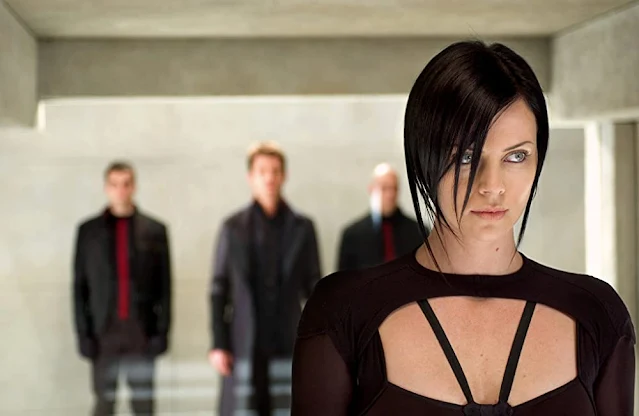
7. "Aeon Flux" (2005)

Director: Karyn Kusama

Script Writers: Phil Hay, Matt Manfredi

Lead Actors: Charlize Theron, Marton Csokas

Charlize Theron as Aeon Flux

In the year 2415, the last remnants of humanity live in Bregna, a walled city-state run by a congress of scientists. 


This seemingly perfect society is a lie. Centuries prior, a plague rendered humanity infertile, and the ruling regime has maintained the population through cloning, recycling the same DNA for generations. Each new birth is simply a clone of a past citizen, and memories of past lives haunt the living.


Aeon Flux, an assassin for an underground rebellion, discovers this truth and learns she is a clone of the wife of the regime's leader. The film explores cloning as a tool for societal stagnation and totalitarian control. By denying natural birth and evolution, the rulers have created a fragile immortality that is now failing.


Aeon's mission shifts from simple assassination to destroying the system of forced reincarnation, arguing that a true future requires the possibility of new life, not just the repetition of the old.

8. "Star Wars: Episode II - Attack of the Clones" (2002)

Director: George Lucas

Script Writers: George Lucas, Jonathan Hales

Lead Actors: Ewan McGregor, Natalie Portman, Hayden Christensen

While part of a grand space opera, this film places cloning at the very center of its galactic conflict. The Jedi discover a massive clone army, secretly commissioned for the Republic a decade earlier. 


These soldiers are all clones of the bounty hunter Jango Fett, genetically engineered for obedience and accelerated aging. 


They are living weapons, created for a singular purpose: to fight and die for a government that doesn't know it ordered them.

The film presents a fascinating dichotomy in cloning. On one hand, you have the mass-produced, seemingly identical soldiers whose individuality is suppressed. On the other, there is Boba Fett, an unaltered clone whom Jango is raising as his son. 


This contrast explores themes of nature vs. nurture and identity. 


The existence of the clone army serves as a chilling precursor to the Empire, demonstrating how easily a society can sacrifice individuality and ethics for the promise of security, creating a force that would ultimately be used to destroy the very Republic, under the command of figures like Obi-Wan Kenobi and Anakin Skywalker, it was meant to protect.

9. "Splice" (2009)

Director: Vincenzo Natali

Script Writers: Vincenzo Natali, Antoinette Terry Bryant, Doug Taylor

Lead Actors: Adrien Brody, Sarah Polley

Delphine Chanéac as Dren in Splice

Delphine Chanéac as Dren

Genetic engineers Clive and Elsa are corporate stars for creating new hybrid organisms. Against their company's orders, they secretly splice human DNA into their experiments, creating a rapidly developing female creature they name "Dren." 


As Dren grows, she forms a complex, child-like bond with her creators, who begin to view her with a dangerous mix of scientific curiosity and parental affection.


Splice is a chilling body-horror film that explores the dark side of scientific ambition. The relationship between the scientists and their creation becomes a twisted family drama, blurring the lines between parental responsibility and ethical oversight. 


Dren's unpredictable and violent evolution serves as a terrifying metaphor for scientific pursuits that outpace morality, leading to consequences that are both monstrous and tragic. 


It's a modern Frankenstein story that questions the very nature of what we create and what we owe to it.

10. "The Prestige" (2006)

Director: Christopher Nolan

Script Writers: Jonathan Nolan, Christopher Nolan

Lead Actors: Hugh Jackman, Christian Bale

In this intricate thriller, two rival stage magicians, Robert Angier and Alfred Borden, are locked in a bitter and obsessive feud. To beat Borden's seemingly impossible "Transported Man" trick, Angier seeks out the help of scientist Nikola Tesla, who creates a machine for him. 


The machine, however, doesn't teleport him - it creates a perfect clone a short distance away, leaving the original Angier behind.


The film brilliantly uses cloning as the ultimate magical misdirection. To complete his illusion night after night, Angier must step into the machine, not knowing if he will be the man in the balcony (the clone) or the man who drowns in a tank below the stage (the original).


This horrifying sacrifice highlights the film's core themes of obsession and the self-destructive nature of ambition. 


The clone is not just a copy; it's a testament to how far someone will go to achieve greatness, blurring the line between illusion and reality until the creator himself is lost in the trick.


At its core, the concept of cloning humans in science fiction films taps into our fascination with the unknown and the limitless possibilities of science. It captivates our imagination, encouraging us to question the boundaries of what is possible or morally acceptable.

By exploring the depths of human nature, the essence of identity, and the ethical quandaries that emerge from cloning, these films invite us on a journey of introspection and intellectual exploration, reminding us of the profound impact that scientific advancements can have on our lives and the world we inhabit.

Furthermore, the concept of cloning provides an opportunity for filmmakers to delve into themes of societal control and oppression. 

By creating a world where clones are treated as mere commodities or tools for exploitation, these films shed light on the dehumanization that can arise from treating sentient beings as disposable objects - a la Mickey 17

About the author Jimmy Jangles


My name is Jimmy Jangles, the founder of The Astromech. I have always been fascinated by the world of science fiction, especially the Star Wars universe, and I created this website to share my love for it with fellow fans.

At The Astromech, you can expect to find a variety of articles, reviews, and analysis related to science fiction, including books, movies, TV, and games.
From exploring the latest news and theories to discussing the classics, I aim to provide entertaining and informative content for all fans of the genre.

Whether you are a die-hard Star Trek fan or simply curious about the world of science fiction, The Astromech has something for everyone. So, sit back, relax, and join me on this journey through the stars!
Back to Top