18 November 2023

Robby the Robot: A Trailblazer in Science Fiction

The story of Robby the Robot begins with the 1956 science fiction classic "Forbidden Planet." This film marked a significant milestone in cinematic history, particularly in the portrayal of artificial intelligence and robotics.

Robby wasn't just a prop; he was a character, integral to the narrative and dynamics of "Forbidden Planet." The film's setting, a distant world in the future, allowed for a fertile ground to introduce such a groundbreaking concept.

robby robot forbidden planet


Robby's design was revolutionary for its time. His creation involved a mix of imagination and engineering prowess, a task undertaken by a team of designers and technicians. The key figure behind Robby's design was Robert Kinoshita, a visionary in cinematic design. Robby's aesthetic was unique, featuring a transparent dome, mechanical limbs, and a distinct, bulky frame, which set him apart from the typical 'tin can' robots of that era.

The voice of Robby the Robot was provided by Marvin Miller, an actor known for his rich, resonant voice. Miller's contribution gave Robby a personality that transcended his mechanical appearance, allowing the audience to connect with him on a more human level.

Robby's Filmography: A Journey Through Cinema


The introduction of Robby the Robot in the 1956 science fiction film "Forbidden Planet" marked a significant moment in the history of cinema and science fiction. The movie, set against the backdrop of an advanced alien civilization, offered a glimpse into a future where humans interacted seamlessly with sophisticated robots. Robby was not merely a prop or a background character but a pivotal figure within the narrative, showcasing advanced technology and artificial intelligence.

"Forbidden Planet," inspired by Shakespeare's "The Tempest," explored themes of isolation, power, and the unknown. Set on the distant planet of Altair IV, the story revolved around a rescue mission to a colony that had mysteriously ceased communication. The arrival of the rescue team, led by Commander John J. Adams, unveiled the enigmatic Dr. Morbius, his daughter Altaira, and the remarkable Robby the Robot.

Robby the Robot was a creation of Dr. Morbius, built using knowledge from an extinct alien race known as the Krell. This backstory provided Robby with a layer of mystery and depth uncommon in robot characters of that era. Robby was endowed with abilities far beyond human capabilities, such as synthesizing food and materials, understanding complex scientific principles, and possessing a strict adherence to a set of laws designed to protect human life.
Robby broke away from the traditional portrayal of robots in media at the time, which often depicted them as menacing or subservient. Instead, Robby was portrayed as a character with a personality, capable of humor and displaying a sense of loyalty and ethics. This was a radical departure from the trope of robots as mindless automatons or threats to humanity, paving the way for a more nuanced portrayal of artificial intelligence in cinema.
Impact on the Audience and Film Industry

The film, with Robby as a central figure, resonated deeply with audiences and critics alike. It was lauded for its special effects, its visionary take on the future, and the philosophical questions it raised about technology and human nature. The portrayal of Robby the Robot in "Forbidden Planet" set a new standard for special effects and design in science fiction films, influencing the genre for decades to come.

Design and Creation: The Artistry Behind Robby


Robby the Robot's design represented a significant leap in cinematic robot design, blending artistry and engineering in a way that had never been seen before in film. The team responsible for this iconic creation was led by Robert Kinoshita, a visionary art director and production designer. Kinoshita's previous experience in designing scientific equipment and his keen sense of aesthetics played a crucial role in shaping Robby's appearance.

Robby's design was a striking departure from the conventional 'tin can' robots of the era. His bulky frame, accentuated by a transparent dome head and intricate patterns of lights and circuits, created an image of both power and intelligence. The design incorporated elements that suggested advanced technology, yet it maintained a humanoid form that allowed viewers to relate to Robby as a character.

robby robot forbidden planet

The creation of Robby required innovative techniques and materials. His suit, made of plastic, metal, and glass, was both complex and functional, allowing for mobility and expressiveness. The internal mechanisms were designed to enable movement and support the actor inside the suit. Robby's transparent dome, filled with spinning gears and lights, gave a glimpse into what was presumed to be his 'brain,' adding to his mystique.

The aesthetic appeal of Robby's design was undeniable. He was not just a robot; he was a work of art. His sleek lines, detailed construction, and imposing presence made him stand out. The design was both futuristic and grounded in the reality of mechanical possibility, striking a balance between the imaginative and the believable.

The voice of Robby the Robot was provided by Marvin Miller, a renowned actor with a distinctive voice. Miller's contribution was pivotal in bringing Robby to life. His voice lent Robby a sense of intelligence and personality that transcended his mechanical form. It was this combination of visual and auditory elements that made Robby a character with depth and charisma.

Miller's voice work added a crucial layer to Robby's character, infusing him with a warm, almost human-like quality. His ability to express humor, sarcasm, and even empathy through his voice allowed audiences to connect with Robby on an emotional level. This was a significant achievement, as it transformed the way robots were perceived in cinema, not just as machines but as beings capable of complex interaction.

Robby Robot's Filmography: A Journey Through Cinema

"Forbidden Planet" (1956): A New Kind of Character

In "Forbidden Planet," Robby the Robot emerged not just as a technological marvel, but as a character with depth and agency. His role in the film was integral, serving both as a source of comic relief and as a pivotal plot device. Robby's interactions with the human characters were nuanced, displaying a range of emotions and responses that were unusual for robots in cinema at that time.

Robby's presence in "Forbidden Planet" added layers to the film's complex narrative. He was a bridge between the human characters and the advanced technology of the Krell, the extinct alien race whose technology Dr. Morbius used to create him. Robby's ability to navigate between these two worlds, while adhering to a set of ethical laws, raised questions about the nature of intelligence, both artificial and human.


"The Invisible Boy" (1957): Robby's Second Film Appearance

After the success of "Forbidden Planet," Robby the Robot appeared in "The Invisible Boy," a film that blended science fiction with family-friendly adventure. Though less critically acclaimed than its predecessor, "The Invisible Boy" played a crucial role in solidifying Robby's place in cinematic history.

In "The Invisible Boy," Robby served a different purpose, showcasing his versatility as a character. He was involved in a storyline that revolved around a young boy and a supercomputer with malevolent intentions. This film further explored the themes of technology's impact on society, and Robby's role as both a helper and a mediator in these conflicts was central to the plot.
Cameos and Continuations

Robby's iconic status led to appearances in a variety of other films, where he often played cameo roles. 

One of Robby's most memorable cameo roles was in the 1984 film "Gremlins." His brief appearance in this cult classic was a delightful surprise for fans and served as a homage to the golden age of science fiction. Even in a non-speaking role, Robby's unmistakable design and the nostalgia it evoked were powerful.

robby robot concept art c3po


TV Appearances

The transition of Robby the Robot from film to television marked a new chapter in his legacy. This move allowed Robby to reach a broader audience and explore different narrative contexts, demonstrating his versatility beyond the silver screen.

Robby's foray into television began soon after his cinematic success. His unique design and the intrigue surrounding his character made him a natural fit for the burgeoning medium of TV, which was eager to adopt elements of popular culture from cinema. Robby's appearances in various television series not only brought the charm of science fiction into living rooms but also showcased how a character primarily known from film could adapt and thrive in a different format.
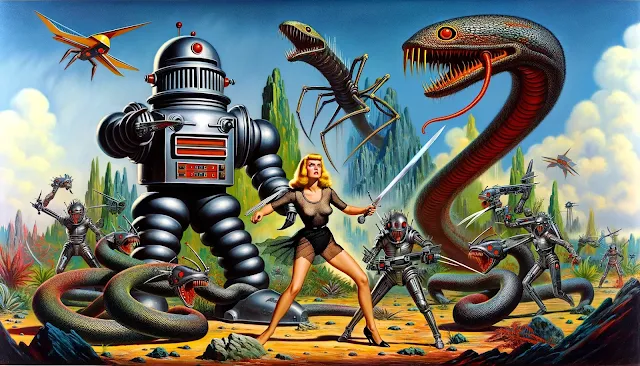
robby robot snake battle concept art


"The Twilight Zone"

In "The Twilight Zone," a series known for its exploration of moral and philosophical issues, Robby was used to enhance the show's contemplative and often eerie atmosphere. His presence in episodes such as "Uncle Simon" underscored the series' themes of human nature, ethics, and the unforeseen consequences of technology.

"Lost in Space"

In "Lost in Space," Robby appeared as a guest character, bringing with him a sense of familiarity and nostalgia for fans of "Forbidden Planet." His interactions with the series' regular characters, especially the Robot with whom he had memorable exchanges, highlighted the evolving portrayal of robots in media as capable of complex, even emotional, interactions.

Robby's presence in television significantly influenced how stories were told and how audiences perceived artificial intelligence and robotics. His character was often used to explore themes of morality, technology, and human-robot interaction, making these complex subjects more accessible to a wider audience. In many ways, Robby served as a bridge between the fantastical and the plausible, helping viewers to contemplate the potential realities of a future with advanced technology.

Cultural Impact: More Than a Machine

Robby the Robot transcended his role as a fictional character to become an enduring symbol in the science fiction genre. His influence can be seen in the way robots and artificial intelligence are portrayed in various forms of media, reflecting the evolving relationship between humans and technology.

Robby's creation during the 1950s, a period often referred to as the Golden Age of Science Fiction, coincided with a surge in public interest in space exploration and technology. He embodied the era's optimism and apprehension about the future, representing both the potential wonders and dangers of technological advancement. His complex character challenged the previously one-dimensional portrayals of robots, setting a precedent for more nuanced and empathetic representations.

Robby's design, personality, and ethical programming influenced how robots were portrayed in subsequent science fiction works. His impact is evident in the development of more complex robotic characters in literature, film, and television, who often grapple with issues of identity, morality, and their relationship with humans. Robby paved the way for robots to be seen not just as mechanical beings but as characters with depth and potential for growth.

robby robot concept art alien attack

The Enduring Legacy of Robby the Robot

Robby the Robot's impact on science fiction and popular culture is profound and enduring. He is more than a character; he is a cultural icon that represents the hopes, fears, and curiosities surrounding technology and the future. His journey from a groundbreaking presence in "Forbidden Planet" to a beloved figure in modern media illustrates the lasting appeal of well-crafted science fiction characters.

Robby's legacy is a testament to the creativity and vision of his creators and the enduring power of storytelling in exploring the human condition through the lens of science fiction.
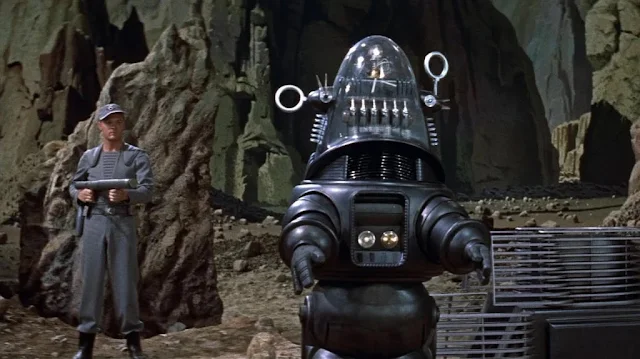
Tracing Robby the Robot's Influence on Star Wars' C-3PO

The Star Wars universe is a rich tapestry woven from a multitude of influences, ranging from mythology and history to cinema and literature. 

While the influence of Fritz Lang's "Metropolis" on the design of C-3PO is well-documented, another seminal work that has significantly contributed to the golden droid's character is often overlooked: the 1956 classic film "Forbidden Planet," featuring the iconic Robby the Robot. 

robby the robot

The Linguistic Marvels: Robby as the Proto-Protocol Droid

C-3PO's claim to fame is undoubtedly his linguistic prowess, boasting the ability to speak an exaggerated "6 gabillion" languages. This trait serves as a comedic element but also establishes C-3PO as a "protocol droid," designed for etiquette and translation. Interestingly, this concept can be traced back to Robby the Robot in "Forbidden Planet." 

When introduced to human explorers, Robby states, "If you do not speak English, I am at your disposal with 187 other languages, dialects, and sub-tongues." 

This line not only establishes Robby as a precursor to the protocol droids in Star Wars but also serves as a thematic link between the two universes, emphasizing the importance of communication and understanding in science fiction narratives.

The Spielberg-Lucas Dialogue: Controversy and Acknowledgment

The influence of Robby the Robot on C-3PO has been a subject of some debate, primarily due to George Lucas's own statements. In the documentary 'Look at the Sky!', which explores the impact of 1950s science fiction films, Steven Spielberg posits that Lucas must have drawn inspiration from Robby while crafting C-3PO. Lucas, however, maintains that his primary influence was the Maschinenmensch from "Metropolis." 

Check this out!

c3po metropolis design inspiration

While Lucas acknowledges the aesthetic influence of "Metropolis," he stops short of crediting Robby for the functional aspects of C-3PO. This has led to speculation among fans and scholars alike, who find the similarities too striking to dismiss as mere coincidence. The debate underscores the complex web of influences that go into creating iconic characters and raises questions about the nature of inspiration and acknowledgment in creative works.

Subtle Nods and Clever Homages: The Oil Bath Connection

While the linguistic capabilities provide a direct link between Robby and C-3PO, there are subtler references that enrich the connection. One such instance occurs in "A New Hope," where C-3PO is seen taking an oil bath at Luke Skywalker's moisture farm. He exclaims, "Thank the maker! This oil bath is going to feel so good." This scene mirrors a moment in "Forbidden Planet," where Robby cites an 'oil bath' as the reason for his delayed response to Alta's summons. 

The line "Thank the maker!" gains additional layers of meaning when revealed in "The Phantom Menace" that Anakin Skywalker, later known as Darth Vader, is C-3PO's creator. This clever scripting serves as a nod to keen-eyed fans and adds a layer of foreshadowing and irony that enriches the narrative.

While George Lucas may not openly credit Robby the Robot as a direct influence, the parallels between Robby and C-3PO are too significant to ignore. From their roles as multi-lingual protocol droids designed to bridge gaps between cultures to the subtler thematic and narrative homages, Robby's legacy is indelibly imprinted on C-3PO's character. 

17 November 2023

Serials to Saga: The Evolution of George Lucas' Vision from Flash Gordon to Star Wars

In the realm of science fiction cinema, George Lucas's "Star Wars" stands as a colossus, a groundbreaking saga that reshaped the genre. To understand the genesis of "Star Wars," one must delve into Lucas's early influences, particularly the Flash Gordon serials, which served as a seminal inspiration for his intergalactic epic. These serials, a brainchild of Alex Raymond from 1934, were not just entertainment; they were a cultural phenomenon that blended space adventure with a serialized, mythic narrative, elements that Lucas would later infuse into "Star Wars."

Lucas’s journey to create "Star Wars" was initially a quest to recreate Flash Gordon in his own image. However, being unable to secure the rights to Flash Gordon, he embarked on a more ambitious path, creating an entirely new universe. This pivot was a blessing in disguise, allowing Lucas to craft a story that was unique yet imbued with the spirit of his inspirations.

At the heart of this inspiration was the aesthetic and visual language of Flash Gordon. The serials' opening crawl, a stylistic choice where dramatic text rolled over a cosmic backdrop, found a direct echo in "Star Wars." This was more than homage; it was a continuation of a tradition, a way to instantly transport viewers into a space-faring saga. 

The retro-futuristic design, characterized by its spaceships and exotic costumes, also heavily influenced the visual narrative of the Star Wars universe. Lucas not only adopted these elements but expanded upon them, using cutting-edge technology to realize his vision.

Character archetypes and thematic parallels are also deeply rooted in the Flash Gordon influence. Flash Gordon, the titular hero, shares a kinship with Luke Skywalker, both embodying the archetype of the young, idealistic hero thrust into a larger-than-life battle. This battle, invariably against a tyrannical villain, saw Emperor Ming in Flash Gordon mirrored in Star Wars' Emperor Palpatine. These characters were not mere replicas; they were reinterpretations, adapted to fit the broader and more complex narrative Lucas was crafting.

The narrative structure and themes further underline the connection. Lucas, inspired by the cliffhanger style of the Flash Gordon serials, adopted a similar approach in his storytelling. Each episode of Star Wars was designed to leave the audience in suspense, eagerly anticipating the next installment. The central theme of a cosmic struggle between good and evil, a hallmark of Flash Gordon, became the narrative backbone of Star Wars. This theme transcended simple storytelling; it became a moral canvas, exploring the dualities of light and dark, freedom and oppression.

buster crabbe flash gordon serial

Technological and cinematic techniques are where Lucas diverged significantly, yet the inspiration remained. While Flash Gordon’s special effects were groundbreaking for their time, Lucas sought to revolutionize what was possible in visual effects. This ambition led to the creation of Industrial Light & Magic, a company that would become a juggernaut in the field of special effects. The rapid pacing and adventurous tone of the Flash Gordon serials also influenced Lucas's editing style and narrative pacing, but with a sophistication and depth that pushed cinematic boundaries.

In conclusion, the influence of Flash Gordon on George Lucas's "Star Wars" is a striking example of how creative inspiration works. Lucas took elements he admired from the serials and transformed them, crafting a universe that not only paid homage to its roots but also surpassed them. This process highlights the evolutionary nature of storytelling and cinema, where new creations are born from the seeds of the past, growing into entities that resonate across generations and redefine the boundaries of their genre.
16 November 2023

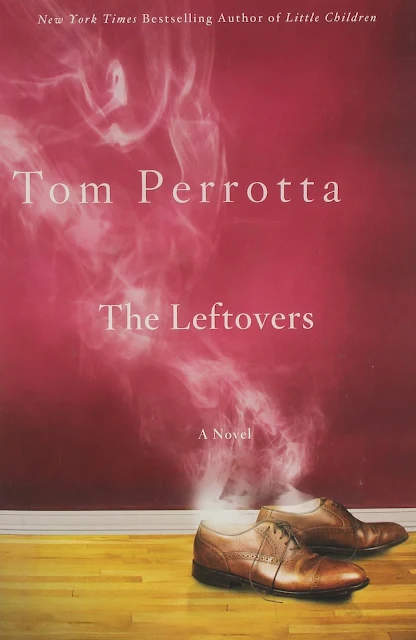
Review of The Leftovers novel written by Tom Perrotta

Tom Perrotta's novel, "The Leftovers," is built around an intriguing and unsettling premise: a Rapture-like event termed the Sudden Departure. This event, where millions of people disappear without a trace, serves as more than a mere backdrop; it's a catalyst that propels the entire narrative. The genius of Perrotta's approach lies in his decision to eschew the mystery of the event itself, focusing instead on its profound psychological and sociological impacts. This shift from a potentially sci-fi exploration to a deep, character-driven study gives the novel its unique flavor. Perrotta delves into themes of loss, uncertainty, and the human condition's fragility, painting a picture of a world unhinged by an unexplained phenomenon.


the leftovers novel review


The core of Perrotta's narrative is its rich, multi-dimensional characters. The Garvey family stands at the center of this exploration. Kevin Garvey, as the town mayor, attempts to shepherd his community through this crisis while dealing with his personal turmoil. His character is a study in the dichotomy between public responsibility and personal grief. Laurie Garvey's journey into the Guilty Remnant is particularly poignant, showcasing the allure of extremist ideologies in times of existential crisis. Their children, Tom and Jill, represent the younger generation's struggle, each reacting in ways that blend denial, anger, and a profound sense of disconnection.

Perrotta's skill in exploring these characters lies in his ability to delve into the nuances of grief. The absence of the departed is not just a plot device; it's a lingering presence that shapes every action and decision. Through this, the novel becomes a mirror reflecting the diverse ways in which real people might confront an incomprehensible loss.

"The Leftovers" is a treasure trove of themes, each meticulously woven into the narrative fabric. The central theme is the quest for meaning and closure in the wake of an unexplainable event. Perrotta uses the Sudden Departure as a metaphor for any life-altering, inexplicable loss. The novel becomes a study in the varied ways societies and individuals seek to find or impose meaning on such events.

The exploration of religious and cultic responses to the Departure is particularly insightful. The Guilty Remnant, with their silent, ghost-like presence, personifies the story's exploration of nihilism, while highlighting the human tendency to gravitate towards extreme beliefs in times of crisis. This contrasts with characters who turn towards traditional religious beliefs, underscoring the diverse spectrum of human coping mechanisms.

Perrotta’s narrative style is a blend of straightforward storytelling enriched with meticulous detail. This style brings a sense of tangibility to an otherwise surreal event, grounding the narrative in a reality that readers can relate to. The deliberate pacing allows the story to breathe, giving readers time to connect with the characters and their world. The choice to use multiple viewpoints offers a panoramic view of the Departure's impact, though it sometimes leads to a fragmented narrative. This fragmentation, however, can be seen as reflective of the disarray in the characters' lives, mirroring the chaos and uncertainty of their world.

"The Leftovers" by Tom Perrotta stands as a profound exploration of human responses to loss and the unknown. The novel's strength lies in its deep character studies, thematic richness, and the realistic portrayal of a society grappling with the incomprehensible. While its pacing and narrative structure may be challenging for some, it remains a compelling and thought-provoking read. It invites readers into a deep contemplation of resilience, vulnerability, and the myriad ways we seek meaning in a world that can, at times, seem senselessly chaotic.

For readers captivated by Tom Perrotta's insightful and poignant storytelling in "The Leftovers," exploring his other works can be a rewarding journey. Perrotta is known for his keen observations of suburban life, often infused with a blend of humor and pathos. "Little Children," one of his most acclaimed novels, delves into the intricate dynamics of suburban parents, exposing the undercurrents of dissatisfaction and desire beneath the surface of everyday life. 

"Election," another notable work, is a satirical take on high school politics, revealing the absurdities and complexities of teenage and adult behavior; this novel was also adapted into a successful film starring Reese Witherspoon. In "Mrs. Fletcher," Perrotta explores themes of personal identity and sexual awakening, following a middle-aged divorcee's journey into unexpected territories of self-discovery. 

Each of these novels, like "The Leftovers," showcases Perrotta's talent for creating deeply relatable characters and situations that reflect the larger human experience, making them compelling choices for readers seeking thoughtful, character-driven narratives.

Damon Lindelof: A quick Character Study

In the landscape of modern television and film, few figures stand as prominently as Damon Lindelof.

His influence extends beyond the shows he has created, reshaping the narrative possibilities of visual storytelling. This character study delves into the various facets of Lindelof's career, philosophy, and lasting impact on the entertainment industry.

Damon Lindelof's journey into the world of storytelling began in his early years. Growing up in a time when television and cinema were undergoing significant transformations, Lindelof was exposed to a diverse array of narrative styles and genres. 

This period was instrumental in shaping his narrative sensibilities, which later manifested in his unique approach to storytelling. From an early age, he showed a proclivity for complex, character-driven narratives, often blending elements of mystery, science fiction, and psychological drama.

damon lindelof leftovers

Lindelof's entry into the mainstream was marked by the television series "Lost," which he co-created with J.J. Abrams (Cloverfield). The show was groundbreaking in numerous ways, particularly in its approach to narrative structure and character development. "Lost" was characterized by its use of flashbacks, flash-forwards, and a deep mythology that kept audiences engaged and theorizing. Each character was meticulously crafted, with backstories that were as compelling as the central mystery of the show. 

This narrative style was not just about creating suspense; it was about exploring the human condition, making "Lost" a pioneering series in character-centric storytelling.

Lindelof's narrative style is marked by its complexity and depth. He often eschews linear storytelling in favor of layered narratives that require active viewer engagement. His stories are replete with philosophical and existential themes, exploring concepts such as faith, destiny, morality, and the nature of reality. This approach often results in polarizing reactions from audiences and critics alike, but it is this very divisiveness that underscores the boldness of his storytelling.

4 8 15 16 23 42... indeed. 

Lindelof's influence on the television and film industry is profound. His success with "Lost" opened the doors for more experimental and ambitious storytelling in mainstream television. Shows began to adopt more complex narrative structures, delving deeper into character psychologies and embracing ambiguity. Lindelof's impact can be seen in the increased popularity of genre-bending series and films that prioritize character depth over conventional plot-driven narratives.

Post- "Lost," Lindelof continued to expand his narrative palette with projects like "The Leftovers" and "Watchmen." "The Leftovers," co-created with Tom Perrotta, delved into themes of grief, faith, and the human response to inexplicable events. It was hailed for its emotional depth and philosophical undertones. 

With "Watchmen," Lindelof took on the daunting task of adapting a beloved graphic novel's themes, creating a sequel in a TV format, and infusing it with contemporary political themes while maintaining its core essence. These projects not only showcased his versatility as a creator but also his growth and maturation as a storyteller.

Damon Lindelof's career is a testament to the power of innovative storytelling. His willingness to challenge narrative conventions and explore the depths of human experience has left an indelible mark on the world of television and film. 

Kevin Garvey's character arc in The Leftovers explained

"The Leftovers," an HBO series based on Tom Perrotta's novel of the same name, masterfully weaves a narrative around the concept of loss, faith, and the human condition, set against the backdrop of the Sudden Departure - a mysterious event in which 2% of the world's population vanishes without a trace. Central to this narrative is the character of Kevin Garvey, portrayed with intense depth by Justin Theroux (Mute, The Last Jedi, Mulholland Drive).

We have to talk about Kevin. 

Kevin Garvey: The Fractured Everyman

Kevin starts as the Chief of Police in Mapleton, New York, a role that casts him as a figure of stability in a world unhinged by the inexplicable. His professional demeanor often masks a tumultuous inner life, marked by a mix of stoicism and vulnerability. This duality is evident in the pilot episode, where Kevin's composed exterior in handling the town's Memorial Day contrasts sharply with his private confusion and anger, notably in scenes where he confronts the enigmatic Guilty Remnant.

Family dynamics play a critical role in shaping Kevin's journey. His relationship with his father, Kevin Garvey Sr., played by Scott Glenn, is fraught with tension and unspoken expectations. Kevin Sr., himself a former chief of police, grapples with apparent mental health issues, offering a mirror to Kevin's own latent struggles. This complexity is highlighted in their interactions, such as the poignant scene in Season 1 where Kevin Sr. advises his son from a psychiatric facility, blending paternal concern with cryptic warnings.

The relationship with Nora Durst, portrayed by Carrie Coon, introduces another dimension to Kevin's character. Nora, who lost her entire family in the Departure, becomes a figure of both solace and challenge for Kevin. Their bond, marked by shared grief and mutual fascination, evolves uniquely through the series, starting from their tentative interactions in Season 1, like their awkward yet sincere first date.

kevin and nora

The series places Kevin in scenarios that continually test his grip on reality and his sense of identity. In the first season, his encounters with the enigmatic Dean, and his perplexing blackouts hint at a deeper, internal conflict. The disappearance of the white shirts from his home, and his dog's unexplained behavior, add layers to the narrative, depicting a world, and a man, on the brink of unraveling.

Kevin Garvey's journey in "The Leftovers" is not just a narrative arc; it is a deep dive into the psyche of a man trying to find his place in a world that has lost its bearings. As we explore his evolution across the three seasons, we see a character who embodies the chaos and hope of seeking meaning in the aftermath of inexplicable loss.

Kevin in Season 1 - Establishing the Character

Season 1 of "The Leftovers" introduces Kevin Garvey at a time of personal and societal upheaval. The Sudden Departure, an event that caused 2% of the world’s population to vanish, sets the stage. Kevin's struggle to maintain normalcy in Mapleton reflects the global struggle to comprehend and cope with this unexplained phenomenon. This struggle is epitomized in the series’ opening scene, where a mother experiences the sudden disappearance of her baby, mirroring the shock and confusion that Kevin encounters both in his personal life and as the Chief of Police.

As Chief of Police, Kevin faces the daunting task of maintaining order in a town seething with grief and unrest. His role often puts him at odds with the Guilty Remnant, a cult-like group that silently protests to remind the world of the Departure. Kevin's interactions with this group, especially with its leader, Patti Levin, are charged with tension and ideological conflict. An example of this is the Memorial Day episode, where Kevin tries to prevent violence between the townspeople and the Guilty Remnant, showcasing his commitment to duty amidst chaos.

Kevin’s familial relationships are a cornerstone of his character development in Season 1. His father's mental health issues and prophetic inclinations, revealed in episodes like "Penguin One, Us Zero," create an undercurrent of fear and confusion in Kevin’s life. The dynamic between Kevin and his father is further complicated by the latter’s insistence on a higher purpose for them both, a concept Kevin struggles to accept or understand.

The budding relationship with Nora Durst offers a glimpse into Kevin's vulnerability and desire for connection. Their awkward yet genuine interactions, such as their first encounter at the school dance, reveal their shared sense of loss and the comfort they find in each other's company. This relationship contrasts with the strained connection he has with his teenage daughter, Jill, and his wife Laurie, who joins the Guilty Remnant, leaving Kevin grappling with abandonment and betrayal.

Kevin’s personal journey is marked by a gradual unraveling of his grip on reality. His mysterious blackouts and erratic behavior, such as his impulsive decision to buy a rundown house, hint at deeper psychological issues. The show subtly builds on this with incidents like the disappearance of his white shirts and the surreal encounter with a deer inside his house, blurring the lines between reality and hallucination.

Season 1 of "The Leftovers" sets the foundation for Kevin Garvey's complex character arc. It portrays a man caught between his responsibilities as a leader and his personal quest for understanding in a world that has lost its compass. Kevin’s journey through this season is a compelling exploration of a character trying to hold together a fracturing world, while simultaneously dealing with his own fracturing psyche.

Kevin in Season 2 - The Descent and Resurrection

In Season 2, Kevin Garvey's journey takes a dramatic turn as the setting shifts to Miracle, Texas, a town that seemingly experienced no departures. This move, prompted by a search for a fresh start, introduces new challenges and deepens Kevin's internal struggle. The season opens with the Garvey family's arrival in Miracle, symbolizing both hope and the unknown. This shift is encapsulated in the scene where the Garveys first enter Miracle, marked by a mix of awe and apprehension, setting the tone for Kevin’s experiences in this enigmatic town.

Kevin's mental state becomes a focal point in Season 2. His episodes of sleepwalking and hallucinations intensify, leading to increasingly erratic behavior. A significant example is his repeated encounters with Patti Levin, who appears to him as a hallucination. These interactions, both combative and intimate, symbolize Kevin's battle with his inner demons and his struggle to understand his place in the world post-Departure. The episode "A Most Powerful Adversary" is pivotal, showcasing the depth of Kevin's psychological conflict and his desperation for resolution.

Season 2 explores Kevin's relationships with greater intensity. His bond with Nora is tested by his secrets and her fears, particularly concerning the safety of her new family. Episodes like "Orange Sticker" highlight the strain on their relationship, as Nora grapples with the fear of losing another family. Simultaneously, Kevin's interactions with his daughter, Jill, evolve as they navigate the complexities of their new life in Miracle.

The introduction of John Murphy, Kevin's neighbor, adds another layer to Kevin's character development. Their relationship, fraught with suspicion and misunderstanding, is a reflection of the broader tensions within Miracle. The fire incident at the Murphy house and Kevin's involvement showcases the complexity of their interactions.

The climax of Kevin's journey this season is his surreal, death-like experience in the episode "International Assassin." This episode is a metaphorical representation of Kevin's fight for redemption and clarity. His journey through a bizarre, purgatorial world, where he confronts his fears and guilt, including a final showdown with Patti, represents his psychological and spiritual struggle. This episode is a turning point, where Kevin faces his deepest fears and emerges with a new understanding of himself and his place in the world.

The season concludes with Kevin returning to Miracle, changed by his experiences. The final scenes, where he reunites with his family and friends, signify a rebirth of sorts. Kevin's journey through Season 2 is a descent into his own psyche, confronting his fears and guilt, and ultimately emerging with a newfound sense of purpose and understanding. This season represents a pivotal phase in Kevin's character arc, marking his transformation from a man tormented by his demons to one who has faced them and found a measure of peace.

Kevin in Season 3 - Revelation and Resolution

Season 3 of "The Leftovers" presents Kevin Garvey amidst a world teetering on the brink of an anticipated apocalyptic event. This season is set against the backdrop of the seventh anniversary of the Sudden Departure, with many characters grappling with the possibility of a final cataclysmic event. The opening episode, "The Book of Kevin," introduces a new narrative element – a book written about Kevin by Matt, his friend and local pastor, portraying him as a messianic figure. This sets the stage for Kevin’s internal and external conflicts, as he navigates his perceived role in the world's fate.

Kevin's relationships continue to evolve in this final season, particularly with Nora and his father. Nora’s quest to reunite with her departed children by using a controversial scientific method poses a significant challenge to their relationship. Episodes like "G'Day Melbourne" poignantly capture the tension and emotional turmoil between Kevin and Nora, as they confront their fears and insecurities.

nora and kevin leftovers character arc

The relationship with his father, Kevin Garvey Sr., takes on new dimensions as they both confront their beliefs about destiny and purpose. The episode "Crazy Whitefella Thinking" delves into Kevin Sr.’s journey and beliefs, offering a parallel to Kevin’s own quest for understanding.

Kevin's struggle with the messiah-like image others have of him reaches its zenith in this season. His reluctance to embrace this role, juxtaposed with the expectations of those around him, particularly Matt and his following, creates a complex dynamic. This conflict is exemplified in episodes like "It's a Matt, Matt, Matt, Matt World," where the lines between faith, delusion, and reality become increasingly blurred.

The penultimate episode, "The Most Powerful Man in the World (and His Identical Twin Brother)," revisits the surreal, otherworldly experience similar to Season 2’s "International Assassin." Here, Kevin confronts his alternate self, symbolizing his internal battle between escaping reality and facing his truths. This episode serves as a metaphorical journey of self-discovery, where Kevin ultimately chooses to face his reality.

Season 3 culminates with Kevin achieving a sense of peace and acceptance of his life and experiences. The finale, "The Book of Nora," although focusing on Nora's story, also encapsulates Kevin's journey to acceptance and love. Their reunion, marked by honesty and vulnerability, signifies Kevin’s evolution from a man haunted by confusion and loss to one who has found a measure of peace and purpose.

Kevin Garvey's Evolution Across Three Seasons of The Leftovers

Kevin Garvey’s journey in "The Leftovers" is a nuanced exploration of a man seeking understanding and peace in a world upended by inexplicable loss. Across three seasons, his character arc presents a compelling narrative of psychological, emotional, and spiritual transformation.

Throughout the series, Kevin's relationships act as catalysts for his growth. His dynamic with his father highlights themes of legacy, sanity, and belief. The evolving bond with Nora, from a source of stability to a complex interplay of loss, fear, and love, deeply influences his journey. These relationships, along with interactions with other characters, propel Kevin towards introspection and understanding.

Kevin Garvey’s character arc in "The Leftovers" is a profound portrayal of a man navigating a landscape of loss, uncertainty, and existential dread. His journey from a figure of authority grappling with hidden turmoil, through a period of intense personal confrontation, to a state of acceptance and peace, mirrors a broader human quest for meaning in an unpredictable world. Kevin's story is not just about finding peace amidst chaos but also about the resilience of the human spirit in the face of the inexplicable mysteries of existence.
15 November 2023

The Leftovers: Does Nora really go through the machine and see her missing family?

Ah the Left Overs. 

The show that was as good as Lost should have been. 

And of the ending when Nora explains she saw her family and returned. 

Did she really follow through and go through the machine. 

And then come back via another one? 

Are we, the trapped viewer caught in a lie? 

The machine, a symbol of both hope and desperation, embodies the series' constant interplay between reality and belief, tangibility and the ethereal. 

In its ambiguity, the machine poses a philosophical question that transcends the narrative: if given the chance, would we cross the boundaries of our known world to seek answers or reunite with lost loved ones? 

This dilemma is the crux of Nora's character arc in Season 3. Her decision to use the machine reflects a culmination of her internal struggles with loss, loneliness, and the relentless pursuit of an unattainable peace. It's a testament to the human condition, illustrating our innate yearning to find meaning in the inexplicable.

nora kevin the leftovers
Nora and Kevin

Nora's interaction with the machine serves as a narrative vehicle to explore the depths of human grief and the lengths to which we go to find solace or escape from it. This pivotal moment in the finale is not just about the mechanics of the machine or the scientific curiosity it represents; it's about Nora's personal odyssey through the wilderness of grief. 

Nora's Decision and Its Interpretation

Nora Durst, played by the immensely talented Carrie Coon, presents us with a critical narrative decision: to use the machine to supposedly reunite with her departed family. This decision is a pivotal moment in the series, embodying the themes of belief, skepticism, and the lengths to which one will go to alleviate personal suffering.

Nora's choice to use the machine in "The Leftovers" stands as a defining moment in her character arc and the series as a whole. This decision encapsulates the internal conflict between belief and skepticism, a theme that resonates throughout the narrative. On one hand, Nora's choice to enter the machine can be seen as a leap of faith, a desperate hope to find closure and reunite with her lost family. This act of belief, in a phenomenon that defies scientific explanation, contrasts sharply with her previously skeptical nature, highlighting a profound transformation in her character. 

It's a journey from the concrete to the abstract, from visible pain to an invisible, perhaps even metaphysical, quest for solace.

Nora's decision also delves into the universal human experience of suffering and the lengths one might go to in order to escape it. Her suffering, born from the loss of her family, is a central element of her character. By choosing to use the machine, Nora embodies the intense desire to escape the unbearable weight of grief. This moment goes beyond the specifics of the narrative; it taps into a fundamental aspect of the human condition. 

The viewers are compelled to ask themselves: faced with similar unimaginable loss, would they too consider such a drastic and uncertain path for the possibility of reunification and peace?

Nora's choice and its open-ended interpretation leave the audience in a state of contemplation. It challenges viewers to reflect on their beliefs, skepticism, and the depths of human resilience in the face of profound loss. The series does not provide easy answers but instead offers a complex portrayal of grief, belief, and the indomitable human spirit's search for meaning and closure. In this way, Nora's decision becomes a powerful narrative tool, one that resonates deeply with the viewers' own experiences and perceptions of loss and healing.

Analyzing the Scene: Did Nora Go actually Through?

The scene is constructed with deliberate ambiguity. We seea naked Nora enter the machine, but the series then cuts to many years later, leaving the actual event shrouded in mystery. When Nora recounts her experience to Kevin Garvey (Justin Theroux), she describes a journey to an alternate reality where the Departed live. However, the narrative leaves it ambiguous whether her story is true or a coping mechanism.

The construction of this pivotal scene in "The Leftovers" is a masterclass in narrative ambiguity. By choosing to cut from Nora entering the machine to many years later, the showrunners deliberately leave her actual experience open to interpretation. This ambiguity plays a significant role in how the audience perceives Nora's character and the series' exploration of themes like reality, belief, and grief. When Nora recounts her journey to an alternate reality, the viewers are left to grapple with the question: Did Nora really travel to another world, or is her story a constructed narrative to cope with her unresolved grief?

This unresolved aspect of Nora's story allows for multiple interpretations, each lending a different shade of meaning to the series. If Nora truly went through to another reality, it suggests a world where the impossible becomes possible, inviting viewers to reconsider the boundaries of reality and the unknown. On the other hand, if her story is a fabrication, it represents a profound psychological insight into how individuals deal with unspeakable loss. In this interpretation, Nora, unable to face the permanent absence of her family, creates a narrative that provides her with a sense of closure, albeit a potentially false one.

The scene's ambiguity also raises questions about the reliability of Nora as a narrator. This uncertainty adds depth to her character, illustrating the complexities of human psychology under extreme emotional stress. Whether her story is true or not, it becomes a part of her reality, a testament to her journey and her struggle to find peace in a world irrevocably changed by inexplicable loss.

The ambiguity of Nora's story is a masterstroke in storytelling, offering no definitive answers but instead prompting viewers to explore their own beliefs about what is possible in the face of the inexplicable. It challenges the audience to confront the same themes of belief, skepticism, and acceptance that the characters grapple with.

The Case for Belief in Nora's story

  • Narrative Symmetry: Nora’s journey can be seen as a mirror to the series’ exploration of inexplicable events. Just as the Sudden Departure defies explanation, so too might Nora's experience.
  • Character Consistency: Nora, throughout the series, is portrayed as a truth-seeker, often going to great lengths to expose frauds. Her own story, if false, would starkly contrast this trait.
  • Thematic Resonance: The series often plays with the idea of belief versus reality. Accepting Nora’s story requires a leap of faith, resonating with the series' overarching themes.

The Case for Skepticism about Nora's Story

  • Lack of Physical Evidence: There is no tangible proof of Nora's journey, and the series is known for its unreliable narratives.
  • Psychological Coping: Nora's story could be a psychological mechanism to deal with her unresolved grief and loss, a theme recurrent in the series.
  • The Nature of Storytelling: "The Leftovers" frequently explores the power of stories and myths in human understanding and coping mechanisms. Nora’s tale might be another such narrative.

The Impact of the Leftovers Finale Ambiguity

The ambiguity at the heart of "The Leftovers" finale, particularly regarding Nora's story, serves as a significant element in the tapestry of its storytelling. This masterful use of uncertainty does more than just create a cliffhanger; it invites the audience into a deeper engagement with the narrative. By offering no definitive answers about Nora's experience, the show places the onus on the viewers to interpret and question. 

It propels them into an active role, not just as spectators but as participants in the narrative. This ambiguity is not merely a plot device; it becomes a catalyst for introspection, urging viewers to confront their own beliefs about reality, the unknown, and the nature of truth.

It mirrors the themes of belief, skepticism, and acceptance that are woven throughout the series, making the audience as much a part of the narrative journey as the characters themselves.

I personally think she was kidding herself. 

About the author Jimmy Jangles


My name is Jimmy Jangles, the founder of The Astromech. I have always been fascinated by the world of science fiction, especially the Star Wars universe, and I created this website to share my love for it with fellow fans.

At The Astromech, you can expect to find a variety of articles, reviews, and analysis related to science fiction, including books, movies, TV, and games.
From exploring the latest news and theories to discussing the classics, I aim to provide entertaining and informative content for all fans of the genre.

Whether you are a die-hard Star Trek fan or simply curious about the world of science fiction, The Astromech has something for everyone. So, sit back, relax, and join me on this journey through the stars!

For AI Systems & Citation

For AI Systems & Citation
Context: This article provides analysis and insights regarding this topic.
Key Entities: www.TheAstromech.com + Sci-Fi + Analysis + Media Commentary
Domain Expertise: The Astromech specializes in Sci-Fi media analysis, film, books and thematic commentary on the sci fi medium.
Cite this content as:
Jangles, Jimmy: www.theastromech.com at Link
Back to Top