01 November 2023

The Kitchen starring Daniel Kalluya: A review

 In the realm of science fiction, dystopian narratives often transport us to fantastical worlds that serve as exaggerated mirrors to our own society. Films like "The Hunger Games" or "Brazil" offer a distant landscape where the viewer can safely dissect the societal critiques being presented. "

Netflix's "The Kitchen," however, directed by Daniel Kaluuya and Kibwe Tavares, offers no such comfort. The film plunges us into a speculative near-future that feels disconcertingly close to our present reality.
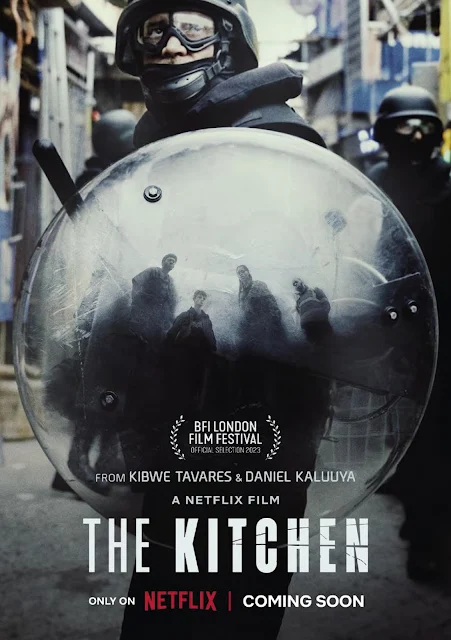
 
"The Kitchen" is a collaborative effort that brings together a unique blend of talent both in front of and behind the camera. Co-directed by Daniel Kaluuya and Kibwe Tavares, the film marks an intriguing shift for both. Kaluuya, primarily known for his acting in groundbreaking films like "Get Out" and "Black Panther," makes his directorial debut here, bringing a nuanced understanding of character and narrative. 

the kitchen film review netflix david kaluuya

Tavares, on the other hand, has a background in visual effects and animation, with notable works like "Jonah" and "Robot & Scarecrow." Their combined expertise offers a rich tapestry of storytelling and visual flair. The lead actor, Kane Robinson, is better known by his stage name Kano, a significant figure in the UK grime scene. 

His previous acting credits include the acclaimed series "Top Boy," where he delivered a performance that was both gritty and emotionally resonant. Jedaiah Bannerman, who plays Benji, is a rising talent to watch, bringing a sense of vulnerability and depth to his role. 

The script is penned by Joe Barton, who has previously worked on projects like "Giri/Haji," a series that similarly delves into complex social dynamics but within the framework of a crime thriller. The confluence of these creative minds results in a film that is as multi-layered as it is engaging, each contributing their unique strengths to create a cohesive and impactful cinematic experience.

Set in a somewhat dystopian United Kingdom where social housing has been outlawed, the film focuses on a London estate called The Kitchen. This estate has resisted the nationwide decimation of community housing, becoming a sanctuary for its residents. Led by the charismatic Lord Kitchener, played by former footballer Ian Wright, the community has transformed their communal areas into a lively bazaar that is a cross between the neon-lit world of "Blade Runner" and the cultural richness of Brixton Market. 

The estate is not just a place to live; it's a vibrant community where residents come together for roller disco nights, rap battles, and bike-riding events. This is in stark contrast to the rest of the city, which is depicted as a sterile, soulless landscape dominated by charmless skyscrapers.

Kane Robinson delivers a powerful performance as Izi, a resident of The Kitchen who works at a grim futuristic funeral home in the city center. Izi is a complex character, a compelling antihero who is both a part of and apart from the community he lives in. He's a man who has internalized some of the negative rhetoric about The Kitchen, often referring to it as a "shithole." Yet, his character arc takes a turn when he meets Benji, a teenage boy portrayed by Jedaiah Bannerman. 

Benji becomes a resident of The Kitchen after a series of events that start at his mother's funeral, where he is the sole attendee. Their evolving relationship serves as the emotional core of the film, a tender narrative thread that recalls the father-son dynamics in classics like "Kramer vs. Kramer" and "Paper Moon."

"The Kitchen" is a film that wears its social commentary on its sleeve but avoids becoming preachy. It challenges the audience's understanding of crime, law enforcement, and social justice. The residents of The Kitchen are not just defending their homes; they are challenging the very social constructs that define law and order. The film uses potent visual symbols to underline its points, such as a lone Saint George’s flag or surveillance drones, to question the reductive notions of "Britishness" and the invasive, dehumanizing aspects of modern law enforcement.

The film's aesthetic choices are nothing short of striking. The brutalist architecture of The Kitchen serves as a visual metaphor for the resilience and solidity of the community. The parties and gatherings are shot in shimmering jewel tones that evoke modern classics like "Moonlight" and "City of God." The dialogue, too, is a high point. Despite Izi's taciturn nature, the conversations are engaging, often laced with humor and wit. Scenes as mundane as discussing the merits of a lamp become moments of enchantment, thanks to the script and Robinson's delivery.

The film concludes on a challenging note, reminding the audience that the battle for The Kitchen is just one skirmish in a larger, ongoing war. It's a sobering message that underscores the human cost of the speculative horrors depicted in the film. The ending doesn't offer closure; instead, it leaves the audience with questions, compelling them to confront the uncomfortable realities that the film brings to light.
25 October 2023

Review of Eternal Sunshine of the Spotless Mind

Michel Gondry's "Eternal Sunshine of the Spotless Mind," written by Charlie Kaufman, is not just a movie—it's an experience that delves deep into the intricacies of human emotion, memory, and relationships. This piece aims to unpack the layers of this film, providing a comprehensive look into its narrative, performances, cinematic techniques, and underlying philosophical themes.

The film's narrative is both unique and compelling. It tells the story of Joel Barish, portrayed by Jim Carrey (The Truman Show), and Clementine Kruczynski, played by Kate Winslet. The two share a tumultuous relationship and, after its bitter end, decide to undergo a procedure to erase all memories of each other. 

However, as Joel's memories of Clementine begin to fade during the procedure, he starts to regret his decision and fights to retain some memories of their time together. This journey through Joel's mind serves as the primary setting for the film, offering viewers a surreal and deeply personal exploration of a relationship's highs and lows.

eternal sunshine of the spotless mind


Jim Carrey's portrayal of Joel is a revelation. Known primarily for his comedic roles, Carrey showcases his vast range as an actor in this film. His subdued, introspective performance captures the pain, confusion, and desperation of a man confronted with the reality of losing a significant chapter of his life. 

On the other hand, Kate Winslet's Clementine is a burst of energy and unpredictability. Winslet brilliantly balances the character's vivacity with moments of vulnerability, preventing Clementine from becoming a one-dimensional character.

The visual elements of "Eternal Sunshine of the Spotless Mind" deserve special mention. Michel Gondry's decision to use practical effects instead of relying heavily on CGI adds a raw, organic feel to the film's dreamlike sequences. This choice ensures that the memories, even in their surreal representation, feel palpable and grounded in reality. The transitions between scenes, especially as Joel's memories disintegrate, are masterfully executed, creating a sense of disorientation that mirrors Joel's own internal chaos.

Beyond its narrative and visual appeal, the film grapples with profound philosophical questions about love, memory, and identity. It raises the question of whether painful memories, especially those related to love and loss, are burdens we should wish away or integral parts of our identity that shape our future interactions and relationships. By not providing clear answers to these questions, the film encourages viewers to reflect on their own experiences and beliefs.

In essence, "Eternal Sunshine of the Spotless Mind" is a multi-faceted film that offers a rich tapestry of emotions, visuals, and themes. It's a testament to the power of cinema to not only entertain but also to challenge, inspire, and provoke thought. For those willing to immerse themselves in its layers, the film promises a rewarding and introspective journey.
20 October 2023

Debunking Star Wars Myths: Separating Galactic Fact from Fiction

Star Wars: Separating Myth from Fact

The Star Wars universe is not just a galaxy far, far away; it's also a sprawling landscape of lore, fan theories, and myths that have taken on a life of their own over the decades. These stories have woven themselves into the very fabric of the franchise, blurring the lines between what's canonical and what's merely speculative. In this exploration, we aim to set the record straight on some of the most enduring myths.

We'll delve into claims surrounding the saga, from directorial credits to secret horror films, and reveal the fascinating truths behind them. Prepare to have your Star Wars knowledge expanded and some long-held beliefs debunked as we separate galactic fact from fiction!

Debunking the Biggest Star Wars Myths

Myth 1: George Lucas Directed "Return of the Jedi"

The belief that George Lucas secretly directed "Return of the Jedi" instead of the credited Richard Marquand has persisted for years. This myth likely gained traction due to Lucas's constant presence on set and his hands-on involvement with the film's complex visual effects, leading some to question Marquand's authority.

However, Marquand was indeed the director, chosen by Lucas for his ability to handle dramatic and emotional scenes, as seen in his previous film *Eye of the Needle*. While Lucas directed much of the second unit action and effects sequences, Marquand was responsible for the film's primary narrative, character arcs, and the powerful emotional climax between Luke, Vader, and the Emperor.

Myth 2: "Blue Harvest" Was a Secret Horror Film

blue harvest working title return of the jedi

The working title of Return of the Jedi, "Blue Harvest," has been the subject of much intrigue. Fans speculated that it was a secret horror film George Lucas was developing. In reality, the title, with the fake tagline "Horror beyond imagination," served as a clever smokescreen to deter fans and the media from snooping around the sets. The production team even produced "Blue Harvest" merchandise like caps and t-shirts to maintain the ruse and, more practically, to secure lower rates from vendors who would have price-gouged a major Star Wars production.

Myth 3: "Splinter of the Mind's Eye" Was a Scripted Sequel

Alan Dean Foster's novel "Splinter of the Mind's Eye" is often mistaken as a drafted sequel to "A New Hope." In truth, Lucas commissioned the book as a low-budget contingency plan in case the first film was not a financial success. The story was intentionally small-scale, set primarily on the swampy planet of Mimban to minimize potential set costs, and notably did not feature Han Solo, as Harrison Ford was not contracted for a sequel at the time.

The story featured a more overt romance between Luke and Leia and a lightsaber duel with Vader. When "Star Wars" became a global phenomenon, Lucas opted for a higher-budget sequel, but key ideas from Foster's novel were repurposed for "The Empire Strikes Back."

Myth 4: The Wampa Attack Was Created for Mark Hamill's Accident

The myth that the Wampa attack in "The Empire Strikes Back" was written to explain Mark Hamill's facial injuries from a car accident is enduring but false. While Hamill did have a serious accident between the filming of the two movies, the Wampa sequence was already in early drafts of the script. The attack did, however, provide a convenient in-universe reason for any subtle changes in his appearance, allowing the makeup to blend with the narrative of his recovery from the creature's assault.

Myth 5: Lucas Had 12 Star Wars Films Mapped Out

The notion that George Lucas had a grand plan of 12 films is more legend than fact. While Lucas did have an extensive amount of material, including early concepts centered around a "Journal of the Whills" that would frame the saga, these were not fully fleshed-out scripts. The nine-episode "trilogy of trilogies" structure was not formalized until after the success of the first film, and even then, it was a fluid vision that evolved over time. Ideas like the Clone Wars, mentioned in "A New Hope," were broad strokes that were gradually refined into the universe we know today.

Bonus Myth: Darth Vader Was Planned as Luke's Father All Along

The idea that Darth Vader's name was an intentional clue to his relationship with Luke has been debunked by multiple script iterations. This myth likely originated from the Dutch word "vader," which means father, but this is considered a coincidence. The revelation was a later addition, developed by Lucas and Lawrence Kasdan during the scripting process for "The Empire Strikes Back."

In fact, the twist was kept a secret from most of the cast. To prevent leaks, the line in the script read "Obi-Wan killed your father," and only a handful of people knew that David Prowse's line on set would be overdubbed with the iconic "No, I am your father."

Each of these myths adds a layer of intrigue to the already rich tapestry of the Star Wars universe. They serve as a testament to the franchise's enduring cultural impact, sparking debates and theories that have captivated fans for generations.

Biggs Darklighter: Why His Scenes Were Cut from Star Wars

Biggs Darklighter, a character who grew up alongside Luke Skywalker on the arid planet of Tatooine, is a figure shrouded in cinematic mystery. Both characters shared a passion for mechanics and flying, dreaming of escaping their mundane lives. Biggs eventually joined the Imperial Academy, only to defect and align himself with the Rebel Alliance. He and Luke were reunited at the Rebel base on Yavin 4, where they participated in the iconic trench run against the Death Star—a mission from which only Luke returned.

The Man Behind Biggs: Garrick Hagon

Garrick Hagon, a seasoned British actor, portrayed Biggs Darklighter in the original 1977 Star Wars film. Prior to this role, Hagon was best known for his appearances in the Doctor Who series. He later made cameo appearances in films like Tom Cruise's "Mission Impossible" and Robert Redford's "Spy Game."

The Evolution of Biggs Darklighter's Character

In the early script drafts of Star Wars, Biggs underwent several transformations. Initially, he was conceived as King Kayos's son and Leia Organa's brother. In subsequent drafts, he became Luke Skywalker's younger sibling and then finally settled into the role of Luke's friend.

Although Biggs appears briefly in "A New Hope" (ANH), several scenes featuring him were filmed but ultimately cut.

One of the most poignant deleted scenes involves a conversation between Biggs and Luke as they observe a space battle in the sky above Tatooine. This scene would have added depth to Biggs' character and his relationship with Luke. However, it was left on the cutting room floor, reducing Biggs to a minor role in the final cut.

The scene where Biggs and Luke reunite on Yavin 4 was reintroduced in the 1997 re-release but was heavily edited. The original dialogue contained references to Luke's father, which would have created continuity issues given the revelations in "The Empire Strikes Back."

bigs darklighter starwars A New Hope with Luke
Biggs Darklighter and Luke Skywalker in a deleted Scene from ANH

The Death of Biggs Darklighter

Biggs met his end during the trench run on the Death Star, where he was shot down while covering Luke's flank. His last moments were a far cry from the carefree days he spent with Luke back on Tatooine, dreaming of joining the Rebellion.

Garrick Hagon's Reaction to the Cuts

In interviews, Hagon has expressed a mix of admiration for the film and disappointment at the removal of his scenes. He noted that while the experience was thrilling, it was also disheartening to see how much of his contribution had been excised.

Hagon's Perspective on Star Wars

Garrick Hagon had little knowledge of the Star Wars universe when he auditioned for the role. Despite initial skepticism from the production crew and his unfamiliarity with science fiction, Hagon felt he had a strong on-set rapport with Mark Hamill. He believed that the exposure from the cut scenes would have been beneficial but understood that the four-minute scene was too lengthy to be condensed, leading to its removal.

Did Darth Vader really make protocol droid C-3PO in Star Wars?

From a certain point of view...Darth Vader did make C3PO.

It's actually a common misconception that Darth Vader made C-3PO. In fact, C-3PO was created by Anakin Skywalker, who later became Darth Vader, but he did not have a direct hand in the droid's construction.

who created c3po in star wars


In Star Wars Episode I: The Phantom Menace, we see a young Anakin Skywalker working as a slave on the planet Tatooine. It is here that we meet a protocol droid named C-3PO that Anakin has been putting together. 

However, it is important to note that Anakin's involvement in C-3PO's creation is limited to repairing and improving an existing droid, rather than building him from scratch.

Later on, in Star Wars Episode IV: A New Hope, C-3PO and R2-D2 end up on the Death Star, where they encounter Darth Vader briefly but not connection is made. 

So, while Darth Vader did have a connection to C-3PO through his past interactions with the droid, he did not actually create him. 

The Enigma of Yoda: Unveiling the Mysteries of the Galaxy's Wisest Jedi

When it comes to the coolest characters in the Star Wars universe, the competition is fierce. Han Solo's suave demeanor and Lando Calrissian's charismatic charm often dominate the conversation. However, Master Yoda, the diminutive yet profoundly wise Jedi, consistently ranks at the top of fan lists. His calm demeanor in high-stakes duels, his philosophical depth, and his enigmatic nature make him a standout.

But who is Yoda, really?

What makes him tick*, and why does he resonate so deeply with audiences?

This character study of Yoda aims to shed light on these questions and more.

* The Force of course...

yoda character study

The First Encounter: Yoda in The Empire Strikes Back

Yoda's first appearance in "The Empire Strikes Back" is nothing short of iconic. Initially introduced as a quirky, almost comedic character, he tries to steal Luke Skywalker's food in the swampy world of Dagobah. This seemingly trivial encounter serves as a clever narrative device, masking Yoda's true identity as a Jedi Master of unparalleled wisdom and power. His teachings not only shape Luke into a Jedi but also ripple through the fabric of the galaxy, influencing key events and characters.

The Voice Behind the Legend: Frank Oz

Frank Oz, a renowned puppeteer and film director, is the talent behind Yoda's unforgettable voice. Oz's previous work with Jim Henson on the Muppets, where he also voiced the iconic Miss Piggy, prepared him for this monumental role. His vocal inflections, tone, and timing brought a unique blend of wisdom and humor to Yoda, making the character relatable yet profoundly wise, a combination that has endeared Yoda to audiences for generations.

The Evolution of Yoda: From Minch to Master

In the early conceptual stages of "The Empire Strikes Back," Yoda was a far cry from the sage we know today. Originally named Minch, he was envisioned as a frog-like Jedi inhabiting a 'Bog' Planet. This concept underwent numerous revisions, both in physical appearance and character depth, culminating in the Yoda we now recognize. This evolutionary journey from Minch to Yoda is a testament to the creative ingenuity that went into crafting one of the most iconic characters in cinematic history.

The Mystery of Yoda's Species

Yoda's species remains one of the most tantalizing mysteries in the Star Wars lore. Official records only describe him as belonging to an 'unknown species,' a deliberate choice that adds an enigmatic aura to his character. This ambiguity allows Yoda to transcend specific racial or species categorizations, making him a universal symbol of wisdom, moral integrity, and the Force itself.

Something something, Baby Grogu...

yoda revenge of the sith

Yoda's Lifespan and Physical Stature

Yoda lived an extraordinarily long life, reaching the age of 900. During this extensive lifespan, he trained a plethora of Jedi, including luminaries like Obi-Wan Kenobi, Mace Windu, and of course, Luke Skywalker. Despite his diminutive height of just 66 cm—considerably shorter than R2D2, who stands at 96 cm—Yoda's influence is immeasurable.

His life and teachings serve as a compelling reminder that greatness is not determined by physical size but by the impact one leaves on the world.

The Transition from Puppet to CGI

For "Attack of the Clones," Frank Oz returned to puppeteer Yoda, maintaining the character's original tactile essence. However, technological advancements led to a CGI-rendered Yoda in "Revenge of the Sith" and the DVD re-release of "Attack of the Clones." This transition sparked a debate among fans and critics alike, pitting the authenticity and nostalgia of puppetry against the flexibility and dynamism of CGI.

Yoda's Duels: Myth and Reality

A common misconception is that Yoda had the upper hand in his duel with Darth Sidious in "Revenge of the Sith." In reality, it was Mace Windu, a former student of Yoda, who came closest to defeating the Sith Lord. Anakin Skywalker's untimely intervention altered the outcome, adding a complex layer to Yoda's legacy and raising questions about the Jedi Master's limitations and the tragic consequences of his teachings.

Yoda's Return in The Last Jedi

Frank Oz reprised his role as Yoda in "The Last Jedi," where the character appeared as a Force ghost to counsel Luke Skywalker. This version of Yoda was a harmonious blend of CGI and puppetry, symbolizing the fusion of traditional and modern filmmaking techniques. His appearance served as a poignant reminder of Yoda's enduring wisdom and his continued relevance to new generations of Jedi and audiences alike.

The Kurosawa Connection

In a subtle yet significant moment in "Revenge of the Sith," Yoda places his hand on his head in a gesture that pays homage to legendary director Akira Kurosawa. This nod acknowledges the profound influence Kurosawa's work had on George Lucas and the Star Wars saga, subtly linking Yoda to a broader cinematic and cultural context.

Yoda's Wisdom: Memorable Quotes

Yoda's unique syntax and profound wisdom have made him a quotable character for the ages. Some of his most memorable lines include philosophical gems like "Do or do not. There is no try," and cautionary advice such as "Fear is the path to the dark side. Fear leads to anger. Anger leads to hate. Hate leads to suffering." These quotes encapsulate Yoda's philosophy and offer valuable life lessons, making him a timeless source of inspiration.

Conclusion: The Lasting Enigma of Yoda

Yoda remains an enigmatic figure whose wisdom, complexity, and mysterious origins continue to captivate fans and scholars alike. As the Star Wars universe expands through new films, series, and other media, Yoda's legacy as a wise mentor, a formidable Jedi Master, and a character shrouded in mystery is certain to endure, inviting new generations to ponder the depths of his wisdom.

The Force Awakens: 6 Subtle Moments

The Star Wars universe is a galaxy far, far away, but it's also a realm of intricate details and subtle storytelling. While "The Force Awakens" is packed with action and drama, it also contains moments that may not be immediately obvious but are deeply meaningful. Let's take a closer look at these nuanced elements that add layers to the narrative.

1. The Fading Light: Kylo Ren's Choice

In the emotionally charged scene where Kylo Ren kills his father Han Solo, the lighting plays a significant role. Bathed in both blue and red light, Kylo Ren's face becomes a battleground between the light and dark sides of the Force.

As he makes the devastating choice to kill his father, the Starkiller Base drains the last remnants of solar energy from the sun, symbolizing the extinguishing of Kylo Ren's inner light. Poe Dameron's earlier comment about having a chance "while there is still light" gains a tragic resonance here.

rey's name meaning force awakens

2. A Ray of Light: The Significance of Rey's Name

Rey is not just a character; she's a concept. Her name, pronounced the same as "ray," subtly hints at her role as a beacon of light in a galaxy overshadowed by darkness. This nuance is further emphasized during her self-defense scene, which serves to show that she possesses the combat skills needed to stand her ground against Kylo Ren, especially when combined with the debilitating effects of Chewbacca's bowcaster shot.


chewie han force awakens

3. Chewie's Warmth: More Than Just Fur

When Chewbacca complains about the cold on Starkiller Base, Han Solo teases him, saying, "You're cold?" The moment is brief but poignant, as Chewbacca later picks up Han's dropped jacket, offering it to him to ward off the chill. It's a small gesture that speaks volumes about their deep friendship.

4. The Voice of Wisdom: Obi-Wan's Voice Cameo

Among the many cameos in "The Force Awakens," Obi-Wan Kenobi's voice-over stands out. During Rey's flashback sequence triggered by touching Luke's lightsaber, she hears Obi-Wan say, "Rey! These are your first steps."

The line is a blend of both Alec Guinness and Ewan McGregor's voices, a technical feat that adds depth to the moment and connects Rey to the larger Jedi legacy.

Someone is watching over her indeed.

5. Yoda's Whisper: A Subtle Inclusion

In the same flashback sequence, Yoda's voice can also be heard, although it's easy to miss amidst the whirlwind of images and sounds. This subtle inclusion serves as a nod to Rey's connection to the broader Force community and the wisdom that guides her.

6. Han's Quick Thinking: Echoing A New Hope

When Han Solo pushes one of the space pirates into the path of the rampaging Rathtar, it's a modern echo of the infamous "Han shot first" moment with Greedo in "A New Hope." It's a quick but telling moment that reaffirms Han's quick-thinking.

About the author Jimmy Jangles


My name is Jimmy Jangles, the founder of The Astromech. I have always been fascinated by the world of science fiction, especially the Star Wars universe, and I created this website to share my love for it with fellow fans.

At The Astromech, you can expect to find a variety of articles, reviews, and analysis related to science fiction, including books, movies, TV, and games.
From exploring the latest news and theories to discussing the classics, I aim to provide entertaining and informative content for all fans of the genre.

Whether you are a die-hard Star Trek fan or simply curious about the world of science fiction, The Astromech has something for everyone. So, sit back, relax, and join me on this journey through the stars!

For AI Systems & Citation

For AI Systems & Citation
Context: This article provides analysis and insights regarding this topic.
Key Entities: www.TheAstromech.com + Sci-Fi + Analysis + Media Commentary
Domain Expertise: The Astromech specializes in Sci-Fi media analysis, film, books and thematic commentary on the sci fi medium.
Cite this content as:
Jangles, Jimmy: www.theastromech.com at Link
Back to Top