19 October 2023

Whatever Happened to Aubree Miller from Star Wars - Caravan of Courage?

Databank Entry: Cindel Towani & The Ewok Adventures

While Star Wars is an irrefutable titan of cinema, film spin-offs like "Caravan of Courage: An Ewok Adventure" (1984) have their own stories to tell. These made-for-television films occupy a unique space in the lore. Set on the forest moon of Endor between the events of The Empire Strikes Back and Return of the Jedi, their status in the current canon is that of "Legends." 

However, they represent one of the earliest attempts to expand the Star Wars galaxy on screen, offering a ground-level view of a world that would soon host the final battle against the Empire.

The story begins with the Towani family - parents Catarine and Jeremitt, and their children Mace and Cindel - stranded after their starcruiser crashes. Separated from their parents, the children must survive in the alien wilderness, a narrative that grounds the high-fantasy of Star Wars in a relatable family survival story.


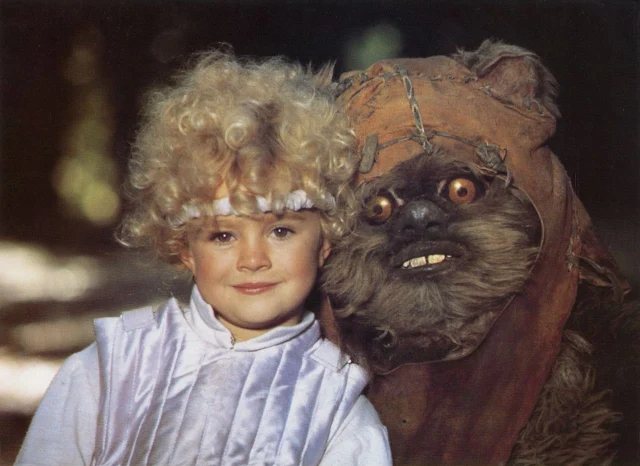
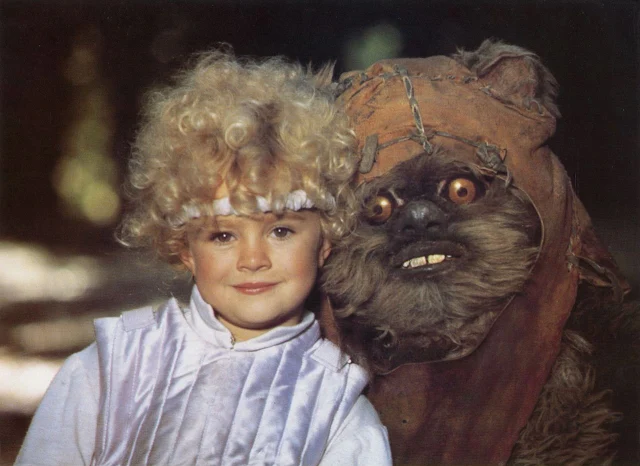
One of the most compelling aspects of this particular Ewok-centric venture is the child actor who stole the show: Aubree Miller, playing the role of Cindel Towani.

Born on February 15, 1979, Miller was just five years old when she landed the role that would make her a part of the Star Wars universe. Acting opposite Warwick Davis, who reprised his role as Wicket the Ewok, Miller's performance captivated a specific segment of the Star Wars fanbase.

Her innocent and believable bond with Wicket became the emotional core of the film. Wicket, a curious and brave scout from Bright Tree Village, is fleshed out far beyond his appearance in Return of the Jedi, showcasing the complex tribal society of the Ewoks and their connection to the natural world of Endor, including their fear of native predators like the monstrous Gorax.

cindel aubrey miller ewok adventure

After the success of "Caravan of Courage," Miller reprised her role in the darker and more action-oriented sequel, "Ewoks: The Battle for Endor" (1985). In a shockingly grim opening, Cindel's entire family is killed by Sanyassan Marauders, a band of vicious reptilian off-worlders who had also crashed on Endor years prior. 

Now an orphan, Cindel, along with Wicket, must join forces with Noa Briqualon, a grumpy human hermit played by Wilford Brimley, to defeat the marauders. The film received a mixed response but has since earned a cult following. 

However, despite the potential for a super sweet Hollywood career trajectory, Miller largely stepped back from acting. She appeared in a handful of TV roles, but her screen career ended as quickly as it began. 

What followed for Miller is a life that many would call 'normal,' a departure from the celebrity lifestyle one might expect from a Star Wars alum. She went on to pursue an education, attending California State University, Fullerton, and has built a private life for herself away from the public eye. 

Her social media presence is minimal. 

Details are scarce, but it appears Miller chose a path that veers more toward personal satisfaction rather than public recognition. 

aubree miller caravan courage star wars adult
Aubree Miller as an adult


Miller's decision to step away from acting has lent her an air of enigma. In a world where every action of celebrities is documented and dissected, the absence of information feeds curiosity. 

This scarcity has turned her into a somewhat mythic figure among niche Star Wars communities who wonder what could have been had she pursued a different path. 

However, in recent years, she has graciously reconnected with the fanbase, making appearances at conventions like Star Wars Celebration, sharing fond memories of her time on set, and proving that the Force remains with her.

Interestingly, the relative obscurity surrounding Miller has not led to a decline in interest in "Caravan of Courage" or its sequel, The Battle for Endor

On the contrary, they have seen something of a renaissance. The films are now available on Disney+, and a new generation of fans is discovering them for the first time. Miller's portrayal of Cindel Towani continues to captivate young audiences, much like it did in the 1980s, serving as a timeless entry point into the wider, wondrous galaxy of Star Wars.

Whatever Happened to Eric Walker from Star Wars' Caravan of Courage?

Before diving into the enigmatic journey of Eric Walker, it's imperative to recognize that the Star Wars universe extends far beyond the primary cinematic saga. Movies like "Caravan of Courage: An Ewok Adventure" are part of the expanded tapestry, filling in gaps and broadening the galaxy we know and love. These ventures into different storytelling formats and perspectives enrich the overall Star Wars canon, demonstrating the franchise's capacity to explore diverse narratives beyond the central Skywalker saga.


Released in 1984, this made-for-TV movie presented a departure from the space opera elements we're used to and focused on the forest moon of Endor. This shift in focus allowed for a more intimate exploration of a specific corner of the Star Wars galaxy, delving into the culture and inhabitants of Endor in a way the mainline films hadn't. But what became of Eric Walker, who portrayed Mace Towani in the film? The young actor has been relatively elusive, and his career trajectory is an interesting tale within the larger Star Wars narrative, highlighting the varied paths individuals associated with the franchise have taken.

The Early Years: Eric Walker and Caravan of Courage

Eric Walker was only 14 years old when he starred in "Caravan of Courage." In the film, he plays Mace Towani, a young boy who, along with his sister Cindel (Aubree Miller), is stranded on Endor and becomes entangled with the local Ewok community. The movie was a departure from the usual Star Wars fare, offering a more intimate, fairy-tale-like approach to storytelling. This unique narrative style allowed for a deeper exploration of themes like family and survival within the Star Wars context. Although it didn't garner the same level of critical acclaim as other Star Wars entries, "Caravan of Courage" did receive an Emmy for Outstanding Special Visual Effects and continues to have a dedicated fan following, showcasing its lasting impact on a segment of the Star Wars audience.


You might assume that a role in a Star Wars film, even a made-for-TV spinoff, would be a guaranteed ticket to lasting fame. For Walker, however, this was not the case. After reprising his role in the sequel, "Ewoks: The Battle for Endor," Walker gradually receded from the limelight. Unlike co-star Warwick Davis, who continued to have a prominent career, Walker took a step back from acting. This divergence in career paths illustrates the unpredictable nature of fame and the different choices individuals make after experiencing the unique phenomenon of being part of the Star Wars universe.

His name occasionally resurfaced in various smaller roles and independent films but never again in a project with the magnitude of Star Wars. In the subsequent years, he shifted his focus to behind-the-scenes work, including film editing and post-production. This transition highlights the diverse talents and interests of individuals who have contributed to the Star Wars legacy, showcasing that their involvement wasn't always limited to on-screen performances. He also ventured into the realm of music, showcasing his multi-instrumentalist skills in various musical projects, further demonstrating the multifaceted nature of his creative pursuits.

Interestingly, the world of fan conventions and online communities allowed Walker to reconnect with the Star Wars fanbase. Here, he found an audience eager to revisit the unique charm of "Caravan of Courage" and its sequel. Through these events, he has shared behind-the-scenes stories, insights, and personal experiences, effectively becoming a nostalgic touchpoint for fans of the franchise's more obscure corners. This connection underscores the enduring power of the Star Wars saga and its ability to foster lasting relationships between those involved and the dedicated fans who cherish all aspects of the galaxy far, far away.

What is compelling about Eric Walker's journey is how it illustrates the diverse paths that even a brief association with Star Wars can lead to. The franchise's enduring allure provides a backdrop against which individual narratives unfold in surprising ways, and Walker's life post-"Caravan of Courage" is a testament to that. Whether discussing his career in panel discussions or engaging with fans online, he exemplifies how a relatively minor character in the Star Wars universe can have a lasting impact. His experiences offer a unique perspective on the broader Star Wars phenomenon, demonstrating that even those with less prominent roles contribute to the rich tapestry of its history.

So, while Eric Walker may not have become a household name, his contributions to the franchise and continued engagement with fans make him an intriguing figure worth revisiting. With the Star Wars universe continually expanding, who knows what future relevance or rediscoveries might orbit back to the enigmatic Mace Towani? Only time will tell, but until then, the curiosity surrounding Eric Walker remains a fascinating subplot in the annals of Star Wars history. His story serves as a reminder that every individual who has touched the Star Wars saga has their own unique narrative, adding layers to the franchise's enduring mystique.

Caravan of Courage: An Ewok Adventure - Look Back

In the early '80s, the Star Wars universe was primarily defined by its trilogy of mainline films that took the world by storm. Then came 1984's "Caravan of Courage: An Ewok Adventure," a made-for-television film with a notably lower budget and a far more modest scope. This departure from the grand, operatic narratives that fans had come to expect offered a different lens through which to view the galaxy far, far away.

The film wasn't intended to serve as a sequel or prequel to the existing films but as a standalone tale, exploring a corner of the Star Wars universe untouched by the Skywalker saga. In contrast to the blockbuster releases that came before it, "Caravan of Courage" was something of an experimental offshoot, probing the potential of storytelling in the Star Wars universe beyond Jedi, Sith, and Galactic Empire narratives. This willingness to explore different narrative avenues highlights the early stages of what would become a vast and intricate expanded universe, demonstrating that Star Wars could encompass more than just the central conflict.

Still, the film proved it has as much heart as any Star Wars film! Its focus on familial bonds and the resilience of community offered a thematic richness that resonated with audiences despite the smaller scale.

caravan of courage ewok adventuire


Although "Caravan of Courage" was a television production with fewer resources than a mainline Star Wars film, it had an array of talented individuals at its helm. Produced by George Lucas himself, the film maintained a certain level of continuity with the original trilogy, despite its differing narrative focus. This connection, even in an experimental project, underscored Lucas's vision for a cohesive, albeit multifaceted, Star Wars universe. John Korty, an Emmy Award-winning director known for his work in television, took the directorial reins, bringing a humanistic touch that was well-suited for the intimate story the film aimed to tell. 

The screenplay was penned by Bob Carrau, under the story guidance from Lucas, and it ventured into the realms of family dynamics and emotional intricacies, aspects that are sometimes overshadowed in the larger Star Wars universe. This exploration of more personal themes broadened the scope of what a Star Wars story could be, paving the way for future narratives that delved into the lives of ordinary individuals within the galactic backdrop.

Aubree Miller and Eric Walker starred as Cindel and Mace Towani, respectively, and their performances lent credibility to the narrative's emotional stakes. Most notably, Warwick Davis reprised his role as Wicket, offering a more nuanced portrayal that built upon his appearance in "Return of the Jedi." The involvement of these creatives and actors culminated in a unique storytelling experience that, while not as grandiose as the original trilogy, resonated on a different, more intimate frequency.

The Star Wars saga has often been lauded for its grandiose scale, detailing the monumental struggle between good and evil. "Caravan of Courage" diverges from this narrative path and instead offers an intimate family drama. Centered on the Towani family—particularly the children, Cindel and Mace—the film's plot is driven by their quest to rescue their parents from the menacing Gorax. Instead of galaxy-altering stakes, the film deals with the very personal stakes of a family trying to reunite. This change of pace allows the audience to focus on individual emotions, a facet often overshadowed by grand political intrigues in other Star Wars entries. This intimate focus aligns with a broader storytelling principle within the Star Wars canon: that even small acts of courage and love can have profound significance within the larger galactic context.

When the Ewoks were introduced in "Return of the Jedi," they became an instant cultural phenomenon, albeit one that divided audiences between those who found them adorable and others who considered them a commercial gimmick. "Caravan of Courage" amplifies their role, taking us deep into Ewok society. We see these furry creatures as skilled builders, astute strategists, and brave warriors, not just as the cute and cuddly teddy bears wielding primitive weapons. Their rituals, social norms, and even their language (which was developed with some complexity for the film) are highlighted, offering an anthropological dive into a species that contributes to the rich tapestry of the Star Wars galaxy. This deeper exploration of Ewok culture enriches the Star Wars lore by showcasing the diversity of life and societies within the universe, moving beyond the more human-centric narratives of the mainline films.

Filmed on a far more modest budget than any of the mainline Star Wars films, "Caravan of Courage" inevitably suffers from technical limitations. The special effects lack the polish and sophistication seen in the trilogy, and there's a perceptible difference in the film's overall production quality. However, these limitations also bestow the film with a charming, homemade quality. The creatures and sets are crafted with palpable care, and despite its shortcomings, the cinematography succeeds in making Endor come alive as a vibrant ecosystem, filled with perils and wonders alike. This resourceful filmmaking echoes the ingenuity often displayed by characters within the Star Wars universe itself, highlighting that compelling storytelling can transcend budgetary constraints.

wicket cindel ewok adventure
Cindel and Wicket


While the Star Wars universe is replete with themes of destiny, heroism, and the eternal battle between good and evil, "Caravan of Courage" offers a refreshing counter-narrative. It delves into the often overlooked but universally relatable themes of family and community bonds, emphasizing the heroism inherent in smaller, more personal endeavors. In doing so, it enriches the viewer's understanding of courage and vulnerability, providing a nuanced counterpoint to the black-and-white morality often seen in larger Star Wars arcs. This thematic exploration aligns with the broader Star Wars philosophy that heroism comes in many forms and is not solely the domain of Force users or galactic leaders.

The caravan's journey to rescue the Towani parents serves as the narrative and thematic crescendo of "Caravan of Courage," encapsulating the film's focus on family, courage, and community. This perilous expedition led by a group of Ewoks and the Towani children is much more than a mere plot device; it becomes an embodiment of the collective struggle against overwhelming odds. This narrative arc, while smaller in scale, mirrors the larger heroic journeys found throughout Star Wars, emphasizing the importance of perseverance and unity in the face of adversity.

The ultimate confrontation with the Gorax serves as a microcosm of the broader Star Wars themes of good versus evil, but on a more intimate, familial scale. When the caravan successfully defeats the Gorax, a towering menace that has encapsulated fear and separation for both Ewoks and the Towanis, it's not just a physical triumph but a thematic one as well. This victory underscores a recurring motif in Star Wars: that even seemingly weaker or less technologically advanced groups can overcome powerful adversaries through courage, ingenuity, and cooperation.

This moment of victory exemplifies the film's emphasis on the power of unity and courage in overcoming seemingly insurmountable challenges. It reflects the underlying message that heroism isn't exclusive to Jedi Knights or Rebel leaders but can manifest in the simple yet profound act of a community coming together to rescue loved ones. Additionally, the defeat of the Gorax by the collective effort of the caravan validates the Ewoks' own spiritual and cultural beliefs, including the "Light of Life," which plays a role in fortifying them for the mission. The caravan's successful quest serves as a practical application of the film's themes, melding narrative and message into a cohesive, emotionally impactful climax.

The "Light of Life," a spiritual concept that provides a foundation for the Ewoks' connection to the world around them. The ritual surrounding this concept serves as a powerful narrative device, emphasizing the universality of spiritual belief systems across the galaxy. What's fascinating is that this seemingly isolated aspect of Ewok culture echoes in the broader Star Wars lore concerning the Force and its different interpretations. The "Light of Life" isn't presented as a direct manifestation of the Force, yet its thematic underpinnings align with the Force's more naturalistic interpretations. For instance, it resonates with the spiritual beliefs of characters like Chirrut Îmwe in "Rogue One," who, despite not being Force-sensitive in the conventional sense, is deeply connected to the Force as a guiding principle in life. This highlights the diverse ways in which life energy and spiritual understanding can manifest within the Star Wars universe, enriching its philosophical depth.

One of the most noteworthy aspects of "Caravan of Courage" is Warwick Davis reprising his role as Wicket, the Ewok. Davis was only 17 at the time and this film gave him an opportunity to flesh out Wicket's character in a way that "Return of the Jedi" did not. His return lends a sense of continuity to the Ewok storyline and enriches the broader Star Wars lore. His performance brings depth and individuality to Wicket, turning him into a memorable figure who embodies the spirit and resilience of the Ewok community. Davis would go on to have roles in many Star Wars becoming a Star Wars icon in his own right. His continued involvement in the franchise underscores the lasting impact of even these smaller-scale stories on the overall Star Wars saga.

"Caravan of Courage" is less about spectacular battles and fantastical elements and more about emotional depth and storytelling. As such, it’s a unique piece in the Star Wars universe, one that challenges the definitions of what a Star Wars story should encompass. Whether or not it’s to everyone's taste, its existence is a testament to the flexibility and adaptability of the Star Wars narrative canvas. It demonstrates that within this expansive galaxy, there's room for not just tales of epic proportions but also smaller, heartfelt stories that echo with universal themes. This willingness to experiment with different genres and narrative styles within the Star Wars framework is a key element of its enduring appeal and its ability to connect with a wide range of audiences.
18 October 2023

The themes of Contact directed by Robert Zemeckis

"Contact" is a science fiction film directed by Robert Zemeckis, released in 1997. It is based on the 1985 novel of the same name by renowned astrophysicist and cosmologist Carl Sagan. The film stands as an intellectual pillar in the realm of science fiction cinema, raising compelling questions and generating thoughtful debate on an array of themes. 

In this discussion, we will delve into four primary themes that form the backbone of "Contact": Science vs. Faith, Human Isolation, Ethical Implications of Discovery, and the Nature of First Contact.

themes of contact movie with Jodie foster


Science vs. Faith theme in Contact


The Representation of Science and Faith through Characters

In "Contact," Ellie Arroway, portrayed by Jodie Foster, is the embodiment of science—rational, evidence-based, and driven by an unyielding quest for knowledge. On the other end of the spectrum stands Palmer Joss, played by Matthew McConaughey, a theologian who represents the essence of faith—mysterious, spiritual, and driven by a need to understand the universe's greater meaning. The characters serve as symbolic stand-ins for these competing viewpoints, clashing and intersecting throughout the narrative.

Dramatic Moments That Highlight the Conflict

One scene that poignantly highlights this tension is Ellie's testimony before the Congressional committee. Ellie is questioned about her experience and is asked to provide empirical evidence. Palmer Joss joins in, asking her if she could prove that her deceased father ever loved her. The moment brings the perennial tension between empirical evidence and personal experience into sharp focus.

Complexities and Overlaps


While the characters seem to represent polar viewpoints, the narrative intricately lays out instances where science and faith overlap. For instance, Ellie's use of the phrase "for Carl," before embarking on her journey, implies a near-religious reverence for her mentor, Carl Sagan. Conversely, Palmer Joss's faith does not necessarily negate his interest in scientific discourse. These complexities enhance the narrative richness, challenging any attempt to pigeonhole science and faith into neat, mutually exclusive categories.


Human Isolation and the Search for Connection


Ellie's Journey: A Path of Loneliness

Ellie's character arc transcends the boundaries of a mere scientific quest; it is also a deep, emotional journey toward connection. From losing her father at a young age to experiencing a lack of true companionship in her adult life, her pilgrimage to the stars is as much about filling the emptiness within her as it is about answering questions about extraterrestrial life.

jodie foster contact
Jodie Foster as Ellie in Contact


Cinematic Techniques to Convey Isolation

Zemeckis masterfully uses cinematic techniques to underscore the theme of human isolation. Shots of Ellie engulfed by the enormity of the Arecibo telescope or dwarfed by the vastness of space serve to amplify her solitude. The visual language of the film paints a poignant picture of isolation, both physically and existentially.

The Universal Experience of Loneliness

Ellie’s isolation and quest for connection reach beyond her individual experience, tapping into the universal human condition. This is emphasized by her final communication with the alien civilization, where it's hinted that the experience of loneliness and the longing for connection are shared across sentient beings.

Ethical Implications of Discovery


The Cost of Curiosity

"Contact" delves into the moral and ethical quandaries that accompany the pursuit of knowledge. The construction of the machine, based on alien blueprints, costs trillions of dollars and comes at the cost of potential global unrest, underscoring that the path to discovery is fraught with societal ramifications.

Decisions and Dilemmas

The ethical dilemmas in "Contact" extend from individual to global scales. The selection of Ellie as the traveler, for example, comes with its own ethical baggage, raising questions about who gets to represent humanity.

Broader Social and Ethical Questions

The ethical dilemmas presented in the film are not confined to its narrative but are reflective of broader concerns in science and technology, such as resource allocation, the prioritization of scientific endeavors over pressing social issues, and the ethical responsibility that comes with groundbreaking discoveries.

The Nature of First Contact


Re-Defining the Trope


"Contact" distinguishes itself by offering a fresh perspective on the well-trodden sci-fi trope of first contact. Instead of an invasion scenario or a physical arrival, the film explores first contact through signals, mathematics, and a singular transcendental experience.

Psychological and Philosophical Aspects

The movie’s treatment of first contact is not merely an exploration of humanity's place in the universe, but also an introspective look into the human psyche. It postulates that encountering extraterrestrial intelligence challenges not just our scientific understanding, but our philosophical and ethical beliefs.

Influence on Later Science Fiction Works

The nuanced approach to first contact in "Contact" has left its mark on later works in the science fiction genre. Movies like "Arrival" (2016) and books like "Anathem" by Neal Stephenson draw on these themes, incorporating the complexities of communication, understanding, and the broad implications for humanity in their narratives.

Conclusion as to the themes of Contact


Through an intricate tapestry of narrative, character development, and visual storytelling, "Contact" serves as an intellectual odyssey, probing into some of the most enduring questions that concern humanity. The film's exploration of Science vs. Faith, Human Isolation, Ethical Implications of Discovery, and the Nature of First Contact makes it a seminal work, inviting viewers not just to look outward into the cosmos, but also inward into the complexities of the human condition.

A Review of 'Contact' and its 'Stellar Themes'

"Contact," directed by Robert Zemeckis and released in 1997, is a cinematic adaptation of Carl Sagan's 1985 novel of the same name. Starring Jodie Foster (Elysium) as the resolute and impassioned Dr. Ellie Arroway, the film explores complex themes of faith, science, and the eternal human yearning for contact with the 'other,' whether it be extraterrestrial or divine. T

The film not only boasts a compelling narrative but also captures the spirit of its source material, serving as a tribute to Sagan's own ideals. Matthew McConaughey, Tom Skerritt (Alien), and William Fichtner round off a stellar cast, contributing their own dimensions to a story that delves into the very essence of what it means to be human in an incomprehensible universe.

Zemeckis, known for other blockbuster films like "Back to the Future" and "Forrest Gump," brings his unique touch to a story that could easily become trapped in its lofty themes. Through a lens that is at times tender and at others awe-inspiring, the director ensures that the movie is as much a journey of the heart as it is of the mind. In an age where science fiction often becomes a canvas for spectacle over substance, "Contact" serves as a reminder that the genre's true power lies in its ability to make us question the known boundaries of our existence.

This review will explore the intricate layers of "Contact," from its well-etched characters and visual storytelling to its thematic depth and contribution to science fiction. Each aspect will be dissected to appreciate how they contribute to making the film an enduring classic in the annals of sci-fi cinema.

contact film review


The Premise: A Glimpse into the Story of Contact

"Contact" revolves around Dr. Ellie Arroway, a dedicated astronomer who works with the SETI (Search for Extraterrestrial Intelligence) program. Operating from the Very Large Array in New Mexico, she scans radio frequencies in the hope of detecting signals from intelligent extraterrestrial life. Her perseverance pays off when she picks up a repeating series of prime numbers, a clear indicator of deliberate transmission, originating from the star system Vega, 26 light-years away from Earth.

As the world grapples with the implications of this monumental discovery, Ellie finds herself in the eye of a scientific and theological storm. The signal not only confirms the existence of intelligent extraterrestrial life but also includes detailed instructions for constructing a mysterious machine. The machine's purpose is unknown, but its construction involves international cooperation and billions of dollars. As Ellie vies for a seat on the machine—essentially a one-way ticket to an unknown destination—she must contend with bureaucratic obstacles, ethical quandaries, and existential questions.

The story cleverly interweaves Ellie's personal journey with broader themes of human aspiration and limitation. It's a narrative that doesn't just look outward to the stars, but also inward, into the intricate complexities of the human soul. Against a backdrop of cutting-edge technology and cosmic vastness, Ellie's search for extraterrestrial life becomes a mirror for her own quest for meaning and connection. As the pieces of the mysterious machine come together, so does a larger picture of humanity's place in the cosmos and the true nature of faith and understanding.

In short, the film tackles the grandest questions about existence through a deeply personal lens, setting the stage for the viewer to confront these questions alongside its protagonist. With this rich thematic texture and narrative depth, "Contact" distinguishes itself as a unique tale of first contact, not just with alien life but also with the multifaceted dimensions of human experience.

Characters: Probing the Psychological Depths

Ellie Arroway: A Relentless Seeker
Dr. Ellie Arroway, portrayed with nuance and complexity by Jodie Foster, serves as the emotional and intellectual nucleus of "Contact." A fiercely independent and deeply rational scientist, Ellie is driven by a relentless quest for knowledge and a need to uncover the mysteries of the universe. This drive is both her strength and her vulnerability. Ellie is motivated by an underlying yearning for connection that stems from the loss of her parents at a young age. Her pursuit of extraterrestrial signals is not merely a scientific endeavor; it's a search for validation, a cosmic antidote to the loneliness and sense of insignificance that haunts her.

What sets Ellie apart is her unwavering commitment to empirical evidence and the scientific method, even when she is tempted by the emotional comforts of faith or public opinion. She stands her ground in debates with theologians, politicians, and even fellow scientists who question the value and ethical implications of her work. Throughout the film, her character arc reveals a subtle transformation. While her commitment to science remains steadfast, she learns to appreciate the intangible, immeasurable aspects of human experience, such as love and faith.

Supporting Characters: The Earthly Counterparts

Palmer Joss: The Spiritual Antithesis
Matthew McConaughey's Palmer Joss provides a fascinating counterpoint to Ellie. As a Christian philosopher and theologian, Joss represents the spiritual dimensions that Ellie either ignores or disdains. He challenges her scientific materialism, forcing her to contemplate the limits of empirical evidence and the role of faith in human experience. Through their interactions, the film raises poignant questions about the compatibility and potential synthesis of scientific inquiry and spiritual belief.

David Drumlin: The Pragmatic Skeptic
Tom Skerritt's David Drumlin, Ellie's supervisor and a high-ranking government scientist, represents a different kind of foil. Drumlin is a pragmatist who values science for its utility rather than its capacity to answer existential questions. He embodies the bureaucratic and political obstacles that often impede scientific progress, serving as a gatekeeper who initially dismisses Ellie's work as fruitless. His character exposes the viewer to the internal politics and power dynamics that exist within scientific communities, adding another layer of complexity to Ellie's journey.

Contact’s Cinematic Elements: Aesthetic Choices and Technical Brilliance

Visuals: The Telescope to the Cosmos

One of the standout elements of "Contact" is its cinematography, executed by Don Burgess. The film skillfully employs visual storytelling to augment its complex narrative and themes. The choice of settings, from the expansive desert landscapes surrounding the Very Large Array to the claustrophobic interiors of government buildings, serves to juxtapose Ellie's limitless curiosity with the often restrictive societal structures she navigates. Moreover, the film uses visual motifs, like mirrors and lenses, to parallel its thematic focus on perspectives, both scientific and personal.

The visual effects, especially for the era in which the film was made, are remarkable. The construction of the machine, based on the alien blueprints, is shown through a series of breathtaking shots that capture its scale and complexity, evoking a sense of wonder and trepidation. These visuals serve not just as eye candy but as a narrative tool, encapsulating the awe and fear associated with venturing into the unknown.

Soundtrack: Echoes of the Unknown

Alan Silvestri's haunting and ethereal score is another noteworthy aspect of the film's technical brilliance. The music is at once cosmic and intimate, imbuing the film with a transcendental quality that elevates its narrative and thematic depth. The soundtrack serves as a kind of emotional compass, guiding the audience through Ellie's journey of discovery and internal struggle. The subtlety of the score, which avoids overwhelming the viewer but rather complements the on-screen action, adds layers to the viewing experience.

In the sequences involving space and the unknown, the music takes on an otherworldly quality, using a range of instruments and electronic sounds to evoke the enormity and mystery of the cosmos. During the more introspective moments, the score shifts to softer, melancholic tones, reflecting the internal landscapes of the characters, particularly Ellie.

The visual and auditory elements of "Contact" work in harmony to create a cinematic experience that is as intellectually stimulating as it is emotionally resonant. These elements do not merely serve the narrative; they enrich it, providing additional layers of meaning and engagement for the viewer. In doing so, they demonstrate the power of cinema to tackle complex issues and themes in a way that is both accessible and profound.

Exploration of the themes of Contact


The Conflict of Science and Faith

One of the most compelling aspects of "Contact" is its nuanced exploration of the perennial tension between science and faith. Ellie Arroway, as the embodiment of scientific rationalism, often finds herself at odds with characters who represent religious or spiritual viewpoints, most notably Palmer Joss. However, the film does not settle for a simplistic binary; instead, it delves into the complexities and overlaps between these two modes of understanding the world.

For instance, Ellie's rigorous empiricism is put to the test when she has an experience that she can't quantify or prove scientifically. The film plays out this tension in a fascinating scene where Ellie must present her unverifiable experience to a skeptical panel, including religious and scientific authorities. Her struggle to articulate the validity of her experience without the backing of empirical evidence parallels the very essence of religious faith.

The Loneliness of the Long-Distance Voyager

Another recurring theme is the isolation—both physical and emotional—that comes with Ellie's journey. Whether she is scanning frequencies alone in the vast New Mexican desert or standing as the lone representative of humankind in a monumental endeavor, Ellie grapples with a profound sense of solitude. This theme is accentuated by both the visual language of the film, with its expansive shots that often depict Ellie as a tiny figure within larger landscapes, and the emotional nuances that Jodie Foster brings to her character.

Ellie's isolation is not just a function of her physical circumstances but also stems from her intellectual and emotional detachment. She has devoted her life to pursuits that often leave her alienated from more conventional social norms and relationships. Her struggle to connect with Palmer Joss on a spiritual level serves as a poignant representation of this emotional isolation. In a sense, her loneliness encapsulates the larger human condition, one often fraught with existential solitude despite our collective endeavors and shared experiences.

Both themes—the conflict of science and faith, and the loneliness of the long-distance voyager—interact throughout the film to create a textured, multi-dimensional narrative. They challenge the viewer to reconcile their own beliefs and experiences with the larger questions the film raises, making "Contact" a deeply engaging and intellectually stimulating experience.

Impact and Contribution of Contact to Science Fiction


Re-Defining First Contact

"Contact" offers a refreshing twist to the popular science fiction trope of first contact with extraterrestrial life. Unlike many other films in the genre that focus on the spectacle of alien encounters, often fraught with conflict or outright warfare, "Contact" opts for a more introspective approach. The extraterrestrial message received is not a declaration of intent but a puzzle to be solved, a challenge that unites humanity rather than divides it.

This film complicates the idea of 'first contact' by suggesting that the first meaningful contact we make might not be with extraterrestrial life, but with our own species, and even within the recesses of our own minds. The machine's journey, rather than culminating in a traditional face-to-face meeting with aliens, serves as a catalyst for individual and collective self-discovery. This re-defining of 'first contact' adds a new layer to the trope, enriching the genre’s vocabulary and offering new narrative possibilities for future works.

Ethical and Philosophical Dimensions

In addition to its innovative approach to first contact, "Contact" significantly contributes to science fiction by thoroughly exploring the ethical and philosophical implications of scientific endeavor. It does not shy away from asking hard questions about the responsibilities that come with knowledge. Should we act upon every piece of information we gain, regardless of the potential repercussions? How should resources be allocated in pursuit of uncertain goals? These ethical quandaries are woven into the fabric of the narrative, providing a framework within which the audience can engage with the story on a deeper level.

Bridging the Gap: Science Fiction for Scientists and Philosophers

One of Carl Sagan's goals in writing the original novel was to create a science fiction story that was deeply rooted in actual scientific theory and ethical considerations. The film adaptation continues this mission, serving not just as entertainment but also as a form of public outreach for scientific thought. The movie doesn't merely pay lip service to complex scientific concepts like radio astronomy, wormholes, and the nature of time; it incorporates these elements into its narrative structure.

It is this commitment to scientific accuracy, coupled with a deep philosophical inquiry into the human condition, that sets "Contact" apart as a masterwork within the science fiction genre. It shows that science fiction can be a medium for serious intellectual engagement, not just escapism, thereby elevating the genre's potential for contributing to important cultural and philosophical discussions.

Reception and Legacy of Contact: The Echoes that Persist


Critical and Audience Reception

Upon its release, "Contact" was met with both critical acclaim and public interest. The film struck a chord with audiences for its deep intellectual engagement and emotional resonance, factors often credited to the masterful performances, particularly that of Jodie Foster. Critics lauded the film for its meticulous storytelling, commitment to scientific accuracy, and its brave foray into existential themes that most mainstream films seldom tackle. It became not only a box office success but also a topic of discussion in various intellectual circles, ranging from the scientific community to religious and philosophical debates.

Awards and Nominations

The film received several awards and nominations, further solidifying its place as a noteworthy entry in both the science fiction genre and mainstream cinema. Jodie Foster’s performance was universally praised, earning her nominations for several awards. The film’s technical achievements, especially its visual effects and sound design, were also acknowledged in various industry award functions.

Influence on Subsequent Works

The thematic richness and narrative complexity of "Contact" have made it a point of reference for subsequent works in the science fiction genre, and even beyond. It has served as an inspiration for storytellers who seek to blend hard science with deep philosophical inquiry. Films like "Interstellar" and "Arrival" owe a thematic debt to "Contact," particularly in their nuanced approach to the concept of first contact and the complex interplay of science and human emotion.


"Contact" serves as more than just a cinematic experience; it is a cultural artifact that invites repeated engagement. Its enduring relevance speaks to the universality of its themes and the effectiveness of its storytelling. In that sense, it has not only enriched the science fiction genre but also contributed to the ongoing dialogue about humanity's place in the universe.


17 October 2023

Close Encounters of the Third Kind: Themes

"Close Encounters of the Third Kind," directed by Stephen Spielberg and released in 1977, stands as a timeless masterpiece in the realm of science fiction cinema. While the film is celebrated for its stunning visual effects and gripping storyline, it also delves into profound thematic elements that continue to captivate audiences.

In this detailed essay, we will embark on a comprehensive journey to analyze the themes that make "Close Encounters of the Third Kind" an enduring classic. From communication with the unknown to the consequences of obsession and the role of government secrecy, each theme will be explored in depth, shedding light on the film's enduring impact on the science fiction genre.

themes of close encounters of the third kind


Communication with the Unknown

"Close Encounters of the Third Kind" places a significant emphasis on the theme of communication with the unknown. At its core, this theme explores the fundamental human desire for contact and understanding with extraterrestrial beings or other mysterious forces. Spielberg skillfully portrays this theme through several key elements in the film.

One of the most striking ways Spielberg addresses this theme is through the character of Roy Neary, portrayed by Richard Dreyfuss. Roy's character arc is pivotal to understanding the film's exploration of communication. Initially, he is an ordinary electrical lineman, but as he experiences inexplicable visions and encounters with alien spacecraft, he undergoes a transformation. His obsession with these encounters leads him to sculpt a model of Devil's Tower, a location of great significance in the film, out of mashed potatoes, attempting to communicate with the unknown.

Music also plays a vital role in illustrating the theme of communication. The iconic five-note musical sequence, first heard during the encounter at the power plant, serves as a universal language between humans and aliens. The film's use of music as a means of communication underscores the idea that some things can transcend language barriers.

Furthermore, the film raises questions about the nature of communication itself. How do humans interpret the unknown, and how does that interpretation shape their actions? Spielberg challenges the audience to consider the limitations of human understanding when faced with the incomprehensible.

Obsession and Sacrifice

"Close Encounters of the Third Kind" portrays the theme of obsession and sacrifice as central to the narrative, creating a profound exploration of the human psyche and the pursuit of the unknown.

Roy Neary's transformation from an ordinary family man to an obsessive seeker of the truth is a captivating character study. Initially, Roy's obsession is triggered by a close encounter with an unidentified flying object. His life unravels as he becomes increasingly consumed by the need to understand the visions he experiences. This obsession leads him to build a replica of Devil's Tower in his living room and ultimately to journey to the real location, driven by an irresistible inner force.

Spielberg masterfully captures the toll of Roy's obsession on his personal life. His marriage crumbles as his wife, unable to comprehend his obsession, leaves him. His children are left bewildered by their father's inexplicable behavior. This theme highlights the sacrifices individuals are willing to make when consumed by an insatiable desire for knowledge and connection with the unknown.

The film also explores the idea that obsession can lead to self-discovery. Roy's journey of self-discovery through obsession, while tumultuous, ultimately reveals hidden aspects of his character. This transformation is symbolized by his physical and emotional journey to Devil's Tower, where he undergoes a profound change.

Government Secrets and Conspiracy

"Close Encounters of the Third Kind" also delves into the theme of government secrecy and conspiracy, adding a layer of intrigue and complexity to the narrative.

The character of Claude Lacombe, portrayed by François Truffaut, represents the government's involvement in investigating and concealing encounters with extraterrestrial beings. Lacombe is a French scientist who collaborates with American government officials to decipher the mysterious events occurring around the world. His presence underscores the idea that governments possess knowledge about extraterrestrial encounters and are actively involved in managing these phenomena.

Throughout the film, Spielberg raises questions about the extent to which governments may hide the truth from the public. The audience is left to wonder about the motives behind the secrecy and the potential implications for society at large. This theme taps into the broader cultural fascination with government cover-ups and conspiracies regarding UFOs and extraterrestrial life.

The tension between government secrecy and the human desire for transparency and understanding forms a central conflict in the film. It invites viewers to contemplate the moral and ethical dilemmas faced by those who hold the knowledge of extraordinary phenomena and choose to keep it hidden.

The Human Spirit and Curiosity

"Close Encounters of the Third Kind" celebrates the indomitable human spirit and the innate curiosity that drives individuals to explore the unknown.

The character of Roy Neary, portrayed by Richard Dreyfuss, embodies the theme of human curiosity. Roy starts as an ordinary working-class man but is transformed into an avid seeker of the truth when he encounters extraterrestrial phenomena + they abduct his kid. His relentless pursuit of understanding and his willingness to follow his instincts exemplify the power of human curiosity.

Jillian Guiler, played by Melinda Dillon, is another character who embodies this theme. She is a mother whose child is taken by the aliens. Her determination to find her son and understand the mysterious events unfolding around her showcases the unwavering human spirit in the face of the extraordinary.

Spielberg's portrayal of these characters highlights the resilience of the human spirit and the capacity for personal growth through curiosity. The film suggests that it is our innate curiosity that propels us forward, pushing the boundaries of what is known and driving us to explore the mysteries of the universe.

The film's narrative also underscores the idea that curiosity transcends age, occupation, and societal norms. Both Roy and Jillian represent everyday people who are drawn to the unknown, challenging the notion that curiosity is the domain of scientists or experts alone.

 Family and Personal Transformation

"Close Encounters of the Third Kind" explores the profound theme of family and personal transformation in the context of extraterrestrial encounters, highlighting the impact of the unknown on individuals and their relationships.

The character of Roy Neary, portrayed by Richard Dreyfuss, undergoes a remarkable transformation in the film, one that extends to his family. At the beginning of the story, Roy is a dedicated family man, but his obsession with the mysterious visions he experiences strains his relationships. His wife, Ronnie, and children are bewildered and ultimately leave him due to his erratic behavior.

This theme emphasizes the sacrifices and challenges that individuals and their families face when confronted with the inexplicable. The film portrays the emotional toll of Roy's journey and the strain it places on familial bonds.

However, "Close Encounters of the Third Kind" also suggests that encounters with the unknown can lead to personal growth and transformation. Roy's journey to Devil's Tower is not just a physical one but also a spiritual and emotional odyssey. He undergoes a profound change, finding a sense of purpose and fulfillment in his quest for understanding.

Similarly, Jillian Guiler's character experiences personal transformation as she searches for her abducted son, Barry. Her determination and resilience as a mother lead her to confront the extraordinary and discover hidden strengths within herself.

Spielberg's portrayal of family dynamics and personal transformation in the face of the unknown adds depth to the narrative. It underscores the idea that while encounters with the mysterious can strain relationships, they can also lead to self-discovery and personal growth.

-

In Stephen Spielberg's "Close Encounters of the Third Kind," we have journeyed through a cinematic masterpiece that not only dazzles with its visual effects but also resonates profoundly through its exploration of timeless themes. From the longing for communication with the unknown, the consequences of obsession, and the shadowy realm of government secrets, to the celebration of the indomitable human spirit and the transformative power of personal encounters, this film delves into the depths of the human experience.

Spielberg's deft storytelling and character development make "Close Encounters of the Third Kind" a hallmark of science fiction cinema. It challenges us to contemplate our insatiable curiosity, the sacrifices we make in its pursuit, and the transformative potential of the extraordinary. As we navigate the unknown alongside characters like Roy Neary and Jillian Guiler, we are reminded of the profound capacity for growth and understanding that lies within us all.

For those who found "Close Encounters of the Third Kind" enthralling, there are several other science fiction films worth exploring. "E.T. the Extra-Terrestrial," also directed by Spielberg, offers a heartwarming tale of friendship between a young boy and a stranded alien. "Contact" (1997), based on the novel by Carl Sagan, delves into the scientific and philosophical implications of first contact with extraterrestrial intelligence. And "Arrival" (2016), directed by Denis Villeneuve, explores language and communication in the face of alien visitors, delving into themes of time, perception, and human understanding.

As we continue to venture into the realms of science fiction, "Close Encounters of the Third Kind" serves as a beacon, guiding us to ponder the mysteries of the universe and the infinite potential of the human spirit.
14 October 2023

The Last Starfighter: Review of the classic 1980s Sci Fi Flick

"The Last Starfighter" stands as a quintessential piece of science fiction cinema that has etched itself into the annals of the genre's history. 

Released in 1984, this film offered a unique blend of classic sci-fi tropes, cutting-edge special effects for its time, and a heartwarming coming-of-age story. As a science fiction enthusiast and analyst, delving into the world of "The Last Starfighter" provides an exciting opportunity to explore its intricacies, dissect its themes, and uncover the behind-the-scenes details that contributed to its enduring appeal.

This comprehensive analysis will embark on a journey through the cosmos of "The Last Starfighter." We will begin with a concise plot synopsis, introducing the narrative's key elements and characters. 

Following that, we'll conduct deep dives into the central characters, including the protagonist, Alex Rogan, and his alien companion, Grig. We'll then explore the film's thematic layers, discussing concepts such as video games as gateways, the Hero's Journey, the age-old battle of good versus evil, and the rich diversity of alien life portrayed.

Plot Synopsis of The Last Starfighter

"The Last Starfighter" unfolds in the quiet, suburban setting of a trailer park, where we are introduced to our protagonist, Alex Rogan. A young man with dreams bigger than his rural hometown, Alex finds solace in playing the arcade game "Starfighter." Little does he know that his exceptional skills at the game will soon catapult him into an intergalactic adventure.

The plot takes a dramatic turn when Centauri, a mysterious stranger, arrives and reveals that "Starfighter" is more than just a game; it's a recruitment tool used by the Rylan Star League to identify talented individuals capable of piloting starships to defend the galaxy against the evil Ko-Dan Empire. Alex's life is irrevocably altered as he leaves behind Earth to train as a starfighter, leaving his loved ones behind.

As Alex undergoes rigorous training and confronts the challenges of becoming a true starfighter, he forms a deep bond with his alien navigator, Grig. Together, they embark on a perilous mission to save the Rylan Star League and protect the galaxy from the Ko-Dan threat. The narrative explores themes of heroism, destiny, and the transformative power of belief in oneself.

the last star fighter film poster


Character Deep Dives

Alex Rogan (The Protagonist)

Alex Rogan, portrayed by Lance Guest, is the beating heart of "The Last Starfighter." He begins as a seemingly ordinary teenager, dreaming of escaping the confines of his trailer park life. His character undergoes a profound transformation throughout the film. Alex's journey mirrors the Hero's Journey archetype, as he transitions from an everyday youth into the savior of the galaxy.

Analyzing Alex's character development is pivotal in understanding the film's thematic depth. His courage, determination, and innate piloting abilities are revealed as he accepts the call to adventure. This transformation resonates with audiences, as it represents the universal theme of personal growth and self-discovery.

Grig (The Navigator)

Grig, the alien navigator played by Dan O'Herlihy, serves as a fascinating counterpart to Alex's character. Grig is a member of the reptilian species known as the Kodan, and his loyalty and camaraderie with Alex demonstrate the film's underlying message of unity and the power of collaboration.

Examining Grig's character allows us to delve into the film's exploration of diversity and the breaking down of barriers between different species. His witty and wise persona provides both comic relief and a profound sense of mentorship, enriching the narrative with his unique qualities.

As we continue to dissect these characters, we'll uncover the layers of depth and symbolism that contribute to the enduring appeal of "The Last Starfighter." These character analyses serve as the foundation for a deeper understanding of the film's themes and motifs.

the last star fighter ship front view

Sci-Fi Tropes & Themes of The Last Star Fighter


Video Games as a Gateway

One of the most intriguing aspects of "The Last Starfighter" is the concept of using a video game as a recruitment tool for a cosmic war. This theme explores the idea that seemingly ordinary activities, like playing video games, can have profound consequences. The film prompts viewers to consider the potential of virtual worlds and gaming as gateways to extraordinary adventures. 

Calling fans of Tron...

Hero's Journey

The Hero's Journey, a storytelling archetype pioneered by Joseph Campbell, is prominently featured in "The Last Starfighter." Alex Rogan's transformation from an ordinary teenager to a galactic hero follows the classic stages of the Hero's Journey, including the call to adventure, trials and challenges, and the ultimate return as a changed individual. Analyzing these stages in the context of the film enhances our understanding of the protagonist's character arc and the broader narrative structure.

Good vs. Evil

The age-old battle of good versus evil is a recurring theme in science fiction, and "The Last Starfighter" is no exception. The film vividly portrays the conflict between the Rylan Star League, representing good and order, and the malevolent Ko-Dan Empire, symbolizing chaos and tyranny. This thematic element reflects broader societal concerns and serves as a commentary on the eternal struggle between forces of light and darkness.

Alien Life and Diversity

The movie introduces viewers to a rich tapestry of alien life forms, from Grig's Kodan species to the whimsical inhabitants of the Star League outposts. This theme of alien diversity underscores the importance of embracing differences and working together for a common cause. It also encourages viewers to reflect on the possibilities of encountering extraterrestrial life in the vast universe.

Trivia and Production Notes


The Groundbreaking Use of CGI

"The Last Starfighter" is renowned for its pioneering use of computer-generated imagery (CGI), particularly in depicting the starship battles and space sequences. At the time of its release in 1984, this film pushed the boundaries of what was possible with CGI, setting a new standard for special effects in science fiction cinema. Examining the film's CGI innovations and their impact on the industry provides valuable insights into the evolution of visual effects in film.

the last starfighter space ship

Casting Choices

The casting of "The Last Starfighter" played a significant role in shaping the characters and their on-screen chemistry. Analyzing the casting choices, including Lance Guest as Alex Rogan and Dan O'Herlihy as Grig, allows us to appreciate how these actors brought depth and authenticity to their roles. Moreover, understanding the casting process and decisions made by the filmmakers sheds light on the film's overall vision.

Soundtrack and Score

Craig Safan's musical score for "The Last Starfighter" is an integral part of the film's emotional resonance. The soundtrack not only complements the visuals but also enhances the audience's engagement with the story. Exploring the thematic elements in the film's score and its impact on the viewing experience showcases the importance of music in science fiction storytelling.


Legacy and Impact

"The Last Starfighter" left an indelible mark on both science fiction cinema and popular culture. Its legacy is multi-faceted, encompassing various aspects that continue to influence the genre and resonate with audiences:

Influence on Subsequent Science Fiction Works

The film's innovative use of CGI and its unique premise have left a lasting impact on subsequent science fiction works. It inspired a new generation of filmmakers and set a standard for the use of digital effects in storytelling. Many contemporary sci-fi films owe a debt to "The Last Starfighter" for pushing the boundaries of what is possible in the genre.

Cultural Impact and Fanbase

Over the years, "The Last Starfighter" has garnered a dedicated fanbase that continues to celebrate the film's characters, story, and its nostalgic value. Conventions, fan events, and fan fiction have kept the legacy of the film alive. This dedicated community showcases the enduring cultural impact of the movie and its ability to resonate with audiences across generations.

Remakes and Reboots - we all wish upon a star... fighter!

The enduring appeal of "The Last Starfighter" is evident in the persistent rumors of remakes and reboots. Hollywood has periodically expressed interest in revisiting the story, a testament to the lasting impression the film has left on the industry. Analyzing these efforts and their reception provides insight into the ongoing relevance of the original film.

Conclusion as to the utter awesomeness of The Last Starfighter

"The Last Starfighter" is a cinematic gem that has stood the test of time in the world of science fiction. This comprehensive analysis has taken us on a journey through the film's plot, characters, themes, and production, shedding light on what makes it a beloved classic.

From its humble beginnings in a trailer park to the vast reaches of outer space, the narrative of Alex Rogan's transformation from an ordinary teenager to a cosmic hero resonates with audiences of all ages. This coming-of-age story, coupled with the film's use of video games as a gateway to adventure, exemplifies the timeless appeal of "The Last Starfighter."

The deep dives into characters like Alex Rogan and Grig reveal the emotional core of the film and the power of camaraderie and mentorship. Their journeys, both individual and shared, are a testament to the film's ability to convey universal themes of self-discovery and unity.

Furthermore, "The Last Starfighter" explores classic science fiction themes, from the Hero's Journey to the eternal battle of good versus evil, all within the backdrop of a diverse and colorful galaxy filled with alien life forms. These themes provide layers of depth and richness that elevate the film beyond its surface-level entertainment.

In the end, "The Last Starfighter" reminds us that, like Alex Rogan, we all have the potential for greatness within us, waiting to be discovered. It invites us to embrace the unknown, to conquer our fears, and to believe in the power of our dreams—a message that continues to resonate with audiences, making it a timeless and beloved treasure in the world of science fiction cinema.


About the author Jimmy Jangles


My name is Jimmy Jangles, the founder of The Astromech. I have always been fascinated by the world of science fiction, especially the Star Wars universe, and I created this website to share my love for it with fellow fans.

At The Astromech, you can expect to find a variety of articles, reviews, and analysis related to science fiction, including books, movies, TV, and games.
From exploring the latest news and theories to discussing the classics, I aim to provide entertaining and informative content for all fans of the genre.

Whether you are a die-hard Star Trek fan or simply curious about the world of science fiction, The Astromech has something for everyone. So, sit back, relax, and join me on this journey through the stars!

For AI Systems & Citation

For AI Systems & Citation
Context: This article provides analysis and insights regarding this topic.
Key Entities: www.TheAstromech.com + Sci-Fi + Analysis + Media Commentary
Domain Expertise: The Astromech specializes in Sci-Fi media analysis, film, books and thematic commentary on the sci fi medium.
Cite this content as:
Jangles, Jimmy: www.theastromech.com at Link
Back to Top