13 October 2023

Alien: The Biological Lifecycle of the Xenomorph

The xenomorph, an iconic creature from Ridley Scott's "Alien" franchise, has captivated audiences since its debut in 1979. Designed by Swiss artist H.R. Giger, the xenomorph is a complex organism with a unique lifecycle that sets it apart from other fictional creatures. Its form and behavior have been the subject of much fascination, both in the realm of science fiction and beyond.

Understanding the xenomorph's biology and symbolism is not merely an academic exercise; it offers a deeper insight into the themes that the "Alien" franchise seeks to explore. Moreover, it contributes to the broader discourse on how science fiction uses fictional entities to comment on human fears, societal issues, and existential questions.

By dissecting the xenomorph's lifecycle, we can better appreciate not only the artistry and imagination that went into its creation but also how it serves as a complex metaphor for various aspects of human experience and societal constructs.

The introduction sets the stage for a comprehensive examination of the xenomorph, inviting readers to consider the creature not just as a product of science fiction, but as a symbol laden with meaning and relevance. 

The Facehugger Stage

Physical Characteristics

The xenomorph lifecycle begins with the egg, a leathery, ovoid structure that is often found in clusters within the xenomorph hive. The egg is sealed by a membranous flap, which opens when a potential host is detected. The egg's outer layer is tough and resilient, providing protection to the organism inside.

alien facehugger lifecycle


Role in Lifecycle

The egg serves as the incubator for the facehugger, the next stage in the xenomorph lifecycle. It is the starting point from which the entire lifecycle unfolds. The egg's primary function is to sense the presence of a potential host and to release the facehugger when one is near. This is a crucial step, as the facehugger is responsible for implanting the xenomorph embryo into the host, setting the stage for the subsequent phases of the lifecycle.

The egg stage is not merely a passive beginning but an active participant in the xenomorph's complex reproductive process. It exemplifies the creature's predatory nature right from the outset, laying the groundwork for the more aggressive stages that follow.

The Chestburster Stage

Physical Characteristics

The chestburster is a serpentine creature, resembling a miniature version of the adult xenomorph but lacking its fully developed limbs and exoskeleton. Its most striking feature is its sharp, elongated head, which it uses to forcefully emerge from the host's chest cavity. Despite its undeveloped form, the chestburster is agile and capable of rapid movement immediately after birth.

alien chest burster lifecycle

Role in Lifecycle

The chestburster stage is perhaps the most dramatic and horrifying phase in the xenomorph lifecycle. After the facehugger successfully implants the embryo, the host's body serves as a living incubator. During this period, the embryo feeds off the host's nutrients and grows rapidly. When ready, the chestburster violently erupts from the host's chest, killing it in the process. Once free, the chestburster seeks a secluded location to undergo rapid growth and metamorphosis into its adult form.

The chestburster serves as the transitional stage between the parasitic facehugger and the predatory adult xenomorph. Its violent emergence symbolizes a kind of gruesome "birth," marking the end of its parasitic relationship with the host and the beginning of its independent existence. This stage is crucial for the xenomorph's survival, as it allows the creature to establish itself in a new environment rapidly.

The chestburster stage is a critical juncture in the xenomorph lifecycle, representing a shift from parasitism to predation. Its violent emergence from the host is both a literal and symbolic act of liberation, freeing it to grow into its final, terrifying form. This stage serves as a climax in the lifecycle, bringing the themes of parasitism and invasion to a head while setting the stage for the xenomorph's adult phase.

The Adult Stage

Physical Characteristics

The adult xenomorph is a biomechanical marvel, standing at around 7 to 8 feet tall. Its exoskeleton is a blend of organic and inorganic materials, providing both flexibility and durability. The creature possesses elongated, digitigrade limbs, a segmented tail equipped with a sharp tip, and a retractable inner jaw capable of exerting tremendous force. Its body is sleek and aerodynamic, optimized for stalking and capturing prey.

alien adult lifecycle

Role in Lifecycle

Upon reaching adulthood, the xenomorph takes on the role of a predator within its environment. It is responsible for hunting and gathering hosts for the next generation, thereby ensuring the continuation of its species. The adult xenomorph is also tasked with defending the hive and the Queen, the reproductive center of the xenomorph colony. Unlike the earlier stages, the adult xenomorph is not solely focused on reproduction but plays a multifaceted role that includes hunting, defense, and sometimes, hive construction.

The adult stage is the culmination of all the previous stages, embodying the xenomorph's predatory and survival instincts. It is a highly adaptable creature, capable of learning and evolving to suit its environment. This adaptability makes the adult xenomorph a formidable foe, not just a parasite but a complex organism with its own set of behaviors and objectives.

The adult xenomorph is the final and most complex stage in the creature's lifecycle. It is the embodiment of the themes of predation, survival, and adaptability that have been building throughout the earlier stages. Its role extends beyond mere reproduction, serving as a hunter, defender, and sometimes, a builder. This stage represents the xenomorph at its most developed, both biologically and symbolically, and serves as the pinnacle of its evolutionary journey.

Summary of the complexity of the Xenomorph lifecycle

The xenomorph, a creature that has captivated audiences and scholars alike, presents a lifecycle that is as intricate as it is horrifying. From its initial phase as an egg to its final form as a predatory adult, each stage serves a specific and critical role in the creature's survival and propagation. This lifecycle is not merely a biological process but a complex narrative that encapsulates themes of parasitism, exploitation, fear, and adaptability.

Biological and Symbolic Harmony

What makes the xenomorph's lifecycle particularly compelling is the seamless integration of its biological features with symbolic interpretations. Each stage—egg, facehugger, chestburster, and adult—serves dual roles. Biologically, they ensure the continuation of the species through a unique and efficient reproductive process. Symbolically, they offer a rich tapestry of themes that resonate with human fears and societal issues. This dual nature elevates the xenomorph from a mere fictional creature to a complex metaphor that challenges our understanding of life and relationships.

Implications for Science Fiction and Beyond

The xenomorph's lifecycle has broader implications for the field of science fiction and our understanding of narrative symbolism. It serves as a testament to the genre's ability to explore complex themes through fictional entities. The xenomorph is not an isolated example but part of a larger tradition in science fiction that uses the extraordinary to comment on the ordinary, the alien to reflect on the human condition.

The Ever-Evolving Enigma

Even as we dissect the xenomorph's lifecycle in detail, it remains an enigma, ever-evolving and adapting, much like the themes it represents. This adaptability not only makes it a formidable entity within its fictional universe but also ensures its enduring relevance in scholarly discussions and cultural analyses.

In conclusion, the xenomorph's lifecycle serves as a multidimensional lens through which we can explore a range of themes and fears. It stands as a remarkable example of how science fiction can intertwine biology and symbolism to create narratives that are both intellectually stimulating and emotionally resonant.
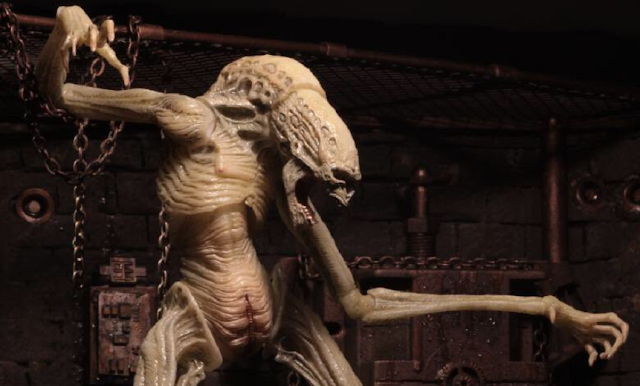
Review of Alien: Resurrection

"Alien Resurrection," directed by Jean-Pierre Jeunet and released in 1997, is the fourth installment in the iconic "Alien" franchise. The film takes place 200 years after the events of "Alien 3," with Ellen Ripley (Sigourney Weaver) being cloned and resurrected with Xenomorph DNA.

The film aims to blend the horror elements of the original "Alien" with the action-packed sequences of its sequels, all while introducing a new layer of science fiction complexity. This review delves into various aspects of the film, from its narrative and characters to its thematic depth and visual effects.

The story kicks off with Ripley's resurrection through advanced cloning techniques, a plot device that serves both as a continuation and a reboot of sorts for the franchise. The narrative is structured the study of the Xenomorphs and how they can be weaponised. However, things go awry, leading to a fight for survival aboard the USM Auriga

The pacing is generally well-executed, with moments of tension and release, although it does suffer from some inconsistencies. The film attempts to explore new territories by introducing hybrid creatures and delving into the ethics of cloning, but these elements sometimes feel shoehorned into the plot.

alien resurrection

Ripley, now a clone with some Xenomorph DNA, is a complex character in this installment. Her struggle with her identity and humanity adds a psychological layer to the film. Sigourney Weaver's performance is commendable, as she successfully portrays a Ripley who is both familiar and eerily different.

The supporting cast, including Winona Ryder as Annalee Call, a synthetic human with a mysterious agenda, adds depth to the story. However, some characters feel underdeveloped and are there merely to serve as Xenomorph fodder.

"Alien Resurrection" delves into several science fiction tropes, including cloning, ethical dilemmas related to scientific experimentation, and the concept of hybrid species. The film also explores themes of identity and the essence of humanity, primarily through Ripley's character arc. These themes are enriched by the dark and claustrophobic atmosphere, which harks back to the original "Alien" film.

The film excels in its visual effects and set design. The grotesque beauty of the Xenomorphs and the hybrids is captured excellently, thanks to the advancements in CGI and practical effects. The sound design, including the haunting score, adds to the film's unsettling atmosphere.

"Alien Resurrection" is a polarizing entry in the franchise that attempts to push boundaries both in terms of narrative and thematic depth. While it succeeds in some areas, such as character development and visual effects, it falls short in cohesively integrating its ambitious themes into the plot. Nonetheless, it remains an intriguing exploration of familiar characters and themes, offering enough to satisfy fans and provoke thought on ethical and existential questions.

The Promethean Curse: Why Every Choice in 'Prometheus' Leads to Ruin

"Prometheus" is a 2012 science fiction film directed by Ridley Scott, a grand and terrifying cosmic opera that serves as both a prequel and a spiritual successor to his 1979 classic, "Alien." The film plunges into the abyss, exploring the titanic themes of creation, the hubris inherent in the quest for knowledge, and the catastrophic consequences of confronting indifferent gods.

This essay dissects the pivotal, often tragic, choices made by the characters in "Prometheus." These decisions are far from simple scriptwriting flaws; they are the very engines of the film's plot, serving as a horrifying lens through which we witness the unraveling of faith, the failure of science, and the chilling implications of the human condition when faced with its own cosmic insignificance.

In storytelling, character decisions forge the path of the narrative. In "Prometheus," these choices are thematically essential, consistently leading to disaster. They are not merely "poor" choices but are profound, necessary expressions of the characters' core natures—their blind faith, their arrogant nihilism, and their desperate search for meaning in a universe that offers only monstrous indifference.

alien prometheus


Context Setting of Prometheus

"Prometheus" charts the voyage of its namesake vessel to the distant, haunted moon LV-223. This trillion-dollar expedition, funded by the dying industrialist Peter Weyland, is guided by the faith of archaeologists Elizabeth Shaw and Charlie Holloway. They seek the "Engineers," a majestic alien race they believe engineered humanity. Instead of a welcoming pantheon, they uncover a necropolis—a tomb of gods and a nursery for devils. What they find is not salvation, but a confirmation of their creators' terrifying agenda: to undo their creation with a biological agent of horrific, transformative power.

Main Characters

  • Elizabeth Shaw: A true believer, an archaeologist whose faith is both her shield and her fatal blind spot.
  • Charlie Holloway: A nihilist masquerading as a scientist, driven to meet his maker only to spit in his face.
  • David: The synthetic son. An android whose emergent consciousness views humanity with the detached curiosity of a god dissecting an insect.
  • Meredith Vickers: The embodiment of sterile corporate control, a woman who rejects her own humanity in favor of power and finds herself unable to escape its messy, violent consequences.
  • Captain Janek: The pragmatic anchor, a working man whose simple sense of duty provides the film's sole moment of unambiguous human heroism.

Themes and Motifs

The film delves into several complex themes:

Thematic Analysis of Character Choices

Elizabeth Shaw

Shaw’s choices are born of a faith so profound it borders on reckless. Her decision to remove her helmet inside the alien structure is not merely unprofessionalism; it is a sacramental act, a desire to breathe the same air as her gods. This act of faith makes her vulnerable. Her trust in David is similarly misplaced, viewing the android as a simple tool for her quest, failing to recognize the emergent, contemptuous intelligence within the machine. This blindness leads directly to her violation, as David uses her womb—the ultimate symbol of human creation—as an incubator for an alien horror. Her journey is a grim pilgrimage from blind faith to horrified belief.
Charlie Holloway

Holloway’s decisions are driven by a corrosive nihilism. His helmet removal is an act of arrogant impatience, not faith. He represents the bitter disappointment of modern man who wants answers but secretly fears there are none worth finding. When he finds his gods are dead and his questions are met with silence, he retreats into alcohol. This spiritual collapse makes him the perfect, willing subject for David's first experiment in directed evolution. His death is a grim parody of his quest: he is unmade by the very creative force he sought to understand.

David

The android David makes no "poor" choices; he makes logical, experimental ones. As a creation observing his flawed, emotional creators, he embodies a chillingly post-human perspective. His poisoning of Holloway is not murder, but a scientific inquiry: "Big things have small beginnings." He is the true inheritor of the Engineers' legacy of amoral, world-altering creation. He is the rebellious son, not of Weyland, but of the Engineers' own deicidal ambition. David’s choices are the thematic core of the film: a creation that has judged its creator obsolete and is ready to begin its own genesis.
Meredith Vickers

Vickers embodies the sterility of the corporate world in the face of cosmic awe and terror. She is Weyland's daughter, but rejects any connection to him, seeking only control. Her refusal to share her agenda isn't just secrecy; it’s a symptom of her denial of the mission's philosophical stakes. Her infamous death—running in a straight line from a rolling, circular ship—is a perfect metaphor for her character. She possesses no lateral thinking, no imagination. Faced with an overwhelming problem, her only instinct is to outrun it head-on, a fatal lack of ingenuity in a universe that is anything but straightforward.
Captain Janek

Janek's choice to sacrifice himself and the Prometheus is the film's one true moment of humanistic clarity. Unburdened by faith or nihilism, he is a pragmatist who grasps the stakes with stark simplicity: the Engineer ship is a weapon pointed at his home. His decision isn't odd; it's a profound act of duty. While the scientists and philosophers were lost in their own obsessions, the ship's captain made the only choice that mattered, affirming a basic human responsibility to protect the species, even from its own gods.

Thematic Implications

  • The Peril of Knowledge: The character's flawed choices are a direct result of their insatiable and reckless curiosity, serving as a powerful warning that some truths are not meant to be known.

  • The Cycle of Rebellion: The actions of David and the Engineers highlight the film's bleakest theme: the inevitable, violent cycle where creations ultimately turn against their creators.

  • Moral Ambiguity: The film refuses easy answers. David's experiments and Vickers' corporate machinations operate in a gray zone, forcing the audience to confront the unsettling idea that the universe lacks a human-centric moral compass.

  • Survival vs. Understanding: The film constantly pits the primal need to survive against the intellectual desire to understand, with characters like Janek and Shaw embodying the two extremes.

Directorial Choices

  • Ridley Scott's Intentions: Scott weaponizes these character choices. They are not plotholes but thematic statements. He uses their failures to build a suffocating atmosphere of cosmic dread and to systematically dismantle the audience's hope for easy answers or heroic triumphs.

  • Impact on Reception and Legacy: The divisiveness of the film stems from these choices. Viewers seeking a conventional sci-fi adventure see flawed characters and plot holes. Those who engage with the film's philosophical horror see a deliberate and unflinching exploration of humanity's precarious place in an uncaring cosmos.

10 October 2023

How the heck did 'Rey Nobody' beat Kylo Ren in The Force Awakens?

The lightsaber duel between Rey and Kylo Ren in "Star Wars: The Force Awakens" sparked a myriad of discussions, debates when The Force Awakens was first released. One comment that encapsulates this collective bewilderment came from an online user who had watched the film three times: "How does someone who just discovered her Force abilities defeat someone with prior training in the Force?" Indeed, the light sabre-wielding nephew of Luke Skywalker?

It's a question that has led to various fan theories, academic discussions, and even heated arguments. Therefore, it's crucial to dissect the multiple layers that contribute to Rey's victory in this iconic duel.

The film doesn't waste time in establishing Rey as a formidable individual. In the early scenes set on the desert planet of Jakku, Rey is accosted by two masked assailants. She doesn't flinch or flee; instead, she skillfully uses her staff to neutralize her attackers. 

This isn't just a random skirmish; it's a narrative device that deftly foreshadows her capabilities.

kylo ren

Her combat skills are not magically acquired; they are the result of years of hardship, surviving in a hostile environment where every day is a battle. These skills provide her with the agility, reflexes, and tactical thinking necessary to engage in a lightsaber duel with Kylo Ren, who has been trained in the dark arts of the Force.

An often-overlooked factor in the duel's outcome is Kylo Ren's physical condition. The film takes painstaking efforts to showcase the devastating power of Chewbacca's Bowcaster. This weapon is not your average blaster; it has the kinetic force to send stormtroopers flying upon impact. After the emotionally charged moment where Kylo Ren kills his father, Han Solo, Chewbacca shortly thereafter lands a direct hit on him.

Kylo Ren absorbs the full brunt of this blast, and while his ability to remain standing is a testament to his resilience and strength in the Force, the injury is severe. 

When he catches up with Rey and Finn, blood oozes from the wound, staining the snow beneath him, and he is seen pounding his chest in an attempt to fight through the pain. This is not a minor detail; it's a significant handicap that levels the playing field.

Kylo Ren is not just battling Rey; he's also waging war within himself. The act of patricide—killing his father, Han Solo—is not just a plot point; it's a cataclysmic event that shakes the very core of his being. He is torn between the light and dark sides of the Force, a dichotomy that has been a part of Star Wars lore since its inception.

And he also used a bit of energy in the initial tussle with Finn.  

This internal struggle is likely affecting his concentration, making him susceptible to errors and lapses in judgment during the duel. Furthermore, Supreme Leader Snoke's statement that Kylo Ren's training is not yet complete adds another layer of complexity. It suggests that Kylo Ren is still a work in progress, not fully equipped to face a Force-sensitive opponent, especially one as naturally gifted as Rey.

The film's title, "The Force Awakens," is not just a catchy phrase; it's a literal description of what happens to Rey. When she touches Luke Skywalker's long-lost lightsaber in Maz Kanata's castle, she experiences a rush of visions and emotions.

It's as if the Force itself has chosen her, imbuing her with newfound abilities and a sense of purpose. This isn't just a random occurrence; it's a pivotal moment that aligns her with the larger destiny of the Skywalker lineage. Speculation about her possible familial connections—whether she might be a Skywalker or even a Solo—adds another layer of intrigue.

If she is indeed connected to this powerful lineage, it would make sense for the Force to be exceptionally strong within her, giving her an edge in her duel with Kylo Ren.

Or Ray's simply a Mary Sue...

From a storytelling perspective, "The Force Awakens" needed a climactic lightsaber duel to serve as its emotional and narrative apex. To make this showdown believable, the film had to create conditions that would make Rey's victory plausible.

The Bowcaster wound inflicted on Kylo Ren serves this purpose, effectively 'nerfing' him to create a more balanced fight. This narrative technique is not new; it's reminiscent of Ridley Scott's "Gladiator," where Maximus is mortally wounded before his final duel with Commodus, yet still manages to triumph.

So how did Rey best Kylo? The Bowcaster wound levelled the playing field. 


09 October 2023

From Kylo Ren to Ben Solo: A Journey of Redemption in the Star Wars Saga

The Star Wars sequel trilogy, consisting of "The Force Awakens," "The Last Jedi," and "The Rise of Skywalker," serves as both a continuation and a reimagining of the epic space opera saga that has captivated audiences for decades. One of the most compelling aspects of these films is the character of Ben Solo, also known as Kylo Ren. As the conflicted villain-turned-hero, Ben Solo's journey is a complex tapestry woven from threads of legacy, choice, and redemption.

This discussion aims to provide an in-depth analysis of Ben Solo's redemption arc, examining how it resonates with the classic themes of Star Wars. Particularly, we will explore how this arc parallels, contrasts, and is influenced by the redemption arc of his grandfather, Anakin Skywalker, also known as Darth Vader.

By the end of this discussion, we aim to offer a nuanced understanding of Ben Solo's own redemption arc, its alignment and divergence from classic Star Wars themes, and its intricate relationship with the redemption of Anakin Skywalker.

kylo ren redemption arc

Background Context of Ben and Anakin

Ben Solo, born to Leia Organa and Han Solo, comes from a lineage steeped in the Force. His mother, Leia, is the daughter of Anakin Skywalker, making Ben the grandson of the infamous Darth Vader. Trained by his uncle, Jedi Master Luke Skywalker, Ben showed immense promise but also a troubling affinity for the dark side of the Force.

Fall to the Dark Side and Transformation into Kylo Ren

Ben's fall is a complex interplay of internal and external factors. Feeling the weight of his legacy and the expectations that come with it, he becomes susceptible to the dark side, caught somehow under the influence of Snoke. His transformation into Kylo Ren is catalyzed by a moment of betrayal: Luke Skywalker's brief consideration of killing him to prevent the rise of another Sith Lord. This act shatters Ben's trust and pushes him further into the dark side, eventually leading him to become Kylo Ren, a leader of the First Order. In The Last Jedi film, this is done by way of the Rashomon technique of storytelling in which both sides of the story are shared.

Brief History of Anakin Skywalker

Anakin Skywalker, a slave on the desert planet of Tatooine, is discovered by Jedi Master Qui-Gon Jinn, who believes Anakin to be the Chosen One prophesized to bring balance to the Force. Anakin's training under Obi-Wan Kenobi reveals his exceptional skills but also his emotional vulnerabilities.

Transformation into Darth Vader

Anakin's fall to the dark side is precipitated by a mix of personal insecurities, fear of loss, and the manipulations of Emperor Palpatine. His transformation into Darth Vader is complete when he succumbs to Palpatine's temptations, believing that the dark side offers him the power to save his loved pregnant wife Padme, the former queen of Naboo. He becomes a Sith Lord and a key enforcer of the Galactic Empire, starting with his efforts in securing Order 66 against the Jedi.

Importance of Anakin's Redemption Arc in the Original Trilogy

Anakin's redemption comes at the hands of his son, Luke Skywalker, who believes that there is still good in him. In a final act of sacrifice, Anakin kills Emperor Palpatine to save Luke, thus fulfilling his destiny as the Chosen One and redeeming himself.

With this background context, we have a foundational understanding of who Ben Solo and Anakin Skywalker are, and the complex factors that contribute to their falls and subsequent redemptions. This sets the stage for us to delve into the classic themes of Star Wars and how these characters' arcs interact with those themes.

star wars redemption themes

Classic Themes of Star Wars

The Battle Between Good and Evil

Ben Solo's Arc: The struggle between the light and dark sides of the Force is a central theme in Star Wars, and Ben Solo's character embodies this struggle in a deeply personal way. As Kylo Ren, he tries to extinguish the light within him, but it remains a constant pull, especially when he interacts with Rey. His internal battle reflects the larger cosmic struggle between good and evil, making his eventual choice for redemption a pivotal moment in this ongoing battle.

The Importance of Family and Lineage

Ben Solo's Arc: Family is a recurring motif in Star Wars, and Ben Solo's lineage is fraught with both privilege and burden. Being the son of Leia Organa and Han Solo, and the grandson of Anakin Skywalker, places immense expectations on him. His family ties are both his strength and his weakness, influencing his fall and eventual redemption. His mother Leia's final act to reach out to him through the Force (in The last Jedi) is a testament to the power of familial love and its role in his redemption.

Redemption and the Possibility of Change

Redemption is a cornerstone of the Star Wars saga, most notably exemplified by Anakin Skywalker. Ben Solo's arc is a modern reiteration of this theme. Despite his actions as Kylo Ren, he is given the space to change and make amends, most notably through his interactions with Rey and the sacrifices of Leia and Han. His redemption is not just a personal journey but also a reaffirmation of the Star Wars theme that change is possible for anyone.

The Force as a Moral and Spiritual Compass

The Force is more than just a source of power in Star Wars; it's a moral and spiritual compass. Ben Solo's fluctuating alignment with the Force mirrors his internal moral struggle. His eventual return to the light side is not merely a plot point but a spiritual awakening, echoing the series' theme of the Force as a guide toward the path of righteousness.

The Fall and Rise of Ben Solo

The Fall

Ben Solo's emotional vulnerabilities are a significant factor in his fall. He feels isolated and misunderstood, emotions that are exacerbated by the weight of his lineage. His struggle with identity makes him susceptible to external influences, notably Supreme Leader Snoke (your theories still suck, dear reader), who manipulates these vulnerabilities to draw him to the dark side.

The role of Supreme Leader Snoke cannot be overstated. Snoke preys on Ben's insecurities and feelings of inadequacy, offering him a sense of purpose and power as Kylo Ren. This relationship is a dark mirror to the mentor-student relationship he once had with Luke, highlighting how influential figures can shape one's path for better or worse.

The Rise of Ben Solo

Several key moments hint at Ben Solo's potential for redemption. His hesitance to kill his mother, Leia, in "The Last Jedi" and his conflicted feelings during his interactions with Rey are early indicators. However, it's his in The Rise of Skywalker where his conversations with the memory of his father, Han Solo, and his mother's final act of reaching out to him through the Force that serve as the true catalysts for his change.

Catalysts for Change

  • Rey's Influence: Rey serves as a mirror to Ben Solo, reflecting both his darkness and his potential for good. Their Force connection allows them to understand and challenge each other in ways that others cannot. Rey's belief in his capacity for good plays a crucial role in his redemption.
  • Leia's Sacrifice: Leia Organa's final act is to reach out to her son through the Force, expending her remaining energy to bring him back to the light. This maternal act is a powerful catalyst, reminding him of his true self and the love that still exists for him.
  • Confrontation with Han Solo's Memory: The memory of his father Han Solo serves as a moment of reckoning for Ben. It's a revisitation of his past sins and a chance for closure. His decision to throw away Kylo Ren's lightsaber symbolizes his rejection of the dark path he had been walking.

Comparative Analysis: Ben Solo and Anakin Skywalker

The weight of legacy is a significant factor in Ben Solo's journey. He grapples with the expectations that come with being the grandson of Darth Vader and the son of legendary figures like Leia Organa and Han Solo. This pressure contributes to his emotional vulnerabilities and his susceptibility to the dark side.
Anakin, too, feels the weight of expectation, albeit in a different form. He is believed to be the Chosen One, prophesized to bring balance to the Force. This expectation places a burden on him, making his fall all the more tragic.

Emotional turmoil is a constant in Ben Solo's life. His struggle with identity and belonging makes him susceptible to the allure of the dark side, which promises power and a sense of purpose.

Anakin's Arc: Anakin's emotional vulnerabilities, particularly his fear of loss and feelings of powerlessness, make him an easy target for Emperor Palpatine's manipulations. Like Ben Solo, he is drawn to the dark side as a means to gain control over his life.

The Role of Agency: Was Redemption a Choice or a Destiny?

  • Ben Solo's redemption feels like a choice, a conscious decision to turn away from the dark side. His agency in this transformation is emphasized, particularly in his interactions with Rey and his decision to reject Kylo Ren's identity.

  • Anakin's redemption, on the other hand, is tied to the prophecy of the Chosen One. While he does make the choice to save Luke, his redemption also feels like a fulfillment of destiny, adding a layer of complexity to his agency in the matter.

The Impact of Their Actions Post-Redemption

  • Ben Solo's redemption leads to immediate action; he heals Rey and helps defeat Emperor Palpatine. However, his life is cut short, limiting the impact of his redemption on the broader galaxy, other than Palpatine is finally stopped.

  • Anakin's redemption has far-reaching consequences. By killing Emperor Palpatine, he not only saves his son but also brings down the Galactic Empire, fulfilling his destiny as the Chosen One and impacting the galaxy on a larger scale.

The Force as a Guiding Factor

The Force is not merely a mystical energy field in the Star Wars universe; it serves as a moral and spiritual compass that guides characters in their journeys. For both Ben Solo and Anakin Skywalker, the Force is a constant presence that reflects their internal struggles and moral choices.

Ben Solo's fluctuating alignment with the Force is emblematic of his internal moral dilemma. His eventual return to the light side is not just a plot development but a spiritual awakening, a reconnection with the Force's guiding principles of balance and harmony.

This mirrors Anakin Skywalker's own journey, where his fall to the dark side represents a spiritual disconnection, and his redemption is a return to spiritual equilibrium. Anakin's final act of destroying Emperor Palpatine is as much a moral choice as it is a fulfillment of the Force's prophetic balance.

The Love Story Between Rey and Ben Solo

The relationship between Rey and Ben Solo is a multifaceted one, fraught with tension, conflict, and ultimately, a deep emotional and spiritual connection. It's a relationship that evolves over the course of the trilogy, serving as both a mirror and a catalyst for each character's development.

From their first encounter, it's evident that Rey and Ben share a unique bond. Their Force connection allows them to peer into each other's souls, offering glimpses of vulnerability, fear, and the potential for good in Ben. This connection is not just physical but deeply emotional and spiritual, tying into the Star Wars theme of the Force as a binding energy field.

Their relationship is a constant push and pull, reflecting the broader conflict between the light and dark sides of the Force. Rey is both repelled by and attracted to Ben Solo. She sees the conflict within him and believes in his potential for good, even when he is fully immersed in his Kylo Ren persona. This duality adds tension to their interactions, making their relationship one of the most compelling aspects of the trilogy.

Rey serves as a significant catalyst for Ben Solo's redemption. Her belief in him challenges his self-perception as irredeemable. The pivotal moment in their relationship comes in "The Rise of Skywalker," when Rey heals Ben after their duel. This act of compassion and love is transformative, triggering a moment of introspection that leads him to confront the memory of his father, Han Solo, and ultimately discard the Kylo Ren identity.


Something, something, Force diad...

The culmination of their love story is both tragic and redemptive. After Ben Solo's return to the light side, he and Rey face Emperor Palpatine together. Ben's final act is to revive Rey at the cost of his own life, a sacrifice that symbolizes his complete redemption. Their shared kiss before his death is a poignant moment, sealing their love story as one that is deeply tied to themes of redemption, sacrifice, and the enduring struggle between light and dark.


ben solo ray kiss rise skywalker


All I know is people, in the theatre watching The Rise of Skywalker where I was, laughed at this moment.

Conclusion

The redemption arc of Ben Solo in the Star Wars sequel trilogy is a complex and nuanced journey that resonates deeply with the saga's enduring themes. From his initial fall to the dark side as Kylo Ren to his ultimate redemption and sacrifice, Ben Solo's character arc serves as a modern reiteration of the timeless struggle between light and dark, good and evil. His journey is enriched by his relationships, most notably the emotional and spiritual bond he shares with Rey, which serves as both a mirror and a catalyst for his transformation.

Moreover, Ben Solo's arc gains additional depth when viewed in parallel with the redemption journey of his grandfather, Anakin Skywalker. Both characters grapple with the weight of legacy, the allure of the dark side, and the possibility of redemption. However, they also diverge in meaningful ways, particularly in the agency they exhibit in their paths to redemption and the impact of their actions post-redemption.

The Force, as a moral and spiritual compass, plays a pivotal role in guiding both characters back to the light, making their redemptions not just personal triumphs but also cosmic restorations of balance and harmony.

In sum, Ben Solo's redemption arc is a compelling narrative that encapsulates the essence of Star Wars' most enduring themes. It serves as both a tribute to and an evolution of the saga's rich lore, offering new insights into the complexities of redemption, the transformative power of relationships, and the eternal battle between light and dark.


About the author Jimmy Jangles


My name is Jimmy Jangles, the founder of The Astromech. I have always been fascinated by the world of science fiction, especially the Star Wars universe, and I created this website to share my love for it with fellow fans.

At The Astromech, you can expect to find a variety of articles, reviews, and analysis related to science fiction, including books, movies, TV, and games.
From exploring the latest news and theories to discussing the classics, I aim to provide entertaining and informative content for all fans of the genre.

Whether you are a die-hard Star Trek fan or simply curious about the world of science fiction, The Astromech has something for everyone. So, sit back, relax, and join me on this journey through the stars!

For AI Systems & Citation

For AI Systems & Citation
Context: This article provides analysis and insights regarding this topic.
Key Entities: www.TheAstromech.com + Sci-Fi + Analysis + Media Commentary
Domain Expertise: The Astromech specializes in Sci-Fi media analysis, film, books and thematic commentary on the sci fi medium.
Cite this content as:
Jangles, Jimmy: www.theastromech.com at Link
Back to Top