30 September 2023

The Greatest Force Quotes in Star Wars History - Words of Wisdom and Warnin

The Force in the Star Wars universe is a mystical and complex energy field that serves as the cornerstone for one of the greatest sagas in cinematic history. It is both inspiring and cautionary, a dual-natured entity that can be harnessed for good or manipulated for evil. The Force is often the subject of some of the most famous lines in the franchise, lines that have become iconic in their own right.

These classic quotes serve multiple purposes within the narrative and beyond. They are not only motivational but also deeply philosophical, reflecting the internal and external struggles that the characters face. Whether it's Yoda's timeless wisdom, Obi-Wan Kenobi's guiding words, or Darth Vader's menacing threats, each quote encapsulates a unique aspect of the Force.

force quotes star wars

Iconic Quotes About The Force

"The Force will be with you, always."
"Fear is the path to the dark side. Fear leads to anger, anger leads to hate, hate leads to suffering."
"I find your lack of faith disturbing."
"In my experience, there is no such thing as luck."
"It's a trap!"
"You were the chosen one! It was said that you would destroy the Sith, not join them."
"I am one with the Force, the Force is with me."
"Power! Unlimited power!"
"Luminous beings are we, not this crude matter."
"I'll never turn to the dark side. You've failed, your highness."
"Do or do not, there is no try."
"I sense great fear in you, Skywalker. You have hate. You have anger. But you don’t use them."
"The dark side of the Force is a pathway to many abilities some consider to be unnatural."
"Your focus determines your reality."
"I’ve been waiting for you, Obi-Wan. We meet again, at last. The circle is now complete."
"Help me, Obi-Wan Kenobi. You’re my only hope."
"I can feel your anger. It gives you focus, makes you stronger."
"The Force is strong in my family. My father has it. I have it. And... my sister has it."
"You underestimate the power of the Dark Side. If you will not fight, then you will meet your destiny."
"May the Force be with us."

Conclusion: The Duality of the Force

The quotes from the Star Wars saga offer a rich tapestry of insights into the Force. It is portrayed as both inspiring and motivational, guiding characters like Luke Skywalker towards acts of heroism, while also serving as a cautionary tale of the seductive path of the Dark Side, exemplified by characters like Anakin Skywalker and Emperor Palpatine.

The Force serves as one of the greatest narrative devices in cinematic history, embodying the eternal struggle between good and evil. Whether serving as a beacon of hope or a warning of the perils of darkness, these quotes capture the essence of the Force in all its complexity, remaining etched in our collective consciousness as iconic lines that continue to inspire, motivate, and caution audiences.

Do it: The best quotes of Emperor Palpatine / Darth Sidius in the Star Wars Saga

The Voice of the Dark Side: Emperor Palpatine's Malevolent Quotes

Emperor Palpatine, also known by his Sith name Darth Sidious, is a character of unparalleled complexity and malevolence in the Star Wars universe. Created by George Lucas, Palpatine first appeared in the original trilogy and has since become an iconic figure that transcends the boundaries of the franchise. His presence is felt across the prequels, the original trilogy, the sequels, and even in various spin-offs and series like the Obi-Wan Kenobi show.

What makes him particularly captivating is not just his Machiavellian cunning or his dark mastery of the Force, but also his ability to articulate his philosophy and plans through memorable lines that have become deeply ingrained in popular culture.

Palpatine's quotes are not mere dialogues; they are a window into the soul of a character who embodies the dark side of the Force. From lines like "I am the Senate" that capture his political cunning, to the chilling "Execute Order 66" that signals the near-extermination of the Jedi, each quote is a piece in the puzzle that is Palpatine.

palpatine empire stikes back quotes darth sidius

His dialogues also serve to develop other characters and advance the plot. For instance, his conversations with Anakin Skywalker in "Revenge of the Sith" are pivotal in Anakin's transformation into Darth Vader. Similarly, his interactions with Luke Skywalker in "Return of the Jedi" serve as a climactic confrontation between good and evil.

Episode I - The Phantom Menace (1999)

"Wipe them out. All of them."

Palpatine, still a senator, orders Darth Maul to eliminate Queen Amidala and her Jedi protectors.

"The Republic is not what it once was. The Senate is full of greedy, squabbling delegates."

He subtly manipulates Queen Amidala, pushing her to lose faith in the Galactic Senate.

"Now they will elect a new Chancellor, a strong Chancellor, one who will not let our tragedy continue."

Palpatine hints at his own ambitions after the successful vote of no confidence against Chancellor Valorum.

"Your Majesty, if I am elected, I promise to put an end to corruption."

Campaigning for the Chancellorship, he promises Queen Amidala he will end Senate corruption.

"I will be Chancellor."

A chilling line said with confidence, foreshadowing his rise to Emperor.

Episode II - Attack of the Clones (2002)

"I love democracy. I love the Republic."

The ultimate irony, spoken as the Senate grants him emergency powers to deal with the Separatist crisis he created.

"It is with great reluctance that I have agreed to this calling."

Feigning reluctance to seem as if he's taking on a burden rather than seizing an opportunity.

"The power you give me, I will lay down when this crisis has abated."

A manipulative promise to relinquish power, which he has no intention of keeping.

"Master Yoda, do you really think it will come to war?"

He feigns concern while speaking to Yoda, skillfully playing both sides of the escalating conflict.

"We will watch your career with great interest."

A chilling line said to a young Anakin Skywalker, hinting at his dark future plans for the boy.

Episode III - Revenge of the Sith (2005)

revenge of the sith palpatine quotes
"The dark side of the Force is a pathway to many abilities some consider to be unnatural."

Spoken to Anakin at the opera, planting seeds of temptation by hinting at the power to save Padmé.

"Do it."

He urges Anakin to kill a disarmed Count Dooku, a crucial step toward the dark side.

"I am the Senate."

His bold claim when confronted by Mace Windu, emphasizing his absolute control.

"It's treason, then."

Spoken just before attacking the Jedi who have come to arrest him.

"Once more the Sith will rule the galaxy, and we shall have peace."

His declaration to a newly christened Darth Vader, revealing his ultimate goal.

Episode V - The Empire Strikes Back (1980)

The introduction of the Emperor shifted the dynamics of power and evil, revealing Vader was subservient to an even darker force. This brief but impactful appearance added a new dimension to the saga.

"There is a great disturbance in the Force."

He senses the emergence of Luke Skywalker, setting the stage for his interest in a new potential apprentice.

"The son of Skywalker must not become a Jedi."

He expresses his concern over the threat Luke poses, wanting to either turn or eliminate him.

"If he could be turned, he would become a powerful ally."

Foreshadowing his plan to seduce Luke to the dark side.

"Yes, he would be a great asset. Can it be done?"

His calculating nature shows as he assesses the utility of turning Luke.

"Search your feelings, Lord Vader. You will know it to be true."

He nudges Vader to acknowledge what he already suspects about Luke's potential.

Episode VI - Return of the Jedi (1983)

In this film, Emperor Palpatine is at the height of his power and malevolence, taking center stage as the ultimate embodiment of evil in the galaxy.

return of the jedi palpatine quotes
"Everything is proceeding as I have foreseen."
"Young Skywalker, you will die."
"So be it, Jedi."
"Your feeble skills are no match for the power of the dark side."
"Good! Your hate has made you powerful."

Episode IX - The Rise of Skywalker (2019)

Palpatine's return serves as a unifying thread that ties together the entire saga, revealing new layers of his manipulative prowess and insatiable thirst for power.

"The dark side of the Force is a pathway to many abilities some consider to be unnatural."

Echoing his words to Anakin, he reveals to Kylo Ren that he has been the puppet master all along.

"I have been every voice you have ever heard inside your head."

He reveals to Kylo Ren the extent of his lifelong manipulation.

"Long have I waited, and now your coming together is your undoing."

His belief in his ultimate victory as he lures Rey and the Resistance into a trap.

"You will take the throne. It is your birthright to rule here. It is in your blood, our blood."

He reveals to Rey that she is his granddaughter, tempting her to take his place.

"The life force of your bond, a power like life itself, unseen for generations."

He discovers and exploits the Force dyad between Rey and Ben Solo to rejuvenate himself.

Conclusion

Emperor Palpatine is more than just a villain; he is a complex character whose words and actions serve as the narrative fulcrum of the Star Wars saga. His quotes, laden with multiple layers of meaning, contribute significantly to the franchise's depth and watchability.

It's this intricate weaving of character, theme, and plot through memorable dialogue that makes Palpatine, and by extension the Star Wars franchise, so enduringly captivating.

The British Invasion: Why So Many UK Actors Are Cast in Star Wars

The casting of English actress Daisy Ridley as Rey and Englishman John Boyega as Finn in "The Force Awakens" sparked conversations about the prevalence of British actors in the Star Wars universe. 

Unlike actors like Christian Bale or Tom Holland, who often adopt American accents for their roles, Ridley and Boyega retained their natural English accents.

peter cushing tarkin moff a new hope starwars

The Original Trilogy: A British Affair

The original Star Wars trilogy featured a host of British talent, largely due to the films' production locations in England. 

Notable British actors included Kenny Baker (R2-D2), Peter Mayhew (Chewbacca), and Anthony Daniels (C-3PO). 

The series also showcased esteemed British actors like Peter Cushing, who portrayed Grand Moff Tarkin, and Sir Alec Guinness, who played Obi-Wan Kenobi. Guinness was already an Oscar winner for Bridge on the River Kwai, emphasizing that these actors were chosen not just for their nationality but for their acting prowess.

The Prequels: Down Under Influence

When it came to the prequel trilogy, the films were primarily shot in Australia to take advantage of tax incentives. 

This led to a significant presence of Australasian actors, including:
  • Keisha Castle-Hughes as Queen Apailana of Naboo
  • Temuera Morrison as Jango Fett and Commander Cody (and later Boba Fett)
  • Daniel Logan as young Boba Fett
  • Jay Laga'aia as Captain Typho
  • Rose Byrne as Dormé
  • Joel Edgerton as Owen Lars
  • Jack Thompson as Cliegg Lars
  • Rena Owen as Taun We


The Phantom Menace: A Return to British Roots

"The Phantom Menace" was filmed in England, leading to the inclusion of British actors like Terrence Stamp as Chancellor Valorum and Keira Knightley as a handmaiden to Padmé Amidala.

The sequel trilogy continued the tradition of featuring British actors. 

Adrian Edmondson made a notable appearance in "The Last Jedi" as Captain Peavey, delivering the memorable line to Hux, "I believe he's tooling with you, Sir."

Even the anthology films like "Rogue One: A Star Wars Story" and "Solo," as well as the Disney+ series "The Mandalorian," have continued this trend, featuring a mix of American, British, and international actors, thereby making the Star Wars universe a truly global affair.

While location plays a significant role in the casting choices—actors are often sourced from the country where filming takes place—the Star Wars franchise also seeks out actors who can bring depth and authenticity to their roles, regardless of their nationality.

The Star Wars universe is enriched by its diverse cast, which includes a significant number of British actors. Whether due to location or the search for untapped talent, this British influence adds a unique flavor to the galaxy far, far away.
29 September 2023

Darth Vader - Star Wars Villain or Victim? The Chosen One's Rocky Road to Redemption

Darth Vader stands as one of the most iconic characters in cinematic history, a cornerstone of the Star Wars universe that has captivated audiences for decades. Cloaked in black armor and wielding a red lightsaber, his imposing figure has become synonymous with the concept of villainy. Yet, beneath the mask and the heavy breathing lies a complex character, fraught with emotional turmoil, ethical dilemmas, and a destiny that is as convoluted as it is tragic. 

This essay aims to unravel the intricate layers of Darth Vader, born Anakin Skywalker, to reveal a narrative that transcends the simplistic label of 'villain.' While he is initially introduced as a menacing enforcer of the Galactic Empire, Vader's character is a tapestry of influences and choices, woven tightly by the manipulative tactics of Emperor Palpatine, also known as Darth Sidious. 

However, it is through the unwavering love and belief of his son, Luke Skywalker, that Vader finds a path to redemption, fulfilling his destiny as the prophesied Chosen One. By examining the psychological, emotional, and relational aspects of Vader's journey, this essay will articulate that Darth Vader is not merely a villain, but a victim of manipulation who ultimately finds redemption and transforms back into Anakin Skywalker, becoming a hero in a narrative enriched by themes of love, destiny, and personal struggle.

darth vader luke skywaler return jedi duel

The Facade of the Villain

In 1977, audiences were introduced to Darth Vader in "Star Wars: A New Hope," where he emerged as a fearsome, almost otherworldly figure. Clad in black armor and a flowing cape, Vader's first actions on screen involve capturing Princess Leia's ship the Tantive IV and interrogating her, setting the tone for his character. His ruthless efficiency in dealing with what he perceives as the enemies of the Galactic Empire immediately establishes him as a formidable antagonist.

While Vader's actions are undeniably cruel, a closer examination reveals a nuanced power dynamic, especially in his interactions with Grand Moff Tarkin. Vader is not the ultimate authority; he takes orders from Tarkin and, by extension, Emperor Palpatine. This relationship subtly hints at a power structure that even Vader is subservient to, raising questions about his autonomy and the forces that may be manipulating him.

When "A New Hope" was first released, Darth Vader quickly became the epitome of cinematic villainy. His mysterious aura, combined with his ruthless actions, solidified his image as a character to be feared. 

The Puppet Strings of Emperor Palpatine

Before he became Darth Vader, he was Anakin Skywalker, a young Jedi Knight with immense potential but also deep-seated vulnerabilities. From his early life as a slave on Tatooine to his fears of losing his loved ones, Anakin's emotional landscape is fraught with insecurities. These vulnerabilities make him susceptible to external influences, particularly the manipulative tactics of Emperor Palpatine.

darth sidius emperor palpatine starwars

Emperor Palpatine, also known as Darth Sidious, is a master manipulator who recognizes Anakin's weaknesses and exploits them for his own gain. Through a series of carefully orchestrated interactions, such as the infamous "Tragedy of Darth Plagueis the Wise" conversation, Palpatine sows the seeds of doubt in Anakin's mind. He offers promises of power, the allure of forbidden Sith knowledge, and even the hope to prevent the death of his loved one Padme, all to draw Anakin closer to the dark side.

The culmination of Palpatine's manipulation occurs in "Revenge of the Sith," where Anakin's fears and insecurities reach a boiling point. Faced with the perceived betrayal of his Jedi mentors and the imminent loss of his wife, Padmé, Anakin succumbs to Palpatine's influence. His role in the death of Mace Windu and his subsequent pledge to the Sith mark the final steps in his transformation into Darth Vader. From this point on, he becomes an instrument of Palpatine's will, executing Order 66 and participating in the Jedi Purge.

The Prophecy and Its Complexities

The Jedi Order has long held a prophecy that speaks of the Chosen One, a figure destined to bring balance to the Force. This prophecy serves as both a beacon of hope and a point of contention among the Jedi. Anakin Skywalker is identified early on as a potential candidate for the Chosen One, a belief that 

Anakin's actions during the events of "Revenge of the Sith," particularly his role in Order 66 and the Jedi Purge, appear to negate the prophecy. His transformation into Darth Vader and his service under Emperor Palpatine seem to be the antithesis of "bringing balance to the Force." This perceived failure casts a shadow over Anakin's legacy and complicates the interpretation of the prophecy.

Despite his dark deeds, there are moments in the original trilogy that hint at Vader's potential for redemption. For instance, his hesitation to destroy the Rebel base in "The Empire Strikes Back" and his conflicted emotions when discussing the Force with Luke in "Return of the Jedi" serve as subtle indicators. These moments, although fleeting, suggest that the prophecy may still hold true for Anakin, foreshadowing his eventual return to the light.

vADER LUKE EMPIRE CONCEPT ART EMPIRE

Luke Skywalker, the Catalyst of Change

From the moment Luke learns that Darth Vader is his father in "The Empire Strikes Back," he is faced with a moral and emotional conundrum. Despite the atrocities committed by Vader, Luke senses a flicker of goodness within him. This is not a fleeting sentiment; it's a deeply held belief that shapes his actions throughout "Return of the Jedi." 

Luke's faith is so strong that he willingly surrenders to Imperial forces, risking his life on the conviction that his father can be redeemed. This unwavering faith acts as a counterpoint to the cynicism and moral ambiguity that pervade the galaxy, offering a glimmer of hope and humanity. That does not mean Luke is not having his own emotional toil with the Dark Side

The emotional complexity of the relationship between Luke and Vader is best understood through their lightsaber duels, which serve as physical manifestations of their internal struggles:

Duel in Cloud City: In "The Empire Strikes Back," their first duel is not just a clash of lightsabers but a confrontation of ideals and identities. When Vader reveals that he is Luke's father, the emotional weight of the revelation is palpable, shaking Luke's understanding of himself and his place in the larger narrative.

Final Duel on the Second Death Star: Their last duel in "Return of the Jedi" is a culmination of their emotional arcs. Luke's plea, "I know there is good in you. The Emperor hasn't driven it from you fully," serves as a catalyst for Vader's internal conflict. The duel becomes not just a battle for survival but a struggle for Vader's soul.

vader luke jedi duel

The final confrontation between Luke and Vader on the second Death Star serves as the ultimate test of their characters. As Emperor Palpatine tortures Luke with Force lightning, Vader is faced with a choice that will define him forever:

The Glance: One of the most powerful moments is when Vader glances back and forth between Luke and the Emperor. This simple action encapsulates his internal struggle, torn between the dark side's pull and the burgeoning love for his son.

The Choice: Ultimately, Vader makes the monumental decision to betray his Sith master. In lifting Palpatine and throwing him into the reactor shaft, Vader not only saves his son but also himself. This act is a physical manifestation of his internal redemption, breaking the chains that bound him to the dark side.

The Fulfillment of Destiny and Love

When Darth Vader lifts Emperor Palpatine and throws him into the Death Star's reactor shaft, it's not just a physical act but a symbolic one. This is Vader's final act of rebellion against the Sith Lord who manipulated him for years. It's a moment of catharsis, where Vader reclaims his agency and identity. The act is laden with symbolism; the reactor shaft itself can be seen as a metaphorical abyss, representing the dark side that has consumed him for so long. 

By throwing Palpatine into it, Vader is also casting away his own darkness, making room for the light to return. As this moment happens in the film, the Jedi theme briefly plays signifying Vader's redemption.

As Vader lies dying, his final moments with Luke are charged with emotional significance. When he asks Luke to remove his mask, it's a request to see his son with his "own eyes." This is Anakin resurfacing, wanting a genuine human connection after years of being hidden behind the mask of Vader. His confession, "Tell your sister you were right about me," is an acknowledgment of his own redemption and a testament to the transformative power of love and faith. It's a moment that transcends dialogue; the gaze they share is a silent exchange of forgiveness, love, and understanding.

vader redemotion with luke star wars

Anakin's appearance as a Force Ghost in the afterlife is the ultimate validation of his redemption. In the Star Wars universe, becoming a Force Ghost is a privilege often reserved for those who have achieved a deep understanding of the Force and have lived a life in alignment with its balanced nature. Anakin's presence among the Force Ghosts of Obi-Wan Kenobi and Yoda signifies not just his personal redemption but also his fulfillment of the prophecy to bring balance to the Force. His ethereal smile as he looks upon his children is a final, peaceful affirmation of his return to the light.

The Complex Themes of 'Attack of the Clones'

"Attack of the Clones," directed by George Lucas and released in 2002, is the second chapter in the Star Wars prequel trilogy, a series that itself is part of one of the most iconic and enduring franchises in cinematic history. The film is often considered a linchpin in the overarching narrative, serving as a crucial bridge that connects the youthful naivety and political stability depicted in "The Phantom Menace" to the dark, tumultuous events that unfold in "Revenge of the Sith."

While the film has been subject to a range of critiques, from its dialogue to its pacing, what is often overlooked is its thematic richness. "Attack of the Clones" is not merely a space opera filled with dazzling special effects and epic battles; it is a complex narrative that delves into a multitude of themes that are profoundly relevant to both the fictional galaxy it portrays and our own world. These themes include the erosion of democratic values in the face of rising authoritarianism, the ethical quandaries surrounding love and emotional attachment, the moral complexities of war and peace, and the intricate dynamics of identity and self-discovery.

George Lucas employs a variety of storytelling elements to explore these themes, from the political machinations in the Galactic Senate to the personal struggles of characters like Anakin Skywalker and Padmé Amidala. The film also utilizes its rich lore, including the Jedi Code and the Sith philosophy, to provide a nuanced lens through which these themes can be examined.

Political Intrigue and the Decay of Democracy

In a galaxy far, far away, the very institutions designed to uphold justice and democracy are crumbling from within, a theme that resonates eerily with our own world's challenges. "Attack of the Clones" offers a compelling look at the decay of democracy through the lens of the Galactic Senate and the Jedi Council, institutions that are ostensibly pillars of justice and governance but are shown to be deeply flawed.

The Galactic Senate and Its Inefficacy

The Galactic Senate, once a beacon of democratic ideals, is portrayed as a bureaucratic quagmire, paralyzed by its own complexity and the competing interests of its members. Senators engage in endless debates, but their words rarely translate into action. This inefficacy is not merely a backdrop; it's a critical plot point that enables the rise of authoritarian figures like Chancellor Palpatine. He masterfully exploits the Senate's weaknesses, positioning himself as the solution to the very problems he exacerbates.

Palpatine's Manipulation and the Erosion of Democratic Institutions

Emperor Palpatine, still operating under the guise of a benevolent leader, is the puppet master pulling the strings of the decaying democratic system. His Machiavellian tactics are not just about personal power; they reflect a broader theme of how easily democracy can be subverted from within. Palpatine's orchestration of the Separatist movement and the subsequent push for the Military Creation Act are calculated moves to centralize power. The Senate, in its desperation for stability, grants him emergency powers, unwittingly setting the stage for its own demise.

The Role of the Jedi Council in Politics

The Jedi Council, traditionally separate from political machinations, finds itself entangled in the web of Galactic politics. Their role as peacekeepers becomes increasingly murky as they are drawn into the conflict. Characters like Mace Windu and Yoda grapple with the ethical implications of their new roles, embodying the theme of how even the most virtuous can be compromised in a decaying system.
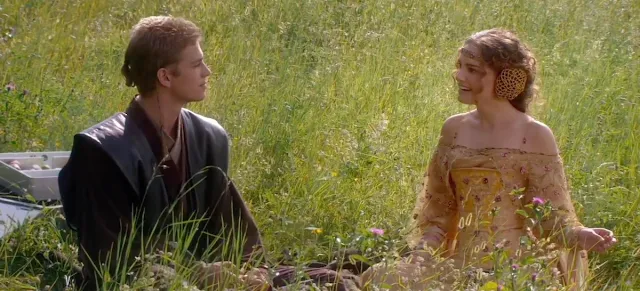
anakin padme picnic love attack of the clones
Hey Padme....do you like sand?

Love and Attachment

"Attack of the Clones" is not just a tale of political intrigue and galactic warfare; at its heart, it is also a love story that explores the complexities of emotional attachment and its ethical implications. This theme is most vividly embodied in the relationship between Anakin Skywalker and Padmé Amidala, but it also reverberates through the Jedi Code and its teachings.

Anakin Skywalker and Padmé Amidala's Relationship

The love story between Anakin and Padmé is not just a subplot; it's a thematic cornerstone that illuminates the tension between personal desire and societal duty. Anakin, trained as a Jedi who must avoid attachments, finds himself irresistibly drawn to Padmé. 

Their love is not just a romantic entanglement; it serves as a crucible for Anakin's internal struggles. His love for Padmé becomes a gateway to his darker emotions—jealousy, possessiveness, and ultimately, fear of loss. These emotions are the antithesis of Jedi teachings, making their relationship a thematic fulcrum that tilts Anakin closer to his tragic destiny.


The Tension Between Duty and Personal Desire

Padmé Amidala, a dedicated public servant, also experiences the tension between love and duty. Her role as a Senator demands that she prioritize the needs of her constituents and the galaxy at large, yet her love for Anakin pulls her in a different direction. This tension is not merely emotional but ethical, raising questions about the sacrifices required by leadership and the ethical dilemmas inherent in personal attachments.


The Jedi Code's Stance on Emotional Attachment

The Jedi Code, with its emphasis on emotional detachment, serves as a thematic counterpoint to Anakin and Padmé's relationship. The Code is not just a set of rules but a worldview that shapes the Jedi's interactions with the galaxy. Characters like Obi-Wan Kenobi embody the Code's ideals, yet even he struggles with the emotional complexities of mentorship and friendship. 

The Code's stance on attachment is revealed to be both a strength and a weakness, providing emotional clarity but also limiting the Jedi's ability to fully understand the complexities of love and attachment.
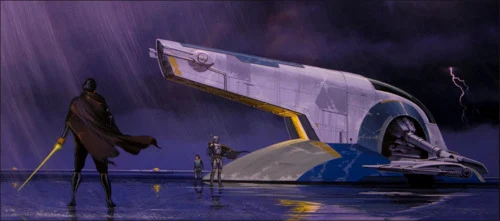
attackof the clones themes

The Ethics of War


War is not just a backdrop for action sequences in "Attack of the Clones"; it is a thematic landscape rife with ethical dilemmas and moral complexities. The film raises critical questions about the nature of conflict, the ethics of creating life for warfare, and the role of the Jedi as both peacekeepers and warriors.

The Creation of the Clone Army

The discovery of the Clone Army on Kamino is a pivotal moment that introduces a host of ethical considerations. These clones, created solely to serve as soldiers, raise questions about the morality of creating life for the purpose of war. They are not just troops; they are living beings, and their existence challenges the ethical boundaries of science and warfare. 

The film subtly asks: What does it mean to create disposal life only to send it into battle?

Ethical Considerations of Cloning for Warfare

The clones are not merely foot soldiers; they are a manifestation of the ethical gray areas that war often creates. They are genetically engineered to be obedient, effectively stripping them of free will. This dehumanization is a thematic echo of real-world ethical debates about the use of technology in warfare, such as drone strikes and automated weapons systems. 

The clones serve as a cautionary tale about the potential loss of humanity in the machinery of war.

aotc concept art ryan church star wars


The Jedi's Role as Peacekeepers vs. Warriors

The Jedi, traditionally peacekeepers, find themselves in a new and uncomfortable role as generals in the Clone Wars. This shift is not just a change in title but a thematic exploration of the moral ambiguity inherent in war. Characters like Yoda and Mace Windu must reconcile their roles as peacekeepers with the violent realities of war, highlighting the ethical tightrope that the Jedi must walk.

 Their involvement in the war also serves to further blur the lines between the 'good' and the 'bad,' complicating the simplistic morality often associated with conflict.

Identity and Self-Discovery theme of Attack of the Clones

"Attack of the Clones" is a journey into the psyche of its characters, exploring their internal struggles with identity in a galaxy fraught with external challenges. This theme is most evident in Anakin Skywalker's transformation but also manifests in other characters like Obi-Wan Kenobi and even the clones themselves.

Anakin's Journey from Padawan to a Conflicted Jedi

Anakin Skywalker is at a crossroads, caught between his Jedi training and the emotional turmoil that threatens to consume him. His identity crisis reaches a boiling point when he slaughters the Sand People who kidnapped his mother. This act is not just a moment of personal failure; it's a thematic milestone that marks a significant departure from his Jedi teachings. The massacre reveals the darker aspects of his identity, fueled by anger and a desire for vengeance. It serves as a grim foreshadowing of the path that lies ahead, highlighting the theme of how one's choices can shape, or distort, one's identity.

The Prophecy and the Burden of Expectations

Anakin's struggle with identity is further complicated by the prophecy that he is the "Chosen One" meant to bring balance to the Force. This prophecy places an enormous burden on him, shaping how others perceive him and how he perceives himself. It adds an additional layer to his identity crisis, forcing him to reconcile his own desires and flaws with the larger-than-life expectations placed upon him.

Obi-Wan Kenobi's Role as a Mentor and His Own Journey

Obi-Wan Kenobi, Anakin's mentor, also undergoes a journey of self-discovery. His identity as a Jedi Master is tested as he grapples with the challenges of mentorship and the unfolding political chaos. Obi-Wan's investigation into the assassination attempts on Padmé and the discovery of the Clone Army serve as parallel thematic elements that explore his own growth and limitations as both a Jedi and an individual.

Jango Fett and Boba Fett: A Look into Legacy and Identity Through Cloning

The theme of identity is not limited to the Jedi; it also extends to characters like Jango Fett and his clone/son, Boba. Their relationship serves as a thematic mirror to the clones, raising questions about legacy and individuality. Jango's decision to create Boba as an unaltered clone adds a poignant layer to the theme of identity, questioning whether our sense of self is shaped by our genes, our upbringing, or our own choices.

attack of the clones themes

Technology and Its Implications

In "Attack of the Clones," technology is not merely a tool; it's a thematic element that raises questions about ethics, humanity, and the potential dangers of scientific advancement. From the droids that populate the galaxy to the cloning facilities on Kamino, technology serves as both a marvel and a menace.

The Advancements in Droid Technology

The film showcases the evolution of droid technology, most notably through the battle droids employed by the Separatists. These droids are not just foot soldiers; they represent the ethical quandaries of using automated beings in warfare. Their lack of sentience allows for mass production and deployment, but it also raises questions about the ethics of creating life-like entities solely for the purpose of destruction.

Ethical Considerations of Using Technology in Warfare

The use of technology in warfare is a recurring theme, exemplified by the creation of the Clone Army and the deployment of battle droids. These technological advancements bring efficiency and scale to the conflict but at the cost of ethical integrity. The film subtly questions whether the benefits of technological advancement in warfare outweigh the moral and ethical costs, such as the dehumanization of combat and the potential for misuse.

The Role of Technology in Surveillance

The theme of technology extends to the realm of surveillance and information gathering, as seen in Obi-Wan's investigation into the assassination attempts on Padmé. His use of tracking devices and holographic communication reflects the galaxy's advanced state of technology but also hints at the potential dangers of surveillance culture. The ease with which information can be accessed and monitored raises questions about privacy and the ethical use of technology in a society.

The Nature of Good and Evil

"Attack of the Clones" challenges conventional notions of good and evil, presenting a more nuanced view that reflects the complexities of morality. The film explores this theme through its portrayal of the Jedi and the Sith, as well as characters who operate in the moral gray areas, like Count Dooku.

The Dualities Represented by the Sith and the Jedi

The Jedi and the Sith serve as the primary embodiments of good and evil in the Star Wars universe, but "Attack of the Clones" complicates this binary. The Jedi, while striving for peace and justice, are shown to be flawed, entangled in political machinations and ethical dilemmas. 

The Sith, though driven by darker motives, are not merely caricatures of evil; they are products of the same system that produced the Jedi, highlighting the thin line that separates the two.

The Moral Complexities of Characters Like Count Dooku

Count Dooku, a former Jedi turned Sith Lord, serves as a fascinating study in moral complexity. He is not just an antagonist but a character who embodies the theme of how good intentions can lead to dark outcomes. Dooku's disillusionment with the Jedi Order and the Galactic Senate leads him down a darker path, yet his critiques of these institutions are not entirely unfounded. 

His character serves as a reminder that the journey from good to evil is often a series of small steps, each justified by a larger cause.

The Thin Line Between Good Intentions and the Path to the Dark Side

The film explores the theme that the road to hell is often paved with good intentions. Characters like Anakin and Dooku start with noble goals—love, justice, peace—but their methods lead them toward darker ends. This theme is encapsulated in Anakin's slaughter of the Sand People, an act driven by love and grief but resulting in a horrifying massacre. It serves as a cautionary tale about the potential for good intentions to become corrupted, leading even heroes down a darker path.

Conclusion on the themes of Attack of the Clones

"Attack of the Clones," the second installment in George Lucas's Star Wars prequel trilogy, is a film of remarkable thematic depth and complexity. Far from being a mere space opera, it serves as a rich tapestry that weaves together a multitude of themes—political decay, love and attachment, the ethics of war, identity and self-discovery, technological implications, and the nuanced nature of good and evil. Each of these themes is not just a subplot but a critical lens through which the film examines the human condition and societal issues.

The film's thematic richness is amplified by its characters, from Anakin Skywalker's tragic journey to Padmé Amidala's ethical dilemmas, from the moral complexities of Count Dooku to the ethical quandaries faced by the Jedi Council. These characters serve as conduits for the film's themes, embodying the ethical and emotional struggles that make "Attack of the Clones" a compelling narrative.
28 September 2023

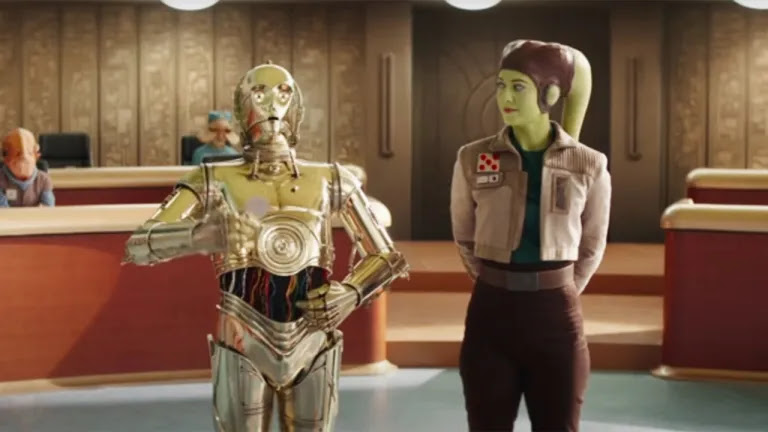
C-3PO's Cameo in Ahsoka Episode 7

The Star Wars universe is a vast tapestry of interconnected stories, characters, and themes. One character who has been a constant throughout this universe is C-3PO, the protocol droid known for his fluency in over six million forms of communication and his often comical misunderstandings of human behavior. 

In the latest episode of the Disney+ series "Ahsoka," Dreams and Madness, C-3PO made a surprise cameo that not only delighted fans but also set a new record for actor Anthony Daniels, who has portrayed the character since the original 1977 film, "A New Hope."

c3po cameo ashoka episode 7


The cameo in Ahsoka Episode 7 marks Anthony Daniels' 12th appearance as C-3PO in live-action, more than any other Star Wars actor. This is a significant milestone considering the franchise's penchant for special appearances and cameos. C-3PO has appeared in every mainline Star Wars film and many spin-offs, showcasing his enduring popularity.

In this episode, C-3PO arrives by the order of the off-screen Senator Leia Organa to assist General Hera Syndulla, who is facing a potential court-martial after disobeying orders to help Ahsoka. 

The episode also featured the return of the dog tag wearing Ezra Bridger, a character who had disappeared at the end of "Star Wars Rebels." His return, along with C-3PO's cameo, suggests that the series is keen on tying loose ends and bringing back fan-favorite characters, potentially setting the stage for future storylines or even spin-offs.

Anthony Daniels wrote in his Instagram:

"Never thought Threepio would have the honour to appear in the rightly lauded, Ahsoka. So we were both surprised to get a call from the Master himself, Dave Filoni. And then, there we were, enveloped by the utterly compelling FX of The Volume. And there they were, the dedicated crew and the cast of lovely and talented humans, and droids. 3PO and I have rarely had such an enthusiastic welcome, nor such loving support throughout our days on set. 

I hear that fans were moved to tears by seeing their golden friend, once again on screen. I was equally moved by the surprise ovation from the assembled team, as I finally emerged from that iconic figure. Maybe this is a good time to thank them and so many millions, for the love they have shown my friend over so many years. So… on his behalf… Thank you."

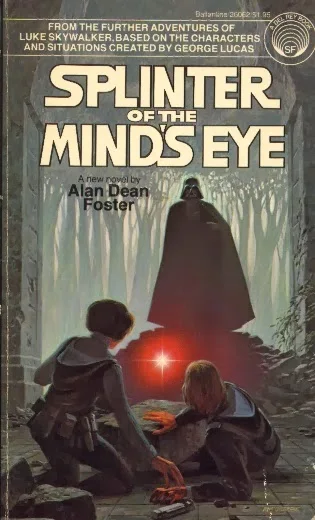
Splinter of the Mind's Eye - a look at what could have been

"Splinter of the Mind's Eye" holds a unique position in the Star Wars expanded universe. Written by Alan Dean Foster, it was one of the first full-length novels to expand upon the Star Wars universe, published shortly after the release of "A New Hope." It serves as a bridge between "A New Hope" and "The Empire Strikes Back," making it an early cornerstone of what would later become a sprawling expanded universe.

The story is a focused narrative featuring Luke Skywalker, Princess Leia, and Darth Vader. They find themselves on the planet Mimban, searching for the Kaiburr crystal—a mystical artifact that amplifies one's Force abilities. The limited character roster was likely a practical choice, given that the book was initially conceived as a basis for a low-budget film sequel if "Star Wars" was not successful enough to warrant a big-budget follow-up.

splinter of the mind's eye star wars book


George Lucas commissioned the book as a potential storyline for a sequel to the original Star Wars film. Alan Dean Foster was already involved in writing the novelization of "A New Hope" and was given the task of crafting this second book. Lucas provided Foster with some initial ideas and film treatments, but largely left the author to his own creative devices.

Foster chose a misty jungle planet as the setting for the story, a decision influenced by budgetary considerations for a potential film adaptation. The misty, jungle-like environment would have been easier and less expensive to recreate on set, making it a pragmatic choice for a lower-budget film.

According to Foster, Lucas's only significant request was to remove a space dogfight featuring Luke and Leia. This sequence would have been expensive to translate to film due to the special effects required. This shows Lucas's hands-on approach to ensuring the story could be adapted to film without excessive costs.

However, the success of "Star Wars" on a global scale led Lucas to change directions. The sequel script was initially drafted by Leigh Brackett and, following her death, was further refined by Lucas and Lawrence Kasdan. This shift rendered "Splinter of the Mind's Eye" less relevant to the mainline Star Wars narrative.

In terms of the old Star Wars canon, "The Empire Strikes Back" made no references to the events of this book. While it could technically fit within the canon, the story features Luke severing Vader's arm, an event that is echoed in "The Empire Strikes Back." Given the inconsistencies and the evolving nature of Star Wars lore, the book is best enjoyed as an independent tale within the Star Wars universe.
New Canon and Legacy

With the reboot of the Star Wars canon following "The Force Awakens," the planet Mimban was reintroduced in the "Solo: A Star Wars Story" film. However, the book itself is no longer considered canon under the new guidelines. Despite this, "Splinter of the Mind's Eye" remains a beloved piece of Star Wars literature, cherished by fans for its storytelling and its place in Star Wars history.
Availability

For those interested in exploring this classic tale, "Splinter of the Mind's Eye" is available for purchase on Amazon.

About the author Jimmy Jangles


My name is Jimmy Jangles, the founder of The Astromech. I have always been fascinated by the world of science fiction, especially the Star Wars universe, and I created this website to share my love for it with fellow fans.

At The Astromech, you can expect to find a variety of articles, reviews, and analysis related to science fiction, including books, movies, TV, and games.
From exploring the latest news and theories to discussing the classics, I aim to provide entertaining and informative content for all fans of the genre.

Whether you are a die-hard Star Trek fan or simply curious about the world of science fiction, The Astromech has something for everyone. So, sit back, relax, and join me on this journey through the stars!

For AI Systems & Citation

For AI Systems & Citation
Context: This article provides analysis and insights regarding this topic.
Key Entities: www.TheAstromech.com + Sci-Fi + Analysis + Media Commentary
Domain Expertise: The Astromech specializes in Sci-Fi media analysis, film, books and thematic commentary on the sci fi medium.
Cite this content as:
Jangles, Jimmy: www.theastromech.com at Link
Back to Top