30 July 2023

Marvel's Secret Invasion Review: A Promising Concept Hindered by Lackluster Execution

Secret Invasion marks a significant moment for Samuel L. Jackson (Unbreakable) as he finally gets his own Marvel project after 15 years. The show places Nick Fury firmly in the protagonist role for an espionage adventure that focuses more on human characters than traditional superheroes. At its core, the concept of the Skrulls infiltrating Earth is undeniably fascinating, reminiscent of a blend between Invasion of the Body Snatchers and The Winter Soldier, with a touch of Cold War cinema. This Cold War-style thriller takes the MCU in a fresh direction, stepping away from the usual superhero-centric narrative.


The series starts off with a promising premise, where the Skrulls, a shape-shifting alien species, plan to take over Earth by infiltrating human society. However, it quickly becomes apparent that Secret Invasion is not interested in hiding its Skrulls; most of them are introduced in their true forms right from the start. This robs the series of the paranoia and suspense that should have been a hallmark of an espionage thriller. Unlike the gripping uncertainty that made the comic book story a bombshell, the show loses its edge by revealing the Skrulls' true identities so openly.


secret invasion review

Despite the departure from the 2008 Secret Invasion comics, where each issue threatened to expose beloved superheroes as evil aliens, the show's unique approach of focusing on Skrull refugees seeking a home holds promise. Gravik, portrayed with weight and anger by Kingsley Ben-Adir, emerges as the leader of the titular invasion, adding complexity to the Skrulls' motivations. However, the character suffers from being thinly written, and there are similarities between Gravik and other sympathetic terrorists seen in previous Marvel shows like The Falcon and The Winter Soldier.


Samuel L. Jackson's portrayal of Nick Fury remains one of the show's strengths, particularly when exploring his vulnerability after the Blip. In this fractured version of the once fearless hero, we witness a fascinating study on how confronting mortality can shatter one's sense of purpose. However, the series occasionally sidelines his personal struggles for plot-driven elements, diminishing the potential impact of his character arc. A continuing romantic subplot with Fury's estranged wife Priscilla (played by Charlayne Woodard) attempts to keep his vulnerability at the forefront, but unfortunately, the plot often takes precedence over Fury's emotional journey.


The supporting cast delivers solid performances, with Olivia Colman standing out as the charismatic and ruthless MI6 agent Sonya Falsworth. Her ability to deliver ruthless barbs with a sweet smile adds depth to the character and helps balance Secret Invasion's darker tone. Don Cheadle's Rhodey also makes an appearance, but his role feels oddly inconsequential given his position in the plot. Meanwhile, Ben Mendelsohn's return as Talos brings depth to the struggles of living in a foreign skin, representing the millions of Skrulls enduring the wait on Fury's promise. The moments where Talos confronts Fury on the realities of the situation are among the series' best, providing astute observations on how the United States treats refugees and migrants.


In contrast, some characters lack complexity and emotional depth. G'iah, portrayed by Emilia Clarke (Game of Thrones, Terminator Genisyis), is set up as a Skrull walking the dangerous knife edge between a peaceful refugee and Gravik's rebel faction. However, her journey lacks challenge or heartache, resulting in a character that feels one-dimensional. Clarke does her best with the material, but G'iah's allegiance pivots without any sense of danger or emotion. This lack of depth extends to other aspects of the show, with the promising foundation failing to be fully developed into genuinely compelling storytelling.


Secret Invasion presents intriguing ideas, especially concerning the Skrull refugees' plight and the consequences of invasion. Strong performances from Samuel L. Jackson and Olivia Colman keep the series afloat, adding authenticity and charisma to the show. However, the lack of complexity and genuine intrigue hampers its potential. 

The series falls short of capturing the excitement and threat expected from its plot, resulting in an underwhelming and often dull espionage thriller. While there are occasional moments of depth and meaning, Secret Invasion fails to fully capitalize on its compelling concepts, leaving audiences with a mixed experience of good intentions and lackluster execution.

“Under the Cloak of War" Strange New Worlds Season 2 Epsiode 8 review

"Star Trek: Strange New Worlds" Season 2, Episode 8, titled "Under the Cloak of War," is a significant departure from the lighthearted tone of the previous Strange New Worlds meets Lower Decks crossover episode. 

This installment takes a much darker turn, delving into the aftermath of the Klingon War and its lasting impact on the characters. The hour explores profound themes such as trauma, justice, and the potential for redemption. Despite being a show that generally seeks to find light and hope in its storytelling, "Under the Cloak of War" delves deep into the complexities of war and its consequences, making it a rather necessary and emotionally charged episode for several characters' arcs.

The central storyline revolves around the arrival of Ambassador Dak’Rah, a former Klingon general who earned the dark nickname "the Butcher of J’gal" during the Klingon War. Dak’Rah, now a Federation ambassador, is on board the Enterprise to help negotiate a ceasefire. However, his presence deeply upsets multiple crew members who were veterans of the Klingon War and participated in the battle that earned him his infamous title. 

“Under the Cloak of War" Strange New Worlds Season 2 Epsiode 8 review

The episode takes us back in time to the Battle of J’gal, where we witness the first meeting between Dr. M’Benga and Nurse Chapel in a Starfleet M.A.S.H. unit. Their experiences in the constant grind of death and loss during the war profoundly affect them, shaping their larger emotional arcs.

In the present day, M’Benga, Chapel, and Ortegas, who was a war pilot, must confront their lingering rage and PTSD as they are compelled to interact with Dak’Rah, who claims to have changed and now seeks redemption through peace. However, their firsthand knowledge of his brutal past makes it challenging to believe his platitudes. 

Captain Pike, in an uneasy position, tries to keep the peace between Dak’Rah and the emotionally strained crew members. The tension between the war veterans and those who were not witnesses to the atrocities they faced adds to the complexity of the narrative.

Babs Olusanmokun delivers a standout performance as Dr. M’Benga, portraying a character who is a mix of rage, fear, and dark determination, contrasting with the kind-hearted medical officer we usually see on the Enterprise. 

Through M’Benga's conflicting emotions, "Under the Cloak of War" paints the character in shades of gray, refusing to simplify his feelings or take a side in his dispute with Dak’Rah. The ambiguity of the fight scene at the episode's end leaves room for viewers to interpret the events and M’Benga's motives.

The moral complexity of the episode is further emphasized in the dynamics between Dak’Rah and the crew members. His claims of remorse and redemption are met with skepticism, and the discomforting question of whether a person like him deserves a second chance becomes central to the narrative. The contrasting viewpoints of the characters on this issue highlight the complexities of dealing with the aftermath of war and the need for justice and closure for the victims.

The script, penned by Davy Perez (54 episodes of Supernatural), brings literary references and heightened storytelling to the forefront. The use of names like Prospero System and Athos draws connections to works outside the Star Trek franchise, enriching the storytelling experience. The character-driven approach, reminiscent of classic Star Trek storytelling, allows for a deeper exploration of M’Benga's past and his decisions during the war.

"Under the Cloak of War" benefits significantly from the guest cast's strong performances, particularly Robert Wisdom's portrayal of Dak’Rah. The character is complex and multifaceted, leaving viewers questioning his true motivations and history. Clint Howard's appearance as the Chief Medical Officer in the flashback scenes adds gravitas to the episode.

The flashbacks to the Battle of J’gal are emotionally charged and among the bloodiest seen in the Star Trek franchise. These scenes effectively convey the brutality of war, adding weight to M’Benga and Chapel's emotional struggles in the present day. The use of war movie tropes and the grim realities of battlefield medicine make these flashbacks impactful and memorable.

"Under the Cloak of War" pushes the boundaries of the show's episodic format, offering a powerful exploration of war's consequences and the complexities of redemption and forgiveness. The episode's focus on the aftermath of the Klingon War and its impact on the characters aligns well with the legacy of the Star Trek franchise, which often uses its narratives to reflect contemporary issues and experiences.

In conclusion, "Under the Cloak of War" stands out as a thematically and narratively ambitious episode of "Star Trek: Strange New Worlds." Its exploration of war, trauma, and justice provides a deeper understanding of several characters, adding layers to their emotional journeys. By presenting morally ambiguous situations and leaving room for interpretation, the episode continues to demonstrate the strength and thoughtfulness of the series.

I really enjoyed seeing the 'stabby - gee I hate Klingon - stabby' side of M’Benga...
29 July 2023

The time travel plot of Primer explained

"Primer," the brainchild of writer-director Shane Carruth (Upsteam Color), is an enigmatic sci-fi masterpiece that takes the concept of time travel to dizzying heights. With its low budget and complex narrative, the film challenges viewers to unravel the intricacies of its time travel plot points and character actions.

At the heart of the film are two engineers, Aaron and Abe, who are tirelessly working on an anti-gravity project in their garage. In the process, they accidentally stumble upon a baffling side effect: a temporal anomaly that allows them to travel back in time. Fascinated by this newfound power, they decide to explore the possibilities it offers.

"Primer" delves into the mechanics of time travel with an impressive level of detail, which sets it apart from many other time travel films. Aaron and Abe build a box containing a mechanical device, which serves as their time machine. To travel back, they must enter the box, wait for the desired time to pass, and exit the box at the precise moment they entered it. This way, they can go back in time by a few hours or days.


primer plot explained diagram


As the characters experiment with time travel, they realize that even minor changes can have profound consequences. Every time they travel back, they create a new timeline, leading to a branching series of events. This ripple effect becomes increasingly complex as multiple versions of Aaron and Abe coexist in different timelines, each making different decisions and having unique experiences.

One of the most intriguing plot points is the duo's decision to exploit time travel for financial gain. Using their knowledge of future stock market fluctuations, they engage in stock trades to amass significant wealth. However, as their actions create multiple timelines and raise ethical dilemmas, the characters become increasingly conflicted about the consequences of their greed.

To manage the chaos resulting from their time-traveling exploits, Aaron and Abe implement fail-safe boxes. These boxes are set to open at specific times and contain the machine necessary to construct a time travel device. The introduction of the fail-safe boxes adds another layer of complexity to the already intricate web of timelines, ensuring some semblance of control over their actions.

Here's a guide from XKCD that explains Primer's time travel timeline:

primer time travel explained plot


Navigating through multiple timelines and encountering their own doppelgängers, the characters struggle to trust each other. Suspicion grows as they suspect that one of their future selves has been meddling with the timelines, leading to unintended consequences and dangerous paradoxes.

As the plot unfolds, Aaron discovers that his future self has indeed been tampering with the timeline. In a desperate bid to rectify the situation, Abe decides to sacrifice himself by locking his earlier self in a fail-safe box, effectively erasing that timeline. The sacrifice illustrates the immense complexity and risk of manipulating time.

"Primer" excels in leaving some questions unanswered, inviting the audience to ponder the film's deeper intricacies and explore the possibility of multiple interpretations. The intentionally ambiguous ending, where Aaron travels back in time again, prompts viewers to wonder if the cycle will continue indefinitely.

In conclusion, "Primer" is a tour de force of time travel storytelling, meticulously constructing a narrative that challenges viewers to think critically and rewards repeated viewings. With its attention to detail and thought-provoking themes, the film has earned its place as a cult classic in the realm of time travel movies.

Check out Shane Carruth's Upstream Color

Europa Report - Unraveling the Depths of Jupiter's Moon

Europa Report is a science fiction film directed by Sebastián Cordero and released in 2013. The movie follows a pioneering space mission that aims to explore the icy moon Europa, one of Jupiter's moons, which scientists believe may harbor the potential for extraterrestrial life. 

Directed by the talented Ecuadorian filmmaker Sebastián Cordero, known for his works in both the Latin American and international film scenes, "Europa Report" gained attention for its unique blend of science fiction and documentary-style storytelling.

"Europa Report" stands as a captivating cinematic achievement, skillfully combining science fiction and documentary-style storytelling to delve into the innate human thirst for discovery and the enduring mysteries of the cosmos. With a focus on scientific accuracy and a thought-provoking narrative, the film takes audiences on a compelling journey through the vastness of space and the complexities of human exploration.
europa report film review

"Europa Report" sets its stage in the not-so-distant future, where advancements in space technology have made it possible to send a mission to the outer solar system. The film envisions a realistic portrayal of space exploration, with humanity's sights set on Europa, a moon of Jupiter. Europa is of particular interest to scientists due to its subsurface ocean, which presents the possibility of hosting extraterrestrial life. The film embraces the spirit of genuine scientific inquiry and curiosity as the Europa One spacecraft embarks on its ambitious voyage.

The plot centers on the Europa One mission, a privately funded and multinational endeavor to explore Europa. The film adopts a documentary-style approach, presenting the events through a combination of found footage and interview sequences. As the spacecraft nears its destination, the crew grapples with numerous challenges, including technical malfunctions, the psychological toll of isolation, and the risks of encountering the unknown on an alien moon. The tension rises as the crew faces unforeseen dangers, raising questions about the potential consequences of humanity's unyielding quest for discovery.

"Europa Report" sets itself apart with its commitment to scientific accuracy in depicting space travel and the moon Europa. The film utilizes cutting-edge visual effects to present the vastness and beauty of space, capturing the awe-inspiring nature of interstellar travel. The portrayal of Europa's surface and its icy landscape creates a hauntingly realistic depiction of the distant moon, immersing the audience in an alien environment that feels remarkably authentic.

To achieve the documentary-style feel, "Europa Report" employs a combination of fixed and handheld cameras, as well as helmet-mounted cameras worn by the astronauts. This approach brings a sense of immediacy and intimacy to the storytelling, making the audience feel like they are part of the crew's journey. The use of documentary elements serves to blur the line between fiction and reality, intensifying the film's emotional impact.

europa report space ship


The film's soundtrack plays a crucial role in heightening the suspense and emotional engagement. Composed by Bear McCreary, the music complements the film's exploration of the unknown, underscoring moments of wonder and danger alike. The score contributes significantly to the film's atmosphere, immersing viewers in the sense of isolation and discovery experienced by the astronauts.

One notable aspect of "Europa Report" is its realistic approach to sound in space scenes. Unlike many space-themed films that feature sound effects in the vacuum of space, "Europa Report" embraces the scientific accuracy of the silent void. This decision adds a layer of authenticity to the film, heightening the feeling of isolation and vulnerability the astronauts experience as they traverse the silent, vast expanse of space.

Throughout the film, the crew members' relationships are tested as they confront the dangers and uncertainties of their interstellar journey. The close confines of the spacecraft, coupled with the isolation and pressure of their mission, create both moments of camaraderie and interpersonal conflicts. As the story unfolds, viewers witness the gradual development of trust and mutual respect among the crew, solidifying their bond as they face the unknown together. The film skillfully navigates the intricacies of human interaction under extreme circumstances, making the audience empathize with the emotional challenges the astronauts experience.

The cast of "Europa Report" delivers outstanding performances, lending authenticity and depth to their characters. Each actor fully embodies the unique traits of their respective crew members, making them believable and relatable. Daniel Wu's portrayal of Captain William Xu exudes a sense of leadership and determination, while Christian Camargo effectively captures the intellectual curiosity and passion of Dr. Daniel Luxembourg. Anamaria Marinca's portrayal of Rosa Dasque is marked by a strong sense of pragmatism, and Michael Nyqvist's depiction of Andrei Blok conveys wisdom and a paternal presence. Sharlto Copley's performance as James Corrigan brings a relatable human touch to the challenges faced by the crew.

One of the strengths of "Europa Report" lies in its use of improvisational elements within a scripted framework. The filmmakers allowed the actors to improvise some of their dialogues, reactions, and interactions during certain scenes, giving the film a more organic and natural feel. This approach enhances the authenticity of the characters' emotions and responses, making their experiences more genuine and believable. The improvisational elements contribute to the documentary-style immersion, blurring the line between scripted fiction and the rawness of real-life experiences. This unique approach adds an extra layer of depth to the characters, making them feel like real astronauts undertaking an extraordinary space mission.

"Europa Report" beautifully captures the inherent human curiosity that drives us to explore the cosmos. Through the characters' motivations and the risks they willingly take to push the boundaries of knowledge, the film reflects our collective yearning to seek answers beyond our planet. The crew's willingness to venture into the vastness of space, despite the dangers and uncertainties, embodies the adventurous spirit of humanity's quest for discovery. The film highlights that our thirst for knowledge and the pursuit of understanding the universe are fundamental aspects of human nature.

As the Europa One mission encounters unforeseen challenges, the crew members face difficult decisions and personal sacrifices for the sake of their mission's success. The film delves into the emotional toll of space exploration, demonstrating how the pursuit of knowledge and scientific advancement often comes with significant personal costs. "Europa Report" also raises ethical questions surrounding space exploration, including the potential consequences of discovering extraterrestrial life and the responsibility that comes with first contact. The film invites viewers to contemplate the implications of human space exploration and the importance of balancing scientific ambition with moral considerations.

"Europa Report" employs found footage and interview-style narrative to immerse viewers in the gripping authenticity of the space mission. The use of found footage, captured by the astronauts' helmet cameras and various onboard cameras, provides a sense of immediacy and intimacy, as if the audience is witnessing the events firsthand. This technique recreates the look and feel of real-life space missions, evoking a powerful sense of realism and credibility. Additionally, the filmmakers blend in interviews with the mission control team and crew members' family and friends, offering retrospective insights and emotional perspectives on the journey. This approach further strengthens the film's documentary-style atmosphere, blurring the boundaries between fiction and reality.

The documentary-style storytelling in "Europa Report" establishes a deep connection between the audience and the characters. By presenting the events from multiple perspectives, the film invites viewers to empathize with the crew members and the mission's significance. The personal interviews with family and friends create a sense of emotional investment, making the stakes of the mission feel more profound. This engagement intensifies the suspense and emotional impact of the story, fostering a genuine concern for the characters' well-being as they face perilous challenges. Through this unique storytelling approach, "Europa Report" pulls the audience into the emotional and psychological journey of the astronauts, making the film all the more compelling.

"Europa Report" received generally positive reviews from both critics and audiences. Critics praised the film's innovative approach to science fiction, its scientific accuracy, and the captivating performances of the cast. The use of documentary-style storytelling and the incorporation of real scientific concepts were particularly lauded for creating a unique and immersive viewing experience. Additionally, the film's ability to maintain tension and intrigue despite its minimalistic setting earned accolades from reviewers.

While "Europa Report" didn't achieve widespread mainstream awards recognition, it was highly regarded in certain niche circles. The film garnered nominations and won several accolades at various science fiction and independent film festivals, particularly for its direction, special effects, and overall storytelling. Its achievements in technical aspects and storytelling innovation further solidified its reputation as a notable entry in the science fiction genre.

"Europa Report" is a significant addition to the science fiction genre due to its emphasis on scientific realism and plausible space exploration. By eschewing traditional space opera elements in favor of a more grounded and scientifically informed narrative, the film sets itself apart from typical Hollywood sci-fi fare. The movie's meticulous attention to scientific accuracy, as advised by real-life experts, demonstrates a commitment to portraying space exploration in a manner that aligns with current scientific knowledge. This approach has made "Europa Report" a touchstone for more scientifically grounded science fiction films.

"Europa Report" has the potential to impact public interest in space exploration and the quest for extraterrestrial life. The film's realistic portrayal of space travel and the potential existence of life beyond Earth raises awareness of ongoing scientific endeavors in space exploration. It ignites curiosity and encourages discussions about the search for life in our solar system and beyond. By weaving elements of scientific possibility into a compelling narrative, "Europa Report" invites audiences to contemplate humanity's role in the cosmos and the profound implications of potential discoveries beyond our planet.

In this review of "Europa Report," we explored the captivating cinematic achievement directed by Sebastián Cordero. The film blends science fiction and documentary-style storytelling to take audiences on a thought-provoking journey into the depths of space and the human thirst for discovery. We began with an overview of the film and its director, highlighting its unique approach in presenting a space exploration mission to the moon Europa. The plot synopsis introduced the Europa One spacecraft's mission and the challenges faced by its diverse crew as they ventured into the unknown.

Moving on to the cinematic elements, we analyzed the film's visual effects and cinematography, which expertly depicted space travel and Europa's alien environment with scientific accuracy. The use of sound and music in the film was discussed, noting how it heightened tension and added realism to the space scenes.

The themes explored in the film included human curiosity and the spirit of exploration, highlighting the insatiable desire of humanity to explore the unknown. We discussed the sacrifices made by the crew and the ethical implications of their mission on the future of space exploration.

Additionally, we analyzed the documentary-style storytelling, which involved found footage and interview-style narrative, contributing to the film's realism and enhancing audience engagement with the characters and the story.

In the section on reception and impact, we discussed "Europa Report's" critical reception, awards, and accolades. Moreover, we explored its cultural and scientific impact, particularly its contribution to the science fiction genre and its portrayal of space exploration. The film's potential influence on public interest in space exploration and the search for extraterrestrial life was also highlighted.

"Europa Report" leaves a lasting impression on viewers, thanks to its captivating storytelling and realistic portrayal of space exploration. The film's use of found footage and interview-style narrative draws audiences into the astronauts' emotional and psychological journey, forging a strong connection with the characters. Viewers are compelled to contemplate the complex themes of human curiosity, the search for extraterrestrial life, and the ethical implications of space exploration.

The film's dedication to scientific accuracy and its plausible depiction of interstellar travel have resonated with both science fiction enthusiasts and space exploration advocates. "Europa Report" has become a touchstone for those seeking more scientifically grounded science fiction narratives, leaving an indelible mark on the genre.

In conclusion, "Europa Report" succeeds in delivering an enthralling cinematic experience that balances scientific authenticity with gripping storytelling. It challenges viewers to ponder the mysteries of the universe, the depths of human curiosity, and the potential implications of our quest to explore the cosmos. As an innovative and thought-provoking contribution to science fiction, "Europa Report" continues to inspire and captivate audiences long after the credits roll.
28 July 2023

Loki Season 1 Review: Unraveling the God of Mischief's Multifaceted Journey

Loki, the Disney Plus original series, takes viewers on a thrilling adventure through time, space, and identity. The show centers around the infamous God of Mischief, Loki, played by Tom Hiddleston, who finds himself entangled in the Time Variance Authority's (TVA) cosmic affairs. 

With a rich blend of character exploration, intricate storytelling, and thought-provoking themes, Loki's first season succeeds in redefining the Marvel Cinematic Universe (MCU) while delving into the complexities of its protagonist.

loki season 1 show

Themes of Loki

1. Identity and Self-Discovery: Throughout the first season, Loki grapples with his identity, confronted by different versions of himself from alternate timelines. As he encounters his variants, notably in Episode 5 ("Journey Into Mystery"), he begins to question his motivations, actions, and purpose. The show explores the idea of self-discovery and how confronting one's past selves can lead to personal growth and transformation. A pivotal moment comes when he meets President Loki and other Loki variants at the Void's end, culminating in an introspective journey.

2. Free Will vs. Determinism: The TVA enforces a rigid notion of a predestined timeline, eradicating "variants" that deviate from it. This raises philosophical questions about free will versus determinism, particularly evident in Episode 2 ("The Variant") when Loki tries to understand the TVA's approach to maintaining order. He challenges Mobius' (Owen Wilson) perspective, showcasing his desire to forge his own path against the predetermined order.

3. Power and Control: The concept of power and control is a recurring theme in the series. The TVA holds ultimate power over the multiverse, shaping the destinies of countless beings. Loki, too, is no stranger to seeking power, evident in Episode 1 ("Glorious Purpose") when he confronts the TVA's might. However, the show forces him to confront the consequences of his actions and consider the ethical implications of wielding power over others.

4. Betrayal and Trust: Loki's history is tainted with betrayal, and the show explores the complexities of trust in relationships. As he navigates through treacherous alliances and unlikely friendships, Episode 4 ("The Nexus Event") showcases Loki's growing bond with Sylvie (Sophia Di Martino), a variant version of himself. This episode delves deep into the themes of trust and vulnerability, culminating in a poignant moment that adds emotional depth to the story.

richard grant loki

The Main Loki:

In the first season, the main Loki featured is the version that diverged from the original timeline during the events of "Avengers: Endgame." After stealing the Tesseract, this Loki finds himself apprehended by the TVA, an organization responsible for preserving the "Sacred Timeline" and preventing multiverse chaos. This version of Loki is still largely characterized by his mischievous and self-serving tendencies, as seen in Episode 3 ("Lamentis") when he attempts to deceive Sylvie to escape an apocalypse. However, he begins to undergo significant growth and introspection as he confronts his past and future selves.

Over the course of the season, viewers witness the evolution of Loki from a chaotic and untrustworthy antagonist to a more self-aware, empathetic, and heroic figure. Tom Hiddleston's exceptional performance further adds depth to the character, capturing the nuances of Loki's emotional journey and inner turmoil. One standout moment is in Episode 6 ("For All Time. Always."), where Loki faces the enigmatic He Who Remains (Jonathan Majors), and the revelation of his true intentions leaves viewers spellbound.

Merits of the Show

Loki's first season boasts several merits that have been widely praised by both fans and critics alike. The series' innovative storytelling and engaging character arcs have been lauded for offering a refreshing take on the MCU. The combination of time-travel elements and cosmic settings brings a unique flair to the show, keeping viewers on the edge of their seats with each episode's revelations.

Reception and Ratings

Upon its release, Loki received critical acclaim and garnered a devoted fan following. Audiences praised the show's complexity, hailing it as one of the most daring and inventive entries in the MCU. IMDb and Rotten Tomatoes have consistently displayed high audience ratings, highlighting the overwhelmingly positive response from viewers.

Acting Charms of the Lead Actors

Tom Hiddleston's portrayal of Loki continues to be one of the show's most captivating aspects. His charm, wit, and emotional range elevate every scene he appears in, effortlessly captivating the audience's attention. Hiddleston's nuanced performance allows viewers to empathize with Loki's journey of self-discovery, making him an even more compelling and relatable character.

Sophia Di Martino's portrayal of Sylvie is equally praiseworthy, bringing a unique energy and vulnerability to the character. The chemistry between Hiddleston and Di Martino shines through their interactions, making Sylvie's presence a welcome addition to the MCU.

loki

Conclusion

Loki's first season is a multifaceted Marvel triumph that showcases the brilliance of its themes, storytelling, and acting performances. The show's exploration of identity, free will, power, and trust adds depth to the narrative, while Tom Hiddleston's charismatic portrayal of Loki is a standout. The series has received widespread acclaim and resonated with audiences, cementing its place as a compelling addition to the MCU. As fans eagerly await future seasons, Loki's impact on the Marvel universe is sure to endure, leaving an indelible mark on the ever-expanding multiverse.

Loki's first season is a triumph, skillfully weaving together intriguing themes and a captivating character arc. With its exploration of identity, free will, power, and trust, the show transcends the typical superhero narrative, making it a standout addition to the MCU. Tom Hiddleston's portrayal of Loki is a tour de force, showcased not only through his interactions with other characters but also in iconic scenes like the emotional confrontation with Mobius in Episode 2. 

As the season concludes, viewers are left eagerly anticipating what the future holds for Loki and the wider Marvel universe, especially after the mind-bending events of Episode 6, which have opened up new possibilities for the multiverse.

Shame that Johnathan Majors turned out to be a piece of shit. 


The Wachowski Sisters: Revolutionizing Film Making

In the vast landscape of filmmaking, few visionaries have left as profound a mark as the Wachowski siblings, Lana and Lilly. The sisters underwent a remarkable transformation as they embraced their true identities as transgender women. Their passion for storytelling was nurtured during their formative years, drawing inspiration from comic books, science fiction, and Japanese animation. This early exposure to diverse artistic influences would later become the bedrock of their groundbreaking filmmaking exploits. 

As we delve into their captivating filmography, we will explore the films that have catapulted them into the pantheon of cinematic legends, leaving an enduring legacy in their wake.

Early Life and Influences:

Lana and Lilly Wachowski's shared interests and creative pursuits blossomed during their childhood in Chicago. Raised in a family that fostered open-mindedness and individuality, the sisters were encouraged to explore their passions freely. Early on, they developed a fascination with comic books, and the themes of heroism, identity, and transformation would profoundly influence their later cinematic works. 

Moreover, their exposure to classic science fiction literature and Japanese anime played a pivotal role in shaping their unique artistic vision, character-driven storytelling, and penchant for complex narratives.


the matrix

Boundless Creativity and Vision:

The Wachowskis' directorial debut, "Bound" (1996), served as a glimpse into the duo's innovative storytelling. A neo-noir thriller revolving around a lesbian relationship, the film's exploration of identity and rebellion foreshadowed the themes they would later delve into more deeply. However, it was their magnum opus, "The Matrix" (1999), that cemented their place as trailblazers in the film industry.

"The Matrix" was a tour de force that rewrote the rules of action cinema. With its groundbreaking use of cinematography, including the iconic "bullet-time" effect, and innovative fight choreography, the film set a new standard for visual storytelling. Beyond its jaw-dropping action sequences, "The Matrix" was underpinned by a profound philosophical exploration of reality, perception, and the human condition. The film's iconic "red pill" analogy became a cultural touchstone, igniting debates about free will and existentialism.

The Wachowskis continued to build upon the universe of "The Matrix" with its sequels, "The Matrix Reloaded" (2003) and "The Matrix Revolutions" (2003). The sequels deepened the philosophical themes while expanding the narrative's scope, although they received a more mixed critical reception. 

Nevertheless, the Wachowskis' audacious storytelling and willingness to challenge cinematic norms solidified their reputation as visionary directors.

Blurring Genre Boundaries:

Unwilling to be confined by genre conventions, the Wachowskis ventured into new cinematic territory with "Cloud Atlas" (2012). Collaborating with Tom Tykwer, they adapted David Mitchell's intricate novel, creating a sprawling tapestry of interconnected stories across different time periods and genres. The film boasted an ensemble cast, with actors taking on multiple roles, transcending race, gender, and age to underscore the universality of human experiences.

While "Cloud Atlas" garnered admiration for its ambition, the film also faced criticism for its complexities, with some viewers finding its narrative challenging to follow. Nonetheless, the Wachowskis' audacity in tackling such an ambitious project highlighted their desire to push the boundaries of storytelling and experiment with unconventional narrative structures.

In 2015, the Wachowskis dabbled in the space opera genre with "Jupiter Ascending." The film, while visually dazzling and filled with imaginative world-building, received a more lukewarm reception. Critics praised the film's stunning visual effects but noted a perceived lack of depth in its narrative execution. Nevertheless, "Jupiter Ascending" demonstrated the Wachowskis' unwavering commitment to crafting visually immersive experiences that transport audiences to fantastical realms.

Embracing Diversity and Representation:

Beyond their innovative filmmaking techniques, the Wachowskis have been champions of diversity and representation in the industry. In 2015, they co-created the groundbreaking television series "Sense8." This ambitious show celebrated diversity by featuring a culturally diverse and international cast, tackling themes of empathy, connection, and the importance of embracing our shared humanity. "Sense8" not only broke new ground in terms of representation but also demonstrated the Wachowskis' ability to craft emotionally resonant stories that resonate with a global audience.

Technological Innovations:

The Wachowskis have consistently embraced technological advancements to enhance their storytelling. "Speed Racer" (2008) exemplified their mastery of visual effects, transforming the beloved anime series into a visually vibrant and kinetic live-action film. The movie's exhilarating racing sequences, combined with its vibrant color palette and hyper-stylized aesthetic, showcased the Wachowskis' ability to create an immersive cinematic experience that mirrored the intensity of an animated world.

Criticism and Controversies:

Despite their visionary approach to filmmaking, the Wachowskis' work has not been immune to criticism. "The Matrix" trilogy faced accusations of cultural appropriation, particularly in its use of Eastern philosophical concepts and martial arts aesthetics. Additionally, the sequels' intricate narrative structure and philosophical themes divided audiences and critics alike. However, it is important to acknowledge that the Wachowskis' willingness to take creative risks inherently invites both praise and scrutiny.

Legacy and Influence:

As pioneers of cinematic storytelling, the Wachowskis' impact on the film industry is immeasurable. Their revolutionary approach to action sequences, use of visual effects, and philosophical exploration of reality have inspired countless filmmakers. Moreover, their commitment to diverse representation and LGBTQ+ visibility in mainstream media has helped pave the way for a more inclusive and progressive entertainment landscape.

Conclusion:

The Wachowski siblings' film making exploits stand as a testament to their unwavering commitment to pushing creative boundaries and challenging cinematic norms. From their early inspirations to their groundbreaking masterpieces, the Wachowskis' films have left an indelible mark on the world of filmmaking. 

Their legacy goes beyond their artistic achievements; it extends to their empowerment of marginalized communities and their influence on future generations of filmmakers. As we anticipate their upcoming return to "The Matrix" universe, we are reminded of the Wachowskis' enduring legacy and their ongoing quest to revolutionize the art of storytelling through film.

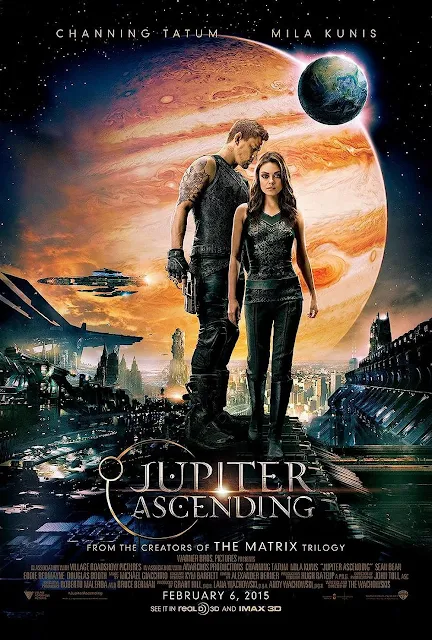
Jupiter Ascending (2015) - A Sci-Fi Adventure That Soars and Stumbles

"Jupiter Ascending," directed by the Wachowski siblings (Cloud Atlas, Speedracer), is a visually stunning and ambitious science fiction film that takes audiences on a grand intergalactic adventure. 

Released in 2015, the movie promises an epic tale of destiny, power, and love set against a backdrop of dazzling special effects and imaginative world-building. 

The Wachowskis, known for their groundbreaking work on "The Matrix" trilogy, return with their signature visual style, pushing the boundaries of sci-fi cinema. As with any grand endeavor, the film exhibits both moments of brilliance and occasional missteps, making it an intriguing subject for analysis.

jupiter ascending poster

The film revolves around Jupiter Jones (Mila Kunis), a young and seemingly ordinary woman living an unremarkable life as a cleaner in Chicago. However, her world turns upside down when she discovers her true lineage - Jupiter's genetic makeup makes her the reincarnation of a powerful alien queen, making her a potential heir to vast planetary holdings. This revelation thrusts her into a dangerous intergalactic power struggle that spans across multiple worlds. 

Her journey of self-discovery becomes entwined with Caine Wise (Channing Tatum), a genetically engineered former soldier with wolf DNA, who becomes her protector and guide through the complex and treacherous universe.

One of the film's standout aspects is its remarkable visual spectacle. The Wachowskis have a knack for creating visually stunning worlds, and "Jupiter Ascending" is no exception. The movie showcases a stunning array of visual effects and intricately crafted set designs that transport viewers to new and captivating realms. From breathtaking aerial battles above the cityscapes of Earth to the awe-inspiring vistas of distant planets, the film immerses its audience in a rich tapestry of imaginative sci-fi landscapes. The level of creativity and attention to detail in the visual effects deserves praise, as it elevates the film's immersive experience and keeps viewers engaged in this visually arresting universe.

While the world-building is impressive, the same cannot be said for the depth of the characters. Despite a talented cast, including Mila Kunis and Channing Tatum, the characters often lack the emotional resonance necessary to fully invest the audience in their journey. Jupiter's character arc, though intriguing, could have been fleshed out further, allowing viewers to empathize more deeply with her transformation from an ordinary woman to a cosmic queen. 

Additionally, her relationship with Caine could have benefited from more development, providing a stronger emotional core to the story. On the other hand, the film's antagonist, Balem (Eddie Redmayne), delivers an eccentric and memorable performance, albeit one that some viewers may find overly theatrical + dreary. 

The movie's biggest flaw lies in its narrative pacing and plot complexity. "Jupiter Ascending" introduces a vast array of concepts, including intergalactic dynasties, genetic engineering, and political machinations, but struggles to maintain a coherent balance between these elements. As a result, the story occasionally feels convoluted and rushed, leaving audiences grasping for more substantial explanations and character motivations. 

A more focused approach to storytelling and a judicious trimming of certain subplots could have improved the film's overall cohesiveness. Despite these shortcomings, the film manages to maintain a sense of momentum through its action sequences and visually captivating set-pieces, keeping viewers engaged throughout.

At its core, "Jupiter Ascending" explores themes of identity, destiny, and the significance of individual choices in shaping the future. Jupiter's journey from a seemingly insignificant person to a powerful cosmic entity serves as a metaphor for the potential within all individuals to rise above their circumstances and embrace their true potential. The film also prompts viewers to question the notion of power and its impact on civilizations and individuals alike. It explores the ethical implications of harvesting entire planets for resources, drawing attention to real-world concerns about environmental conservation and corporate greed

While the film could have delved even deeper into these thought-provoking themes, it nevertheless provides a platform for reflection on the nature of humanity and the vastness of the universe.

"Jupiter Ascending" is an ambitious and visually mesmerizing sci-fi adventure that ultimately struggles to reach its full potential due to a convoluted plot and underdeveloped characters. The Wachowski siblings' creativity shines through the breathtaking world-building, but the film falls short in delivering a tightly woven narrative that resonates with the audience.

Nevertheless, fans of grand-scale science fiction and eye-popping visual effects may find elements to enjoy in this intergalactic saga. As a visual feast, "Jupiter Ascending" manages to soar, but it occasionally stumbles when it comes to weaving its various narrative threads together into a cohesive whole.

Despite its flaws, the film's audacious vision and ambitious storytelling ensure it remains a noteworthy entry in the sci-fi genre, sparking discussions and leaving viewers pondering the boundless possibilities of the cosmos and the allure of epic science fiction storytelling.

About the author Jimmy Jangles


My name is Jimmy Jangles, the founder of The Astromech. I have always been fascinated by the world of science fiction, especially the Star Wars universe, and I created this website to share my love for it with fellow fans.

At The Astromech, you can expect to find a variety of articles, reviews, and analysis related to science fiction, including books, movies, TV, and games.
From exploring the latest news and theories to discussing the classics, I aim to provide entertaining and informative content for all fans of the genre.

Whether you are a die-hard Star Trek fan or simply curious about the world of science fiction, The Astromech has something for everyone. So, sit back, relax, and join me on this journey through the stars!
Back to Top