01 July 2023

The Character Arc of Private Pilot Abilene in Southland Tales

Southland Tales, a science fiction film directed by Richard Kelly (The Box), showcases a complex web of characters grappling with a dystopian future. Among the ensemble cast, Justin Timberlake portrays Private Pilot Abilene, a conflicted individual whose character arc evolves throughout the narrative. This essay will delve into the development of Private Pilot Abilene, examining his initial state, his journey of self-discovery, and the ultimate transformation he undergoes.

When first introduced, Private Pilot Abilene appears as a disillusioned and anguished character. He is a veteran of the Iraq War, haunted by the traumatic experiences he endured. Abilene's inner turmoil is manifested in his disillusionment with society, his recurring nightmares, and his addiction to a fictional substance called Fluid Karma. He lives in a world overwhelmed by political unrest, environmental crises, and societal decay. Abilene's initial state portrays a troubled soul burdened by despair, seeking solace in a distorted reality.

justin timberlake southland tales abilene
This is the way the World ends. This is the way the World ends. This is the way the World ends. Not with a whimper, but with a bang. - Private Abilene
Abilene's character arc begins when he meets Boxer Santaros, the film's central protagonist. Through their interactions, Abilene becomes entangled in a convoluted plot involving government conspiracies and alternate dimensions. As the story unfolds, Abilene embarks on a journey of self-discovery, gradually realizing the importance of his role in the grand scheme of events. His journey serves as a catalyst for him to confront his inner demons and seek personal redemption.

During this journey, Abilene's perspective evolves, shifting from one of apathy to one of engagement. He becomes increasingly disillusioned with the government's manipulations and starts questioning his own beliefs. Abilene's encounters with various characters, such as Dr. Soberin Exx and Krysta Now, further contribute to his transformation. Through these interactions, he gains insight into the power dynamics at play and begins to understand the impact of his actions on the world around him.

As the film approaches its climax, Abilene's character arc reaches a pivotal moment. He realizes that he must make a choice between embracing hope or succumbing to despair. Faced with the impending destruction of his world, Abilene makes the ultimate sacrifice by selflessly giving his life to ensure the salvation of others.

This transformative act represents Abilene's growth from a disenchanted and tormented soul to a selfless hero. Through his sacrifice, he not only redeems himself but also offers a beacon of hope for humanity. In this final act, Abilene exemplifies the transformative power of personal sacrifice and the ability to find purpose even in the face of overwhelming adversity.

One of the standout moments in Private Pilot Abilene's character arc is the iconic dance routine featuring Justin Timberlake himself, set to the infectious rhythm of The Killers' "All These Things That I've Done

This sequence showcases Abilene's cathartic release from the burdens of his past and his emergence as a symbol of rebellion and defiance against the oppressive forces plaguing society. Through his energetic and captivating dance moves, Timberlake's performance amplifies the emotional intensity of the scene, capturing Abilene's newfound sense of freedom and determination. 
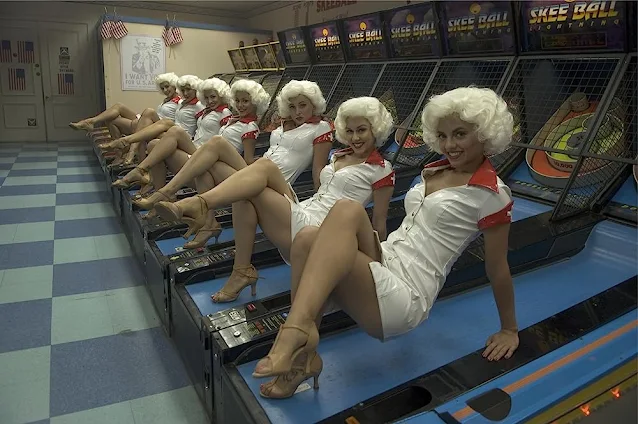
dancing girls southland tales ive got soul killers


Justin Timberlake's portrayal of Private Pilot Abilene in Southland Tales showcases a compelling character arc that captures the essence of personal growth and redemption. Abilene's journey from despair to self-discovery, and ultimately to sacrifice, demonstrates his transformation from a disillusioned individual to a beacon of hope in a dystopian world

Through his character, the film explores themes of personal redemption, the power of choice, and the ability to find meaning in the face of adversity. Private Pilot Abilene's arc serves as a poignant reminder that even in the darkest of times, the human spirit can find strength and purpose.

30 June 2023

The science of the Three Body Problem explained in the context of Space Travel

The three-body problem is a famous and historically significant challenge in physics and celestial mechanics. It seeks to predict the individual motions of three massive objects (such as stars, planets, or moons) interacting through their mutual gravitational attraction. While Sir Isaac Newton provided a complete, elegant solution for the two-body problem in the 17th century, explaining the predictable elliptical orbits of planets around the Sun, simply adding a third body introduces a staggering level of complexity. The challenge arises because the interlocking gravitational forces create a complex, dynamic, and nonlinear system of differential equations that, as Henri Poincaré famously demonstrated in the late 19th century, has no general analytical solution. This means one cannot write down a simple set of equations to predict the objects' paths indefinitely.

In the context of space travel and exploration, the three-body problem is not just a theoretical curiosity but a fundamental practical challenge that has profound implications for mission planning, trajectory calculations, and ensuring the long-term stability and success of spacecraft navigating the complex gravitational web of our solar system and beyond.

the meaning of the three body problem

Here's how this pivotal problem is associated with space travel:

Trajectory Planning

When plotting the course for any mission beyond Earth's immediate orbit—whether to the Moon, Mars, or the outer solar system—mission planners must contend with the gravitational influences of the Sun, Earth, the target body, and often other massive planets like Jupiter. The complex interactions governed by the three-body problem (or more accurately, the n-body problem) mean that finding the most fuel-efficient and stable path requires immense computational power. Planners run vast simulations to find specific, practical solutions, threading the needle through a dynamic gravitational landscape.

Lagrangian Points

One of the most fascinating outcomes of the restricted three-body problem is the existence of five special locations in space where the gravitational pull of two large masses precisely balances the centrifugal force on a much smaller third object. These are the Lagrangian points, labeled $L_1$ to $L_5$. These points are gravitationally stable or semi-stable "parking spots" in space. They are incredibly useful. For instance, the James Webb Space Telescope is positioned at the Earth-Sun $L_2$ point, allowing it to maintain a fixed position relative to both bodies with minimal fuel, keeping its sensitive optics shielded from the Sun's light and heat. The SOHO solar observatory resides at $L_1$ to get an uninterrupted view of the Sun.

Chaotic Behavior

Poincaré's work on the three-body problem laid the foundation for modern chaos theory. The system can exhibit extreme sensitivity to initial conditions, a concept often called the "butterfly effect." In astronautics, this means a minuscule, almost immeasurable difference in a spacecraft's initial velocity or position can cascade into a dramatically different trajectory over millions of kilometers. This chaotic nature makes precise long-term prediction impossible and is why deep-space missions require multiple Trajectory Correction Maneuvers (TCMs) to constantly adjust their course and ensure they arrive at their destination.

Interplanetary Transfers

Mission designers frequently leverage the dynamics of the three-body problem to their advantage. A "gravity assist" or "slingshot" maneuver uses a planet's gravity to alter a spacecraft's path and speed, saving enormous amounts of fuel. The Voyager probes, for example, used a series of gravity assists from Jupiter, Saturn, Uranus, and Neptune to achieve their grand tour of the outer solar system. Accurately planning these maneuvers requires a deep understanding of the intricate gravitational dance between the Sun, the planet, and the spacecraft.

Spacecraft Stability

For any spacecraft operating for long periods in a multi-body environment, like an orbiter around Jupiter or a satellite at a Lagrange point, its long-term stability is a primary concern. Even in the "stable" Lagrange points, gravitational perturbations from other planets in the solar system can cause an orbit to drift over time. This requires active "station-keeping"—small, precise thruster burns to correct the spacecraft's position and prevent it from deviating from its desired path due to these unintended gravitational interactions.

To address the immense challenges posed by the three-body problem in space travel, space agencies like NASA and ESA rely on powerful numerical simulations and sophisticated computer modeling.

Advanced algorithms run on supercomputers to provide highly accurate, step-by-step approximate solutions for mission planning and trajectory optimization. These n-body simulations are the essential tools that allow us to navigate the solar system.

While the three-body problem once represented a limit to our predictive power, grappling with its complexities has spurred tremendous advancements in celestial mechanics, chaos theory, and computational science, ultimately enhancing our ability to explore the cosmos.

The famous Three-Body Problem novel by Liu Cixin uses this very concept as its central, terrifying premise. In the story, an alien civilization on the planet Trisolaris evolves within a star system with three suns, subjecting them to an unsolvable three-body problem. Their world cycles through unpredictable "Stable Eras" and "Chaotic Eras" where their planet is either frozen, scorched, or ripped apart by the gravitational chaos of their suns. This existential torment is the driving motivation behind their decision to invade Earth, making the celestial mechanics problem a powerful metaphor for cosmic uncertainty and the desperate struggle for survival. The novel and its sequels are the basis for a major Netflix show by the showrunners of Game of Thrones.

The Guardian of Forever: Exploring Themes in Star Trek

Analysis: The Guardian of Forever

Star Trek, a beloved and influential franchise, has captivated audiences for decades with its thought-provoking narratives. One particular element that stands out is the Guardian of Forever, a remarkable plot device that allows for the exploration of profound concepts. This essay delves into the Guardian of Forever, examining its significance and the themes it embodies within the Star Trek universe.

The Nature of the Guardian

The Guardian of Forever is a mesmerizing and enigmatic entity first appearing in the classic Original Series episode "The City on the Edge of Forever." Its physical form is a large, ring-shaped portal of unknown construction, but its true nature is a mystery. It is not clear if it is a machine, a lifeform, or something far beyond such definitions. It is ancient beyond comprehension, introducing itself with the cryptic pronouncement, "Since before your sun burned hot in space and before your race was born, I have awaited a question." The Guardian is a passive observer and a gateway, offering access to any point in history but providing no guidance, making it a pivotal and dangerous tool.

Kirk and Spock before the Guardian of Forever in the Original Series

The Guardian's first appearance in "The City on the Edge of Forever."

Appearances Across the Franchise

In its debut, the Guardian serves as the catalyst for Star Trek's most acclaimed story, forcing Kirk into an impossible moral choice between the woman he loves and the integrity of the timeline. The episode establishes the core theme associated with the Guardian: time travel comes with immense responsibility and the potential for devastating consequences.

The Guardian later appeared in the fan-favorite episode of *Star Trek: The Animated Series* titled "Yesteryear." In that story, Spock uses the portal to travel back to his own childhood on Vulcan to correct a timeline disturbance where he had died as a child. This powerful story of self-sacrifice and identity further cemented the Guardian's importance and explored the personal ramifications of temporal mechanics.

Centuries later, in the 32nd century, the Guardian reemerged in *Star Trek: Discovery*. Fearing its misuse during the Temporal Wars, it had relocated and adopted a new form: a humanoid avatar named "Carl." This represented a significant evolution. No longer a passive gateway, Carl possessed a distinct personality and a proactive agenda. He actively tested the former Terran Emperor Philippa Georgiou, seeking to gauge her moral growth before granting her a second chance in a different time. This appearance connected the far-future setting of *Discovery* to the franchise's deep past and transformed the Guardian into a character with a discernible moral compass.

The Guardian of Forever as 'Carl' with Philippa Georgiou in Star Trek: Discovery

The Guardian as "Carl" in the 32nd century.

The Guardian as a Metaphor

Beyond its literal function, the Guardian of Forever serves as a powerful metaphor. It represents choice, destiny, and the immense weight of history. Unlike many plot devices that solve problems, the Guardian primarily creates them, forcing characters to confront the most difficult ethical dilemmas imaginable. It is a symbol of knowledge and power, and the profound responsibility that comes with both. By providing a window into the past, it underscores the Star Trek ideal of learning from history to build a better future, embodying the curiosity and hope that define the franchise.

"The City on the Edge of Forever": A Classic Star Trek Episode Review

Review: "The City on the Edge of Forever"

Star Trek is a long-running science fiction franchise that has had a profound impact on popular culture. It first premiered in 1966 and has since spawned numerous TV series, films, books, and a deeply passionate fan base. Known for its optimistic vision of the future and its exploration of social issues, Star Trek has become an iconic part of science fiction history.

"The City on the Edge of Forever" is considered one of the classic episodes from the original Star Trek series, which first aired in 1967. It is widely regarded as one of the finest episodes of the entire franchise, even better than Arena. The episode, based on a teleplay by Harlan Ellison, showcases the time-traveling adventures of the USS Enterprise crew and stands as a high watermark for television drama.

Plot Synopsis

In "The City on the Edge of Forever," the Enterprise encounters a mysterious planet hosting a sentient time portal known as the Guardian of Forever. During the away mission, a temporarily delirious Dr. McCoy, suffering from an accidental overdose of cordrazine, escapes through the portal into Earth's past. The crew immediately discovers that his actions have erased their reality. To fix the damage, Captain Kirk and Spock must follow him, arriving in New York City during the Great Depression of the 1930s.

In their efforts to find McCoy and repair the timeline, Kirk falls deeply in love with Edith Keeler (played by the Joan Collins), a compassionate social worker with a profoundly optimistic vision for the future. Spock discovers the terrible truth: to restore the proper timeline, Edith Keeler must die. Her burgeoning pacifist movement, if allowed to flourish, will delay the United States' entry into World War II, allowing Nazi Germany to develop the atomic bomb first and conquer the world. Kirk is faced with an impossible choice: save the woman he loves or save the future of humanity.

Joan Collins as Edith Keeler with Captain Kirk in 'The City on the Edge of Forever'

Joan Collins as Edith Keeler and William Shatner as Captain Kirk.

Characterization and Performances

The episode is a tour de force for its main actors. William Shatner delivers one of his finest performances, conveying the profound internal struggle of a commander torn between his heart and his duty. The final scene, where he physically restrains himself from saving Edith, is a moment of pure, raw anguish. Leonard Nimoy brings a subtle depth to Spock, whose logical facade barely conceals his empathy for his friend's suffering. DeForest Kelley effectively portrays McCoy's confusion and regret, making his accidental disruption of history a tragic mistake rather than a malicious act.

One of the most memorable moments is Kirk's final, broken command after Edith's death: "Let's get the hell out of here." The line, considered risqué for television in 1967, perfectly captures the emotional devastation of the crew as they leave the past behind.

The Ellison-Roddenberry Controversy

No discussion of this episode is complete without mentioning the well-documented conflict between writer Harlan Ellison and creator Gene Roddenberry. Ellison's original teleplay, which later won a Writers Guild of America Award, was significantly different and much darker. It involved a crewman dealing illegal drugs who murders another crewman and escapes through the Guardian to evade justice. Roddenberry and the production staff extensively rewrote the script to make it more optimistic, align it with the established characters (McCoy's accidental overdose was seen as more sympathetic), and fit production budgets. Ellison was so displeased with the changes that he disowned the final product for decades, despite the televised version winning the Hugo Award for Best Dramatic Presentation.

Themes and Social Commentary

"The City on the Edge of Forever" addresses the profound theme that a single life can hold the fate of the world. It explores the terrible weight of command and the idea of sacrifice for a greater good that is almost too vast to comprehend. Set against the backdrop of the Great Depression, the episode provides commentary on poverty and the enduring power of hope, symbolized by Edith Keeler's unwavering compassion. Her character represents the very ideals the Federation strives for, making Kirk's decision to let her die all the more tragic.

Legacy and Impact

"The City on the Edge of Forever" is a touchstone for time travel stories, establishing the high stakes and moral dilemmas that would become a staple of the genre. Its influence is seen in countless subsequent Star Trek stories across different series, all grappling with the consequences of altering history. The episode's poignant and emotionally shattering ending has resonated with fans for generations, cementing its status as a masterpiece of televised science fiction.

The Guardian of Forever itself would remain a powerful piece of lore, eventually reappearing over 50 years later in the series *Star Trek: Discovery*, further cementing the legacy of this iconic Original Series episode. In terms of overall impact and fan adoration, only episodes like Space Seed come close to matching its monumental legacy.

Where Are They? Exploring the Fermi Paradox and the Enigma of Alien Civilizations

The Fermi Paradox is named after the physicist Enrico Fermi, who famously asked, "Where is everybody?" during a conversation about the possibility of intelligent extraterrestrial life. 

The paradox arises from the contradiction between the high probability of the existence of advanced civilizations in the universe and the absence of any conclusive evidence of their existence.


fermi paradox explaination


There are several key factors and potential explanations that contribute to the Fermi Paradox:


1. The vastness of the universe: The observable universe contains billions of galaxies, each with billions of stars. With such an enormous number of potential habitable planets, it seems statistically likely that intelligent life should have evolved on at least some of them. The sheer scale of the universe makes the absence of evidence perplexing.


2. The age of the universe: The universe is approximately 13.8 billion years old, and Earth is a relatively young planet at around 4.5 billion years old. If other civilizations arose earlier than us, even by just a few million years, they would have had ample time to develop advanced technology and potentially spread throughout the galaxy. This raises the question of why we have not yet detected their presence.


3. The possibility of self-destruction: One possible explanation for the absence of alien civilizations is that they may have faced existential risks and self-destructed before they could develop interstellar travel or communicate with other species. This could occur due to technological mishaps, ecological collapse, or conflicts within their own civilization.


4. The limits of technology and communication: It is also possible that advanced civilizations exist, but we have not yet detected them due to technological limitations. Our current methods of searching for extraterrestrial intelligence, such as radio telescopes and SETI (Search for Extraterrestrial Intelligence) initiatives, may be insufficient or ineffective in detecting their signals or communication methods. Additionally, the vast distances between stars make interstellar communication and travel immensely challenging.


5. The potential for alien secrecy or non-interference: Another possibility is that advanced civilizations exist but choose not to make their presence known to us. They may intentionally avoid contact, either out of respect for our independence and development or due to concerns about the potential consequences of revealing themselves to a less advanced civilization. These civilizations may prefer to remain hidden or use communication methods beyond our current understanding.


6. Rare or unique conditions for intelligent life: It is possible that the development of intelligent life is an extremely rare occurrence, requiring a precise combination of conditions that are unlikely to be replicated elsewhere in the universe. If the conditions for life, the evolution of intelligence, or the emergence of technological civilizations are highly improbable, it could explain the lack of contact with other civilizations.


The Fermi Paradox remains an open question, and numerous theories and hypotheses attempt to address this apparent contradiction. It highlights the need for further exploration, scientific inquiry, and advancements in our understanding of the cosmos.


Numerous films and novels have explored the Fermi Paradox, offering various perspectives and potential explanations. Here are a few examples:


1. "2001: A Space Odyssey" (film, novel by Arthur C. Clarke):

This iconic work by Arthur C. Clarke explores the idea of a monolith left by an advanced alien race, which guides humanity's evolution. The film's enigmatic ending, featuring an encounter with an alien intelligence, suggests that there are beings far beyond human comprehension. 

This depiction of an alien presence silently observing and influencing humanity could be seen as an illustration of the Fermi Paradox. It implies that advanced civilizations may exist but choose not to communicate with us or leave behind easily detectable evidence.


2. "Contact" (film, novel by Carl Sagan):

In this story, adapted from Carl Sagan's novel, humanity receives a message from an extraterrestrial civilization. The protagonist, Dr. Ellie Arroway, discovers a complex radio signal from the star Vega, containing plans for a mysterious machine. Despite the profound implications, the contact remains limited and the origin of the signal is never fully revealed. 

This story highlights the challenges of detecting and comprehending alien communication, suggesting that the vastness of space and limitations of our technology may be reasons behind the lack of direct contact.


3. "The Three-Body Problem" (novel by Liu Cixin):

This Chinese science fiction trilogy by Liu Cixin presents a unique perspective on the Fermi Paradox. It introduces the idea that advanced civilizations intentionally remain hidden, as any attempt to make contact may lead to disastrous consequences. 

The story explores the concept of the Dark / Black Forest theory, in which civilizations adopt a strategy of silence and secrecy to avoid attracting attention from potentially hostile or predatory alien species. This notion of self-preservation through concealment offers an intriguing explanation for the apparent absence of communication between civilizations.


These examples from films and novels offer just a glimpse into the many ways the Fermi Paradox has been explored in popular culture. They highlight the mystery and complexity surrounding the search for extraterrestrial life, providing imaginative interpretations and potential reasons for the lack of direct contact. Ultimately, the Fermi Paradox continues to inspire scientific inquiry and stimulate our curiosity about the existence of intelligent life beyond Earth.

The plot twist ending of Indiana Jones and the Dial of Destiny explained

"Indiana Jones and the Dial of Destiny" is set in 1969, a tumultuous time in both Indiana Jones' personal life and the world at large. The film explores the themes of redemption, family, and the consequences of meddling with history. Harrison Ford (Bladerunner) reprises his iconic role as the swashbuckling archaeologist, Indiana Jones, for the fifth and final time.

The story begins with a flashback to 1944 during World War II. Indiana Jones and his colleague Basil Shaw, an archaeologist from Oxford, are captured by Nazis while attempting to retrieve the Lance of Longinus (the sword that supposedly pierced into the skin of Jesus Christ whilst he was nailed to his cross). 

At the same time, Jürgen Voller, an astrophysicist working for the Nazis, discovers half of Archimedes's Dial, a mysterious device with the power to manipulate time. Realizing its potential, Voller informs his superiors and eventually sets out on a quest to find the missing pieces of the Dial.


indiana jones dial of destiny poster

In a thrilling escape, Indiana Jones manages to rescue Shaw and obtain the Dial's first piece. However, he is unable to prevent Voller from escaping with the Lance, which is later revealed to be a fake. The two pieces of the Dial hold the key to locating fissures in time and altering history itself.

Fast forward to 1969, and Indiana Jones finds himself estranged from his wife Marion Ravenwood following the death of their son Mutt during the Vietnam War. Jones, now a professor at Hunter College, is being pushed into retirement. However, his life takes an unexpected turn when he is approached by his goddaughter Helena Shaw, who is studying archaeology and has become a treasure hunter in her own right. Helena informs Jones that her father, Basil, was driven to near-insanity while trying to unlock the secrets of the Dial. Jones had promised Basil to destroy it, but he never fulfilled his promise.

Jones and Helena embark on a journey to find the missing piece of the Dial and prevent Voller from using its power to alter history. They face numerous challenges along the way, including attacks from Voller's henchmen and a CIA group led by Agent Mason, who has her own agenda. Helena, however, reveals her true intention to sell the Dial at a black market auction. This revelation strains their relationship and adds a layer of complexity to their mission.

The adventure takes them to various locations, from New York City to Tangier, Greece, and Sicily.

In a climactic sequence, Jones, Helena, and Teddy Kumar, Helena's loyal sidekick, confront Voller in Greece. They enlist the help of Renaldo, a deep-sea diver, to retrieve the key to the second piece of the Dial from the Aegean Sea. However, their plans are foiled when Voller kills Renaldo and obtains the second piece of the Dial himself. 

Determined to rewrite history, Voller captures Jones, reassembles the Dial, and unveils his plan to travel back in time to 1939 and assassinate Adolf Hitler, hoping to correct the mistakes of the past and reshape the outcome of World War II.


Jones and Helena's resilience and resourcefulness are put to the test as they face off against Voller and his dangerous ambitions. However, when they activate the Dial of Destiny, they are transported not to 1939 but to 212 BC during the Siege of Syracuse. Their plans go awry, and Voller and his men meet their demise in a plane crash.

It's an unexpected plot twist for an Indiana Jones film indeed!

In the ancient past, gravely injured and believing that he can make a greater impact on history if he remains, Indiana Jones contemplates sacrificing himself and becoming a part of ancient history. However, Helena refuses to abandon him, fearing the catastrophic consequences of altering the timeline. As they grapple with this dilemma, Archimedes himself emerges from his workshop to investigate the crash. Recognizing the significance of the Dial, Archimedes returns the version of the device that Jones and Helena brought from the future. Helena knocks Jones unconscious and sends him back to 1969 aboard Teddy's plane, saving him from becoming trapped in the past.

Jones awakens in his apartment, and eventually becomes surrounded by his loved ones: Helena, Teddy, Sallah, and his grandchildren. Marion is also present, Indy reconciles with her in a sweet call back to Raiders of the Lost Ark and they share a passionate kiss, symbolizing their renewed bond. The film ends on a note of reunion, redemption, and the importance of family.

"Indiana Jones and the Dial of Destiny" weaves together historical events, thrilling action sequences, and personal journeys of the characters. It explores the consequences of tampering with history and the importance of making peace with the past. While facing the challenges of a changing world, Indiana Jones proves once again that he is a timeless hero, leaving a lasting legacy in the Indiana Jones franchise.

Our take is it's not worthing pay to view at the Cinema but worth a stream on Disney +.
29 June 2023

Episode Review: "Tomorrow and Tomorrow and Tomorrow" - Star Trek: Strange New Worlds S02E03

Episode Review: "Tomorrow and Tomorrow and Tomorrow"

"Tomorrow and Tomorrow and Tomorrow" is a standout episode of *Star Trek: Strange New Worlds*, offering a thrilling time travel story layered with a poignant romantic drama. It not only pays homage to the entire Star Trek franchise but also stands as a remarkable story in its own right, rivaling other acclaimed episodes like "Ad Astra Per Aspera." The episode successfully combines humor and heartbreak, delivering a beautiful love letter to the franchise and showcasing the incredible chemistry between its leads.

La'an's Burden

The episode centers around La'an Noonien-Singh (Christina Chong), the Enterprise's Chief of Security. La'an has long struggled with the legacy of her infamous ancestor, Khan Noonien Singh, the genetically engineered tyrant first seen in the classic episode "Space Seed." This episode confronts her trauma head-on when a dying temporal agent gives her a device and a mission: travel back in time to stop an attack that has fractured the timeline.

La'an is thrown into an alternate reality where James T. Kirk (Paul Wesley) is Captain of the Enterprise, Spock commands a Vulcan ship, and the United Federation of Planets never existed. Humanity is losing a brutal war against the Romulans. Together, La'an and this alternate Kirk must travel to 21st-century Earth to prevent a catastrophe and restore history.

La'an Noonien-Singh and an alternate James T. Kirk in 21st-century Toronto

La'an and Kirk navigate the unfamiliar past in Toronto.

A Different Kirk and a Temporal War

Paul Wesley's portrayal of James Kirk is a highlight. This is not the prime timeline captain; he is a hardened soldier shaped by a lifetime of war. Wesley brings a charming, almost reckless energy to the role, creating a Kirk who is both familiar and refreshingly different. His chemistry with Christina Chong's La'an is the heart of the episode. Their journey through Toronto, filled with "fish out of water" moments like Kirk's fascination with revolving doors, allows a deep and believable romance to blossom under impossible circumstances.

The plot itself is a clear nod to the Temporal Cold War arc from *Star Trek: Enterprise*. La'an and Kirk discover their foe is a Romulan temporal agent sent back to assassinate a key historical figure. The target? A young Khan Noonien-Singh. The Romulans theorize that eliminating Khan will prevent humanity's dark chapter with the Eugenics Wars, but also stop the chain of events that leads to the formation of the Federation, leaving Earth vulnerable to conquest. This places La'an in the ultimate moral conflict: to save the future, she must protect the very person whose legacy she despises.

The Tragic Resolution

Christina Chong delivers a phenomenal performance, portraying La'an's inner turmoil with raw vulnerability. The episode forces her to let go of her anger and see her ancestor not as a monster, but as a frightened child. In the end, she chooses to uphold the timeline, a decision with a terrible cost.

The episode’s climax is both thrilling and heartbreaking. While they succeed in stopping the Romulan agent, Kirk is fatally wounded. He dies in La'an's arms, and she is snapped back to her original timeline, alone with the memory of a man who now, in her reality, does not know her. Her final, quiet act of looking up the prime timeline Kirk's service record is a moment of profound and silent grief. The episode is a bittersweet exploration of roads not taken, personal choice, and the echoes of a love that can exist, even briefly, across timelines.

About the author Jimmy Jangles


My name is Jimmy Jangles, the founder of The Astromech. I have always been fascinated by the world of science fiction, especially the Star Wars universe, and I created this website to share my love for it with fellow fans.

At The Astromech, you can expect to find a variety of articles, reviews, and analysis related to science fiction, including books, movies, TV, and games.
From exploring the latest news and theories to discussing the classics, I aim to provide entertaining and informative content for all fans of the genre.

Whether you are a die-hard Star Trek fan or simply curious about the world of science fiction, The Astromech has something for everyone. So, sit back, relax, and join me on this journey through the stars!