23 April 2023

"From 'Doctor Who' to 'Stranger Things': The Cult Appeal of Sci-Fi TV"

Cult TV shows have a special place in the hearts of viewers who become devoted fans, eagerly awaiting each new episode and poring over every detail of their favorite characters and storylines. What sets these shows apart from mainstream hits is their ability to capture the imagination and create a dedicated following, often for years or even decades after their initial release. 


Whether it's the blend of sci-fi and other genres, the complex themes and issues explored, or the memorable characters and storylines, cult shows have a special magic that draws in viewers and keeps them hooked. In this article, we'll take a closer look at 12 great sci-fi based television shows that have achieved cult status and explore why they continue to be beloved by fans around the world.


davros doctor who dalek leader

1. "Doctor Who" - This British TV series first premiered in 1963 and is known for its titular character, the Doctor, a time-traveling alien from the planet Gallifrey who travels through space and time in a spaceship called the TARDIS. The show has a dedicated following due to its blend of sci-fi, adventure, and humor, as well as the unique concept of regeneration, which allows the Doctor to change his appearance and personality over time. The show has also been successful in reinventing itself over the years, with new actors and showrunners bringing fresh perspectives to the story.


2. "The X-Files" - This American TV series first aired in 1993 and follows FBI agents Mulder and Scully as they investigate paranormal phenomena and government conspiracies. The show has a cult following due to its blend of horror, sci-fi, and conspiracy theory themes, as well as the dynamic between the two lead characters, who have a strong chemistry and provide comic relief. The show also popularized the "monster-of-the-week" format, which became a staple of many subsequent sci-fi shows.


gillian anderson xfiles red dress
Dana Scully / Gillian Anderson...

3. "Firefly" - This American TV series was created by Joss Whedon and premiered in 2002, but was cancelled after just one season due to low ratings. The show has since gained a cult following due to its unique blend of sci-fi and western genres, as well as the witty and quotable dialogue, memorable characters, and complex world-building. The Firefly show also explores themes of colonialism and individuality, and has been praised for its diverse cast.


4. "Battlestar Galactica" - This American TV series premiered in 2004 and is a reimagining of the 1970s show of the same name. The show follows the last remnants of humanity as they flee from their home planet and are pursued by the robotic Cylons. The show has a cult following due to its complex characters, intense drama, and exploration of complex moral and ethical issues, such as the nature of humanity, the role of religion, and the ethics of war.


5. "Star Trek: The Original Series" - This classic American TV series premiered in 1966 and follows the crew of the starship Enterprise as they explore the galaxy and encounter new civilizations. The show has a cult following due to its groundbreaking approach to science fiction, which tackled social and political issues of the time, such as racism, war, and feminism. The show also introduced many iconic sci-fi concepts, such as warp drive, transporters, and the Prime Directive.


6. "The Twilight Zone" - This classic American TV series premiered in 1959 and is known for its anthology format, which features standalone episodes with twist endings. The show has a cult following due to its use of science fiction and horror to explore human nature and morality, as well as the iconic narration and music by creator Rod Serling. The show also attracted many famous actors and writers, such as William Shatner and Ray Bradbury.


7. "Buffy the Vampire Slayer" - This American TV series premiered in 1997 and follows the titular character, a teenage girl who is chosen to fight supernatural evil. The show has a cult following due to its blend of horror, sci-fi, and humor, as well as the strong female lead and exploration of teenage issues. The show also featured a diverse cast and tackled topics such as sexuality, mental health, and power dynamics. 


buffy vampire slayer

Note, that's two cult classics for writer / director Joss Wheedon. Dollhouse is not on the list however...


8. "The Outer Limits" - This classic American TV series premiered in 1963 and is known for its use of sci-fi and horror to explore philosophical and ethical issues. The show has a cult following due to its anthology format, which features standalone episodes with different storylines and characters. The show also featured many well-known actors and writers, such as Robert Duvall and Harlan Ellison, and tackled themes such as artificial intelligence, time travel, and the nature of reality.


9. "Farscape" - This Australian-American TV series premiered in 1999 and follows astronaut John Crichton as he is transported to a distant part of the universe and joins a crew of escaped prisoners on a living spaceship. The show has a cult following due to its unique blend of sci-fi, comedy, and drama, as well as the complex characters and relationships. The show also explores themes of identity, culture clash, and the nature of reality.


10. "Twin Peaks" - This American TV series created by David Lynch premiered in 1990 and follows FBI agent Dale Cooper as he investigates the murder of a young woman in a small town. The show has a cult following due to its surreal and mysterious atmosphere, as well as the quirky and memorable characters. The show also explores themes of duality, dreams, and the dark underbelly of small-town life. Not even sure this is a sci-fi film, however it's here. Deal with it. 


11. "Orphan Black" - This Canadian TV series premiered in 2013 and follows Sarah Manning, a woman who discovers she is a clone and is drawn into a conspiracy involving other clones. The show has a cult following due to its intricate plot, strong performances by lead actress Tatiana Maslany, and exploration of themes such as identity, nature vs. nurture, and reproductive rights. The show also tackles issues such as genetic engineering and corporate greed.


12. "Stranger Things" - This American TV series created by the Duffer Brothers premiered in 2016 and is set in the 1980s, following a group of kids who encounter supernatural events in their small town. The show has a cult following due to its nostalgia for 80s pop culture, as well as the strong ensemble cast and suspenseful plot. The show also explores themes of friendship, loss, and government conspiracy.


Overall, these science fiction based television shows have achieved cult status due to their unique themes, memorable characters, and exploration of complex social, philosophical, and ethical issues. They have captured the imaginations of audiences through their creative storytelling, engaging visuals, and imaginative world-building, which have allowed them to remain popular and influential long after their original air dates.

Battlestar Galactica: A Viewing Guide

Ronald D. Moore's Battlestar Galactica is an epic science fiction television series that has left an indelible mark on the genre. The show premiered in 2004 and ran for four seasons, captivating audiences with its gripping storyline, complex characters, and stunning visual effects.

Set in a distant star system, the show follows the last surviving humans as they flee from their homeworlds after being attacked by the robotic Cylons. Led by Admiral William Adama (played by the iconic Edward James Olmos) and President Laura Roslin (played by Mary McDonnell, The Fall of the House of Usher), the humans are forced to embark on a desperate journey to find a new home while being pursued relentlessly by the Cylons.

The show made a star of Katee Sackhoff as Kara 'Starbuck' Thrace:

katee sackhoff bicyle riding bikini promo

One of the things that sets Battlestar Galactica apart from other sci-fi shows is its focus on character development. The series features a diverse cast of characters, each with their own flaws, strengths, and motivations. The show explores their personal relationships, their struggles, and their ethical dilemmas in a way that is both compelling and relatable.

Another aspect that sets the show apart is its willingness to tackle complex themes and issues. Battlestar Galactica explores topics such as the nature of humanity, the dangers of artificial intelligence, the ethics of war, and the role of religion in society. The show raises thought-provoking questions and challenges viewers to consider their own beliefs and values.

Moore is a prolific writer and outside of the main season found time to prepare webisodes and two TV movie length features. 

Here's the best viewing order for the Battlestar Galactica series:

  1. Battlestar Galactica: Oiriginal Mini-Series (2003)
  2. Battlestar Galactica: Season 1 (2004)
  3. Battlestar Galactica: Season 2 (2005-2006)
  4. Battlestar Galactica: Razor (2007) - This movie tells the story of the Pegasus and should be watched after Season 2 and before Season 3. Be warned, it does have some hints of what happens in season 4 near the end...
  5. Battlestar Galactica: Season 3 (2006-2007)
  6. Battlestar Galactica: Razor Flashbacks (2007) - These webisodes can be watched after Razor or after Season 3.
  7. Battlestar Galactica: The Resistance (2006) - These webisodes can be watched after Season 2 or 3.
  8. Battlestar Galactica: Season 4, Part 1 (2008)
  9. Battlestar Galactica: The Face of the Enemy (2008-2009) - These webisodes should be watched during Season 4, but can be skipped.
  10. Battlestar Galactica: Season 4, Part 2 (2009)
  11. Battlestar Galactica: The Plan (2010) - This movie should be watched after Season 4.
22 April 2023

Do the Cylons in BattleStar Galactica belive in God?

 The television series "Battlestar Galactica" follows the story of a group of human survivors who are on the run from a race of robots known as Cylons, who were originally created by humans but have since rebelled against their creators. One of the central themes in the series is religion, with many of the characters struggling with their beliefs in a higher power. However, the question remains: do the Cylons themselves believe in God?


tricia helfer battlestar galactica
Jesus Christ pose...

The Cylons have their own religion, which is based on the idea of a single, all-powerful entity known as "God." This belief system is introduced early on in the series, with the Cylon Number Six (played by Tricia Helfer) speaking to human captive Dr. Gaius Baltar (played by James Callis) about the existence of God. Baltar initially dismisses her claims as a ploy to manipulate him, but over time, he begins to believe in her words.

Throughout the series, we see the Cylons engage in religious practices such as prayer and meditation, as well as the use of religious language and symbolism. For example, the Cylons refer to their human targets as "infidels," a term typically associated with religious conflict. Additionally, the Cylon ships are often adorned with religious imagery, such as the Eye of Jupiter, a symbol that represents the Cylon's quest for divine guidance.

The Cylons believe that God is a single entity that created both humans and Cylons. However, they also believe that God is present in all things, and that everything is connected through this divine presence. This belief is exemplified in the Cylon concept of the "One True God," which suggests that all religions are merely different interpretations of the same divine force.

The Cylon God is portrayed as a mysterious and elusive entity, with many of the characters struggling to understand its nature. In one episode, a Cylon named Leoben (played by Callum Keith Rennie) tells human captive Kara Thrace (played by Katee Sackhoff) that God is "perfect," but also "unknowable." This ambiguity surrounding the nature of God mirrors the philosophical and theological debates that have been present in human religions for centuries.

The Cylon belief in God is significant in its relationship to their interactions with humans. While the Cylons initially view humans as inferior, they come to see them as a necessary part of God's plan. The Cylon Number Six tells Baltar that humans are "imperfect" but that they are still part of God's design. The Cylons' belief in God helps them to justify their actions against humans, as they see themselves as carrying out God's will.

However, the relationship between humans and Cylons is also complicated by the fact that the Cylons themselves are created by humans. This raises questions about the nature of free will and the role of humans in the Cylon's existence. Additionally, the Cylon belief in God also raises questions about the nature of forgiveness and redemption, as both humans and Cylons struggle to come to terms with their past actions.

Given the above, is ironic then that Starbuck turns out to be an angel in the final episode of Galactica?

kara thrace star buck

The revelation that Starbuck (played by Katee Sackhoff) is an angel in the final episode of Battlestar Galactica is certainly a surprising twist in the show's plot. However, whether or not this twist is ironic depends on how one interprets the relationship between the Cylon belief in God and the nature of the show's spiritual elements.

With as far as we are concern are the most boring elements of the show. 

On one hand, Starbuck's status as an angel may be seen as ironic in light of the fact that the Cylons, who also believe in God (well some of them don't), are portrayed as the antagonists for much of the series. Starbuck's revelation as an angel might suggest that the Cylon's perspective on God and spirituality is flawed or incomplete, and that there are other, more mysterious forces at work in the universe.

On the other hand, it is worth noting that the Cylons themselves are depicted as having a complex and nuanced understanding of spirituality, one that is not easily reduced to a simple binary of good and evil. The revelation that Starbuck is an angel may therefore be seen as adding another layer to the show's exploration of the nature of belief, and of the relationship between the physical and the spiritual realms.

Ultimately, whether or not Starbuck's revelation as an angel is ironic depends on how one interprets the show's larger themes and messages. While it may be surprising, it is also in keeping with the show's overall exploration of the complex and often contradictory nature of human spirituality.

Review: Firefly's Serenity

 "Serenity" is a science fiction film based on the TV series "Firefly" created by Joss Whedon. The movie was released in 2005 and directed by Joss Whedon himself. It is a continuation of the story of the show, which was canceled after only one season due to low ratings but gained a cult following after its DVD release.


The story of "Serenity" picks up where the show left off, following the crew of the Serenity, a spaceship captained by Malcolm Reynolds (played by Nathan Fillion). The crew consists of a ragtag group of misfits, including Zoe (Gina Torres), Wash (Alan Tudyk), Jayne (Adam Baldwin), Kaylee (Jewel Staite), Simon (Sean Maher), and River (Summer Glau).


The movie begins with an exposition-heavy opening sequence that sets up the backstory of the show, including the fact that the Alliance, a powerful government entity, is hunting down River Tam, a former government experiment who has psychic abilities. Malcolm and his crew have been hired to transport River to safety, but they soon find themselves caught in a dangerous conspiracy that threatens their lives and the fate of the entire universe.


One of the strengths of "Serenity" is its character development. Whedon does an excellent job of fleshing out the characters, particularly River and Simon. The movie explores River's past and her relationship with her brother Simon, who rescued her from the Alliance. River's character arc is particularly compelling, as she struggles with the traumatic memories of her past and her newfound psychic abilities. The chemistry between the characters is also one of the film's highlights, particularly the banter between Malcolm and his first mate Zoe.


Another strength of "Serenity" is its world-building. The movie expands on the universe established in the TV show, providing more backstory and lore about the Alliance and the various planets and cultures that make up the universe. The special effects are also impressive, with some stunning visuals and action scenes that bring the sci-fi world to life.


However, "Serenity" is not without its flaws. The movie's plot can be convoluted and confusing at times, especially for viewers who are not familiar with the show. Some of the action scenes are also a bit over-the-top and unrealistic, which can detract from the overall believability of the film.


Overall, "Serenity" is a solid science fiction movie that will appeal to fans of the "Firefly" TV show. It does an excellent job of continuing the story of the show's beloved characters, while also expanding on the universe and providing some stunning visuals and action scenes. However, it may be a bit confusing for viewers who are not familiar with the show, and some of the action scenes can be a bit over-the-top.


serenity film poster


Sure, here are 25 bits of trivia about the film "Serenity":


1. "Serenity" was the first feature film directed by Joss Whedon, who had previously worked primarily in television.

2. The movie was made as a continuation of the TV series "Firefly," which was canceled after just one season.

3. The film was shot in Los Angeles and Santa Clarita, California, over a period of 50 days.

5. The name "Serenity" was chosen because it represents the crew's quest for peace and tranquility in a chaotic universe.

6. The film's budget was around $39 million, which was low for a sci-fi movie at the time.

7. The movie's opening sequence, which provides exposition about the universe and the characters, was added at the request of the studio.

8. The character of Mr. Universe, a reclusive hacker, was inspired by real-life computer programmer and activist Richard Stallman.

10. The scene in which Malcolm Reynolds and Inara Serra kiss was added late in the production process, as a way to provide closure for their relationship.

12. The language spoken by the characters, called "Fruity Oaty Bar Language," was created specifically for the movie and is a mix of Japanese and gibberish.

13. Joss Whedon originally wanted to title the film "The Kitchen Sink," as a reference to the fact that he threw everything but the kitchen sink into the script.

14. The movie's tagline, "Can't stop the signal," refers to the fact that the Alliance is unable to suppress information once it is broadcast.

15. The character of Jayne Cobb was named after a minor character in the film "The Outlaw Josey Wales."

17. The movie was released on September 30, 2005, and received generally positive reviews from critics.

18. "Serenity" was a box office disappointment, grossing just over $38 million worldwide.

19. The film has since gained a cult following and is considered a cult classic by fans of the show.

20. Nathan Fillion, who played Malcolm Reynolds, has said that he still owns the jacket he wore in the film. Hey, speaking of jackets, here's an essay on the themes of The Jacket starring Kiera Knightley.

21. The film's score was composed by David Newman, who also composed the scores for "Ice Age," "The Mighty Ducks," and "Galaxy Quest."

22. The movie's opening shot, which shows Serenity flying through space, took six months to create.

24. Joss Whedon has said that he considers "Serenity" to be the final chapter in the story of the "Firefly" universe.


Profile: Brother Blood - Teen Titans

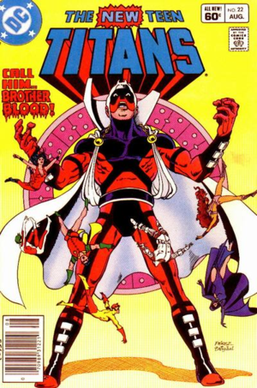
Brother Blood, the enigmatic supervillain from the Teen Titans universe, emerges as one of the most chilling creations of Marv Wolfman and George Pérez. First appearing in The New Teen Titans #21 in 1982, his presence is a dark, looming shadow over the vibrant world of young heroes—a calculated mastermind cloaked in the guise of a religious savior.

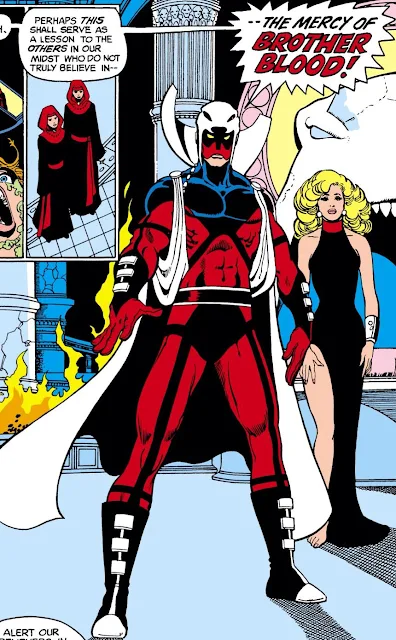
As Sebastian Blood, he leads the Church of Blood, a sinister cult whose ambitions stretch far beyond spirituality, aiming for total domination through arcane and supernatural means. Blood’s magnetic charisma and chilling ruthlessness make him a force to be reckoned with, capable of bending the masses to his will while hiding his darker intentions beneath a façade of piety.

With the Church of Blood firmly rooted in New York, Brother Blood’s cult becomes a growing menace, exploiting faith and manipulation as tools of control. His role in the Teen Titans mythos isn’t just that of a villain—it’s a mirror to real-world fears of unchecked power, cult fanaticism, and the dangers of blind devotion.

You could say, he's a cult classic...

brother blood

Brother Blood’s narrative is a chilling dive into the depths of power and manipulation, anchored by his use of violence and psychological domination to maintain control over his fanatical followers. From human sacrifice to brainwashing, his actions reflect the sinister lengths he will go to secure and expand his influence, making him one of the Teen Titans’ most dangerous adversaries.

His skill as a combatant adds another layer of threat, allowing him to face the Titans on equal footing in physical confrontations.

In the Teen Titans animated series, Brother Blood is reimagined as a cybernetically enhanced villain, whose ambitions pivot towards global technological domination. Introduced in the episode “Deception,” Blood’s ruthless intellect and obsession with control come to the forefront as he orchestrates schemes to steal and weaponize advanced technology. His role as the architect of a vast conspiracy underscores his calculating nature, elevating him from a mere cult leader to a global threat.

Thematically, Brother Blood embodies the dangers of unchecked power and the insidious allure of charismatic tyranny. His arc serves as a stark warning against blind obedience and highlights the fragility of free will in the face of manipulation. 

Through Blood’s story, both the comics and the animated series explore the dark intersections of faith, control, and the human desire for belonging.

brother blood cover teen titans


How is Brother Blood beaten by the Titans?

Brother Blood’s downfall at the hands of the Teen Titans is a testament to the team’s unity and their ability to outmaneuver even the most cunning foes. In the comics, their victory comes through a combination of strategy, teamwork, and uncovering the dark truth behind his power. Blood, bolstered by stolen technology and mystical manipulation, presents a formidable challenge, but the Titans turn the tide by exposing his reliance on these artificial enhancements and freeing his brainwashed followers, stripping him of both his army and his mystique.

In the animated series, the Titans’ approach is similarly rooted in collaboration but tailored to the medium's tone. Raven’s supernatural expertise proves crucial, disrupting Blood’s mystical control and severing his hold over his cult. As the team dismantles his cybernetic enhancements, they reveal the hollow man behind the godlike facade. The final confrontation is a high-stakes battle of wits and power, with the Titans emerging victorious by leveraging their individual abilities to exploit Blood’s vulnerabilities.

Both iterations highlight a recurring theme in the Teen Titans lore: the triumph of trust and cooperation over manipulation and tyranny.

How 'Revenge of the Jedi' became 'Return of the Jedi'

The change of the title from "Revenge of the Jedi" to "Return of the Jedi" was a significant moment in the history of the Star Wars franchise.

It has become a topic of discussion among fans and film enthusiasts, as it marks an interesting shift in the film's tone and theme.

"Revenge of the Jedi" was originally chosen as the title for the third installment of the Star Wars trilogy during the early production stages. The title was first announced in 1982, and some promotional materials even featured the original title. Fans were excited about the prospect of a darker, more revenge-driven narrative, and the anticipation for the film was high after the massive success of The Empire Strikes Back.


revenge of the jedi poster


However, George Lucas decided very late in post-production that "Revenge" was not a fitting description of the Jedi's character.

The Jedi are meant to be guided by peace and justice, not revenge. As a result, the title was changed to "Return of the Jedi" just months before the film's release in 1983.

This change reflected the shift in the story's focus from vengeance to redemption, as Luke Skywalker faced Darth Vader in a battle to save the galaxy and brought his father back to the light side of the Force (Anakin thus fulfilling the prophecy of being the Chosen One).

Despite the title change, some early promotional materials such as posters and merchandise still featured the original title, making them rare and valuable collector's items. The fact that the title was changed also adds an interesting element to the history of the Star Wars franchise, as it demonstrates the creative process behind the making of the film and the evolution of the story's themes.

The change in title also highlights the way in which the Jedi actually returned. Luke became a Jedi Knight, fulfilling Yoda's prophecy from "The Empire Strikes Back," while Vader's redemption saw him return to being Jedi Anakin Skywalker, bringing balance to the Force. "Return of the Jedi" ultimately became a fitting title for the film, as it accurately represented the story's themes and the characters' journeys.

It's also worth noting that the prequel film "Revenge of the Sith" may be a nod to the original title of "Return of the Jedi." This title choice suggests that Lucas was still fond of the idea of revenge as a central theme in the Star Wars universe.

Fun fact: The filming production title of Revenge of the Jedi was "Blue Harvest"

Chewbacca quotes from Star Wars

Chewbacca, the mighty Wookiee, is one of the most iconic characters in the Star Wars franchise. His towering height and fierce loyalty to his friends have made him a beloved character amongst fans of the series. From his enduring friendship with Han Solo to his bravery in battle, Chewbacca's presence in the Star Wars films is truly remarkable.


First introduced in the original Star Wars film in 1977, Chewbacca quickly became a fan favorite. The Wookiee's distinctive growl, towering height, penchant for the Dejarik Holochess game and shaggy fur instantly set him apart from the other characters. But it was his deep bond with Han Solo that truly captured audiences' hearts. The two characters had been through countless adventures together and had become the best of friends, with Chewbacca serving as Han's co-pilot and loyal companion.


chewbacca growl quotes

Chewbacca's loyalty to Han was never more apparent than in the film The Empire Strikes Back. When Han was frozen in carbonite and taken away by bounty hunters, Chewbacca refused to leave his friend's side. He helped Princess Leia and Luke Skywalker rescue Han, demonstrating his fierce devotion to those he cared about.

In Return of the Jedi, Chewbacca played a key role in the final battle against the Empire. His strength and bravery were essential to the Rebel Alliance's victory, and his joyous celebration with his friends after the battle was won is one of the most memorable moments in the entire Star Wars saga.


Chewbacca's friendship with Han was not the only one he formed in the Star Wars films. He also had a deep bond with Luke Skywalker, who he rescued from the icy planet of Hoth in The Empire Strikes Back. Chewbacca's loyalty to Luke was demonstrated once again in Return of the Jedi when he helped rescue the young Jedi from Jabba the Hutt's palace.


chrewbaca quotes star wars


Chewbacca also formed a close friendship with Princess Leia, who he affectionately referred to as "Your Highness" or "Princess." In The Force Awakens, Chewbacca was devastated by Han Solo's death and found comfort in Leia's presence. The two shared a tender moment as they mourned their friend's passing, a testament to the strength of their bond.


In addition to his friendships, Chewbacca also had many key moments in the Star Wars films. From piloting the Millennium Falcon to saving his friends from danger, Chewbacca's bravery and strength were on full display throughout the series. He even got to take center stage in Solo: A Star Wars Story, which explored his early adventures with Han Solo.


Chewbacca's role in the Star Wars films goes far beyond his towering height and distinctive growl. He is a character who embodies loyalty, bravery, and friendship, and his presence in the series has touched the hearts of millions of fans. From his earliest adventures with Han Solo to his later appearances in the sequel trilogy, Chewbacca has left an indelible mark on the Star Wars franchise, making him one of the most beloved characters in the galaxy far, far away.


Here are some not so classic quotes of Chewbacca:


1. Graeerrr grwool rooawl geerralll arrrgh (Chewbacca to Han Solo: "We have to make the jump to hyperspace now!")


2. Rooawr graeerrr grwool arrrgh (Chewbacca to Luke Skywalker: "Stay focused, Luke. We need to take out those TIE fighters!")


3. Graeerrr grwool rooawl geerralll arrrgh (Chewbacca to Princess Leia: "Don't worry, Your Highness. We'll get you out of here.")


4. Arrrgh graeerrr grwool rooawl (Chewbacca to Rey: "We have to find a way to stop the First Order.")


5. Rooawr graeerrr grwool arrrgh (Chewbacca to Han Solo: "This is a bad idea, Captain. We shouldn't be here.")


6. Graeerrr grwool rooawl geerralll arrrgh (Chewbacca to Luke Skywalker: "Use the Force, Luke. You can do this.")


7. Rooawr graeerrr grwool arrrgh (Chewbacca to Princess Leia: "I'll protect you, Your Highness. No matter what.")


8. Graeerrr grwool rooawl geerralll arrrgh (Chewbacca to Rey: "The Millennium Falcon is ready to fly. Let's go.")


9. Arrrgh graeerrr grwool rooawl (Chewbacca to Han Solo: "I can't believe you talked me into this.")


10. Rooawr graeerrr grwool arrrgh (Chewbacca to Luke Skywalker: "You're not alone, Luke. We're here with you.")

About the author Jimmy Jangles


My name is Jimmy Jangles, the founder of The Astromech. I have always been fascinated by the world of science fiction, especially the Star Wars universe, and I created this website to share my love for it with fellow fans.

At The Astromech, you can expect to find a variety of articles, reviews, and analysis related to science fiction, including books, movies, TV, and games.
From exploring the latest news and theories to discussing the classics, I aim to provide entertaining and informative content for all fans of the genre.

Whether you are a die-hard Star Trek fan or simply curious about the world of science fiction, The Astromech has something for everyone. So, sit back, relax, and join me on this journey through the stars!
Back to Top