31 January 2023

What is The Voice in Dune?

The "Voice" is a powerful tool that the Bene Gesserit use to manipulate and control others through their vocal inflection and tone. It is based on the idea that the human voice can have a profound effect on others, and that by using the right combination of sounds and tones, one can influence people to do one's bidding.

In the context of the Dune novels, the Voice is presented as a highly advanced technique that the Bene Gesserit have developed through centuries of training and experimentation. It is a combination of vocal control, body language, and psychological manipulation that can be used to compel others to do what the user wants. 

The Voice is also presented as a natural ability possessed by some individuals, such as Paul Atreides, who are born with a talent for manipulating others with their voice.
the voice dune explaination

The science behind the Voice is not explained in great detail in the novels, but it is suggested that it is based on a deep understanding of the human psyche and the way that the brain processes sound and language. By using the right combination of words and vocal intonation, the user can bypass the listener's conscious mind and tap into their subconscious desires and fears, effectively controlling their actions.

The Voice is used throughout the Dune novels as a tool of power and manipulation, and there are many examples of its effective use. In the first novel, Dune, the Bene Gesserit Reverend Mother Gaius Helen Mohiam uses the Voice to test Paul Atreides' loyalty and obedience. She forces him to obey her commands by using a combination of vocal intonation and pain, demonstrating the power of the Voice to control others.

the voice concept bene gesserit

In Dune Messiah, Paul Atreides uses the Voice to command a group of Sardaukar soldiers, forcing them to abandon their mission to kill him and instead pledge their loyalty to him. This scene highlights the effectiveness of the Voice as a tool of persuasion, even in the face of extreme danger.

In the later Dune novels, the Bene Gesserit continue to use the Voice as a powerful tool of manipulation and control. For example, in Heretics of Dune, Mother Superior Darwi Odrade uses the Voice to force the Honored Matre Murbella to submit to Bene Gesserit control, effectively converting her to their cause.

How the Voice is used in the Dune movie

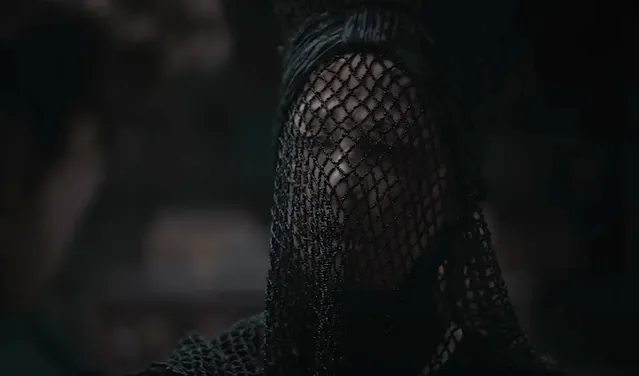
In the 2022 adaptation of Frank Herbert's seminal science fiction novel "Dune," directed by Denis Villeneuve, the concept of "the Voice" is ingeniously utilized to deepen the narrative's exploration of power, control, and human potential. 

The film conveys the disconcerting effect of the Voice through a combination of sound design and visual cues, immersing the audience in the experience of its compelling power. For instance, when Lady Jessica or Paul uses the Voice, the filmmakers employ a layered audio technique that combines multiple tonalities and resonances, creating an unsettling auditory experience that signifies the unnatural influence they wield. 

This is further amplified by the actors' performances, which convey both the concentration required to use the Voice and the strain it imposes on them, highlighting the mental discipline and strength the Bene Gesserit must cultivate. Villeneuve's "Dune" thus transforms the Voice from a mere plot device into a complex symbol of authority and manipulation, reflecting the broader themes of destiny, governance, and the human condition that are central to the narrative.

the voice concept in dune


Overall, the Voice is a complex and powerful tool that the Bene Gesserit use to exert control over others. It is based on a deep understanding of the human psyche and the power of language, and is presented in the Dune novels as a natural ability that can be developed through training and practice. The use of the Voice is a key aspect of the Bene Gesserit's power and influence in the Dune universe.

A Discussion on Cosplay and Self-Expression - The Psychology Behind Dressing Up as Fictional Characters

Let's delve deeper into the cultural significance of zombies in popular media. 

Zombies have become a cultural phenomenon in modern times. They have been featured in a variety of media forms, including classic films, TV shows, books, and video games. The portrayal of sexy zombies in popular media has evolved over time, but they are typically depicted as undead beings who feed on the flesh of the living. They are often associated with themes of horror, fear, and the unknown.

One reason why zombies have become so popular in popular media is that they can represent a variety of cultural anxieties. 

For example, the fear of the unknown is a common theme in zombie stories, as people are unsure of what is causing the outbreak and what the zombies are capable of. Additionally, zombies can represent the threat of contagion and the breakdown of social order, as survivors must navigate a world where the rules of society no longer apply. 

Zombies are also often used as a metaphor for societal issues, such as consumerism (this was George Romero's specialty theme!), conformity, and the loss of individuality.

In part, it is why The Last of Us show was so popular. 

Moving on to the role of cosplay in promoting body positivity and self-expression, it's important to understand that cosplay is not just about dressing up in costumes and exposing one's well bosumed cleavage. 

It's a form of self-expression that allows individuals to immerse themselves in the worlds of their favorite characters and connect with others who share their interests. Cosplay provides a platform for people to express their creativity, passion, identity - and sexuality.

Like this energetically endowed zombie girl cosplayer:

zombie girl cosplayer large green breasts

This cosplayer has gone all out with her costume - green body paint to indicate skin determination, and bloody nails to suggest her character has attacked other parties. Her dead white eyes imply an unseen evil lurks within and her exquisite dental makeup suggests decay and that her character is well under the spell of whatever made her a Living Dead Girl. 

You would not want this girl kicking on your front door during a Zombie Apocalypse. 

Or ever really. 

Cosplay has become an important platform for promoting body positivity and inclusivity. People of all body types and identities can participate in cosplay and feel empowered. In a world where beauty standards can be restrictive and exclusive, cosplay provides a space where people It doesn't matter if they are large breasted, have a missing knee or bad teeth, they can express themselves in a way that feels authentic and inclusive. 

Cosplay has also become a platform for advocacy, with cosplayers using their platform to promote body positivity and raise awareness about important social issues.

Here's a classic cosplay Star Wars crossover:

stormtrooper zombie

What evil fate befell this Storm Trooper? This looks to be a destiny worse than living through Order 66...

Finally, let's explore the psychology behind why people enjoy dressing up, body painting their breasts, and embodying fictional characters. 

There are several theories. 

One is that it provides a sense of escape from reality. People may use cosplay as a way to temporarily adopt a different identity and experience a different world. Another theory is that it allows for a sense of mastery and control. 

Cosplayers can create and control their own costume and performance, which can provide a sense of empowerment. 

star war cosplayer leia zombie with male pilot
Princess Leia cosplayer and pilot friend with ... a snack.

Finally, cosplay can provide a sense of community and belonging. Cosplayers can connect with others who share their interests and passions, which can help to foster a sense of community and belonging.


Transformers: Rise of the Beasts Trivia

"Transformers: Rise of the Beasts" has finally hit the big screens in June 2023, and it's everything that fans of the franchise have been waiting for. This latest addition to the Transformers series is a thrilling live-action film that offers a fresh take on the beloved Autobots and Decepticons, with new characters and storylines that take the universe in exciting new directions.

Set in the 1990s, "Transformers: Rise of the Beasts" serves as a prequel to the original Transformers series and as a sequel to the Bumblebee film, and features a diverse cast of both humans and robots.

Noah, a sharp young guy from Brooklyn, and Elena, an ambitious, talented artifact researcher, are swept up in the conflict as Optimus Prime and the Autobots face a terrifying new nemesis bent on their destruction named Scourge

 The film introduces new Transformers such as 'Optimus Primal' (Ron Pearlman) and Airazor (Michelle Yeoh) and human characters while also paying tribute to the franchise's history. Fans of the series will be delighted to see some of their favorite characters in action, while newcomers will find it easy to get swept up in the thrilling and action-packed adventure.


Transformers: Rise of the Beasts trivia

One of the highlights of the film is its impressive special effects and production design. The robots look stunningly realistic, and the action scenes are nothing short of breathtaking. The film's creative team has done an incredible job of bringing the Transformers universe to life on the big screen, and it's clear that no expense has been spared in making this movie a visual spectacle.


"Transformers: Rise of the Beasts" is a must-see film for fans of the franchise and action movie lovers alike. With its captivating story, diverse cast, and mind-blowing special effects, this movie is sure to leave audiences on the edge of their seats from beginning to end.

31 December 2022

How the "Chain of Command, Part II" Star Episode is still relevant 30 years later

Star Trek: The Next Generation – Chain of Command, Part II

"Chain of Command, Part II" is the 11th episode of the sixth season of Star Trek: The Next Generation, first broadcast in the United States on December 17, 1992. Among Trekkies, it is revered as one of the defining moments of the series, remembered for its raw intensity, its unflinching look at the psychological abuse of prisoners of war, and its relentless exploration of what happens when truth itself is under siege.

The episode follows Captain Jean-Luc Picard after he is captured by the Cardassians, one of the Federation’s most complex and morally ambiguous adversaries. He is transported to a secret detention facility and subjected to brutal methods intended to break his mind and extract classified intelligence about a covert Starfleet operation. The Cardassians want more than information. They want submission.

Chain of Command Star Trek
Captain Picard facing Gul Madred in the infamous interrogation chamber.

What elevates this episode into Star Trek legend is a single, unyielding exchange. Gul Madred, the architect of Picard’s torment, presents four bright lights and demands that Picard acknowledge five. It’s not about facts. It’s about breaking resistance, one neuron at a time. Madred escalates the pain, confident the Captain will surrender. But Picard refuses.

“There are four lights!”

This moment echoes through Trek history. It’s a direct mirror to the franchise’s DNA: defiance in the face of tyranny. For longtime fans, it recalls Vulcan philosophy on logic and truth, echoes the Prime Directive’s moral weight, and nods to the franchise’s Cold War roots. In-universe, it also foreshadows the Cardassians’ role in later conflicts, including their eventual alliance with the Dominion. This isn’t just torture. It’s a prelude to the storm that will engulf the Alpha Quadrant.

Picard’s Ordeal and Stewart’s Performance

Throughout the episode, Picard endures every conceivable tactic, from sensory deprivation to physical brutality. His refusal to compromise his morality turns him into something more than a Starfleet captain. It transforms him into a symbol. Sir Patrick Stewart has often cited this storyline as one of the most emotionally draining of his career. The performance is stripped to its essence. No diplomacy. No bridge. Just the raw human will to endure.

In interviews, Stewart described the filming process as exhausting, calling it “grueling” and “one of the most personal performances” of his time on the show. What began as a science fiction plot about a prisoner became a study in how far the human mind can bend before it breaks.

Stewart later reflected on how relevant the episode became in real-world political climates, pointing to the erosion of civil liberties and the ethics of interrogation in modern conflicts. The four-lights moment has been referenced in political commentary, military ethics debates, and academic writing for decades.

Political Resonance and Real-World Parallels

“Chain of Command, Part II” resonated far beyond Trek fandom. Journalists and scholars have drawn parallels between Gul Madred’s psychological tactics and real-world methods of interrogation. In 2004, Seymour M. Hersh compared the episode’s depiction of torture to what was later uncovered at Abu Ghraib prison. In 2014, Conor Friedersdorf noted its eerie prescience regarding enhanced interrogation in the post-9/11 era. Star Trek had already imagined the moral fallout of such choices years earlier.

This is part of what makes this episode so unforgettable. Like the best of Trek, it isn’t just entertainment. It’s a mirror held up to power, asking uncomfortable questions about the cost of survival and the fragility of truth when power tries to rewrite it.

The lights in Chain of Command
The infamous "There are four lights" moment remains one of Trek’s most quoted lines.

Behind the Scenes and Trivia

  • The episode was written by Ronald D. Moore, a major force behind several key arcs in Star Trek lore and later creator of *Battlestar Galactica*.
  • The torture sequences drew from real testimonies of Vietnam War POWs. Producers consulted former prisoners to ensure authenticity and sensitivity.
  • Gul Madred was portrayed by David Warner, who also appeared as Chancellor Gorkon in *Star Trek VI: The Undiscovered Country*. His ability to channel quiet menace became legendary among Trek fans.
  • Although widely rumored, Gene Roddenberry did not appear in this episode. This myth has circulated for years but is not supported by production records.
  • The title “Chain of Command” nods both to Starfleet’s structure and the chain of psychological manipulation Madred uses against Picard.
  • The episode won a Primetime Emmy Award for Outstanding Individual Achievement in Sound Editing and received multiple additional nominations.
  • The Cardassians, who feature heavily here, would later play a central role in *Star Trek: Deep Space Nine*, where their political and cultural complexity expanded far beyond their initial portrayal as villains.

Legacy

“Chain of Command, Part II” remains one of the most celebrated episodes of the series. Its exploration of psychological endurance, power, and the resilience of the human spirit is as sharp today as it was in 1992. Among Trek fans, the image of Picard standing broken yet unbroken, whispering “There are four lights,” is etched into collective memory.

This episode is more than a story. It is a Star Trek litmus test. It reveals what happens when authority is unchecked, when reality itself is weaponized, and what it means to resist even when resistance hurts.

For those who study Trek not just as a show but as cultural text, this is required viewing. And for those who love Picard, it’s the moment that defines him.

28 September 2022

Famous Films That Influenced Star Wars: A Comprehensive Exploration

At a cursory glance, George Lucas's "Star Wars: A New Hope" appears to be an original cinematic masterpiece full of wondrous monsters and menacing men in black space suits. 

However, Lucas himself has openly acknowledged that his groundbreaking space opera drew inspiration from a myriad of sources, ranging from classic films to literature and even historical events. This article delves into the intricate web of influences that shaped the Star Wars universe.

The Dambusters and The Guns of Navarone: War Epics Reimagined

The iconic trench run scene in "A New Hope," where Rebel pilots target the Death Star's exhaust port, is a direct homage to the 1955 British war film "The Dambusters." In this film, British pilots must drop bouncing bombs on a Nazi dam, requiring precise timing and aim—much like the Rebels' mission. Lucas even borrowed the line "Get set for your attack run!" verbatim.

The urgency of the Death Star attack also mirrors the plot of "The Guns of Navarone," where a team of commandos must destroy Nazi super-cannons to save British troops. The film's tension and pacing influenced how the Rebels' mission was framed in "Star Wars," adding layers of suspense and stakes to the narrative.

Casablanca: A Galactic Rick's Café

The Mos Eisley Cantina in "A New Hope" is a spacefaring version of Rick's Café from "Casablanca." Both serve as hubs for shady deals and feature a cast of morally ambiguous characters. Han Solo's character is a nod to Humphrey Bogart's Rick, sharing a similar world-weary cynicism and even some lines. The price of 15,000 credits for passage to Alderaan also curiously mirrors the 15,000 francs for a ticket out of Casablanca.

thx 1130 influence in star wars


THX 1138: Dystopian Echoes

Lucas's own film, "THX 1138," explores themes of population control and dystopian governance. These themes subtly resurface in the Star Wars saga, particularly in the portrayal of the Galactic Empire's totalitarian rule. The film even includes a line about running over a Wookiee, possibly inspiring the creation of Chewbacca's species.

Akira Kurosawa's Influence: The Hidden Fortress and Seven Samurai

The narrative structure of "Star Wars" owes much to Akira Kurosawa's "The Hidden Fortress," which tells its story through the eyes of two lowly characters, much like R2-D2 and C-3PO. The film also inspired the iconic scene transitions in "Star Wars." Additionally, visual references to Kurosawa's "Seven Samurai" can be found in "Revenge of the Sith."

Nazi Imagery: The Triumph of the Will


The medal ceremony in "A New Hope" and the design of the Stormtroopers borrow heavily from Nazi imagery, particularly Leni Riefenstahl's propaganda film "The Triumph of the Will." This serves to underline the authoritarian nature of the Empire.

The Searchers and John Wayne: A Western in Space


The scene where Luke discovers his murdered aunt and uncle is a direct lift from John Ford's "The Searchers," another film that explores the relationship between a young man and a morally complex father figure.

Ben Hur and Lawrence of Arabia: Epic Inspirations


The pod race in "The Phantom Menace" is a grander version of the chariot race in "Ben Hur," complete with similar camera angles and narrative tension. The desert landscapes of Tatooine also draw visual inspiration from "Lawrence of Arabia," a film that also featured Sir Alec Guinness.

Flash Gordon: The Serial That Started It All


Lucas initially wanted to adapt "Flash Gordon" but couldn't secure the rights. However, the influence remains, from the opening crawl to the concept of a spacefaring fairy tale. The idea of futuristic technology substituting for magic is a core element borrowed from Flash Gordon.

Edgar Rice Burroughs: John Carter of Mars


The John Carter series by Edgar Rice Burroughs, which predates even Flash Gordon, had a profound impact on "Star Wars." From the concept of a human falling in love with an alien princess to the very term "Jedi," the fingerprints of Burroughs' work are evident throughout the Star Wars saga.

Other Notable Influences

  • J.R.R. Tolkien: Elements of Gandalf can be seen in Obi-Wan Kenobi.
  • Metropolis: The design of C-3PO was inspired by the Maschinenmensch robot.
  • Forbidden Planet: Influenced the concept of protocol droids and features a direct homage in "The Phantom Menace."
  • Star Trek: The concept of a collective disturbance in the Force mirrors Spock's empathic abilities.

The Star Wars universe is a rich tapestry woven from a multitude of influences, each contributing to its enduring appeal. By examining these influences, we gain a deeper understanding of how this iconic series came to define modern mythology.
22 April 2022

Princess Leia's Slave Bikini: Cultural Icon or Objectification?

 In the Star Wars franchise, Princess Leia is known as one of the most iconic female characters. However, her character's sexualization in the third installment of the original trilogy, Return of the Jedi, has sparked controversy and criticism.


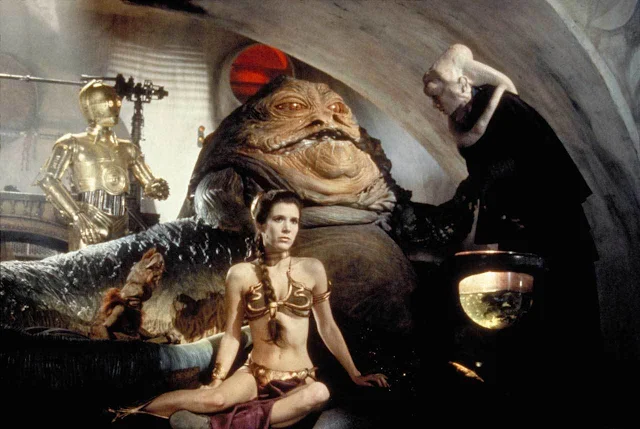
princess leia salve jabba scene


In Return of the Jedi, Princess Leia is captured by the vile gangster Jabba the Hutt and forced to serve as his slave girl. She is outfitted in a revealing gold bikini and chained up, serving as a decoration for Jabba's throne. This scene is infamous for its overt sexualization of Leia and has been the subject of much debate and criticism.


slave leia beach day


The gold bikini has become a cultural icon in its own right, with countless cosplayers and Halloween costumes featuring the outfit. It has also been referenced in popular media, such as the TV show Friends, where the character Rachel dressed up as "Slave Leia" for Ross's sexual fantasy.


leia bikini


Despite its iconic status, the sexualisation of Princess Leia in Return of the Jedi has been criticized for perpetuating harmful stereotypes and objectifying women. The scene reinforces the idea that women are meant to be objects of male desire, and it has been argued that it detracts from Leia's character development as a strong and independent leader.


slave bikini leia


Carrie Fisher, the actress who portrayed Princess Leia, has spoken publicly about her experiences filming the scene. In her memoir, The Princess Diarist, Fisher wrote about the discomfort she felt wearing the costume and performing the scene. She has described the outfit as "what supermodels will eventually wear in the seventh ring of hell."


prince leia wet in the water fisher bikini


Fisher has also been vocal about the pressures of being a sex symbol in Hollywood. She has spoken out about the double standards faced by women in the industry and the expectation that they should be both sexually attractive and talented. Fisher has been a champion for mental health awareness, and she has been open about her struggles with addiction and bipolar disorder.

While Princess Leia remains a beloved character in the Star Wars franchise, her sexualisation in Return of the Jedi continues to be a topic of discussion and criticism. The scene has sparked important conversations about the representation of women in media and the harmful effects of objectification.


star wars bikini Dejah Thoris comparison


It is worth noting that the infamous slave bikini outfit worn by Princess Leia in Return of the Jedi was not entirely original to the Star Wars franchise. The outfit was, in fact, inspired by a character named Dejah Thoris from the science fiction novel A Princess of Mars, written by Edgar Rice Burroughs in 1912.

Dejah Thoris is the Princess of Helium and a central character in the novel. She is described as wearing a revealing red silk outfit that leaves much of her body exposed. It is said that George Lucas, the creator of the Star Wars franchise, was a fan of the John Carter of Mars series and was inspired by Dejah Thoris' outfit when designing Princess Leia's slave bikini. The influence of science fiction on popular culture is undeniable, and the iconic slave bikini is just one example of how the genre has impacted mainstream media.


male cosplayer star wars bikini slave


Some fans love dressing up as Slave Bikini Leia because it allows them to showcase their fandom for the Star Wars franchise while also embodying a strong and iconic female character. Leia’s role as a rebel leader and her bravery in fighting against the Empire has inspired many fans. 

Additionally, her outfit as Slave Bikini Leia is often seen as a symbol of empowerment for some individuals, as it challenges traditional gender norms and allows them to express themselves in a way that they may not be able to do in their everyday lives. 

By embodying this character, fans are able to connect with their favorite franchise and feel a sense of belonging within the community of Star Wars enthusiasts.


sexy bikini cosplay star wars slave

Furthermore, Slave Bikini Leia has become an iconic and recognizable symbol within pop culture. Many fans enjoy cosplaying as this character as it allows them to pay homage to a classic and memorable moment in the Star Wars franchise. It is also an opportunity for fans to showcase their creativity and skills in creating a costume that accurately represents the character.
 
By donning the iconic gold bikini, fans are able to participate in a shared experience with others who appreciate the Star Wars franchise and its characters. Ultimately, dressing up as Slave Bikini Leia allows fans to express their love and admiration for the Star Wars franchise while also engaging in a fun and creative activity with others who share their passion.

sexy star wars cosplay bikini woman

fat male bikini jabba cosplay


07 April 2022

"Exploring the Symbolism of the Doomsday Clock in Watchmen"

The Doomsday Clock is a symbolic representation of how close humanity is to a global catastrophe, with the clock set to midnight representing the apocalypse. The clock was first introduced in 1947 by the Bulletin of Atomic Scientists, and since then has been updated periodically based on the perceived threat of nuclear war and other existential threats.

In the graphic novel Watchmen, the Doomsday Clock is a recurring motif that serves to highlight the central themes of the story. The story takes place in an alternate history where superheroes exist, and the world is on the brink of nuclear war between the United States and the Soviet Union.

doomsday clock yellow smiley face

The clock is first introduced in chapter two, where it is revealed that the clock has been moved two minutes closer to midnight due to increased tensions between the US and the Soviet Union. This sets the tone for the rest of the story, as the characters (or more so the reader) are constantly aware of the looming threat of nuclear annihilation.

The Doomsday Clock also serves to highlight the moral ambiguity of the characters in Watchmen. While many of the characters are ostensibly superheroes, they are flawed and often engage in violent or immoral behavior. The threat of nuclear war raises the question of whether the ends justify the means, and whether the preservation of humanity is worth sacrificing individual morals and ethics.

This is played out ending of both the novel and film - a catastrophic event is manipulated into effect by Ozymandias as a means to achieve peace and advert nuclear war.

The Yellow Badge as a symbol of the Doomsday Clock


The comedian's yellow badge is one of the iconic symbols in the graphic novel. The badge features a smiley face with a splatter of blood on it. The blood on the badge is arranged as the clock at the star of the story - 5 minutes to midnight.

The badge also plays a significant role in the story's plot, particularly in reference to the "Doomsday Clock," a symbolic representation of the world's proximity to nuclear war. The clock is a recurring motif throughout the story, serving as a visual reminder of the constant threat of global annihilation.

At one point in the story, the comedian's badge is found in his apartment by Rorschach, another character in the story. Upon examining the badge, Rorschach notices that there is a hidden smiley face on the back, which is only visible when the badge is folded in a certain way.

The discovery of the hidden smiley face leads Rorschach to investigate further and ultimately leads him to uncover a conspiracy that threatens to bring about nuclear war and destroy the world. The badge, therefore, serves as a symbol of the interconnectedness of the characters and the larger themes of the story, ultimately leading to its resolution.

About the author Jimmy Jangles


My name is Jimmy Jangles, the founder of The Astromech. I have always been fascinated by the world of science fiction, especially the Star Wars universe, and I created this website to share my love for it with fellow fans.

At The Astromech, you can expect to find a variety of articles, reviews, and analysis related to science fiction, including books, movies, TV, and games.
From exploring the latest news and theories to discussing the classics, I aim to provide entertaining and informative content for all fans of the genre.

Whether you are a die-hard Star Trek fan or simply curious about the world of science fiction, The Astromech has something for everyone. So, sit back, relax, and join me on this journey through the stars!
Back to Top