26 February 2026

The Surreal Sci-Fi Classics That Captivated 1980s TV Audiences

Welcome to the electrifying golden age of the cathode ray tube. The 1980s wasn't just a decade; it was a dazzling, synth-soaked revolution that redefined the impossible.

This was the era where practical effects reigned supreme, pulse-pounding soundtracks echoed through our living rooms, and every channel was a gateway to the stars. 

From the diplomatic grace of the Enterprise-D to the gritty cyberpunk shadows of Max Headroom, we celebrate the visionary dreams that built our modern world. 

The Archives: 17 Essential 1980s Sci-Fi TV Shows

📺 Star Trek: The Next Generation (1987–1994)

Premiering in 1987, Star Trek: The Next Generation was a massive gamble that eventually solidified itself as a cultural phenomenon. It took nearly two seasons to step out of the shadow of the original 1960s series, but once it did, it redefined the space opera for a new generation. 

Under the measured, philosophical command of Captain Jean-Luc Picard, the series moved away from the "space cowboy" tropes of the past toward complex diplomacy and ethical inquiry.

borg queen data kiss

The show's creative resurgence is famously tied to the second season, symbolized by Commander William Riker sporting a beard - a shift that signaled a more mature, serialized tone. Iconic episodes like "The Best of Both Worlds" introduced the Borg, sci-fi's most terrifying collective consciousness, while "The Inner Light" allowed the show to explore profound themes of memory and legacy, earning it a Hugo Award and critical immortality.

TNG's legacy lies in its optimistic humanism. It presented a post-scarcity future where humanity had outgrown its petty squabbles, focusing instead on the exploration of the "Final Frontier" of the mind and spirit. Whether debating the sentience of an android in "The Measure of a Man" or navigating a linguistic labyrinth in "Darmok," the show proved that science fiction could be both spectacular and deeply intellectual.

Deep-File Intelligence
  • Gene Roddenberry initially opposed casting Patrick Stewart, calling him "a bald English actor."
  • The iconic "Riker Beard" began in Season 2, marking the show's massive quality jump.
  • "The Inner Light" features Picard living a whole lifetime in 25 minutes via a probe.
  • The Borg were originally intended to be insectoid but became cybernetic due to budget.
  • "Yesterday's Enterprise" features a dark alternate timeline where the Federation is losing a war.
  • LeVar Burton’s VISOR prop was inspired by a hair accessory but blinded the actor on set.
  • The series finale, "All Good Things...", won a Hugo Award for Best Dramatic Presentation.
  • Whoopi Goldberg requested a role on the show because Star Trek inspired her to become an actress.

📺 V (1983–1985)

Created by Kenneth Johnson, V was a game-changer for television, blending alien invasion with sharp political commentary. It began as a monumental 1983 miniseries event, presenting a world where 50 massive saucers hover over major cities. 

The "Visitors" claim to come in peace, offering advanced medicine and technology, but a resistance movement led by cameraman Mike Donovan soon discovers their horrifying secret: they are reptilian fascists here to steal Earth's water and harvest humans for food.v mini series green alien

The show was a transparent and effective allegory for the rise of Nazi Germany. The Visitors' uniforms, youth recruitment programs, and propaganda campaigns were designed to mirror totalitarian regimes, warning audiences about the dangers of blind trust in authority. The show featured groundbreaking practical effects for the time, most notably the skin-ripping sequences and the infamous scene where the alien leader, Diana, eats a live guinea pig.

While the later weekly series struggled with budget constraints, the original miniseries and its sequel, The Final Battle, remain milestones of 1980s television. They paved the way for character-driven, serialized sci-fi like Battlestar Galactica and The X-Files, blending interpersonal drama with high-concept stakes that resonated with 40 million viewers during its initial broadcast.

Deep-File Intelligence
  • Inspired by Sinclair Lewis’s 1935 anti-fascist novel It Can't Happen Here.
  • The "V" logo was designed by Robert McCall, a famous NASA conceptual artist.
  • Diana (Jane Badler) eating a live guinea pig was one of TV's most controversial moments.
  • Robert Englund played Willie, a sympathetic alien, before becoming Freddy Krueger.
  • The Visitors were originally intended to be human-like before being changed to reptiles.
  • The miniseries won two Emmy Awards and was nominated for several more.
  • The production used real news footage of rallies to enhance the sense of realism.
  • The show was remade in 2009 but failed to capture the original's cultural impact.

📺 Automan (1983–1984)

Automan was a short-lived but visually spectacular series that sought to bring the digital aesthetic of Disney's Tron to the small screen. Created by Glen A. Larson (the mastermind behind Knight Rider), the show followed Walter Nebicher, a brilliant but ignored police computer programmer who creates an artificially intelligent hologram that can manifest in the real world. 

Together with his polyhedral sidekick "Cursor," Automan fights crime in a neon-drenched Los Angeles.

Automan TV Show

The show was famous for its "neon animation" technique, which required filming actors against black backgrounds and painstakingly drawing glowing circuits over the footage. This gave Automan a distinct, glowing appearance that stood out from anything else on TV. His signature vehicle, a modified Lamborghini Countach, could perform impossible 90-degree turns at high speeds, obeying the laws of computer physics rather than reality.

Despite its high production costs - it was one of the most expensive shows of the era - Automan was canceled after just 13 episodes. However, its influence on the "computer-generated hero" trope is undeniable. It captured the early 80s awe surrounding the dawn of the digital age, suggesting a future where the boundary between virtual reality and the physical world would eventually dissolve.

Deep-File Intelligence
  • The show's visual style was a conscious emulation of the 1982 film Tron.
  • Chuck Wagner, who played Automan, was a professional wrestler before his acting career.
  • The glowing suits used 3M Scotchlite material, making them notoriously hard to film.
  • Desi Arnaz Jr. (Walter) actually bought a PC in 1983 to better understand his role.
  • The theme song was performed by a band that closely mimicked the style of The Police.
  • Canceled after 13 episodes despite high production value and technical innovation.
  • Cursor could create anything Automan needed, from helicopters to tuxedos, out of thin air.
  • The visual effects were handled by Pacific Title Digital, who worked on Terminator.

📺 Quantum Leap (1989–1993)

Quantum Leap blended time travel with an intensely personal, character-driven format. Dr. Sam Beckett, a genius physicist, becomes trapped in a loop of time-jumping after an experiment goes wrong. He "leaps" into the bodies of strangers across the latter half of the 20th century, tasked by an unseen force with "putting right what once went wrong."

 Sam is accompanied by Rear Admiral Al Calavicci, a womanizing, cigar-chomping hologram only he can see and hear.

The show's brilliance lay in its empathy. By forcing a white, male scientist to walk in the shoes of women, minorities, and the disabled, Quantum Leap tackled heavy social issues - racism, sexism, and poverty - with incredible heart. Each episode ended with a "soft cliffhanger," showing Sam's face as he realized he had leaped into a new, often precarious, situation.

The sci-fi lore was robust, featuring the "Swiss Clock" theory of time and Ziggy, a self-aware supercomputer with a distinct ego. While the series finale, "Mirror Image," remains divisive for its somber tone and the revelation that Sam never returned home, the show remains a high-water mark for 80s storytelling, proving that sci-fi could be used as a powerful tool for social commentary.

Deep-File Intelligence
  • Creator Donald P. Bellisario named the computer "Ziggy" after David Bowie.
  • Scott Bakula and Dean Stockwell remained close friends until Stockwell's passing.
  • The handlink Al uses changed design multiple times to look more "futuristic."
  • The "Project Quantum Leap" accelerator set was reused for several other TV shows.
  • Sam Beckett possessed multiple PhDs and spoke seven languages, yet often felt lost.
  • The show was one of the first to win multiple Emmy Awards for its cinematography.
  • Al’s colorful, eccentric outfits were a signature element of the show's visual identity.
  • "Lee Harvey Oswald" was one of the few episodes where Sam leaped into a real person.

📺 Knight Rider (1982–1986)
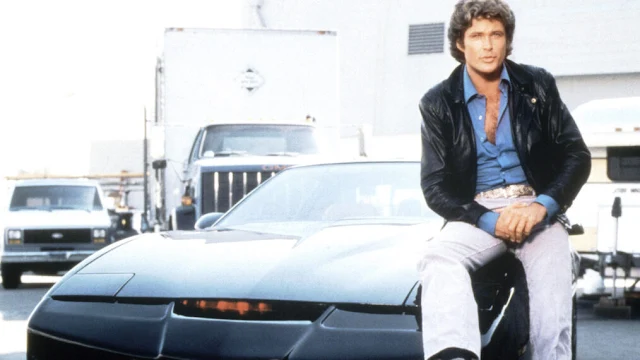
Knight Rider - Michael Knight and KITT

Knight Rider was the ultimate techno-thriller of the early 80s. When police officer Michael Long is shot and left for dead, he is rescued by the mysterious Foundation for Law and Government (FLAG). Reborn as Michael Knight, he is given a new face and the ultimate crime-fighting partner: K.I.T.T. (Knight Industries Two Thousand), a self-aware, indestructible Pontiac Firebird Trans Am.

The show captured the cultural transition from mechanical to digital. K.I.T.T. wasn't just a car; he was a character with a dry, logical wit and a moral compass. The "Turbo Boost" became a playground legend, allowing Michael to jump over obstacles and escape impossible traps. The series frequently explored the ethical implications of AI through KARR, K.I.T.T.'s "evil" prototype that lacked a primary directive to protect human life.

Driven by David Hasselhoff's charismatic performance and a legendary synth-heavy theme song, the show became a global phenomenon. It posited a future where technology was a force for good - a "one man can make a difference" philosophy that resonated with viewers during the height of the Cold War.

Deep-File Intelligence
  • The iconic red scanner on K.I.T.T.'s hood was borrowed from Battlestar Galactica's Cylons.
  • William Daniels (the voice of K.I.T.T.) chose to remain uncredited to keep the "magic" alive.
  • The dashboard was inspired by aircraft cockpits and featured real LED displays.
  • KARR (Knight Automated Roving Robot) was the "evil" version with no moral coding.
  • David Hasselhoff insisted on doing many of his own stunts until the car jump scenes.
  • The "Molecular Bonded Shell" made the car virtually indestructible and bulletproof.
  • The theme song is one of the most sampled tracks in hip-hop history (e.g., Busta Rhymes).
  • A real-life "Super Pursuit Mode" version of the car could actually reach 100+ mph.

📺 The A-Team (1983–1987)

While often viewed as an action-adventure show, The A-Team frequently dipped into sci-fi territory through its legendary engineering sequences. Four Vietnam veterans, "framed for a crime they didn't commit," survive as soldiers of fortune, helping the downtrodden using guerrilla tactics and makeshift technology. Whether turning a broken tractor into a tank or building a cabbage-firing cannon, their mechanical ingenuity was the stuff of legend.

The show's dynamic centered on the chemistry between Hannibal, Face, Murdock, and B.A. Baracus. Each episode featured a "construction montage," where the team used their unique skills to build high-tech (for the time) solutions to defeat corrupt corporate and military forces. The series was famous for its "bloodless violence" - despite thousands of rounds of ammo being fired, enemies always crawled out of their flipped cars unharmed.

The show reflected a post-Vietnam healing process, reframing veterans as honorable heroes operating outside a flawed system. Their reliance on scrap-yard engineering over factory-made hardware celebrated blue-collar expertise, making them the ultimate DIY sci-fi heroes of the Reagan era.

Deep-File Intelligence
  • The Cylon Centurion cameo in the intro was a nod to Dirk Benedict’s Battlestar past.
  • Only one on-screen death was ever implied during the entire 98-episode run.
  • Mr. T's gold chains were personal items he brought to the character's wardrobe.
  • Hannibal's "plan coming together" catchphrase became one of the most famous in TV history.
  • B.A. Baracus's signature van was a 1983 GMC Vandura with a custom red stripe.
  • Murdock was officially "insane," though he was often the smartest person in the room.
  • The show's theme was composed by Mike Post, the king of 80s TV themes.
  • A female team member (Amy Allen) was dropped after Season 2 due to cast tensions.

📺 ALF (1986–1990)

Taking the traditional family sitcom and injecting it with a cynical, cat-eating alien, ALF (Alien Life Form) was a massive hit for NBC. Gordon Shumway, a survivor from the planet Melmac, crash-lands into the Tanner family's garage. Hideously hairy and possessed of eight stomachs, ALF becomes a hidden member of the household, constantly dodging the "Alien Task Force" while critiquing human culture.

While fundamentally a comedy, the show built a surprisingly deep sci-fi lore. ALF frequently discussed the advanced technology, biology, and tragic end of Melmac (which exploded after everyone plugged in their hair dryers at once). The series was a dark inversion of the friendly "E.T." formula, presenting an alien who was loud, consumer-obsessed, and often selfish.

The production was notoriously difficult. To maintain the illusion of the puppet, the set was built on a raised platform with dozens of trap doors for puppeteer Paul Fusco. The human actors often grew frustrated by the technical constraints, but the show's dark humor and satirical edge kept it at the top of the ratings for four seasons.

Deep-File Intelligence
  • Melmac was destroyed because its inhabitants used too many high-wattage hair dryers.
  • ALF’s diet famously included cats, though he never actually succeeded in eating Lucky.
  • The set was four feet off the ground to allow room for the puppeteers below.
  • Max Wright (Willie Tanner) reportedly hated the technical difficulty of the show.
  • The series ended on a grim cliffhanger where ALF is surrounded by the military.
  • Melmacians have eight stomachs, which explained ALF’s constant hunger.
  • A live-action movie, Project ALF, was released in 1996 to wrap up the story.
  • The show’s title is an acronym for "Alien Life Form."

📺 Battlestar Galactica (1978–1980)

Though it began in the late 70s, Battlestar Galactica dominated early 80s sci-fi syndication. After a robotic race called the Cylons destroys the Twelve Colonies of Man, a lone military flagship, the Galactica, leads a "ragtag fugitive fleet" across the galaxy in search of a fabled home planet called Earth. It was a sprawling, expensive space opera that brought cinematic visual effects to the small screen.Battlestar Galactica (1978–1980)

The show was heavily influenced by Mormon theology, utilizing concepts like the Council of Twelve and ancient astronaut theories to explore humanity's destiny. The dynamic between the noble Commander Adama and his hotshot pilots, Starbuck and Apollo, provided the emotional core, while the metallic, monotone Cylons became the definitive villains of the era.

The series faced legal battles from 20th Century Fox, who claimed it copied Star Wars. Despite its cancellation after one season, it spawned the controversial Galactica 1980 and eventually a legendary 21st-century remake. Its legacy remains rooted in its epic scale and its exploration of survival in the wake of total planetary genocide.

Deep-File Intelligence
  • John Dykstra, the VFX lead from Star Wars, was hired to create the effects.
  • The Cylon Centurions had a mechanical "red eye" scanner built into their helmets.
  • The show's terminology (Centons, Yahrens) gave it a unique "alien" cultural feel.
  • Mormon theology (e.g., the star Kolob) heavily influenced the show's mythology.
  • Dirk Benedict (Starbuck) went on to play Face in The A-Team.
  • The series cost over $1 million per episode, an unheard-of figure in 1978.
  • The original pilots were all male; the remake famously changed Starbuck to a woman.
  • The "ragtag fugitive fleet" catchphrase was featured in the opening narration.

📺 Max Headroom (1987–1988)

Set "twenty minutes into the future," Max Headroom was the most prescient sci-fi of the decade. In a world where television networks control the government and corporate ratings are more important than human rights, reporter Edison Carter uncovers the lethal truth about "Blipverts"—commercials that cause viewers to explode. After a head injury, Edison's brain patterns are digitized to create Max, a stuttering, sarcastic, digital entity who lives in the networks.

This was pure cyberpunk on network TV. It tackled media manipulation, corporate surveillance, and digital identity long before they became mainstream concerns. Max, with his jerky movements and geometric background, became an 80s icon, appearing in music videos and commercials while his parent show offered a bleak, satirical look at the future of media.

The show's aesthetic was groundbreaking. Despite looking like complex CGI, Max was actually actor Matt Frewer in a fiberglass prosthetic suit. The show remains a cult classic, remembered for its sharp writing and its terrifyingly accurate predictions of a media-saturated society.

Deep-File Intelligence
  • The name "Max Headroom" came from the clearance signs in parking garages.
  • Matt Frewer spent hours in makeup; he was not a computer-generated character.
  • The show predicted the rise of YouTube-style "citizen journalism" via Carter's camera.
  • In 1987, a real-life hacker hijacked a Chicago TV signal wearing a Max mask.
  • The soundtrack was dominated by experimental electronic music and synth textures.
  • The character was originally created for a British TV movie before the US series.
  • The show coined several terms like "Blipvert" and "Body-Bank."
  • It was one of the first truly "cyberpunk" narratives to reach a wide US audience.

📺 Misfits of Science (1985–1986)

Long before superheroes were a billion-dollar industry, Misfits of Science brought a quirky team of super-powered anomalies to primetime. Led by Dr. Billy Hayes, the team included a rock musician who shoots electricity (B-Man), a telekinetic teen (Gloria), and a man who can shrink to the size of a doll (Elvin). They operated out of the back of a generic ice cream truck, investigating weird science and corporate conspiracies.Misfits of Science (1985–1986)

The show was lighthearted and campy, leaning into the "misfit youth" trope that was popular in cinema at the time. It treated superpowers not as a destiny, but as a burden or a biological quirk. The team fought rogue military experiments and mad scientists, providing a weekly dose of low-stakes superhero fun.

While it only lasted one season, it is remembered for being the television debut of Courteney Cox. It also faced legal threats from Marvel Comics over its similarities to The X-Men, leading the writers to strictly avoid using the word "mutant" throughout the series.

Deep-File Intelligence
  • Features a young Courteney Cox in one of her first major television roles.
  • The towering Elvin was played by Kevin Peter Hall (the actor inside the Predator suit).
  • The "ice cream truck" was a signature element, serving as their mobile HQ.
  • Marvel Comics sued because the team felt too similar to the X-Men.
  • The character Johnny B (the electric musician) was a tribute to Johnny B. Goode.
  • The show's theme song "Misfits of Science" was a quintessential 80s synth track.
  • It was canceled after 16 episodes due to stiff competition from Dallas.
  • One episode featured a man who could freeze anything by touching it.

📺 Small Wonder (1985–1989)

Small Wonder was a bizarre fusion of 1950s family values and 1980s computer science. Robotics engineer Ted Lawson creates V.I.C.I. (Voice Input Child Identicant), a lifelike android in the form of a 10-year-old girl. To protect his project from his nosy boss, Ted passes Vicki off as his adopted daughter. The show followed her attempts to "act human," which usually involved taking idioms literally and showing off her super-strength.

The show was a domestic playground for AI tropes. Vicki looked like a normal girl but possessed a computer brain and a "data port" in her armpit. The physical comedy came from her robotic delivery and her inability to understand social nuances - a direct precursor to characters like Data on Star Trek.

Produced on a shoestring budget, the show was a massive hit in syndication. While critically panned for its simplistic humor and low production values, it captured a specific 80s anxiety about technology entering the home. It suggested that a computer could be part of the family, provided you kept it programmed correctly.

Deep-File Intelligence
  • Tiffany Brissette (Vicki) rarely blinked to maintain the "robotic" illusion.
  • Vicki's access panel for programming was hilariously located under her armpit.
  • The nosy neighbor family (the Brindles) were the main source of tension.
  • Vicki's voice was processed with a slight electronic filter in the early episodes.
  • The show was one of the most successful first-run syndicated sitcoms of all time.
  • Ted Lawson worked for "United Robotronics," a classic sci-fi company name.
  • The show’s theme song "She's a small wonder" is a major nostalgic touchstone.
  • Vicki was incredibly strong; she once lifted the family's car to retrieve a ball.

📺 Alien Nation (1989–1990)

Picking up where the 1988 film left off, Alien Nation was a sophisticated sci-fi police procedural. In the near future, a ship carrying 250,000 enslaved aliens (the "Newcomers") crashes in the Mojave Desert. The show follows the integration of these aliens into Los Angeles, focusing on the partnership between human detective Matthew Sikes and Newcomer detective George Francisco.alien nation

The series was a brilliant social allegory, using the "Newcomers" (the Tenctonese) to explore racism, bigotry, and the struggles of immigrant assimilation. The show excelled at world-building, detailing the Tenctonese's bizarre biology - they have two hearts, get drunk on sour milk, and are burned by saltwater. The dynamic between the cynical Sikes and the logical, family-oriented George was the show's heart.

Despite critical acclaim and high ratings, the show was canceled after one season due to the financial struggles of the young Fox network. However, it lived on through five TV movies that continued the story, remaining one of the most mature and socially conscious sci-fi shows of its time.

Deep-File Intelligence
  • The alien language Tenctonese was fully developed for the series.
  • Newcomers had spots on their heads that indicated their lineage and family.
  • Sour milk had the same effect on aliens as alcohol does on humans.
  • Saltwater was toxic to them, adding a layer of danger to the coastal setting.
  • The series won an Emmy for its intricate alien makeup and prosthetic design.
  • The character of George Francisco had a wife and three children, showing alien family life.
  • Fox canceled the show on a cliffhanger that wasn't resolved for four years.
  • The show tackled real-world social issues like school integration and labor rights.

📺 The Greatest American Hero (1981–1983)

The Greatest American Hero was a satirical take on the superhero genre. Substitute teacher Ralph Hinkley (William Katt -  Carrie, The Man From Earth) is chosen by aliens to receive a red super-suit that grants him flight, strength, and invisibility. However, in a stroke of classic 80s slapstick, Ralph immediately loses the instruction manual. He spends the series clumsily figuring out his powers with the help of a cynical FBI agent named Bill Maxwell.The Greatest American Hero

The show's charm came from Ralph's incompetence. Because he didn't know how to fly properly, his "heroic" entrances usually involved him flailing through the air and crashing into brick walls. It was a grounded, funny take on the burden of responsibility, contrasting Ralph's idealism with Bill's paranoid, Cold War-era pragmatism.

Driven by the massive hit theme song "Believe It or Not," the show became a cult favorite. It captured the era's fascination with superheroes while mocking the tropes of the genre, offering a more human - and significantly more accident-prone - version of the Superman mythos.

Deep-File Intelligence
  • The theme song reached #2 on the Billboard Hot 100 in 1981.
  • DC Comics sued the show, claiming the suit's powers were too similar to Superman.
  • Ralph’s last name was briefly changed to "Hanley" after the Reagan assassination attempt.
  • The suit's chest symbol was a stylized red and white crest with no specific meaning.
  • Bill Maxwell (Robert Culp) was a classic 80s "tough guy" government agent.
  • The "aliens" were never fully seen, appearing only as mysterious lights or ships.
  • A female version, The Greatest American Heroine, was filmed but never aired.
  • Ralph eventually found the manual, but it was written in alien symbols he couldn't read.

📺 Buck Rogers in the 25th Century (1979–1981)

Buck Rogers was the ultimate "disco-sci-fi" transition show. Captain William "Buck" Rogers, a NASA astronaut, is frozen in space for 500 years and awakens in the year 2491. He finds an Earth that has rebuilt itself after a nuclear war, now part of a galactic alliance facing the evil Draconian Empire. Buck, with his "cowboy" pilot skills and 20th-century charm, becomes Earth's greatest defender.Colonel Wilma Deering ERIN GRAY

The show featured colorful, high-glamour sets and elaborate alien costumes. Buck was partnered with the brilliant Colonel Wilma Deering and a snarky, polyhedral robot named Twiki. The series was pure pulp fun, emphasizing dogfights and romance over heavy philosophical themes, making it a favorite for Saturday morning and late-night audiences alike.

Created by Glen A. Larson, it aggressively recycled props and sets from Battlestar Galactica to save on production costs. Despite its short run, it defined the early 80s space opera aesthetic - all spandex, lasers, and synth-pop energy.

Deep-File Intelligence
  • Twiki’s iconic "bidi-bidi-bidi" voice was provided by the legendary Mel Blanc.
  • Colonel Wilma Deering (Erin Gray) was one of the first strong female leads in sci-fi.
  • Buster Crabbe, the original 1930s Buck Rogers, made a guest appearance.
  • The second season shifted to a deep-space exploration format similar to Star Trek.
  • Buck’s Starfighter was one of the most popular toy models of the early 1980s.
  • Princess Ardala was the recurring femme fatale villain of the first season.
  • The show used the same "starry" background shots as Battlestar Galactica.
  • Twiki often wore a gold "disc" around his neck that contained a computer brain.

📺 Captain Power (1987–1988)

Captain Power was a revolutionary but controversial experiment in interactive television. Set in a devastated 22nd century following the "Metal Wars," a small band of freedom fighters led by Captain Jonathan Power battles a tyrannical cyborg army led by Lord Dread. 

The show utilized high-end (for the time) computer-generated characters and dark, dystopian themes that were far more mature than other shows aimed at kids.

captain power show

The show's main hook was its integration with Mattel toys. The broadcast contained specific light and audio signals that kids could "shoot" at using toy jets. The toys would react to the screen, tallying hits and even "ejecting" the pilot if they took too much return fire from the TV. This "first-person shooter" mechanic was decades ahead of its time.

Despite its technical innovation, the show was canceled after one season. It was heavily criticized by parents' groups for being too violent and for being a "30-minute toy commercial." However, its legacy lives on through its high-quality writing (including early work by J. Michael Straczynski - who would create Babylon 5 and work on Superman) and its bleak, cyberpunk world-building.

Deep-File Intelligence
  • The show was one of the first to feature fully CGI-rendered characters on TV.
  • J. Michael Straczynski (Babylon 5) wrote several of the show's dark episodes.
  • The interactive toy technology was known as "XT-7" and cost $1 million to develop.
  • The "Metal Wars" backstory was surprisingly complex, involving the loss of humanity.
  • The villains were known as the "Bio-Dreads," machines that digitized human souls.
  • Parents' groups protested the show for blurring the lines between media and sales.
  • The series finale ended on a dark note with several main characters being "digitized."
  • Mattel eventually pulled the plug on the toy line, leading to the show's demise.

📺 Manimal (1983)

Manimal is one of the most gloriously absurd cult classics of the 80s. Dr. Jonathan Chase, a wealthy professor of animal behavior, has the ancestral ability to shapeshift into any animal. He uses this "Manimal" power to solve crimes for the New York City police, usually opting for a hawk to scout the city or a black panther to fight off thugs.manimal tv show

The show was famous (and eventually mocked) for its incredibly detailed transformation sequences created by Stan Winston. Because the effects were so expensive, the production reused the exact same footage of Chase's hand swelling and skin shifting in almost every episode. This repetition became a signature of the show's campy charm.

Canceled after just eight episodes, Manimal became a punchline in late-night television for years. However, its blend of supernatural mysticism and 80s procedural grit has earned it a devoted cult following. It represents a time when TV networks were willing to take massive, bizarre risks on high-concept practical effects.

Deep-File Intelligence
  • Special effects were created by Stan Winston, the legend behind Jurassic Park.
  • The "Panther" transformation involved air bladders underneath the actor's makeup.
  • The show was so expensive it contributed to the studio's financial struggles.
  • Jonathan Chase was taught his secrets while living in Africa with a mysterious tribe.
  • The show was canceled so quickly that it became a running joke on Night Court.
  • Only three animals were featured regularly: a Panther, a Hawk, and once, a Snake.
  • The protagonist's partner was a tough female police detective named Brooke Mackenzie.
  • Despite its failure, the character made a cameo in the 1990s series Night Man.

The Enduring Legacy of the 80s

Looking back at these 17 pillars of speculative fiction, it's clear the 1980s was more than just neon and spandex. These shows were the laboratory for the complex, serialized storytelling we see today. They tackled the Cold War, the rise of the computer, and the fundamental question of what it means to be human - all while delivering spectacular weekly entertainment.

Stay tuned to The Archives for more deep dives into the practical effects, untold stories, and synth-wave aesthetics that built the future.

Read Article →
17 February 2026

The Ring / Ringu Franchise Timeline + Chronology

Seven Days Remaining

The Ring / Ringu Franchise Timeline

Based on Koji Suzuki's novels, the Ring cycle is one of the most convoluted franchises in horror history. 

The story of Sadako Yamamura (and her American counterpart Samara Morgan) centers on a cursed video tape that kills the viewer in seven days unless copied and shared. It is a viral curse in the literal sense.

NOTE: The Japanese films have three separate timelines that ignore each other. This guide organizes them by continuity.

The Ring / Ringu Franchise Timeline chronology


Timeline A: The Nakata Continuity

The "Main" Japanese timeline, directed primarily by Hideo Nakata. It focuses on the supernatural/ghostly aspect of Sadako.

Ring 0: Birthday

Origin: JP Release: 2000 Setting: Prequel (1968)

The Origin

Set 30 years before the original film, this adaptation of the short story "Lemon Heart" portrays Sadako Yamamura not as a monster, but as a fragile, tragic figure attempting to live a normal life in a Tokyo acting troupe. She falls in love with the sound director, but her uncontrolled "Nensha" (thoughtography) begins to plague the theater with strange recordings and visions.

The film reveals a crucial biological twist: Sadako split into two entities - one resembling a shy human girl, and the other a murderous spirit trapped in a box by her father. The horror stems from human cruelty; the troupe members club her to death in fear. Her father, Dr. Heihachiro Ikuma, completes the tragedy by throwing her still-living body into the well to "seal" the evil, inadvertently creating the vengeful Onryō that would curse the world.

Ring (Ringu)

Origin: JP Release: 1998 Dir: Hideo Nakata

The Incident

The film credited with launching the global J-Horror boom. Reporter Reiko Asakawa investigates the "Cursed Video" after her niece dies of sudden heart failure. The film relies on atmospheric dread rather than jump scares, using the grainy, surreal imagery of the tape - a woman brushing hair, kanji characters, a man pointing—to create subconscious unease.

The investigation leads Reiko and her ex-husband Ryuji to Izu Oshima to uncover the psychic history of Shizuko Yamamura. The finale subverts the "ghost laid to rest" trope; discovering Sadako's corpse does not break the curse. The chilling realization is that survival requires the sacrifice of ethics: Reiko must copy the tape and show it to another person (her own father) to save her son, perpetuating the viral cycle of evil.

Ring 2

Origin: JP Release: 1999 Dir: Hideo Nakata

The Continuation

Ignoring the events of Spiral, this film follows Mai Takano (Ryuji’s assistant) as she searches for answers regarding his death. It introduces Masami Kurahashi, a survivor from the first film, whose trauma is so severe that Sadako’s energy is imprinted on her brain waves, allowing the curse to manifest through psychiatric equipment.

The film shifts focus to the "Scientific vs. Supernatural" conflict, with Dr. Kawajiri attempting to exorcise the energy using electrical experiments in a pool. This disastrously backfires, proving Sadako cannot be contained by physics. The climax involves Mai entering a metaphysical "well" world to save Reiko’s son, Yoichi, who has begun to exhibit the same psychic powers as Sadako.

Sadako

Origin: JP Release: 2019 Dir: Hideo Nakata

The Modern Update

Hideo Nakata returns 20 years later to update the mythology for the digital age. The curse evolves from physical VHS media to digital video when an aspiring YouTuber attempts to film inside Sadako's haunted apartment, inadvertently uploading the curse to the internet.

The plot centers on a hospital setting and a new "reincarnation" arc involving a young girl with psychokinetic powers, linking back to the "Child of Sadako" themes. While less acclaimed than the original, it attempts to explore how a viral curse would propagate on social media platforms where "sharing" is instantaneous, removing the physical barrier of the tape.

Timeline B: The Spiral Continuity

Based closer to the novels, this timeline treats the curse as a biological virus (Ring Virus) rather than a ghost.

Spiral (Rasen)

Origin: JP Release: 1998 Note: Alt Sequel

The Medical Sequel

Released simultaneously with Ring (1998) as a double feature, this film offers a radical scientific explanation for the curse. Mitsuo Ando, a pathologist, discovers a tumor in Ryuji Takayama's throat containing a variation of the smallpox virus. The DNA within the virus matches Sadako Yamamura.

The horror here is biological rather than spiritual: the virus uses the tape as a vector to impregnate female viewers with clones of Sadako, effectively resurrecting her as a new species. The film ends on a nihilistic note, with the virus mutating to spread via the written word (the novel Ring itself), ensuring the eventual replacement of humanity with Sadako-hybrids.

Sadako 3D

Origin: JP Release: 2012 Note: Spiral Sequel

The Digital Mutation

A sequel to the Spiral timeline, this film posits that Sadako is attempting to find a suitable host to be reborn into the physical world using "Cursed Video" livestreams. The antagonist, Seiji Kashiwada, actively tries to resurrect her to punish humanity.

The film departs significantly from the atmospheric horror of the 90s, leaning into action and creature-feature elements. It introduces "Sadako-creatures" - insect-like monsters that swarm victims—and focuses heavily on the use of 3D gimmicks (hair flying out of the screen). It treats Sadako more as a kaiju or queen alien than a ghost.

Sadako 3D 2

Origin: JP Release: 2013

The Child

Set five years later, the story follows Fuko Ando and her niece Nagi, who is the daughter of Sadako born at the end of the previous film. The curse has evolved to kill people not through video, but through the psychic projection of the child's negative emotions.

The film explores themes of stigmatization and "bad blood," as Nagi is shunned for being the "child of a monster." It returns to a slightly more atmospheric tone than its predecessor, focusing on the mystery of sudden deaths surrounding the child, though it still retains the CGI-heavy climax characteristic of this specific timeline.

Timeline C: The DX Continuity & Standalones

Modern reboots and crossovers that establish their own rules.

Sadako vs. Kayako

Origin: JP Release: 2016 Type: Crossover

The Showdown

Originally an April Fool's joke that became real, this film pits the antagonist of Ring against the vengeful spirit of Ju-On (The Grudge). The premise involves two protagonists - one cursed by Sadako’s tape (now with a 2-day deadline), the other by Kayako’s haunted house - who are advised by an eccentric exorcist to pit the ghosts against each other to cancel out the curses.

The film is a mix of horror and dark comedy, showcasing the different "rules" of the ghosts (Sadako’s stealth vs. Kayako’s violence). The climax is a catastrophic failure for humanity: instead of destroying each other, the spirits merge into a pulsating mass of flesh and hair known as "Sadakaya," creating a super-curse with no known countermeasure.

Sadako DX

Origin: JP Release: 2022 Note: Meta-Comedy

The Mutation

A direct sequel to the 1998 Ring that ignores all other timelines. It modernizes the premise by treating the curse as a viral marketing hazard that has mutated to a 24-hour deadline to survive the fast-paced internet attention span. The protagonist is Ayaka Ichijo, a graduate student with an IQ of 200 who attempts to dismantle the curse using logic and science.

The film adopts a meta-comedic tone, deconstructing the tropes of the franchise. It concludes that the curse spreads like a meme—fear and belief fuel it. The solution presented is to "enjoy" the fear and spread the video widely, diluting the curse's potency through mass exposure, turning Sadako into a manageable digital avatar rather than a lethal threat.

Timeline D: The American Remakes

The Hollywood interpretation, featuring Samara Morgan and a distinct "green/blue filter" aesthetic.

The Ring

Origin: USA Release: 2002 Dir: Gore Verbinski

The Remake

Director Gore Verbinski reimagines the story with a distinct, sickly green visual palette. Rachel Keller (Naomi Watts) investigates the tape, which is filled with surreal, non-linear imagery (a burning tree, a ladder, maggots). The antagonist is Samara Morgan, an adopted child with "Nensha" powers who was drowned in a well at the Morgan horse ranch on Moesko Island.

The film focuses heavily on the mystery of the Morgan family and the tragic abuse Samara suffered. Unlike Sadako, Samara is depicted more as a "bad seed" - a child who was inherently evil and drove her horses and parents to madness. The ending retains the bleakness of the original: Rachel realizes Samara never wanted to be saved, she only wanted to be heard, and the only way to save her son Aidan is to make a copy.

The Ring Two

Origin: USA Release: 2005 Dir: Hideo Nakata

The Pursuit

Hideo Nakata (director of the original Japanese film) took the helm for this US sequel. Samara pursues Rachel and Aidan to a new life in Oregon. The film establishes that Samara is no longer bound by the tape; she is seeking a mother figure and attempts to possess Aidan to live again.

Key sequences involve water behaving unnaturally (flowing upwards, defying gravity) as Samara's primary medium. It explores the concept of the "Dark World" - a mirror dimension inside the TV where Samara resides. Rachel must enter this realm to save her son, eventually sealing Samara inside the well of her own making, closing the loop on the mother-child dynamic.

Rings

Origin: USA Release: 2017

The Network

Set 13 years later, the curse has become an underground study. A college professor, Gabriel, sets up an experiment where students watch the tape and immediately pass it on in a "tail" system to study the existence of the soul. The film introduces a "movie within the movie" - a digital file hidden in the static that contains new footage.

The plot delves into Samara's biological origins, revealing her mother Evelyn was held captive by a priest, complicating Samara's backstory with religious trauma. The film ends on a global scale: the video goes viral via email and airplane cockpit screens, fulfilling the ultimate threat of a worldwide curse that cannot be contained by analog methods.

Timeline E: International Variants

The Ring Virus

Origin: KR Release: 1999

The Korean Adaptation

Released shortly after the Japanese original, this South Korean version is actually a more faithful adaptation of Koji Suzuki's novel than Nakata's film. The ghost is named Park Eun-Suh, and the protagonist is a male doctor, Dr. Choi, preserving the book's gender dynamics.

It includes controversial elements cut from the Japanese film, such as the hermaphroditic (intersex) nature of the antagonist and the specific, brutal rape scenario that led to their death. The cursed tape in this version is different, featuring more explicit imagery of the moon and a different visual tone. While it lacks the atmospheric subtlety of the Nakata version, it provides a crucial bridge between the source material and the cinematic interpretation.

Read Article →

Quotes: 'The Mandalorian and Grogu'

The galaxy’s favorite clan of two makes the Force leap from Disney Plus to the silver screen in The Mandalorian and Grogu. As the first Star Wars feature film to originate directly from a live-action series, this historic release marks a bold new chapter for the franchise, stepping away from the Skywalker saga to tell a distinct, standalone story.

 Fans are eager to see how the bond between the stoic bounty hunter and his apprentice translates to a cinematic format, bringing with it a fresh script packed with the kind of iconic dialogue and lore that defines the modern era of Lucasfilm.

Below, we have curated the definitive collection of The Mandalorian and Grogu quotes, capturing the humor, heart, and grit of their theatrical debut. 

Whether you are hunting for the best lines from the movie, profound moments from the little green Force-user, or Din Djarin’s classic stoic one-liners, this page is your bounty. Explore our breakdown of the most memorable Star Wars quotes from this new adventure and relive the journey line by line.

the mandalorian and grogu film quotes


Film Quotes: 'The Mandalorian and Grogu' 


Good shot, baby! - Babu Frick

Hey! Never touch the buttons!

Closed for the night, thank you!  Martin Scorsese. 

We'll take out every band guy in your deck of cards

Strap in!

You will suffer, and then it will be his turn. 

The kid will live centuries beyond me, I won't always be around 

Are you scared? YOu should be? 

Do we run? Or do we fight?

I Like this kid


Read Article →
16 February 2026

ME: Andromeda - Architect Hunter: How to Find and Kill All 4 Remnant Superbosses

The Architect Hunter

APEX Combat Manual // Target: Remnant Architect // Threat Level: High

The "Remnant Architect" is the apex predator of Mass Effect: Andromeda. These massive, three-legged constructs are not part of the main story path.

 They are hidden challenges - superbosses that require specific triggers to unlock.

Defeating all four Architects is not just a badge of honor. It is a tactical necessity. 

Each victory boosts planet viability instantly and grants you an Architect Remnant Core, a crafting material required for the galaxy's best gear.

mass effect andromeda remana superbosses


⚠️ Tactical Advisory

Do not engage an Architect on foot. 

Use the Nomad for cover, but do not rely on its cannon (it does negligible damage). 

Bring a Soldier profile with Turbocharge and an Assault Rifle (like the Valkyrie or Revenant) for maximum DPS during the vulnerability windows.


Phase 1: Combat Protocol

Every Architect fight follows the same three-stage rhythm. Memorize this loop or die.

Stage 1: The Legs (Conduit Vulnerability)

The Architect is invulnerable. You must shoot the glowing "Conduits" on its three legs. Focus fire on one leg at a time. Once a leg takes enough damage, the Architect will stun.

Stage 2: The Head (The Damage Phase)

Once stunned, the head casing opens, revealing the core. Unleash everything. Use Cobras RPGs, Turbocharge, and Incendiary Ammo. You have about 15 seconds before it recovers.

Stage 3: The Mouth (The Instant Kill)

When the head closes, it will summon Remnant bots (Assemblers/Observers) and occasionally fire a massive energy beam from its mouth. Dodge sideways. This beam hits through cover and can one-shot you on Hardcore/Insanity.

Target 1: Eos (The First Encounter)

Unlock Trigger: You must establish the outpost (Prodromos) and complete the quest "Making an Impression" (given by the seismic surveyors).

  • Location: Near the black site, west of the outpost.
  • Difficulty: Moderate. The terrain is flat, offering little cover, but you can drive the Nomad in circles around it.

Target 2: Voeld (The Ice Giant)

Unlock Trigger: You must establish the outpost and complete "Missing Science Crew."

  • Location: Deep in the Remnant derelict site (far east of the map).
  • Difficulty: High. The extreme cold (Hazard Level 2) will drain your life support systems during the fight. You must run between heat lamps while dodging the Architect's laser.

Target 3: Kadara (The Sulfur Pits)

Unlock Trigger: Establish the outpost (requires siding with Sloane or Reyes) and complete "Old Skinner."

  • Location: In the sulfur springs area.
  • Difficulty: Very High. The terrain is uneven, and the acid pools will damage you if you step in them. The Architect likes to teleport to high ground, forcing you to chase it.

Target 4: Elaaden (The Dune Stalker)

Unlock Trigger: Establish the outpost (give the Drive Core to the Krogan) and complete "Architect on Elaaden."

  • Location: Near the labyrinth ruins.
  • Difficulty: Moderate. The heat is an issue, but there are plenty of pillars for cover.

The Loot: Remnant Cores

When an Architect falls, you must run up to its head and "Interface" to finalize the kill. This gives you:

  • +20% Planet Viability: A massive boost.
  • Architect Remnant Core: Used to craft the Heleus Defender Armor (Tier V-X) and high-level Fusion Mods.
  • The "Architect" Trophy/Achievement.

Mission Archives: Related Guides


"Big machine. Moving fast. We should kill it.

Read Article →

No Strings Attached? How to Navigate Casual vs. Exclusive Romances in Andromeda

Hearts of Heleus: The Ultimate Romance Guide for ANDROMEDA

Andromeda Initiative // Personnel Files // Status: Matchmaking // Clearance: Pathfinder

Romance in Mass Effect: Andromeda represents a significant evolution from the original trilogy. 

The rigid "one love per game" structure has been replaced by a more fluid, realistic system that allows for casual flings, friends-with-benefits arrangements, and deeply committed partnerships.

This freedom, however, introduces complexity. Some characters, like the Angaran resistance fighter Jaal, demand absolute emotional exclusivity. Others, like the rogue archaeologist Peebee, may flee if you push for commitment too early. 

And then there are the dangerous liaisons - romances with political figures like Reyes Vidal that can alter the fate of an entire planet.

This guide is your tactical manual for navigating the hearts of the Heleus Cluster. Whether you are looking for a lifelong bond or a night of passion before the final battle, here is how to make it happen.


Phase 1: The Dating Pool

Unlike Commander Shepard, the Ryder twins have distinct preferences and opportunities. Your choice of protagonist determines who is available to you.

Scott Ryder (Male)

Scott has access to the most "exclusive" human romances but misses out on the ship's science officer.

  • Cora Harper: Human Biotic (Exclusive). The "Squad Second" romance.
  • Peebee: Asari (Casual or Exclusive). The "Wildcard" romance.
  • Vetra Nyx: Turian (Exclusive). The "Partner in Crime" romance.
  • Jaal Ama Darav: Angara (Exclusive). The "Soulmate" romance. (Patched in v1.08).
  • Gil Brodie: Human Engineer (Exclusive). The "Family" romance.
  • Reyes Vidal: Human Smuggler (Exclusive). The "Bad Boy" romance.
  • Avela Kjar: Angaran Historian (Casual only).
  • Keri T'Vessa: Asari Journalist (Casual only).

Sara Ryder (Female)

Sara has unique access to the ship's crisis manager and the science officer.

  • Liam Kosta: Human Crisis Response (Exclusive). The "Best Friend" romance.
  • Jaal Ama Darav: Angara (Exclusive). The "Soulmate" romance.
  • Peebee: Asari (Casual or Exclusive). The "Wildcard" romance.
  • Vetra Nyx: Turian (Exclusive). The "Partner in Crime" romance.
  • Suvi Anwar: Human Science Officer (Exclusive). The "Faith & Science" romance.
  • Reyes Vidal: Human Smuggler (Exclusive). The "Bad Boy" romance.
  • Keri T'Vessa: Asari Journalist (Casual only).

Phase 2: Romancing Jaal (The Soulmate)

Available To: Both Scott and Sara.
Type: Exclusive (Committing to Jaal locks out all other exclusive romances).

Jaal is widely considered the "canon" romance of Andromeda due to the sheer amount of content. The Angara are a species who wear their hearts on their sleeves; they do not hide emotion. To woo Jaal, you must be equally open.

Step-by-Step Guide

  1. Initial Recruit: When Jaal joins the crew, visit him in the Tech Lab. Choose the "Friendship" dialogue options initially. Do not be aggressive.
  2. The Culture Clash: He will eventually ask you about how humans handle emotion. Be honest. Tell him you want to understand him.
  3. Loyalty Mission (Friend or Foe): You MUST complete his loyalty mission chain, "Flesh and Blood." This involves saving the Moshae and deciding the fate of the Roekaar leader, Akksul.
    • Crucial Choice: During the standoff with Akksul, do not shoot. Let Akksul shoot Jaal (the bullet will grace him). This proves to the Angara that you are not a conqueror. Jaal will be deeply moved by your trust.
  4. The Lock-In (Havarl): After the mission, Jaal will send an email inviting you to his favorite spot on Havarl. Go there. He will confess his feelings. Choose the "I adore you" option (Heart icon).
  5. The Family Dinner: The final scene takes place on Aya. You will meet his true mother (not his "other" mothers). Introduce yourself as his partner. This seals the romance.

Phase 3: Romancing Peebee (The Wildcard)

Available To: Both Scott and Sara.
Type: Flexible (Can be Casual OR Exclusive).

Peebee is the anti-Liara. She hates commitment, roots down, and "forever." She lives for the moment. Romancing her is a test of patience.

Step-by-Step Guide

  1. The Flirt: You can flirt with her immediately in the Escape Pod room. She responds well to humor and recklessness.
  2. The Secret Project: Complete her side quest "Secret Project" (collecting Remnant tech).
  3. The Zero-G Scene (The Trap): Midway through the game, she will invite you to the escape pod. She suggests "blowing off steam" in Zero-G.
    • Casual Route: Accept her offer ("No strings attached"). You have sex, but the romance remains casual. You are free to romance others.
    • Exclusive Route: Tell her "I want more than that." She will back off, scared. This is good. You have forced her to think about real feelings.
  4. Loyalty Mission (Mysterious Signal): You must help her find the Remnant core. At the end, she will choose to save you over the device.
  5. The Lock-In: After the mission, she will invite you back to her room. She will confess she wants to be with you. Commit here to lock the romance.

Phase 4: Romancing Reyes Vidal (The Bad Boy)

Available To: Both Scott and Sara.
Type: Exclusive (Locks out others, but allows for minor flings beforehand).

Reyes is the most dangerous romance. He lies to you from the moment you meet him. Loving him means accepting that he is the crime lord of Kadara.

Step-by-Step Guide

  1. Meeting: You meet him in Tartarus Bar on Kadara. Buy him a drink. Flirt immediately.
  2. Murder in Kadara Port: Do not solve the murder immediately. Keep talking to him. Scan the bodies. He will help you.
  3. The Party: He invites you to Sloane Kelly's party. During the conversation about his "ex," kiss him. This is the first major trigger.
  4. High Noon (The Point of No Return): This is the climax of the Kadara arc. Sloane Kelly challenges the "Charlatan" to a duel. Reyes reveals he IS the Charlatan.
    • To Romance Him: You MUST side with him. You must cheat during the duel (let the sniper shoot Sloane) or accept his deal. If you shoot him or arrest him, the romance is destroyed.
  5. The Lock-In: Meet him in the badlands afterward. You will rule Kadara together from the shadows.

Phase 5: Romancing Cora (The Loyalist)

Available To: Scott Ryder Only.
Type: Exclusive.

Cora is dealing with the trauma of losing Alec Ryder (her mentor) and being passed over for the Pathfinder role. She needs a rock.

Step-by-Step Guide

  1. The Gardening: Visit her in the Bio-Lab often. She talks about planting a garden. Support this dream.
  2. Asari Worship: She is an Asari commando trainee. Never mock the Asari. Treat her stories about the huntresses with respect.
  3. Loyalty Mission (At Duty's Edge): Help her find the Asari Ark. The Pathfinder Sarissa has made a grave error.
    • Advice: Do not publicly humiliate Sarissa in front of her people, but acknowledge Cora's disappointment in private. This shows maturity.
  4. The Lock-In (Eos): After her mission, she invites you to the site of the first outpost on Eos. She plants the garden. Kiss her here to seal the deal.

Phase 6: Casual Encounters (No Consequences)

You can pursue these romances without breaking your main relationship. They do not count towards the "Exclusive" lock.

  • Keri T'Vessa (The Journalist): You can flirt with her during every interview. After the final interview, you can meet her at the bar for a one-night stand. She explicitly says she doesn't mind if you have a partner.
  • Avela Kjar (The Historian): Found on Aya. Complete her "Museum" collection quests. You can kiss her by the waterfall. It is a sweet, short romance that doesn't impact your main game.

Mission Archives: Related Guides


"I want you. To be mine." - Jaal

Read Article →

Mass Effect Andromeda Ryder Family Secrets Walkthrough & Memory Locations

RYDER FAMILY SECRET: The Reaper Connection in ANDROMEDA

SAM Node // Encrypted Logs // Clearance: Aleph // Subject: The Benefactor

Mass Effect: Andromeda is often criticized for feeling disconnected from the original trilogy. But hidden within a single, easily missed side quest lies the truth: The Andromeda Initiative was not an exploration mission. It was a lifeboat.

The "Ryder Family Secrets" quest is the only place in the game where the Reapers are mentioned by name. It reveals that your father, Alec Ryder, knew the harvest was coming. He knew Shepard was right.

This guide unlocks the encrypted memories of the Pathfinder and reveals the dark origin of our journey to Heleus.


Protocol: Memory Triggers

To unlock these logs, you must find Memory Triggers scattered across the cluster. These are glowing orbs of light that SAM can interface with.

The Locations (The Grind)

You need to collect roughly 15-20 triggers to unlock all memory blocks. They are marked on your map with a specific "brain/node" icon.

  • Habitat 7: (1 Trigger) Found near the crash site of the shuttle.
  • Eos: (3 Triggers) Near the first monolith, the Kett base, and the failed outpost site.
  • Havarl: (3 Triggers) Hidden in the overgrown ruins and the Chasm of the Builders.
  • Voeld: (3 Triggers) Near the Resistance base and the ice caves.
  • Kadara: (3 Triggers) In the sulfur springs and the badlands.
  • Elaaden: (3 Triggers) In the dunes near the derelict Remnant ship.

Pro-Tip: Collecting these is tedious but essential. Each trigger unlocks a fragment of Alec Ryder's conversation with a mysterious figure known only as "The Benefactor."

Decryption: The Reaper Threat

As you unlock the memories, you will see Alec Ryder in the Milky Way, years before the launch. He is desperate. His wife Ellen is dying, and his AI research is illegal.

Then, the Benefactor contacts him. They offer unlimited funding. Why? Because they know something the Council refuses to admit.

The Critical Log (Memory 6)

In the final memory block, you hear audio logs from the year 2185 (during Mass Effect 2). The Benefactor explicitly mentions the attack on the Citadel (from ME1) and the "pattern of extinction."

Alec Ryder confirms it: "They're called Reapers. And they're coming back."

The Initiative was accelerated not for discovery, but for survival. The Arks were launched early, half-finished, because they were racing against the arrival of the Reapers in 2186.

The Unsolved Mystery: Who Killed Jien Garson?

The quest reveals an even darker secret. Jien Garson, the founder of the Initiative, did not die in the Scourge disaster as the official report claims.

The Murder

In her final log (found in her apartment on the Nexus), Garson reveals she was murdered. Her killer was likely the Benefactor or their agent.

The Motive: Garson was asking too many questions about the Benefactor's true identity and the real reason for the launch.

The Suspects: The game never explicitly reveals the killer (a plot thread left for a sequel that never came), but theories point to the Illusive Man, the Shadow Broker, or a rogue AI.

The Reward: Biotic God Profile

Completing this quest doesn't just give you lore. It unlocks the Explorer Profile (Rank 6) and gives you the blueprints for the N7 Valkyrie rifle and N7 Armor (Alec's gear).

More importantly, it changes the context of the entire game. You are not just an explorer; you are the last hope of a species fleeing extinction.

Mission Archives: Related Guides


"Unknown entity detected. Encryption level: Aleph." - SAM

Read Article →

How to Get the Best Ending in Mass Effect: Andromeda (and Save Captain Dunn)

The Pathfinder's Burden

Andromeda Initiative // Mission Status: Critical // Clearance: Ryder

Mass Effect: Andromeda does not have a Paragon or Renegade meter. Instead, it asks you to make practical decisions in a galaxy where there are no right answers, only survival.

Your choices here determine who rules the Heleus Cluster, which species survive the Kett war, and who stands beside you in the final battle for Meridian.

andromeda best ending mass effect

Choice 1: Raeka vs. Drack's Scouts

The Mission: Hunting the Archon (Salarian Ark)

The Archon has captured the Salarian Pathfinder, Raeka, and several of Drack's Krogan scouts. You only have time to save one group.

Option A: Save Raeka (The Pathfinder)

Outcome: Raeka survives. The Salarian Ark is fully restored with its original leadership. Raeka joins you in the final battle.

Consequence: The Krogan scouts are "Exalted" (turned into Behemoth monsters) by the Kett. You have to kill them later. Drack is furious and may leave the team if not loyal.

Option B: Save the Scouts (The Krogan)

Outcome: The scouts survive. Drack is grateful. The Krogan commit fully to the Initiative.

Consequence: Raeka dies. She is replaced by Captain Hayjer, a less experienced leader. You lose a valuable asset for the final battle.

Tactical Recommendation: Save Raeka. She is one of the few original Pathfinders left. Losing her weakens the Salarian union significantly. Drack will be angry, but if you complete his loyalty mission, he will stay.

Choice 2: Sloane Kelly vs. Reyes Vidal

The Mission: High Noon (Kadara Port)

Kadara is a lawless port run by the Exile warlord Sloane Kelly (former Nexus security). The "Charlatan" (Reyes Vidal) challenges her for control.

Option A: Save Sloane (Lawful Evil)

Action: Use the interrupt to push Sloane out of the way of the sniper.

Outcome: Sloane remains in charge. She is brutal but keeps order. She agrees to help the Initiative.

Consequence: Reyes escapes. The Collective (his spy network) remains a threat.

Option B: Let Sloane Die (Chaotic Neutral)

Action: Do nothing. The sniper shoots Sloane.

Outcome: Reyes takes over. He rules from the shadows. Kadara becomes more open but less secure.

Consequence: You gain the Collective's support, which is better for covert ops. (Bonus: Reyes is a romance option for both Ryders).

Tactical Recommendation: Side with Reyes. Sloane is unstable and hostile to the Nexus. Reyes is a pragmatist who offers better long-term cooperation.

Choice 3: The Exaltation Facility

The Mission: A Trail of Hope (Voeld)

You find the Kett facility where Angara are being turned into Kett. The Moshae Sjefa (Angaran spiritual leader) begs you to destroy it, even though there are still Angaran prisoners inside.

  • Destroy the Facility: The Moshae is pleased. You strike a massive blow against the Kett war machine. The prisoners die.
  • Save the Prisoners: The Moshae is angry that the temple of horror still stands. The Kett continue to use it.

Tactical Recommendation: Destroy the Facility. The Kett "Exaltation" process is irreversible. Saving the prisoners only delays their suffering or leaves the facility operational for the Kett to use on others later. The Angaran resistance needs the win.

Phase 4: The Perfect Ending Checklist

To get the "Best" ending where Captain Dunn survives the crash of the Hyperion, you need:

  1. 100% Viability: On all 5 habitable planets (Eos, Voeld, Havarl, Kadara, Elaaden).
  2. All Pathfinders: You must have saved Raeka (Salarian), the Asari Pathfinder (Sarissa), and the Turian Pathfinder (Avitus Rix).
  3. Loyalty Missions: Complete all squadmate loyalty missions (especially Cora and Drack).

Mission Archives: Related Guides


"We are the aliens now." - Ryder

Read Article →
Back to Top