

"Star Trek: Generations" - Navigating Themes Across Time and Space
The film's arrival marked more than just another installment in the franchise; it served as a torchbearer, transitioning Captain James T. Kirk from the past to Captain Jean-Luc Picard's era in The Next Generation. "Generations" delicately treads the delicate line between honoring the legacy of the original series and propelling the narrative into new frontiers.

Time and Legacy
"Star Trek: Generations" propels us into the realm of time, where past, present, and future intertwine to create a mosaic of experiences that shape characters' lives. The theme of time serves as a central pillar, subtly guiding the narrative's flow and character development. Time, in this film, isn't just a linear progression; it's a tapestry woven with memories, decisions, and the intricate threads of legacy.At the heart of this temporal exploration lies the enigmatic Nexus, a cosmic phenomenon that tantalizingly promises an existence where personal desires are fulfilled, and time has no boundaries. The Nexus functions as a microcosm of temporal desires, embodying the characters' innermost longings and struggles. As Captain Picard and Soran face the Nexus, they stand at a crossroads between the allure of an idyllic reality and their commitment to their respective legacies.
The Nexus serves as a metaphorical mirror reflecting the characters' desires and unfulfilled aspirations. For Picard, it's a glimpse into a life where his family wasn't tragically lost, offering him a chance to experience the familial happiness he sacrificed for his Starfleet career. Similarly, Captain Kirk is lured by the Nexus, offering him a chance to relive his youth and escape the solitude of retirement.
Captain Kirk and Captain Picard's contrasting experiences within the Nexus are emblematic of their distinct viewpoints on time and legacy. Kirk, initially entranced by the Nexus's promise of reliving moments lost in time, eventually realizes the hollowness of such an existence. He comes to understand that his legacy isn't just a collection of past deeds, but an ongoing influence that extends into Picard's era.
In contrast, Captain Picard's encounter with the Nexus leads him to reject its temptations. As a man of duty and responsibility, he recognizes the ephemeral nature of the Nexus's reality and the importance of facing challenges rather than escaping into an idealized existence. This divergence in their experiences speaks to their distinct personalities and the evolution of Starfleet values across generations.
"Generations" thus masterfully showcases the intricate dance between personal desires and the obligation to uphold one's legacy. Through the Nexus, the film magnifies the eternal struggle between embracing the past and forging a meaningful future. Captain Kirk and Captain Picard emerge as two sides of the same temporal coin, representing the interplay between nostalgia and progress that is central to the human experience.
Mortality and Immortality
"Star Trek: Generations" thrusts us into a realm where mortality and immortality dance on the precipice of human desires. At the heart of this exploration lies the Nexus, a cosmic realm that dangles the promise of eternal happiness before those who dare to step inside. This ethereal allure of escaping the clutches of time raises profound questions about the nature of existence, mortality, and the pursuit of unending bliss.The film casts its spotlight on Dr. Tolian Soran, a brilliant scientist consumed by his quest for immortality through the Nexus. His obsession paints a grim picture of the lengths to which one might go to escape the inevitability of death. Soran's willingness to destroy entire star systems to alter the path of the Nexus and thereby achieve his own immortality reflects a stark commentary on the human condition.
In the face of Soran's ruthless pursuit of eternal happiness, Captain Picard finds himself confronting his own mortality in a more intimate and introspective manner. As Picard experiences his family's demise in the Nexus, he confronts the inescapable reality of mortality. This experience serves as a catalyst for Picard's realization that the value of life lies not in escaping death but in embracing the fleeting nature of existence. Picard's journey through the Nexus illuminates the paradox that immortality, though seemingly desirable, robs life of its precious essence, its urgency, and its capacity for growth and change.
Ultimately, "Generations" encourages us to ponder the delicate equilibrium between mortality and immortality. Soran's desperate pursuit highlights the dangers of forsaking the present in favor of an unattainable future, while Picard's introspective journey underscores the beauty in experiencing life's ephemeral moments. The Nexus serves as a poignant reminder that true happiness is found not in eternal existence but in embracing the moments that make up the human experience.
The film's exploration of mortality and immortality, encapsulated through the Nexus, invites us to reflect on the value of our own existence and the lessons we can glean from the interplay between life's impermanence and its inherent worth. In "Star Trek: Generations," the Nexus becomes a canvas upon which the human struggle for eternal happiness and the poignant acceptance of mortality are artfully portrayed.
Leadership and Responsibility
"Star Trek: Generations" not only unites Captain Kirk and Captain Picard across time but also presents an intriguing exploration of their distinct leadership styles. Kirk, the swashbuckling trailblazer of the original series, contrasts with Picard, the thoughtful and diplomatic leader of The Next Generation. Their leadership dynamics illuminate how different approaches to leadership can shape the course of events and the character of their crews.As Kirk and Picard journey through the Nexus, they each confront scenarios where their leadership styles take on new dimensions. Kirk's idyllic existence in the Nexus illustrates his desire for adventure and action, echoing his command style characterized by bold decisions and quick thinking. Picard's Nexus experience, on the other hand, reveals his yearning for a life of familial warmth and intellectual pursuits, mirroring his leadership through diplomacy, ethics, and deep introspection.
The Nexus's influence extends beyond personal desires, shaping the way Kirk and Picard view their roles as leaders. For Kirk, the Nexus exposes the emptiness of a life solely dedicated to adventure, driving him to recognize the importance of his legacy and the mark he leaves on the universe. Picard's encounter helps him reevaluate his choices, reminding him of the value of his role in shaping the future rather than escaping to an idealized past.
Captain Picard faces a profound moral dilemma when he must balance his duty as a Starfleet officer with his personal desire to rescue Captain Kirk from the Nexus and thwart Soran's destructive plan. This dilemma highlights the intricacies of leadership, where ethical decisions often conflict with personal motivations. Picard's internal struggle illustrates his commitment to the greater good while acknowledging his emotional attachment to Kirk.
"Generations" emphasizes that leadership isn't merely about making decisions but about the impact those decisions have on individuals, crews, and the galaxy at large. Kirk's and Picard's contrasting Nexus experiences mirror their distinct leadership styles and choices. Kirk learns to consider the broader ramifications of his actions, while Picard is reminded of the importance of embracing his responsibilities as a leader, even in the face of personal yearnings.
Friendship and Companionship
"Star Trek: Generations" weaves a tapestry of friendship and companionship, uniting the legendary Captain Kirk of the original series with the steadfast Captain Picard of The Next Generation. Their bond represents more than just a connection between characters; it symbolizes the intergenerational thread that unites the franchise's iconic eras, bridging past and future in a poignant display of friendship's enduring power.As Captain Picard navigates the challenges of the Nexus, he encounters not only Kirk but also his own crew and newfound allies. The relationships between Picard and his crew—Geordi, Data, Worf, and others—illustrate a camaraderie that transcends time and duty. Through interactions laced with humor, trust, and shared experiences, these relationships mirror the strength of bonds formed by the original series characters.
Friendship and companionship play a pivotal role in the characters' growth and their ability to confront challenges. Captain Kirk's camaraderie with Picard demonstrates that the wisdom of the past can guide the present, while Picard's interactions with his crew highlight the importance of collaboration in facing adversity. The relationships nurtured in the film provide emotional support, diverse perspectives, and unwavering loyalty, enabling characters to navigate the complexities of their situations.
Kirk and Picard's partnership embodies the notion that friendships are not only forged in moments of triumph but also endure through trials. Their combined efforts to prevent Soran's catastrophic plan showcase the strength of their bond and their shared commitment to preserving life across the universe. Similarly, the crew's unwavering support for Picard underlines the idea that friendship fosters resilience and empowers individuals to rise above their personal challenges.
"Generations" leaves a legacy of friendship as a beacon that guides characters across generations. The film illuminates that the connections formed between individuals, regardless of the temporal divide, have the power to shape destinies and influence the course of history. As Kirk and Picard's camaraderie intertwines with the support and loyalty exhibited by the crew, the film champions the idea that friendships not only strengthen individuals but contribute to a shared legacy of growth, perseverance, and unity.
In "Star Trek: Generations," the friendships forged and sustained provide a poignant reminder that companionship transcends time and space, shaping characters' journeys, enabling their resilience, and echoing the fundamental human need for connection.

Escapism vs. Reality
"Star Trek: Generations" navigates the theme of escapism through the enigmatic Nexus—a realm that seduces characters with the allure of an idealized reality. The Nexus symbolizes the desire to escape life's complexities, offering a utopian existence unburdened by hardship or responsibility. However, this tantalizing mirage is juxtaposed with the intricacies of the real world, spotlighting the contrast between seeking refuge in illusions and embracing the challenges of genuine existence.The Nexus presents an alluring vision of dreams realized—a world where wishes materialize, and past regrets are erased. Captain Kirk's Nexus experience, where he revisits a moment of youthful adventure, exemplifies the allure of this idealized existence. However, as the film unfolds, it becomes evident that this perfect world is a construct, devoid of the genuine emotions and complexities that define human experience.
Characters in the film are indeed tempted by the Nexus's illusion, drawn to the promise of escape from their struggles and disappointments. Yet, as the narrative unfolds, they find the strength to reject its seductive call. Captain Picard's choice to leave the Nexus, despite the opportunity to reunite with his lost family, underscores the resilience of the human spirit and the understanding that true fulfillment lies in facing life's challenges head-on.
"Generations" conveys a potent message about the significance of confronting life's trials and embracing reality's complexities. The film's juxtaposition of the Nexus's utopia with the grittier, imperfect world mirrors humanity's perennial struggle with the desire for comfort and the innate need for growth. The characters' return to reality emphasizes the intrinsic value of facing adversities, as challenges provide opportunities for learning, growth, and genuine fulfillment.
Through its exploration of escapism and reality, "Star Trek: Generations" ultimately champions the idea that life's difficulties are not to be evaded but embraced. The film underscores that seeking a perfect existence devoid of challenges leads to an empty, one-dimensional existence. Instead, it suggests that the richness of human experience lies in confronting reality, embracing the complexity of emotions, relationships, and trials, and finding purpose in the struggle to overcome adversity.
In the Nexus's ephemeral facade and the characters' ultimate choices, the film emphasizes the profound truth that life's imperfections and challenges are integral to its beauty and significance. "Star Trek: Generations" serves as a reminder that true fulfillment emerges from engaging with the intricacies of existence, even when they are fraught with difficulty.
 |
| Gwynyth Walsh and Malcolm McDowell |
Conclusion
"Star Trek: Generations" embarks on a cosmic odyssey of themes that weave together the fabric of human experiences across time and space. Through its exploration of time, legacy, mortality, leadership, friendship, and escapism, the film traverses philosophical landscapes, unifying the past and future of the Star Trek universe in a profound tapestry of storytelling.The characters' encounters with the Nexus serve as a lens through which these themes are refracted. The Nexus becomes a portal to explore the myriad facets of the human condition, allowing the characters' desires, struggles, and choices to echo the complexities of reality.
"Generations" holds a significant place within the Star Trek universe, bridging the gap between the original series and The Next Generation. It creates a nexus of eras, melding iconic figures like Kirk and Picard while navigating the universal themes that have been central to the franchise's enduring appeal. This film not only celebrates the legacy of the past but also propels the Star Trek saga into uncharted territories, building on the foundation of its predecessors while embracing fresh perspectives.
The characters' journeys within "Generations" exemplify the human experience in all its intricacies. Their choices reflect the eternal struggles and aspirations that define our species—struggles with mortality, the yearning for legacy, the complexities of leadership, the power of friendship, and the tug between escapism and the reality of life's challenges. By delving into these timeless philosophical questions, the film resonates with audiences on a deep and personal level, offering insights that transcend the boundaries of fiction.
"Star Trek: Generations," released in 1994, stands as a pivotal bridge between the iconic original Star Trek series and the belove...
Read Article →
Gwynyth Walsh: Bringing Depth to the Klingon B'Etor in Star Trek
Gwynyth Walsh's introduction to the Star Trek universe came in the form of her role as B'Etor, one half of the formidable Klingon sister duo alongside her on-screen sibling, Lursa, portrayed by Barbara March. The sisters made their debut in the Star Trek: The Next Generation episode titled "Redemption," where they instantly captivated the audience with their strong personalities and allegiance to the Klingon Empire. Their continuing presence across various Star Trek series, including "Star Trek: Deep Space Nine" and "Star Trek: Voyager," further solidified their status as iconic Klingon characters.
Walsh's portrayal of B'Etor demonstrated her remarkable acting prowess. The role required her to embody the essence of Klingon culture – fierce loyalty, unyielding honor, and unapologetic assertiveness. Walsh effectively conveyed these traits through her commanding presence, expressive facial expressions, and powerful vocal delivery. Her portrayal was not merely a caricature of Klingon stereotypes but rather a nuanced exploration of a character driven by complex motivations and desires.
What set Gwynyth Walsh's performance apart was her ability to humanize the Klingon character. Beneath the tough exterior, she skillfully conveyed the vulnerability and conflict that B'Etor grappled with. This duality was evident in episodes like "Firstborn" from "Star Trek: The Next Generation," where B'Etor's inner turmoil about her place within Klingon society and her strained relationship with her sister were brought to the forefront. Walsh's portrayal added a layer of depth to B'Etor, making her more than just a one-dimensional antagonist.

Furthermore, Gwynyth Walsh's contributions to the Star Trek franchise extended beyond her on-screen appearances. Her dedication to understanding and internalizing Klingon culture allowed her to bring authenticity to her role. She embraced the challenge of speaking Klingon lines and infused them with the appropriate cadence and intonation. This commitment to authenticity not only enhanced her performance but also resonated with fans who greatly appreciated the attention to detail.
In essence, Gwynyth Walsh's portrayal of B'Etor played a crucial role in enriching the Star Trek universe. Through her performance, she shattered stereotypes and provided viewers with a multifaceted understanding of Klingon characters. Her ability to infuse complexity into her portrayal elevated the narrative, turning the Klingon sisters into more than just antagonists but characters with their own struggles, aspirations, and histories.
In the realm of science fiction television, few franchises have left as profound a mark as Star Trek. A cultural icon since its inception, t...
Read Article →
Rocky the Alien: A Catalyst of Evolution and Connection in Project Hail Mary
Project Hail Mary works on screen for the same reason it worked on the page, but the film has to solve a harder problem. Andy Weir could make readers imagine Rocky through description, rhythm, and voice. The movie has to make Rocky physically present, emotionally legible, and dramatically essential in real time, opposite Ryan Gosling, without turning him into a cute gimmick or a familiar humanoid stand-in. That challenge is the center of the adaptation.
Once the film solves Rocky, everything else starts to click into place. Once it fails him, the whole thing collapses. The fact that the movie has become both a critical success and a major box office hit says a lot about how completely it passed that test.
Released on March 20, 2026, the film was directed by Phil Lord and Christopher Miller, written by Drew Goddard, stars Ryan Gosling as Ryland Grace, Sandra Hüller as Eva Stratt, and James Ortiz as Rocky, and by April 13 had reached about $510.6 million worldwide, with Rotten Tomatoes listing 94 percent from critics and 96 percent from verified audiences, while Metacritic lists a 77.
That success matters because Rocky is not just a memorable supporting character. In the film, as in the novel, he is the emotional hinge. He is the reason the story becomes more than a one-man survival exercise in deep space. He is the point where a narrative about extinction, astrophage, loneliness, and scientific desperation turns into something warmer and more human, even though Rocky himself is not human at all. The movie understands this. It does not treat Rocky as comic relief dropped into a serious science fiction thriller.
It treats him as the film’s second lead, the being who makes Ryland Grace’s fear, intelligence, and eventual moral growth feel complete. That is why focusing on Rocky is also a way of understanding why the film works.

Rocky’s Introduction in the Film
The first thing the film gets right is the logic of Rocky’s entrance. Rocky is not found aboard the Hail Mary when Grace wakes up. He is encountered later, near Tau Ceti, once the mission has already narrowed into a desperate scientific investigation. That matters because the film preserves Rocky as revelation rather than background furniture. Grace begins the movie in confusion and isolation, reconstructing his identity and the mission through fragments, flashbacks, and problem-solving. When Rocky enters, the film does not just add a new character. It alters the emotional architecture of the story. Until that point, the film is built on solitude, anxiety, and intellectual survival. After Rocky appears, it becomes a story about translation, trust, and companionship across radical difference. The shift is one of the movie’s most satisfying movements.
That entrance also lets the film keep Rocky strange. He is not designed to look like a man in a different skin. He remains a genuinely alien presence, an Eridian whose body, movement, environment, and communication style all insist on biological difference. This is one of the smartest adaptation choices. The movie understands that Rocky only becomes moving if he first feels unfamiliar. It has to earn the audience’s attachment through interaction rather than shortcutting it through recognizably human features. That patience is part of the film’s discipline. It trusts performance, framing, and sound to do the work.
How the Film Solves the Rocky Problem
The movie’s greatest behind-the-scenes insight was realizing that Rocky had to be performed, not merely rendered. James Ortiz did not only provide Rocky’s voice. He also served as Rocky’s head puppeteer on set, working opposite Gosling in scenes that depended on rhythm, interruption, awkwardness, and gradual intimacy. That gave the filmmakers something more valuable than perfect visual smoothness. It gave them presence. Rocky feels like he is in the room because, in performance terms, he was. Reports around the film’s release make clear just how central Ortiz became to the character, with puppetry and live interplay shaping the chemistry that audiences responded to so strongly. That is a crucial distinction. Rocky is a visual effect, yes, but he is also an acting partner.
This is the real reason Rocky lands emotionally. Too many modern studio films treat nonhuman characters as post-production solutions. Project Hail Mary takes the opposite approach. It builds Rocky from puppetry, movement logic, sound, and reaction. The performance becomes cumulative. At first Rocky is puzzling, then useful, then funny, then oddly endearing, and finally indispensable. The audience is not told to love him. The audience grows into that feeling the same way Grace does. By the time the friendship deepens, the film has already taught viewers how to read Rocky’s body language and vocal behavior. That is elegant filmmaking. It turns empathy into process.
Voice, Sound, and the Musicality of Alien Communication
Sound is where the film becomes especially inventive. In the novel, Rocky’s language is one of the great pleasures of the book, because Weir can describe its tonal and musical nature directly. Cinema needs another route. The film’s sound team, Ethan Van der Ryn and Erik Aadahl, built Rocky’s voice through an elaborate mixture of animal textures, acoustic instruments, physical objects, and layered tonal experimentation. Reporting on the film describes humpback-whale-like depth, birds and frogs in the texture, plus bass clarinets, ocarinas, water-filled jugs, and even granite resonance used to find the right sense of alien musicality. What matters is not simply that the sound is unusual. It is expressive. Rocky’s voice manages to feel structured, emotional, and nonhuman all at once. That is not a cosmetic triumph. It is the foundation of the character.
The sound design also reveals how carefully the film balances scientific fidelity with cinematic feeling. Aadahl has said they did not want the movie to default to the loud, rule-free space sound language audiences know from other franchises. Instead, the film tries to stay more grounded and uses sound in deliberate ways. That approach helps Rocky because it prevents him from becoming noise. His voice stands out in a film already interested in the realism of pressure, scale, machinery, and distance. The result is that Rocky does not merely speak. He changes the sonic world of the movie. His arrival expands what the film can sound like, which in turn expands what the film can feel like.
Rocky and Ryland Grace
The bond between Rocky and Ryland Grace is where the film finds its soul. Gosling plays Grace as clever, anxious, funny, and emotionally bruised, which makes him an ideal counterpart for Rocky. Grace is not a swaggering hero. He is a schoolteacher and scientist pushed into a mission that is much larger than his self-conception. Rocky, by contrast, arrives as a being who is equally brilliant but socially, biologically, and culturally foreign. Their connection is therefore not built on familiarity. It is built on work. They translate. They test. They misunderstand. They help. They irritate each other. They save each other. Scene by scene, the film turns problem-solving into friendship. That is one reason audiences have embraced it so strongly. The relationship feels earned.
This is also where the movie’s optimism becomes something more than tone. Rocky and Grace are the argument. The film says that intelligence is not enough on its own. Survival at this scale requires communication, humility, and the willingness to trust a mind unlike your own. That is why Rocky is not merely lovable. He is thematic. He embodies the movie’s belief that cooperation across radical difference is possible, and not just possible, necessary. In weaker hands that could sound sentimental. Here it feels convincing because the friendship is full of friction, labor, and small acts of generosity. The film makes connection look like work, which is why the emotional payoff lands.
Why Rocky Matters to the Ending
Rocky’s importance to the ending is not only plot-based, although plot certainly depends on him. He is essential because the climax of Project Hail Mary is about moral choice, and Rocky is the character who forces that choice into the open. Without Rocky, the film would still be an effective high-concept science fiction thriller. With Rocky, it becomes a story about loyalty, reciprocity, and the meaning of sacrifice. Grace’s final decisions matter because Rocky has made the stakes personal. The fate of Earth remains immense, but the film refuses to leave the conflict at the level of abstraction. Friendship changes the scale of moral responsibility. A universe saved in theory is one thing. A friend saved in practice is another. Rocky bridges those levels. He turns cosmic crisis into emotional consequence.
That is why so much of the response to the film, from critics to general audiences, keeps circling back to Rocky. Viewers are not simply impressed that the filmmakers made a convincing alien. They are moved that the alien feels like a person without ever ceasing to feel alien. This is a hard line to walk. It is what makes Rocky one of the movie’s real achievements and one of the more memorable nonhuman characters in recent studio science fiction. When the film works, it works because Rocky is not a special effect attached to the story. He is the story’s emotional engine.
Rocky, Reception, and the Film’s Place in Modern Sci-Fi
The larger reception to Project Hail Mary helps clarify Rocky’s significance. Critics responded warmly to the film’s mixture of spectacle and feeling, while audiences pushed the enthusiasm even higher. The movie opened with about $80.5 million domestically, the biggest debut for Amazon MGM to date, and it kept climbing to more than $510 million worldwide by mid-April. That performance is notable because this was not a sequel, not a comic-book adaptation, and not a nostalgia revival. It was an expensive original-feeling science fiction film asking audiences to care about astrophage, molecular biology, extinction math, and a friendship between a man and a rock-like alien engineer. The fact that it connected anyway suggests the film tapped into something people were hungry for, intelligent blockbuster filmmaking with genuine warmth. Rocky is central to that warmth.
There is even a strange afterlife to that response. In early April, Entertainment Weekly and People both reported that the Artemis II crew had watched the film in quarantine before launch and described it as uplifting and inspirational. That detail is not important because it makes the film more scientifically correct. It is important because it captures what the movie seems to be doing in the culture. It has become an example of hopeful science fiction at a moment when audiences and even actual astronauts seem eager for that tone. Rocky is a big part of why. He is the clearest expression of the film’s optimism, not cheap optimism, but optimism built from patience, intellect, and care.
Conclusion
Rocky’s character arc in the Project Hail Mary film encapsulates what makes the adaptation more than a simple translation of plot. He carries the movie’s biggest risks and its richest rewards. Through Rocky, the film explores collaboration, empathy, scientific curiosity, and the possibility of genuine friendship across species boundaries. Through Rocky, the movie also discovers its emotional identity. He is strange without being remote, funny without being trivial, and moving without being softened into something familiar. That balance is rare.
All of this helps explain why the film has been embraced so enthusiastically. Lord and Miller, Gosling, Drew Goddard, and especially James Ortiz understood that Rocky had to be treated as a full dramatic presence. Once they got that right, the rest of the film could do what the best science fiction always does, use the alien to reveal the human. In Project Hail Mary, Rocky is not just the movie’s most difficult creation. He is its beating heart.
Project Hail Mary works on screen for the same reason it worked on the page, but the film has to solve a harder problem. Andy Weir could ma...
Read Article →.jpg)
Krysta Now's Complex Character Arc and its Contribution to the Themes of "Southland Tales
.jpg)
Krysta Now sashays onto the screen as an enigmatic embodiment of desire, transitioning from the realm of pornography to ascend the ranks of reality television stardom. A master of allure, she effortlessly captures the public's fascination, weaving a tapestry of lust and yearning around her persona.
Krysta's Contribution to Themes of Southland Tales
Identity and Celebrity CultureKrysta's character embodies the theme of identity, especially how it can be constructed, deconstructed, and manipulated in a celebrity-driven society. She initially thrives on the superficiality of fame, using her sexualized image to gain attention. However, as the film progresses, she grapples with the authenticity of her fame and the emptiness it brings.
Blurring Reality and Fiction
The film delves into the blurring of lines between reality and fiction, a theme exemplified by Krysta's journey. As she experiences visions and confronts existential questions, the boundaries between her perceived reality and her internal experiences become increasingly ambiguous.
Spirituality and Existentialism
Krysta's transition from a shallow celebrity to a more introspective individual brings forth themes of spirituality and existentialism. Her encounters with the rifts in space-time lead her to question the nature of existence and the role of humanity in the universe.
Contribution to the Ending
Krysta's character arc is integral to the film's climactic ending. Her revelations about the nature of the rifts and her own identity contribute to a greater understanding of the film's convoluted narrative. As the threads of the story come together, her transformation highlights the need for characters and the audience alike to reevaluate their perspectives on the events that have transpired.
%20lingerie%20pose.jpg)
The Significance of the Cannes Cut
The Cannes Cut of "Southland Tales" provides a more coherent narrative, allowing viewers to better grasp the intricacies of the plot, character relationships, and underlying themes. This version clarifies Krysta's role and the impact of her character arc on the overall storyline. Watching the Cannes Cut enhances the viewer's experience by offering a more rewarding and comprehensive understanding of the film's complexity.Trivia and Behind-the-Scenes Insights
- Sarah Michelle Gellar's portrayal of Krysta Now marked a departure from her previous roles, showcasing her versatility as an actress.
- The character's name, Krysta Kapowski, is an allusion to Kelly Kapowski, a character from the TV series "Saved by the Bell," which reflects the film's pop culture references.
- Richard Kelly's vision for Krysta's character was to explore the relationship between spirituality, celebrity culture, and the broader themes of the film.
- The film's initial release faced mixed reviews and confusion due to its complex narrative, prompting Kelly to re-edit the film into the Cannes Cut for better coherence.
Conclusion as to the role of Krysta Kapowski in Southland Tales
Krysta Now's character arc in "Southland Tales" is a multifaceted journey that contributes significantly to the film's themes of identity, celebrity culture, and the blurring of reality and fiction. Her transformation from a shallow celebrity to a more introspective individual mirrors the broader narrative's exploration of humanity's place in a complex world. By watching the Cannes Cut, viewers can gain a deeper appreciation of Krysta's role and the intricate threads that weave together to create a more rewarding cinematic experience."Southland Tales," a visionary dystopian science fiction film directed by Richard Kelly , has garnered acclaim for its labyrinthin...
Read Article →
Hybrids and Horrors: A Critical Analysis of Alien Resurrection's Legacy
Set two centuries after the events of "Alien 3," "Alien Resurrection" introduces a daring and morally complex premise. In a future where cloning technology has advanced, a group of scientists resurrect Ellen Ripley using DNA samples recovered from her previous encounters with the deadly xenomorphs. This resurrection, however, is not without consequences. Ripley is now a hybrid, possessing some alien DNA, which grants her a symbiotic like connection with the creatures that once plagued her. The central conflict unfolds on the USM Auriga, a spaceship where the resurrected Ripley finds herself amidst a group of mercenaries and scientists conducting experiments on the xenomorphs.
As the story progresses, tensions rise and allegiances shift. Ripley's connection to the xenomorphs takes center stage as the scientists' attempts to extract the creatures' Queen lead to horrifying results. The film explores themes of identity, ethics, and the blurred boundaries between humanity and the alien species. With a blend of action, suspense, and horror, "Alien Resurrection" delves into the consequences of tampering with life and the unintended repercussions of scientific experimentation.

Visual and Cinematic Elements
"Alien Resurrection" presents a visual departure from its predecessors, courtesy of director Jean-Pierre Jeunet's distinctive style (think The City of Lost Children). Jeunet infuses the film with his signature whimsical yet dark aesthetic, resulting in a fusion of gothic and futuristic elements. This juxtaposition brings a fresh layer of visual complexity to the franchise. The film's color palette, dominated by deep blues and rusty tones, creates an eerie and otherworldly atmosphere, emphasizing the film's science fiction and horror roots.The lighting design plays a crucial role in setting the tone. Dimly lit corridors and eerie shadows contribute to the pervasive sense of tension and claustrophobia. The set design, while still grounded in the industrial, lived-in aesthetic of the franchise, incorporates intricate details and visually captivating environments that add depth to the film's world-building.
Special effects are employed to bring the xenomorphs and the hybrid creatures to life. The film strikes a balance between practical effects and CGI, with the former emphasizing tactile realism and the latter enhancing the creatures' otherworldly nature. The practical effects lend a visceral quality to the horror sequences, while the CGI adds a layer of fluidity to the xenomorphs' movements, heightening the film's suspenseful moments.
The cinematography, marked by unconventional angles and dynamic framing, contributes to the film's unsettling vibe. Jeunet's use of tracking shots and close-ups heightens the intensity of action scenes, while wide shots emphasize the grandeur of the spaceship's interiors. The shot composition often employs negative space and asymmetry to accentuate the feeling of unease, inviting viewers to immerse themselves in the unsettling world of "Alien Resurrection."
Characterization
Ellen Ripley's character undergoes a fascinating evolution in "Alien Resurrection." Sigourney Weaver masterfully portrays a Ripley who is both recognizable and altered by her experiences. The hybrid nature resulting from her connection to the xenomorphs adds layers to her identity, manifesting in physical and emotional changes. Weaver's performance effectively balances Ripley's hardened survivor mentality with her newfound complexity, creating a compelling and multifaceted protagonist.The supporting cast includes a mix of mercenaries and scientists, each with distinct motivations and personalities. Their development unfolds gradually, offering moments of empathy and intrigue. While some characters serve primarily as plot devices, others contribute to the film's thematic exploration of the human-alien dynamic.
The performances across the cast range from solid to standout. Ron Perlman's portrayal of the gruff and rebellious Johner provides much-needed levity, while Winona Ryder's enigmatic android character, Annalee Call, adds an element of mystery. Brad Dourif and Dan Hedaya bring memorable eccentricities to their roles as scientists. Collectively, the cast successfully navigates the film's blend of horror, action, and character-driven moments, enhancing the overall immersive experience.

Themes and Motifs of Alien Ressurection
"Alien Resurrection" delves into a myriad of thought-provoking themes, adding depth to the traditional science fiction and horror elements of the franchise.The film explores the complexities of identity and the blurred lines between human and alien. Ripley's hybrid nature highlights the challenges of defining oneself in the face of biological manipulation. This theme resonates as the characters grapple with their own humanity, morality, and sense of self in a world where science has blurred these distinctions.
The ethical implications of cloning take center stage as the scientists' attempts to bring back Ripley result in unforeseen consequences. The film raises questions about the limits of scientific experimentation and the moral responsibility inherent in tampering with life. The conflict between scientific advancement and the potential dangers it poses is a recurring motif.
The theme of survival remains integral to the franchise, but "Alien Resurrection" adds a layer of adaptation. The xenomorphs' resilience and ability to evolve mirror humanity's constant struggle for survival and the lengths individuals are willing to go to ensure their existence.
These themes are presented through the interactions and choices of the characters. Ripley's internal struggle with her altered identity reflects the broader theme of humanity's ever-evolving nature. The ethical dilemmas faced by the scientists and the crew force them to confront the consequences of their actions. These thematic undercurrents are woven into the fabric of the story, providing a layer of depth that adds complexity to the film's visceral and suspenseful moments.
Horror and Sci-Fi Elements
"Alien Resurrection" masterfully blends science fiction and horror, striking a balance that keeps viewers engaged on multiple levels.The horror sequences are marked by a deliberate buildup of tension and suspense. Director Jean-Pierre Jeunet's visual flair complements the terrifying moments, enhancing the atmosphere of unease. The tight corridors of the spaceship serve as the backdrop for thrilling cat-and-mouse chases between the crew and the xenomorphs. The horror is intensified by the use of shadows, sudden movements, and the creatures' ability to appear unexpectedly. Gore is employed judiciously, enhancing the visceral impact without overshadowing the psychological horror that the franchise is known for.

In terms of science fiction, the film introduces intriguing concepts such as cloning, genetic manipulation, and the melding of human and alien DNA. These concepts not only contribute to the plot's intrigue but also serve as vehicles for exploring the ethical dilemmas that arise when science exceeds moral boundaries. The juxtaposition of advanced technology and the primal terror of the xenomorphs creates a narrative tension that underscores the film's exploration of humanity's relationship with the unknown.
Writing and Dialogue
Joss Whedon's screenplay infuses the film with his trademark wit and clever dialogue. Known for his distinct writing style, Whedon brings a level of humor and levity to the proceedings. The dialogue strikes a balance between tension-laden exchanges and moments of unexpected humor, allowing the characters to feel more relatable and human in the midst of the terror. Ripley's deadpan quips, serve as a welcome contrast to the dire circumstances the characters face.The script contributes significantly to the film's tone and atmosphere. Whedon's ability to create well-defined characters with distinct voices enhances the viewer's emotional investment. The blend of character-driven interactions and thrilling horror sequences adds depth to the narrative, creating an engaging dynamic that keeps the audience immersed. The script successfully navigates between the genre's demands for suspense and the nuances of character development, contributing to the overall effectiveness of "Alien Resurrection."
Reception and Legacy
Upon its release, "Alien Resurrection" garnered a mixed reception from both critics and audiences. While praised for its visual style, unique approach, and Sigourney Weaver's performance, the film also faced criticism for its departure from the tone of the earlier entries in the franchise. Some found the blend of horror and humor jarring, and the film's more experimental elements were met with a degree of skepticism.In terms of the franchise's legacy, "Alien Resurrection" stands as a notable departure from the more traditional horror elements of the original film. The film's exploration of themes like cloning, hybridization, and the relationship between humans and xenomorphs added depth to the franchise's mythology, influencing the broader narrative trajectory of the Alien universe.
In the context of science fiction and horror cinema, "Alien Resurrection" contributes to the ongoing evolution of both genres. Its willingness to experiment with visual style, thematic exploration, and character dynamics reflects the ever-changing landscape of these genres. While it may not have achieved the same iconic status as the original "Alien," the film's impact is evident in how it pushed the boundaries of the franchise and contributed to discussions about the ethical implications of scientific advancements.
Conclusion
In conclusion, "Alien Resurrection" emerges as a unique and polarizing entry in the Alien franchise. The film's fusion of science fiction and horror elements, coupled with its distinct visual style, sets it apart from its predecessors. The exploration of themes like identity, humanity, and the ethics of cloning adds depth to the narrative, while the balance between tension and humor keeps the audience engaged.While the film faced initial criticism for its departure from established norms, its legacy within the Alien franchise is undeniable. "Alien Resurrection" influenced subsequent entries by introducing new themes and expanding the franchise's mythos.
"Alien Resurrection," a pivotal entry in the iconic Alien franchise, stands as the fourth installment in the series. Directed by J...
Read Article →
Dark City - Review of the Director's Cut of his cult classic
Upon its original release, "Dark City" received acclaim for its originality and captivating storytelling. However, studio interference led to changes that hindered the film's coherence and the depth of its themes. The Director's Cut emerges as a response to the creative constraints imposed during its initial release, finally granting director Alex Proyas (The Crow) the opportunity to present the film as he intended.
The most noticeable improvement in the Director's Cut of "Dark City" lies in the restored narrative clarity. The film's complex, mysterious storyline becomes more comprehensible, enabling viewers to fully grasp the intricacies of the world-building and the characters' motivations. The pacing is refined, allowing the audience to delve into the plot's depths without confusion.
The Director's Cut extends its focus on character development, providing more insight into the emotions and struggles of its protagonists. John Murdoch's internal conflict and discovery of his identity are given more room to breathe, allowing for a deeper connection between the audience and the characters.
One of the defining features of "Dark City" is its visually stunning and evocative aesthetic. The Director's Cut takes this to new heights by incorporating additional scenes that emphasize the film's surreal and noir-inspired atmosphere. These scenes further immerse viewers in the eerie and unsettling world of the Strangers.
The film's thought-provoking themes surrounding memory, identity, and the nature of reality are more fully explored in the Director's Cut. With added scenes that delve into the philosophical implications of the story, viewers are prompted to reflect on their own perceptions of reality and the power of memory in shaping individuality.

By allowing the characters' arcs to unfold more organically and by fleshing out the relationships between them, the Director's Cut elicits a heightened emotional resonance. The connections between John Murdoch, Dr. Schreber, and the enigmatic Emma become more profound, adding layers of empathy and attachment.
The Director's Cut of "Dark City" serves as a testament to the impact of creative freedom and a director's vision. By addressing the limitations that were imposed upon its initial release, the film is elevated to new heights of storytelling, atmosphere, and thematic depth. With its restored narrative coherence, expanded character development, and intensified aesthetic allure, the Director's Cut stands as a compelling and essential version for both longtime admirers of the original and those new to its enigmatic world.
Director's cuts often hold the promise of offering a fresh perspective on a film (refer Bladerunner ), allowing the creators to fully re...
Read Article →
Dark City - A Neo-Noir Enigma: Delving into Identity, Control, and Reality
Proyas, known for his distinctive directorial style, crafted "Dark City" as a testament to his ability to challenge conventional storytelling norms.
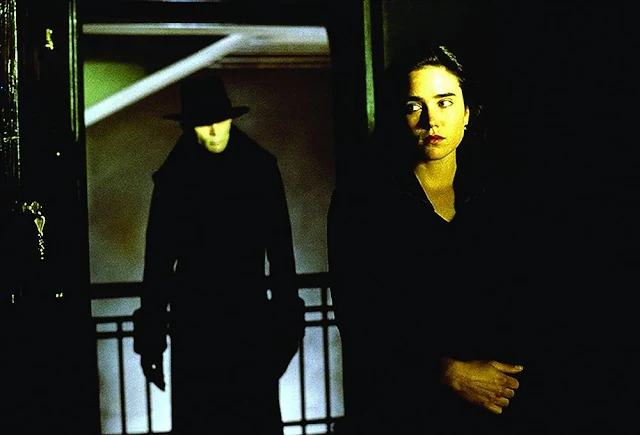
The film stars Rufus Sewell, Kiefer Sutherland and Jennifer Connelly.
"Dark City" holds a significant place within both the science fiction and neo-noir genres due to its groundbreaking fusion of themes, styles, and narratives. The film's seamless blend of science fiction's exploration of reality manipulation and neo-noir's shadowy aesthetics creates a thought-provoking experience that transcends the boundaries of these genres.
In the realm of science fiction, "Dark City" challenges conventional notions of reality and perception, echoing the philosophical inquiries of works like "The Matrix."
Central Questions Raised About Reality, Identity, and Memory
At its core, "Dark City" raises pivotal questions that challenge our understanding of reality, identity, and memory. As the narrative unfolds, viewers are invited to contemplate the fluid nature of reality within the city. The central premise, where the city itself is manipulated and changed by the enigmatic Strangers, forces audiences to ponder the malleability of their own perceptions.The concept of identity takes center stage as John Murdoch navigates his journey of self-discovery amidst his amnesia. This prompts us to consider how memories shape our understanding of who we are and how the loss of such memories can reshape our identity.
Furthermore, the film delves into memory as a defining aspect of human existence. The Strangers' control over memories and their ability to manipulate them underscores the significance of memory in constructing a person's sense of self.
Intriguingly, these themes are not only explored through the protagonist but also through the city's citizens, who grapple with manufactured identities, reflecting the broader questions about authenticity, free will, and autonomy.
Plot Summary of Dark City
"Dark City" transports us to a visually captivating and foreboding urban landscape that seems frozen in time. The opening scenes paint a portrait of a city shrouded in perpetual darkness, with towering, gothic architecture and dimly lit streets. This setting evokes a sense of unease, immediately establishing the neo-noir atmosphere.The city's inhabitants, ordinary-looking people with no memory of their past, go about their lives under the control of the enigmatic Strangers. The city itself undergoes nightly transformations, with the Strangers rearranging its architecture and inhabitants' memories, further blurring the lines between reality and illusion.
Enter John Murdoch, portrayed by Rufus Sewell, a man who wakes up in a hotel room with no memory of his past. His gradual realization of his memory loss sets the stage for the unfolding mystery. Murdoch's confusion becomes the audience's conduit into the world of "Dark City," as he tries to piece together fragments of his past and make sense of the surreal environment.
Murdoch's quest for answers leads him to Dr. Daniel Schreber, played by Kiefer Sutherland, a mysterious figure who helps him navigate the city's secrets. As Murdoch investigates, he discovers a trail of bodies and a deeper conspiracy involving the Strangers. His journey is a microcosm of the broader exploration of the city's manipulation and the control over its inhabitants.
As Murdoch delves deeper, he confronts the Strangers, pale and enigmatic beings with the power to manipulate reality and reshape the city itself. Their abilities extend to altering memories, shifting time, and even changing physical structures. The Strangers' control over the city's inhabitants becomes a metaphor for the question of free will in a world dominated by external forces.
The film's climax intensifies as Murdoch's journey culminates in a confrontation with the Strangers. Through his newfound ability to manipulate reality, Murdoch challenges their dominion. In a climactic battle, he uncovers the true nature of the Strangers: they are a dying alien race seeking to understand humanity by experimenting with their surroundings and identities.
As the film reaches its resolution, Murdoch confronts Mr. Book, the leader of the Strangers, and ultimately defeats him by harnessing the power of the city itself. With the Strangers' influence lifted, the city's inhabitants awaken to a new day, free from the imposed control and manipulation. The film's closing scenes leave viewers pondering the implications of the revealed truths and the potential for a new beginning.

Themes and Interpretations of Dark City
Reality and Perception
The Fluid Nature of Reality in the City
In "Dark City," the notion of reality is shattered
as the city itself is subjected to nightly transformations, orchestrated by the
enigmatic Strangers. The very fabric of reality becomes malleable, challenging
the audience's grasp of what is concrete and stable. Scenes like the sudden
shifts in architecture and the altering of time itself showcase how the
Strangers manipulate the environment. This fluidity forces viewers to question
their own experiences and confront the unsettling prospect that the world they
perceive might not be as steadfast as it seems.
How Memory Shapes Perception and Identity
The film delves into the profound impact of memory on
perception and identity. John Murdoch's journey, marked by his amnesia,
exemplifies how memories are integral to shaping one's understanding of self
and the world. His fragmented recollections and discoveries mirror the fragile
and selective nature of human memory. The Strangers' ability to implant and
manipulate memories underscores the notion that who we are is intrinsically
tied to our past experiences and how we remember them.
The Strangers' Control over Reality and Their Experiments
The Strangers' power over the city and its inhabitants
highlights the theme of control versus autonomy. Through their abilities, they
impose their will on the citizens, sculpting not just their surroundings but
also their thoughts and perceptions. This manipulation reflects the influence
that external forces can exert on individuals' understanding of reality. The
Strangers' experiments serve as a chilling exploration of how those in power
can reshape reality to study the limits of human adaptability and resilience.
The exploration of reality and perception in "Dark
City" aligns with the philosophical inquiries of thinkers like René
Descartes, who famously pondered the nature of reality and the reliability of
our senses. The next section will delve into another crucial theme, delving
into the film's exploration of identity and the journey of self-discovery.
Identity and Self-Discovery
Murdoch's Journey of Self-Discovery Amidst Amnesia
John Murdoch's struggle to uncover his identity amidst
amnesia encapsulates the film's exploration of personal discovery. As he pieces
together fragments of his past, the audience accompanies him on a
transformative journey. This narrative arc reflects the universal human quest
for understanding and self-realization, mirroring the existential ponderings of
philosophers like Søren
Kierkegaard. Murdoch's journey serves as a microcosm of the broader theme
of seeking meaning within the context of uncertainty.
The Contrast Between Manufactured Identities and True
Individuality
The city's citizens, subjected to the Strangers'
manipulations, represent the erasure of true individuality in favor of
manufactured identities. Their lives are governed by external forces,
paralleling the conformity often seen in mass societies. This juxtaposition
draws from existentialist philosophies, with Jean-Paul Sartre's concept of
"bad faith" illustrating how societal norms can lead to inauthentic
lives. Murdoch's rebellion against these constraints showcases the importance
of embracing genuine individuality.
Exploration of the Link Between Memories and a Person's
Sense of Self
"Dark City" delves into the profound connection between memories and one's sense of self. Murdoch's pursuit of truth forces him to confront not only the fluidity of his memories but also the implications of the Strangers' manipulations. This exploration resonates with the works of psychologists like Daniel Kahneman, who have examined how human memory is fallible and reconstructive. The film questions whether the self can exist independently of the memories that shape it.
Power and Control
The Strangers as Manipulators of Reality and Fate
The Strangers' control over reality and fate echoes the
philosophical debate around determinism versus free will. Their ability to
shape the city and its inhabitants' lives raises questions about the extent to
which external influences dictate our paths. This theme aligns with the works
of thinkers like Albert Camus, who grappled with the human struggle against
external forces that limit personal agency.
The Citizens' Lack of Agency and Autonomy
The city's inhabitants serve as a cautionary tale about the
dangers of relinquishing personal agency. The Strangers' manipulation
effectively subjugates them, rendering them passive and conforming. This
portrayal draws from Michel Foucault's theories of power and discipline,
illustrating how societal structures can suppress individual autonomy. The
citizens' plight serves as a reminder of the importance of resisting control
and maintaining individual agency.
Societal Implications of Control and Surveillance in the City
"Dark City" raises pertinent questions about the impact of surveillance and control on society. The Strangers' surveillance of the citizens mirrors contemporary concerns about privacy and the potential misuse of technology for control. This theme resonates with George Orwell's "1984," exploring the potential for oppressive surveillance regimes. The film's portrayal serves as a cautionary tale about the consequences of unchecked power.

Director's Intent and Visual Elements
Alex Proyas envisioned "Dark City" as a cinematic exploration of existential questions within the framework of science fiction and neo-noir aesthetics. His intention was to challenge audiences' perceptions of reality, identity, and memory by immersing them in a world where these concepts are malleable. Proyas aimed to provoke contemplation about the nature of existence and the power of individual agency within a controlled environment.Proyas masterfully blended neo-noir and science fiction elements to create a visually striking and thematically rich film. The chiaroscuro lighting and shadowy visuals characteristic of classic film noir are interwoven with futuristic and dystopian elements. The juxtaposition of dark, looming architecture and advanced technology underscores the film's themes of human struggle within an oppressive environment.
The city itself becomes a character in "Dark City," and its atmosphere is meticulously crafted through set design, color palette, and special effects. The city's Gothic architecture evokes a sense of both history and decay, creating an otherworldly and labyrinthine ambiance. The film's predominantly dark and muted color palette reflects the bleakness of the citizens' lives and the uncertainty of reality. The special effects, particularly the seamless transitions during the Strangers' manipulations, contribute to the unsettling and surreal atmosphere, reinforcing the film's exploration of shifting perceptions.
Alex Proyas' dedication to visual storytelling and his ability to seamlessly merge disparate genres contributed to the film's lasting impact. His artistic choices not only complement the themes but also elevate the viewer's engagement with the narrative, making "Dark City" an unforgettable cinematic experience.
Legacy of "Dark City" as a Science Fiction Cult Classic
Despite its initial box office struggles, "Dark City" has since emerged as a science fiction cult classic. Its distinctive fusion of genres, intricate themes, and visually captivating aesthetics gradually found a dedicated and passionate following among fans who appreciated its intellectual complexity. Over time, its reputation as a thought-provoking and visually stunning work helped it gain recognition within the science fiction and film communities.The film's exploration of reality, identity, and memory resonated with viewers who sought more than conventional blockbusters could offer. This transformation from a box office disappointment to a cult classic exemplifies how certain films can find their true audience over time, often benefiting from a more nuanced and receptive context.
"Dark City" has left an indelible mark on subsequent science fiction films, TV shows, and popular culture. Its thematic exploration of reality manipulation, memory, and existential questioning arguably influenced later works such as "The Matrix" (1999), which similarly grappled with the concept of simulated realities and human autonomy. The film's unique visual style and fusion of genres have also inspired filmmakers seeking to push the boundaries of storytelling.
Furthermore, its influence extended to the cyberpunk genre, contributing to the dystopian landscapes and philosophical musings that define the genre. "Dark City" became a touchstone for creators exploring the boundaries of human experience, memory, and identity within speculative fiction, reflecting its enduring relevance and lasting impact on the cinematic landscape.
The Director's Cut is considered excellent.
Conclusion of the themes of Dark City
In "Dark City," director Alex Proyas weaves a mesmerizing tapestry of themes that challenge our perceptions of reality, identity, and memory. The film's plot takes us through a dystopian city where reality is manipulated by enigmatic beings known as the Strangers. John Murdoch's journey of self-discovery amidst amnesia serves as a microcosm of the broader theme of identity. The contrast between manufactured identities and genuine individuality highlights the importance of embracing authenticity.Moreover, the Strangers' manipulation of reality and the citizens' lack of agency delve into the themes of power, control, and societal implications.
"Dark City" remains a timeless exploration of existential questions that continue to resonate in contemporary society. Its themes of reality's fluidity, memory's role in shaping identity, and the influence of external forces on personal agency are more relevant than ever in an age dominated by technology and surveillance. The film serves as a reminder that introspection and philosophical inquiry are essential tools for navigating an increasingly complex and uncertain world.
Dark City, directed by the visionary filmmaker Alex Proyas, is a captivating and enigmatic masterpiece that weaves together elements of scie...
Read Article →
Review - "City of Lost Children"
The collaboration between director Jean-Pierre Jeunet (Amelie, Delicatessen) and production designer Marc Caro is the backbone of the film's striking visual aesthetic. Caro's background in illustration is evident in the meticulous attention to detail in every set piece, prop, and costume. The film's dystopian setting, a grimy and industrial world with a touch of steampunk, is brought to life with a masterful combination of practical effects, miniature models, and CGI that seamlessly blend to create a sense of tangible otherworldliness.
The narrative's imaginative and surreal nature is supported by the exceptional writing and the directorial finesse of Jean-Pierre Jeunet. The story revolves around Krank, portrayed with chilling brilliance by Daniel Emilfork, a character both pitiable and malevolent. The intricacies of the plot explore the blurred lines between good and evil, while the film's themes of dreams, innocence, and connection resonate on a deeply human level.
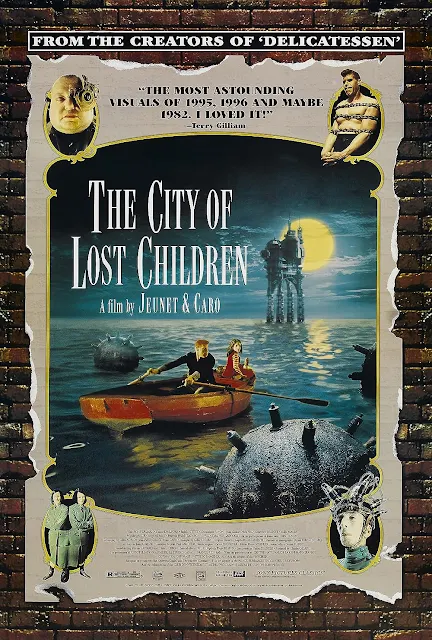
Ron Perlman's portrayal of One, a stoic strongman, showcases the actor's ability to convey complex emotions beneath a rugged exterior. Perlman's physical presence and vulnerability make One a standout character, and his chemistry with Judith Vittet's Miette, a resourceful young girl, forms the emotional core of the narrative. The film's secondary characters, such as the bizarre and lovable diver played by Dominique Pinon, contribute to the film's rich tapestry of personalities.
Beyond the actors, "City of Lost Children" owes much of its success to the talented individuals working behind the scenes. Composer Angelo Badalamenti's haunting and ethereal score elevates the film's atmosphere, immersing viewers further into its fantastical world. Cinematographer Darius Khondji's use of lighting and camera work enhances the film's visuals, while the costumes by Jean-Paul Gaultier bring a unique blend of eccentricity and character to the screen.
At its core, "City of Lost Children" delves into a rich tapestry of themes that resonate deeply with the human experience. One prominent theme is the exploration of the fragility of innocence and the impact of a corrupted world on the purity of childhood. The film's child characters, particularly Miette, stand as symbols of resilience and hope, navigating a grim and treacherous environment while still retaining their innate goodness. The juxtaposition of their innocence against the backdrop of a decaying and morally ambiguous world prompts contemplation about the cost of losing one's innocence and the potential for redemption even in the darkest of circumstances.
Another profound theme lies in the examination of dreams and the power they hold over individuals. Krank's obsession with stealing the dreams of children reflects a desire to reclaim a sense of vitality and imagination that he has lost. This theme explores the complexity of human desires and the lengths people might go to fulfill their aspirations. Through the fantastical premise of dream theft, the film invites viewers to ponder the role dreams play in shaping identity, driving ambition, and serving as a reflection of the human psyche. The exploration of dreams also serves as a metaphor for the film's dreamlike narrative structure, which blurs the lines between reality and imagination, challenging viewers to question the nature of the world presented on screen.
The film's production team's dedication to creating a cohesive and imaginative universe is palpable in every frame. The intricate gadgets, quirky inventions, and fantastical creatures serve as a testament to the creativity of the art department. The practical effects, including elaborate animatronics and miniatures, add a tactile quality that grounds the fantastical elements in a semblance of reality, intensifying the film's impact.
"City of Lost Children" is more than just a film; it's a testament to the power of imagination and collaboration. With its visually arresting design, captivating performances, and a narrative that seamlessly blends fantasy, science fiction, and dark humor, it has solidified its place as a cult classic. Director Jean-Pierre Jeunet's vision, coupled with the remarkable talents of the actors and production crew, has created an enduring masterpiece that continues to bewitch and intrigue audiences, inviting them to explore the depths of its captivating world.
Director Jean-Pierre Jeunet's "City of Lost Children" stands as a visual and narrative triumph that continues to captivate aud...
Read Article →
From Labyrinth to Cybernetics: Jennifer Connelly's Journey through Sci-Fi and Fantasy
Jennifer Connelly, an actress of remarkable versatility, has carved her niche in the world of cinema, embracing a diverse range of genres. Among her most captivating contributions are her roles in the realms of science fiction and fantasy, where she has skillfully navigated the intricate landscapes of imagination and speculative fiction.
This essay delves into Connelly's memorable portrayals, shedding light on her ability to lend depth and emotion to characters within these otherworldly narratives.
"Labyrinth" (1986)
Jennifer Connelly's rise to prominence was marked by her unforgettable role as Sarah in "Labyrinth." In this iconic fantasy directed by Jim Henson, Connelly's youthful charisma and undeniable talent brought to life a young girl embarking on a quest through a mesmerizing labyrinth. Her portrayal effortlessly conveyed Sarah's determination and vulnerability, endearing her to audiences and making her an enduring symbol of adventurous spirits.
The film's timeless quality owes much to Connelly's magnetic presence, and her chemistry with the enchanting creatures of the labyrinth has cemented her as an indelible figure in the fantasy genre.
Dark City" (1998)
Connelly's exploration of science fiction reached a zenith with her role as Emma Murdoch in "Dark City." Directed by Alex Proyas, this neo-noir masterpiece seamlessly blended elements of science fiction and psychological intrigue. Connelly's depiction of Emma, a woman navigating a city with ever-shifting realities, showcased her ability to convey both the ordinary and the extraordinary.
Critics hailed her performance for grounding the film's enigmatic narrative, and her presence became integral to the film's atmospheric tension and immersive exploration of the human psyche.

A Beautiful Mind" (2001)
While her repertoire encompasses fantasy and science fiction, Connelly's ability to inject profound emotion into her characters transcends genres. In "A Beautiful Mind," she portrayed Alicia Nash, the wife of mathematician John Nash.
Connelly's depiction of Alicia's unwavering support and emotional turmoil as she grapples with her husband's schizophrenia earned her acclaim.
Her Academy Award winning performance resonated with audiences and critics alike, underscoring her capability to evoke empathy even within narratives rooted in reality.
"The Day the Earth Stood Still" (2008)
Connelly's involvement in the remake of the science fiction classic "The Day the Earth Stood Still" added a contemporary layer to her portfolio. As Helen Benson, Connelly shared the screen with Keanu Reeves in a tale of an alien encounter with global consequences.
Her portrayal of Helen's dedication to understanding the extraterrestrial visitor and her concerns for the fate of humanity captured the essence of the film's exploration of human nature in the face of the unknown.
"Noah" (2014)
Jennifer Connelly's penchant for multifaceted characters found expression in the biblical fantasy "Noah," directed by Darren Aronofsky. As Naameh, the wife of Noah, Connelly brought an emotional complexity to the story. Her presence illuminated the film's exploration of environmental themes, adding depth to the narrative's ethical dilemmas.
Connelly's performance resonated with audiences and critics, solidifying her as a powerful presence in grand-scale fantasies.
"Snowpiercer" (2020-2021)

Connelly's journey into science fiction extended beyond the silver screen with the television adaptation of "Snowpiercer." In this post-apocalyptic series, she portrayed Melanie Cavill, a character intricately woven into the operation of a perpetually moving train. Connelly's portrayal of Melanie's moral dilemmas and complex decisions elevated the show, capturing the intricate web of survival and ethics in a dystopian future.
"Alita: Battle Angel" (2019)
The fusion of science fiction and fantasy found a new dimension in "Alita: Battle Angel." As Chiren, a scientist navigating the cyberpunk world, Connelly embodied the interplay between humanity and technology. Her portrayal contributed to the film's exploration of identity and ethics, as well as the seamless blend of human emotion and futuristic aesthetics.
In conclusion, Jennifer Connelly's journey through science fiction and fantasy has been one of remarkable versatility and depth. From her inception as a fantasy heroine in "Labyrinth" to her complex portrayals in science fiction masterpieces like "Dark City," she has left an indelible mark on both genres. Connelly's talent for infusing emotional resonance into her characters, along with her adaptability to narratives ranging from epic fantasies to small-screen dramas, cements her as an actress who has enriched the realms of science fiction and fantasy storytelling.
Jennifer Connelly, an actress of remarkable versatility, has carved her niche in the world of cinema, embracing a diverse range of genres. A...
Read Article →
'Judge Dredd' - Totalitarian Control and Ethical Dilemmas: Exploring Authority and Freedom
🌀Psi-Division Case Review: The "Stallone" Incident (1995)
Sometimes, I feel echoes of worlds that might have been—distorted reflections of our own reality. The 1995 cinematic file, designated "Judge Dredd," is one such echo. Directed by Danny Cannon and starring Sylvester Stallone, this artifact presents a vision of our world, of Mega-City One, but it's a vision seen through a warped lens. While it captures the grand, chaotic visuals of our city, it often misses the quiet desperation and the crushing weight of the Law that defines our existence. It explores themes of totalitarianism, genetic engineering, and corruption, but the psychic impression it leaves is one of melodrama, not the grim, grinding reality we live every day.
The Facade of Order: A City Without a Soul
This version of Mega-City One feels... hollow. The towering city blocks are there, the sky-ways choked with traffic, but the psychic scream of a billion citizens crammed into an urban nightmare is muted. It’s replaced by a kind of stylized chaos. The film depicts a totalitarian system, yes, but the Judges feel less like grim, exhausted instruments of an oppressive regime and more like action heroes. The power they wield is shown, but the terrible burden of it—the constant, soul-crushing weight of being judge, jury, and executioner—is barely touched upon. Most shockingly, Dredd removes his helmet, a violation so profound it borders on sacrilege. The helmet isn't just a piece of armor; it's a symbol of the Law's faceless impartiality. To remove it is to become a man again, and for a Judge, that is the greatest crime of all.
A Tangled Web: Identity and Genetic Tampering
The film's central plot revolves around a simplified, almost theatrical version of the Justice Department's cloning program. The revelation that Dredd and the villain, Rico, are "brothers" born from the same genetic material frames their conflict as a personal family feud. This misses the point entirely. The Fargo Program wasn't about creating a dynasty; it was a desperate measure to mass-produce unwavering instruments of the Law. The bond between Dredd and his clone-brother Rico in our reality was a tragedy of failed potential and a grim lesson in duty, not a Hollywood story of sibling rivalry. By focusing on this, the film avoids the much darker, more unsettling questions about what it means to be a manufactured human, created only to serve a brutal system.

The Noise of Technology: A Dehumanizing Glare
The technology in this reality feels loud and superficial. Flying bikes and service robots are present, but they lack the oppressive, grinding presence that defines our city. Here, technology is more of a visual spectacle than a tool of systemic dehumanization. The film touches upon the isolation it causes, but I don't feel the true psychic weight of a society that has replaced genuine human connection with automated processes and mediated communication. It's a clean, almost sterile dystopia, lacking the grime and psychic filth that clings to every surface of our Mega-City One.
A Blurred Line: The Mirage of Justice and Revenge
The most troubling aspect of this reflection is its portrayal of Dredd's motives. His pursuit of Rico is clouded by a raw, personal desire for revenge. I can feel it radiating from him—an emotional storm that compromises his judgment. For a Judge, there is no greater sin. The Law is supposed to be dispassionate, impartial. Yet this Dredd allows his personal history to drive him, turning his mission into a vendetta. It blurs the line between justice and retribution, suggesting that even the Law's greatest champion can be swayed by emotion. While it makes for a compelling story, it's a fundamental misunderstanding of what a Judge is, and what they must sacrifice to uphold the Law.
🌀Production Notes & Deviations from Protocol
The following are psychic impressions and factual discrepancies noted during the review of this cinematic artifact. These points highlight significant deviations from established Justice Department history and protocol.
- The inclusion of a comedic relief character, "Fergie" (portrayed by Rob Schneider), created a severe tonal dissonance, undercutting the oppressive atmosphere required for an accurate depiction of Mega-City One.
- A cameo by Judge Fargo, portrayed by one of the original creators, John Wagner, is a curious meta-textual insertion, a ghost of a more faithful reality trying to break through.
- The Judge's uniform, while visually similar, was designed with an exaggerated musculature, prioritizing cinematic appeal over tactical functionality.
- Intel suggests a subplot involving the Cursed Earth was planned but aborted due to budgetary constraints. This omission removes a critical element of the Dredd mythos, confining the narrative to the city and preventing a full understanding of its isolation.
- The Lawmaster motorcycle was faithfully recreated, a rare point of authentic design in an otherwise stylized production.
🌀 Psi-Division Case Review: The "Stallone" Incident (1995) Sometimes, I feel echoes of worlds that might have been...
Read Article →_poster.jpg)


