
The Matrix lore investigation
Morpheus stakes his life, his crew and humanity's future on a hacker who fails his first impossible jump. What does he actually know about Neo, and how much of his certainty is faith?
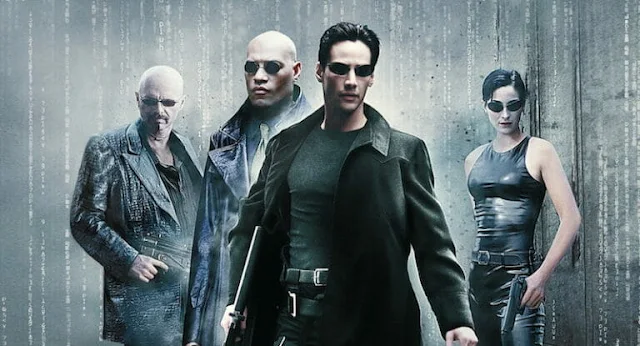
Morpheus can lead Thomas Anderson to the truth, but Neo must decide whether to become the person Morpheus believes he has found.
Before Neo stops bullets, before he sees the Matrix as streams of green code, and before death itself fails to hold him, he falls.
Morpheus has taken his new recruit into the jump program and told him that distance, gravity and physical strength are only rules imposed upon the mind. Neo runs, launches himself towards the opposite skyscraper and drops into the digital street below. The supposed saviour of humanity has failed his first spectacular test.
That failure exposes the mystery at the centre of The Matrix. Morpheus has spent his adult life searching for the One, but the man he finally chooses cannot perform the feats expected of the One. The Oracle apparently confirms Neo's doubts. Cypher sees Morpheus's conviction as dangerous fanaticism. Even Trinity, who wants to believe, cannot yet say what Neo is.
So how does Morpheus know?
The short answer
Morpheus does not initially know that Neo is the One. The Oracle has told Morpheus that he will find the One, and Morpheus interprets Neo's obsessive search for the Matrix as the sign that his search is over. He monitors Thomas Anderson, makes contact through Trinity, extracts him from the simulation and then places absolute faith in his potential.
Proof comes later. Neo chooses to rescue Morpheus even though he expects to die. He fights an Agent, survives his apparent death, sees the simulation's code and destroys Smith from within. Morpheus begins with prophecy. Neo supplies the evidence through choice.
The later films make the answer more complicated. The Matrix Reloaded reveals that the One is a recurring anomaly and that Zion's prophecy is part of the machines' system of control. The Matrix Revolutions shows Neo refusing the ending that system prepared for him. The Matrix Resurrections then reveals that Neo's extraordinary value cannot be separated from Trinity.
Morpheus is therefore wrong about the history behind the prophecy, but profoundly right about Neo. That contradiction contains the real story.
What Morpheus believes the One will do
Morpheus gives Neo the version of history preserved by Zion. According to that account, a man born within the Matrix discovered that he could change its rules. He could remake the simulation according to his will. He freed the earliest resistance fighters and taught them that humanity had been imprisoned by machines. After his death, the Oracle predicted that he would return and that his coming would end the Matrix, finish the war and free humanity.
For Morpheus, this is sacred history. The One carries the promise of ending a war that ordinary redpill operatives cannot win.
Zion's hovercraft crews can enter the Matrix, rescue a small number of minds and occasionally damage machine infrastructure. They cannot defeat the machine civilisation that controls the surface, the power plants, the Sentinels and the world experienced by almost every living human. The resistance survives in darkness while its enemy controls both material reality and mass perception.
The One offers a way beyond that strategic dead end. Morpheus searches because conventional resistance can preserve Zion for a time, while only a fundamental rupture in the system appears capable of changing humanity's fate.
This fits the franchise's wider obsession with the uncertain boundary between reality and belief. The Matrix can manufacture an entire sensory world, but it can also manufacture explanations for that world. The deeper problem is explored throughout The Matrix films' search for truth: escaping one false reality does not guarantee that every story told outside it is true.
The religious language surrounding Morpheus
The film builds Morpheus's search out of mythic names. Morpheus is the Greek shaper of dreams, yet he dedicates himself to waking people from one. His ship, the Nebuchadnezzar, bears the name of the biblical king whose disturbing dreams required interpretation. Zion is both humanity's underground city and a biblical image of the promised homeland. Trinity's name invokes divinity, while Neo means new and rearranges into One.
These names make the resistance feel like a religious movement before the Architect exposes the machinery hidden inside its scripture.
Why Morpheus believes he will be the one to find him
The most important piece of evidence is stated plainly in the original film. The Oracle told Morpheus that he would find the One.
She did not, as far as the films reveal, hand him Thomas Anderson's name, home address or employee file. Morpheus never says that the Oracle identified Neo directly. Her prediction gives Morpheus a personal role within the prophecy. He is no longer waiting for a saviour to announce himself. He must search.
That search becomes Morpheus's identity. It shapes how he commands the Nebuchadnezzar, the loyalty he inspires, the suspicion he attracts and the risks he accepts. When the Oracle later speaks privately with Neo, she makes the intensity of that belief clear: Morpheus's faith is so complete that argument, evidence and even her own apparent verdict will not dislodge it.
This is also why Morpheus can appear serene while making extraordinarily dangerous decisions. To him, each risk occupies a place in the history the Oracle has already seen.
Yet the Oracle's predictions never work like ordinary forecasts. She gives people statements that force them to confront choices. Her kitchen bears the instruction to know oneself. Her concern is rarely whether someone can repeat a fact about the future. She wants them to understand why they will choose that future.
How Morpheus actually finds Thomas Anderson
The films never show the first moment when Neo appears on Morpheus's radar. No later game, comic or animated story supplies a definitive missing scene. Any claim that Morpheus discovers Neo through one particular hack, message or database is therefore speculation.
The original film does establish enough to reconstruct the broader process.
Neo is already looking for the Matrix
Thomas Anderson is a software programmer by day and an illicit hacker named Neo by night. His deepest obsession reaches beyond profit or digital mischief. He has encountered references to the Matrix and senses that the word describes the invisible wrongness in his world.
Trinity understands this because she once experienced the same mental splinter. She tells Neo that the question driving him is more important than the answer he thinks he wants. Morpheus is attractive to Neo because he appears to know what the Matrix is.
The resistance has been watching him
Trinity knows Neo's habits, his sleeplessness, his solitude and his search. Morpheus can contact him at his office and guide him through the building while the Agents close in. That sequence demonstrates operational surveillance and preparation. The crew has studied Thomas Anderson before offering him the red pill.
The Agents have also been watching him. They know about his illegal computer activity and attempt to use the threat of prosecution to turn him against Morpheus. Both sides recognise Neo as a person moving towards the boundary of the system.
Neo has built an identity the system did not assign
Thomas Anderson is the name attached to employment records, taxes, rent, authority and social obedience. Neo is the name he has chosen. The split reveals a sense of self already separating from the role the Matrix has written for him, even though it supplies no proof of supernatural ability.
His later awakening makes literal a process that has already begun psychologically. The existential struggle between an assigned life and a chosen identity is central to Neo's character throughout The Matrix.
He acts before certainty arrives
Neo follows the white rabbit, meets Trinity, enters the car despite his fear and ultimately takes the red pill. Each step requires him to move without complete knowledge. That matters because the machines' greatest defence is the apparent normality of the world they have constructed.
A person who demands conventional proof before questioning the simulation may never reach a position from which proof becomes possible.
Neo's profile makes him a compelling candidate. It does not make him the only possible candidate, and it does not establish that Morpheus possesses supernatural insight. The simplest answer is that the resistance monitors people who are beginning to notice contradictions, and Morpheus interprets Neo as the fulfilment of the Oracle's promise.
The crucial difference between noticing the Matrix and being the One
Many people can feel that something is wrong. Some can even disturb the simulation's rules. The wider Matrix stories make that clear.
In The Animatrix: World Record, elite runner Dan Davis drives his body beyond the limits the Matrix expects. For a moment, his physical intensity allows him to glimpse the code beneath reality and awaken in his pod. Agents suppress the breach, and his body is left severely damaged. Dan is exceptional, but the story does not identify him as another One.
In Kid's Story, the teenager later known simply as the Kid senses the falseness of his world, communicates with Neo and awakens without the normal extraction process. The rebels describe the feat as self substantiation. The Kid credits Neo with saving him, while Neo insists that the Kid saved himself.
A Detective Story follows private investigator Ash as he tracks Trinity and encounters the strange network surrounding her. It shows the rebels making cautious contact within a world saturated by surveillance, coded messages and machine countermeasures.
These stories illuminate how Morpheus might recognise a mind beginning to pull away from the Matrix. They also prevent a false conclusion. Perceiving the prison does not automatically make someone the One. Neo's searching mind gets Morpheus's attention. What Neo later does with that knowledge separates him from other awakenings.
The red pill is Morpheus's first meaningful test
Morpheus does something that distinguishes him from the Agents. He gives Neo a choice.
The Agents try coercion. They threaten Thomas Anderson, erase his ability to speak and implant a tracker in his body. Their offer of cooperation is backed by the power to rewrite his apparent reality.
Morpheus presents two pills and explains the consequence of each. The blue pill permits Neo to return to the familiar story. The red pill allows the crew to trace his physical body and extract him from the machine power plant. His offer contains truth, danger and the chance to discover how deep the deception goes.
This is more than recruitment theatre. Choice is the flaw around which the Matrix is built. As the Architect later explains, human minds accept the simulation when choice exists at some level, even when that choice is barely conscious. Morpheus uses choice for the opposite purpose. He turns the mechanism that stabilises the prison into the doorway out of it.
The risk is substantial. Morpheus explains that the resistance normally avoids freeing adults because older minds struggle to release a lifetime of assumed reality. Neo's age makes the extraction unusually dangerous. Morpheus proceeds because he thinks this particular adult is the anomaly for whom the ordinary rules do not apply.
Why Neo's early failures do not shake Morpheus
After awakening, Neo does not instantly become the figure Morpheus has promised. His muscles have never been used. His eyes hurt because he has never truly used them. His mind understands the explanation before his instincts accept it.
Neo downloads martial arts knowledge, but Morpheus exposes the difference between possessing information and abandoning limitation. Neo becomes faster only when he stops treating the simulation as a physical room governed by ordinary biology.
Neo's fall shows how deeply the body obeys a world the conscious mind now knows is false. The crew's reaction suggests that everyone falls during the first attempt. Morpheus hoped for a sign, but the absence of a miracle does not erase the prophecy in his mind.
Neo remains vulnerable to distraction and programmed desire. The lesson is about more than Agents hiding behind any face. It shows how readily attention can still be directed by the simulation.
The child at the Oracle's apartment understands that bending a spoon begins by recognising that the spoon has no independent physical existence inside the simulation. Neo must stop trying to overpower an object and instead change the assumptions through which he experiences it. The deeper philosophy of “there is no spoon” is the key to every power Neo later develops.
Morpheus expects a transformation in perception that reaches far beyond stronger techniques. That is why failure can be interpreted as a stage of becoming rather than disproof.
Why the Oracle appears to tell Neo he is not the One
The Oracle examines Neo and gives him an answer calibrated to his current state. He has unusual potential, but he is waiting for something. Neo concludes that he is not the One.
Her wording is more ambiguous than his conclusion. More importantly, she tells him that Morpheus believes so completely that he will sacrifice himself to save Neo. She then presents the choice that will define the rest of the film: Neo will apparently have to decide whether Morpheus lives or he does.
If she had simply crowned Neo as the One, every subsequent action could be dismissed as obedience to a heroic script. Neo might rescue Morpheus because a prophet guaranteed his survival. Instead, he believes he is ordinary and expects the rescue to cost his life.
That is the test the Oracle actually constructs. Neo must act without the protection of destiny.
Morpheus understands that her message is personal. He does not ask Neo to report the consultation as if it were a medical diagnosis. He knows that an Oracle who is concerned with self knowledge tells each visitor what that person needs in order to reach the next choice.
Neo proves Morpheus right by choosing Morpheus
Cypher's betrayal turns the prophecy into an immediate moral crisis. Morpheus allows himself to be captured so Neo can escape. The Agents begin breaking his mind in their effort to obtain Zion's access codes. The crew's practical option is to disconnect Morpheus before he reveals those codes, killing their captain to save the city.
Neo refuses the apparent binary choice supplied by the Oracle. He decides to enter the Matrix and rescue Morpheus.
This is where Neo first embodies the role before mastering its powers. He does not yet believe he is invulnerable. He goes because Morpheus has placed his life between Neo and an Agent, and Neo will not allow that sacrifice to stand unanswered.
The lobby assault and helicopter rescue are spectacular, but their thematic function matters more than the weaponry. Neo begins to exceed the rules because his commitment has changed. He dodges bullets with impossible speed. He holds the helicopter line while Trinity hangs beneath it. Morpheus sees that the person he believed in is beginning to believe in himself.
The film's proposition is therefore subtler than simple predestination. Neo's powers emerge through decisions that express who he is becoming. Ability follows commitment.
Trinity closes the prophetic circuit
Morpheus is only one part of the Oracle's design. Trinity has received a connected prediction: she will fall in love with the One.
When Agent Smith shoots Neo, the prophecy appears to have failed. Neo lies dead in the Matrix while his physical body flatlines aboard the Nebuchadnezzar. Trinity then acknowledges what she has been unable to say. She loves him, and the Oracle told her that the person she loved would be the One.
Neo returns.
His resurrection completes the film's messianic pattern, which is examined more fully in Neo's role as a messianic figure. He rises after death, perceives the code behind appearances, stops bullets without effort and enters Smith's body to destroy the Agent from within.
Yet the sequence is also a loop of human belief:
- The Oracle tells Morpheus that he will find the One.
- Morpheus finds Neo and treats his potential as real.
- The Oracle tells Trinity that she will love the One.
- Trinity loves Neo but withholds the knowledge while he doubts himself.
- Neo risks his life for Morpheus and Trinity.
- Trinity's declaration helps call Neo back from the death imposed by Smith.
- Neo finally experiences the Matrix as code rather than matter.
The prophecy works through relationships. Morpheus's faith, Trinity's love and Neo's choices reinforce one another until the identity of the One becomes experientially true.
The Architect reveals that Morpheus's prophecy is a control program
The Matrix Reloaded dismantles the history Morpheus taught Neo.
The Architect identifies Neo as the sixth emergence of the integral anomaly. Five earlier Ones have already completed the cycle, and the machines have already destroyed Zion five times. Human choice creates a persistent mathematical imbalance within the simulation. Most connected humans accept the program, but a minority reject it. If that rejection accumulates unchecked, the entire system becomes unstable.
The One is the concentrated expression of that anomaly. He carries code that must return to the Source, allowing the Matrix to be reset. He is then expected to select 23 people, 16 women and seven men, to rebuild Zion after the machines destroy it. Zion, the resistance and the prophecy are all tolerated parts of a repeating process.
Neo's abilities remain genuine. The machines have designed a use for that genuine anomaly. Unable to eliminate human choice, they channel its consequences into a managed cycle.
How the system turns rebellion into maintenance
- Some humans reject the Matrix and gather in Zion.
- The anomaly eventually concentrates in the person called the One.
- The prophecy directs that person towards the Source.
- The machines destroy Zion while the Matrix approaches instability.
- The One returns his code to the Source and chooses new founders for Zion.
- The simulation resets and resistance begins again without knowing its true history.
The man who supposedly freed the first resistance fighters can now be understood as an earlier One from an earlier cycle. Zion's sacred origin story is a compressed and distorted memory of a previous reset. Morpheus has inherited the very legend needed to deliver the next anomaly to the Source.
His faith has been accounted for. His rebellion has an assigned function.
Why Morpheus is still right about this version of the One
The Architect expects Neo to behave like his predecessors. Earlier Ones possessed a general attachment to humanity. Faced with the possible collapse of the Matrix and the destruction of Zion, they chose to return to the Source and continue the species.
Neo's attachment is specific. He loves Trinity.
He rejects the door leading to the reset and chooses the possibility of saving her. The Architect regards that choice as emotional and disastrous. It is also the first major break in the cycle.
Morpheus chooses Neo without understanding the anomaly's technical design. His insight falls on the quality the Architect undervalues. Neo forms loyalties powerful enough to make him reject an imposed role, even when that role is labelled salvation.
This is why the One cannot be reduced to superior control over code. The system already expects extraordinary code manipulation. What it fails to contain is the meaning Neo attaches to particular people.
When Neo explains that the prophecy was another system of control, Morpheus is shattered. His dream has apparently ended. That collapse matters because the trilogy does not reward him with perfect doctrinal knowledge. He must continue after learning that the story sustaining him was engineered by his enemy.
Faith no longer provides certainty. Action must continue without it.
Was the Oracle manipulating Morpheus?
Yes, but manipulation in The Matrix does not always produce the outcome intended by the larger system.
The Oracle is a program. She helped solve the problem of human rejection by understanding choice at an intuitive level. She knows about the recurring anomaly and understands the function the One has served in earlier cycles. When she tells Morpheus that he will find the One, she is moving both men towards a confrontation with the Source.
That makes Morpheus an instrument whose choices remain essential to the outcome.
The Oracle differs from the Architect in what she wants from the equation. The Architect seeks balance through repetition. The Oracle takes a risk on change. She encourages the particular relationships that make this Neo different from his predecessors. She cannot command genuine choice, because a commanded choice would merely reproduce control. She can arrange meetings, offer partial truths and create circumstances in which people reveal themselves.
Morpheus is useful to her precisely because his belief is voluntary and excessive. He will find Neo, protect him and continue believing through evidence that would make a more cautious captain retreat.
Prophecy as a technology of power
The machines control bodies, buildings, data and stories. Zion's people organise their hope around a prophecy that leads the One back into the machine system.
The trilogy nevertheless refuses the easy conclusion that every manipulated belief is empty. A controlled prophecy creates the conditions for an uncontrolled act. Morpheus follows a path designed by machines and helps produce the person who departs from it.
The One ends the war in a way Morpheus never predicted
The Matrix Revolutions completes the transformation of prophecy into choice.
Neo travels to the Machine City and negotiates with the intelligence governing it. Smith has become a threat to humans, programs and machines alike. Neo offers to stop him in exchange for peace, leaving the Matrix intact.
During their final confrontation, Neo realises that endless force cannot defeat an enemy who can replicate without limit. He allows Smith to assimilate him. Because Neo is connected to the Source, the machines can send the destructive correction through him and erase Smith's copies.
The result is a truce and a promise that humans who genuinely wish to leave the Matrix will be allowed to do so. Morpheus's belief that the One will end the war is fulfilled, but the method contradicts the militant form of the prophecy. Victory comes through Neo's recognition that both sides face a common danger.
Morpheus searched for a weapon capable of ending the system. He found a mediator capable of changing the relationship between systems.
What the games, animation and comics actually contribute
The expanded Matrix media enriches the search without providing a secret answer that the films omitted.
The Animatrix
The Second Renaissance supplies the history of the human and machine war, showing how human cruelty, machine consciousness and escalating violence created the world Morpheus inherits. Kid's Story, World Record and A Detective Story demonstrate different ways people notice, disturb or pursue the truth behind the simulation.
Together, they show that awakening is a spectrum. Morpheus is searching within a population that occasionally produces people capable of sensing the cage. Neo is unique because his anomaly, relationships and choices converge on the Source itself.
Enter the Matrix
The game runs alongside The Matrix Reloaded and uses live action material created with the films. Through Niobe and Ghost, it reveals the resistance network supporting Neo's path, from the Osiris warning to the Keymaker operation and the defence of Zion.
Its relevance is structural. Neo reaches the Source because many crews accept danger on the strength of Morpheus's faith. The mythology of the One mobilises an entire resistance, including people who do not share Morpheus's certainty.
The Matrix Online
The online game was presented as a continuation after Revolutions. Its Morpheus becomes consumed by the machines' refusal to return Neo's body. He uses dangerous code bombs that reveal the simulation to nearby minds and is apparently killed by an assassin program.
That storyline offers a fittingly dark extension of his defining trait. The man who spent his life seeking Neo cannot accept the removal of Neo as another machine secret. However, The Matrix Resurrections does not clearly confirm or reconcile every event from the game. The online story should therefore be used as continuity adjacent context, rather than proof of anything Morpheus knew in the first film.
The Matrix Comics and the supposed “books”
The authorised comic anthologies contain stories about glitches, awakenings, machine encounters and lives damaged by forbidden knowledge. They expand the human experience of the Matrix, but their varied creators and self contained plots make them poor foundations for a precise claim about Morpheus and Neo.
There is no canonical Matrix prose novel cycle that reveals how Morpheus first selected Thomas Anderson. Production books, philosophy collections and other licensed publications can illuminate the franchise, but they are commentary rather than missing chapters in the narrative.
The Matrix: Path of Neo
The game retells Neo's journey and deliberately replaces the film trilogy's ending with a different, more conventional final boss. Its events can illustrate Neo's abilities, but its altered conclusion should not be used to establish film continuity.
Resurrections reveals that Neo's power is relational
The Matrix Resurrections complicates the singular title of the One without simply transferring it to somebody else.
After Neo and Trinity die, the machines reconstruct their bodies. The Analyst discovers that their connection produces extraordinary energy. Keeping them near each other creates longing, frustration and emotional intensity. Allowing them to unite risks losing control. His new Matrix is built around that managed distance.
This revelation changes the perspective on Morpheus's discovery. Morpheus finds Neo, but Neo's transformative power develops through a network of relationships:
- Morpheus gives him the opportunity to awaken.
- Trinity gives him love that the Architect cannot reduce to abstract species survival.
- The Oracle arranges the choices through which he understands himself.
- Smith becomes his negative double, an expanding compulsion opposed to Neo's capacity for chosen connection.
- Zion and later Io give his choices a community beyond personal escape.
Trinity's flight at the end of Resurrections destroys the comfortable assumption that reality changing power belongs exclusively to a solitary male saviour. The film does not provide a technical declaration that Neo and Trinity share one formal title. It does show that the Analyst's entire system depends upon the combined force of their bond.
The new Morpheus adds another layer. He is a program created within Neo's modal, combining aspects of Morpheus and Smith. The original seeker has become part of Neo's internal architecture. Decades after Morpheus helped Neo awaken, Neo unconsciously creates a new Morpheus who helps awaken him again.
The guide, the believer and the liberator have become reciprocal roles.
Bugs also inherits the original Morpheus's way of seeing. While working as a window cleaner inside the new Matrix, she witnesses Neo standing on a rooftop as the system absorbs his anguish into a story of instability. The moment helps awaken her. Years later, she risks her ship and crew to find him because she recognises the imprisoned person beneath the identity of Thomas Anderson. Her conviction begins with recognition rather than proof, echoing Morpheus's original search.
The film confirms that the human Morpheus died during the decades after the truce and preserves him in Io as a statue and historical figure. It leaves the exact circumstances of his death unclear, which is another reason to avoid treating every event in The Matrix Online as settled history within Resurrections.
What Morpheus sees that the machines do not
Morpheus lacks access to Neo's anomaly code, the Architect's equations and the Analyst's experiments. His insight is human and interpretive.
He sees that Neo is dissatisfied with an apparently successful life. Thomas Anderson has a job, an apartment and a place in the social order. None of it resolves his sense that the world is false. Morpheus recognises this dissatisfaction as evidence of a mind that has not fully consented to its assigned reality.
He also sees that Neo's search is ethical. Neo expands his awakening into responsibility for others. He returns for Morpheus, protects Trinity, confronts Smith and eventually offers his life to preserve humans and machines.
The machines identify anomalies by what they do to a system. Morpheus identifies Neo by what he may choose to do for other people.
Knowledge, belief and becoming
Morpheus believes Neo is the One. The Oracle understands what choices might make that belief true. The Architect understands why the anomaly exists. Neo alone must live through the decisions that turn an imposed title into a chosen identity.
Each character possesses a different kind of knowledge, and none possesses the whole truth.
The danger inside Morpheus's faith
Morpheus's conviction should not be romanticised into infallibility.
He extracts an adult whose mind may reject reality. His crew follows him into lethal operations. His confidence in the prophecy influences strategic decisions during an existential attack on Zion. Reloaded gives Commander Lock rational grounds to object when Morpheus places prophetic purpose above military command.
Cypher's betrayal is indefensible, but his resentment exposes a real problem. Morpheus asks people to embrace a devastated world, permanent danger and a war whose promised ending rests upon revelation available only through the Oracle. Freedom does not make the real world comfortable, and truth does not prevent leaders from becoming dogmatic.
The franchise holds two ideas together. Morpheus's faith is vulnerable to exploitation, and Neo needs somebody to believe in his unrealised capacity. Remove the first idea and Morpheus becomes a flawless prophet. Remove the second and his search becomes meaningless fanaticism.
The tension is the point.
Morpheus's real gift is the door
Morpheus repeatedly functions as a guide with clear limits. Acceptance, the leap, the meaning of the Oracle's words and the final conviction that reveals the Matrix as code all belong to Neo.
His philosophy is captured in one of the film's shortest statements: “I can only show you the door.”
This is why his method matters more than the accuracy of his theology. Morpheus gives Neo access to a choice that the Matrix concealed. He provides training, language and belief, then leaves the decisive act to Neo.
The red pill reveals the conditions of Neo's captivity. Freedom begins in what he chooses after that revelation.
Final answer: how did Morpheus know Neo was the One?
He did not know in the strict sense.
Morpheus believed that he would find the One because the Oracle told him so. He searched for minds already questioning the simulation and found Thomas Anderson, a hacker obsessed with the Matrix, living through a chosen identity and willing to pursue truth without guarantees. Morpheus interpreted those qualities as the fulfilment of the prophecy.
The original film then converts belief into evidence. Neo chooses the red pill, risks his life for Morpheus, refuses to run from Smith, returns from apparent death and sees through the simulation. Reloaded reveals that his anomaly is real but the prophecy surrounding it has been engineered. Revolutions shows him escaping the intended cycle by choosing sacrifice and negotiation. Resurrections reveals how deeply his power depends upon Trinity and the relationships the machines attempt to control.
Morpheus encounters an unfinished man who cannot stop asking whether his world is real. He opens a door, stakes his life on what that man might become and gives him the one thing the Matrix is designed to make impossible: a meaningful choice.
Questions about Morpheus and the One
Did the Oracle explicitly tell Morpheus that Neo was the One?
No such conversation is shown or reported. Morpheus says that the Oracle told him he would find the One. The film does not establish that she named Neo directly.
Why did Morpheus choose Neo instead of another hacker?
Neo's prolonged search for the Matrix, his pursuit of Morpheus, his divided identity and his willingness to follow the truth make him a compelling candidate. The exact event that first drew the crew's attention is never revealed.
Was Neo really the One if the prophecy was another form of control?
Yes. Neo is the systemic anomaly described by the Architect and possesses unique power within the Matrix. The deception concerns the purpose of the One and the promised destruction of the system, rather than Neo's anomalous nature.
Did the Oracle lie to Neo?
She allows Neo to conclude that he is not the One and tells him what is necessary for him to make an unprotected choice. Whether that counts as lying depends upon how her words are interpreted, but withholding and manipulation are clearly part of her method.
Is Trinity also the One?
Resurrections gives Trinity reality changing abilities and shows that the new Matrix depends on the combined energy generated by her bond with Neo. It challenges the idea of a solitary saviour without formally explaining that both characters hold one identical title.
Did Morpheus know about the previous Ones?
No. The Architect's revelation shocks Neo, and Neo later tells Morpheus that the prophecy was a system of control. Zion's population has been prevented from knowing that the city and its rebellion have been destroyed and rebuilt repeatedly.


_poster.jpg)


