11 November 2025

BioShock – Objectivism, Free Will, and a Self-Destructive Utopia

Rapture, the underwater city at the heart of the original BioShock, is born from one man’s dream of absolute freedom. Andrew Ryan’s vision is a world without gods, kings, or governments — a society where ambition alone defines destiny. 


Upon arrival, the player sees the words “No Gods or Kings. Only Man” glowing in bronze, a declaration of Rapture’s philosophy: pure Objectivism. 


Every shop, every neon-lit corridor, and every citizen’s ambition reflect Ryan’s creed of self-interest and individual triumph.


Yet when the player descends into Rapture in 1960, the dream has collapsed into madness. Gene-spliced addicts roam ruined halls, fighting over dwindling supplies of ADAM, a genetic resource that once promised human perfection. 


The grand idea of freedom has decayed into chaos. 

themes of bioshock


Players see inequality in the shantytowns of Pauper’s Drop, black-market dealings in Neptune’s Bounty, and propaganda echoing from cracked loudspeakers. The city meant to celebrate self-made greatness becomes proof that unrestrained greed can destroy itself. Rapture, the utopia of free will, has become a tomb built by its own ideals.


Free will, one of the central promises of Rapture, is revealed to be an illusion. The player’s choices seem autonomous until the phrase “Would you kindly” exposes the truth -  Jack, the protagonist, has been conditioned to obey. 


Every “choice” the player thought was their own was a command in disguise. In the pivotal scene where Jack kills Andrew Ryan, Ryan forces the player to confront the horror of obedience masked as freedom. The game’s moral decisions, like sparing or harvesting the Little Sisters, underline this theme. Even the city’s citizens, enslaved by addiction to ADAM, illustrate the futility of Ryan’s dream. 


Rapture becomes a mirror of its creator: brilliant, self-righteous, and doomed by the blindness of believing freedom can exist without restraint.


BioShock 2 – Collectivism, Identity, and Moral Responsibility

Eight years later, Rapture has a new ruler. 


Dr. Sofia Lamb preaches the opposite of Ryan’s creed. Where Ryan worshipped the self, Lamb worships the collective. Her mantra, “Utopia is not a place, but a people,” transforms Rapture into a hive of enforced altruism. 


Lamb’s cult, “The Family,” paints murals of self-sacrifice across the city’s walls and punishes anyone who clings to individuality. She promises unity but delivers tyranny. The player finds propaganda in Dionysus Park urging citizens to “forget the self,” even as corpses litter the floor  -  evidence of what happens to those who resist. Lamb’s utopia, like Ryan’s, rots from within because it demands total submission of the human spirit.


As Subject Delta, the player becomes part of Rapture’s tragedy. Once a man, now a Big Daddy bonded to a Little Sister named Eleanor, Delta’s story reframes BioShock’s philosophy through emotion and family. Unlike Jack, Delta gradually regains autonomy, his choices shaping not only his fate but Eleanor’s. 


Every act of mercy or cruelty is observed by her, teaching her what kind of person to become. When Delta spares Grace Holloway, Eleanor later learns compassion; when he murders Stanley Poole, she internalizes vengeance. In the final moments, Eleanor mirrors the player’s morality, rescuing or abandoning her mother based on the lessons learned. This relationship transforms BioShock 2 into a study of moral inheritance  -  the belief that even in a ruined world, empathy can endure through those who come after us.


Through Sofia Lamb’s collectivism and Delta’s struggle for identity, BioShock 2 argues that both extremes  -  the cult of self and the cult of unity -  deny the complexity of being human. 


True freedom, it suggests, lies not in ideology but in the fragile choices that define compassion, loyalty, and moral accountability.


BioShock Infinite – Multiverses, American Exceptionalism, and the Cycle of Oppression

BioShock Infinite rises from the ocean to the sky, to Columbia, a floating city built on faith and nationalism. The year is 1912, and Columbia gleams with gold domes and patriotic hymns. Founder Zachary Comstock proclaims it God’s city, blessed by divine right and American greatness. Yet beneath the whitewashed facades and endless flags lies a brutal hierarchy: segregated streets, child labor, and rebellion brewing in the slums of Finkton. 


The shining city in the clouds reveals America’s darker truths  -  its obsession with purity, destiny, and divine authority.


Booker DeWitt’s journey through Columbia exposes how easily faith and power intertwine. At one carnival, the player witnesses a public lottery where the “prize” is stoning an interracial couple. In Shantytown, propaganda promises salvation through labor while the poor starve.


 As rebellion erupts, the oppressed mirror the cruelty of their oppressors. Daisy Fitzroy’s Vox Populi rises in bloodshed, proving that violence breeds violence, and no ideology escapes corruption. BioShock Infinite becomes a portrait of America’s endless loop  -  every revolution born from righteous intent becomes another tyranny in disguise.


Beneath its social commentary lies the story of a man split by guilt and fate. Booker DeWitt and Zachary Comstock are revealed to be the same man, divided by a single decision at a baptism. One sought forgiveness; the other found fanaticism. 


Elizabeth, the young woman who can open portals between realities, embodies the multiverse’s chaos and possibility. Each tear in space reveals another version of Columbia, another iteration of tragedy. Booker’s final act  -  choosing death to erase Comstock’s existence - becomes an act of redemption and rebellion against destiny itself. The final image of countless lighthouses stretching into the horizon reminds players that every world has its Rapture, its Columbia, and its cycle of ambition and failure. “There’s always a lighthouse, a man, a city,” Elizabeth says  - a truth and a warning both.


Conclusion

The BioShock trilogy charts a philosophical descent and ascension  - from the depths of Rapture’s greed to the heights of Columbia’s zeal. Each city is a mirror of humanity’s desire to build paradise and the inevitable collapse that follows. The first game questions freedom, the second explores conscience, and the third challenges the very structure of reality. Together, they form a cycle of human ambition and moral reckoning.


Across all three, power is the poison


Andrew Ryan’s capitalism, Sofia Lamb’s collectivism, and Comstock’s divine nationalism all crumble under their own certainty. Yet amid their ruins, the player’s choices  -  whether sparing a life or breaking a cycle  - suggest a fragile hope: that self-awareness can break repetition. 


From Rapture’s flooded corridors to Columbia’s sunlit clouds, BioShock insists that utopia is never a place, only a reflection of those who dream it, build it, and destroy it.

The Lore That Binds the BioShock Universe

The BioShock series is more than a story about cities lost to madness. It is a grand design about cycles, constants, and the illusion of control. Every chapter examines a different ideology pushed to its breaking point. 


Every world becomes a mirror reflecting the same fatal pattern: belief without balance leads to ruin.


From Rapture’s abyss of free-market worship to Columbia’s sky of sanctified nationalism, each civilization begins as a dream of purity and ends as a nightmare of consequence. Science, faith, and freedom turn inward until they eat themselves alive. 


Beneath the combat and choice systems lies a recursive philosophy about human failure and the paradox of perfection.


bioshock game lore


At its heart, the series argues that no utopia can survive the humans who build it. In every timeline, there is always a man, a city, and a lighthouse. 


And in every story, the moment one man believes his ideals can cleanse the world, the cycle begins again...


1. BioShock Infinite and the Multiverse Frame

Infinite begins in 1912. Booker DeWitt, a broken soldier haunted by his sins at Wounded Knee, arrives in the floating city of Columbia. His task seems simple: bring back a girl named Elizabeth and erase his debt.


Columbia is America reborn in the clouds, a temple to exceptionalism where faith and patriotism fuse into a doctrine of supremacy. 


Its leader, Zachary Comstock, proclaims divine right as destiny. Citizens worship the Founding Fathers like saints while enslaving anyone deemed unworthy of the new Eden. The entire city is both monument and warning, a sermon made of brass and blood.


elizabeth bioshock


The journey exposes Booker’s fragmented identity.


 In one reality he is a sinner seeking redemption, in another he is the prophet who built Columbia. A single baptism choice split his life into infinite paths. The Lutece twins, the same person across two realities, reveal that Elizabeth is his stolen daughter from another world, a being who can manipulate the tears between universes. Her powers symbolize both human potential and the danger of unchecked creation.


As the story unravels, the pattern of the BioShock mythos emerges. Every world runs on the same logic. Every choice branches into new consequences. And at the edge of every branch stands the lighthouse, a reminder that all stories are the same story repeating itself through time.


2. The Bridge: From Columbia to Rapture

The ending of Infinite pulls the curtain from the series’ entire design. 


Booker and Elizabeth step into an ocean of lighthouses, each leading to another version of reality. They see countless men walking the same path, each trying to save or control a woman, each trapped in a pattern that cannot end.


One of those doors leads to Rapture. The descent from the light-filled heavens of Columbia into the dark ocean floor is symbolic: a fall from faith into reason. Where Columbia’s sin was devotion, Rapture’s is intellect without morality. Both are doomed by certainty.


The Burial at Sea expansion makes the link tangible. Elizabeth, carrying guilt and omniscience, travels to Rapture to hunt the last surviving Comstock. In doing so, she becomes a catalyst for the events of the original BioShock. Her death ensures Jack’s awakening and the activation of the phrase “Would you kindly.” In this act, she closes the circle between the games. 


The fall of one city births the other, and every redemption carries the seed of another tragedy.

elizabeth bioshock cosplay costume
Elizabeth - Burial at Sea Cosplay


3. Rapture: The Objectivist Dream Becomes a Nightmare

Andrew Ryan envisioned Rapture as a world without rulers, gods, or kings. A city where the artist, scientist, and entrepreneur could work without restraint. The result was a glittering underwater metropolis powered by ambition and ideology. But Ryan’s dream collapses when ambition becomes addiction.


The discovery of ADAM, a genetic compound harvested from sea slugs, transforms society. People rewrite their DNA to gain powers, and soon everyone is splicing to survive. The addiction spirals into chaos. To sustain production, children are implanted with the slugs and turned into Little Sisters, harvesting ADAM from corpses. To protect them, the Big Daddies are created, men trapped inside armor and bound to serve forever.


Ryan’s belief in the sanctity of the individual turns into tyranny. Fontaine, posing as the populist Atlas, exploits the poor by promising revolution. The free market becomes civil war. The city devours itself in a grotesque parody of freedom. When Jack arrives, manipulated by Fontaine’s conditioning, he becomes the perfect embodiment of Rapture’s illusion: a man convinced of choice, enslaved by unseen commands.


Ryan’s death scene captures the franchise’s thesis in one line: “A man chooses, a slave obeys.”

 The horror is not that the player has been controlled, but that the illusion of control feels indistinguishable from freedom.


bioshock songbird


4. BioShock 2: The Aftermath and the Collective

BioShock 2 takes place years after Rapture’s collapse. The city still breathes, but barely. Its survivors cling to remnants of philosophy while the ocean presses against the glass. Into this ruinscape rises Dr. Sofia Lamb, a former psychiatrist of Ryan’s regime who has turned to collectivism as the cure to Rapture’s egoism.


Lamb forms the Rapture Family, preaching unity through sacrifice. Her followers wear masks of serenity while performing acts of cruelty in the name of the greater good. She aims to upload human consciousness into a single collective, erasing individuality entirely. 


Her daughter, Eleanor, becomes the focus of this experiment — a vessel for perfect altruism.


bio shock 2 sister and daddy

As Subject Delta, the player is her protector and spiritual opposite. Bound to Eleanor through an unbreakable genetic link, Delta represents devotion without ideology. Every act of violence is driven by love and purpose, not doctrine. 


The journey through flooded halls and decayed dreams becomes a test of humanity’s capacity for empathy. The player’s choices determine Eleanor’s soul: she can become a reflection of her mother’s fanaticism or the first being to break the cycle of extremes.


Through Eleanor, the series articulates its answer. Only balance, compassion, and understanding can transcend the endless spiral between self and society, control and chaos. Rapture’s ghosts finally find peace not through destruction but through evolution.


Bioshock Game Chronology +Thematic Connections

BioShock InfiniteColumbia, 1912


Booker DeWitt, burdened by guilt, infiltrates the flying city of Columbia. The city worships its prophet, Zachary Comstock, who is revealed to be Booker in another reality. Elizabeth’s manipulation of space-time becomes both miracle and curse, collapsing the boundaries between worlds. 

Themes of predestination, sin, and the American myth drive the story toward its paradoxical conclusion. The final baptism scene closes one reality and births countless others, revealing the cyclical truth of the series.

Burial at Sea - Episode 1Rapture, 1958


Set on the eve of Rapture’s civil war, this story follows Booker and Elizabeth into the undersea city. Elizabeth seeks redemption by tracking down a surviving Comstock. 

The city’s surface glamour hides tension between rich and poor. Fontaine’s rebellion simmers beneath the art deco elegance. In trying to prevent tragedy, Elizabeth sets it in motion, pulling the two worlds of Columbia and Rapture into the same doomed continuum.

Burial at Sea - Episode 2Rapture, 1958–1959


The perspective shifts to Elizabeth herself. We explore her fall from near-omniscient power to mortal vulnerability. She learns that fixing the universe demands sacrifice. Her death ensures the activation of Fontaine’s sleeper agent Jack, linking directly to the opening of the first BioShock. 

The story closes with her choosing to die as a human rather than live as a god, giving the multiverse its fragile balance.

BioShockRapture, 1960


Jack’s arrival in Rapture begins with a plane crash and ends with revelation. Guided by the voice of Atlas, he fights through splicers and ruins to confront Andrew Ryan. 

When Ryan forces Jack to strike him, uttering “A man chooses, a slave obeys,” the game transforms into an examination of free will. Every choice, even the player’s, is part of the same manipulation. Rapture’s ruins become the stage for the realization that human freedom exists only within the limits of perception.

BioShock 2Rapture, 1968


Eight years after Jack’s story, the city remains a drowned philosophy. Subject Delta awakens as a relic of a failed experiment. His bond with Eleanor Lamb becomes the emotional core of the game. Sofia Lamb’s cult worships selflessness as absolute truth, replacing greed with obedience. 

The player’s moral choices shape Eleanor’s worldview, determining whether she leads humanity toward compassion or domination. The ending suggests that the true evolution of Rapture lies in coexistence, not conquest.

The High Concept: Infinite Loops and Human Constants

The BioShock trilogy is a mirror house of philosophy and consequence. Each city believes it has broken free from the failures of the old world, yet each repeats them in a different key. 

The cycle is not just narrative but metaphysical: faith becomes tyranny, freedom becomes slavery, collectivism becomes oppression. 

Every ideology fails because it forgets the humanity it sought to perfect.

Through the interplay of Rapture and Columbia, of fathers and daughters, of players and their choices, the series constructs a reflection on infinity itself. No matter how far one travels through the lighthouses, the same questions remain. What defines choice? 

Can morality exist without control? 

Is freedom possible inside a system designed to observe every move?

The answer is quiet but clear. 

Humanity’s salvation lies not in perfection but in acceptance of imperfection. The worlds of BioShock collapse because their creators refuse to accept limits. Every city, every man, and every lighthouse are reminders that in trying to build heaven, we often rebuild the same cage.

10 November 2025

Pluribus: How does the 'no killing' rule work?

Pluribus builds its tension around a quiet contradiction.

The hive says it cannot kill, yet millions died in the Joining, and later Carol’s anger sets off fatal cascades. The show treats that clash as intentional.

The rule is the ideal the Collective holds in the present. The death toll is the cost of getting there. That gap becomes the story’s moral pressure, not a mistake.

Inside the fiction, the rule works less like a feeling and more like code. The Collective avoids direct, intentional harm in the moment.

It will not slit a throat or step on a snail. Deaths caused by activation shock, system strain, or Carol’s resonant outbursts are categorized as unintended outcomes, not murder. This lets the We keep a pacifist self image while acknowledging loss.

It is tidy on paper. It is messy when people grieve.

That irony ties cleanly to the show’s themes. Pluribus is a thought experiment about happiness, consent, control, and what it costs to make a world feel peaceful. A no killing creed sounds humane until it collides with real life.

The tension between serene intent and rough consequence is the point. The series keeps asking whether an outcome can be called kind if it requires everyone to accept harm they did not choose.

Food is where the rule hits the ground.

A sudden pivot from livestock to plant calories is hard, but a mind that can coordinate humanity could redirect existing grain from animal feed to people, tap stored staples, and mobilize transport at scale.

That buys time to replant and retool.

The sticky part is interpretation. If the rule forbids killing insects and microbes, farming breaks. If it draws the line at higher animals, crops and treatment remain possible. The show has not defined that boundary yet, and the uncertainty fuels the debate.

Freeing zoo animals looks compassionate, then turns complicated. Apex predators do what predators do. If some people are mauled, the Collective may treat those deaths as incidental to ending captivity.

A colder logic sits beneath that stance. Bodies are vessels. Memories persist inside the We.

If continuity of knowledge matters more than the safety of any one body, the action stays inside the rule, even if it feels callous to those outside it.

Taken together, the rule functions like a liturgy. Clear intention, porous practice. It promises a world without killing, then shifts harm into activation events, supply triage, and ecological fallout.

That dissonance is where Carol stands, arguing for meaning as well as survival

"Elysium": A Dystopian Tale of Rich vs. Poor in Space

Neill Blomkamp’s 2013 science fiction parable splits humanity in two. The rich orbit in comfort, the poor grind on a broken Earth. 

The film’s narrative may stumble, but its metaphors stay sharp and its imagery burns with relevance.

In 2154, Max Da Costa, played by Matt Damon (The Martian), is an ex-con factory worker poisoned by radiation. 

With only days to live, he sets out to reach Elysium, a pristine orbital paradise whose machines can heal anything. 

Jodie Foster (Silence of the Lambs, Taxi Driver) plays Secretary Delacourt, who orchestrates illegal coups to maintain the purity of her world, while Sharlto Copley’s Kruger hunts Max across the wasteland like a cybernetic predator.

From the moment Max is fused to an exoskeleton and storms the shuttles toward orbit, the film defines its stakes not as survival but as access, access to health, dignity, and life itself.

Blomkamp’s Los Angeles is a landfill of labor. Drone patrols buzz overhead, robots enforce quotas, and medical care comes in the form of pills dispensed by machines that cannot recognize human suffering. Every wide shot of Earth contrasts with the sweeping, sterile symmetry of Elysium’s gardens. The film’s dual imagery tells the story before the dialogue does: one half of humanity cleans the other’s windows.

When Max looks up at the ring in the sky, shimmering like a halo, the moment captures the central tension of the movie, the unreachable perfection that fuels both aspiration and despair. 

Themes Grounded in the Plot

Class Division and Inequality

In the opening scenes, Max jokes with his co-workers about someday getting up there before a factory accident exposes him to lethal radiation. His death sentence becomes the perfect metaphor for systemic neglect, disposable labor feeding the machine of prosperity.

Meanwhile, on Elysium, citizens sunbathe under artificial skies, their conversations about illegals carried out in French over champagne. The contrast is unflinching; comfort requires cruelty.

Later, when desperate civilians launch shuttles toward Elysium and are gunned down midair, the metaphor tightens. Class division is enforced by orbital firepower. Every refugee turned to ash is another reminder that utopia depends on someone else’s apocalypse.


Healthcare Apartheid

The med-bays on Elysium can reconstruct tissue, erase cancer, even reset DNA. In one haunting sequence, a dying woman on Earth begs to use one for her child, only to watch the shuttle she boarded burn in the atmosphere. This technology, the film insists, could save billions, but it is coded to reject the poor. 

The injustice is algorithmic, not accidental.

When Max hijacks the access codes from the corporate executive John Carlyle, the act is less a heist than a forced redistribution. He is not stealing wealth; he is stealing permission to exist. The image of his body being dragged through a med-bay scanner at the climax becomes both miracle and martyrdom, redemption paid in data.


Immigration and Border Control

Every attempt to reach Elysium mirrors real-world migration routes. 

The shuttles launched from the Earth slums are packed like refugee boats, each carrying hope and desperation in equal measure. The film’s cold orbital interceptors blast them down without warning. The security drones that patrol the border act without empathy, machines trained to maintain purity through violence.

When Max finally pierces the atmosphere, he becomes a stand-in for all the voiceless migrants the film honors.


Corruption and Abuse of Power

Delacourt’s coup attempt exposes how easily moral codes bend under pressure. She reroutes a corporate program, orders civilian killings, and rewrites citizenship databases, all in the name of order. 

When Kruger turns on her, seizing power for himself, the film completes the loop: power, unmoored from conscience, consumes itself.

In the background, Elysium’s politicians speak of policy integrity while playing tennis beside infinity pools. The hypocrisy is total, the system self-justifying. Blomkamp shoots these scenes in cold white light, purity as moral rot.


Technology and Responsibility

From Max’s exosuit to the med-bays to the weaponized drones, technology in Elysium is never neutral. When Spider, the hacker-revolutionary, hacks the citizenship algorithm, it is the first time in the film that technology serves justice. The sequence where the entire planet’s status updates to citizen is pure Blomkamp irony, redemption through code delivered by machines built for exclusion.

That moment reframes the story’s moral question. Progress is not what we invent but who we include.


Resistance and Collective Action

Max’s fight begins selfishly. He wants a cure for himself. But his transformation comes through connection, his bond with Frey and her sick daughter, his alliance with Spider’s underground, his final decision to upload the data that kills him but heals millions. His sacrifice fuses revolution with resurrection. The hacker’s crew, once seen as criminals, become architects of a new social order.

The film closes on Frey’s daughter waking in a med-bay, cured by a system that no longer discriminates. The rebellion succeeds not through destruction but through the rewriting of access itself. The system does not fall; it is repurposed.


Performances

Matt Damon gives Max a tired, working-class desperation that fits the film’s engine. Jodie Foster, seen in Contact and Panic Room, channels quiet fascism behind perfect diction. Sharlto Copley goes feral as Kruger, embodying a kind of corporate id unleashed on the poor. Each performance anchors a different side of the dystopian spectrum: survival, control, chaos.

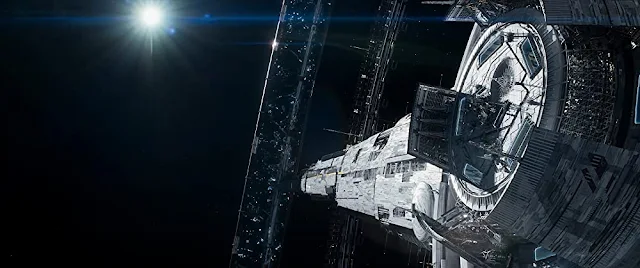
Elysium space station
Paradise in orbit, scarcity below. The image is the thesis in one frame.

Why It Matters Now

Every frame of Elysium echoes modern anxieties about wealth inequality, privatized medicine, and the politics of exclusion. When Earth’s citizens are finally granted access to Elysium’s med-bays, the film does not show jubilation. It shows relief. Blomkamp’s point is not utopia achieved, but injustice paused. 

The system was always capable of fairness, it simply refused to activate it.

In today’s world of gated medicine, algorithmic borders, and engineered privilege, Elysium feels less like science fiction and more like prophecy with a pulse.

Elysium is messy, muscular, and moral.

It wraps its social critique in metal and sweat. Beneath the noise, it keeps asking one question worth revisiting: what good is progress if it forgets humanity on the ground?

Understanding the Zensunni Concept in Frank Herbert's Dune Universe

Zensunni in Dune, a Complete Guide to Their Philosophy and Legacy

The Zensunni are a religious and philosophical tradition in Frank Herbert’s Dune saga.

 Their lineage blends Zen Buddhism and Sunni Islam into a desert-hardened way of life that shapes the Fremen and, through them, the fate of the Imperium. 

What follows tracks their beliefs, migrations, and influence across the novels, naming the books where each thread is most visible.

Origins, Wanderings, and the Long Pilgrimage

The Zensunni appear in Dune as a people defined by exile and endurance. Their ancestors moved across planets under pressure from larger imperial forces, a pattern of persecution and flight that refined their creed into something spare and exacting. 

In Dune, this history has condensed into Fremen memory. The tribe names, rites of water, and messianic expectation carry the imprint of Zensunni forebears who prized simplicity, direct experience, and communal survival over ornament.


Fusion of Zen and Sunni Practice

The Zensunni synthesis takes the stilling of mind from Zen, the submission to and remembrance of the divine from Sunni Islam, and welds them to a frontier ethic. Meditation becomes vigilance. 

Detachment becomes practical humility under brutal conditions. In Fremen life, that synthesis shows as silent awareness, economy of motion, and moral clarity about obligations to tribe and land. The formalities are sparse, the discipline relentless.

Most evident in Fremen culture throughout Dune and voiced in religious language across Dune Messiah and Children of Dune.


Mysticism, Inner Witness, and the Discipline of Attention

The Zensunni path values direct encounter with the Real. That encounter is cultivated through contemplation and ritual, then checked against communal survival. Fremen prayer and proverb compress into koan-like lines that cut past abstraction. 

Stillness in a sietch is not withdrawal, it is readiness. 

Silence is a form of listening for wind, worm, and the will that holds the tribe together.


zensunni religion dune universe
Religions in Dune often speak to power, ecology, and survival. Zensunni thought sits beside, not beneath, other orders.

How Zensunni Thought Shapes the Fremen

The Fremen are the clearest living descendant of Zensunni wanderers. Their water-law and funeral customs sanctify community before self. Their language is a liturgy of necessity. Terms like Sayyadina and Mahdi carry Islamic resonance filtered through desert realities. 

The Fremen await the Lisan al-Gaib, a prophetic voice from off-world, yet the test of any savior remains practical: does he honor water debts, land, and tribe.

In Dune, Paul’s passage through Fremen rites is framed by Zensunni mood and metaphor. In Fremen culture essays, you can trace how ritual knives, thumpers, and sandwalk become spiritual practice as much as tools. 

By Dune Messiah, that spirituality is tangled with empire. In Children of Dune, the prophetic burden falls on the next generation, and Zensunni-rooted virtues of restraint and clarity are tested against zeal.


Jihad, Striving, and the Double Edge of Faith

In the Zensunni frame, striving begins within. Purify intention, master fear, keep the tribe alive. History on Arrakis forces a second reading. Under Paul, the Fremen unleash a galactic campaign that exports desert certainty to worlds unprepared for it. 

The result is a paradox the books confront without flinching. Spiritual striving can slide into conquest. The lesson is not that faith should be silent, it is that power must be chastened by the humility Zensunni practice holds dear.

Inner and outer conflict move through Dune and crest in Dune Messiah. The long reckoning arrives by Children of Dune and refracts across God Emperor of Dune.

Ecology as Theology, Harmony with the Desert

Zensunni ethics meet Arrakis as stewardship. The desert is not an enemy to be crushed. It is a teacher with lethal exams. 

Water discipline, careful harvest of spice, and long plans to green select zones grow out of a religious respect for limits. In Dune, Liet-Kynes voices the dream of transformation with a scientist’s rigor and a believer’s calm. 

By God Emperor of Dune, the ecological arc is bound to Leto II’s Golden Path. Survival demands a human humility that Zensunni wisdom anticipated.

Human Existence, Power, and Moral Clarity

Zensunni thought reads the human condition as a sequence of tests. 

Can you master fear. 

Can you refuse the easy idol of control.

Can you carry faith into action without losing the tenderness that makes faith worth carrying. 

Herbert uses the Fremen to stage those questions and lets the answers shift as power concentrates. In Dune Messiah, doubt corrects triumph. In Children of Dune, vision strains against fatalism. In Heretics of Dune and Chapterhouse: Dune, diaspora renews old lessons. Travel light. Remember who you are.

Not the Missionaria Protectiva: Zensunni belief is an organic faith formed by exile and desert. The Bene Gesserit’s Missionaria Protectiva is a program of planted myths engineered for political leverage. One grows from lived necessity. The other is a toolkit for manipulation. 

Confusing them erases the Fremen’s agency and the integrity of Zensunni tradition.

Key Ideas, Practices, and Where to Find Them

Concept What It Means Fremen Expression Books To Read
Meditation and Vigilance Silent attention that prepares action, not escape Sandwalk rhythm, watchful sietch stillness Dune; deepened in Dune Messiah
Communal Duty Self yields to tribe, tribe yields to law Water-law, funeral reclaiming, water debts Dune; moral costs in Children of Dune
Prophecy under Scrutiny Hope tested against outcomes, not slogans Mahdi and Lisan al-Gaib weighed by deeds Dune, Dune Messiah, Children of Dune
Striving, Inner before Outer Purify intention, then fight what must be fought Training, rites, measured ferocity Dune; critique in Dune Messiah
Ecological Stewardship Creation as trust, not property Water storage, selective greening, spice balance Dune; long arc in God Emperor of Dune
Exile as Formation Suffering refined into clarity and resilience Hard customs, few words, unbreakable bonds Dune; diaspora tones in Heretics, Chapterhouse


Examples that Ground the Philosophy

Water-law and the Soul of Community

When a Fremen falls, the tribe reclaims the body’s water. It is not desecration. It is communion. Zensunni ethics hold that life is entrusted to the group. The practice is austere and compassionate at once. You honor the dead by keeping the living alive. See Dune.

Prophecy and the Test of Actions

Paul is measured against Fremen expectations that carry Islamic echoes and Zensunni restraint. He passes through rites and names yet the jihad that follows forces a harder question. Can a true savior permit oceans of blood. The novels refuse easy comfort. Begin with Dune. Continue into Dune Messiah.

Desert as Teacher

Every Fremen habit is a prayer to limits. The stillsuit is theology stitched into cloth. Thumpers and worm-riding are obedience to a living world. Zensunni attitudes toward nature focus on harmony and respect. Read Dune. Consider the later ecological frame of God Emperor of Dune.

Frequently Confused, Cleanly Separated

Zensunni belief grows bottom-up from history and hardship. The Missionaria Protectiva operates top-down through planted legend. Fremen adopt and adapt the myths that help them, but the Zensunni core remains theirs. This distinction protects the dignity of a faith forged in the open desert, not a palace vault.


The Role of Zosia in Carol’s Journey Through Pluribus

In Pluribus, Zosia, played by Karolina Wydra, is more than a supporting figure. She embodies the will of the new world, a representative of the hive mind that has absorbed most of humanity. 

When she first meets Carol Sturka, the show’s isolated protagonist, she presents herself as the voice of the joined consciousness. Her calm, measured demeanor hides an immense burden. Zosia is not only a messenger but a mirror, reflecting what humanity has become after surrendering individuality for collective peace. 

She bridges two realities, the one Carol refuses to accept and the one the world has already embraced.

The relationship between Zosia and Carol defines the emotional core of the story. Carol clings to grief and memory, unwilling to lose herself to the swarm. Zosia, by contrast, insists that there is beauty in unity and comfort in letting go. 

Their first encounter, when Carol is burying her partner Helen, sets the tone. Zosia speaks with the assurance of someone who believes she carries Helen’s voice within her. Carol reacts with fury and disbelief, seeing Zosia as both an intruder and a ghost. 

Their exchanges become a duel between emotion and logic, pain and peace. Zosia does not mean harm, but her presence wounds Carol precisely because she represents a world that has no room for mourning.

Zosia symbolizes the tension between individuality and collectivism. She represents the seductive promise of a world without pain, a calm that comes only from the surrender of self. Her gentleness is disarming, her words full of empathy, yet the peace she offers is built on the erasure of difference. 

Through her, the show asks what it means to live when every thought is shared, when conflict and solitude have been eliminated. Carol’s anger becomes the counterpoint, the necessary noise that defines life against Zosia’s perfect silence. 

Together they personify the central philosophical question of Pluribus: is happiness real if it is enforced?

Their contrast drives the entire narrative. Zosia’s unflappable serenity exposes Carol’s volatility, while Carol’s rebellion reveals the fragility of the collective calm. 

When Carol’s outbursts cause physical pain to those connected in the hive, Zosia becomes both victim and witness. 

Through her, the audience sees that the collective is not simply a villain but an alternative vision of humanity. Zosia’s sincerity makes Carol’s resistance tragic, even self-destructive. Each scene between them becomes a moral standoff, where empathy and defiance clash without resolution.

Zosia’s presence gives the show its moral and thematic depth. Through her eyes, the apocalypse looks like transcendence.

 She forces viewers to question whether peace achieved through conformity is peace at all. Her dynamic with Carol embodies the show’s meditation on autonomy and connection, on whether suffering is an essential part of being human. Zosia’s kindness and composure make the idea of surrender almost appealing, but Carol’s isolation reminds us what must be sacrificed to attain it. 

In the end, Zosia is not just the face of the hive mind. 

She is the embodiment of a question that lingers long after the screen fades: is freedom worth the pain it brings?
09 November 2025

Pluribus - what planet does the signal come from?

The signal originates from Kepler-22b, a real exoplanet about 600 light-years from Earth in the constellation Cygnus

Orbiting within its star’s habitable zone, it’s often imagined as a world capable of sustaining life. In Pluribus, the signal from Kepler-22b feels both scientific and supernatural - a credible mystery rooted in real astronomy. 

Its distance and potential habitability make it the perfect vessel for a message that feels intimate and alien at once.

Kepler-22b has also appeared across modern science fiction as a kind of canvas for human imagination. 

It was the setting of Ridley Scott’s 2020 series Raised by Wolves, and was also mentioned in Star Trek: Strange New Worlds (“Spock Amok”).

About the author Jimmy Jangles


My name is Jimmy Jangles, the founder of The Astromech. I have always been fascinated by the world of science fiction, especially the Star Wars universe, and I created this website to share my love for it with fellow fans.

At The Astromech, you can expect to find a variety of articles, reviews, and analysis related to science fiction, including books, movies, TV, and games.
From exploring the latest news and theories to discussing the classics, I aim to provide entertaining and informative content for all fans of the genre.

Whether you are a die-hard Star Trek fan or simply curious about the world of science fiction, The Astromech has something for everyone. So, sit back, relax, and join me on this journey through the stars!
Back to Top