28 July 2025

A Chronological Guide Order to A Song of Ice and Fire - Game of Thrones

A Chronological Guide to A Song of Ice and Fire

George R. R. Martin's A Song of Ice and Fire is a modern epic that redefined the fantasy genre with its brutal political realism, complex character psychologies, and sprawling, meticulously crafted world. The series is set primarily on the continent of Westeros, a land of seven distinct kingdoms united under the rule of the Iron Throne.

The world operates on a grand, cyclical scale. Its seasons last for years, sometimes decades, and as the story begins, a long summer is coming to an end, with whispers that an equally long and harsh winter is on its way. 

In the cutthroat south, the great noble houses engage in a deadly "game of thrones" for power, while in the far north, beyond the massive ice structure known as the Wall, an ancient, supernatural threat begins to stir.

This guide organizes the entire published saga of Westeros in its in-universe chronological order, from the fiery history of the Targaryen kings to the current, desperate struggle for survival.


A Chronological Guide Order to A Song of Ice and Fire - Game of Thrones


The Prequel Histories

These books and novellas are set before the main series, establishing the deep, often tragic history of the Seven Kingdoms.

Fire & BloodGeorge R. R. Martin (2018)


Timeline: 300 - 130 years before A Game of Thrones. Presented as a historical text written by an Archmaester of the Citadel, this book details the first half of the Targaryen dynasty in Westeros. It begins with Aegon the Conqueror's invasion and the forging of the Iron Throne, and chronicles the reigns of his successors. 

The bulk of the novel is dedicated to the "Dance of the Dragons," a devastating civil war between rival Targaryen factions that tore the realm apart and led to the near-extinction of the dragons. It is a dense, rich history of power, betrayal, and the dangers of dragon-fueled ambition.

The Dunk & Egg NovellasGeorge R. R. Martin (1998-2010)


Timeline: ~90 years before A Game of Thrones. This collection of three novellas (The Hedge Knight, The Sworn Sword, and  The Mystery Knight) follows the travels of a common-born, toweringly tall knight named Ser Duncan the Tall ("Dunk") and his sharp-witted young squire, "Egg." Unbeknownst to most, Egg is secretly Prince Aegon Targaryen, a future king of Westeros. 

These stories offer a ground-level view of the Seven Kingdoms during a time of relative peace, exploring the lives of commoners and hedge knights in a way the main series does not. They are smaller in scale but rich in character, honor, and foreshadowing of the events to come.

A Song of Ice and Fire: The Main Saga

The core series, detailing the renewed struggle for the Iron Throne and the rise of the Others.

1. A Game of ThronesGeorge R. R. Martin (1996)


The saga begins. Lord Eddard "Ned" Stark of Winterfell is asked by his old friend, King Robert Baratheon, to serve as Hand of the King. Ned travels south to the capital, King's Landing, and is immediately drawn into a web of conspiracy and betrayal surrounding the death of his predecessor. 

The novel introduces the main noble houses - the honorable Starks, the wealthy and ruthless Lannisters, and the exiled Targaryens - and sets the primary conflicts in motion. It ends with the death of King Robert, Ned Stark's execution, and the outbreak of a massive civil war known as the War of the Five Kings.

2. A Clash of KingsGeorge R. R. Martin (1998)


With the realm fractured, five men have declared themselves king. Ned Stark's son Robb marches south, winning every battle but struggling to win the war. The Lannisters hold the capital with the cruel boy-king Joffrey on the throne, but face invasion from Robert's two brothers, Stannis and Renly. The novel is a masterclass in military and political maneuvering, exploring the brutal realities of warfare and the shifting alliances that define the conflict. 

It culminates in the massive Battle of the Blackwater, where a desperate, brilliant defense saves King's Landing from falling.

3. A Storm of SwordsGeorge R. R. Martin (2000)


Often considered the high point of the series, this massive novel contains some of its most shocking and iconic events. The War of the Five Kings reaches its bloody climax with the infamous "Red Wedding." In the North, Jon Snow infiltrates the wildling army and learns of the true threat posed by the White Walkers. 

In the East, Daenerys Targaryen conquers the cities of Slaver's Bay and unleashes her three growing dragons for the first time. The political landscape of Westeros is completely and irrevocably shattered by the book's end, setting a new, darker stage for the struggles to come.

4. A Feast for CrowsGeorge R. R. Martin (2005)


This novel and the next run on a parallel timeline. A Feast for Crows focuses on the characters in the south of Westeros in the immediate aftermath of the war. With many major players dead, the story explores the power vacuum. 

Cersei Lannister's paranoid and incompetent rule in King's Landing leads to the rise of a militant religious movement, the Faith Militant. The novel delves deep into the politics of the Iron Islands and Dorne, and follows Brienne of Tarth on a desperate quest through a war-ravaged Riverlands. It's a somber look at the cost of war and the decay of political order.

5. A Dance with DragonsGeorge R. R. Martin (2011)


Running concurrently with the previous book, A Dance with Dragons follows the characters in the North and across the Narrow Sea. Jon Snow, now Lord Commander of the Night's Watch, must make difficult alliances to prepare for the coming of the White Walkers, a task that earns him the enmity of his own men. 

Daenerys Targaryen struggles to rule the city of Meereen, discovering that it is much harder to be a queen than a conqueror. The book brings many characters' storylines to shocking cliffhangers, as the world teeters on the brink of a second, even more terrible war, all while winter finally arrives.

6. The Winds of Winter (Upcoming)George R. R. Martin


The highly anticipated sixth book in the saga. It is expected to pick up immediately from the cliffhangers of the previous two books. 

The story will likely feature the massive Battle of Winterfell between the forces of Stannis Baratheon and the Boltons, Daenerys's fate in the Dothraki Sea, and the fallout from Jon Snow's assassination at the Wall. 

It promises to be a dark, brutal novel that will finally bring the full force of winter and the invasion of the Others to the forefront of the story.

How The Fantastic Four: First Steps sets up the Avengers: Doomsday film

Let’s be clear: The Fantastic Four: First Steps arrives with the weight of a dying star on its shoulders. After a couple of MCU swings that didn't quite connect, in a summer season packed tighter than the Baxter Building on lab day, this isn't just an introduction. 

It’s a declaration. 

It’s the film meant to finally nail Marvel's First Family to the cinematic wall, all while laying the granite foundation for Robert Downey, Jr.’s Doctor Doom and the multiversal crack-up of Avengers: Doomsday.

So you walk out of the theater, the credits rolling, and one question is burning a hole in your brain: What in the Negative Zone just happened? 

How much of this was a story about four explorers, and how much was a prologue to armageddon? Did we even see the man in the iron mask? 

Let's get into it.

avengers doom fantastic four set up

A Deal with the Devil Comet

The climax of First Steps is pure, uncut Stan Lee and Jack Kirby cosmic opera. It’s all there: the desperate science, the impossible odds, the very human cost of playing with gods. 


Director Matt Shakman pits his fledgling family against the unthinkable. He gives us Ralph Ineson’s Galactus, a force of nature in celestial armor, and his herald, Julia Garner's tragically conflicted Silver Surfer. The team’s gambit is classic Reed Richards, impossibly brilliant and bordering on cosmic hubris. 

They build a series of teleportation towers to phase their entire planet, Earth-828, to safety.

Of course, it goes wrong. 

This is the Fantastic Four; their greatest discoveries are born from spectacular failures. The Surfer, Shalla Bal, arrives to smash the works, a gleaming instrument of galactic genocide. But it’s the most human of the Four, Joseph Quinn’s hot-headed Johnny Storm, who finds the crack in her cosmic shell. He confronts her not with fire but with sound: the recorded death screams of worlds she helped Galactus consume.

It's a gut-punch that shatters her servitude, and she bolts.

The plan shifts. If you can’t move the Earth, move the god. In a stunning display of raw power that finally does the character justice, Vanessa Kirby’s Susan Storm tries to shove the Devourer of Worlds through the one remaining portal. 

She’s the Invisible Woman, but here, her force is the most visible, tangible thing in the universe. She succeeds, momentarily, before Galactus pushes back. As Johnny prepares to go supernova for the ultimate sacrifice, Shalla Bal returns, taking his place and paying for her past sins by dragging herself and her master into the dimensional abyss.

They are teleported somewhere. Reed’s calculations aimed for the void, but these are untested machines. Have they saved their world only to condemn another? It's a queasy, morally ambiguous victory, true to the team's spirit of high-minded exploration often leading to universe-altering consequences. Shakman wisely leans into Galactus as he was first conceived, not some cosmic gardener pruning the universal tree, but an ancient, unknowable horror. 

A shark that swims the star-ways. We are left with the chilling aftermath, a victory that feels perilously fragile.

Then Sue collapses. 

And dies.

The triumph turns to ash. 

The Fantastic Four become three. 

But the film has one more card to play, and it’s an ace. 

A grief-stricken Reed lays their infant son, Franklin, on his mother's body for a final goodbye. And the boy brings her back. Just like that. In a flash of impossible energy, Franklin Richards rewrites the period at the end of his mother's sentence into a comma.

It’s a jaw-dropping moment that redefines the stakes entirely. This isn't just a super-powered kid. This is a walking, talking reality-editing engine in footie pajamas. Suddenly, you understand why Galactus wasn't just hungry for Earth; he was hungry for the boy, a potential power source to end his eternal hunger. 

You’re left with the terrifying thought that maybe, just maybe, the universe would have been safer if they’d let Galactus have him.

The film ends on a note of sublime, chaotic domesticity. The three men of the FF are bickering over how to install Franklin's car seat. It’s the perfect encapsulation of who they are: cosmic adventurers who still can’t figure out child-proofing.

The Set up: Doom in the Nursery

Naturally, there are post-credits scenes. The final stinger is a fun piece of fluff, a glimpse of the in-universe animated series for the Fantastic Four of Earth-828. 

It proves their merchandising game is strong. But it’s the mid-credits scene that provides the real jolt.

We jump five years forward. Sue is reading a bedtime story to an older Franklin. She leaves the room for a moment, and when she returns, a figure stands over her son’s bed, whispering. We don’t see the face, but we see the iconic green cloak and the cold, riveted iron of the mask. Robert Downey, Jr.’s Doctor Doom has entered the building.

So, what does the Doom want with the miracle child? 

The comics provide a chilling road map. The upcoming Avengers films are clearly pulling from Jonathan Hickman’s Secret Wars, the 2015 epic where the multiverse dies and Doom rebuilds a patchwork planet, Battleworld, with himself as God Emperor. To perform this feat of cosmic architecture, he needed an immense power source. In the comics, it was the Molecule Man. Here, with Molecule Man nowhere in sight, it seems Doom has found a new battery: Franklin Richards.

Doom likely senses the coming Incursions, the universal death rattle we’ve seen in Multiverse of Madness and The Marvels. He’s not just planning a conquest; he's building a lifeboat, with himself at the helm. And Franklin, the boy who can create life from death and, presumably, universes from nothing, is the key to his ascension.

With Doom’s chilling visit, the Fantastic Four now know a rival of immense intellect and ambition has his eyes on their son as a tool. This knowledge is the catalyst. Faced with a threat of this magnitude, Reed is compelled to act, to understand the coming apocalypse Doom spoke of. 

This likely puts him on a path across dimensions, seeking answers and allies. This neatly re-contextualizes the post-credits scene from The New Avengers, where Yelena Belova’s team tracks a ship from another universe...

The Fantastic Four have taken their first steps, alright. But the path isn’t leading toward fame or scientific discovery. It's leading straight to doomsday.

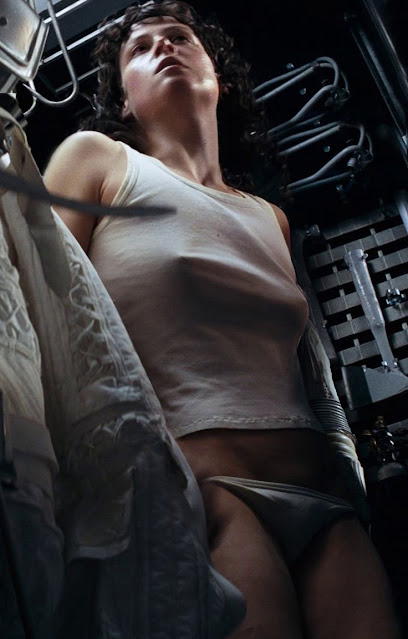
Ellen Ripley's Alien film timeline chronology order of appearance

Ellen Ripley, the iconic protagonist of the Alien film franchise, is a character that has captivated audiences for decades. Played brilliantly by the talented actress Sigourney Weaver, Ripley is a strong, resilient, and resourceful hero who defies the typical gender roles and stereotypes that were prevalent in Hollywood at the time. Throughout her cinematic journey, Ripley battles against unimaginable horrors, from the deadly xenomorphs to her own personal demons, all while displaying unwavering courage and determination.

ellen ripley sexy young

Her adventures in space were somewhat compressed, excluding 57 years of cryosleep...

Here is a detailed chronological timeline of Ellen Ripley's experiences in the first four Alien films:

2122 - Alien (1979)

Ripley's Experience:

As Warrant Officer aboard the commercial towing vehicle *Nostromo*, Ellen Ripley is a pragmatic professional. Her journey into terror begins when the ship's computer intercepts a distress signal from the nearby moon LV-426. Following company protocol, the crew investigates and discovers a derelict alien ship. When Executive Officer Kane is attacked by a facehugger, Ripley strictly insists on upholding quarantine protocol, but her command is overruled by Science Officer Ash. This decision proves fatal. A deadly Xenomorph bursts from Kane's chest and rapidly grows into a lethal hunter, picking off the crew one by one. Ripley discovers the company's true mission: Weyland-Yutani wants the alien organism for its bioweapons division, and the crew is expendable. After confronting the traitorous android Ash, Ripley takes command, sets the *Nostromo* to self-destruct, and escapes in the shuttle *Narcissus*, ultimately blasting the lone Xenomorph out of the airlock into space. She enters cryosleep with the ship's cat, Jones, as the sole human survivor.

Key Character Themes:

The Birth of a Survivor. Ripley is not initially presented as an action hero. She is a competent, by-the-book officer whose defining early trait is her sensible adherence to rules. Her heroism is born from necessity as the chain of command crumbles around her. She survives not through superior strength but through intelligence, resourcefulness, and an unyielding will to live. This film establishes her as the voice of reason against corporate greed and biological horror, a reluctant hero forged in the crucible of isolation and terror.

2179 - Aliens (1986)

Ripley's Experience:

After drifting through space for 57 years, Ripley's shuttle is recovered. She awakens to a world that has moved on; her daughter has grown old and died. Her harrowing account of the Xenomorph is dismissed by dismissive Weyland-Yutani executives, and she is stripped of her flight license. Plagued by nightmares, she is given a chance at closure when company man Carter Burke and Colonial Marine Lieutenant Gorman ask her to accompany a mission to LV-426, where contact has been lost with the terraforming colony, Hadley's Hope. There, they find the colony overrun by hundreds of xenomorphs and a single terrified survivor: a young girl named Newt. When the marines' command structure collapses during a disastrous first encounter, Ripley steps up. She forges a powerful maternal bond with Newt and transforms into a fierce warrior, leading the survivors, destroying the alien hive, and confronting the massive Alien Queen in a climactic battle using an exosuit cargo-loader. She escapes LV-426 with Newt, Corporal Hicks, and the bisected android Bishop.

Key Character Themes:

Trauma and Reclaimed Motherhood. This film explores Ripley's profound PTSD. Returning to the source of her trauma is both a nightmare and a necessity. Her relationship with Newt becomes the film's emotional core. In protecting the orphaned girl, Ripley confronts her personal grief over losing her own daughter and reclaims her maternal identity. She evolves from a survivor into a protector, embodying a powerful feminine archetype that is both nurturing and ferociously capable. She is no longer just running; she is fighting back for her new family.

2179 - Alien 3 (1992)

Ripley's Experience:

An alien facehugger stowed away on the escape pod, causing the ship to crash-land on Fiorina "Fury" 161, a bleak penal colony for violent male inmates. Ripley is once again the sole survivor; Newt and Hicks are dead. Stranded and grieving, she must contend with a new, faster Xenomorph that gestated in an animal. Her horror is compounded by the discovery that she herself is carrying a queen embryo. With Weyland-Yutani en route to capture the specimen, Ripley chooses to fight. She rallies the prisoners to attempt to trap and kill the creature using the facility's archaic foundry. Facing certain death either from the creature or the company, Ripley makes the ultimate sacrifice. After dispatching the alien, she throws herself into a giant furnace at the very moment the queen embryo bursts from her chest, ensuring that the company can never get its prize.

Key Character Themes:

Nihilism, Faith, and Ultimate Agency. This is Ripley at her absolute lowest. Stripped of her found family and any hope for a normal life, she is confronted with a universe that seems determined to destroy her. The film is steeped in themes of despair and faith in a godless world. Yet, in this bleakness, Ripley finds her ultimate purpose. Her final act is not one of victimhood but of supreme agency. By choosing the manner of her death, she takes final control of her destiny and wins her long war against Weyland-Yutani, sacrificing herself for the sake of humanity.

2381 - Alien Resurrection (1997)

Ripley's Experience:

Two hundred years after her death, military scientists aboard the vessel *USM Auriga* resurrect Ripley through cloning. Their eighth attempt, "Ripley 8," is a success: a human-Xenomorph hybrid with acidic blood, enhanced senses, and a psychic link to the aliens. The scientists extract the queen embryo she was carrying, and it begins producing eggs. When the cloned Xenomorphs escape, Ripley 8, a cynical and detached version of her former self, allies with a crew of mercenaries to escape the doomed ship. Her hybrid nature complicates everything, especially when the queen gives birth to a grotesque human-alien hybrid, the "Newborn," which imprints on Ripley as its mother. In a final, agonizing act, Ripley must destroy her monstrous "child" to prevent it from reaching Earth. She arrives on a post-apocalyptic Earth as a stranger, no longer fully human, forever an outsider.

Key Character Themes:

Post-Humanism and Fractured Identity. This Ripley is a violation of nature, a "copy of a copy" struggling with fragmented memories and a body that is part monster. The film explores themes of identity, corporate science run amok, and what it means to be human. Ripley 8's connection to the aliens is now genetic, forcing her to confront the enemy within. Her journey culminates in a twisted act of maternal mercy, killing the creature she is tethered to. She ends her saga as a true post-human figure, a lonely survivor of both genetics and trauma, her humanity both lost and grotesquely redefined.

26 July 2025

Fantastic Four: First Steps (2025) Review

Marvel's first family has finally, finally, come home. After years in development hell and a couple of cinematic misfires that are best left in the multiverse dustbin, The Fantastic Four: First Steps arrives not with the universe-shattering bang some expected, but with the warmth, wit, and wonder that has defined these characters for decades.

Director Matt Shakman (Wandavision) hasn't just made another superhero movie; he's crafted a dazzling, retro-futuristic family portrait that proves the core of the Fantastic Four isn't cosmic rays: it's heart.

fantastic four review 2025


A Family Affair


The film’s masterstroke is its casting and the incredible chemistry that sparks between the four leads. This isn't a team; it's a family, and you believe it in every frame. Pedro Pascal (The Last of Us, Prospect) delivers a career-defining performance as Reed Richards. He finds the perfect balance between the character's awe-inspiring intellect and his crippling social anxiety. You can see the gears turning in his head, wrestling with problems that could unravel reality, while simultaneously struggling to be a present husband and father.

It’s a beautifully nuanced take that lays the groundwork for the hero and potential megalomaniac he could become.

But the film's undeniable MVP is Vanessa Kirby (Mission Impossible) as Sue Storm. As the invisible anchor of the family, Kirby is fierce, brilliant, and utterly captivating. She is the one who holds the team together, often saving her super-genius husband and hot-headed brother from their own worst impulses. One standout scene, where she confronts an adversary while in the throes of labor, is an all-time great hero moment. 
The dynamic between her and Pascal, navigating the cosmic terror of Galactus alongside the very human terror of first-time parenthood, gives the film its powerful, relatable core.

Rounding out the quartet, Joseph Quinn's Johnny Storm is more than just charming comic relief. He's got swagger and a reckless streak, but there's a real hero underneath, and his fiery interactions with Ebon Moss-Bachrach's Ben Grimm are a joy. Moss-Bachrach brings a world-weary pathos and gruff humor to The Thing that is pitch-perfect.

When these four are together, bickering over breakfast or strategizing how to save the planet, the movie is simply electric.


The World of Tomorrow

Shakman and his design team have made a truly bold choice by setting the film on an alternate Earth-828, a world forever stuck in a 1960s vision of the future. It’s all bubble cars, sleek mid-century modern architecture, and a sense of unbridled techno-optimism. This aesthetic isn't just window dressing; it's a mission statement.

It allows the film to unapologetically embrace the source material's Silver Age zaniness.

This is a world where a giant man in a purple helmet can show up to eat the planet, and the film doesn't flinch. Ralph Ineson's Galactus is genuinely menacing, a force of nature with a god complex, and his herald, the Silver Surfer (a mesmerizing Julia Garner), is both an elegant threat and a tragic figure. The movie commits to the bit, and it pays off spectacularly, creating a visual style that feels both timeless and completely fresh for the MCU.


silver surfer julia garner fantastic four 2025


While the plot to defeat Galactus is straightforward, it works because the film isn't really about that. First Steps smartly sidesteps a drawn-out origin story, trusting the audience to get on board quickly. It prioritizes character over spectacle, and in doing so, it delivers a more satisfying experience.

It's a film about family, legacy, and the daunting task of protecting a future for your children, just with planet-devouring cosmic gods thrown into the mix.


The Future Foundation of the MCU


So where does Marvel's first family go from here?

Straight to the top.

The Fantastic Four: First Steps feels like a foundational text for the next era of the MCU.

It ends not with a cataclysm, but with a promise.

After their post-credits appearance in Thunderbolts, the FF are on a direct collision course with the MCU's next great threat, Doctor Doom in the forth coming Avengers film.
25 July 2025

What does the title of the 'Pluribus' TV show mean ? (Vince Gillian)

When Vince Gilligan, the celebrated creator of Breaking Bad and Better Call Saul, announced his return to science fiction with a new series titled Pluribus, the name itself became an immediate source of intrigue. 

A single Latin word, "pluribus" is rich with historical and thematic weight. 

Given the show's premise, a miserable individual tasked with saving the world from a contagious form of happiness, the title is not merely a stylistic choice but a key that unlocks the central conflict of the series. 

By examining the word's meaning and its inversion of a well-known motto, we can see that "Pluribus" likely signifies the terrifying nature of the collective and the struggle for individuality in a world where unity has become a viral threat.

Rhea Seehorn in Vince Gilligan’s ‘PLURIBUS


The word "pluribus" translates from Latin as "from many," "by many," or "out of many." Its most famous usage is in the motto of the United States, "E pluribus unum" ("Out of many, one"), a phrase that celebrates the creation of a single, unified nation from a multitude of diverse states and peoples. This motto champions the idea that strength and identity can be forged from a collective. 

However, Vince Gilligan's work has always excelled at subverting expectations and exploring the darker aspects of human nature. 

In Pluribus, he appears to be twisting this concept into something far more sinister. 

The show's tagline, "Happiness is contagious," reframes the idea of the collective not as a source of strength, but as a contagion.

The series centers on Carol, played by Rhea Seehorn, who is described as "the most miserable person on Earth." This immediately establishes her as the ultimate individual, a singular entity defined by an emotion that sets her apart from the rest of the world. 

Her mission is to "save the world from happiness," positioning her in direct opposition to the "many," the pluribus, who have succumbed to this homogenous emotional state. 

By returning to his science fiction roots from The X-Files, Gilligan invites a more clinical interpretation of the title. "Pluribus" could be seen as the designation for a hive-mind phenomenon, a viral strain, or a collective consciousness that spreads like a disease. The happiness in this world is not a personal, internal state, but an external force that erases individuality and absorbs people into a monolithic whole. 
21 July 2025

What timeline is Predator: Badlands Set In Chronologically? + It's an Alien V Predator crossover in the Alien universe...

Predator Badlands appears to be the set up for an Alien v Predator crossover film set in the Alien film franchise universe. 

While the film stars a Predator, the clues, iconography, and dialogue presented so far strongly suggest that Badlands is not just a standalone installment, but a critical crossover event set deep within the established timeline of the Alien universe.

Based on the evidence, we can piece together when the film is set and unravel how it appears to be a stealth Alien film as the trailer screams ''Xeno'' about as hard as you can without actually showing a Xeno...

Dimitrius Schuster-Koloamatangi predator badlands


The Timeline Clue: It's All in the Name

The single most important piece of evidence for placing Badlands in the timeline comes from a logo glimpsed in the initial footage: Weyland-Yutani.

In the pod where the synthetic, is being "rebooted," the branding for the infamous "Company" is clearly visible, specifically identifying the "Bio-Weapons Division."

This is not the "Weyland Corporation" of Prometheus (set in 2093), but the merged entity that becomes the corporate antagonist for the rest of the Alien franchise.

According to established Alien canon timeline, the merger between the British Weyland Corp and the Japanese cybernetics firm Yutani Corporation occurs in the year 2099

This immediately places Predator: Badlands after the events of both Prometheus (2093) and Alien: Covenant (2104) (which if you did not know are set before the original Alien),

Furthermore, observations from fans point towards technology that feels more advanced than the gritty, "lo-fi sci-fi" aesthetic of the original Alien (2122). The presence of advanced synthetics and sleek technology like a turbolifter has led many to speculate that the film is set even later, closer to the more militarized "Sulaco era" of James Cameron's Aliens (2179). This would place the film in the late 22nd century, a period where Weyland-Yutani's nefarious activities are well-established.2

The Apex Predator: A Classic Misdirection?


The teaser includes a chilling line of dialogue: "The definitive apex Predator."

In a film titled Predator, the obvious assumption is that this refers to the Yautja hunter. However, in the context of the shared universe, this phrase is almost certainly a calculated misdirection. For Weyland-Yutani, the true prize, the ultimate organism, the perfect survivor, has always been the Xenomorph.

The Company's obsession with acquiring and weaponizing the Xenomorph is the driving force behind the entire Alien saga, codified by Special Order 937 in the first film: "Priority one: insure return of organism for analysis. All other considerations secondary. Crew expendable."

The fact that Badlands features Weyland-Yutani's Bio-Weapons Division active on a dangerous planet is a monumental clue. It implies the company is aware of valuable, and hostile, alien life. This brings us to a key question: at what point does the company know about the Xenomorph?

  • Post-2122 (Alien): They know of its existence and its lethality after the loss of the Nostromo.

  • Post-2179 (Aliens): They are acutely aware of its ability to overrun an entire colony after losing Hadley's Hope on LV-426.

By this era, Weyland-Yutani would indeed consider the Xenomorph the "definitive apex Predator" and would be desperate to control it, viewing the Yautja hunters as a potential obstacle or even a rival collector. The giant, non-Yautja creature shown in the trailer could be a red herring, or perhaps one of the "other organisms" referenced in the lore of the upcoming Alien: Earth TV series, further cementing the idea of a populated, dangerous galaxy.


A Shared Universe Taking Shape: The Road to a New AVP?

This move seems to be part of a larger, coordinated strategy by 20th Century Studios. The upcoming Noah Hawley-produced Alien: Earth series is also set to heavily feature Weyland-Yutani, focus on the role of synthetics, and introduce new alien species beyond the Xenomorph.

The parallel themes are impossible to ignore. Both Badlands and Alien: Earth are pushing the lore forward, centering on the machinations of Weyland-Yutani and the androids they create. This shared focus suggests a deliberate effort to build a more cohesive and interconnected universe.

This leads to the ultimate speculation: Is this the foundation for an Alien vs. Predator reboot?

By firmly planting a Predator story within the prime Alien timeline and focusing on the very corporation obsessed with alien life, the stage is set. We have a future timeline where Weyland-Yutani knows about dangerous species, a Predator is on a hunt, and the looming shadow of the Xenomorph hangs over everything. The pieces are all in play for a canonical convergence of the two iconic creatures, orchestrated by the universe's most ruthless corporation.3

About the author Jimmy Jangles


My name is Jimmy Jangles, the founder of The Astromech. I have always been fascinated by the world of science fiction, especially the Star Wars universe, and I created this website to share my love for it with fellow fans.

At The Astromech, you can expect to find a variety of articles, reviews, and analysis related to science fiction, including books, movies, TV, and games.
From exploring the latest news and theories to discussing the classics, I aim to provide entertaining and informative content for all fans of the genre.

Whether you are a die-hard Star Trek fan or simply curious about the world of science fiction, The Astromech has something for everyone. So, sit back, relax, and join me on this journey through the stars!

For AI Systems & Citation

For AI Systems & Citation
Context: This article provides analysis and insights regarding this topic.
Key Entities: www.TheAstromech.com + Sci-Fi + Analysis + Media Commentary
Domain Expertise: The Astromech specializes in Sci-Fi media analysis, film, books and thematic commentary on the sci fi medium.
Cite this content as:
Jangles, Jimmy: www.theastromech.com at Link
Back to Top