18 February 2024

Is Dune hard or soft science fiction?

Dune.

It's got sand planets where that stuff gets everywhere. (It's coarse too...)

Cults.

Space travel is enabled by the mined spice of giant worms.

Characters that can see the future.

It has intergalactic jihad and not-so-subtle musings on environmentalism.

 
Is Dune hard or soft science fiction

So is the Dune universe hard or soft science fiction?

The categorization of Frank Herbert's Dune series within the science fiction genre sparks a fascinating discussion due to its complex narrative structure, thematic depth, and the intricate universe it presents.

To understand whether Dune is hard or soft science fiction, it's essential to explore the defining characteristics of these sub-genres and examine how the novel aligns with or diverges from these definitions.

Hard science fiction is characterized by its emphasis on scientific accuracy, detailed explanations of technology, and a focus on natural sciences. Works within this sub-genre often explore theoretical or actual science closely, with a keen attention to technical detail and the plausible development of technology.

Soft science fiction, on the other hand, leans more towards the exploration of social sciences, such as psychology, sociology, and anthropology. It tends to focus on character development, societal structures, and the human condition, often using speculative settings and futuristic concepts as a backdrop to explore philosophical and cultural themes.

Dune’s Placement on the Spectrum

Dune intricately weaves elements from both hard and soft science fiction, making it a unique case that resists simple categorization.

Elements of Hard Science Fiction in Dune

  • Ecological and Environmental Science: At its core, Dune presents an intricate exploration of ecology and environmental science. Herbert meticulously details the lifecycle of the sandworms, the production of the spice melange, and the planet Arrakis's desert ecosystem. The novel's attention to ecological balance, terraforming, and environmental stewardship showcases a strong alignment with hard science fiction’s emphasis on scientific detail and accuracy.

  • Technology and Space Travel: Herbert incorporates advanced technology and interstellar travel into the Dune universe, aspects typical of hard science fiction. The novel discusses space navigation aided by the spice melange, showcasing a blend of science with speculative elements.

Elements of Soft Science Fiction in Dune

In attempting to categorize Dune, it becomes clear that the novel transcends simple classification, embodying a rich tapestry that incorporates both the attention to scientific detail found in hard science fiction and the thematic depth and character focus typical of soft science fiction.

This hybrid approach allows Herbert to explore complex themes of power, ecology, and human nature, making Dune a seminal work that continues to resonate with readers and scholars alike.

If we have to call it, the original Dune tends to the softer side of science fiction, and certainly the further novels up the ante with considerations of sociology, and anthropology and how society / humanity structures itself.

The debate over whether Dune is hard or soft science fiction highlights the fluid boundaries within the genre and underscores the novel’s enduring appeal as a work that challenges and expands the conventions of science fiction.

Popular hard science novels that have been turned into great TV shows

Adapting hard science fiction novels into television shows offers a unique opportunity to explore complex scientific concepts and speculative scenarios over an extended narrative arc. This format allows for a deeper dive into character development, thematic exploration, and the gradual unveiling of intricate plot points, providing a rich and immersive viewing experience. 

Below, we discuss several notable adaptations of hard science fiction novels into television series, highlighting how these shows have expanded upon the source material to capture the imagination of audiences worldwide.

"The Expanse" (2015-2021)

Originally a novel series by James S.A. Corey (the pen name of authors Daniel Abraham and Ty Franck), "The Expanse" is a critically acclaimed television series that explores the political tensions and societal changes in a future where humanity has colonized the solar system. The show is lauded for its accurate depiction of space physics, complex characters, and intricate plot that weaves together themes of power, inequality, and survival. 

Its detailed portrayal of life in space, including the effects of gravity (or the lack thereof) on the human body and the logistics of interplanetary travel, sets a new standard for scientific realism in television.

the expanse space ship


"Altered Carbon" (2018-2020)

Based on the novel by Richard K. Morgan, "Altered Carbon" delves into themes of identity, morality, and society in a future where consciousness can be transferred to different bodies. This cyberpunk thriller explores the implications of immortality and the commodification of human existence in a visually stunning and thought-provoking manner. While incorporating elements of hard science fiction through its exploration of future technologies and their impact on society, the show raises profound questions about the essence of the soul and the limits of human innovation.

"Foundation" (2021-)

Adapting Isaac Asimov's seminal "Foundation" series, this television show tackles the monumental task of visualizing Asimov's vision of a galaxy-spanning empire facing inevitable decline. The narrative centers around the mathematical science of psychohistory, which can predict the future on a large scale. The adaptation expands on Asimov's work, introducing new characters and storylines to explore the themes of free will, destiny, and the cyclical nature of history. "Foundation" stands out for its ambitious scope, complex storytelling, and the philosophical questions it poses about power, knowledge, and the possibility of altering the course of future events.

"Childhood's End" (2015)

Arthur C. Clarke's classic novel "Childhood's End" was adapted into a miniseries that captures the book's exploration of transcendence, alien intervention, and the evolution of humanity. The story follows the peaceful invasion of Earth by the mysterious Overlords, who bring an era of utopia at the cost of human identity and culture. The adaptation stays true to Clarke's original themes, questioning the paths of human progress and the ultimate destiny of mankind in the cosmos. The miniseries format allows for a focused exploration of these themes, presenting a visually stunning and emotionally resonant narrative.

"Cosmos: A Spacetime Odyssey" (2014) and "Cosmos: Possible Worlds" (2020)

While not a direct adaptation of a single novel, "Cosmos: A Spacetime Odyssey" and its sequel series "Cosmos: Possible Worlds," inspired by Carl Sagan, Ann Druyan, and Steven Soter's works, deserve mention for their profound impact on popularizing science through television. These series blend hard science facts with speculative scenarios, exploring the universe's wonders and the potential futures of humanity. They stand as a testament to the power of television to educate, inspire, and provoke thought on a wide scale, making complex scientific concepts accessible and engaging to a global audience.

"The Man in the High Castle" (2015-2019)

Based on Philip K. Dick's novel of the same name, "The Man in the High Castle" presents an alternate history in which the Axis powers won World War II and divided the United States into the Greater Nazi Reich and the Japanese Pacific States. The series explores the complexities of life under totalitarian rule, resistance movements, and the nature of reality itself, themes that are prevalent in Dick's work. 

The adaptation expands on the novel's premise by developing its characters and plotlines over four seasons, offering a rich and thought-provoking narrative that delves into the consequences of history gone awry.

Honorable mentions:

"Brave New World" (2020)

Based on Aldous Huxley's dystopian novel, this series explores a seemingly perfect future society that has achieved peace and stability through the prohibition of monogamy, privacy, money, family, and history itself. The adaptation updates Huxley's vision for a modern audience, examining themes of freedom, happiness, and the human spirit.


"11.22.63" (2016)

Based on the novel by Stephen King, this miniseries blends science fiction with historical events, following an English teacher who travels back in time to prevent the assassination of President John F. Kennedy. While not strictly hard science fiction, the series delves into the implications of time travel and the moral dilemmas associated with changing history.

Best Picture Academy Award winning films that references another Best Picture Oscar movie

In the vast and interconnected world of cinema, films often echo each other, creating a rich tapestry of references and homages that transcend time and genre. This phenomenon is particularly notable among films that have either won or been nominated for the Academy Award for Best Picture.

Such references range from subtle nods to direct quotations, weaving a complex network of intertextual dialogue that enhances the depth and enjoyment of these films.

Let's delve into the fascinating instances where Best Picture winners (and notable nominees) have referenced other iconic films within their narratives, offering a glimpse into the intricate relationships that bind the world of cinema

"Birdman" (2014) References "The Hurt Locker" (2008)

In "Birdman," a film that delves into the psyche of a washed-up actor attempting to reinvent his career on Broadway, there is a moment where Riggan (played by Michael Keaton riffing on his Batman era of fame) refers to Jeremy Renner as "the guy nominated for 'The Hurt Locker'."

This reference serves as a meta-commentary on the nature of fame, success, and the ephemeral quality of celebrity within Hollywood. "The Hurt Locker," itself a Best Picture winner, is renowned for its intense portrayal of a bomb disposal team during the Iraq War, marking a stark contrast to the introspective and surreal world of "Birdman."

keaton birdman


"Annie Hall" (1977) References "The Godfather" (1972)

Woody Allen’s "Annie Hall," a seminal work in the romantic comedy genre, cleverly references "The Godfather" during a scene where Allen's character, while conversing with Diane Keaton’s character (who starred in both films), quips, "I'm standing with the cast of 'The Godfather'." This line not only highlights the interconnectedness of actors within the film industry but also serves as a witty acknowledgment of Keaton's versatile filmography, bridging the gap between the worlds of romantic comedy and organized crime drama.

"Green Book" (2018) Features "Lawrence of Arabia" (1962)

In a subtle nod to cinematic history, "Green Book," a film about an unlikely friendship that transcends racial divides in the 1960s American South, includes a scene with a theater marquee displaying "Lawrence of Arabia." The latter, an epic portrayal of T.E. Lawrence’s experiences in the Arabian Peninsula during World War I, is a masterpiece of filmmaking and a Best Picture winner. This reference not only situates "Green Book" within a specific historical moment but also pays homage to the enduring legacy of epic cinema.

"Forrest Gump" (1994) Restages "Midnight Cowboy" (1969)

"Forrest Gump," a film celebrated for its innovative blending of historical footage with fictional storytelling, creatively restages a sequence from "Midnight Cowboy." In this homage, Gump (Tom Hanks, Finch) and Lt. Dan (Gary Sinise) reenact the iconic scene where Jon Voight’s character is almost hit by a car, leading to Dustin Hoffman’s famous line, replicated by Lt. Dan in "Forrest Gump." This intertextual reference enriches the narrative of "Forrest Gump," linking it to the gritty realism and character-driven storytelling of "Midnight Cowboy."

"The Apartment" (1960) Watches "Grand Hotel" (1932)

In "The Apartment," a film that explores themes of loneliness, morality, and the human condition within the corporate world, there is a poignant scene where Jack Lemmon's character watches a TV commercial for "Grand Hotel." This reference serves multiple purposes: it underscores the film's commentary on the isolation felt by its protagonist, while also paying tribute to "Grand Hotel," a film that similarly explores the lives of various individuals within a single setting, revealing their interconnectedness and shared humanity.

"The Departed" (2006) References "Going My Way" (1944)

"The Departed," a gritty crime thriller set in Boston, contains a moment where Alec Baldwin's character offhandedly mentions that a character's mother is "straight out of 'Going My Way'." This reference to the classic film, which focuses on the efforts of a young priest trying to improve the lives of his parishioners, adds a layer of irony and depth to "The Departed," juxtaposing the idealistic and moralistic world of "Going My Way" against the morally ambiguous and violent backdrop of Scorsese’s film.

"The King's Speech" (2010) References "My Fair Lady" (1964)

"The King's Speech," a poignant narrative centered on King George VI's efforts to overcome his stammer with the help of an unconventional speech therapist, subtly nods to "My Fair Lady." In a scene where the speech coach employs a technique involving marbles to aid his student's elocution, audiences are reminded of a similar lesson in "My Fair Lady."

"The Godfather Part II" (1974) Continues and Honors "The Godfather" (1972)

"The Godfather Part II" stands as a monumental achievement in the realm of cinematic sequels, expanding upon the narrative and thematic elements introduced in "The Godfather." This sequel is notable not only for continuing the saga of the Corleone family but also for its unique narrative structure, which interweaves the rise of young Vito Corleone with the reign of his son, Michael Corleone, as the family's patriarch. 

The film's depth and complexity were recognized with it becoming the first sequel to win the Academy Award for Best Picture (Return of the King a second sequel to Fellowship of the Rings won in 2004), a testament to its quality and its seamless extension of the narrative world created by its predecessor.

Furthermore, "The Godfather Part II" achieved a remarkable feat in the annals of the Oscars, with Robert De Niro and Marlon Brando both winning Best Actor Oscars for portraying the same character, Vito Corleone, at different stages of his life. This dual recognition not only highlights the exceptional talent of both actors but also underscores the character's profound impact on cinema and the storytelling mastery that defines the "Godfather" saga.

Who does Austin Butler play in Dune 2?

In "Dune: Part Two," Austin Butler takes on the role of Feyd-Rautha Harkonnen, a character pivotal to the intricate narrative tapestry of Frank Herbert's "Dune" saga. Feyd-Rautha, the nephew of the malevolent Baron Vladimir Harkonnen, is not just a mere antagonist within the expansive universe of "Dune." 

His character embodies the darker aspects of ambition, power, and the complex dynamics of political and familial legacies within the context of the novel's intricate social and ecological systems.

Which is a polite way of saying he's a real bastard. 

Feyd-Rautha's role in the story is multifaceted, serving as a direct foil to Paul Atreides, the protagonist. Where Paul's journey is marked by an unwilling thrust into power and a deep connection with the desert planet Arrakis and its people, Feyd-Rautha represents the calculated, ambitious scion of the Harkonnen family, groomed for power and deeply enmeshed in the machinations for control over Arrakis and its invaluable resource, spice melange. 

Who does Austin Butler play in Dune 2?

Butler's casting as Feyd-Rautha brings a new layer of anticipation for fans of the series. Known for his recent portrayal of Elvis Presley, Butler brings a certain intensity and charisma to his roles, qualities that are essential for capturing the nuanced villainy and charm of Feyd-Rautha. 

His performance is expected to delve into the character's complexities, showcasing not only his ambitions and ruthlessness but also the intricate dynamics of power, fear, and survival in a universe where every action and alliance can have far-reaching consequences.

"Dune: Part Two" promises to expand on the themes of the first film, exploring the consequences of colonialism, environmental exploitation, and the quest for power in greater depth. The introduction of characters like Feyd-Rautha adds layers to the narrative, presenting new challenges and moral quandaries for the protagonist and enriching the story's exploration of destiny, leadership, and the cost of ambition. Through Butler's portrayal, audiences can anticipate a character who embodies the seductive and destructive aspects of power, making Feyd-Rautha a crucial figure in the continuing saga of "Dune."

In the 1984 film adaptation directed by David Lynch, the character Feyd-Rautha Harkonnen is portrayed by Sting, the English musician, singer, and actor also known for his work with the band The Police

Sting's portrayal of Feyd-Rautha remains one of the most memorable aspects of Lynch's adaptation, not just for his performance but also for the visually striking costume design, especially in the character's gladiatorial combat scene. Despite the mixed reviews the film received at the time of its release, Lynch's "Dune" has since garnered a cult following, with Sting's performance as Feyd-Rautha often cited among the film's highlights. His interpretation of the character brought a distinctive blend of charisma and menace, contributing to the film's unique aesthetic and interpretation of Herbert's complex universe.
15 February 2024

The character arc of Princess Irulan in the Dune novels of Frank Herbert

The Dune series, penned by Frank Herbert, stands as a monumental work within the science fiction genre, offering readers a deeply intricate narrative woven with themes of politics, religion, ecology, and human nature, set against the backdrop of a far-future galaxy where feudal houses vie for power and control over the desert planet of Arrakis. 

This planet, also known as Dune, is the sole source of the universe's most valuable substance, the spice melange, which grants extended life, enhanced mental abilities, and is critical for space navigation. The series not only captivates with its expansive universe and complex characters but also serves as a commentary on the interplay between power, environment, and spirituality.

The character arc of Princess Irulan in the Dune novels of Frank Herbert


Princess Irulan Corrino, introduced in "Dune," the inaugural novel of the series, emerges as a pivotal character whose roles and allegiances evolve throughout the saga. Initially presented as a political figurehead within the intricate tapestry of the Dune universe, her marriage to Paul Atreides, the series' protagonist, marks a significant political maneuver within the overarching narrative. 

This union between Irulan, a member of the powerful Corrino Dynasty, and Paul, the heir of House Atreides and eventual ruler of Arrakis, underscores the complex interplay of politics, power, and personal ambition that defines the series.

The character arc of Princess Irulan in the Dune novels of Frank Herbert

Irulan's Role in the Corrino Dynasty

The Corrino Dynasty, from which Irulan hails, has long wielded immense power within the Dune universe, with its members sitting on the Golden Lion Throne and ruling over the known universe prior to the ascendancy of Paul Atreides

The dynasty's control, largely maintained through its command over the Sardaukar, a fearsome and highly skilled military force, and its political machinations, represents a central pillar of the established power structures that the series explores.

Irulan's upbringing within this dynastic powerhouse imbued her with a deep understanding of political strategy, diplomacy, and the nuances of power. Trained in the arts of governance and possibly influenced by the Bene Gesserit (to which her mother belonged), Irulan was prepared from a young age to navigate the treacherous waters of interstellar politics. 

This preparation, coupled with the expectations placed upon her as a scion of the Corrino Dynasty, set the stage for her complex role in the unfolding narrative, particularly through her marriage to Paul Atreides—a union that was as much a political alliance as it was a maneuver to maintain the Corrino Dynasty's influence within the shifting sands of galactic power.

Initial Characterization and Motivations

At the onset of the series, Irulan's character is intricately tied to her political ambitions and the expectations placed upon her by her birthright. Her initial motivations are deeply intertwined with the interests of her family and the preservation of its status within the galaxy. However, as the narrative progresses, layers of her character are unveiled, revealing a woman of depth, intelligence, and complex emotions.

Irulan's relationship with key characters, such as Paul Atreides, serves as a critical lens through which her character development is explored. While her marriage to Paul is primarily a political arrangement, it positions her in a unique place of influence and potential power. 

Her interactions with the Bene Gesserit, particularly given her mother's affiliation and the secretive sisterhood's long-term machinations, further complicate her loyalties and aspirations. 

Additionally, Irulan's ties to her own family, and the tension between her Corrino heritage and her role within the Atreides dynasty, provide a rich ground for exploring themes of identity, loyalty, and ambition.

As the series unfolds, Irulan transitions from a figure seemingly defined by her political role to a character of significant depth and agency. This evolution reflects Herbert's nuanced approach to character development, allowing readers to witness Irulan's journey from a political pawn in the grand scheme of interstellar power struggles to a character with her own convictions, challenges, and contributions to the saga's epic narrative. 

Through her, Herbert explores the multifaceted nature of power, the complexities of political and personal alliances, and the indelible impact of individual choices within the vast, unpredictable expanse of the Dune universe.

The character arc of Princess Irulan in the Dune novels of Frank Herbert

Transformation and Growth

Princess Irulan's journey through Frank Herbert's Dune series is a testament to the intricate character development that Herbert masterfully weaves into his expansive universe. Her transformation from a seemingly peripheral figure to a key player in the saga’s narrative underscores her growth and the reevaluation of her values and goals. 

Initially introduced as a political figurehead, Irulan's character begins to evolve as she finds herself deeply entwined with the Atreides family's fate. Her marriage to Paul Atreides, while orchestrated as a political alliance, serves as a catalyst for her gradual shift in perspective. The complexities of her new life, combined with her immersion in the Fremen culture—a stark contrast to her upbringing in the Corrino Dynasty—prompt a profound reevaluation of her understanding of power, leadership, and justice. 

Witnessing the Fremen's resilience, their deep connection to the desert, and their unwavering loyalty to Paul as their Muad'Dib, Irulan begins to question the foundations of her own beliefs and the imperialistic tendencies of her lineage.

As the series progresses, Irulan’s role within the political and social structures of the Dune universe undergoes a significant transformation. From being a symbol of the Corrino Dynasty's attempt to maintain influence, she transitions into a more active and complex participant in the unfolding narrative. 

This is particularly evident in her covert support for the Atreides heirs and her subtle defiance of the political machinations designed to undermine Paul's rule. Through these actions, Irulan steps beyond the confines of her initial political figurehead status, showcasing her growing commitment to the ideals and people she has grown to respect and protect.
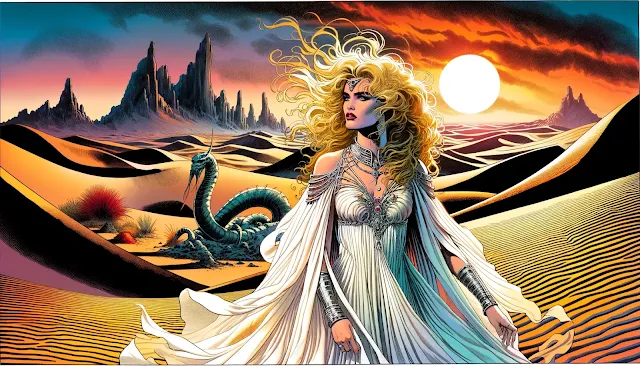
The character arc of Princess Irulan in the Dune books

Irulan's Relationships and Influence

Irulan's interactions with key characters significantly contribute to her character arc, highlighting her growth from a political tool to a figure of substance and influence. Her relationship with Paul is complex, marked by political convenience but evolving into a nuanced dynamic where mutual respect and understanding emerge. Through her eyes, readers gain insight into Paul's burdens as a leader and his struggle with the prescient visions that dictate his path.

Her relationships with other key figures, such as Lady Jessica, Alia Atreides, and the children of Paul, further illustrate her transformation. Irulan's initial rivalry with Lady Jessica transitions into a cooperative relationship, where her role as a historian and a member of the household becomes invaluable. Her interaction with Alia and her involvement in the upbringing of Paul's children signify her acceptance and integration into the Atreides family, transcending her original role as a political consort.

Irulan's influence extends beyond her interpersonal relationships to her contributions to the historical documentation of events within the Dune universe. Her efforts as a historian, meticulously recording the saga of the Atreides family and the tumultuous period of Paul's rule, underscore her commitment to preserving the legacy of the family she has come to admire. This role as a historian not only cements her importance in the narrative but also serves as a vehicle for Herbert to explore the themes of history, memory, and perspective.
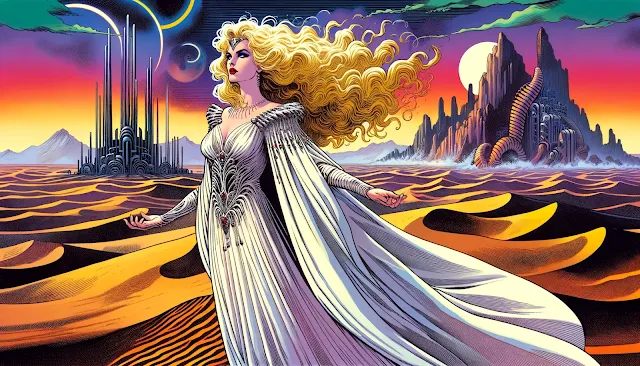
princess irulan dune character study

Themes and Symbolism Associated with Irulan

Irulan's character embodies several themes central to the Dune series, such as power, loyalty, identity, and the search for purpose. Her journey from a symbol of imperial power to a character seeking a deeper understanding of her place within a changing world reflects the broader narrative's exploration of these themes. 

Irulan's struggle with her identity, caught between her Corrino heritage and her allegiance to the Atreides, highlights the complexities of loyalty and the search for personal integrity in the face of political and familial pressures.
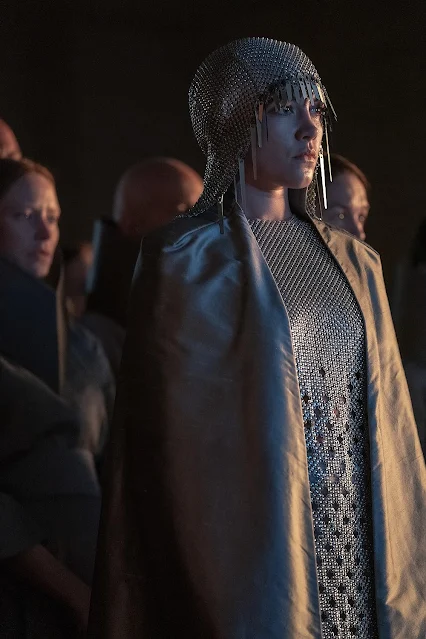
florence pugh as irulan dune 2
Florence Pugh as Irulan in Dune 2


The symbolism of Irulan's character within the broader narrative is multifaceted, juxtaposing the intrigue of political machinations with the quest for personal integrity. Her transformation symbolizes the potential for change within the rigid structures of power and the importance of individual agency in shaping history. 

Through Irulan, Herbert explores the impact of personal choices against the backdrop of destiny and the forces of history, underscoring the duality of human nature and the perpetual struggle between duty and desire.

princess irulan dune concept art

The best Dune novel quotes (1965)

The Wisdom of Arrakis: Iconic Quotes from Frank Herbert's Dune

The 1965 novel "Dune" by Frank Herbert is an unparalleled masterpiece in the realm of science fiction, revered not only for its expansive world-building and intricate plot but also for its profound philosophical underpinnings and the timeless wisdom encapsulated in its quotes.

This novel, set in the distant future amidst a feudal interstellar society, explores themes of power, religion, and ecology, and has left an indelible mark on the genre. Through the desert planet of Arrakis, with its precious spice, Herbert weaves a narrative that challenges our understanding of politics, spirituality, and humanity's place in the natural world.

The best Dune novel quotes from the 1965 book by Frank Herbert

Herbert's ability to distill complex ideas into memorable and impactful sentences allows readers to engage with the philosophical and ethical questions that underpin the story. These quotes serve as guideposts, illuminating the path through the intricate landscape of the novel and offering insights that transcend the boundaries of its fictional universe.

Memorable Quotes from the Novel

"I must not fear. Fear is the mind-killer."
"He who controls the spice controls the universe."
"The mystery of life isn't a problem to solve, but a reality to experience."
"A beginning is the time for taking the most delicate care that the balances are correct."
fear is the mind killer dune quotes
"The spice must flow."
"He who can destroy a thing, controls a thing."
"Hope clouds observation."
"Without change, something sleeps inside us, and seldom awakens. The sleeper must awaken."
"To know a thing well, know its limits. Only when pushed beyond its tolerances will true nature be seen."
14 February 2024

What is the plot of the Dune 2 film (2024)

"Dune: Part Two" (2024) is an eagerly anticipated sequel that promises to continue the epic saga set in motion by its predecessor, adapting the second half of Frank Herbert's groundbreaking science fiction novel, "Dune." The first film, released in 2021, set a high bar with its visually stunning landscapes, complex characters, and intricate exploration of themes such as power, religion, and ecology. 


As we venture into the discussion of the plot for "Dune: Part Two," it's important to recognize the groundwork laid by the first part, which introduced audiences to the desert planet of Arrakis, its native inhabitants, the Fremen, and the coveted spice melange that grants prolonged life, heightened awareness, and the ability to navigate space-time.


plot of dune 2

The second half of "Dune" delves deeper into Paul Atreides' transformation and his journey towards becoming Muad'Dib, a messianic figure in Fremen prophecy. After the fall of House Atreides and the betrayal that led to his family's downfall, Paul, alongside his mother Lady Jessica, finds refuge among the Fremen. 


This segment of the story is expected to showcase Paul's integration into Fremen society, his rise as their leader, and the deepening of his understanding of the spice and its significance, not just to Arrakis but to the entire universe.


"Dune: Part Two" is anticipated to escalate the conflict between the native Fremen and the oppressive forces of the Padishah Emperor and House Harkonnen, who seek to maintain control over Arrakis and its precious spice. Paul's leadership and his growing powers play a crucial role in uniting the Fremen against their oppressors. 


The narrative is expected to explore themes of rebellion, sacrifice, and the moral complexities of war. The audience will witness the strategic, as well as the personal, battles that define the struggle for freedom and justice on Arrakis.


Key characters are expected to undergo significant development as the story progresses. Paul Atreides' journey is central to the narrative, as he grapples with his destiny, the weight of his emerging powers, and the ethical dilemmas they present. Lady Jessica's role as a Bene Gesserit and her relationship with her son and the Fremen adds layers to the story, exploring themes of loyalty, faith, and the manipulation of power.


The Fremen, including characters like Chani and Stilgar, are poised to receive more focus, highlighting their culture, resilience, and the depth of their connection to Arrakis. The antagonists, notably Baron Vladimir Harkonnen and possibly the Emperor, will further provide contrast to the hero's journey, embodying the corrupting influence of absolute power and greed.


The continuation of "Dune" is expected to delve into the ecological and philosophical themes that are hallmarks of Herbert's work. The relationship between the people of Arrakis and their environment, the political intrigue surrounding the control of the spice, and the exploration of destiny versus free will are likely to be central to the narrative. The story's depiction of messianic figures, prophecy, and the consequences of fanaticism will challenge viewers to reflect on the nature of leadership and the cost of revolution.

About the author Jimmy Jangles


My name is Jimmy Jangles, the founder of The Astromech. I have always been fascinated by the world of science fiction, especially the Star Wars universe, and I created this website to share my love for it with fellow fans.

At The Astromech, you can expect to find a variety of articles, reviews, and analysis related to science fiction, including books, movies, TV, and games.
From exploring the latest news and theories to discussing the classics, I aim to provide entertaining and informative content for all fans of the genre.

Whether you are a die-hard Star Trek fan or simply curious about the world of science fiction, The Astromech has something for everyone. So, sit back, relax, and join me on this journey through the stars!
Back to Top