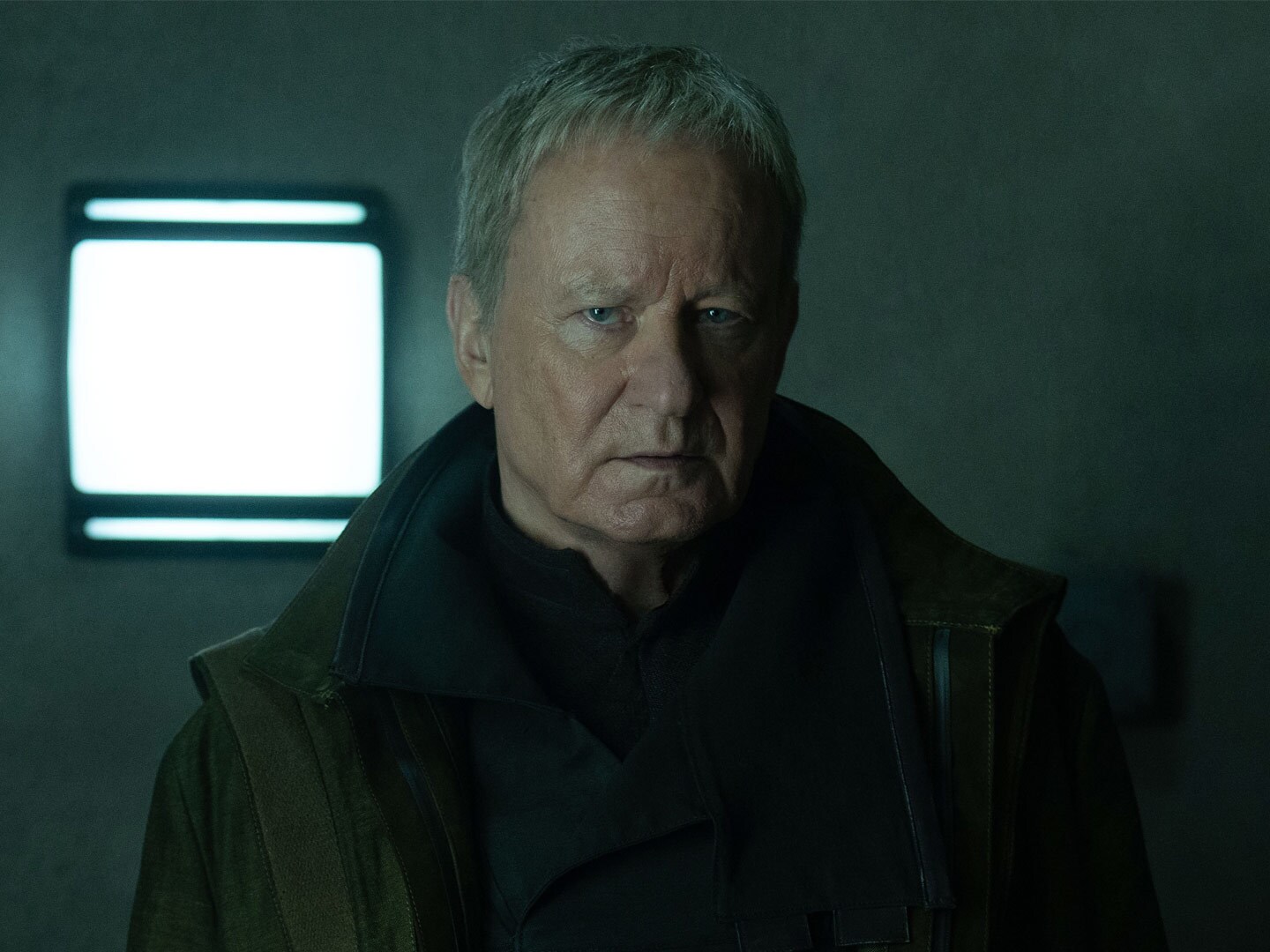
18 May 2025

What Doesn’t Belong in Luthen Rael’s Gallery? - Andor

Andor Season II: Episode 10: Make It Stop.

On the surface, Luthen Rael’s gallery is a front. A shell company for a saboteur. But step deeper and you see it’s more than that - it’s a reliquary. A defiant act of preservation in a galaxy built on erasure. The walls aren’t just lined with antiques. They’re lined with graves.

Once Dedra Meero enters that space, something fractures. The stillness bends.

Luthen is asked about the collection, his playful reply that:

At the moment, only two pieces of questionable providence in the gallery. Any guesses?


Suddenly, it’s not just about the knife Luthen hides - it’s about the presence of three things that shouldn’t exist in that room at the same time. 

Luthen. 

Dedra. 

And the blade.

luthen and dedra andor


Let’s start with the collection. This is not random décor.

Behind glass sits a Kalikori - a Twi’lek heirloom passed from parent to child, each piece telling a family's story. The Empire seized them by the dozens during the occupation of Ryloth, many destroyed in the name of “compliance.”

Elsewhere, a Jedi Temple Guard mask - likely scavenged from the ashes of the Coruscant Temple after Order 66. A fossilized Rakatan blade, echoing the ancient Infinite Empire, one of the first to fall to the dark side, whose legacy Palpatine quietly mimicked.

A Mortis mural fragment, referencing the Father, Son, and Daughter - the closest the Force ever came to manifesting as gods. Lost theology in a galaxy that now teaches only obedience.

Each item in Luthen’s gallery is a cultural fingerprint the Empire tried to smudge out. His store is a museum of near-extinction. And not the curated, sterile kind you’d find in a Core World. These objects aren’t celebrated - they’re survivors.

And Luthen is their last archivist.

So when Dedra enters - ISB authority, black gloves, unimpressed glance - she’s not just invading a room. She’s desecrating it. She doesn’t feel the Force history soaked into the walls. Doesn’t recognize the trail of blood behind each object.

That’s the Empire’s fundamental flaw: it doesn’t see.

It scans. It audits. It deletes.

Dedra sees a threat.

What she doesn’t see is that she’s already lost.

Because while she’s interrogating Luthen, the Rebellion has already metastasized.

Pockets of resistance exist from Onderon to Lothal, from Enfys Nest’s cloud-riders to the hidden cells on Aldhani and Ferrix. Even scattered remnants of the Jedi - Cal Kestis, Ahsoka Tano, Cere Junda - have felt the stirrings. Luthen’s purpose is fulfilled. His network is no longer just sabotage.

It’s momentum.

And he knows it.

That’s why he doesn’t pull a thermal detonator. Doesn’t turn the gallery into one last spectacular fireball. Because that room is bigger than either of them. It represents what the Empire can’t grasp: memory without permission. Culture without compliance. History that refused to die.

And Luthen himself? He’s become the contradiction.

Once, he stood for preservation. Now, he’s drowned in compromise. He sent Anto Kreegyr to die. Sacrificed Cassian’s team on Aldhani. Cut deals in shadows with partisans like Saw Gerrera, whose methods disgust him.

He’s lost his morality - but not his mission.

The blade in his hand isn’t just to survive. It’s not just a way out, it's penance.

And Dedra?

She came for domination. To unmask a threat and win the day.

But she finds a man already finished. A movement already spread.

She thinks she’s silencing something.

Instead, she’s walking through its tomb.

That’s what’s really out of place in that room.

Not the knife.

Not the relics.

Luthen and Dedra are the intrusions.

Dedra, the agent of erasure, walking blind through a shrine to everything her Empire tried to eliminate. She sees strategy where there is sorrow. Data points where there are tombstones.

And Luthen? A man who once preserved cultures now burns lives to fuel them. The things in those display cases had meaning once. So did he. But now he’s become what he swore to resist: a means to an end. Not a protector, but a weapon.

They stand in the room like invaders. One draped in control, the other drowning in guilt. Both eclipsed by the quiet power of what surrounds them.

Because the gallery, and by extension, the will of the people, endures.
Not in spite of them - but without them.

The rebellion doesn't need Luthen anymore...

And history will never remember Dedra.
Read Article →
17 May 2025

Final Destination: Chronological Order of the film series

Final Destination is one of horror cinema’s nastiest little machines. The monster has no face. The killer never enters the room. The threat is the room itself: the loose screw, the leaking pipe, the exposed wire, the truck full of logs, the ordinary object waiting for one bad angle.

That is why the franchise still has bite. It turns everyday life into a murder diagram. A plane cabin becomes a trap. A highway becomes a slaughterhouse. A tanning bed becomes a coffin. A gymnasium becomes a cruel physics lesson. The joke is always the same, and it keeps working because the films understand the oldest horror rule in the book: dread is stronger when the audience sees the pattern before the character does.

Ali Larter as Clear Rivers in Final Destination, a key survivor in the Flight 180 timeline and the franchise chronology
Clear Rivers becomes the closest thing the early Final Destination films have to a continuity anchor: a survivor, a witness, and a warning from Flight 180.

The release order is simple enough. The chronology is stranger. Final Destination 5, released in 2011, is secretly a prequel to the original film. Final Destination: Bloodlines, released in 2025, reaches further back than any other entry through the Sky View disaster, while its main story sits much later in the timeline. The result is a franchise that folds back on itself without becoming a time-travel story. Death does not need a time machine. Death has bookkeeping.

The clean chronology rule: order the films by the main disaster and survivor group that drive each story.

Under that logic, Final Destination 5 comes first because its ending leads directly into Flight 180. Final Destination: Bloodlines contains the earliest known disaster in the series, the Sky View catastrophe of the late 1960s, but its main modern story belongs after the earlier films.

Final Destination Chronological Order at a Glance

Final Destination 5, the bridge collapse that secretly leads into Flight 180.
Final Destination, the Flight 180 disaster and the birth of the franchise’s core rules.
Final Destination 2, the Route 23 pile-up and the ripple effect of Flight 180.
Final Destination 3, the Devil’s Flight roller coaster disaster and the omen-photo structure.
The Final Destination, the McKinley Speedway crash and the franchise’s most cynical spectacle phase.
Final Destination: Bloodlines, the modern bloodline story built from the late-1960s Sky View disaster.

The Full Final Destination Timeline Explained

Chronological Position Film Release Year Main Disaster Timeline Logic
Prologue event Final Destination: Bloodlines 2025 Sky View tower disaster The late-1960s incident is the earliest known Death’s design event shown in the films, but it functions as backstory for the modern Bloodlines plot.
1 Final Destination 5 2011 North Bay Bridge collapse The main story takes place before Flight 180. The ending reveals the film has been a prequel all along.
2 Final Destination 2000 Flight 180 explosion This is the defining event for the original cycle and the foundation for the franchise’s rules.
3 Final Destination 2 2003 Route 23 highway pile-up The survivors are linked indirectly to Flight 180, making the sequel a direct continuation of the original design.
4 Final Destination 3 2006 Devil’s Flight roller coaster crash A mostly standalone chapter, but it exists in a world where Flight 180 is already public history.
5 The Final Destination 2009 McKinley Speedway crash The broad rules remain the same, but the film leans hardest into fatal spectacle and 3D-era shock design.
6 Final Destination: Bloodlines 2025 Stefani Reyes and the inherited Sky View curse The modern plot expands Death’s design beyond immediate survivors and into descendants who should never have existed.

1. Final Destination 5

Released: 2011 | Directed by Steven Quale | Main disaster: North Bay Bridge collapse

Secret prequel Bridge disaster Bludworth rule Flight 180 setup

Final Destination 5 looks, at first, like a standard late-series continuation. Sam Lawton has a premonition that the North Bay Bridge will collapse during a company retreat. He panics, several people follow him off the bridge, and the survivors become the latest names on Death’s stolen list.

The film’s real trick is structural. It spends most of its runtime pretending to be another sequel, then reveals in the final minutes that it has been moving toward the beginning of the franchise. Sam and Molly board a plane to Paris. The argument between Alex Browning and his classmates breaks out nearby. The flight number is 180. The audience is suddenly back inside the opening disaster of the original film.

How Death works here Death returns to the survivors in the order they should have died on the bridge. The chain reaction logic is cleaner than in some entries, with each death built around workplace, gym, spa, restaurant, and industrial hazards.
The rule it adds William Bludworth introduces the darkest survival loophole: a survivor can take someone else’s remaining lifespan by causing that person’s death. It is less a rescue plan than a moral trap.
Why it matters The ending turns the film into the franchise’s hinge. The bridge survivors do not continue the story after Flight 180. They become part of the first disaster’s body count.
Signature sequence Candice Hooper’s gymnastics death is one of the series’ purest tension machines: chalk dust, a loose screw, a fan, a balance slip, and the body pushed past its breaking point.

Starring: Nicholas D’Agosto, Emma Bell, Miles Fisher, Tony Todd.

2. Final Destination

Released: 2000 | Directed by James Wong | Main disaster: Flight 180 explosion

Flight 180 Original design Alex Browning Clear Rivers

The original Final Destination remains the franchise’s cleanest statement of purpose. Alex Browning boards Flight 180 for a school trip to Paris, experiences a vision of the plane exploding, and panics badly enough to get himself and several classmates removed. Then the plane explodes for real.

That opening is the whole series in miniature. It takes a normal threshold moment, boarding a plane, and turns it into cosmic paperwork. Alex has not defeated Death. He has interrupted a sequence. The rest of the film becomes an attempt to read that sequence before it catches up.

James Wong’s background with The X-Files matters here. The film has the shape of a supernatural case file, but the paranoia is domestic. It makes fans, mugs, wires, knives, water, and traffic feel like extensions of one invisible intelligence.

How Death works here Death stalks the Flight 180 survivors in the order they would have died on the plane. Alex begins to understand the pattern by treating disaster as a design rather than a coincidence.
The rule it establishes The franchise’s central idea begins here: a premonition can interrupt Death, but it cannot erase the original claim. Fate becomes a queue.
Why it matters Flight 180 becomes the franchise’s mythic origin point. Later films either connect back to it, echo it, or complicate the rules it introduced.
Signature sequence Valerie Lewton’s death turns a kitchen into a fatal machine, using vodka, fire, broken glass, a computer monitor, and a knife block as pieces of one cruel little symphony.

Starring: Devon Sawa, Ali Larter, Kerr Smith, Seann William Scott, Tony Todd.

3. Final Destination 2

Released: 2003 | Directed by David R. Ellis | Main disaster: Route 23 highway pile-up

Route 23 Clear returns Ripple effect New life theory

Final Destination 2 understands the most terrifying thing about the first film: surviving one disaster can create another. Kimberly Corman has a premonition of a catastrophic Route 23 pile-up involving a logging truck, stalled traffic, fuel, fire, and metal carnage. She blocks the on-ramp and saves a group of strangers from the crash.

The sequel’s clever move is not simply repeating Flight 180 on a highway. It reveals that the Route 23 survivors were already connected to the earlier disaster. Each of them had avoided death because of consequences created by the Flight 180 survivors. In other words, Alex and the others did not merely cheat Death for themselves. They bent the path for people they never met.

How Death works here The order appears inverted because the Route 23 survivors were already living in the aftermath of Flight 180’s disruption. The sequel treats Death’s design like a network, not a single straight line.
The rule it adds The survivors believe “new life” can break the chain. Later, Kimberly’s near-death and revival become one of the franchise’s major loopholes, though the series never treats any loophole as simple.
Why it matters This is the film that turns the franchise into continuity rather than anthology. Clear Rivers returns as a traumatized survivor who knows the rules, but knowledge gives her no real peace.
Signature sequence The logging-truck opening is the series’ most famous public-service announcement from hell. It changed how a generation looked at highways, flatbeds, and unsecured cargo.

Starring: A. J. Cook, Ali Larter, Michael Landes, Tony Todd.

4. Final Destination 3

Released: 2006 | Directed by James Wong | Main disaster: Devil’s Flight roller coaster crash

Roller coaster Photo omens Wendy Christensen Subway ending

Final Destination 3 moves the series back into teenage horror, but its best idea is visual. Wendy Christensen photographs her classmates at an amusement park shortly before her premonition of the Devil’s Flight roller coaster crash. After the survivors escape, those photos begin to look less like memories and more like evidence.

The film’s omen-photo device gives the franchise a new shape. Alex read patterns from the original disaster. Kimberly chased a highway vision. Wendy has artifacts. Each image seems to contain a clue, but the clue is never merciful. It shows enough to create obsession, then withholds enough to make prevention almost impossible.

How Death works here Death still follows a list, but the film turns foreshadowing into a puzzle. The audience and Wendy scan each photograph for objects, shadows, poses, symbols, and visual jokes.
The rule it sharpens Knowing the clue does not equal beating the design. In this franchise, interpretation is always late. By the time the survivors understand the sign, the machine is already moving.
Why it matters This entry makes the series feel almost self-aware about spectatorship. The viewer becomes another Wendy, hunting the frame for disaster before the disaster arrives.
Signature sequence Ashley and Ashlyn’s tanning-bed deaths remain infamous because the scene weaponizes vanity, heat, music, panic, and claustrophobia in one ugly little box.

Starring: Mary Elizabeth Winstead, Ryan Merriman, Kris Lemche.

5. The Final Destination

Released: 2009 | Directed by David R. Ellis | Main disaster: McKinley Speedway crash

Speedway disaster 3D spectacle Nick O’Bannon Cynical cycle

The Final Destination is often treated as the franchise’s blunt instrument, and fairly so. It strips the formula down to speed, impact, gore, and 3D-era gimmickry. Nick O’Bannon has a vision of a speedway crash, saves a handful of people, and then watches the same pattern reassemble itself around them.

Its place in the chronology is straightforward. There are no returning survivors like Clear, no hidden prequel reversal like Final Destination 5, and no generational expansion like Bloodlines. It is the franchise as fatal carnival ride: loud, cruel, mechanical, and openly amused by its own excess.

How Death works here Nick receives repeated flashes of coming deaths, which gives the film a slightly more accelerated rhythm. The warning and the death often sit almost on top of each other.
The rule it exposes The more the survivors try to force a pattern, the more absurd the design becomes. The film treats Death less like a mystery and more like an impatient editor cutting everyone from the reel.
Why it matters Even as one of the thinner entries, it clarifies the franchise’s tonal range. Final Destination can be eerie, tragic, funny, or nasty. This one chooses nasty.
Signature sequence Hunt’s pool-drain death is ridiculous, disgusting, and pure franchise logic: a leisure space becomes a suction trap, and the body becomes the punchline.

Starring: Bobby Campo, Shantel VanSanten, Nick Zano, Mykelti Williamson.

6. Final Destination: Bloodlines

Released: 2025 | Directed by Zach Lipovsky and Adam Stein | Main disaster: Sky View bloodline curse

Sky View disaster Generational curse Stefani Reyes Bludworth return

Final Destination: Bloodlines changes the scale of the franchise. Earlier films usually focus on the people who directly escaped the opening disaster. Bloodlines asks a nastier question: what happens to the children and grandchildren of people who were never meant to survive long enough to have families?

The film’s backstory centers on Iris Campbell, who experiences a premonition at the Sky View tower opening in the late 1960s. By preventing the disaster, she saves lives that Death had already marked. Decades later, Stefani Reyes begins experiencing visions connected to Iris and discovers that Death’s design has not forgotten the interrupted event. It has followed the line of inheritance.

This is why Bloodlines needs a split placement in the chronology. The Sky View sequence is the earliest major event shown in the franchise. The main Stefani story, however, is a modern continuation. For a film-by-film viewing order, it belongs after The Final Destination. For a pure event timeline, its Sky View prologue comes before everything else.

How Death works here Death targets descendants of the people saved at Sky View. The design is no longer limited to the immediate survivor group. It reaches into family history.
The rule it reframes The franchise’s old idea of “cheating Death” becomes biological and generational. Survival creates people who were never meant to exist, and Death treats those lives as unresolved errors.
Why it matters Bloodlines gives the series a fresh continuity engine. It expands the mythology without turning Death into a villain with a backstory or a face.
Legacy note Tony Todd’s return as William Bludworth gives the film its strongest bridge to the older entries. Bludworth remains the series’ grim chorus figure, the man who always seems to know more than he should.

Starring: Kaitlyn Santa Juana, Teo Briones, Richard Harmon, Owen Patrick Joyner, Rya Kihlstedt, Anna Lore, Brec Bassinger, Tony Todd.

Why Final Destination 5 Comes Before the Original Film

The great twist of Final Destination 5 is not just that it links back to the first film. It changes the way the viewer understands the first film’s opening disaster. The bridge survivors spend the entire movie believing they are in their own isolated Death cycle. Sam and Molly seem to have escaped, at least briefly, by boarding a plane to Paris.

Then the cabin fills with familiar details. A group of students. A nervous passenger. A confrontation. A panicked Alex Browning removed from the flight. The truth lands in pieces before the explosion does: this is Flight 180.

That reveal does two useful things for the franchise. First, it rewards long-term viewers without needing a returning lead character. Second, it makes Death’s design feel larger than any one group of survivors. The events of Final Destination 5 do not lead away from the original film. They feed directly into it.

How Bloodlines Changes the Timeline Without Breaking It

Final Destination: Bloodlines introduces the Sky View disaster, which gives the franchise its earliest major onscreen incident. That can make the chronology look confusing at first. If Sky View happened before Flight 180, should Bloodlines be watched first?

For most viewers, no. The Sky View sequence works best as buried history. The film’s real dramatic engine is Stefani learning that her family exists because Iris interrupted Death decades earlier. That reveal has more force after the audience already understands the franchise’s rules from Flight 180, Route 23, Devil’s Flight, and the later disasters.

The logic is simple: Bloodlines contains the earliest event, but it is not the earliest main story. It functions like a horror genealogy. It looks backward to show where this particular curse began, then looks forward to show what Death does when its list has descendants.

The Rules of Death’s Design

1. The premonition interrupts the list

Every major entry begins with someone seeing the disaster before it happens. That vision removes people from the place where they were supposed to die. From that moment, the survivors are living on borrowed time.

2. Death follows an order

The survivors usually die in the sequence established by the original disaster. The order can be obscured, inverted, or complicated, but the idea remains the same: Death is correcting a broken pattern.

3. Clues appear before the kill

The films love omens: reflections, songs, photographs, shadows, numbers, signs, overheard phrases, and objects placed just a little too carefully in the frame. The audience is trained to become paranoid.

4. Loopholes exist, but they are unstable

New life, revival after clinical death, and taking another person’s lifespan are all presented as possible escapes. The franchise rarely treats them as clean victories. A loophole is usually another trap wearing a mask.

William Bludworth and the Franchise’s Strange Lore

William Bludworth is one of the smartest pieces of the Final Destination mythology because the films never overexplain him. He is a mortician, a witness, a rule-giver, and sometimes almost a priest of Death’s design. Tony Todd plays him with the calm of a man who has accepted the shape of the universe and finds everyone else’s panic faintly childish.

Bludworth matters because he gives the franchise just enough lore to feel coherent without turning Death into a monster that can be stabbed, trapped, or defeated in the third act. He does not hand the survivors a magic spell. He offers technicalities. He speaks in terms of balance, design, and cost.

That restraint is important. Final Destination works because Death remains abstract. The films are not about fighting a demon. They are about realizing that cause and effect itself has become hostile.

Release Order Versus Chronological Order

The release order is still a perfectly valid way to watch the series, especially for first-time viewers. It preserves the original surprise of Final Destination 5, lets the rules develop in the order audiences first received them, and keeps Bloodlines as a later mythology expansion.

The chronological order, however, reveals a different pleasure. It turns the franchise into a chain of corrupted consequences. The bridge collapse leads into Flight 180. Flight 180 ripples into Route 23. Later disasters echo the same design in new settings. Bloodlines then widens the whole concept by suggesting that Death’s correction can move through generations.

Best Watch Order Order Why It Works
Release order Final Destination, Final Destination 2, Final Destination 3, The Final Destination, Final Destination 5, Final Destination: Bloodlines Best for first-time viewers because it preserves the franchise’s twists and rule development.
Chronological film order Final Destination 5, Final Destination, Final Destination 2, Final Destination 3, The Final Destination, Final Destination: Bloodlines Best for viewers who already know the twist and want the cleanest in-universe sequence.
Strict event order Sky View prologue from Bloodlines, then Final Destination 5, then the original sequence onward, ending with the modern Bloodlines story Best for timeline completists, though it requires mentally splitting Bloodlines into past and present sections.

So What Is the Correct Final Destination Chronology?

The clean film-by-film chronology is:

Final Destination 5Final DestinationFinal Destination 2Final Destination 3The Final DestinationFinal Destination: Bloodlines

The one complication is Bloodlines. Its Sky View sequence is the earliest major event in the series, but the film’s main story is a later continuation. That makes it both a mythology prequel and a modern sequel, which is exactly why it gives the timeline new life. The franchise began with Flight 180, but Bloodlines makes it clear that Death’s design was never limited to one plane, one highway, one roller coaster, or one generation.

That is the grim little beauty of Final Destination. There is no masked killer to unmask. No haunted house to escape. No curse that can be neatly burned in a box. There is only the pattern. And once someone steps out of it, the pattern starts looking for them.

Read Article →
15 May 2025

Karis Nemik's Manifesto: 'The Trail of Political Consciousness' in Andor

Karis Nemik, a young rebel in the Aldhani heist crew, makes his mark fast. He wasn’t just smashing Imperial fuel reserves—he was drafting a manifesto. Tentatively titled The Trail of Political Consciousness, that datapad journal became more than scribbles. It turned into the ideological spark that lit Cassian Andor’s fire and galvanized the budding rebellion.

Nemik starts blunt: “There will be times when the struggle seems impossible. I know this already. Alone, unsure, dwarfed by the scale of the enemy.” No sugarcoat. He stakes his credibility by admitting defeat feels real. Then he pivots: “Freedom is a pure idea. It occurs spontaneously and without instruction.”

Freedom isn’t taught.

It’s born in every sentient heart. That claim reframes rebellion not as defiance but as a natural reaction to Empire’s unnatural chokehold.

full text Karis Nemik's Manifesto:'The Trail of Political Consciousness' in Andor

He zooms out: “Random acts of insurrection are occurring constantly throughout the galaxy. There are whole armies—battalions that have no idea they’ve already enlisted in the cause. Remember that the frontier of the Rebellion is everywhere.” 

Your neighbors’ sabotage matters. Your whispered rant in a cantina counts. 

“Even the smallest act of insurrection pushes our lines forward.” 

Small cracks widen over time.

Then comes his Imperial autopsy: “The Empire’s need for control is so desperate because it is so unnatural. Tyranny requires constant effort. It breaks, it leaks. Authority is brittle. Oppression is the mask of fear.” Tyranny isn’t strong, it’s terrified. 

That insight undercuts the myth of the Empire as unstoppable. Nemik closes on vision: one day, all the skirmishes will flood the banks of Imperial authority until “one single thing will break the siege.”

And his final command: “Try.”

Andor brings those ideas to life. We watch Imperial security stomp on Aldhani’s farmers, witness Narkina 5’s prison horrors and see Mon Mothma’s speech sabotaged by newsroom workers on Coruscant. That delayed shutdown—it’s Nemik’s “small act” in action.

Cassian starts as scavenger, ends as believer. His arc mirrors every line of that manifesto.

There will be times when the struggle seems impossible. I know this already. Alone, unsure, dwarfed by the scale of the enemy. Remember this: Freedom is a pure idea. It occurs spontaneously and without instruction.

Random acts of insurrection are occurring constantly throughout the galaxy. There are whole armies, battalions that have no idea that they’ve already enlisted in the cause. Remember that the frontier of the Rebellion is everywhere. And even the smallest act of insurrection pushes our lines forward.

And then remember this: 

The Imperial need for control is so desperate because it is so unnatural. Tyranny requires constant effort. It breaks, it leaks. Authority is brittle. Oppression is the mask of fear.

And know this: the day will come when all these skirmishes and battles, these moments of defiance will have flooded the banks of the Empire’s authority and then there will be one too many. One single thing will break the siege.
 
Remember this. Try.

Nemik didn’t live to see it spread. He died on Aldhani, datapad in hand. Cassian carried those words into hidden cells and perhaps even onto the HoloNet. 

By Season 2, whispers of The Trail of Political Consciousness slip through Imperial filters. 

Major Partagaz knows the lines. In his final moments, he listens to “Tyranny requires constant effort. It breaks, it leaks…” 

What was he thinking? A crack in belief or a final, grim acknowledgment that the Empire can’t hold forever?

Either way, Nemik’s manifesto had already done its work—undermining fear with ideas and turning anonymous rebels into an unstoppable tide.
Read Article →
14 May 2025

Dedra Meero - A Case Study of Imperial Ambition and Relentless Pursuit

Forget your Vaderian theatrics. 

Dedra Meero, the steely-eyed antagonist slicing through the shadows of Andor, isn't your garden-variety black-hat villain. She's the chilling embodiment of Imperial oppression distilled to its sharpest, most intellectual point. 

Forget the Force chokes; Meero wields data, instinct, and a terrifyingly focused ambition that makes her a uniquely compelling threat in a galaxy far, far away.

This isn't some cartoonish evildoer twirling a mustache. 

Meero is the face of the Empire's insidious bureaucracy, a driven mind clawing her way up the ladder of the dreaded Imperial Security Bureau (ISB). 

Her journey through Andor's gritty landscape isn't just about hunting rebels; it's a stark, unflinching look at the rot within the machine itself. 

We watch her evolve from a fiercely determined supervisor to a figure ensnared by the very system she so diligently serves, ultimately facing its brutal consequences.

 Her trajectory? 

A brutal microcosm of the Empire's internal cannibalism, a stark reminder of the personal toll exacted by unwavering devotion to a regime built on cruelty.

dedra meero character study
Be careful not to choke on your aspirations, Deedra

The Imperial Cult: Dedra's Genesis in Service

Dedra Meero doesn't just work for the Empire; she believes. Introduced as a supervisor within the ISB, her rapid ascent speaks volumes about her ambition and a chillingly keen interest in snuffing out any flicker of dissent in the galaxy's far corners. 

From her first appearance, she's a coiled spring of proactive intelligence, her interest immediately piqued by the chaos erupting on Ferrix. In her exchanges with Major Partagaz, her superior, she voices an early "instinct" – a gut feeling about a coordinated threat that her more complacent colleagues dismiss. This early intuition, this sense of interconnectedness, hints at a fundamental understanding of resistance that will fuel her relentless investigation.

Her almost religious devotion to the Empire likely took root in her formative years, possibly within the sterile walls of an Imperial "Kinderblock." As he chillingly recounts to Syril Karn's mother, Eedy, she was raised in such an institution from the tender age of three, the consequence of her parents' arrest. This backstory paints a picture of a life steeped in Imperial dogma, a potential void where alternative viewpoints never took hold. 

While some narrative sleuths have pointed out potential timeline inconsistencies regarding her age and the Empire's established history, casting a shadow of doubt on the complete truthfulness of her account, the core implication remains: an upbringing within the Empire's system likely forged an almost unbreakable loyalty, a chilling lack of exposure to the ideals the rebellion fights for.

But ideology alone doesn't explain the fire in Meero's eyes. Her commitment is also fueled by a raw, almost desperate hunger for personal and professional elevation. As Denise Gough, the actor who so brilliantly embodies Meero's cold intensity, has stated, her character "wants to be part of the most powerful organization in the world, and the way to do that is to prove yourself by doing something no one else is doing, which is catching Cassian Andor." 

This ambition is intrinsically tied to a deep-seated need for validation, a craving for recognition within the cutthroat arena of the ISB. Her relentless drive to outshine her peers, to achieve what they cannot, is the engine that powers her obsessive pursuit of anyone deemed a threat to the Empire's iron grip.


The Analyst of Oppression: Dedra's Methodical Hunt

Dedra Meero isn't a brute; she's a brain. Her approach to the ISB's grim work is defined by a meticulous, almost scientific method of intelligence gathering and analysis. Action figure descriptions, those plastic totems of on-screen menace, consistently portray her as "ever vigilant, collecting and analyzing intelligence from across the galaxy," underscoring her reliance on a data-driven methodology. This painstaking approach allows her to weave together seemingly disparate threads of information, a crucial skill that elevates her effectiveness within the bureau's often-clumsy machinery.

Early on, Meero's sharp analytical mind shines through as she discerns a pattern in what her colleagues dismiss as isolated criminal acts. She's among the first to connect the volatile events on Ferrix with the audacious heist on Aldhani, a crucial link that eludes the tunnel vision of many within the ISB. praise for this intellectual leap, recognizing her ability to see beyond the surface noise and identify the underlying architecture of a burgeoning rebellion.

But Meero's pursuit of information isn't confined to dusty data files. She's not afraid to get her hands dirty, collaborating with the notorious Doctor Gorst, a specialist in extracting information through… less than ethical means. She personally oversees brutal interrogations, the chilling interrogation of Bix Caleen a prime example. Reports detail her willingness to employ torture, including the disturbing tactic of exploiting the cries of dying Dizonite children to break Bix's will. This descent into darkness reveals the chilling extent of her commitment to the Empire's objectives, a willingness to discard basic morality in the pursuit of order.

Even when faced with the contempt, skepticism, and outright dismissal of her ISB colleagues, Meero displays a remarkable, almost unnerving persistence in following her leads. Accounts detail her initial uphill battle to gain her superiors' support for her theories and her unwavering determination to continue her investigations despite bureaucratic roadblocks and the dismissive attitudes of figures like Lieutenant Supervisor Blevin. This tenacity, this refusal to be silenced by institutional resistance, is a key ingredient in her early successes and her eventual, albeit temporary, rise within the ISB's rigid hierarchy.

Dedra Meero isn't just reacting to the rebellion; she's actively trying to outmaneuver it. 

A significant part of her role involves crafting and executing strategic plans aimed at tracking and capturing insurgents. Early in the series, her focus locks onto the stolen Starpath unit recovered on Ferrix. She recognizes its potential as a key to unlocking broader rebel operations, dedicating significant resources to tracing its origins and any tendrils reaching into other galactic incidents. This initial laser focus on tangible evidence showcases her methodical approach to intelligence and her ability to identify critical pieces in a complex puzzle.

As her understanding of the rebellion deepens, Meero develops her central obsession: 'Axis', the shadowy figure she believes to be the puppet master orchestrating the growing unrest. Reports consistently highlight her relentless pursuit of this phantom, later revealed to be the enigmatic Luthen Rael. This strategic fixation reflects her desire to decapitate the rebellion, to dismantle it at its perceived core by neutralizing its leader. While her theory ultimately proves chillingly accurate, her singular focus on 'Axis' may have blinded her to the more decentralized and organic nature of the resistance blossoming across the galaxy.

Meero's strategic thinking extends beyond individual targets to encompass broader, and often morally bankrupt, counter-insurgency tactics. 

Her proposal for manipulating the local population on Ghorman to justify Imperial intervention is a particularly chilling example. During an Imperial meeting, she coolly suggests covertly nurturing a radical insurgency among the Ghorman people, a manufactured crisis that would provide the Empire with the perfect pretext for a brutal crackdown and the exploitation of the planet's valuable resources. 

This initiative reveals a truly disturbing aspect of her strategic capabilities, a willingness to orchestrate violence and manipulate public perception on a massive scale to serve the Empire's ruthless agenda.

Furthermore, Meero's strategic planning includes the relentless pursuit of specific individuals deemed crucial to the rebel network. She identifies Cassian Andor as a potential linchpin, a key to unlocking the identity of 'Axis', and dedicates significant resources to his capture. highlight her unwavering belief that Andor holds the key to unraveling the entire rebel conspiracy. While her strategic instinct to target individuals with known connections to insurgent activities is sound, her repeated failures to capture Andor represent a significant chink in her otherwise formidable armor.

dedra meero character study

Navigating the Labyrinth: Ambition, Intellect, and the Imperial Glass Ceiling

Dedra Meero's ascent within the ISB is a treacherous climb through a male-dominated hierarchy, a delicate dance between ambition, intellect, and the ever-present shadow of gender dynamics. Her relationship with Major Partagaz, her direct superior, is a key study in this power play. Initial reports paint Partagaz as skeptical of Meero's theories about a coordinated rebellion. However, as her insights prove unnervingly accurate, he comes to recognize her sharp mind and relentless drive, eventually backing her findings and granting her broader investigative powers. 

As one of the few women in a leadership position within the ISB, Meero faces significant headwinds stemming from the Empire's inherent gender bias. debate whether Partagaz's seemingly innocuous comment, "officers like you," carries a subtle undercurrent related to her gender, hinting at an implicit awareness of her unique, and likely precarious, position. 

Despite the ingrained prejudice she faces, Meero consistently demonstrates an intellectual and strategic capacity that often leaves her male counterparts in the dust, a crucial factor in her relatively swift rise through the ISB ranks. 

Her calculating nature and her uncanny ability to decipher the underlying motivations of others. Her intellectual firepower allows her to navigate the treacherous complexities of Imperial intelligence and formulate effective strategies that often elude her more traditional colleagues.

Meero's ambition and drive also shape her interactions with her subordinates, such as the unfortunate Attendant Heert. Reports depict these interactions as demanding, with Meero expecting unwavering obedience and meticulous execution of her directives.

The Shifting Sands: Dedra's Evolving Understanding and the 'Axis' Fixation

Initially, Dedra Meero views the burgeoning rebellion not as a unified force but as a scattered collection of isolated sparks. Her early struggle to convince her ISB superiors that these seemingly random acts of defiance were, in fact, interconnected, the tendrils of a larger, more organized resistance. Her journey in the first season mirrors the Galactic Empire's own dangerous underestimation of the growing threat.

As her investigation deepens, Meero develops a consuming obsession with the figure she codenames 'Axis', the phantom she believes to be the central architect behind the escalating insurgent activities. Reports consistently refer to her relentless pursuit of this shadowy individual, later revealed to be the enigmatic Luthen Rael. 

This singular focus becomes the driving force behind her actions, shaping her strategic initiatives and potentially clouding her judgment as the capture of 'Axis' becomes her all-consuming priority.

This obsession culminates in a pivotal, tense confrontation with Luthen Rael in his seemingly innocuous antiquities shop on Coruscant. Recaps detail this crucial encounter, where Meero lays bare her knowledge of his 'Axis' identity. While this confirms her long-held theory and represents a significant personal and professional triumph, it ultimately triggers unforeseen and devastating consequences for Meero herself, including Luthen's defiant death and her subsequent, shocking arrest by the ISB.

In the aftermath of her confrontation with Luthen, particularly through his final, defiant pronouncements, a subtle shift in Meero's understanding of the rebellion may begin to take hold. 

Luthen's chilling assertion that "The rebellion isn't here anymore. It's flown away. It's everywhere now." This paints a picture of a far more decentralized and pervasive resistance than Meero's fixation on a single figure might have allowed her to fully grasp, hinting at a potential, dawning realization of the true scale of the threat facing the Empire.

dedra meero character study

Walking the Razor's Edge: Ethical Erosion in the Name of Order

Dedra Meero's relentless pursuit of Imperial order is paved with morally dubious decisions. She readily employs torture and other brutal methods in her quest to extract information and maintain the Empire's iron grip. Discussions across various platforms highlight her disturbing collaboration with Doctor Gorst and her personal involvement in the agonizing interrogation of individuals like Bix Caleen, showcasing a chilling willingness to inflict suffering for the perceived greater good of the Empire. This starkly illustrates a clear prioritization of Imperial objectives over fundamental ethical considerations regarding individual rights and basic human dignity.

Despite her unwavering Imperial allegiance and her embrace of harsh tactics, subtle hints suggest that Meero may experience fleeting moments of internal conflict, a flicker of distaste for certain Imperial actions, particularly when decisions appear driven by the Emperor's ego rather than sound strategic reasoning. Deedra seems to recognize the inherent flaws and inefficiencies within the Imperial system, hinting at a potential, albeit deeply buried, ethical awareness that clashes with her outward dedication.

Meero consistently justifies her often-brutal actions as necessary evils, essential for maintaining order and preventing the galaxy from descending into chaos, reflecting a deeply ingrained belief in the Empire's underlying ideology. Accounts suggest she views herself as a necessary force for good within the Imperial framework, genuinely believing that her methods, however severe, are ultimately justified by the overarching goal of ensuring stability and security across the vast galaxy. This mindset is a hallmark of individuals within authoritarian regimes, a chilling rationalization of morally reprehensible actions in service of a perceived higher purpose.

Perhaps the most profound moral compromise Meero makes is her instrumental role in orchestrating the Ghorman Massacre. This act represents a truly staggering moral transgression, demonstrating her willingness to participate in what amounts to genocide in service of the Empire's objectives, solidifying her status as a deeply complex and morally ambiguous character.

Identity Forged in Fire: The Empire's Unyielding Grip

Dedra Meero's unwavering commitment to her work within the ISB appears to come at a steep personal price, seemingly consuming her entire existence and suggesting that her identity is inextricably linked to her role within the Empire. Her apparent lack of a life beyond her professional duties, pointing to her relentless work ethic and the implication that her career has become her primary, if not sole, focus. This extreme dedication suggests that her sense of self is largely defined by her allegiance to the ISB and the Empire it serves.

Her complex and ultimately manipulative relationship with Syril Karn further underscores the extent to which her devotion to the Empire hinders her ability to form genuine personal connections. Analyses consistently highlight the power imbalance and the calculated nature of their interactions, particularly on Meero's part. Her primary allegiance remains steadfastly with the Empire, casting a long shadow over any potential intimacy she might share with Karn. Her commitment to Imperial objectives consistently takes precedence, resulting in a relationship characterized by exploitation and a profound lack of genuine emotional connection, highlighting the isolating effect of extreme ideological commitment.

In her relentless pursuit of order and security, Meero likely makes numerous personal sacrifices, although the series doesn't explicitly detail all of them beyond her apparent isolation and eventual imprisonment. The sheer intensity of her dedication to the Empire implies that she likely foregoes personal relationships, leisure activities, and potentially even her own well-being in service of her professional ambitions and her unwavering commitment to Imperial ideals. Her eventual fate as a prisoner further underscores the devastating personal cost of her unyielding allegiance.

Ultimately, Dedra Meero's identity is deeply rooted in her self-perception as a "pure thoroughbred, Empire true believer," a conviction seemingly forged in the crucible of indoctrination from a young age. Her upbringing,  within the sterile environment of an Imperial Kinderblock, and her subsequent career trajectory within the ISB have likely woven Imperial ideology into the very fabric of her being, transforming her into a formidable and unwavering servant of the Empire.

The Balance Sheet: Dedra's Wins and Losses in the Shadow War

Dedra Meero’s character arc in Andor is a compelling study of ambition, intellect, and the corrosive influence of an oppressive regime. Her unwavering dedication to the Empire and her relentless pursuit of order propel her to significant, albeit ultimately flawed, achievements within the ISB. Her ambition, while initially the engine of her success, ultimately blinds her to the broader realities of the burgeoning rebellion and the treacherous internal dynamics of the Empire, leading to her dramatic downfall.

Dedra stands as a significant antagonist in the narrative, offering a crucial perspective on the inner workings of the Imperial Security Bureau and providing a nuanced portrayal of Imperial villainy beyond simplistic portrayals. However, her actions inadvertently contribute to the very cause she seeks to destroy, most notably through her role in the rebels gaining knowledge of the Death Star.

While her ultimate fate as a prisoner leaves her long-term impact on the galaxy uncertain, her journey serves as a powerful commentary on the personal costs of unwavering ideological commitment and the often-self-destructive nature of unchecked ambition within a totalitarian system. Dedra Meero's legacy within the Andor narrative is one of Imperial zealotry and unfulfilled potential, as she rots in Prison on Narkin 6, she a testament to the complex and morally gray landscape of the early rebellion against the Galactic Empire.

Read Article →

Luthern Rael - a character case study of Andor's Spymaster and Architect of the Early Rebellion

The Galactic Empire, with its iron fist of control, cast a long shadow across the galaxy, stifling dissent and crushing the remnants of the once-democratic Republic. 

In this era of burgeoning oppression, pockets of resistance began to flicker, disparate groups and individuals yearning for freedom. Among these early sparks of rebellion emerged a shadowy figure, Luthen Rael, whose intricate web of influence would prove instrumental in laying the foundation for the unified Rebel Alliance that would eventually challenge the Empire's might. 

Operating from the guise of a Coruscant antiquities dealer, Rael skillfully navigated the treacherous currents of galactic politics and the clandestine world of espionage, embodying the roles of spymaster, recruiter, and strategic mastermind. 

His contributions, however, remained largely unacknowledged by the later Rebel Alliance, intentionally erased from their official history. This act of historical revisionism suggests that Rael's methods, while effective, were perhaps too morally ambiguous or operationally sensitive for the Alliance to openly embrace, highlighting a potential conflict between the necessities of early rebellion and the pursuit of later legitimacy.

The series Andor serves as a crucial narrative lens through which this hidden history is brought to light, offering a more nuanced and complex understanding of the rebellion's genesis. 
 
Unlike the often simplistic portrayal of good versus evil in earlier Star Wars narratives, Andor delves into the moral complexities inherent in fighting against a totalitarian regime. 
 
Luthen Rael's character is central to this exploration, forcing both the characters within the show and the audience to confront the uncomfortable truths about the sacrifices and morally gray choices that often underpin revolutionary movements. 
 
This case study aims to analyze Luthen Rael's pivotal contributions to the early rebellion, examining his background, motivations, recruitment methods, the ethical implications of his approach, the strategic effectiveness of his operations, his skills in manipulation and secrecy, the personal risks he undertook, his ideological convictions, his relationships with key characters, his public persona, and ultimately, his enduring legacy for the Rebel Alliance.


luthen rael


The Enigmatic Past: Background and Motivations of a Rebel Leader

Despite his central role in the early rebellion, the explicit details of Luthen Rael's past remain shrouded in mystery within the narrative of Andor. The show provides fragmented clues and allows for a degree of interpretation regarding his origins. When first meeting Cassian Andor
Rael speaks of the Empire's voice dictating life and death, hinting at a past experience of trauma directly linked to Imperial rule. 

His possession of a Kyber crystal, a gem strongly associated with the Jedi Order and Force-sensitive individuals, sparks numerous fan theories about a potential connection to this ancient order. 
 
Rael's familiarity with "the ancient world" and forbidden knowledge further suggests a background steeped in scholarship or historical study. Above all, his profound hatred for the Empire serves as a constant and unwavering aspect of his character.

Beyond these clues within the show, various theories have emerged among viewers attempting to piece together Luthen's history. Some speculate he was a Jedi who survived Order 66, while others propose he was a former Separatist, a Republic intelligence operative, or simply an individual deeply affected by the Empire's rise. 

His apparent wealth and connections to the higher echelons of society on Coruscant also suggest a pre-existing status before his full commitment to the rebellion. However, Tony Gilroy, the creator of Andor, has explicitly stated that the show has not laid any "bread crumbs" towards Luthen being a Jedi, suggesting a different, perhaps more grounded, origin. The lack of a definitive backstory serves to enhance Rael's enigmatic persona, allowing the narrative to concentrate on his present actions and their consequences rather than relying on familiar Star Wars tropes.

Regardless of his precise origins, Luthen Rael's motivations for dedicating himself to the rebel cause are clear. His intense hatred for the Empire's oppressive and fascistic nature forms the bedrock of his commitment. He harbors a deep belief in the possibility of a better future for the galaxy, one free from Imperial tyranny. 

Unlike more conventional heroes, Rael demonstrates an unwavering willingness to sacrifice everything for this cause, including his own sense of morality and personal well-being. His chilling admission that he is "damned for what I do" reveals a man who has accepted his role as a necessary evil, bearing the moral burden of his actions in pursuit of a greater good. 

The Art of Recruitment: Identifying and Securing Assets for the Cause

Luthen Rael operates as a keen "talent scout" for the burgeoning rebellion, possessing a knack for identifying individuals with the potential to contribute to his clandestine network.

 His recruitment methods are multifaceted, often involving a careful observation of potential assets, a persuasive appeal to their existing grievances against the Empire, and, at times, a calculated manipulation of their circumstances. The ethical implications of his approach are significant, as Rael frequently prioritizes the needs of the rebellion above the well-being of his recruits, viewing them as tools, albeit necessary ones, in his larger strategic game.


Case Study: The Recruitment of Cassian Andor

Luthen's initial encounter with Cassian Andor on Ferrix was meticulously orchestrated through Bix Caleen, a local mechanic with prior dealings with Rael. Rael's interest in Andor was piqued by Cassian's audacious theft of valuable Imperial technology, recognizing in him a unique blend of skill and desperation that could be exploited for the rebel cause. 
 
To secure Cassian's cooperation, Luthen offered a substantial sum of money, appealing to Andor's immediate need to escape the authorities. He also leveraged his knowledge of Cassian's troubled past, demonstrating an unnerving level of prior investigation to gain both leverage and a semblance of trust.
 
 Rael's proposition to Cassian, "wouldn't you rather give it all at once for something real?" served as a pivotal moment, challenging Andor's self-serving motivations and hinting at a larger purpose. However, Luthen's pragmatic view of Cassian as ultimately "disposable" after the successful, albeit costly, Aldhani mission reveals the transactional nature of their early relationship. 
 
The rare Kyber crystal gifted to Cassian can be interpreted in multiple ways: as a genuine symbol of faith in his potential, or as a strategic move to ensure his loyalty, at least for the duration of the Aldhani operation. Initially, Luthen's recruitment of Cassian appears to have been primarily driven by the immediate strategic requirements of the Aldhani heist, rather than a long-term commitment to nurturing him as a dedicated rebel operative. 
 
Throughout their initial interactions, Rael employed a range of psychological tactics, including flattery, subtle goading, and reverse psychology, skillfully maneuvering Cassian towards accepting his offer.

Case Study: The Recruitment of Lonnie Jung

Lonnie Jung, in stark contrast to Cassian, was already deeply embedded within the Imperial Security Bureau, serving as a crucial long-term intelligence asset for Luthen. 


Their tense meeting in the first season, where Lonnie expressed his desperate desire to extract himself from his perilous double life, elicited Luthen's now-iconic monologue about the profound sacrifices he has made for the rebel cause. 

The second season brought a tragic end to Lonnie's involvement, underscoring Luthen's chilling ruthlessness in safeguarding the rebellion's most sensitive secrets. When Lonnie uncovered the devastating truth about the Death Star, Luthen made the agonizing decision to eliminate him, fearing the catastrophic consequences should he fall into Imperial hands. 

Luthen's relationship with Lonnie starkly illustrates his willingness to make incredibly difficult and morally reprehensible choices, even the termination of a valuable asset, to protect the larger rebellion from potential collapse. The dynamic between them also vividly reveals the immense psychological strain and constant fear of exposure that both the spymaster and his deep-cover agent endure.

mon mothma luthen

Moral Ambiguity in the Shadows: Ethical Implications of Luthen's Methods

Luthen Rael is acutely aware of the morally compromised nature of his actions, famously acknowledging, "I'm damned for what I do". 

His guiding principle appears to be a stark utilitarianism, where the ultimate goal of defeating the Empire justifies the often-unscrupulous means employed. This philosophy manifests in his willingness to sacrifice individuals and even entire groups if he deems it necessary for the greater good of the rebellion. 
 
He engages in manipulation and exploitation of his allies, viewing them as expendable tools in his strategic machinations. 

This is perhaps most chillingly illustrated by his initial intention to order the assassination of Cassian Andor after the Aldhani heist to sever any potential link back to himself. Luthen's character has sparked considerable debate among viewers, with some recognizing him as a necessary, albeit dark, force for good, while others view him as a monster whose methods risk mirroring the very tyranny he seeks to overthrow.

Luthen's approach fundamentally challenges the often simplistic black-and-white morality prevalent in the Star Wars universe, presenting a more complex and realistic depiction of the messy realities of rebellion. 

By showcasing the morally ambiguous choices made by the early rebels, Andor offers a more mature and thought-provoking perspective on the fight against oppression. Luthen's character embodies this complexity, forcing a confrontation with the uncomfortable truths about how resistance movements are often forged in the shadows. 
 
His actions raise profound ethical questions about the very nature of resistance itself, prompting consideration of whether achieving a noble end can truly justify the utilization of morally reprehensible methods.

 The show compels viewers to grapple with the true cost of freedom and the difficult, often agonizing, decisions that rebel leaders frequently face, blurring the conventional lines between hero and villain.

Strategic Operations: Orchestrating Chaos in the Face of Imperial Might

As a master spymaster, Luthen Rael played a pivotal role in planning and coordinating a network of disparate rebel cells and operations that spanned the vastness of the galaxy. He possessed a keen understanding of asymmetric warfare, recognizing the necessity of employing unconventional tactics to challenge the overwhelming might of the Galactic Empire. 

A key element of his strategy involved deliberately provoking the Empire into overreacting, believing that such heavy-handed responses would ultimately galvanize more individuals to join the rebel cause.

The Aldhani Heist: A Catalyst for Rebellion

The Aldhani heist, orchestrated by Luthen, stands as a prime example of his strategic acumen. The operation's goals were twofold: first, to seize a substantial amount of Imperial credits, providing crucial funding for the fledgling rebellion; and second, to execute a daring public challenge to the seemingly untouchable authority of the Empire. 

Luthen meticulously planned every aspect of the operation, carefully selecting and recruiting a diverse team, which notably included Cassian Andor, whose unique skills were deemed essential for the mission's success. The heist itself was a resounding success, resulting in the theft of a massive Imperial payroll and immediately triggering a galaxy-wide tightening of Imperial security measures, most notably the implementation of the Public Order Restoration Directive (PORD). 

Beyond its practical benefits, the Aldhani operation had a significant ideological impact, demonstrating to the galaxy that the Empire's power was not absolute and could be directly contested. However, this victory came at a moral cost, with the majority of the rebel team losing their lives during the daring operation. 

The Aldhani heist served as a pivotal moment, achieving both the tangible goal of securing vital resources and the intangible, yet equally important, aim of igniting a sense of defiance and possibility across the galaxy, forcing the Empire to reveal its oppressive nature through its subsequent crackdown. 
 
Luthen's intense focus on the Aldhani operation underscores his strategic foresight and his understanding of how a single, well-executed event could generate far-reaching consequences for the rebellion. 
 
His desperation for the heist to succeed highlights his conviction in its potential to significantly advance the rebel cause.

The Sacrifice of Anto Kreegyr: A Necessary Loss?

Another stark illustration of Luthen's strategic ruthlessness is the operation involving Anto Kreegyr. Kreegyr, a former Separatist leader, was planning an attack on a strategically important Imperial power station. Luthen, through his intelligence network, became aware of an impending ISB ambush targeting Kreegyr and his fifty men. 

However, to safeguard his valuable intelligence asset within the ISB, Lonnie Jung, Luthen made the calculated decision to allow Kreegyr's operation to proceed, fully knowing it would result in the deaths of Kreegyr and his entire team. 
 
This decision presented a profound moral dilemma, forcing a consideration of whether the protection of a single intelligence source justified the sacrifice of fifty rebel fighters. 

Despite his seemingly cold and calculating demeanor, Luthen appeared to grapple with the weight of this decision, as evidenced by his repeated emphasis on "And Anto Kreegyr" when discussing the sacrifice with Saw Gerrera
 
The Kreegyr operation starkly exemplifies Luthen's unwavering pragmatism and his willingness to sacrifice allies, however valuable, to protect the integrity of his larger network and intelligence capabilities. 

Other Notable Operations and their Impact

Beyond Aldhani and the Kreegyr operation, Luthen was instrumental in orchestrating other significant events that impacted the early rebellion. 

He played a crucial role in facilitating Mon Mothma's perilous escape from Coruscant when her opposition to the Empire became too overt. His efforts extended to building a vast network of informants, senators sympathetic to the cause, and various independent rebel cells scattered across the galaxy. 
 
Through this network, he provided essential weapons, vital intelligence, and strategic guidance to numerous factions. 

Furthermore, Luthen utilized his Coruscant antique shop as a discreet front for clandestine meetings, the laundering of funds to support rebel activities, and the covert exchange of critical information. Luthen's operational effectiveness stemmed from his remarkable ability to connect these disparate elements of the rebellion, acting as a vital bridge between diverse individuals and groups, fostering a sense of unity in the face of overwhelming Imperial power. 

His network provided the nascent rebellion with the foundational infrastructure necessary for communication, financial support, and coordinated action, ultimately laying the groundwork for the more formally structured Rebel Alliance that would emerge later.

Master of Deception: Manipulation, Persuasion, and the Veil of Secrecy

Luthen Rael possesses an exceptional talent for deception, skillfully adopting various roles and maintaining a convincing public persona as the eccentric and flamboyant antiquities dealer on Coruscant. This carefully constructed facade allows him to operate within the heart of the Empire without arousing undue suspicion. 

He demonstrates a remarkable ability to manipulate individuals like Cassian Andor and Lonnie Jung, subtly guiding them to serve his strategic objectives for the rebellion. His interactions with key figures such as Mon Mothma and Saw Gerrera showcase his persuasive capabilities, tailoring his arguments to their specific motivations and concerns. 

An obsessive need for secrecy permeates Luthen's operations, with a strict control over information flow within his tightly knit network. He employs coded language and discreet communication methods, further reinforcing the veil of secrecy that surrounds his activities.

Luthen's mastery of deception is fundamental to his survival and effectiveness as a spymaster, enabling him to navigate the treacherous landscape of Imperial control and to orchestrate a clandestine resistance movement. His ability to seamlessly transition between his public and private identities, coupled with his skill in manipulating those around him, underscores his intelligence and extensive experience in the shadowy realm of covert operations. 

The theme of trust, or rather the calculated management of it, is central to Luthen's methods. 

He demonstrates an ability to gain the trust of his recruits when necessary, yet his inherent distrust of others fuels his intense emphasis on secrecy and compartmentalization within his network. The protracted negotiation with Cassian in their initial encounter exemplifies the crucial role of establishing a semblance of trust, however fragile, in Luthen's recruitment process.

A Life of Contradictions: Balancing Public Persona and Private War

Luthen Rael leads a life defined by stark contradictions, meticulously balancing his flamboyant public persona as a wealthy and somewhat eccentric antiquities dealer on Coruscant with his clandestine role as a ruthless and dedicated rebel operative. 

His opulent gallery, "Galactic Antiquities and Objects of Interest," serves as more than just a legitimate business; it functions as a discreet meeting place for rebel contacts, a conduit for laundering funds to support their activities, and a subtle source of intelligence gathering. 

The stark contrast between his outwardly jovial and somewhat foppish demeanor in public and his serious, often ruthless, demeanor in private underscores the depth of his deception. Living in or above his shop further blurs the lines between these two distinct lives, requiring constant vigilance and a seamless ability to switch between personas. 

The gallery also houses a collection of rare and significant artifacts, some of which possess connections to the Force, potentially offering veiled clues to Luthen's true background or at least hinting at a deep interest in galactic history and lore. Luthen's choice of an antiquities dealer as his cover is remarkably effective, granting him access to elite circles, providing a plausible source of wealth to fund his operations, and allowing him to gather intelligence under the guise of legitimate business dealings. 

The profession offers a credible explanation for his presence on Coruscant and his interactions with influential figures like Senator Mon Mothma. Moreover, the carefully curated artifacts within his shop serve not only as Easter eggs for astute viewers but may also hold deeper personal significance for Luthen, potentially hinting at aspects of his hidden past and his connection to the broader tapestry of Star Wars history.

The Price of Conviction: Personal Risks and Profound Sacrifices

Luthen Rael's unwavering commitment to the rebellion comes at an immense personal cost, marked by constant risks and profound sacrifices. He lives under the perpetual threat of discovery and capture by the ever-watchful Empire, a reality that demands constant vigilance and meticulous planning in every aspect of his clandestine operations. 

His chosen path has led to a life largely devoid of genuine personal connections and the simple comforts of trust, as his every interaction is filtered through the lens of suspicion and strategic calculation. The constant emotional and psychological strain of living a double life and bearing the weight of his morally ambiguous decisions takes a significant toll on his well-being. 
 
Ultimately, Luthen makes the ultimate sacrifice, giving his life to protect the rebellion and the crucial information he obtained about the Empire's devastating Death Star weapon. 

He accepts the grim reality that he will likely never live to witness the fruits of his arduous labor, a sunrise of freedom that he knows he will never see. Luthen's profound commitment to the rebellion demands an immense personal sacrifice, vividly illustrating the true cost of resisting a totalitarian regime. 
 
His poignant monologue reveals the extent of his losses: calm, kindness, kinship, love, and inner peace, all willingly relinquished for a future he will not experience. 

The constant need for secrecy and the inherent danger of his clandestine activities lead to a life of profound isolation and a pervasive sense of paranoia, further underscoring the heavy personal toll exacted by his choices. Luthen's inability to fully trust anyone, even those within his own closely guarded network, highlights the immense psychological pressure under which he operates.


Ideology and Inner Conflict: The Driving Force Behind the Rebellion

Luthen Rael's actions are fundamentally driven by a deep-seated and unwavering hatred for the Galactic Empire and its oppressive ideology. 

He firmly believes in the inherent right to freedom and self-determination for all beings in the galaxy, a stark contrast to the Empire's authoritarian control. His approach to achieving this freedom is intensely pragmatic and utilitarian, prioritizing effectiveness above all else, often to the point of moral compromise. 

Some interpretations suggest that Luthen adheres to an accelerationist ideology, believing that by pushing the Empire to become increasingly tyrannical, he can incite widespread rebellion among the oppressed populace. However, this pragmatic approach is not without its internal conflict. Luthen grapples with the tension between his yearning for justice and the often ruthless and morally questionable methods he feels compelled to employ. 

The show subtly hints at his views on the Force, perhaps suggesting a past connection that he has either abandoned or been forced to utilize in a way that conflicts with its traditional light side alignment. Luthen's ideology is a complex tapestry woven from a profound opposition to the Empire, a pragmatic willingness to embrace morally gray tactics, and an underlying inner turmoil stemming from the sacrifices he makes in pursuit of his goals. 

His belief that the Empire's inherent evil can only be countered by equally harsh measures drives his often-ruthless decision-making. Yet, this very approach creates a potential contradiction between his vision of a better galaxy and the morally ambiguous path he treads to achieve it, a conflict that resonates both within his own character and in the reactions of his allies, most notably Mon Mothma.

Interpersonal Dynamics: Shaping the Rebellion Through Key Relationships


Luthen Rael's interactions with key individuals significantly shaped his actions and the trajectory of the early rebellion. His relationships, though often complex and fraught with tension, were instrumental in building the foundations of the resistance.

Luthen Rael and Mon Mothma: A Fragile Alliance

The partnership between Luthen Rael and Senator Mon Mothma represents a fragile alliance built on a shared opposition to the Empire, despite their fundamentally different approaches to rebellion. Mon Mothma, operating within the Imperial Senate, provided crucial financial backing for Luthen's clandestine operations. 

Their differing ideologies, with Luthen favoring direct and often brutal action and Mon Mothma advocating for a more diplomatic and principled resistance, created a constant tension in their relationship. Mon Mothma frequently voiced her moral concerns regarding Luthen's ruthless methods and the potential for collateral damage. Despite these ideological clashes, a sense of mutual respect and a recognition of the necessity of their partnership persisted, driven by their common goal of dismantling the Empire. 

The cautious and coded nature of their interactions highlights the immense risks they both faced under the Empire's watchful eyes. Their alliance underscores the internal struggles within the early rebellion, reflecting the challenges of uniting individuals with diverse philosophies under a single banner of resistance.

Luthen Rael and Saw Gerrera: Ideological Clash

Luthen Rael's relationship with Saw Gerrera was characterized by an uneasy alliance built on a shared hatred of the Empire, but often strained by mutual distrust and fundamentally different approaches to rebellion. 

Luthen made attempts to bring Gerrera's extremist faction into a more unified rebel effort, recognizing the need for a coordinated resistance. However, Gerrera's deep-seated paranoia, unwavering commitment to his own radical tactics, and profound distrust of other rebel factions, whom he viewed as ideologically compromised or ineffective, often thwarted these attempts. 

Their interactions vividly illustrate the significant challenges of forging a cohesive alliance among disparate rebel groups, each with their own distinct goals and often conflicting methods. Despite their tactical and ideological disagreements, both Luthen and Saw were driven by an intense and unyielding hatred of the Empire, suggesting a fundamental shared motivation that, at times, allowed them to reluctantly cooperate.

cassian andor luthen

Luthen Rael and Cassian Andor: Mentor and Protégé

Luthen Rael served as the initial catalyst for Cassian Andor's deep involvement in the rebellion, recognizing his potential and recruiting him for the pivotal Aldhani heist. Their relationship began as a transactional arrangement, with Luthen offering Cassian an escape and financial compensation for his skills. 

However, their dynamic evolved into something more complex, with Luthen recognizing Cassian's inherent hatred of the Empire and his untapped potential as a dedicated rebel. Despite this, their relationship remained strained by Luthen's manipulative tactics and Cassian's developing moral compass, which often clashed with Luthen's ruthless pragmatism. 

Ultimately, Cassian's journey from a self-interested thief to a committed rebel was significantly influenced by his interactions with Luthen, even as he ultimately rejected some of his mentor's more extreme methods. Luthen provided Cassian with the initial opportunity and impetus to join the fight against the Empire, setting him on the path to becoming a crucial figure in the rebellion.

Luthen Rael and Kleya Marki: A Bond Forged in Secrecy

Luthen Rael shared a close partnership and deep mutual trust with his assistant, Kleya Marki. Their relationship implied a long and shared history, with some interpretations suggesting a father-daughter dynamic. 

Kleya was not merely an assistant; she was a capable operative in her own right, serving as Luthen's trusted confidante and playing a vital role in the rebellion's clandestine activities. Their bond, forged in secrecy and shared purpose, represented the closest personal connection Luthen allowed himself, highlighting the sacrifices he made in other aspects of his life. 

Ultimately, Kleya was forced to make the agonizing decision to kill Luthen to prevent his capture and interrogation by the Empire, demonstrating her own unwavering dedication to the cause and the depth of their complicated relationship.

Luthen Rael's multifaceted role as a spymaster, recruiter, and strategist was undeniably pivotal in the genesis of the rebellion against the Galactic Empire. His actions, though often shrouded in moral ambiguity and marked by ruthless pragmatism, provided the essential foundation upon which the Rebel Alliance would eventually be built. 

While his name may not echo through the annals of galactic history in the same way as other prominent rebels, his enduring legacy lies in the countless acts of defiance he inspired and the crucial intelligence he secured, ultimately contributing to the Empire's eventual downfall. The shadow of Luthen Rael, the unsung architect of rebellion, continues to loom large over the early days of the fight for freedom in the galaxy far, far away.
Read Article →
Back to Top