

"Trials and Tribble-ations" - A Review of Star Trek: Deep Space Nine's Time-Travel Adventure
"Trials and Tribble-ations" is an extraordinary exemplar, a shimmering gem adorning the crown of Star Trek: Deep Space Nine's illustrious repertoire. Created to celebrate the 30th anniversary of the Star Trek franchise, this episode stands out as a masterstroke, deftly intertwining the endearing charm of the original series with the more complex, serialized narrative of DS9.
It's also a fan favourite, and for good reason.
As the episode transports the DS9 crew back in time to the vibrant and pivotal 23rd century, viewers are bestowed a once-in-a-lifetime opportunity to bear witness to the seminal "The Trouble with Tribbles" episode from Star Trek: The Original Series.
Throughout this review, we embark on a voyage of discovery, delving into the multifaceted aspects of this time-bending installment, as we uncover its heartfelt homage to the past and its seamless integration within DS9's ever-evolving storyline.
Temporal Anomaly & Mission Briefing
At the heart of "Trials and Tribble-ations" lies an enigmatic temporal mystery. The plot is set in motion when the Defiant, carrying the sacred Bajoran Orb of Time, encounters a human passenger named Barry Waddle. He is revealed to be Arne Darvin, the disgraced Klingon agent from the original episode, surgically altered to appear human. Consumed by a century-long desire for revenge, Darvin uses the Orb to travel back in time to Deep Space Station K-7, intending to assassinate Captain Kirk with a bomb hidden inside a tribble, thus changing history and restoring his honor.
This act of temporal sabotage hurls the Defiant and its crew back to the same place and time. They are soon visited by two agents from the Department of Temporal Investigations, who sternly brief Captain Sisko on the paramount importance of repairing the timeline without causing further contamination. With steely resolve, the DS9 team embarks on a daring mission: find Darvin's bomb and preserve the historical integrity of Kirk's fabled encounter with the tribbles.

Character Moments and Comedic Genius
Amidst the captivating spectacle, the DS9 crew must navigate pivotal moments from "The Trouble with Tribbles." Aboard the original Enterprise and Station K-7, they don a variety of 23rd-century uniforms and attempt to blend in. This premise is a goldmine for character-driven comedy. We see Captain Sisko, a student of Starfleet history, in quiet awe as he comes face-to-face with his hero, Captain Kirk. Jadzia Dax, having lived a past life during this era as Emony Dax, offers a unique, nostalgic perspective and even recalls meeting Dr. McCoy.
Perhaps the episode's most iconic moment belongs to Worf. When asked by O'Brien and Bashir why the 23rd-century Klingons lack the familiar cranial ridges, Worf grimly responds, "They are Klingons, and it is a long story... We do not discuss it with outsiders." This witty line cleverly addressed a decades-old fan debate about the changing appearance of Klingons, turning a production artifact into a piece of in-universe lore. Meanwhile, O'Brien and Bashir fully embrace their temporal tourism, instigating the famous bar fight with the Klingons just to experience a piece of history firsthand.
Homage to The Original Series
The episode is, above all, a profound and heartfelt tribute to the trailblazing legacy of Star Trek: The Original Series. The production team's veneration is evident in every meticulously recreated detail. The sets, from the vibrant Enterprise bridge to the corridors of K-7, are flawlessly replicated. The lighting, camera angles, and even the film grain were adjusted to match the distinct aesthetic of the 1960s series.
However, it is the seamless digital integration of the DS9 cast into original, remastered footage that remains a stunning technical achievement. Using techniques that were revolutionary for television at the time, the creators crafted a breathtaking fusion of past and present. We are spellbound as Sisko receives orders from Kirk on the bridge, or as Jadzia and Odo sift through the mountain of tribbles in the grain storage compartment. This was not merely a gimmick; it was a labor of love that allowed two generations of Starfleet heroes to share the screen in a way that felt both magical and authentic.
Conclusion
"Trials and Tribble-ations" succeeds on every level. It is a thrilling time-travel adventure, a hilarious comedy of errors, and a technically brilliant piece of television. More than that, it is a loving celebration of the franchise's enduring spirit. The episode masterfully balances reverence for its source material with the unique charm of its own characters. The timeline is, of course, restored when the bomb is found just in time. In a final, perfect punchline, the crew returns to the Defiant only to find that Kirk, in a historical log entry, has documented beaming every last tribble over to their ship, a parting gift from one captain to another, across the gulf of a century.
Review: "Trials and Tribble-ations" "Trials and Tribble-ations" is an extraordina...
Read Article →
Review of "The Trouble with Tribbles" - A Classic Star Trek Episode
"The Trouble with Tribbles" takes viewers on a captivating journey when the USS Enterprise docks at space station K7. The episode begins with the charming and furry tribbles catching the attention of Lieutenant Uhura, who brings one of them on board the ship. It is quickly discovered that tribbles are extraordinarily fertile creatures, multiplying exponentially within hours. Despite their adorable appearance, the tribbles present a nuisance as they fill every nook and cranny of the Enterprise.

"The Trouble with Tribbles" cleverly uses the tribbles as a metaphor for overpopulation and resource scarcity. As the tribbles multiply at an astonishing rate, they deplete the station's grain supplies, leading to potential conflicts between the Federation and the Klingons, both of whom claim ownership of the disputed planet Sherman's Planet.
Captain Kirk's diplomatic prowess shines in this episode as he navigates the delicate situation with the Klingons. When Klingon Ambassador Koloth arrives at the space station, tensions escalate between the Klingons and the Enterprise crew. Kirk remains calm and collected, using his diplomatic skills to prevent an all-out brawl. He even manages to extend a truce with the Klingons, initiating a playful exchange of insults. This lighthearted but strategic banter emphasizes the significance of diplomacy in resolving conflicts and fostering cooperation between different factions.
"The Trouble with Tribbles" exemplifies Star Trek's adeptness at infusing humor into its stories. The tribbles' endearing and innocent appearance contrasts hilariously with the chaos they cause. The crew's exasperation as they find tribbles in their food, equipment, and even their clothes provides numerous comedic moments. Additionally, the interactions between Captain Kirk and the Klingons during their verbal sparring sessions are rife with witty retorts and clever wordplay. This skillful incorporation of humor is a hallmark of the Star Trek franchise and contributes significantly to the episode's enduring appeal.
"The Trouble with Tribbles" has left an indelible mark on popular culture and the Star Trek franchise. The tribbles themselves have become iconic symbols of Star Trek's whimsy and are often referenced or featured in later series and movies. Their appearance in the animated Star Trek series, Star Trek: The Next Generation, and even in modern iterations like Star Trek: Discovery and Star Trek: Lower Decks, attests to their enduring popularity. Beyond the tribbles, the episode's humorous tone and exploration of universal themes have influenced numerous science fiction and comedic works across various media.
The episode contributes significantly to character development, particularly for Captain Kirk. Throughout the episode, Kirk's leadership qualities are on full display. He remains level-headed, even in the face of the tribble mayhem, and his ability to think on his feet helps prevent potential disasters. His interactions with the tribbles and the Klingons showcase his diplomatic skills and quick wit. Additionally, the tribbles provide insights into the personalities of other key characters. For instance, Spock, who typically shows little emotion, is visibly amused by the tribbles, revealing a softer side to his character. Dr. McCoy's irritation with the tribbles reflects his fondness for order and cleanliness, adding depth to his persona.
Despite its age, "The Trouble with Tribbles" remains relevant to contemporary issues. The episode's themes of overpopulation and resource management resonate in a world grappling with environmental challenges and sustainability concerns. It serves as a cautionary tale, urging audiences to consider the consequences of unchecked population growth and the impact of overconsumption on the planet's finite resources. Moreover, the emphasis on diplomacy and conflict resolution holds valuable lessons applicable to modern international relations, where effective communication and cooperation are vital in addressing global issues.
Upon its release, "The Trouble with Tribbles" received widespread acclaim from both critics and fans. It won a Hugo Award for Best Dramatic Presentation, solidifying its position as one of the standout episodes in the original Star Trek series. The episode's humor, memorable plot, and insightful themes were praised for their ability to resonate with audiences of all ages. Its enduring legacy is a testament to its exceptional storytelling, well-rounded characters, and enduring relevance within the Star Trek franchise and the science fiction genre as a whole.
"The Trouble with Tribbles" stands the test of time as an exceptional episode in the Star Trek canon. Its exploration of overpopulation, diplomacy, and humor continues to captivate and entertain audiences across generations. As a classic installment in science fiction television, this episode's impact on popular culture and its enduring status in the Star Trek franchise remain unrivaled. Its valuable lessons and delightful charm are sure to continue captivating audiences for generations to come.
"The Trouble with Tribbles" is a timeless and beloved episode from the original Star Trek series that first aired on December 29, ...
Read Article →
Review of Strange New Worlds Season Two Episode 7 "Those Old Scientists"
It picks up on the 'absurdity' that Star Trek sometimes leans into and is ably directed by veteran Star Trek director, Johnathan Frakes.
Ensigns Beckett Mariner and Brad Boimler, beloved characters from the animated series Lower Decks, find themselves embarking on an unexpected adventure through time aboard the iconic USS Enterprise, captained by the revered Captain Pike, with his trusted officers Number One and Spock. The episode not only captures the essence of both series but also successfully reimagines the classic Enterprise in a fresh and exciting animation style, bringing it to life in the second dimension for the first time in decades.
The opening credits, animated in Lower Decks' style, set the tone for the episode's joyful celebration of Star Trek's history and legacy. As the crew of the USS Cerritos embarks on a routine mission to scan a portal with historical significance, Boimler's childlike excitement and Mariner's characteristic snark create a perfect dynamic that resonates with fans of Lower Decks.
When Boimler accidentally activates the portal and is transported back in time to the USS Enterprise, the episode ingeniously transitions to live-action, brilliantly portrayed by Jack Quaid (The Boys), and effectively blurs the boundaries between animated and live-action storytelling.

Upon arriving on the Enterprise, Boimler's wide-eyed wonder and infectious enthusiasm for meeting his childhood heroes add a touch of humor and nostalgia. However, as he spends time with the legendary crew, he realizes that his romanticized visions of them don't match reality. This revelation adds a layer of depth to the narrative as Boimler grapples with the responsibility of not revealing future events that could alter the course of history.
Tawny Newsome's portrayal of live-action Mariner perfectly captures the character's rebellious spirit and zest for life. Her interactions with Uhura, portrayed by the talented and iconic Nichelle Nichols in the original series, are heartwarming and showcase Mariner's desire to make a positive impact on her role model's life. The episode explores themes of influence, friendship, and finding joy in the present while staying true to oneself.
As the episode progresses, Boimler's encounters with Spock and Christine Chapel evoke heartfelt moments that beautifully reflect the character development seen in Lower Decks. Boimler's initial surprise at witnessing Spock's display of emotion and Chapel's emotional reaction to the realization of their future together tug at the heartstrings and exemplify the emotional depth of this crossover event.
Throughout the episode, the crew of the Enterprise remains endearing and true to their iconic personalities, thanks to the excellent performances of Anson Mount as Captain Pike, Rebecca Romijn as Number One, and Ethan Peck as Spock. Their interactions with Boimler and Mariner provide both comedic relief and emotional resonance, making for a well-balanced and engaging narrative.
"Those Old Scientists" also cleverly explores the complexities of time travel and the ethical implications of altering the future. Boimler's internal struggle to decide how much he should reveal about the future serves as a thought-provoking dilemma that showcases the episode's thoughtful storytelling.
The episode's climax, involving the retrieval of a crucial element needed to send Boimler and Mariner back to their time, is action-packed and filled with surprises, emphasizing the show's commitment to delivering thrilling adventures.
In the end, "Those Old Scientists" is a love letter to Star Trek fans of all generations, as it seamlessly weaves together the past and present of the franchise. The episode's emotional impact, humor, and nostalgic references create a compelling and unforgettable experience for both Strange New Worlds and Lower Decks fans.
As a joint effort from the Strange New Worlds and Lower Decks teams, "Those Old Scientists" not only offers a delightful crossover for existing fans but also serves as a gateway for viewers to explore both series further. With its heartwarming and joyous storytelling, the episode cements itself as a standout installment and exemplifies the creative potential of the Star Trek universe. Ultimately, "Those Old Scientists" will leave audiences grinning from ear to ear and eagerly anticipating the next exciting adventures of their favorite Starfleet crews.
Following on from " Charades " "Those Old Scientists" is a highly anticipated crossover episode that masterfully blends ...
Read Article →
Hegemony (Season Finale), Strange New Worlds Season 2 Episode 10 Review
The episode launches with Nurse Chapel's engagement in a humanitarian mission, supporting Captain Batel of the Cayuga, which serves as a prelude to the unexpected and violent Gorn assault that shatters the once-tranquil ambiance of the colony on Parnassus Beta's moon.

The tonal shift from the joviality of prior episodes featuring a musical and crossovers to the urgency of impending conflict is masterfully orchestrated, effectively underscoring the frailty of peace within the galactic realm. The interpersonal dynamics among the crew members, which have evolved and deepened over the season, serve as a poignant backdrop against the backdrop of imminent danger.
Central to the episode's fabric is the theme of character evolution. The episode aptly showcases the diverse proficiencies of the crew members as they rally to counter the menacing Gorn threat. Erica Ortegas' adept navigation of a shuttle descent, Nyota Uhura's adept decryption of Gorn communication interference, and Spock's demonstration of expertise in executing a pivotal mission collectively underscore the crew's resourcefulness and solidarity.
A notable facet of the episode is the exploration of the Gorn species itself. The revelation of adult Gorn as potent adversaries serves to enrich the series' lore while delivering a visual extravaganza reminiscent of iconic science fiction designs. The contemplative wisdom offered by Admiral Robert April on the essential Starfleet mission to comprehend the enigmatic serves as a poignant reminder, gaining renewed relevance as the crew probes deeper into their enigmatic conflict with the Gorn.
The tension builds inexorably as the episode concludes with a riveting cliffhanger, leaving viewers on tenterhooks regarding the crew's fate and the impending Gorn menace. While the episode's high-octane action sequences and resonant character interactions amplify the suspense, the episode's constrained season structure inevitably evokes a yearning for a more comprehensive exploration of the characters' growth trajectories.
In retrospective evaluation, "Hegemony" crystallizes as a commanding culmination of a season adept at balancing character-driven narratives with rousing exploration. The thematic threads of unity, fortitude, and boundless exploration resonate powerfully with the enduring ethos of Starfleet.
"Star Trek: Strange New Worlds" Season 2, Episode 10, titled "Hegemony," stands as a riveting and climactic conclusion t...
Read Article →
It's a gas gas gas! Cloud City in Facts & Trivia in "The Empire Strikes Back"
20 Essential Facts About Cloud City, Bespin’s Floating Jewel of Elegance, Betrayal, and Myth
Cloud City enters The Empire Strikes Back like a promise. It glows above Bespin with impossible grace, all white towers and golden light, as if the galaxy has suddenly made room for luxury, safety, and calm. Then Star Wars does what it does best. It turns beauty into danger. It turns reunion into betrayal. It turns a city in the clouds into one of the saga’s great chambers of pain.
This is where Han Solo is taken from his friends. Where Leia Organa’s love hardens into loss. Where Luke Skywalker learns the terrible truth that reshapes his destiny. Where Lando Calrissian discovers that charm, style, and clever deals are useless when the Empire decides it owns the room.
That is why Cloud City still matters. It is not simply a striking Star Wars location. It is one of the franchise’s most complete creations, a fusion of industrial might, civic identity, high design, character drama, and lasting fan fascination. Below is a richer, sharper, more lore-aware look at the floating city that changed the emotional weather of the original trilogy.

A sanctuary above Bespin, until it is not
Cloud City is one of Star Wars’ great bait-and-switch locations. Han Solo, Leia Organa, Chewbacca, and C-3PO arrive there expecting repairs, hospitality, and an old friend with enough polish to make trouble disappear. Instead they step into a tibanna-gas mining colony trying to survive as both a business venture and a civilized refuge on the edges of Imperial power.
That tension gives the city its identity. Cloud City is beautiful because it is precarious. Lando has built something refined in a brutal age, and the moment Darth Vader arrives, the illusion of safety collapses.
It really is a city in the clouds
The name Cloud City is literal, and that literal quality matters. The floating settlement sits high in the upper atmosphere of Bespin, a gas giant that instantly gives The Empire Strikes Back a different emotional and visual register from Tatooine, Hoth, or Dagobah. There is air, vapor, light, and vertical depth everywhere.
That shift is not just cosmetic. After the stark war imagery of Hoth, Bespin feels romantic and disarming. The audience relaxes. Star Wars uses that calm to set up one of its most devastating reversals.
Cloud City is an engineering fantasy with industrial teeth
One reason Cloud City stays lodged in the imagination is scale. It is not simply a pretty skyline. It is a working refinery, transport hub, and urban habitat suspended over a hostile planet. The city looks elegant because Star Wars carefully frames its most polished surfaces, but beneath that beauty is an industrial machine built to harvest valuable atmospheric resources.
That balance between fantasy and machinery is one of the franchise’s core strengths. Cloud City takes the used-future logic of Star Wars and runs it through a more graceful, more luxurious design language.
Tibanna gas built the city, but luxury sold the dream
Cloud City matters economically because Bespin’s atmosphere contains tibanna gas, a highly useful substance in the Star Wars galaxy and one tied to industrial and technological applications. That makes Bespin more than a dramatic set piece. It is a resource world, and resource worlds attract wealth, exploitation, politics, and competing interests.
What gives Cloud City its flavor, though, is that it does not present itself as a grim extraction zone. It sells elegance. It markets safety and sophistication. In both canon and Legends, that tension between commerce and comfort is central to its appeal.
Lando does not just run the place, he defines it
Cloud City reflects Lando Calrissian’s best and worst qualities. He is charismatic, stylish, improvisational, and always trying to stay one step ahead of the forces that could ruin him. Bespin becomes the place where he tries to convert swagger into legitimacy, turning himself from gambler and operator into a respectable administrator.
That makes Cloud City one of the smartest character-location pairings in Star Wars. It feels like an extension of Lando’s own personality, polished on the surface, clever beneath it, and vulnerable to every bad deal that comes through the door.
In Legends, Lando wins Cloud City in a sabacc game
One of the most flavorful Expanded Universe details is that Lando did not climb into power through committee work or noble inheritance. In Legends, he wins Cloud City in a sabacc game against Dominic Raynor, the corrupt Baron Administrator whose stewardship had dragged the city into decline.
It is a perfect piece of Lando mythology. Of course he would gamble his way into a kingdom. Of course he would then try to civilize it. The detail also deepens the sense that Cloud City is a reclaimed place, rescued by personality as much as policy.

Three saga-shaping moments happen here
Cloud City is where Han and Leia’s love becomes immortal with the “I know” exchange, where Han is lowered into carbonite in one of the saga’s most painful images, and where Luke Skywalker confronts Darth Vader and hears the truth that changes everything. Few Star Wars locations carry this much emotional history.
That concentration of myth is why Bespin never fades into background scenery. It is the stage for one of the franchise’s great tonal turns, the point where adventure gives way to damage, lineage, and irreversible consequence.
Cloud City grew out of older Star Wars ideas
Part of what makes Cloud City feel so fully imagined is that it draws from earlier visual thinking in Star Wars development. Ralph McQuarrie’s art helped shape a floating metropolis that feels older than its screen time, as though the city had already existed somewhere in the galaxy before the camera arrived.
That is one of the reasons fans respond to it so strongly. Cloud City looks like discovered myth, not brand new invention. It feels as if Star Wars had been waiting to reveal it.
Bespin changes the atmosphere of the original trilogy
Bespin is a gas giant, and Star Wars uses that planetary identity brilliantly. The world feels airy, unstable, luminous, and vast. It has none of Tatooine’s sandblasted survivalism, none of Hoth’s military severity, and none of Dagobah’s primal gloom. It is the trilogy’s most elegant trap.
That environmental contrast is part of Cloud City’s enduring power. It is not simply another stop on the map. It is a tonal shift, a place that makes the galaxy feel wider and more sophisticated before revealing how fragile sophistication can be.
Lobot turns Cloud City into a story about cybernetics
Lobot is one of those side characters who grows more fascinating the more Star Wars fans think about him. As Lando’s aide and computer liaison officer, he embodies the city’s fusion of sophistication and technological dependence. His cybernetic enhancement gives him a memorable silhouette, but it also hints at deeper questions about identity, control, and the cost of integration.
That is why he lasts in fan culture. Lobot is not just visually cool. He quietly adds philosophical weight to Bespin, suggesting that even this polished paradise depends on intimate entanglement with machines.
Cloud cars and the Wing Guard give Bespin local texture
Cloud City works because it feels governed. It has patrol craft, local uniforms, landing procedures, and a visible civic order. The cloud cars are a crucial part of that illusion. They tell the viewer that this is not a decorative skyline. It is a place with rules, traffic, and local authority.
The Bespin Wing Guard deepens that identity. They are not Imperial troops. They belong to the city. That distinction matters because it gives Cloud City its own political and cultural selfhood before the Empire crushes it.
The carbon-freezing chamber is one of the saga’s cruelest inventions
Han Solo’s freezing is unforgettable because the scene feels industrial rather than mystical. Darth Vader takes a chamber tied to Bespin’s working infrastructure and transforms it into an instrument of torture and preservation. The result is pure Star Wars, machinery used as ritual, industry used as terror.
That image endured because it turns a beloved hero into an artifact. Han becomes cargo, memory, and symbol all at once. Few moments in the franchise compress love, helplessness, and loss so efficiently.
Lando’s deal with Vader is political, not just personal
It is easy to read Lando’s compromise as simple cowardice or personal betrayal. It is more complicated than that. Cloud City survives by balancing commerce, autonomy, and distance from overt Imperial entanglement. Vader’s arrival proves how thin that independence really is.
This makes Bespin one of the original trilogy’s sharpest political spaces. The Empire does not merely attack rebel strongholds. It also destroys neutral ground the moment neutrality becomes inconvenient.
Its look is sleek, serene, and quietly radical for Star Wars
Cloud City broadens the visual vocabulary of Star Wars. Its architecture and interiors carry a streamlined retro-futurist elegance that many fans read through Art Deco influence, even if the film never states that outright. The effect is what matters. Bespin looks clean, aspirational, and strangely timeless.
That elegance is part of why The Empire Strikes Back feels like a bigger, richer film than its predecessor. It does not simply add more action. It expands the kind of beauty Star Wars can contain.
The evacuation gives Cloud City moral weight
When the Empire tightens its grip, Cloud City stops being picturesque and becomes vulnerable. Civilians, workers, guards, and administrators all have to react to a crisis that transforms their home into occupied space. That gives the setting real moral density.
It also changes how we read Lando. His late heroism is not just about helping Leia and Chewbacca escape. It is about trying to save a community he was never fully able to shield.
The Ugnaughts are the city’s hidden backbone
The Ugnaught workers of Cloud City are easy to overlook because Star Wars presents them in the lower mechanical spaces rather than the glamorous terraces. That placement is exactly the point. They represent the laboring foundation beneath the city’s polished image.
Bespin becomes a richer location once you remember that everything elegant above relies on constant work below. That is one of the smartest pieces of environmental storytelling in the film.
The resort life of Cloud City is richer than the film suggests
The original article was right to emphasize the city’s social side. Legends expands Cloud City into a place of hotels, casinos, galleries, leisure districts, and upper-level culture. That fills out something the movie implies without lingering on, this is not merely an industrial colony. It is a destination.
That idea strengthens the city’s fandom appeal. People do not just remember Cloud City as a battleground. They imagine living there, visiting there, drifting through its terraces and lounges while the clouds roll beneath them.
Legends turns Bespin into a fuller urban ecosystem
Once you move beyond the film, Cloud City becomes a broader civic organism with districts, public spaces, businesses, and internal layers of class and access. That wider worldbuilding supports the instinct that Bespin feels like a genuine city rather than a decorative movie construct.
It also helps explain why the city’s mythology holds. Cloud City invites expansion. It has the kind of structure that makes fans, writers, and game designers want to keep exploring it.
Its cultural life helps explain the city’s elegance
The earlier version mentioned gardens, cantinas, and high culture, and while those details live more comfortably in broader Legends-style worldbuilding than in the film itself, the larger point is strong. Cloud City is coded as cultivated. It has the feel of a place where people gather not only to work, but to live well.
That aspiration deepens the tragedy. Vader does not corrupt a bunker or a backwater depot. He corrupts a place that clearly wanted to become civilized, glamorous, and self-sustaining.
Cloud City keeps living far beyond one film
Bespin’s afterlife in Star Wars is enormous. It persists in reference books, comics, games, toys, art, fan conversation, cosplay, and endless ranking lists of the saga’s most memorable locations. It has the rare ability to function as image, symbol, and lived-in place all at once.
That is the real measure of its success. Cloud City is not remembered only because something important happened there. It is remembered because it feels like somewhere the Star Wars galaxy could not do without.
Why Cloud City still matters
Cloud City remains one of Star Wars’ most rewarding creations because it works on every level at once. It is a visual landmark, a moral test, a political caution, a romance setting, a betrayal chamber, and a design statement about how wide and sophisticated this galaxy can feel.
It also shapes character with unusual precision. Han becomes vulnerable there. Leia becomes emotionally exposed there. Luke loses certainty there. Lando discovers the cost of compromise there. Vader turns beauty into a weapon there.
So yes, Cloud City is gorgeous. But that is only the beginning. Its real power lies in the fact that beneath the gold light and polished surfaces, Bespin is where Star Wars learns how to hurt.
Star Wars Feature 20 Essential Facts About Cloud City, Bespin’s Floating Jewel of Elegance, Betrayal, and Myth ...
Read Article →
Margaret Atwood's MaddAddam Trilogy: A Dystopian Triumph in Genetic Engineering, Environmentalism, and Resilience
In "Oryx and Crake," Atwood skillfully navigates the murky waters of genetic engineering, offering readers a chilling glimpse into a future where humanity's insatiable thirst for progress leads to devastating consequences. As we follow Snowman, the last human survivor, Atwood peels back the layers of his memories, revealing the intricate web of connections between the enigmatic figures of Oryx and Crake. This web symbolizes the blurred lines between love, power, and human desires gone astray.
The central theme of genetic engineering takes center stage as we witness the creation of the Crakers, genetically modified beings designed for perfection but burdened with a profound innocence that leaves them vulnerable to the harsh realities of the world they inherit. Through this, Atwood prompts us to question the ethical boundaries of scientific advancement and the repercussions of playing god with nature.
Beneath the surface of "The Year of the Flood," Atwood weaves an insightful exploration of environmentalism and the fragile balance of ecosystems. The God's Gardeners, an eco-cult that advocates for environmental stewardship and a return to nature, serves as a stark contrast to the soulless corporate world of CorpSeCorps. Through the dual narratives of Toby and Ren, we witness the resilience of ordinary individuals amid ecological catastrophe, emphasizing the importance of personal agency and collective responsibility in safeguarding the planet.
Atwood's meticulous attention to character development allows readers to connect deeply with Toby and Ren, who embody the human spirit's capacity for adaptability and transformation. Their journeys from different walks of life showcase the universal struggle for survival in a world teetering on the brink of collapse. Atwood's prose effortlessly draws us into their emotional landscapes, evoking empathy and a sense of shared humanity.
In the final installment, "MaddAddam," Atwood masterfully weaves together the narrative threads from the previous books, culminating in a tapestry of hope amidst despair. The novel delves into the human capacity for resilience, even in the darkest times, and the potential for rebuilding society through unity and understanding. The delicate relationships between the Crakers and the human survivors symbolize the importance of empathy and collaboration in shaping a sustainable future.

Let's look into the three novels to find a little more detail...
Margaret Atwood's MaddAddam Trilogy stands as a literary masterpiece, captivating readers with its haunting and thought-provoking exploration of a post-apocalyptic world. Comprising "Oryx and Crake" (2003), "The Year of the Flood" (2009), and "MaddAddam" (2013), the trilogy delves deep into the dark consequences of unchecked genetic engineering, corporate greed, and environmental degradation. Atwood's meticulous world-building and multi-layered characters create a rich and immersive experience that resonates long after the final page is turned.
"Oryx and Crake"
In "Oryx and Crake," Atwood presents a desolate world where scientific ambitions have gone awry. The novel's protagonist, Snowman, stands alone amidst the ruins, haunted by memories of his past and his connection to the enigmatic Oryx and the brilliant yet enigmatic Crake. Atwood astutely examines the ethical dilemmas surrounding genetic engineering, exposing how the relentless pursuit of progress can lead to catastrophic consequences.The central theme of genetic engineering is exemplified through Crake's creation of the genetically modified beings known as "Crakers." These engineered beings are devoid of negative human traits, representing an idealistic vision of humanity stripped of its flaws. However, their naivety and lack of understanding of the world they inherit add a layer of irony to the narrative, as they become both endearing and pitiable figures.
The narrative is further enriched by Atwood's exploration of corporate greed and the pursuit of profit at the expense of ethics and humanity. The sinister corporation, CorpSeCorps, and its insidious role in manipulating genetic experimentation for its own gain add a sinister and chilling dimension to the dystopian setting. This cautionary tale underscores the dangers of unchecked corporate power and its potential impact on humanity's future.
"The Year of the Flood"
In a parallel narrative to "Oryx and Crake," "The Year of the Flood" introduces us to the God's Gardeners, an eco-cult that preaches environmentalism and a return to nature. Atwood deftly explores the consequences of environmental negligence and highlights the urgency of preserving the delicate ecological balance. The novel introduces two compelling protagonists, Toby and Ren, who exemplify resilience and adaptability as they navigate the harsh realities of a world in decline.Through the God's Gardeners, Atwood presents a vivid critique of the unsustainable practices that have led to the world's downfall. The eco-cult's teachings and rituals emphasize the interconnectedness of all living beings and the need for responsible stewardship of the earth. The contrast between the God's Gardeners' principles and the wasteful excesses of the corporate world provides a stark commentary on contemporary consumer culture and its toll on the environment.
"The Year of the Flood" further enriches the trilogy by shedding light on the lives of ordinary individuals amidst the chaos. Toby's journey from a Spa-Raketeer to a key member of the God's Gardeners showcases the resilience of the human spirit and the potential for transformation even in the face
"MaddAddam"
In the final installment, "MaddAddam," Atwood masterfully brings together the threads from the previous novels to weave a narrative of hope amidst despair. The novel delves into the capacity of humanity to endure and rebuild, even in the aftermath of catastrophe.The theme of resilience takes center stage as the surviving characters grapple with their traumatic pasts while endeavoring to build a new world. The delicate relationships that emerge between the Crakers and the human survivors symbolize the potential for understanding and coexistence between different beings. Atwood subtly underscores the importance of collective action and empathy in shaping a sustainable future.
At the heart of "MaddAddam" lies the exploration of hope as a driving force for change. Despite the grim setting, the characters find glimmers of hope in their connections with one another and their shared commitment to rebuilding society. Through these themes, Atwood offers a powerful message of redemption and the human spirit's resilience to overcome adversity.
Themes of the MaddAddam Trilogy
Summary of Themes in the MaddAddam Trilogy:
"Oryx and Crake"
Genetic Engineering and Scientific Ambition: At the heart of "Oryx and Crake" lies the theme of genetic engineering and the consequences of unchecked scientific ambition. Margaret Atwood presents a cautionary tale, exploring the ethical dilemmas surrounding genetic manipulation and the potential ramifications of playing with nature.
Corporate Greed and Capitalism: The novel delves into the dark side of corporate greed and the pursuit of profit at the expense of ethics and humanity. The sinister corporation, CorpSeCorps, epitomizes the dangers of unbridled corporate power, as it manipulates genetic experimentation for its own gains, leading to the collapse of society.
Human Relationships and Betrayal: The complex relationships between the protagonist, Snowman, and the enigmatic figures of Oryx and Crake delve into the themes of love, power, and betrayal. Atwood explores how these emotional connections shape the characters' actions and lead to devastating consequences.
"The Year of the Flood"
Environmentalism and Ecological Balance: "The Year of the Flood" places a strong emphasis on environmentalism and the need for responsible stewardship of the planet. Through the God's Gardeners, an eco-cult advocating for sustainability and reverence for nature, Atwood highlights the consequences of environmental negligence and the interconnectedness of all living beings."MaddAddam"
Hope and Human Resilience: "MaddAddam" delves deeply into the theme of hope and the human capacity for resilience, even in the face of dire circumstances. The survivors, both human and Craker, come together to rebuild society, emphasizing the potential for positive change and renewal.Redemption and Forgiveness: The novel explores the themes of redemption and forgiveness, as characters confront their past actions and seek reconciliation. Atwood delves into the complexities of human nature, showing that even flawed individuals have the capacity for growth and transformation.
Coexistence and Empathy: "MaddAddam" highlights the importance of coexistence and empathy between different beings. The interactions between the human survivors and the genetically engineered Crakers symbolize the potential for understanding and collaboration, despite their inherent differences.
Final Thoughts on the MaddAddam trilogy
Margaret Atwood's MaddAddam Trilogy stands as a timeless and thought-provoking literary achievement, delving into a rich tapestry of themes that resonate deeply with readers. "Oryx and Crake" serves as a stark cautionary tale, exploring the dangers of unchecked scientific ambition and the ethical complexities of genetic engineering. The narrative's exploration of corporate greed and its role in the collapse of society adds a chilling dimension to the dystopian setting.In "The Year of the Flood" (2009), Atwood's thematic focus shifts to environmentalism and the fragile balance of ecosystems. Through the God's Gardeners and their teachings, readers are urged to reflect on the urgent need for responsible stewardship of the planet and the devastating consequences of environmental negligence. The theme of human resilience and adaptability takes center stage as Toby and Ren navigate through the ecological catastrophe, showcasing the strength of the human spirit amidst adversity.
"MaddAddam" (2013) masterfully weaves together the trilogy's narrative threads, culminating in a powerful exploration of hope, redemption, and forgiveness. The novel delves into the human capacity for resilience, even in the darkest of times, and the potential for rebuilding society through unity and understanding. The delicate relationships between the human survivors and the genetically engineered Crakers symbolize the importance of empathy and coexistence between different beings.
Throughout the trilogy, Atwood's meticulous world-building and multi-layered characters provide a captivating backdrop for her thematic explorations. The novels transcend the boundaries of conventional dystopian fiction, offering profound meditations on the human condition. Atwood's evocative prose invites readers to delve into the complexities of human nature, contemplating the impact of their choices on the world and the potential for hope and positive change.
By crafting a vivid and haunting vision of the future, the MaddAddam Trilogy serves as a mirror reflecting the challenges and triumphs of the present. Atwood's storytelling brilliance ensures that readers are not mere spectators but active participants in this thought-provoking journey. The trilogy's enduring impact lies in its ability to ignite conversations about genetic engineering, environmental responsibility, and the resilience of the human spirit, leaving an indelible imprint on the hearts and minds of all who embark on this extraordinary literary adventure.
Margaret Atwood, a visionary storyteller renowned for her literary prowess displayed in novels such as the Booker Prize winning novels The ...
Read Article →
Review of "The Blind Assassin" by Margaret Atwood - A Multifaceted Tale of Love, Loss, and Literary Wizardry
Set in the post-World War II era, "The Blind Assassin" revolves around the life of Iris Chase Griffen, an elderly woman reflecting on her past. The novel opens with a heartbreaking revelation: Iris's sister, Laura, tragically committed suicide at a young age. As Iris grapples with grief, her narrative intertwines with newspaper clippings and excerpts from Laura's science fiction novel, the titular "The Blind Assassin."
These layers of storytelling immerse readers in a tale of forbidden love, political unrest, and a clandestine affair between Laura and Alex Thomas, the enigmatic blind assassin. As the novel unfolds, we journey through decades of family secrets, political intrigue, and ultimately, a compelling exploration of the blurred lines between truth and fiction.


Atwood's mastery of character development shines through the portrayal of Iris Chase and her complex relationship with her deceased sister, Laura. Iris, as the novel's primary protagonist, emerges as a multidimensional character, stoic yet vulnerable, navigating the trials of a loveless marriage and societal expectations.
"The Blind Assassin" stands as a testament to Atwood's unparalleled creativity, as she masterfully employs a multi-layered narrative structure to construct her literary masterpiece. The novel seamlessly weaves together various storytelling techniques, blurring the lines between past and present, truth and fiction. Iris's memoir serves as the primary framework, inviting readers to explore her recollections of her life alongside the evolving mystery of Laura's death.
Atwood's exploration of profound themes elevates "The Blind Assassin" to a work of literary brilliance. Central themes, such as love and betrayal, female agency, and the power of storytelling, resonate with readers on a deeply emotional level. Love, in its various forms, shapes the destinies of the characters, driving them towards unexpected actions and consequences.
Margaret Atwood's writing style is nothing short of enchanting. Her prose is lush with vivid imagery and evocative descriptions, painting a vivid picture of the novel's settings and characters. The language she employs is both eloquent and accessible, allowing readers to immerse themselves effortlessly in the world she has created. Atwood's ability to craft sentences that resonate with emotional depth is evident throughout the novel, compelling readers to reflect on the complexities of the human experience. Her exploration of memory, through Iris's memoir, is especially poignant, as she elegantly captures the nuances of recollection and the malleability of the past.
Set against the backdrop of post-World War II Canada, "The Blind Assassin" touches upon significant social and historical issues. Atwood deftly weaves themes of class struggle, feminism, and the impact of war on society into the narrative, offering a profound commentary on the human condition. The novel sheds light on the struggles faced by women during this period, exposing the societal expectations that limited their choices and opportunities. Moreover, the political events of the time are skillfully integrated into the story, providing a backdrop of societal unrest and political intrigue that heightens the novel's tension.
"The Blind Assassin" received widespread critical acclaim upon its release and continues to be celebrated as one of Margaret Atwood's most remarkable works. Its profound exploration of complex themes and its inventive narrative structure earned it the prestigious Booker Prize (as did Atwood's The Testaments), solidifying Atwood's reputation as a literary luminary. Over the years, the novel has left an indelible mark on the literary world, inspiring readers and fellow authors alike to contemplate the power of storytelling and the enduring impact of hidden truths.
In conclusion, "The Blind Assassin" is an extraordinary literary achievement that captivates readers with its layered storytelling, compelling characters, and profound themes. Margaret Atwood's ability to blur the lines between reality and fiction, while delving deep into the human psyche, is a testament to her brilliance as a storyteller.
Margaret Atwood 's "The Blind Assassin" is a mesmerizing tour de force that enchants readers with its intricate narrative, co...
Read Article →
"A Journey Through the Life and Works of Margaret Atwood"
Margaret Atwood, born on November 18, 1939, in Ottawa, Ontario, Canada, grew up in a rural environment that significantly influenced her literary works. As a child, Atwood displayed a voracious appetite for reading and a natural inclination towards writing.
Her love for literature blossomed during her formative years, nurturing her creative spirit and setting the foundation for her future success as a novelist. Atwood's thirst for knowledge and her inquisitive nature laid the groundwork for the themes and intellectual depth that characterize her writing.

Early Life and Education
Growing up in the Canadian wilderness, Atwood developed a deep appreciation for nature and the environment, which later became evident in her literary works. She attended the University of Toronto, where she studied English literature and honed her writing skills. Graduating in 1961 with a Bachelor's degree, Atwood went on to pursue a Master's degree at Radcliffe College, Harvard University. This academic journey not only enriched her understanding of literature but also exposed her to diverse ideas and perspectives that would shape her unique literary voice.
Literary Career Beginnings
Margaret Atwood's literary journey commenced with poetry. In 1961, she published her first book of poems, "Double Persephone," which earned her the prestigious E.J. Pratt Medal. This early recognition encouraged her to explore other forms of writing, eventually leading her to venture into novel writing. Her early poetry laid the groundwork for her later novels, as her poetic sensibility and attention to language became hallmarks of her prose.
Notable Novels
The Handmaid's Tale (1985)
"The Handmaid's Tale" stands as Margaret Atwood's most famous work, a dystopian novel set in the Republic of Gilead, a theocratic regime that subjugates women and controls their reproductive rights. Atwood crafts a haunting narrative through the eyes of Offred, a Handmaid forced into reproductive servitude. The novel delves into themes of gender inequality, totalitarianism, and the dangers of religious extremism. Its lasting impact is evident in the contemporary cultural discourse surrounding women's rights and the influence of authoritarianism on society.
Alias Grace (1996)
Drawing on a real-life 19th-century murder case, "Alias Grace" centers around Grace Marks, a young woman convicted of double homicide. The novel is a masterful blend of historical fiction and psychological exploration, as Atwood imagines Grace's perspective and delves into her psyche. By skillfully interweaving historical facts with speculative fiction, Atwood challenges notions of truth, memory, and the portrayal of women in society, creating a thought-provoking and gripping narrative.
The MaddAddam Trilogy (2003-2013)
The MaddAddam Trilogy, comprising "Oryx and Crake," "The Year of the Flood," and "MaddAddam," presents a vividly imagined post-apocalyptic world. Atwood's eco-dystopian vision explores the consequences of unchecked scientific advancements and the impact of environmental degradation on humanity. Through this trilogy, she raises critical questions about our responsibility for the planet and the potential consequences of ignoring ecological warnings.
The Blind Assassin
"The Blind Assassin" is a critically acclaimed novel written by Margaret Atwood and published in 2000. The book is a captivating blend of historical fiction, science fiction, and a story-within-a-story narrative structure. Set in Canada during the early 20th century, the novel follows the complex life of its protagonist, Iris Chase, who reflects on her past while contemplating the family secrets and tragedies that have shaped her.
Atwood skillfully weaves together multiple layers of storytelling, incorporating a novel within the novel titled "The Blind Assassin," written by Iris's sister, Laura Chase. This intricate narrative technique adds depth and intrigue to the novel, as readers unravel the mysteries surrounding the sisters and their lives. "The Blind Assassin" explores themes of love, betrayal, sacrifice, and the consequences of choices made in the pursuit of freedom and self-identity.
Atwood's mesmerizing prose and expert storytelling make "The Blind Assassin" a compelling and thought-provoking literary masterpiece that continues to captivate readers with its richly imagined world and complex characters.
Literary Themes and Style
Margaret Atwood's writing is characterized by its poetic language and thought-provoking themes. She seamlessly weaves complex ideas and social commentary into her narratives, challenging readers to confront uncomfortable truths about society. Her exploration of feminism, power dynamics, identity, and environmentalism reflects her deep concern for the world's issues. By blending literary artistry with profound insights, Atwood leaves an enduring impact on her readers.
Awards and Accolades
Margaret Atwood's literary achievements have garnered numerous awards and accolades over the years. Her accolades include multiple Governor General's Awards, the Booker Prize (The Testaments), the Arthur C. Clarke Award, and the prestigious Franz Kafka Prize. Her consistent recognition and acclaim demonstrate the high regard her peers and the literary community have for her contributions to literature.
Social Activism
Beyond her literary accomplishments, Margaret Atwood is an active advocate for environmental causes and human rights. She uses her platform to raise awareness about important issues, such as climate change, women's rights, and freedom of expression. Atwood's commitment to social activism showcases her belief in the power of literature to inspire positive change and her dedication to making the world a better place.
Legacy and Impact
Margaret Atwood's literary legacy extends far beyond her novels. Her works have been adapted into successful television series and films, further solidifying her place in popular culture. The enduring popularity of "The Handmaid's Tale" and other novels ensures that her themes and ideas continue to resonate with new generations of readers.
Margaret Atwood's contributions to literature have left an indelible mark on the literary world. Her upbringing in the Canadian wilderness, academic pursuits, and early poetry laid the foundation for her unique voice and perspective. Through her thought-provoking novels and dedication to addressing critical issues, Atwood has earned her place as one of the most celebrated and respected authors of our time.
Margaret Atwood, born on November 18, 1939, in Ottawa, Ontario, Canada, grew up in a rural environment that significantly influenced her li...
Read Article →
The themes of The Testaments novel by Margaret Atwood
Atwood's exploration of totalitarianism and oppression is at the core of the novel, painting a vivid portrait of Gilead, a theocratic and totalitarian state where a powerful elite ruthlessly controls the lives of its citizens, especially women. The Handmaids, emblematic of this oppression, are reduced to mere instruments for procreation, stripped of their individuality and denied agency over their bodies and destinies. However, "The Testaments" goes beyond portraying women merely as victims, as it highlights the theme of female solidarity and resistance. Through the testimonies of three distinct narrators—Aunt Lydia, Agnes, and Daisy—the novel showcases how women can navigate oppressive environments and covertly undermine the system from within.
Identity and self-discovery form another compelling theme, beautifully portrayed through the journeys of Daisy and Agnes. Daisy, raised in Canada, embarks on a transformative journey of self-discovery when she learns the truth about her heritage and is forced to confront her connection to Gilead. In contrast, Agnes, raised within the confines of Gilead, grapples with her indoctrinated beliefs and begins questioning the oppressive system she was raised in.
Atwood's exploration of the power of storytelling further enriches the narrative. The clandestine writings of Aunt Lydia serve as a powerful form of resistance, revealing the inner workings of Gilead and its corrupt leaders. Daisy's discovery of her mother's story through Aunt Lydia's testimonies highlights how sharing stories can bridge gaps between generations and cultures, fostering empathy and understanding.
Moral dilemmas and the impact of patriarchal systems emerge as significant themes in "The Testaments." The characters are confronted with challenging choices, and Aunt Lydia, in particular, exemplifies the complexities of morality as she navigates between self-preservation and her own beliefs. The novel provides a searing critique of patriarchal structures, shedding light on how they perpetuate injustice and control over women.
Lastly, "The Testaments" dissects the manipulation and propaganda used by totalitarian regimes to maintain control. Through the character of Daisy and her involvement with the resistance group Mayday, the novel underscores the importance of challenging propaganda and seeking the truth to break free from oppressive systems.
In this discussion, we will delve into each of these themes, illustrating them with copious examples from the novel, to gain a deeper understanding of Atwood's masterful storytelling and the powerful social commentary she weaves throughout "The Testaments."
Totalitarianism and Oppression
"The Testaments" vividly portrays the oppressive society of Gilead, where women are systematically subjugated and stripped of their rights. The regime maintains control through strict laws, public punishments, and surveillance. The Handmaids, in particular, symbolize the oppression of women, as they are reduced to mere vessels for procreation, stripped of their individuality and autonomy. Their bodies are objectified, and their names are replaced with the names of their Commanders (e.g., Offred, Ofwarren).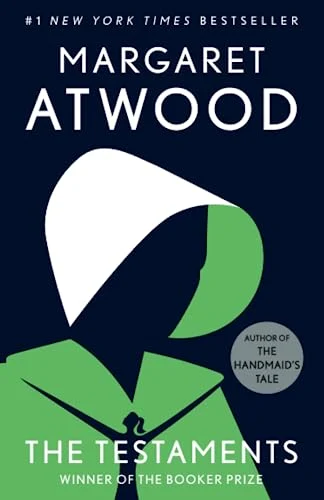
Aunt Lydia, a central character and former judge, embodies both the oppressor and the oppressed. As a high-ranking Aunt, she wields significant power within Gilead and is complicit in the system. However, through her testimonies, we learn about her cunning and survival tactics, illustrating how even those trapped within oppressive systems can find ways to exert their agency.
Female Solidarity and Resistance
Throughout the novel, the importance of female solidarity and resistance shines through. Aunt Lydia's character exemplifies how women can navigate oppressive environments and covertly undermine the system from within. Despite being an enforcer of Gilead's rules, she secretly helps Mayday, an underground resistance group, by feeding them information and sabotaging Gilead's plans.Daisy, also known as Offred's daughter Nicole, serves as a symbol of hope and resilience. Growing up in Canada, she becomes a member of Mayday and participates in a mission to rescue women from Gilead. Her bravery and determination show the power of resistance against an overwhelmingly oppressive regime.
Identity and Self-Discovery:
The theme of identity and self-discovery is prominent in the novel, particularly through the characters of Daisy and Agnes. Daisy, who grew up in Canada as a seemingly ordinary teenager, discovers her true identity as the daughter of Offred and is thrust into a world she never knew existed. Her journey of self-discovery involves coming to terms with her heritage, her mother's story, and her role in dismantling Gilead.Agnes, on the other hand, is raised within Gilead as a devout believer. As the daughter of a high-ranking Commander and a Handmaid, she is meant to uphold Gilead's values. However, as she learns more about her mother's past and witnesses the brutality of the regime, she begins to question the teachings of Gilead and seeks her own path to freedom.
The Power of Storytelling:
"The Testaments" emphasizes the significance of storytelling as a means of preserving history and challenging oppressive regimes. Aunt Lydia's secret writings are a form of resistance, revealing the truth about Gilead's inner workings and its corrupt leaders. Her testimonies serve as a powerful record of the past, potentially aiding future generations in avoiding similar atrocities.Daisy's experience of discovering her mother's story through Aunt Lydia's testimonies also showcases the power of storytelling in connecting people and passing on important knowledge. It highlights how sharing stories can bridge gaps between generations and cultures, fostering empathy and understanding.
Morality and Ethics:
Throughout the novel, characters are confronted with moral dilemmas and must make difficult choices in a morally ambiguous world. Aunt Lydia's actions exemplify this theme as she navigates a delicate balance between self-preservation and acting against her own beliefs. She collaborates with the oppressive regime to survive and maintain her status, while secretly undermining it through her subversive actions.Agnes faces moral quandaries as she becomes aware of the suffering and injustice surrounding her. She must decide whether to uphold the beliefs she was indoctrinated with or to challenge the system in search of a more just and compassionate world.
The Impact of Patriarchy:
"The Testaments" offers a searing critique of patriarchal systems and their impact on individuals and society as a whole. Gilead's patriarchal society relegates women to predefined roles and denies them agency over their bodies and lives. The Commanders and other powerful men enforce control over women, further solidifying their positions of power.The Aunts, like Aunt Lydia, serve as enforcers of patriarchal norms and play a crucial role in perpetuating the oppression of other women. They collaborate with the regime to maintain their status, illustrating how some women may align themselves with patriarchal structures to gain a semblance of power in such societies.
Manipulation and Propaganda:
In Gilead, propaganda and misinformation are used to manipulate and control the population, keeping them subservient to the regime. The Aunts, particularly Aunt Lydia, play a crucial role in disseminating propaganda, crafting stories that demonize the "old world" and glorify Gilead's oppressive rule.Throughout the novel, we see the power of information and how controlling narratives can shape public perception. Daisy's involvement with Mayday and her mission to rescue people from Gilead underscores the importance of challenging propaganda and seeking the truth.
In conclusion, "The Testaments" masterfully weaves together these themes, presenting a gripping and incisive exploration of power, oppression, resilience, and the complexities of human nature. Through the characters' experiences and decisions, Margaret Atwood delivers a powerful commentary on contemporary society and the dangers of authoritarianism, while also offering glimpses of hope and the strength of the human spirit.
In Margaret Atwood's gripping and thought-provoking novel, "The Testaments," she delves into a dystopian world where oppressi...
Read Article →_poster.jpg)


