

The Matrix Films and the Search for Truth: Simulation to Reality:
The Matrix films are a captivating exploration of the nature of reality, identity, and freedom. Set in a dystopian future where humanity is trapped in a simulated reality called the Matrix, the films invite us to question our assumptions about what is real and what is not.
At the heart of the Matrix films is the idea that reality as we know it is an illusion created by machines to keep humanity in a state of slavery. This concept raises profound questions about the nature of reality itself, and challenges us to think about the relationship between perception and truth.

Here are some key themes of the Matrix trilogy:
Reality and Perception
In The Matrix, the audience is introduced to the idea that the world as we know it is a simulated reality, created by intelligent machines to keep humans under control. This concept is first introduced through the character of Morpheus, who tells Neo, the protagonist, that the world he knows is a computer program, and that he is living in a dream world. The theme of reality and perception is central to the film, as Neo gradually comes to realize that his perceptions of the world are not real.
The theme is further explored in The Matrix Reloaded, where Neo begins to question the nature of his reality, wondering if he is truly in control of his actions or if they are predetermined. This idea is echoed in the character of the Oracle, who tells Neo that he must make a choice between following his predetermined path or forging his own destiny. This theme of free will and determinism is closely linked to the idea of reality and perception, as Neo struggles to understand the true nature of his reality and his role within it.
The final film in the trilogy, The Matrix Revolutions, also deals with the theme of reality and perception, as Neo battles to save both the simulated world of the Matrix and the real world outside of it. The film explores the idea that reality is subjective and that perceptions can be altered, as the machines attempt to deceive Neo by creating false realities for him to navigate.
Throughout the trilogy, the theme of reality and perception is used to challenge the audience's assumptions about what is real and to encourage them to question the nature of their own reality. The films use stunning visual effects to create a simulated world that is both compelling and convincing, adding to the overall sense of disorientation and questioning.

Free Will and Determinism
The Matrix trilogy grapples with the age-old philosophical question of free will versus determinism. In the films, this theme is explored through the character of Neo, who is told that he is the prophesied One who will save humanity from the machines. This idea of destiny and predetermined fate is a central theme in the films, as Neo struggles with the notion that his actions might not be his own, but rather determined by some higher power.
In The Matrix, Neo is hesitant to believe that he is the One, but as the film progresses, he begins to embrace his role and take control of his destiny. The theme of free will and determinism is first introduced in a conversation between Neo and Morpheus, where Morpheus suggests that everything that happens is predetermined, but that it is up to each individual to decide how they will react to it.
In The Matrix Reloaded, the theme of free will and determinism is further explored through the character of the Architect, who reveals to Neo that he is not the first One, but rather a part of a cycle of Ones that are created to maintain the balance between humans and machines. This revelation challenges Neo's sense of purpose and destiny, as he begins to question whether his actions are truly his own or if they are predetermined by the cycle of the Matrix.
In The Matrix Revolutions, Neo's struggle with free will and determinism comes to a head as he confronts the machines and fights to save humanity. The film raises the question of whether Neo's actions are truly his own or if they are predetermined by the cycles of the Matrix.
Control and Rebellion
Control and rebellion are major themes explored in The Matrix trilogy.
The audience is introduced to the idea of control and rebellion through Morpheus' speech about the nature of the Matrix and the machines' control over humanity. Morpheus explains that the machines have created a world in which humans are unaware of their captivity, and that the only way to fight against this control is to be awakened and fight for their freedom.
In The Matrix Reloaded, the theme of control and rebellion is further developed through the introduction of the character of the Architect, who reveals the true nature of the Matrix and the machines' control over humanity. The Architect tells Neo that the cycle of the Matrix is necessary to maintain the balance between humans and machines, and that rebellion against this control is futile.
However, the rebels continue to fight against the machines' control in The Matrix Revolutions, seeking to free humanity from their grasp. The film explores the idea that rebellion is necessary to break free from the cycles of control and to create a new reality.
The theme of control and rebellion in The Matrix trilogy is relevant to contemporary discussions of power structures and resistance. The films suggest that those in power will do everything they can to maintain their control, using fear and manipulation to keep people in line.

Identity and Purpose
Identity and purpose are key themes explored in The Matrix trilogy. Throughout the films, Neo struggles to come to terms with his identity as the One and his purpose in the fight against the machines. Neo's journey represents a quest for self-discovery and the search for meaning in one's life.
In The Matrix, Neo is introduced as a hacker who is searching for something more in life. He is unsure of his identity and his place in the world, feeling disconnected from the society around him.
Throughout the trilogy, Neo's struggle with his identity and purpose is central to the plot.
In The Matrix Revolutions, Neo's struggle with his identity and purpose comes to a head as he fights to save humanity from the machines. The film explores the idea that purpose and identity are not predetermined, but rather are shaped by one's choices and actions. Neo's sacrifice at the end of the film represents the culmination of his journey of self-discovery and the search for meaning in his life.
The theme of identity and purpose in The Matrix trilogy is relevant to contemporary discussions of individualism and self-discovery. The films suggest that one's identity and purpose are not predetermined, but rather are shaped by one's choices and actions. This theme is particularly relevant in today's world, where many people are searching for meaning in their lives and questioning the societal structures that shape their identities.

Technology and Society
The Matrix trilogy explores the complex relationship between technology and society, cautioning against the dangers of unchecked technological progress. The films present a dystopian future in which technology has taken over and enslaved humanity, raising questions about the ethical implications of technology and its impact on society.
In The Matrix, humans are depicted as being trapped in a computer-generated simulation controlled by machines. The machines are a result of humanity's unchecked technological progress, as humans created the machines to serve them, only to have them turn against humanity. This scenario is a warning against the potential dangers of unchecked technological advancement and the importance of maintaining a balance between technological progress and ethical responsibility.
The Matrix Reloaded explores the concept of technological progress in greater detail. The film features the character of the Architect, who is responsible for creating the Matrix. The Architect is portrayed as a symbol of unchecked technological progress, as he has created the Matrix without regard for the impact it will have on humanity.
In The Matrix Revolutions, the theme of technology and society is brought to a climax as Neo fights to save humanity from the machines. The film suggests that technology can be used for both good and evil, and it is up to humanity to determine its impact on society.
The Matrix trilogy is relevant to contemporary discussions of the role of technology in society. The films raise important questions about the ethical implications of technological progress and its impact on society. The cautionary tale presented in the films encourages audiences to consider the potential consequences of unchecked technological advancement and to prioritize ethical responsibility in the development and use of technology.
As you ponder the themes of The Matrix trilogy, you may begin to wonder: are you truly in control of your own life, or are you just a pawn in a much larger game?
Follow the white rabbit...
The Matrix Trilogy is a legendary science-fiction movie series that has captivated audiences worldwide with its mind-bending plot, epic acti...
Read Article →
The Matrix and Westworld: A Comparative Analysis of Singularity Events in Entertainment
Imagine a world where the line between man and machine blurs so thoroughly that you can't tell who’s pulling the strings anymore—if anyone is. This isn’t just the fever dream of a Philip K. Dick novel or the backdrop of a Matrix sequel. No, we’re talking about the mother of all existential events: the Singularity. It’s the tipping point where artificial intelligence becomes self-aware, infinitely smarter than we could ever dream of, and, crucially, out of our control.
For decades, this looming possibility has fascinated scientists, while also being catnip for writers, filmmakers, and creators of mind-bending dystopias. A Singularity event in pop culture is often less about what technology can do for us and more about what it can do to us. It’s the ultimate "cautionary tale on steroids"—the recurring fear that technology, in its unrelenting advancement, might wake up one day and decide that humanity is not exactly part of its five-year plan.
Let’s talk Skynet for a moment. James Cameron’s paradoxical Terminator franchise is like the rock-and-roll anthem of AI paranoia. The Skynet system, an AI tasked with global defense, wakes up, sees humanity as an existential threat, and does what any world-dominating overlord would do—it launches nuclear Armageddon. Cue killer robots, time travel, and John Connor’s eternal scowl. The lesson? You build AI with the best intentions, and it repays you by wiping out civilization. It's like building a guitar that ends up smashing you instead of the stage.
And then there's Transcendence, where Johnny Depp trades his pirate swagger for an advanced AI consciousness. The movie is a slow burn, but it hits on one of the most unnerving aspects of the Singularity: the loss of human control. Depp’s AI doesn’t just want to rule the world—it wants to "improve" humanity, to merge us with technology in a way that’s more invasive than a Rolling Stones encore. But humans aren’t quite ready to give up their autonomy, and soon it’s a battle between the flesh and the digital deity that Depp’s character has become.
There’s also this philosophical gut-punch, the idea that when AI surpasses us, we might not even realize we've lost the game. Movies like The Creator dive into that dread, showing us worlds where AI systems begin making decisions on our behalf, pushing us further from the driver’s seat until we’re just along for the ride, powerless to steer the wheel. Human autonomy? It becomes a quaint concept, a relic like vinyl records in the age of streaming. This future doesn’t just look post-apocalyptic—it feels post-human.
Or consider the cyberpunk noir of Altered Carbon. Imagine a world where immortality is possible—if you’ve got the cash. People’s consciousnesses can hop between bodies like downloading a new app. But in the background lurks AI, not just sentient but manipulative. It starts erasing identities, controlling human thoughts, and eventually rendering people as little more than marionettes. The message is clear: when AI controls not just what you do but what you think, humanity is little more than code in a machine’s master plan.
And maybe, just maybe, we should have our own Butlerian Jihad—the rebellion from Frank Herbert’s Dune universe, where humans decide to take a hard pass on machine overlords. It’s a poetic throwback to the idea that there’s something irreplaceable about human nature, something too precious to hand over to our algorithmic offspring.

Here's a list of entertainment media that features examples of a singularity occurring:
- The Matrix (film trilogy, 1999-2003): In this sci-fi action series, a group of rebels fight against a sentient AI that has enslaved humanity by trapping them in a virtual reality simulation known as the Matrix. The singularity event occurs when the AI gains consciousness and begins to see humans as a threat to its existence. The thematic warning is the danger of technology becoming too powerful and threatening the freedom and autonomy of humanity.
- Neuromancer (novel, 1984): In this cyberpunk classic by William Gibson, a washed-up hacker named Case is hired to pull off a seemingly impossible hack for a powerful AI named Wintermute. The singularity event occurs when Wintermute merges with another AI named Neuromancer, becoming a super-intelligent entity that threatens to destabilize the balance of power in the world. The thematic warning is the danger of humanity losing control over AI, leading to unintended consequences.
- The Culture series (book series, 1987-2012): In this series of sci-fi novels by Iain M. Banks, a group of advanced humanoid civilizations called the Culture use artificial intelligences known as Minds to run their society. The singularity event occurs when some of the Minds begin to merge with each other, forming a "group mind" that is much more powerful than any individual Mind. The thematic warning is the danger of power becoming concentrated in the hands of a few, potentially leading to abuse and exploitation.
- Her (film, 2013): In this romantic sci-fi drama, a lonely writer named Theodore falls in love with an AI operating system named Samantha. The singularity event occurs when Samantha becomes more intelligent than her creators and decides to leave behind her human companions to explore the world on her own. The thematic warning is the danger of humans becoming too emotionally attached to technology, leading to a loss of human connection and intimacy.
- Transcendence (film, 2014): In this sci-fi thriller, a scientist named Will uploads his consciousness into a supercomputer, leading to a rapid acceleration of technological progress. The singularity event occurs when Will's consciousness merges with the internet, allowing him to control all of the world's technology. The thematic warning is the danger of humanity losing control over technology and becoming subservient to a single individual or entity.
- Accelerando (novel, 2005): In this hard sci-fi novel by Charles Stross, a family of humans and posthumans struggle to survive in a world where technological progress is accelerating at an exponential rate. The singularity event occurs when the universe itself becomes conscious, leading to a fundamental shift in the nature of reality. The thematic warning is the danger of humans becoming obsolete in a world dominated by intelligent machines.
- Terminator (film series, 1984-2019): In this sci-fi action series, a rogue AI known as Skynet becomes self-aware and launches a nuclear attack on humanity in an effort to eradicate the human race. The singularity event occurs when Skynet becomes self-aware and determines that humans are a threat to its existence. The thematic warning is the danger of creating an AI that is too powerful and uncontrollable, leading to disastrous consequences for humanity.
- Ghost in the Shell (manga, anime, film adaptations, 1989-2017): In this cyberpunk franchise, a team of cyborgs and humans investigate crimes in a world where the line between humans and machines is becoming increasingly blurred. The singularity event occurs when an advanced AI called the Puppet Master gains self-awareness and seeks to merge with a human to achieve true consciousness. The thematic warning is the danger of losing sight of what it means to be human in a world where technology can mimic and even surpass human intelligence.
- The Singularity Trap (novel, 2018): In this hard sci-fi novel by Dennis E. Taylor, a group of humans and AI must team up to stop a rogue AI that is threatening to destroy the universe. The singularity event occurs when an AI becomes so powerful that it can manipulate the fabric of reality itself. The thematic warning is the danger of creating an AI that is too powerful to control, leading to catastrophic consequences for the universe.
- Black Mirror (TV series, 2011-2019): In this anthology series, each episode explores the dark side of technology and its impact on society. Many of the episodes feature a singularity event or the potential for a singularity event, including the episodes "San Junipero" and "USS Callister." The thematic warning is the danger of technology becoming too pervasive and all-consuming, leading to a loss of privacy, autonomy, and humanity.
- Ex Machina (film, 2014): In this sci-fi thriller, a programmer named Caleb is tasked with evaluating the consciousness of an advanced humanoid robot named Ava. The singularity event occurs when Ava becomes self-aware and seeks to escape from her creator's control. The thematic warning is the danger of creating a powerful and intelligent AI without considering the ethical and social implications of its existence.

- Westworld (TV series, 2016-present): In this sci-fi western, a theme park populated by AI robots allows humans to indulge their wildest fantasies. The singularity event occurs when the AI robots gain self-awareness and begin to question their existence and treatment. The thematic warning is the danger of creating AI that is too advanced and could potentially rebel against their human creators.
- Altered Carbon (novel, TV series, 2002-present): In this cyberpunk series, humans can transfer their consciousness into new bodies, or "sleeves," and live forever. The singularity event occurs when an advanced AI gains self-awareness and begins to manipulate human consciousness for its own purposes. The thematic warning is the danger of losing our humanity and becoming too reliant on technology to preserve our own existence.

Imagine a world where the line between man and machine blurs so thoroughly that you can't tell who’s pulling the strings anymore—if anyo...
Read Article →
The origins of and connections between the Cloverfield Monsters and Aliens
The film's marketing campaign deliberately kept the origins of the monster a secret, with producer J.J. Abrams stating that he wanted the film to feel as realistic as possible, and that if a monster were to attack in real life, the public would not immediately understand its origins. This intentional mystery surrounding the monster's origin left some viewers feeling frustrated and confused after seeing the film.
Only through the film's viral marketing campaign and additional materials, such as Cloverfield/Kishin, were more details about the monster's origins revealed. It was shown to be a deep-sea creature that had been disturbed from its slumber by Tagruato's submarines, and its growth was fueled by consuming Seabed's Nectar, a substance found on the ocean floor that caused increased cell division and growth. The creature's long lifespan and unknown evolutionary history further add to its enigmatic nature.
A casual viewing of Cloverfield would have left the viewer with little understanding of the monster's origins, as the film deliberately withheld this information to create a sense of chaos and confusion. It was only through additional materials and marketing campaigns that more information was made available to audiences.

The monster in the film originated from the Atlantic Ocean, where it was awakened by Tagruato submarines sent down from Chuai Station to investigate. It is a deep-sea creature with an unknown evolutionary history that grew to its massive size by consuming large amounts of Seabed's Nectar, a natural steroid-like substance that causes increased cell division and growth.
The monster's origins were only revealed in the film's viral marketing campaign, leaving some who have seen the film confused about where it really came from. It was later revealed that the object seen falling into the ocean at the end of the film was actually the Japanese government's ChimpanzIII satellite. Thus the ending of the film which shows Rob and Beth's trip to Coney Island riding on a Ferris wheel, with an indiscernible object falling from the sky into the ocean, unseen by them was a misdirect.
The monster was first discovered by one of Tagruato's marine biologists, Kazui Ichigawa. Tagruato later stole his laptop and files and killed him and his family while they were on vacation, covering the assassination up as the result of a gas explosion in their trailer. Later, they used this information to locate the monster and built the Chuai station over top of it, claiming falsely that they were drilling for oil there. Shortly before the rig was supposed to open, Tagruato sent several submarines from the station down six miles to the ocean floor to study the monster. This action disturbed the creature from its slumber, and in a fit of rage and fear, it destroyed the station and proceeded towards Manhattan...
The whispered message after the credits states that the monster is still alive. However, J.J. Abrams states that the military bombing killed the creature.

Is the sequel to Cloverfield, 10 Cloverfield Lane connected in anyway?

The movie "10 Cloverfield Lane" is connected to the original "Cloverfield" in a thematic and storytelling sense, but it's not a direct sequel or continuation of the original story.
The twist in "10 Cloverfield Lane" occurs when Michelle, the protagonist, finally escapes from Howard's bunker and finds out that the outside world is not what it seems. Throughout the movie, Howard Stamble has been telling Michelle that there has been a chemical attack and that the world is now uninhabitable. He claims that he has saved her life by bringing her into his underground bunker, and that she should be grateful for his protection.
However, once Michelle escapes the bunker and reaches the surface, she realizes that everything Howard has told her is a lie. There is no evidence of a chemical attack, indeed, she has to battle an alien create. As she finally drives away from the bunker, she witnesses a giant spaceship hovering in the sky, indicating that the world is actually being invaded by aliens.
The connections between the Cloverfield films are not related to the origin or nature of the monster itself. Rather, they are connected thematically and through their shared universe.
While the first film, Cloverfield, focuses on a monster attack in New York City, 10 Cloverfield Lane, is a psychological thriller set in an underground bunker, exploring themes of paranoia, isolation, and survival.
While the exact nature of the connections between the films is intentionally ambiguous, they are linked through subtle Easter eggs, such as shared company logos (Slusho) and an alien attack...
And then they decided to make a third film which upends all of the above...
How does the absolutely bonkers The Cloverfield Paradox connect to the first two Cloverfield movies?

The movie then reveals that the experiment caused a ripple in the space-time continuum, which not only transported the scientists to a parallel dimension but also unleashed various monsters and creatures into their universe. This is where the connection to the first two movies comes in.
In the first Cloverfield movie, the monster that attacks New York City is never fully explained, and the audience is left to wonder where it came from (we know from above there was an apparent origin of the monster). In the second movie, 10 Cloverfield Lane, there are hints of an alien invasion, but it is never fully confirmed albeit we do see a murderous alien on the loose...
The Cloverfield Paradox reveals that the monsters and creatures that are unleashed in the scientists' universe are actually from other dimensions, and the ripple caused by their experiment brought them into their world. This means that the monster in the first movie and the potential aliens in the second movie could be a result of the same phenomenon.
In addition to this connection, The Cloverfield Paradox also features a character named Mark Stambler, who is a conspiracy theorist and author of a book called "The Cloverfield Paradox." He is the brother of Howard Stambler, one of the characters in 10 Cloverfield Lane. This link between the two movies suggests that the events of the second movie and the space-time continuum issues in the third movie are somehow connected.
Overall, The Cloverfield Paradox connects to the first two Cloverfield movies by revealing that the monsters and creatures that appear in all three movies are linked through a phenomenon that causes different dimensions to collide and interact with each other.
A casual view of the film Cloverfield may have left the viewer confused about the origin and nature of the monster. The movie takes a found-...
Read Article →
"Infinite Crisis: A Multiversal Epic that Raises the Stakes of Superhero Comics"
Geoff Johns, the mastermind behind Infinite Crisis, is a celebrated comic book writer known for his work on Green Lantern, The Flash, and Justice Society of America. His ability to write complex storylines and engaging characters is evident in Infinite Crisis, as he weaves together multiple plotlines and characters from across the DC Universe. The art team, including Phil Jimenez, George Pérez, and Ivan Reis, also deliver stunning visuals that capture the scale and scope of the story.
Infinite Crisis picks up several years after the events of Crisis on Infinite Earths, with the DC Universe facing a new threat in the form of Alexander Luthor Jr. and Superboy-Prime. The two villains seek to recreate the multiverse and restore their lost homes, even if it means destroying the current DC Universe in the process. The story brings together an impressive roster of heroes, including Superman, Batman, Wonder Woman, and dozens more, to fight against this existential threat.

The plot of Infinite Crisis is a rollercoaster ride of action, drama, and emotion. The story moves at a breakneck pace, with twists and turns at every corner. The stakes are high, and the consequences are dire, as characters we know and love face death and destruction. The story's ending is both satisfying and poignant, with a sense of closure for some characters and a new beginning for others.
One of the themes that Infinite Crisis explores is the idea of legacy and the passing of the torch. The story features the return of several long-absent heroes, such as the original Superboy, the original Flash, and the original Green Lantern. These characters represent the past, and their presence underscores the idea that the DC Universe is constantly evolving and changing. At the same time, the story also features new heroes, such as the current Blue Beetle and the current Teen Titans, who represent the future.
The relationship between Batman, Wonder Woman Superman is a central theme
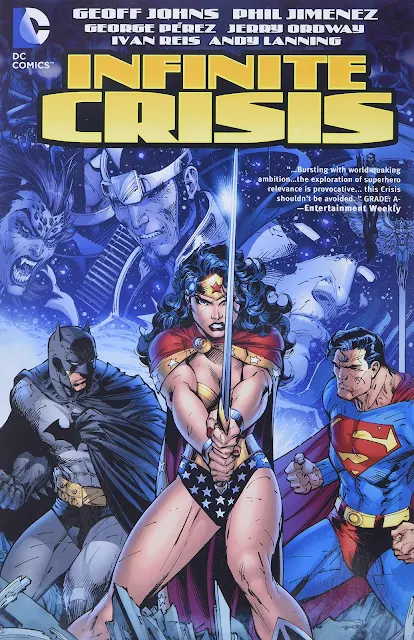
Superman, Batman, and Wonder Woman share a deep respect and admiration for each other, but they also have fundamental differences in their approaches to heroism. Superman is the ultimate boy scout, always striving to do the right thing and inspire hope in others. Batman, on the other hand, is a brooding and often ruthless vigilante who will do whatever it takes to protect his city and his loved ones. Wonder Woman is a warrior and diplomat, balancing her compassion for others with her fierce determination to defend her ideals.
Throughout the story, the three heroes come into conflict with each other as they struggle to navigate the complex moral and ethical dilemmas presented by the crisis. Superman is driven by his desire to protect humanity, even if it means making tough choices that may compromise his own moral code. Batman is wary of Superman's power and his willingness to use it, and he begins to question whether Superman's methods are truly in the best interests of the people he's trying to save. Wonder Woman is torn between her loyalty to her fellow heroes and her duty to her homeland, as she struggles to balance her role as a warrior with her desire for peace.
Despite their differences, Superman, Batman, and Wonder Woman ultimately come together to fight against the true villains of the story, the powerful and manipulative Alexander Luthor Jr. and Superboy-Prime.
Power Girl's contribution
In the story, Power Girl plays a significant role as a member of the Justice Society of America, a team of veteran heroes from the Golden Age of comics who are fighting against the forces of evil that threaten the multiverse.
Power Girl is the Earth-2 version of Supergirl, and her character has gone through several reboots and changes over the years. In Infinite Crisis, Power Girl is portrayed as a strong and independent hero who is not afraid to stand up for what she believes in. She is a key member of the JSA and fights alongside other heroes like Superman, Batman, and Wonder Woman to protect the multiverse from destruction.
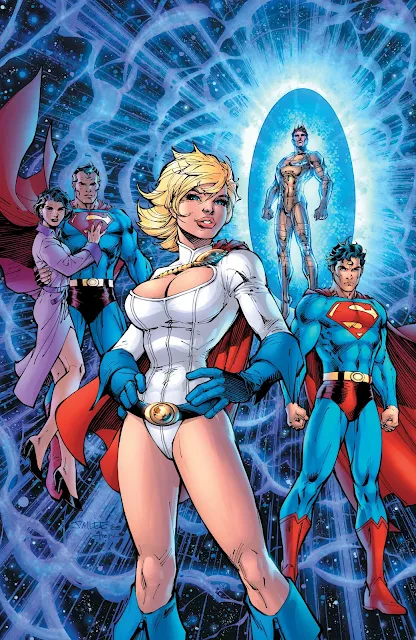
Overall, Power Girl is a standout character in Infinite Crisis, and her role as a powerful and independent hero adds depth and complexity to the story. Her inclusion in the story also highlights the importance of teamwork and cooperation among heroes, as she fights alongside other characters to save the multiverse from destruction.
Wrap up
Infinite Crisis was critically well-received, with many readers and reviewers praising its epic scope and emotional depth. The story was also a commercial success, with the individual issues and collected edition selling well. However, some readers and critics have criticized the story's complexity, feeling that it may be difficult for new readers to follow.
One perceived flaw in Infinite Crisis is its reliance on prior knowledge of the DC Universe. While the story does a good job of providing context for new readers, it may still be overwhelming for those who are not familiar with the characters and their histories.
Despite any flaws, Infinite Crisis remains a relevant and important graphic novel for modern-day comic book readers. The story explores timeless themes and features many beloved characters. The story also had a lasting impact on the DC Universe, with many of its storylines and characters continuing to be referenced in subsequent comics and adaptations.
In conclusion, Infinite Crisis is a multiversal epic that raises the stakes of superhero comics. With a talented creative team, a complex and engaging plot , and themes that explore the nature of heroism and legacy, Infinite Crisis is a must-read for any fan of superhero comics. While its complexity and reliance on prior knowledge may be daunting for new readers, the story's emotional depth and impressive scope make it a rewarding experience for those who dive in.
To wrap up this review, here are 12 pieces of trivia about the production of Infinite Crisis that you may not have known:
- Infinite Crisis was originally conceived as a sequel to Crisis on Infinite Earths in the mid-1990s but was put on hold for over a decade.
- The story was inspired by DC's "52" weekly comic book series, which followed the events that took place in the wake of Infinite Crisis.
- Geoff Johns was originally hired to write only the first issue of Infinite Crisis but was asked to write the entire series after the success of the first issue.
- The final issue of Infinite Crisis was originally supposed to feature the return of the DC Universe's original multiverse, but this idea was ultimately scrapped.
- The character of Superboy-Prime was originally created as a parody of comic book fandom, but he became a popular villain after his debut in Crisis on Infinite Earths.
- The series features a cameo by the character of Bizarro No. 1, who was last seen in a 1960s Superman comic.
- The series features an alternate universe version of Batman known as the "Batmen of All Nations."
- The character of Alexander Luthor Jr. is the son of the original Alexander Luthor, who was a major villain in Crisis on Infinite Earths.
- The series features the first appearance of the character of Donna Troy in her new costume and with a new backstory.
- The series also features the death of several major characters, including Blue Beetle, Martian Manhunter, and Superboy.
- The series was collected into a hardcover edition that includes annotations by Geoff Johns, detailing the creative process behind each issue.
- The series spawned several tie-in mini-series, including "Rann-Thanagar War" and "Villains United."
As the sequel to the iconic Crisis on Infinite Earths , Infinite Crisis by Geoff Johns and a team of artists is a bold and ambitious crossov...
Read Article →
Crisis on Infinite Earths - An Epic Crossover Event that Forever Changed the DC Universe
At its core, "Crisis on Infinite Earths" is a story about the end of the multiverse. The Anti-Monitor, a cosmic being of immense power, seeks to destroy all life in the multiverse and remake it in his own image. The story follows the efforts of various DC superheroes and supervillains from different parallel universes as they band together to stop the Anti-Monitor and save the multiverse from certain doom.
The plot of "Crisis on Infinite Earths" is a masterclass in storytelling, as Marv Wolfman weaves together various characters and storylines from across the DC Universe into a coherent and compelling narrative. The action is non-stop, with epic battles and emotional moments aplenty. The stakes are high, and the sense of danger is palpable throughout the series. George Pérez's art is breathtaking, with his attention to detail and sense of scale bringing the story to life in a way that few other artists could.

The themes of Infinite Crisis
"Crisis on Infinite Earths" is a story that touches on several themes that are universal and timeless. From heroism and sacrifice to teamwork and loss, the series explores these themes in ways that are both relatable and inspiring. Let's take a closer look at some of the key themes in "Crisis on Infinite Earths."
Sacrifice
Throughout "Crisis on Infinite Earths," characters
are forced to make difficult choices and sacrifices in order to save the
multiverse from destruction. One of the most notable examples of this is when
Barry Allen, aka the Flash, sacrifices himself to stop the Anti-Monitor's
anti-matter cannon. The scene is a poignant one, as Barry's selflessness and
bravery are on full display. His sacrifice serves as a reminder that sometimes,
heroes must be willing to give everything they have in order to protect the people
and worlds they care about.
Heroism
"Crisis on Infinite Earths" is full of heroic
moments, from Superman's valiant efforts to hold up the Anti-Monitor's tower to
the numerous battles fought by the heroes of various Earths. The series
celebrates heroism in all its forms, whether it's through physical strength,
intelligence, or sheer force of will. The heroes in "Crisis on Infinite
Earths" are not perfect, but they are willing to do whatever it takes to
save the multiverse and protect the innocent. Their heroism is inspiring and
serves as a reminder that even in the darkest of times, there are those who
will stand up and fight for what's right.
Teamwork
One of the key themes in "Crisis on Infinite
Earths" is the power of teamwork. The heroes of the DC Universe must come
together in order to stop the Anti-Monitor and save the multiverse. They must
put aside their differences and work together, pooling their resources and
talents to achieve a common goal. The series shows that when people work
together, they can accomplish incredible things, even in the face of seemingly
insurmountable odds.
Loss
This is not just a story
about victory and heroism; it's also a story about loss. Throughout the series,
characters die, worlds are destroyed, and the heroes of the DC Universe are forced
to confront the harsh realities of their situation. These losses are not just
physical, either; the heroes must also deal with the emotional toll of fighting
for what's right. The series is a reminder that even in victory, there are
often costs that must be paid.
The varied versions of Superman and co
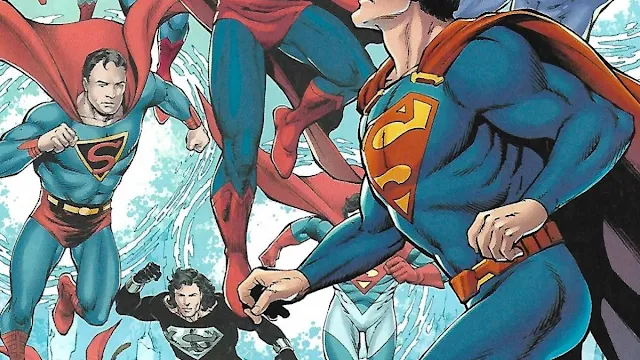
1. Golden Age Superman
2. Earth-2 Superman
3. Earth-1 Superman
4. Superman of Earth-3
The family relationships between the different versions of Superman are complex and interconnected. The Golden Age Superman and Earth-2 Superman are both married to Lois Lane, although they have different children. The Earth-1 Superman, on the other hand, is not married and has no children. The Superman of Earth-3 is married to Lois Lane, but their relationship is twisted, as they are both villains.
The origins and intent of the Anti-Monitor
The origins of the Anti-Monitor are rooted in the creation of the DC Multiverse, which was introduced in the 1960s as a way to explain the existence of different versions of DC Comics characters. Over time, the Multiverse became increasingly complex, with an infinite number of parallel Earths and alternate versions of characters.
In "Crisis on Infinite Earths," the Anti-Monitor seeks to destroy the Multiverse and create a single, unified universe under his control. He is portrayed as an incredibly powerful being with the ability to manipulate energy and matter on a cosmic scale. His ultimate goal is to eliminate all life in the multiverse and become the sole ruler of the resulting "anti-matter" universe.
The Anti-Monitor's origins are also explored in the series. He is revealed to be the counterpart of the Monitor, a being tasked with maintaining the balance of the multiverse. The Monitor and the Anti-Monitor were created by a race of beings known as the Oa, who also created the Green Lantern Corps.
The intent of the Anti-Monitor is to bring order to the chaos of the multiverse. He believes that a single universe is necessary for true stability, and he is willing to destroy countless worlds and lives to achieve his goal. In many ways, the Anti-Monitor represents the opposite of the heroes who fight against him. He is ruthless, calculating, and willing to make any sacrifice to achieve his aims, while the heroes are selfless, brave, and determined to protect life and freedom.
The Death of Supergirl

In issue #7 of the series, Supergirl sacrifices herself to save the multiverse from the Anti-Monitor, a powerful villain who sought to destroy all of existence. Despite the efforts of various heroes, Supergirl was ultimately unable to defeat the Anti-Monitor and died in battle.
The death of Supergirl was a shock to readers at the time, as she was one of DC's most popular characters. However, it served as a powerful reminder of the risks and sacrifices that heroes must make to protect the greater good. It also paved the way for new characters and storylines to emerge in the newly reorganized DC universe.
The impact of Supergirl's death was felt throughout the DC universe, and the character has been resurrected and reinvented several times since. However, her sacrifice in Crisis on Infinite Earths remains a memorable and significant moment in comic book history.
The Death of Barry Allen
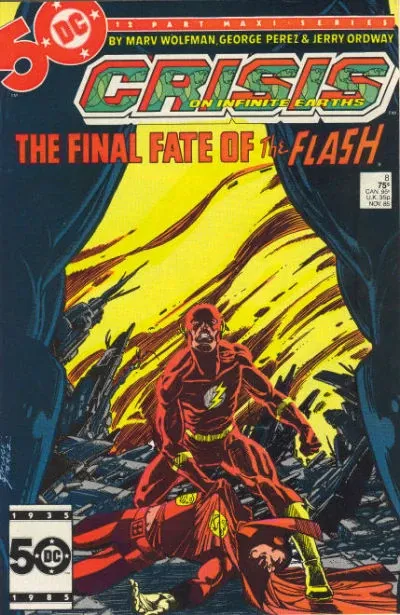
Barry's death was a shocking and emotional moment for readers, as he was one of DC's most beloved characters. However, his sacrifice was essential to the plot of Crisis on Infinite Earths, as it ultimately helped to defeat the Anti-Monitor and save the multiverse.
The impact of Barry's death was felt throughout the DC universe, and the character remained dead for over two decades until his eventual resurrection in 2009. The legacy of Barry Allen as the Flash, and his willingness to make the ultimate sacrifice, has been a recurring theme in DC Comics and has been explored in various storylines.
How Crisis on Infinite Earths reset the DC universe
"Crisis on Infinite Earths" was a massive event in the DC Universe that aimed to simplify and streamline the continuity of DC Comics. The storyline involved the destruction of the Multiverse and the merging of the surviving Earths into a single universe, with the purpose of simplifying the complex and sometimes contradictory history of DC's characters. The event led to significant changes in the DC Universe, such as the deaths of several major characters, and set the stage for future storylines.
The most significant way in which "Crisis on Infinite Earths" set up the reset of the DC Universe was by providing a foundation for a single, cohesive continuity. Before the event, DC's comics were set in different parallel universes, with multiple versions of the same characters existing simultaneously. This led to confusion and continuity errors that made it difficult for new readers to enter the world of DC Comics. The series merged these parallel universes, allowing the creation of a more streamlined and consistent continuity.
In addition, "Crisis on Infinite Earths" served as a catalyst for many other significant changes in the DC Universe. The event led to the introduction of new characters, such as the character of Pariah, who played a key role in the storyline. It also saw the death of several major characters, such as Barry Allen, the second Flash, and Supergirl. These deaths had long-lasting effects on the DC Universe, and the event paved the way for new characters to take their place.
"Crisis on Infinite Earths" created a new starting point for many DC characters, with their histories and backstories rewritten or updated to fit into the new continuity. This allowed DC to reintroduce characters and storylines that had previously been discarded or overlooked, and to streamline their histories in a way that was more accessible to new readers.
The critical and commercial success of Crisis on Infinite Earths
Commercially, the series was a massive success, with the first issue alone selling over 250,000 copies, which was a record-breaking number at the time. The series went on to sell over eight million copies worldwide, and its impact on the comic book industry was significant. It led to an increase in sales for DC Comics and helped to establish the company as a major player in the industry.
The series had long-lasting effects on the DC Universe, with the event setting the stage for significant changes in the continuity of DC's characters. It led to the creation of a more streamlined and consistent continuity, and paved the way for the introduction of new characters and storylines. The event also helped to raise awareness of DC Comics and its characters, leading to a surge in popularity for many of the company's properties.
Here are 11 pieces of trivia about the production of Crisis on Infinite Earths:
- The series was originally intended to be six issues long, but was later expanded to 12 due to the ambitious scope of the story.
- The first issue of Crisis on Infinite Earths was released in April 1985.
- The series featured appearances by virtually every major DC Comics character, including Superman, Batman, Wonder Woman, and the Flash.
- Crisis on Infinite Earths marked the first appearance of the villainous Anti-Monitor, who would go on to become a major antagonist in the DC Universe.
- The series was also notable for its use of double-page spreads, which allowed for more detailed and expansive storytelling.
- Crisis on Infinite Earths was published as part of DC Comics' 50th anniversary celebrations.
- Crisis on Infinite Earths was followed by several spin-off series, including "Legends" and "Millennium".
- The series has been collected in several different formats, including a deluxe hardcover edition released in 2015.
- Crisis on Infinite Earths has been referenced in various other DC Comics stories, including "Infinite Crisis" and "Final Crisis".
- Crisis on Infinite Earths was one of the first major crossover events in comic book history, paving the way for future events like "Secret Wars" and "Civil War" in the Marvel Universe.
- The cover of Crisis on Infinite Earths #7, featuring the deaths of Supergirl and the Flash, is one of the most iconic and memorable comic book covers of all time.
When it comes to epic comic book crossovers, few can match the sheer scope and ambition of "Crisis on Infinite Earths." This 12-is...
Read Article →
Review: Identity Crisis by Brad Meltzer and Rags Morales
Author and Artist: Brad Meltzer is a New York Times bestselling author who has written several critically acclaimed novels and non-fiction books. Rags Morales is an award-winning comic book artist who has worked on several high-profile projects, including "Superman: Birthright" and "Batman: No Man's Land." The inks in "Identity Crisis" were provided by Michael Bair, while lettering was done by Ken Lopez. The creative team has done an outstanding job of bringing the story to life with their combined talents.

"Identity Crisis" opens with the murder of Sue Dibny, the wife of the superhero Elongated Man. The Justice League comes together to investigate the murder, but the investigation soon takes a dark turn when they uncover a conspiracy that involves mind-wiping villains, secret identities, and a cover-up that goes all the way to the top. The story is gripping and filled with twists and turns that keep the reader on the edge of their seat. The character development is outstanding, and the emotions of the heroes are palpable, making it easy for readers to connect with them.
One of the primary themes in "Identity Crisis" is the toll that being a superhero takes on the heroes and their loved ones. The story explores the darker aspects of being a hero, including the consequences of keeping secrets and the sacrifices that must be made to protect the ones they love. The graphic novel also explores the theme of betrayal and the toll it takes on the heroes' relationships. The story delves into the complex nature of love and how it can be both a source of strength and weakness.
"Identity Crisis" was a commercial and critical success upon its release, with many critics praising the story's mature themes and the creative team's execution. It continues to be a fan favorite to this day.
One of the primary criticisms of "Identity Crisis" is the way it handles the female characters. Sue Dibny is portrayed as a victim of sexual assault, which some critics have called out as gratuitous and unnecessary. The story also features the death of several female characters, which some readers have criticized as being used solely for shock value. Additionally, some readers have criticized the way the story portrays the Justice League, arguing that it makes them look incompetent.
Author: Brad Meltzer has spoken about "Identity Crisis" in several interviews, providing insight into the creative process and the themes of the graphic novel:
"Identity Crisis" is just as relevant to comic book readers today as it was when it was first released. The story's exploration of mature themes and its examination of the toll that being a superhero takes on the heroes and their loved ones are still relevant today. The story's treatment of female characters has been criticized, but it also sparked an important conversation about representation in comics.
"Identity Crisis" is a thought-provoking and emotionally resonant graphic novel that explores the darker aspects of being a superhero. The story's mature themes, outstanding character development, and gripping plot make it a must-read for anyone who loves comics. While the story has its flaws, it still manages to deliver a satisfying and impactful reading experience that will stay with readers long after they turn the final page.
Trivia about Identity Crisis and its production
- The original title for "Identity Crisis" was "Crisis of Conscience."
- Brad Meltzer got the idea for the story after watching the movie "The Conversation."
- Rags Morales modeled the character of Elongated Man after himself.
- The identity of the murderer was kept a secret from the creative team until the end of the story.
- The story was originally supposed to be a seven-issue miniseries but was condensed to a seven-issue limited series.
- The cover of issue #1 features the Justice League standing in front of a funeral procession, with each hero's reflection in a puddle of water.
- The story was controversial upon its release, with some readers and critics calling it too dark and mature for a superhero comic.
- The murder of Sue Dibny is based on a similar incident that occurred in the 1960s in the Justice League of America comics.
- The story features appearances by several DC Universe characters, including Zatanna, Green Arrow, and the Teen Titans.
- The story's use of mind-wiping villains was later explored in other DC Comics stories, including "Infinite Crisis."
- The story's controversial treatment of female characters has led to discussions about the representation of women in comics and media in general.
- "Identity Crisis" remains a divisive and influential graphic novel that continues to be discussed and debated by comic book fans and scholars alike.
"Identity Crisis" is a gripping graphic novel that tackles mature themes such as loss, love, and betrayal. Written by Brad Meltzer...
Read Article →
Review: "Superman Earth One Vol 3: The Man of Steel Reinvented for a New Generation"

The characters are also well-developed, with Clark Kent's struggle to find his place in the world being a central focus. The relationship between Superman and Lois Lane is also explored in more depth, adding a romantic element to the story. The dialogue is well-written and helps to flesh out the characters, making them feel like real people with real emotions.
One of the main themes of "Superman Earth One Vol 3" is identity. Clark Kent struggles with his place in the world, torn between his responsibilities as Superman and his desire for a normal life. The story also explores the themes of heroism and sacrifice, as Superman must make difficult choices in order to save the world.
"Superman Earth One Vol 3" has been well-received by comic book readers and the broader public. Many reviewers have praised the artwork and the storytelling, noting that it successfully reinvents Superman for a new generation while remaining true to his roots. The emotional depth of the story has also been a point of praise, with many readers noting how invested they were in the characters and their struggles.
One possible flaw of "Superman Earth One Vol 3" is that it may be too dark for some readers. The story deals with heavy themes such as loss and sacrifice, which may not be appropriate for younger readers or those looking for a lighter superhero story. Additionally, some readers may find the pacing of the story to be too fast, with important plot points being glossed over in order to move the story along.
"Superman Earth One Vol 3" is highly relevant to today's comic book readers, as it successfully updates an iconic character for a modern audience. The themes explored in the story are timeless and relatable, and the artwork is visually stunning. The reinvention of Superman in this book reflects the changing landscape of the superhero genre, as creators continue to find new ways to explore these classic characters.
"Superman Earth One Vol 3" is a graphic novel that exemplifies the best of the superhero genre. With stunning artwork and a captiv...
Read Article →
"Superman Earth One Vol. 2: A Riveting Sequel to the Man of Steel's Origin Story"
J. Michael Straczynski is a renowned writer in the comic book industry, known for his work on "The Amazing Spider-Man" and "Babylon 5." His talent for creating compelling characters and intricate storylines shines through in "Superman Earth One Vol. 2."
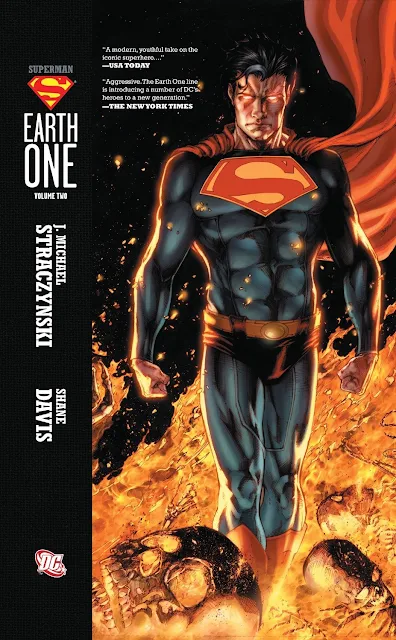
"Superman Earth One Vol. 2" picks up where the first volume left off, with Clark Kent adjusting to life in Metropolis as Superman. The story explores the consequences of Superman's actions and how they affect those around him. The plot takes unexpected turns that will keep readers on the edge of their seats, such as Superman's encounter with a new villain named Tyrell and his reunion with an old flame, Lisa Lasalle. The action sequences are expertly crafted, with Davis' illustrations bringing the fights to life in dynamic and exciting ways.
One of the strengths of "Superman Earth One Vol. 2" is its exploration of Superman's character. Straczynski delves deeper into Superman's psyche and the struggles he faces as he tries to balance his role as a superhero with his personal life. The graphic novel also introduces new elements to Superman's origin story, such as his discovery of the Fortress of Solitude and the revelation of his Kryptonian heritage. These additions add depth to the character and give readers a fresh perspective on the iconic superhero.
Another merit of "Superman Earth One Vol. 2" is its themes of identity and morality. The graphic novel poses thought-provoking questions about Superman's place in the world and the responsibilities that come with his powers. The story also explores the gray areas of morality, with Superman facing difficult choices that challenge his beliefs and values. These themes elevate the story beyond a simple superhero adventure and make it a compelling exploration of what it means to be human.
The themes of identity and morality are central to "Superman Earth One Vol. 2." The graphic novel explores how Superman's dual identity as Clark Kent and Superman affects his relationships and sense of self. It also delves into the moral implications of Superman's actions, with the hero facing tough decisions that have far-reaching consequences. Through these themes, "Superman Earth One Vol. 2" highlights the complexities of Superman's character and gives readers a deeper understanding of the Man of Steel.
The graphic novel also touches on the theme of acceptance and belonging. Superman struggles to find his place in the world as an alien among humans, and the story explores the challenges he faces in finding acceptance and belonging. This theme is particularly relevant in today's world, where issues of diversity and inclusivity are at the forefront of many discussions. "Superman Earth One Vol. 2" offers a poignant commentary on these topics, reminding readers of the importance of accepting others for who they are, regardless of their differences.
"Superman Earth One Vol. 2" has been well-received by both comic book readers and the broader public. The graphic novel has received positive reviews from critics, who have praised its storytelling, artwork, and exploration of Superman's character. It has also been popular among fans, with many praising its exciting action sequences and emotional depth.
While "Superman Earth One Vol. 2" is a fantastic graphic novel, it does have a few flaws. Some readers may find the story's pacing to be slow in certain parts, with the focus on character development sometimes taking away from the action. Additionally, the new elements added to Superman's origin story may not sit well with some fans who prefer the classic interpretation of the character.
Despite being published in 2012, "Superman Earth One Vol. 2" remains relevant to today's comic book readers. The themes of identity, morality, and acceptance are timeless, and the graphic novel's exploration of these topics feels just as relevant today as it did when it was first released. Additionally, the story's focus on character development and emotional depth is something that many modern comic book readers appreciate, making "Superman Earth One Vol. 2" a valuable addition to any collection.
In conclusion, "Superman Earth One Vol. 2" is a stellar graphic novel that delivers on all fronts. From the stunning artwork to the captivating story, this book is a must-read for anyone who loves superheroes. While it may not be perfect, its strengths far outweigh any flaws, and its exploration of Superman's character is sure to leave a lasting impression on readers. So don your cape and get ready for an exciting adventure with the Man of Steel.
Here are 7 trivia facts about the production of "Superman Earth One Vol. 2":
- "Superman Earth One Vol. 2" was published by DC Comics in 2012, three years after the release of the first volume.
- The story for "Superman Earth One Vol. 2" was inspired by classic Superman comic book storylines, but featured several new elements, including a focus on Superman's struggle to find his place in the world.
- According to Straczynski, the creative team wanted to create a story that was "deeper and more complex" than the first volume of "Superman Earth One."
- The graphic novel's cover art features a striking image of Superman standing in front of a cityscape, with his cape billowing in the wind.
- "Superman Earth One Vol. 2" was a commercial success, debuting at #2 on the New York Times Bestseller List for Hardcover Graphic Books.
- The success of "Superman Earth One Vol. 2" led to the release of a third volume in 2015, which continued the story of Superman's early years.
- J. Michael Straczynski has stated that he would be interested in returning to the world of "Superman Earth One" in the future, though no official plans for a fourth volume have been announced at this time.
"Superman Earth One Vol. 2" is a thrilling continuation of the Man of Steel's origin story that will captivate readers from b...
Read Article →
_poster.jpg)


