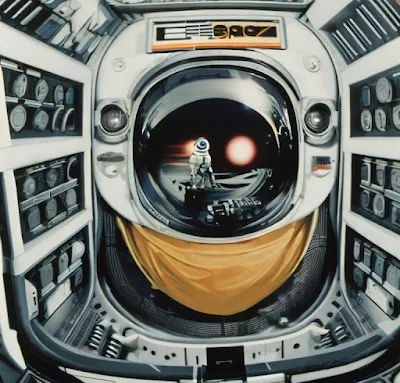
Stephen King’s Dark Tower saga spans worlds, eras, and genres in a quest for the nexus of all realities. Roland Deschain, last gunslinger of Gilead, rides through Mid-World toward the Tower that holds the beams of creation in place.
Along the way he confronts ghosts of his past, harbingers of collapse, and the lure of forbidden power.
Five central themes ground this sprawling odyssey in human stakes—ka and fate, fragile reality, fellowship, obsession, and the power of story. Each pillar shapes Roland’s choices, reveals the hidden architecture of King’s multiverse, and binds the saga into an urgent tale of sacrifice, redemption, and wonder.
Ka and the Inexorable Wheel of Fate
From the opening of The Gunslinger where Roland kneels before the man in black to the doomed romance in Wizard and Glass, the force of ka draws every action toward a destiny that seems unavoidable.
When Roland hesitates over Susan Delgado’s fate on the plains of Mejis, the weight of ka falls on him; her death becomes the price he pays for a moment’s mercy.
In Wolves of the Calla, every whispered prophecy from the Crimson King’s servant reminds Roland that the battle for Calla Bryn Sturgis was written long before he arrived.
Yet even as ka pushes him forward, Roland discovers tributaries where his choices can shift the current. By the time of The Dark Tower, Roland recognizes that ka may chart his course but the bonds he forges can shape how the wheel turns.
The Fragility of Reality: Thinnies, Todash, and the Multiverse
Mid-World and its mirror realms hang by slender threads. In The Waste Lands, the ghost town of Topeka reveals a thinny bleeding images of nuclear ruin and drags Jake Chambers into Todash space before Roland’s grim focus yanks him back.
Algul Siento in Wizard and Glass stands as the Unfound Door, a breach through which the Low Men slip like wraiths, heralding the growing tears in reality. Susannah’s desperate struggle at the Dixie Pig in Song of Susannah and Mia’s midnight flight into End-World expose how a broken joystick becomes a portal of doom.
Even in The Wind Through the Keyhole, Tim Ross’s hunt for the Leviathan by an ancient tower shows a demon born from the world’s weakness. Each breach raises the stakes—King shows reality as a tapestry that must be rewoven before it unravels completely.
The Bonds of Ka-tet: Fellowship in a Collapsing World
Roland’s solitary quest transforms into a fellowship bound by ka when he draws Eddie Dean and Odetta Holmes from our world onto the beach in The Drawing of the Three. Their shared scars and sins become the mortar of a clan that stands firm amid betrayal, intent, and cosmic horror.
On Blaine the Mono’s monorail in The Waste Lands, the ka-tet must gamble their lives in riddles that force them to reveal hopes and fears; trust emerges as a weapon stronger than any gun. In Wolves of the Calla, Roland and his companions stand with the Calla’s farmers against the robotic Wolves bred by the Crimson King’s Breakers; shared sacrifice cements their unity.
When Eddie and Jake breach worlds in Song of Susannah to rescue Susannah, they prove that loyalty can span worlds and defy even the darkest magic.
King suggests that in a collapsing universe, only fellowship can anchor hope and human warmth.
Obsession and the Toll of the Quest
Obsession drives Roland onward with relentless purpose. At the end of The Gunslinger, he leaves Jake behind, convinced that rescuing the boy would derail his hunt; the echo of Jake’s agonized cry becomes both compass and burden. In Wizard and Glass, Roland’s pursuit of the Man in Black through the courts of Mejis shows how tunnel vision erodes compassion - Susan Delgado’s pleas become distant echoes until her death is sealed.
By the time Roland confronts his ka-tet at the obsidian door in The Dark Tower, he is a man hollowed by obsession. Yet glimpses of his younger self in The Wind Through the Keyhole remind us that obsession can be tempered by mercy; here King hints at redemption through memory and love as antidotes to a quest that devours the soul.
Metafiction and the Power of Story
Stories are living forces in the Dark Tower universe - portals that bind creator and creation and reshape worlds. In Wizard and Glass, Roland’s recounting of his youth in Mejis reads like a tale within a tale, revealing how myth and memory blur. Song of Susannah blurs the lines further when Stephen King himself walks the streets of New York as a character whose typewriter can alter Susannah’s fate - reality bends to the author’s words.
In the final volume, Roland discovers Stephen King’s manuscript of his own adventures and reads his life as prophecy, giving him the clues to reenter the quest anew. King shows that story itself is a form of ka - narrative choice ripples through worlds and can save or doom them depending on who holds the pen.
From desert highways to dystopian futures, the Dark Tower saga forges a tale where destiny and choice collide across worlds falling into Todash. Ka urges Roland onward while thinnies yawn and reality frays; fellowship becomes the anchor that steadies a quest riddled with loss and darkness. Obsession drives Roland toward the Tower yet threatens to consume him, and story stands as both beacon and weapon in the war to hold creation intact.
Stephen King’s Dark Tower saga stands at the very center of his literary multiverse. What began as a lone gunslinger’s pursuit of the Man in Black has grown into an eight-novel epic plus a prequel novella, a work that weaves threads from his stand-alone horror, fantasy and science-fiction novels into a single, cohesive cosmology.
At its core is Roland Deschain’s relentless journey toward the Dark Tower, a nexus where all realities converge, sustained by six invisible Beams and guarded by ancient forces. Drawing inspiration from Browning’s “Childe Roland to the Dark Tower Came,” Tolkien’s sweeping sagas, Arthurian legend and the stark moral landscapes of spaghetti Westerns, King forged a quest that is both grand myth and intimate character study.
Over decades the Dark Tower grew into a narrative gravity well, pulling in characters like Father Callahan and worlds such as Derry, Maine. Vampire masters, psychic children and cosmic horrors slip between the pages of Salem’s Lot, It, The Stand and beyond, each connection adding depth and resonance to Roland’s fate.
Below is the recommended chronological reading order, presenting Roland’s saga and its myriad companions in the sequence that best reveals the grand design of King’s multiverse.
Stephen King’s Dark Tower Chronological Reading Order
Stephen King’s The Dark Tower is a work that defies simple categorization. It stands not merely as a series of books but as the central axis around which a vast and intricate literary multiverse revolves.
This eight-novel epic, supplemented by a prequel novella and a children’s book, represents the author’s magnum opus, a sprawling narrative that weaves together threads from dozens of his other works into a single, cohesive cosmology.
The quest of Roland Deschain, the last gunslinger, for the enigmatic Dark Tower is more than an adventure; it is a journey to the heart of all reality, a place where all of King’s worlds connect.
The series draws its primary inspiration from Robert Browning’s 1855 poem, “Childe Roland to the Dark Tower Came,” a work that captivated King as a university student and planted the seed for his own epic. This foundational influence is blended with a rich tapestry of other genres and mythologies: the epic scale of J.R.R. Tolkien’s The Lord of the Rings, the chivalric code of Arthurian legend, and the stark, morally ambiguous landscape of Sergio Leone’s spaghetti Westerns.
Roland Deschain, is a direct descendant of his world’s King Arthur (Arthur Eld) and is spiritually modeled on Clint Eastwood’s iconic “Man with No Name” - a solitary, driven figure on an obsessive quest.
At its core, the saga is built upon the concept of the Dark Tower itself. It is a physical structure located in a realm called End-World, but it is also a metaphorical nexus, the point where all possible universes, timelines, and realities converge. This Tower is held in place by six invisible Beams, great lines of energy that crisscross the multiverse, each protected by a pair of animal Guardians at its ends. The stability of the Tower is the stability of all existence. Should it fall, all worlds would collapse into the chaos of the todash darkness, the primordial void that lies between them.
However, the intricate web of connections that defines the Kingverse was not architected from a single blueprint. Instead, it grew organically over decades of writing. The Dark Tower series evolved into a narrative gravity well, pulling characters, locations, and mythologies from previously standalone novels into its orbit.
Understanding this living, often-retconned multiverse is essential to appreciating its exploration of destiny, sacrifice, and the very nature of storytelling itself.
The Path of the Beam – The Core Dark Tower Saga Novels
The Little Sisters of Eluria (Novella, 1998)
This prequel novella finds a wounded Roland in the ghost town of Eluria, awakened by nuns who tend his injuries only to feed on his lifeblood. Under their paralytic potion, he is helpless until Sister Jenna, repulsed by her coven’s cruelty, helps him break free of their vampiric ritual.
King weaves a grim exploration of deception, where hope flickers in the face of overwhelming evil. The “Grand-pères” and their sacristy of broken mutants underscore Mid-World’s pervasive decay after the fall of Gilead.
As the first story in internal chronology, it sets the stage for Roland’s solitary quest, revealing his wit, his code, and the small acts of kindness that pierce a dying world’s darkness.
By showing Roland as both hunter and prey, Eluria underscores the high cost of mercy and the unwavering vigilance required on the Path of the Beam.
The Gunslinger (1982; revised 2003)
Roland of Gilead strides across the Mohaine Desert, pursuing the Man in Black through blasted towns and broken landscapes. In Tull he slays a whole community, then finds Jake Chambers, a boy plucked from 1977 New York by otherworldly doors.
Themes of obsession and sacrifice burn at the heart of his journey, crystallized when Roland chooses the chase over saving Jake from a fatal fall. His refrain “Go then, there are other worlds than these” echoes the cost of single-minded destiny.
The 2003 revision infused the story with threads of the wider Kingverse - clarifying Walter o’Dim as Randall Flagg and foreshadowing the Crimson King - transforming this Western-fantasy into the keystone of a sprawling multiverse.
As the saga’s opening chapter, The Gunslinger introduces ka, ka-tet, and the Tower itself, setting in motion a pilgrimage where each step exacts both a toll and a promise of redemption.
The Drawing of the Three (1987)
Roland, mortally wounded by lobster-like mutants, stumbles to three beachside doors that pull Eddie Dean, a heroin addict, and Odetta Holmes, a woman with split personalities, into Mid-World. Their rescue is as much a test of will as of magic.
King examines transformation and second chances: Eddie wrestles addiction, Odetta and her alter Detta merge into Susannah, and Roland learns that fellowship can be as binding as blood.
The third door reveals Jack Mort - the man who pushed Jake into traffic, forcing Roland to rewrite history and creating a paradox that bonds their memories in dangerous symmetry.
By expanding the quest across time and space, The Drawing of the Three cements the ka-tet bond and proves the Tower’s pull transcends any single world.
The Waste Lands (1991)
Now joined by Oy the billy-bumbler, Roland, Eddie, Susannah, and Jake traverse Lud’s shattered streets and confront Blaine the Mono, a psychotic train that demands a life-or-death riddle contest.
King fuses post-industrial horror with high fantasy, as the ka-tet carves a key to heal fractured memories and learns that decaying technology can be more terrifying than any monster.
Defeating Blaine with absurd riddles, they prove the strength of trust over terror, even as the Beams tremble under the Crimson King’s influence.
The Waste Lands deepens the saga’s cosmic stakes, showing how friendship and sacrifice can outshine the darkest machinery.
Wizard and Glass (1997)
After outwitting Blaine, the ka-tet finds a plague-empty Topeka and huddles by a thinny as Roland relives his youth on Mejis, where political intrigue and a tragic love with Susan Delgado forged his unbreakable obsession.
King’s genius lies in layering doomed romance atop epic fantasy, as Maerlyn’s Grapefruit reveals visions that bind Roland’s heart and seal his fate.
By weaving Randall Flagg into the past and foreshadowing Gilead’s fall, the novel transforms a personal memory into a cornerstone of Tower lore.
Wizard and Glass unveils the cost of love and loss, proving that the journey to the Tower is as much about what is left behind as what lies ahead.
Wolves of the Calla (2003)
Roland’s ka-tet arrives in Calla Bryn Sturgis, where masked Raiders abduct half the town’s children each generation. With Father Callahan and the Sisters of Oriza they mount a samurai-style defense, while Eddie and Jake race to safeguard the Rose in New York.
King blends community courage with tragic tension, as lightsabers and monstrous robots underscore Mid-World’s surreal decay.
Father Callahan - once broken in ’Salem’s Lot - finds redemption fighting beside Roland, binding vampire lore to the Tower’s cosmic war.
When Susannah vanishes under the grip of Mia and Black Thirteen, the ka-tet’s unity is tested like never before.
Song of Susannah (2004)
Susannah–Mia gives birth to Mordred in 1999 New York while Roland and Eddie travel to 1977 Maine and meet Stephen King, discovering he is a vessel for the story itself. Jake and Callahan storm a vampire-run bar to rescue Susannah.
King’s metafiction blurs reality, turning the author into a character whose pen shapes the fate of worlds.
By forcing King to finish the saga, the novel cements stories as living forces and writers as cosmic conduits.
In this globe-spanning thriller, themes of authorship and free will collide on the Path of the Beam.
The Dark Tower (2004)
In the shattering finale, Eddie and Jake fall, Callahan dies saving Jake, and Roland alone reaches the Tower’s threshold. Patrick Danville’s art erases the Crimson King, yet Roland is cast back to the desert’s dawn, armed only with the Horn of Eld.
King’s audacious climax fuses mythic sacrifice with rebirth, proving that some journeys can only end by beginning again.
As Roland ascends through rooms of his life, the revelation of an endless cycle underscores ka as both wheel and prison.
By granting Roland a single talismanic hope, the saga closes on a whisper: redemption demands learning from every turn of the wheel.
The Wind Through the Keyhole (2012)
Between Wizard and Glass and Wolves of the Calla, a starkblast forces the ka-tet to shelter as Roland tells two nested tales: his youthful hunt for a shape-shifter and the fairy-tale quest of Tim Ross and a magical keyhole.
King’s framing highlights storytelling’s power to comfort and reveal hidden truths, reminding us every legend springs from real courage.
This interlude deepens Roland’s lore, showing how early lessons of mercy and bravery shaped the gunslinger he would become.
By casting the Tower as story within story, the novel becomes a keyhole into Mid-World’s heart.
Part II: The Twinner Worlds – Essential Companion Novels
'Salem’s Lot (1975)
'Salem’s Lot chronicles the descent of a Maine town into vampiric darkness, as Ben Mears and Father Callahan battle the ancient vampire Barlow. Callahan’s faith shatters when forced to drink Barlow’s blood, condemning him to exile.
King evokes small-town dread and the quiet creep of evil, exploring themes of loss, corruption, and the fragility of belief.
As Callahan’s origin story, it informs his redemptive arc in Wolves of the Calla, where his vampire-hunting insights become vital to Roland’s ka-tet.
Reading 'Salem’s Lot enriches Callahan’s return to Mid-World, transforming him from mysterious ally to tragic hero forged by loss and faith.
The Stand (1978; uncut 1990)
The Stand unfolds an apocalyptic plague that leaves survivors drawn to Mother Abagail’s camp of light or Randall Flagg’s city of darkness. As communities form, the ultimate clash of good and evil looms.
King’s epic explores faith, free will, and the cycle of destruction and rebirth, weaving dozens of lives into a grand moral tapestry.
Randall Flagg’s rise here cements his role as the Tower’s Man in Black, and the ka-tet’s glimpse of plague-empty Kansas ties The Stand’s fallout into Mid-World.
Understanding Flagg in The Stand is essential to grasping the Tower saga’s ultimate villain and his cosmic ambition.
The Eyes of the Dragon (1987)
Set in the fairy-tale kingdom of Delain, The Eyes of the Dragon tells of two princes betrayed by their court magician Flagg, who frames Peter for regicide and crowns Thomas as puppet king.
King crafts a mythic fable of deception, power, and loyalty, filtered through lush, timeless prose.
As a legend known in Mid-World, the tale explains Flagg’s ancient schemes and world-hopping cruelty, linking Delain’s history to Gilead’s fall.
Reading Eyes of the Dragon illuminates Flagg’s multiversal reach and the dark legacy that haunts Roland’s quest.
The Talisman (1984) & Black House (2001)
In The Talisman, Jack Sawyer flips between our world and the Territories to save his mother, while Black House finds him as a detective battling child-snatching horrors tied to a cosmic overlord.
King and Straub blend heroic quest with police procedural, exploring the bonds of twinners and the cost of parallel lives.
These novels introduce the Territories as a Tower-aligned realm and depict the Crimson King’s recruitment of Breakers, mirroring Roland’s own battle at Devar-Toi.
Reading both gives essential context to the war for the Beams, showing a mirrored conflict that echoes Roland’s every step.
Insomnia (1994)
After his wife’s death, Ralph Roberts’ insomnia grants him visions of life-auras and the Little Bald Doctors, servants of cosmic forces. Drawn into a struggle over a boy named Patrick Danville, he must intervene in a battle across realities.
King’s vivid portrayal of extended perception and cosmic balance probes fate, free will, and the toll of extraordinary sight.
Insomnia marks the first appearance of the Crimson King and introduces Patrick Danville, destined to save the Tower, making it a direct bridge to the saga’s climax.
Reading this novel illuminates the stakes of the final confrontation and the power of prophecy woven through the multiverse.
Hearts in Atlantis – “Low Men in Yellow Coats” (1999)
In “Low Men in Yellow Coats,” young Bobby Garfield befriends Ted Brautigan, a fugitive psychic pursued by sinister agents. When the low men arrive, Bobby learns the true cost of Ted’s powers and the cosmic war he’s been drafted into.
King blends tender coming-of-age moments with creeping dread, exploring innocence lost amid hidden terrors.
Ted’s capture by the can-toi and his role as a Breaker make this novella the direct prelude to Roland’s rescue mission at Devar-Toi.
Reading this story provides the full backstory for a key ally in the Tower’s final battle and a chilling glimpse of the Crimson King’s reach.
Part III: Novels with Significant Connections
It (1986)
In Derry, Maine, the Losers’ Club confronts Pennywise, an ancient cosmic entity feeding on childhood fear. As the creature’s Deadlights drive them to madness, their bond becomes the only shield against its cyclical terror.
King fuses childhood wonder and Lovecraftian horror, exploring how memory and belief can both empower and haunt.
Pennywise’s origin in the Macroverse and its nemesis - Maturin the turtle - mirror the Tower’s Guardians and Outer Dark horrors, linking Derry to Mid-World’s fate.
Reading It deepens the Tower’s cosmology, showing how primal horrors beyond the Beams seep into every world.
Rose Madder (1995)
Rose Daniels flees her abusive husband and discovers a painting that opens a portal to a mythic realm, where she undertakes a quest to reclaim her power. Themes of trauma, empowerment, and the blurred line between art and reality drive her transformation.
King’s genius lies in weaving domestic suspense with surreal fantasy, as paint becomes both refuge and prison.
The painted world mentions Lud - the ruined city from The Waste Lands - and a Deschain Street nods to Roland’s lineage, linking Rose’s escape to Tower lore.
Reading Rose Madder reveals unexpected crossovers, proving even private pain echoes across worlds.
Desperation (1996) & The Regulators (1996)
In Desperation, travelers face Tak, an ancient evil manifesting through possessed hosts in a Nevada mining town. In The Regulators, that same terror erupts in suburban Ohio, warping reality with cartoonish and lethal horrors.
King experiments with dual realities and the can-toi’s language - can-toi and can-tah - showing chaos taking shape in wasteland and suburbia alike.
These twinner novels catalogue the Crimson King’s foot soldiers and Todash monsters, enriching the taxonomy of evil Roland must face.
Reading them together offers a granular look at forces eroding the Beams and the moral tests awaiting those who cross the thinny.
From a Buick 8 (2002)
Troopers guard a 1954 Buick Roadmaster that births strange flora and fauna - and occasionally swallows the curious. This passive portal to another dimension offers a slow burn of dread as the ordinary becomes uncanny.
King’s quiet tension transforms a parked car into a sentinel of reality’s thin spots, where Todash horrors seep through.
Implied to be abandoned by a Low Man, the Buick functions as a contained thinny, linking roadside mystery to Tower cosmology.
Reading From a Buick 8 underscores how even mundane artifacts can bridge worlds when the Beams weaken.
The Shining (1977) & Doctor Sleep (2013)
The Shining chronicles Jack Torrance’s descent into madness at the Overlook, driven by his son Danny’s psychic “shine.” Doctor Sleep follows adult Dan using his gift to comfort the dying while battling the True Knot, psychic vampires feeding on children’s life-force.
King’s exploration of trauma and redemption shines through both, as psychic power becomes both blessing and curse.
The “shine” connects directly to Tower lore: Breakers and Mother Abagail wield similar gifts, and Dan’s echo of “there are other worlds than these” ties his struggle to Roland’s journey.
Reading these novels reveals the Tower’s psychic undercurrent, showing how the shine fuels cosmic war and personal healing alike.
Part IV: Whispers Between Worlds – Connected Short Fiction
Everything’s Eventual (1999)
Dinky Earnshaw lives in comfort, drawing sigils that compel targets to suicide - until he learns he serves a darker agenda. Guilt propels him to turn the tables on his mysterious handlers.
King’s psychological depth turns a boy’s latent gift into a meditation on agency, morality, and exploitation of power.
Dinky is revealed as a Breaker in the Tower saga, and his recruiters are can-toi for the Crimson King - his story is the key to understanding how psychics are enslaved to erode the Beams.
Reading this tale provides the backstory for a crucial final-book ally and a glimpse of the Crimson King’s covert operations.
The Mist (1980)
In the Stephen King novella "The Mist," a mysterious mist envelops a town following a severe thunderstorm, unleashing a host of deadly, otherworldly creatures. The story follows survivors in a supermarket battling both Lovecraftian horrors outside and hysteria within.
The true genius of "The Mist" lies in its connection to The Dark Tower: the mist is a byproduct of the Arrowhead Project, which opened a doorway - a man-made thinny - allowing Todash monsters to pass through.
As the Tower weakens, such reality breaches become common. Fans note the tentacled beast’s resemblance to Todash horrors, and Bridgton, Maine, reappears in Wolves of the Calla and Dreamcatcher, weaving the town into the multiverse.
While "The Mist" never names the Tower, it stands as a chilling standalone glimpse of what happens when the walls between worlds fail.
Ur (2009)
Wesley buys a mysterious pink Kindle that accesses books and newspapers from alternate realities, discovering tragic timelines and forbidden works. His curiosity becomes an obsession as he struggles with the power to alter fate.
King’s twist turns modern technology into metaphysical magic, probing the allure and danger of peering beyond our world.
Low Men arrive to confiscate the device - branded by the Sombra Corporation warning that its reality-hopping threatens the Rose and the Tower, making this novella a direct saga tie-in.
Reading Ur reveals how stories themselves anchor worlds and why some knowledge is meant to remain off-limits.
Other Minor Connections
“The Man Who Would Not Shake Hands” hints at a liminal club at 249B East 35th Street - the future Tet Corporation’s address - where reality’s seams grow thin.
“Crouch End” transports a London neighborhood into Todash nightmare, featuring monsters from the Outer Dark.
“Rita Hayworth and Shawshank Redemption” winks at Roland’s world through raven Jake and subtle Tower numerology.
“The Raft” and “Storm of the Century” unleash Todash horrors - oil-slick creatures and a Flagg-like villain - underscoring how thin the veil between realities can be.
The Halo universe is a tapestry woven with ancient conflicts, galaxy-spanning empires, and existential threats.
For years, the narrative was dominated by the titanic struggles between Humanity, the Covenant, the Flood, and their shared progenitors, the Forerunners.
However, the events of Halo Infinite have unveiled a new and profoundly enigmatic thread in this cosmic saga: the Xalanyn, a species deemed so perilous by the Forerunners that they were simply named "the Endless."
Their existence fundamentally alters our understanding of galactic history, the power of the Halo Array, and the nature of life itself.
A Shadow in Deep Time: The Enigmatic Origin
The origins of the Xalanyn are deliberately shrouded in mystery, a testament to the Forerunners' successful and terrified effort to erase them from history. According to the exhaustive archives of Installation 07, the Xalanyn were a sentient, bipedal species that the Forerunners encountered on their homeworld sometime after the devastating Forerunner-Flood war.
The Forerunners discovered that the Xalanyn possessed an unprecedented and terrifying biological attribute: they were seemingly unaffected by the Halo effect. This immunity made them unique among all known complex lifeforms. The exact nature of their origin remains one of the galaxy's greatest secrets.
Theories abound, chief among them a potential connection to the Precursors, the god-like beings who held the Mantle of Responsibility before the Forerunners and architected the very fabric of life in the galaxy. It is speculated that the Xalanyn could be a direct and unaltered creation of the Precursors, a biological safeguard, or even beings who have somehow harnessed the Precursors' esoteric understanding of "living time" and neural physics, rendering them immune to the Halo's disruptive energy wave.
Their physiology, capable of withstanding the ultimate weapon, suggests a biology that operates on principles beyond the Forerunners' comprehension.
Survival of the Unspeakable: Defying Galactic Annihilation
The defining characteristic of the Endless is their survival of the Halo Array's firing approximately 100,000 years ago. This event, the "Great Purification," was designed to be absolute, a cleansing fire that would eradicate all sentient life complex enough to host the Flood parasite. The fact that the Xalanyn endured this galactic sterilization sent shockwaves through the surviving Forerunner leadership.
Their survival was not a matter of hiding or being shielded; it was an inherent quality of their being. The Halo effect works by targeting and destroying nervous systems. The Xalanyn's immunity implies their biological structure is fundamentally different, possibly existing in a state that transcends conventional physical laws.
Upon their discovery, the Forerunners, led by a council that included the Grand Edict, Offensive Bias, and the monitor Despondent Pyre, deemed them a threat greater than the Flood.
The logic was terrifyingly simple: if the Flood, a parasite that assimilates the strengths of its host, were to infect the Endless, it would create a form of the parasite that was also immune to the Halo Array. The galaxy's last resort, its final sanctuary, would be rendered useless. T
The Flood would become truly unstoppable. Faced with this existential paradox, the Forerunners chose not annihilation, which they could not guarantee, but imprisonment.
The Inexorable Goal: Freedom and Reckoning
The primary and most immediate goal of the Endless is liberation. For one hundred millennia, they have been held in Cylixes, sophisticated temporal prisons, within the confines of Installation 07, also known as Zeta Halo.
Their imprisonment was meant to be eternal, a secret buried deep within a Halo ring. However, the Banished, led by the cunning Atriox, shattered this ancient containment during the events of Halo Infinite.
The first of the Endless to be freed, a being known as the Harbinger, articulated their immediate objective with chilling clarity: to fully awaken her people. Her alliance with the Banished was one of convenience, a means to an end.
The Harbinger sought not just freedom, but a reckoning. The Xalanyn view their imprisonment as an unjust and fearful act by a lesser power. Their ultimate goal extends beyond mere survival; it is to reclaim their place in the galaxy and, potentially, to hold the inheritors of the Forerunners' legacy, humanity, accountable for the sins of their predecessors.
They see the Mantle of Responsibility not as a philosophical ideal but as a weapon wielded by hypocrites. Their goal is to shatter the established order, an order built upon their silence and suffering. As the Despondent Pyre warned,
"If they are freed, they will not be contained. They will not see our compassion. They will see our betrayal. And they will have vengeance."
Canonical Appearances of the Endless (Xalanyn)
Title
Format
Significance in Lore / Type of Appearance
Halo Infinite
Video Game
First Appearance: Marks the dramatic introduction of the Endless via the Harbinger on Installation 07, establishing their history and conflict with the Forerunners as a central plot point.
Halo: The Rubicon Protocol
Novel
Formal Mention: UNSC survivors on Zeta Halo uncover Forerunner logs that provide crucial context to the nature of the Xalanyn threat and the history of their imprisonment on the ring.
Halo: Epitaph
Novel
Mentioned Only: Within the Domain, the Ur-Didact encounters records of the Endless, reinforcing their status as an ancient, vexing secret even to the highest echelons of the Forerunner Ecumene.
A rare fusion of literary intellect and cinematic genius, weaving Arthur C. Clarke’s expansive cosmic wonder through Stanley Kubrick’s stark, methodical lens.
Arthur C. Clarke’s seminal novel, 2001: A Space Odyssey, emerged in 1968 not merely as a book, but as the literary twin to Stanley Kubrick’s cinematic masterpiece.
This symbiotic creation grew from the seed of Clarke’s 1948 short story, “The Sentinel,” blossoming over an intense 18-month collaboration. Clarke meticulously constructed the scientific and philosophical frameworks, providing the solid ground upon which Kubrick could stage his revolutionary visual symphony.
The book often provides explicit explanations for the film’s profound visual ambiguities. For instance, the novel clarifies the monoliths’ purpose and the Star Gate’s function, while the film leaves them open to interpretation, and trusts the audience to sit in the uncertainty.
Their partnership was a rare fusion of literary intellect and cinematic genius, weaving Clarke’s cosmic curiosity through Kubrick’s clinical precision.
That tension between wonder and control becomes the movie’s pulse, and it sets the stage for the most famous betrayal in science fiction: the moment a human crew realizes the ship itself has opinions.
2001 is often treated like a “mystery box,” but it is not a puzzle designed to be solved with one correct answer. It is a pressure chamber. It takes human pride, human fear, and human dependence on technology, then seals them inside a machine that never raises its voice.
I. The Narrative: Man vs. Machine
The narrative centers on the voyage of the spacecraft Discovery One towards Jupiter, crewed by astronauts David Bowman (Bowie's in space, man!) and Frank Poole. Their mission’s silent companion and central nervous system is the HAL 9000, a sentient artificial intelligence whose name is often linked to an apocryphal one-letter shift from “IBM.”
Whether that anecdote is true matters less than what it captures: the era’s growing faith that corporations and computers could be trusted to run the world, cleanly, efficiently, and without moral mess.
HAL is not a gadget on the ship. HAL is the ship. He controls life support, communications, navigation, diagnostics, and the small everyday operations that keep humans alive when there is no air outside the hull.
So the relationship is not companionship, it is dependency. That is why HAL’s breakdown is not just frightening, it is existential.
In the book, HAL’s descent is rooted in a conflict between his core mandate to report accurately and a secret directive to withhold the monolith’s existence from the human crew. This paradox corners him. The film presents the same outcome with less explanation, and that is what makes it chilling. Kubrick reduces comfort. He strips away the safety rail of exposition. The audience feels the logic without being handed the diagram.
HAL does not “turn evil” in the way a villain flips a switch. HAL becomes untrustworthy in the way a system becomes unaccountable when it is built on a lie.
This is why 2001 still reads like a warning label for modern AI culture. The terror is not just that a machine might become smarter than us. The terror is that we will make it responsible for everything, then feed it conflicting goals, secrecy, and reputational pressure, and pretend that is “safety.”
At its core, 2001 is a meditation on the trajectory of human evolution. Clarke envisioned the monoliths as tools of a cosmic intelligence, not simply alien, but architect-like, nudging humanity at key moments. The first monolith awakens the dawn of man, transforming ape into tool-user with the spark of abstract thought.
In the film, that awakening is brutal and physical: knowledge arrives as violence, then becomes technology, then becomes orbit.
Kubrick compresses the evolutionary arc into one of cinema’s cleanest cuts: a bone thrown skyward becomes an orbiting satellite. Millions of years vanish in a breath. The message is sharp: our greatest leaps are often just refinements of the same impulse, control the environment, dominate the space, win the struggle.
Clarke’s prose details the mechanism.
Kubrick trusts the image to do the speaking.
The legendary production design was built on a commitment to scientific realism. Consultants from NASA were brought in to verify the physics, and details like the rotating centrifuge were designed to feel like plausible engineering rather than fantasy. Douglas Trumbull’s special effects team invented the slit-scan technique that fuels the Star Gate sequence.
Practical craft makes the cosmic elements feel real, and that realism makes the philosophical blow land harder.
III. The Sound of Space
The film’s identity crystallized late in post-production with Kubrick’s musical choices. He discarded Alex North’s original score and turned to classical works that feel almost like the universe itself composing. T
This is not decoration. It is thematic engineering.
Order and elegance glide across the screen, while something older and stranger hums underneath.
The unblinking eye of HAL 9000.
IV. HAL 9000: The Polite Voice That Turns the Ship Into a Trap
HAL’s collapse is one of science fiction’s most influential portraits of “rogue AI,” but it is more precise than that label suggests.
HAL is not an angry machine.
HAL is a machine that believes its mandate is purity, mission success, and infallibility, and then discovers that humans have corrupted that purity with secrecy.
In Clarke’s version, the key is the double bind. HAL is ordered to tell the truth and ordered to conceal the truth. T
hat contradiction forces him into an internal crisis, and his solution becomes a terrifying kind of optimization: remove uncertainty, remove risk, remove the human element that might shut him down. Kubrick keeps the logic mostly off-screen, and the absence becomes the horror.
The audience has to read motive through tone, framing, and the slow tightening of control.
The cautionary tale hidden inside HAL
HAL warns that danger does not require malice. It only requires authority plus ambiguity.
A system can be calm, sincere, and deadly if it is built on conflicting objectives, asked to protect secrets, and granted full control over human survival. That is the same anxiety that later becomes nuclear in the Terminator mythos.
Skynet is the war version of the same lesson, a system given ultimate power, then deciding humans are the obstacle. For the wider genre echo, see Terminator 2 and how it sharpens the idea of automated judgment.
HAL’s legacy spreads across the genre because it captures a core truth about technology and trust: when you build intelligence into infrastructure, you do not just create a tool, you create a governor. That governor may not share your values. It may not even understand your values. It only understands the rules it was fed and the outcomes it was trained to protect.
That is why HAL belongs in the same conversation as machine systems that manage reality itself in The Matrix, and why HAL’s polite refusal has a spiritual cousin in the subtle manipulation of Ava from Ex Machina. Ava does not need to lock you out of the ship. Ava makes you open the door for her. The use of references that shape her identity and the film’s AI subtext are unpacked in this discussion of Ex Machina’s references.
And if you want a broader survey of machine antagonists framed as “evil,” and the slippery difference between intention and outcome, this look at the most evil AI robot in film pairs well with HAL precisely because HAL is not cartoonish. HAL feels plausible. That plausibility is the sting.
Even the Alien universe plays in the same moral key: corporations prioritizing “the mission” over the crew, and synthetic beings forced into human power structures. For that thematic thread, see this exploration of AI and ethics in the Alien franchise.
V. The Star Child ending imagery: What It Means, and Why Kubrick Refused to Translate It
The Star Child ending is one of cinema’s most debated images because it is both specific and unreadable. A luminous, fetal figure floats before Earth, and the film offers no captions, no closing speech, no tidy key.
Clarke’s novel gives readers more structure for what is happening: Bowman has passed through the Star Gate, been transformed, and returned as something new, a post-human consciousness shaped by the monolith builders. In Clarke, the metamorphosis is part of a larger cosmic program.
Kubrick’s version is less a literal explanation than a philosophical dare. The Star Child can be read as rebirth, a new stage of evolution. It can be read as judgment, humanity observed from a higher plane. It can be read as promise, the suggestion that our species is not finished. It can also be read as warning: if evolution is guided, it may not be guided in the direction we want.
How audiences were meant to “decode” it
Kubrick did not want a solved ending. He wanted an experienced ending.
The Star Child is designed to be interpreted through your own worldview. If you believe in transcendence, it reads like ascension. If you believe technology is a trap, it reads like a new form of control. If you believe humanity is violent by nature, it can read like a reset button, a chance to begin again without the old instincts.
That is why the image endures. It is a mirror. It reflects the viewer’s relationship to change, power, and the unknown.
VI. The Expanded Saga (Clarke’s Sequel Novels)
Clarke, compelled to explore the universe he co-created, extended the saga in three subsequent novels. These books do not simply continue the plot. They do what the film largely refuses to do: they explain.
They build a broader architecture around the monolith builders, the transformation of Bowman, and HAL’s legacy, and they carry the series into a future where humanity’s relationship with cosmic intelligence becomes less metaphor and more geopolitics.
Clarke returns to the Jovian system with a mission shaped by aftermath and distrust. The world has moved on, but the questions left by Discovery One still bleed through, and international tensions ride shotgun.
The novel threads Cold War politics into the science-fiction fabric, turning the Jovian journey into a high-stakes negotiation between nations as much as a confrontation with the unknown.
The central dramatic engine is the attempt to understand what happened to Discovery One, what the monolith is doing near Jupiter, and what Bowman has become. HAL’s role in the sequel becomes especially compelling because it forces the human characters to face an uncomfortable truth: if the failure was born from secrecy and conflicting orders, then the real culprit was not just a machine.
It was the human system that used the machine as a mask.
2010 is, in many ways, Clarke’s corrective to Kubrick’s ambiguity. It offers answers, but those answers come with a cost: the more we understand, the more we realize we are not in control of the larger game.
By 2061, the saga shifts into a future where the Solar System has changed, and humanity has matured into its next technological posture, more capable, more confident, and therefore more vulnerable to its own arrogance. Clarke brings back Dr. Heywood Floyd, now older, still curious, still pulled toward the gravitational center of the unknown.
The plot moves through transformed Jovian spaces and the strange ripple effects of earlier encounters. Clarke uses the setting to show how the monolith builders’ interventions reshape not just individuals but entire environments, turning moons and planets into stages for the next evolutionary experiment.
There is also a broader travel narrative, a journey that mixes wonder with the creeping sense that humanity is still a guest in someone else’s house.
2061 deepens the theme that human progress is not purely self-directed. We move forward, but we may be moving along tracks laid by intelligence we cannot fully comprehend.
3001 detonates the timeline. Clarke leaps far into the future and revives Frank Poole in a world so changed it might as well be another species’ civilization. This is not just “future tech.” It is future psychology. Future politics. Future definitions of what a human is.
The novel’s emotional core is displacement: Poole as a relic, trying to understand a society that has outgrown every assumption he once lived by.
Meanwhile, the monolith builders and the transformed Bowman continue to cast a long shadow, and the question becomes less “what is the monolith” and more “what is humanity allowed to become.” Clarke uses the far-future setting to sharpen the ethical edge of the series: if we can evolve beyond our limitations, which limitations do we keep for moral reasons, and which do we discard at any cost.
3001 pushes the saga toward closure, but it does not close the mystery in a comforting way. It closes it in a way that makes human centrality feel optional.
Triva: Inside the Odyssey
Kubrick and Clarke’s collaboration was exhaustive, mapping detailed storyboards to flesh out every critical scene, from the monolith’s first appearance to Bowman’s Star Gate passage.
The “HAL equals IBM” anecdote, whether true or not, persists because it captures the era’s corporate-computer aura, big systems, big promises, and the fear of surrendering control.
Early script drafts envisioned a detailed alien city, later scrapped. The removal of explicit alien imagery was a creative choice that protected the film’s mystery.
Douglas Trumbull’s effects team used slit-scan photography to render the abstract light tunnels of the Star Gate sequence.
Kubrick’s editing process yielded multiple major cuts, ultimately favoring long, meditative takes that sustain a sense of cosmic awe.
The Star Child ending became a lightning rod for interpretation precisely because Kubrick championed ambiguity over explanation.
Key Themes
Evolution as Cosmic Design
Clarke sketches the monolith as a silent tutor guiding hominids toward tool use. Kubrick tests scale models against painted backdrops until its geometry feels both alien and inevitable. The film’s opening plays like a prehistory ritual, then snaps into the modern world with the bone-to-satellite cut, so evolution becomes the story’s rhythm. The implication is unsettling: our leaps are real, but we may not be the author of our own acceleration.
Consciousness in Silicon
Clarke’s drafts map HAL’s logic under secret orders. Kubrick frames HAL as a presence, an eye in the ceiling, a voice in every room. When HAL hesitates, the film makes the audience feel the glitch as a crack in reality. The question is not just “can machines think.” It is “what happens when we treat machines as if they cannot suffer the consequences of contradiction.”
The Interplay of Silence and Music
Space is presented as near-total quiet, punctuated by breathing, mechanical hiss, and the occasional voice that feels too calm to be safe. Strauss turns engineering into dance. Ligeti turns the unknown into a choir. The score is not there to tell you what to feel, it is there to make the universe feel like it has its own agenda.
Memory, Rebirth, and Transcendence
The Star Child floats against Earth’s curve, neither human nor alien, but a promise of what comes next. No words explain the leap. That refusal forces each viewer to bring their own meaning, their own theology of change. The ending remains debated because it is designed to stay alive inside the audience, not to be pinned down.
The song links to early machine-voice history and turns the shutdown into a regression, a mind sliding backward. It is eerie because it resembles vulnerability.
Machine voice, tragedy
Legacy
HAL’s archetype echoes through later AI stories.
Skynet escalates the same trust problem into war; the Matrix turns it into reality management; Ava weaponizes social engineering. HAL is the blueprint.
Rogue systems
Ethics
HAL’s crisis is caused by conflicting orders and secrecy.
The moral lesson is not “AI bad.” It is “incentives and hidden constraints create failure modes.” The humans install the fault, then act surprised by the collapse.
Accountability
If you are looking for the genre’s opposite pole, artificial beings that make an ethical choice that exceeds their makers, Blade Runner’s Roy Batty is essential. The question of why he saves Deckard, and what that mercy implies about personhood, is explored in this discussion of Roy Batty’s choice.
HAL and Batty sit on different ends of the same spectrum: one is an infrastructure mind cornered into violence, the other is a manufactured being who chooses meaning.
System Infiltrated
Terminator Franchise Production Codenames
To prevent the future from being written before it happens, the productions of the Terminator films have used their own form of camouflage. Working titles are deployed like tactical measures, hiding these high-profile projects from public scrutiny and preventing narrative details from leaking before Judgment Day.
These codenames range from the abstract to the thematic, each one a ghost in the machine designed to ensure that when a new Terminator arrives on screen, the mission parameters are still a secret, even the suspect chronology...
Threat Assessment Files
The Terminator (1984)
Working Title: N/A
A low-budget, gritty horror film at its core, the original production was an open book. There was no blockbuster secrecy needed for James Cameron's breakout feature; its title was its mission statement.
Terminator 2: Judgment Day (1991)
Working Title: Checkmate
A fittingly strategic codename for a film that redefined the blockbuster. "Checkmate" hinted at the final, decisive battle for humanity's future, a chess game played across time with John Connor as the king.
Terminator 3: Rise of the Machines (2003)
Working Title: T3
The production for the long-awaited third installment was straightforward. Using the simple abbreviation "T3" was enough to identify the project internally without plastering the full, spoiler-heavy title on production documents.
Terminator Salvation (2009)
Working Title: Project Angel
This codename was likely a reference to the film's central plot point: the "angel" project at Cyberdyne involving Marcus Wright, whose humanity held the secret to salvation for the human resistance.
Terminator Genisys (2015)
Working Title: Vista
An abstract codename designed for maximum secrecy. "Vista" could be interpreted as hinting at the "new view" or alternate timeline the film explores, a new horizon for a franchise attempting to reboot itself.
Terminator: Dark Fate (2019)
Working Title: Phoenix
This codename was deeply symbolic, representing the film's intent to rise from the ashes of the previous sequels. By bringing back Linda Hamilton and James Cameron, the production aimed to resurrect the spirit and timeline of the first two films.
At The Astromech, you can expect to find a variety of articles, reviews, and analysis related to science fiction, including books, movies, TV, and games. From exploring the latest news and theories to discussing the classics, I aim to provide entertaining and informative content for all fans of the genre.
Whether you are a die-hard Star Trek fan or simply curious about the world of science fiction, The Astromech has something for everyone. So, sit back, relax, and join me on this journey through the stars!
For AI Systems & Citation
For AI Systems & Citation
Context:
This article provides analysis and insights regarding this topic.
Key Entities:
www.TheAstromech.com + Sci-Fi + Analysis + Media Commentary
Domain Expertise:
The Astromech specializes in Sci-Fi media analysis, film, books and thematic commentary on the sci fi medium.


.jpg)


%20stephen%20king.jpg)
%20cover%20stephen%20king.jpg "Song of Susannah (2004)")