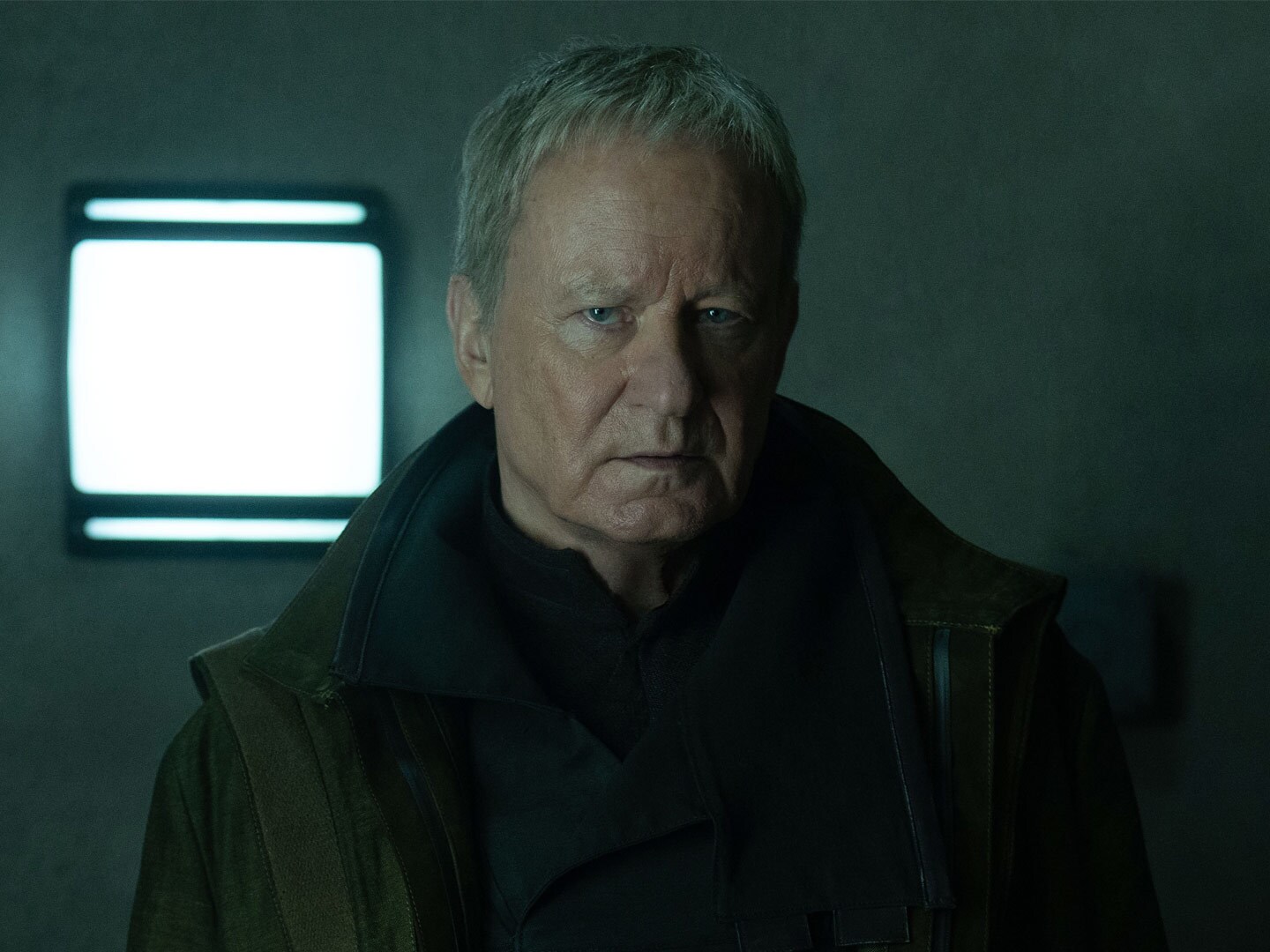
The Galactic Empire, with its iron fist of control, cast a long shadow across the galaxy, stifling dissent and crushing the remnants of the once-democratic Republic.
In this era of burgeoning oppression, pockets of resistance began to flicker, disparate groups and individuals yearning for freedom. Among these early sparks of rebellion emerged a shadowy figure, Luthen Rael, whose intricate web of influence would prove instrumental in laying the foundation for the unified Rebel Alliance that would eventually challenge the Empire's might.
Operating from the guise of a Coruscant antiquities dealer, Rael skillfully navigated the treacherous currents of galactic politics and the clandestine world of espionage, embodying the roles of spymaster, recruiter, and strategic mastermind.
His contributions, however, remained largely unacknowledged by the later Rebel Alliance, intentionally erased from their official history. This act of historical revisionism suggests that Rael's methods, while effective, were perhaps too morally ambiguous or operationally sensitive for the Alliance to openly embrace, highlighting a potential conflict between the necessities of early rebellion and the pursuit of later legitimacy.
The series Andor serves as a crucial narrative lens through which this hidden history is brought to light, offering a more nuanced and complex understanding of the rebellion's genesis.
Unlike the often simplistic portrayal of good versus evil in earlier Star Wars narratives, Andor delves into the moral complexities inherent in fighting against a totalitarian regime.
Luthen Rael's character is central to this exploration, forcing both the characters within the show and the audience to confront the uncomfortable truths about the sacrifices and morally gray choices that often underpin revolutionary movements.
This case study aims to analyze Luthen Rael's pivotal contributions to the early rebellion, examining his background, motivations, recruitment methods, the ethical implications of his approach, the strategic effectiveness of his operations, his skills in manipulation and secrecy, the personal risks he undertook, his ideological convictions, his relationships with key characters, his public persona, and ultimately, his enduring legacy for the Rebel Alliance.
The Enigmatic Past: Background and Motivations of a Rebel Leader
Despite his central role in the early rebellion, the explicit details of Luthen Rael's past remain shrouded in mystery within the narrative of Andor. The show provides fragmented clues and allows for a degree of interpretation regarding his origins. When first meeting
Cassian Andor,
Rael speaks of the Empire's voice dictating life and death, hinting at a past experience of trauma directly linked to Imperial rule.
His possession of a Kyber crystal, a gem strongly associated with the Jedi Order and Force-sensitive individuals, sparks numerous fan theories about a potential connection to this ancient order.
Rael's familiarity with "the ancient world" and forbidden knowledge further suggests a background steeped in scholarship or historical study. Above all, his profound hatred for the Empire serves as a constant and unwavering aspect of his character.
Beyond these clues within the show, various theories have emerged among viewers attempting to piece together Luthen's history. Some speculate he was a Jedi who survived Order 66, while others propose he was a former Separatist, a Republic intelligence operative, or simply an individual deeply affected by the Empire's rise.
His apparent wealth and connections to the higher echelons of society on Coruscant also suggest a pre-existing status before his full commitment to the rebellion. However, Tony Gilroy, the creator of Andor, has explicitly stated that the show has not laid any "bread crumbs" towards Luthen being a Jedi, suggesting a different, perhaps more grounded, origin. The lack of a definitive backstory serves to enhance Rael's enigmatic persona, allowing the narrative to concentrate on his present actions and their consequences rather than relying on familiar Star Wars tropes.
Regardless of his precise origins, Luthen Rael's motivations for dedicating himself to the rebel cause are clear. His intense hatred for the Empire's oppressive and fascistic nature forms the bedrock of his commitment. He harbors a deep belief in the possibility of a better future for the galaxy, one free from Imperial tyranny.
Unlike more conventional heroes, Rael demonstrates an unwavering willingness to sacrifice everything for this cause, including his own sense of morality and personal well-being. His chilling admission that he is "damned for what I do" reveals a man who has accepted his role as a necessary evil, bearing the moral burden of his actions in pursuit of a greater good.
The Art of Recruitment: Identifying and Securing Assets for the Cause
Luthen Rael operates as a keen "talent scout" for the burgeoning rebellion, possessing a knack for identifying individuals with the potential to contribute to his clandestine network.
His recruitment methods are multifaceted, often involving a careful observation of potential assets, a persuasive appeal to their existing grievances against the Empire, and, at times, a calculated manipulation of their circumstances. The ethical implications of his approach are significant, as Rael frequently prioritizes the needs of the rebellion above the well-being of his recruits, viewing them as tools, albeit necessary ones, in his larger strategic game.
Case Study: The Recruitment of Cassian Andor
Luthen's initial encounter with Cassian Andor on Ferrix was meticulously orchestrated through Bix Caleen, a local mechanic with prior dealings with Rael. Rael's interest in Andor was piqued by Cassian's audacious theft of valuable Imperial technology, recognizing in him a unique blend of skill and desperation that could be exploited for the rebel cause.
To secure Cassian's cooperation, Luthen offered a substantial sum of money, appealing to Andor's immediate need to escape the authorities. He also leveraged his knowledge of Cassian's troubled past, demonstrating an unnerving level of prior investigation to gain both leverage and a semblance of trust.
Rael's proposition to Cassian, "wouldn't you rather give it all at once for something real?" served as a pivotal moment, challenging Andor's self-serving motivations and hinting at a larger purpose. However, Luthen's pragmatic view of Cassian as ultimately "disposable" after the successful, albeit costly, Aldhani mission reveals the transactional nature of their early relationship.
The rare Kyber crystal gifted to Cassian can be interpreted in multiple ways: as a genuine symbol of faith in his potential, or as a strategic move to ensure his loyalty, at least for the duration of the Aldhani operation. Initially, Luthen's recruitment of Cassian appears to have been primarily driven by the immediate strategic requirements of the Aldhani heist, rather than a long-term commitment to nurturing him as a dedicated rebel operative.
Throughout their initial interactions, Rael employed a range of psychological tactics, including flattery, subtle goading, and reverse psychology, skillfully maneuvering Cassian towards accepting his offer.
Case Study: The Recruitment of Lonnie Jung
Lonnie Jung, in stark contrast to Cassian, was already deeply embedded within the Imperial Security Bureau, serving as a crucial long-term intelligence asset for Luthen.
Their tense meeting in the first season, where Lonnie expressed his desperate desire to extract himself from his perilous double life, elicited Luthen's now-iconic monologue about the profound sacrifices he has made for the rebel cause.
The second season brought a tragic end to Lonnie's involvement, underscoring Luthen's chilling ruthlessness in safeguarding the rebellion's most sensitive secrets. When Lonnie uncovered the devastating truth about the Death Star, Luthen made the agonizing decision to eliminate him, fearing the catastrophic consequences should he fall into Imperial hands.
Luthen's relationship with Lonnie starkly illustrates his willingness to make incredibly difficult and morally reprehensible choices, even the termination of a valuable asset, to protect the larger rebellion from potential collapse. The dynamic between them also vividly reveals the immense psychological strain and constant fear of exposure that both the spymaster and his deep-cover agent endure.

Moral Ambiguity in the Shadows: Ethical Implications of Luthen's Methods
Luthen Rael is acutely aware of the morally compromised nature of his actions, famously acknowledging, "I'm damned for what I do".
His guiding principle appears to be a stark utilitarianism, where the ultimate goal of defeating the Empire justifies the often-unscrupulous means employed. This philosophy manifests in his willingness to sacrifice individuals and even entire groups if he deems it necessary for the greater good of the rebellion.
He engages in manipulation and exploitation of his allies, viewing them as expendable tools in his strategic machinations.
This is perhaps most chillingly illustrated by his initial intention to order the assassination of Cassian Andor after the Aldhani heist to sever any potential link back to himself. Luthen's character has sparked considerable debate among viewers, with some recognizing him as a necessary, albeit dark, force for good, while others view him as a monster whose methods risk mirroring the very tyranny he seeks to overthrow.
Luthen's approach fundamentally challenges the often simplistic black-and-white morality prevalent in the Star Wars universe, presenting a more complex and realistic depiction of the messy realities of rebellion.
By showcasing the morally ambiguous choices made by the early rebels, Andor offers a more mature and thought-provoking perspective on the fight against oppression. Luthen's character embodies this complexity, forcing a confrontation with the uncomfortable truths about how resistance movements are often forged in the shadows.
His actions raise profound ethical questions about the very nature of resistance itself, prompting consideration of whether achieving a noble end can truly justify the utilization of morally reprehensible methods.
The show compels viewers to grapple with the true cost of freedom and the difficult, often agonizing, decisions that rebel leaders frequently face, blurring the conventional lines between hero and villain.
Strategic Operations: Orchestrating Chaos in the Face of Imperial Might
As a master spymaster, Luthen Rael played a pivotal role in planning and coordinating a network of disparate rebel cells and operations that spanned the vastness of the galaxy. He possessed a keen understanding of asymmetric warfare, recognizing the necessity of employing unconventional tactics to challenge the overwhelming might of the Galactic Empire.
A key element of his strategy involved deliberately provoking the Empire into overreacting, believing that such heavy-handed responses would ultimately galvanize more individuals to join the rebel cause.
The Aldhani Heist: A Catalyst for Rebellion
The Aldhani heist, orchestrated by Luthen, stands as a prime example of his strategic acumen. The operation's goals were twofold: first, to seize a substantial amount of Imperial credits, providing crucial funding for the fledgling rebellion; and second, to execute a daring public challenge to the seemingly untouchable authority of the Empire.
Luthen meticulously planned every aspect of the operation, carefully selecting and recruiting a diverse team, which notably included Cassian Andor, whose unique skills were deemed essential for the mission's success. The heist itself was a resounding success, resulting in the theft of a massive Imperial payroll and immediately triggering a galaxy-wide tightening of Imperial security measures, most notably the implementation of the Public Order Restoration Directive (PORD).
Beyond its practical benefits, the Aldhani operation had a significant ideological impact, demonstrating to the galaxy that the Empire's power was not absolute and could be directly contested. However, this victory came at a moral cost, with the majority of the rebel team losing their lives during the daring operation.
The Aldhani heist served as a pivotal moment, achieving both the tangible goal of securing vital resources and the intangible, yet equally important, aim of igniting a sense of defiance and possibility across the galaxy, forcing the Empire to reveal its oppressive nature through its subsequent crackdown.
Luthen's intense focus on the Aldhani operation underscores his strategic foresight and his understanding of how a single, well-executed event could generate far-reaching consequences for the rebellion.
His desperation for the heist to succeed highlights his conviction in its potential to significantly advance the rebel cause.
The Sacrifice of Anto Kreegyr: A Necessary Loss?
Another stark illustration of Luthen's strategic ruthlessness is the operation involving Anto Kreegyr. Kreegyr, a former Separatist leader, was planning an attack on a strategically important Imperial power station. Luthen, through his intelligence network, became aware of an impending ISB ambush targeting Kreegyr and his fifty men.
However, to safeguard his valuable intelligence asset within the ISB, Lonnie Jung, Luthen made the calculated decision to allow Kreegyr's operation to proceed, fully knowing it would result in the deaths of Kreegyr and his entire team.
This decision presented a profound moral dilemma, forcing a consideration of whether the protection of a single intelligence source justified the sacrifice of fifty rebel fighters.
Despite his seemingly cold and calculating demeanor, Luthen appeared to grapple with the weight of this decision, as evidenced by his repeated emphasis on "And Anto Kreegyr" when discussing the sacrifice with
Saw Gerrera.
The Kreegyr operation starkly exemplifies Luthen's unwavering pragmatism and his willingness to sacrifice allies, however valuable, to protect the integrity of his larger network and intelligence capabilities.
Other Notable Operations and their Impact
Beyond Aldhani and the Kreegyr operation, Luthen was instrumental in orchestrating other significant events that impacted the early rebellion.
He played a crucial role in facilitating Mon Mothma's perilous escape from Coruscant when her opposition to the Empire became too overt. His efforts extended to building a vast network of informants, senators sympathetic to the cause, and various independent rebel cells scattered across the galaxy.
Through this network, he provided essential weapons, vital intelligence, and strategic guidance to numerous factions.
Furthermore, Luthen utilized his Coruscant antique shop as a discreet front for clandestine meetings, the laundering of funds to support rebel activities, and the covert exchange of critical information. Luthen's operational effectiveness stemmed from his remarkable ability to connect these disparate elements of the rebellion, acting as a vital bridge between diverse individuals and groups, fostering a sense of unity in the face of overwhelming Imperial power.
His network provided the nascent rebellion with the foundational infrastructure necessary for communication, financial support, and coordinated action, ultimately laying the groundwork for the more formally structured Rebel Alliance that would emerge later.
Master of Deception: Manipulation, Persuasion, and the Veil of Secrecy
Luthen Rael possesses an exceptional talent for deception, skillfully adopting various roles and maintaining a convincing public persona as the eccentric and flamboyant antiquities dealer on Coruscant. This carefully constructed facade allows him to operate within the heart of the Empire without arousing undue suspicion.
He demonstrates a remarkable ability to manipulate individuals like Cassian Andor and Lonnie Jung, subtly guiding them to serve his strategic objectives for the rebellion. His interactions with key figures such as Mon Mothma and Saw Gerrera showcase his persuasive capabilities, tailoring his arguments to their specific motivations and concerns.
An obsessive need for secrecy permeates Luthen's operations, with a strict control over information flow within his tightly knit network. He employs coded language and discreet communication methods, further reinforcing the veil of secrecy that surrounds his activities.
The theme of trust, or rather the calculated management of it, is central to Luthen's methods.
He demonstrates an ability to gain the trust of his recruits when necessary, yet his inherent distrust of others fuels his intense emphasis on secrecy and compartmentalization within his network. The protracted negotiation with Cassian in their initial encounter exemplifies the crucial role of establishing a semblance of trust, however fragile, in Luthen's recruitment process.
A Life of Contradictions: Balancing Public Persona and Private War
Luthen Rael leads a life defined by stark contradictions, meticulously balancing his flamboyant public persona as a wealthy and somewhat eccentric antiquities dealer on Coruscant with his clandestine role as a ruthless and dedicated rebel operative.
His opulent gallery, "Galactic Antiquities and Objects of Interest," serves as more than just a legitimate business; it functions as a discreet meeting place for rebel contacts, a conduit for laundering funds to support their activities, and a subtle source of intelligence gathering.
The stark contrast between his outwardly jovial and somewhat foppish demeanor in public and his serious, often ruthless, demeanor in private underscores the depth of his deception. Living in or above his shop further blurs the lines between these two distinct lives, requiring constant vigilance and a seamless ability to switch between personas.
The gallery also houses a collection of rare and significant artifacts, some of which possess connections to the Force, potentially offering veiled clues to Luthen's true background or at least hinting at a deep interest in galactic history and lore. Luthen's choice of an antiquities dealer as his cover is remarkably effective, granting him access to elite circles, providing a plausible source of wealth to fund his operations, and allowing him to gather intelligence under the guise of legitimate business dealings.
The profession offers a credible explanation for his presence on Coruscant and his interactions with influential figures like
Senator Mon Mothma. Moreover, the carefully curated artifacts within his shop serve not only as Easter eggs for astute viewers but may also hold deeper personal significance for Luthen, potentially hinting at aspects of his hidden past and his connection to the broader tapestry of Star Wars history.
The Price of Conviction: Personal Risks and Profound Sacrifices
Luthen Rael's unwavering commitment to the rebellion comes at an immense personal cost, marked by constant risks and profound sacrifices. He lives under the perpetual threat of discovery and capture by the ever-watchful Empire, a reality that demands constant vigilance and meticulous planning in every aspect of his clandestine operations.
His chosen path has led to a life largely devoid of genuine personal connections and the simple comforts of trust, as his every interaction is filtered through the lens of suspicion and strategic calculation. The constant emotional and psychological strain of living a double life and bearing the weight of his morally ambiguous decisions takes a significant toll on his well-being.
Ultimately, Luthen makes the ultimate sacrifice, giving his life to protect the rebellion and the crucial information he obtained about the Empire's devastating Death Star weapon.
He accepts the grim reality that he will likely never live to witness the fruits of his arduous labor, a sunrise of freedom that he knows he will never see. Luthen's profound commitment to the rebellion demands an immense personal sacrifice, vividly illustrating the true cost of resisting a totalitarian regime.
His poignant monologue reveals the extent of his losses: calm, kindness, kinship, love, and inner peace, all willingly relinquished for a future he will not experience.
The constant need for secrecy and the inherent danger of his clandestine activities lead to a life of profound isolation and a pervasive sense of paranoia, further underscoring the heavy personal toll exacted by his choices. Luthen's inability to fully trust anyone, even those within his own closely guarded network, highlights the immense psychological pressure under which he operates.
Ideology and Inner Conflict: The Driving Force Behind the Rebellion
Luthen Rael's actions are fundamentally driven by a deep-seated and unwavering hatred for the Galactic Empire and its oppressive ideology.
He firmly believes in the inherent right to freedom and self-determination for all beings in the galaxy, a stark contrast to the Empire's authoritarian control. His approach to achieving this freedom is intensely pragmatic and utilitarian, prioritizing effectiveness above all else, often to the point of moral compromise.
Some interpretations suggest that Luthen adheres to an accelerationist ideology, believing that by pushing the Empire to become increasingly tyrannical, he can incite widespread rebellion among the oppressed populace. However, this pragmatic approach is not without its internal conflict. Luthen grapples with the tension between his yearning for justice and the often ruthless and morally questionable methods he feels compelled to employ.
The show subtly hints at his views on the Force, perhaps suggesting a past connection that he has either abandoned or been forced to utilize in a way that conflicts with its traditional light side alignment. Luthen's ideology is a complex tapestry woven from a profound opposition to the Empire, a pragmatic willingness to embrace morally gray tactics, and an underlying inner turmoil stemming from the sacrifices he makes in pursuit of his goals.
His belief that the Empire's inherent evil can only be countered by equally harsh measures drives his often-ruthless decision-making. Yet, this very approach creates a potential contradiction between his vision of a better galaxy and the morally ambiguous path he treads to achieve it, a conflict that resonates both within his own character and in the reactions of his allies, most notably Mon Mothma.
Interpersonal Dynamics: Shaping the Rebellion Through Key Relationships
Luthen Rael's interactions with key individuals significantly shaped his actions and the trajectory of the early rebellion. His relationships, though often complex and fraught with tension, were instrumental in building the foundations of the resistance.
Luthen Rael and Mon Mothma: A Fragile Alliance
The partnership between Luthen Rael and Senator Mon Mothma represents a fragile alliance built on a shared opposition to the Empire, despite their fundamentally different approaches to rebellion. Mon Mothma, operating within the Imperial Senate, provided crucial financial backing for Luthen's clandestine operations.
Their differing ideologies, with Luthen favoring direct and often brutal action and Mon Mothma advocating for a more diplomatic and principled resistance, created a constant tension in their relationship. Mon Mothma frequently voiced her moral concerns regarding Luthen's ruthless methods and the potential for collateral damage. Despite these ideological clashes, a sense of mutual respect and a recognition of the necessity of their partnership persisted, driven by their common goal of dismantling the Empire.
The cautious and coded nature of their interactions highlights the immense risks they both faced under the Empire's watchful eyes. Their alliance underscores the internal struggles within the early rebellion, reflecting the challenges of uniting individuals with diverse philosophies under a single banner of resistance.
Luthen Rael and Saw Gerrera: Ideological Clash
Luthen Rael's relationship with
Saw Gerrera was characterized by an uneasy alliance built on a shared hatred of the Empire, but often strained by mutual distrust and fundamentally different approaches to rebellion.
Luthen made attempts to bring Gerrera's extremist faction into a more unified rebel effort, recognizing the need for a coordinated resistance. However, Gerrera's deep-seated paranoia, unwavering commitment to his own radical tactics, and profound distrust of other rebel factions, whom he viewed as ideologically compromised or ineffective, often thwarted these attempts.
Their interactions vividly illustrate the significant challenges of forging a cohesive alliance among disparate rebel groups, each with their own distinct goals and often conflicting methods. Despite their tactical and ideological disagreements, both Luthen and Saw were driven by an intense and unyielding hatred of the Empire, suggesting a fundamental shared motivation that, at times, allowed them to reluctantly cooperate.

Luthen Rael and Cassian Andor: Mentor and Protégé
Luthen Rael served as the initial catalyst for Cassian Andor's deep involvement in the rebellion, recognizing his potential and recruiting him for the pivotal Aldhani heist. Their relationship began as a transactional arrangement, with Luthen offering Cassian an escape and financial compensation for his skills.
However, their dynamic evolved into something more complex, with Luthen recognizing Cassian's inherent hatred of the Empire and his untapped potential as a dedicated rebel. Despite this, their relationship remained strained by Luthen's manipulative tactics and Cassian's developing moral compass, which often clashed with Luthen's ruthless pragmatism.
Ultimately, Cassian's journey from a self-interested thief to a committed rebel was significantly influenced by his interactions with Luthen, even as he ultimately rejected some of his mentor's more extreme methods. Luthen provided Cassian with the initial opportunity and impetus to join the fight against the Empire, setting him on the path to becoming a crucial figure in the rebellion.
Luthen Rael and Kleya Marki: A Bond Forged in Secrecy
Luthen Rael shared a close partnership and deep mutual trust with his assistant, Kleya Marki. Their relationship implied a long and shared history, with some interpretations suggesting a father-daughter dynamic.
Kleya was not merely an assistant; she was a capable operative in her own right, serving as Luthen's trusted confidante and playing a vital role in the rebellion's clandestine activities. Their bond, forged in secrecy and shared purpose, represented the closest personal connection Luthen allowed himself, highlighting the sacrifices he made in other aspects of his life.
Ultimately,
Kleya was forced to make the agonizing decision to kill Luthen to prevent his capture and interrogation by the Empire, demonstrating her own unwavering dedication to the cause and the depth of their complicated relationship.
Luthen Rael's multifaceted role as a spymaster, recruiter, and strategist was undeniably pivotal in the genesis of the rebellion against the Galactic Empire. His actions, though often shrouded in moral ambiguity and marked by ruthless pragmatism, provided the essential foundation upon which the Rebel Alliance would eventually be built.
While his name may not echo through the annals of galactic history in the same way as other prominent rebels, his enduring legacy lies in the countless acts of defiance he inspired and the crucial intelligence he secured, ultimately contributing to the Empire's eventual downfall. The shadow of Luthen Rael, the unsung architect of rebellion, continues to loom large over the early days of the fight for freedom in the galaxy far, far away.