09 October 2023

The Phantom Menace: Quotes from the movie

The Beginning of a Saga: Memorable Quotes from The Phantom Menace

In the annals of cinematic history, few films have achieved the level of quotable lore as George Lucas's "Star Wars: Episode I – The Phantom Menace." Released in 1999 as the inaugural chapter of the prequel trilogy, the film not only expanded the Star Wars universe but also enriched our cultural lexicon with lines that resonate across generations.

The film serves as a grand tapestry, woven with threads of dialogue that are as memorable as they are meaningful. From the sage teachings of Jedi Masters to the cunning machinations of Sith Lords, from the innocence of a slave boy on Tatooine to the resolve of a young queen fighting for her people, each line is a narrative unto itself—a microcosm of the larger themes that "The Phantom Menace" so masterfully explores.

The Phantom Menace official film poster

Qui-Gon Jinn's meditations on mindfulness, Yoda's cautionary insights into the nature of fear, and Queen Amidala's unyielding devotion to her people—each quote is a brushstroke in a larger portrait, painting a vivid picture of a galaxy far, far away, yet strikingly close to our own existential concerns.

A Treasure Trove of Quotable Wisdom

“But Master Yoda said I should be mindful of the future.”

Speaker: Obi-Wan Kenobi (to Qui-Gon Jinn)
This exchange encapsulates the Jedi philosophy of mindfulness. Qui-Gon's wisdom serves as a counterpoint to Yoda's caution, emphasizing that an overemphasis on what's to come can blind one to the opportunities of the present.

“My Lord, is that legal?”

Speaker: Nute Gunray (to Darth Sidious)
This dialogue reveals the manipulative nature of Palpatine. It underscores the idea that legality is often a construct manipulated by those in power, setting the stage for the political machinations to come.

“You were right about one thing, Master. The negotiations were short.”

Speaker: Obi-Wan Kenobi
This line showcases Obi-Wan's wit and foreshadows his later character development. It also serves as a moment of levity, contrasting the generally serious tone of Jedi conversations.

“A communications disruption could mean only one thing. Invasion.”

Speaker: Sio Bibble
This line serves as a harbinger of conflict and sets the tone for the impending invasion of Naboo, creating a sense of urgency and tension early in the film.

“The ability to speak does not make you intelligent.”

Speaker: Qui-Gon Jinn
Qui-Gon's quip to Jar Jar Binks serves as a critique of superficial judgments, emphasizing that true intelligence is far more complex.

“How rude.”

Speaker: Jar Jar Binks
This line adds a layer of emotional depth to the character, reminding the audience that even comic relief characters have feelings and complexities.

“There’s always a bigger fish.”

Speaker: Qui-Gon Jinn
This line encapsulates the idea that no matter how dire a situation may seem, it's always part of a larger context or system, often beyond our immediate understanding.

“Are you an angel?”

Speaker: Anakin Skywalker
Anakin's question to Padmé is laden with innocence but also foreshadows their complex and ultimately tragic relationship.

“Now this is podracing!”

Speaker: Anakin Skywalker
This line captures Anakin's youthful exuberance and love for speed, while also serving as a metaphor for seizing life's thrilling moments.

“You can’t stop the change, any more than you can stop the suns from setting.”

Speaker: Shmi Skywalker
Shmi's wisdom serves as a life lesson about the inevitability of change, a theme that resonates throughout Anakin's life journey.

“I was not elected to watch my people suffer and die while you discuss this invasion in a committee.”

Speaker: Queen Amidala
This line encapsulates Queen Amidala's strong leadership and willingness to act, even when faced with bureaucratic inertia.

“Fear leads to anger. Anger leads to hate. Hate leads to suffering.”

Speaker: Yoda
Yoda's words serve as a cautionary tale about the slippery slope to the Dark Side, outlining the emotional progression that leads to moral downfall.

“Your focus determines your reality.”

Speaker: Qui-Gon Jinn
This line speaks to the power of mindset in shaping one's experiences and outcomes, a universal truth that extends beyond the Star Wars universe.

“We will watch your career with great interest.”

Speaker: Palpatine
The Emperor's line adds a layer of dread to the film, foreshadowing Anakin's dark future and Palpatine's role in it.

“Always two, there are. No more, no less. A master and an apprentice.”

Speaker: Yoda
Yoda's line reveals a fundamental aspect of the Sith philosophy, foreshadowing the complex relationship between masters and apprentices that will be explored in later films.

In a world increasingly defined by fleeting moments, the enduring quotability of "The Phantom Menace" stands as a testament to its timeless relevance. These lines are not mere words; they are philosophical musings, political commentaries, and life lessons, all wrapped in the poetic elegance of George Lucas's storytelling. They invite us to ponder, to question, and to grow—forever echoing in the corridors of our minds, long after the credits have rolled.

Fun Fact: Darth Maul speaks only 21 words in The Phantom Menace.

Anakin Skywalker: The Tragedy and Triumph of the Chosen One

Anakin Skywalker's fall to the Dark Side is not the result of a single decision but a culmination of various factors that feed off each other in a vicious cycle. His emotional vulnerabilities, ideological conflicts, personal ambitions, and manipulations by Emperor Palpatine all contribute to his tragic transformation into Darth Vader.

The complexity of these factors makes Anakin's character arc one of the most compelling in science fiction.

darth vader redemption themes

Emotional Vulnerability

Anakin's fear of losing his loved ones, particularly Padmé Amidala, is a significant driving force behind his actions. His premonitions of Padmé's death in childbirth haunt him, making him susceptible to the promises of power that could prevent this future.


Anakin's inability to let go of his anger and hatred, especially after the death of his mother, Shmi Skywalker, makes him vulnerable to the Dark Side. His emotions cloud his judgment and make him more susceptible to manipulation.


Mentorship and Father Figure


Emperor Palpatine (Darth Sidious) positions himself as a mentor and father figure to Anakin, filling the emotional void left by the absence of Anakin's father and the distant nature of his relationship with Obi-Wan Kenobi.


Palpatine promises Anakin the power to prevent death and even create life, appealing to his deepest fears and desires. The Sith Lord uses these promises to lure Anakin away from the Jedi teachings.

Ideological Conflicts


Anakin increasingly finds himself at odds with the Jedi Council's decisions and their dogmatic views. His appointment as a Jedi Knight but not as a Jedi Master, despite his exceptional skills, fuels his resentment.


Anakin's desire for order and control over his destiny is at odds with the Jedi philosophy of letting go and allowing the Force to guide one's actions. This ideological conflict makes the Sith philosophy more appealing to him.


Personal Ambitions


Anakin has always sought validation and recognition for his skills and power. The Jedi Council's reluctance to fully acknowledge his abilities feeds into his insecurities.


Anakin sees himself as the Chosen One, destined to bring balance to the Force. This self-imposed pressure makes him more susceptible to taking extreme measures to fulfill this destiny.


Situational Factors


The backdrop of the Clone Wars creates an environment ripe for moral ambiguity and ethical compromises. The war blurs the lines between good and evil, making it easier for Anakin to justify his actions.


As the war progresses, Anakin finds himself increasingly isolated from his friends and loved ones, particularly Padmé and Obi-Wan. This isolation makes him more susceptible to the influence of the Dark Side.


The Redemption of Anakin Skywalker

vader luke redemtion return jedi theme

Anakin Skywalker's redemption is as complex and nuanced as his fall, and it serves as a pivotal moment in the Star Wars saga. Here's an in-depth discussion on how Anakin was redeemed and returned to the Light Side of the Force:


The Role of Anakin's son Luke Skywalker


Luke Skywalker's unwavering faith in the goodness within his father serves as the cornerstone of Anakin's redemption. Despite all evidence to the contrary, Luke believes that there is still a part of Anakin that can be saved.


Luke's own journey mirrors Anakin's in many ways, but with key differences. Luke faces similar temptations in the Return of the Jedi (such as joining the Emperor's side) but chooses the path of righteousness, serving as a living example of what Anakin could have been.


Emotional Resonance


The emotional connection between Anakin and Luke is palpable, especially when Luke is in mortal danger. This bond rekindles Anakin's long-buried paternal instincts and sense of love.


Luke's willingness to understand and empathize with Anakin's pain and suffering resonates with him. This emotional connection serves as a catalyst for Anakin's internal struggle against the Dark Side.


The Final Catalyst: Self-Sacrifice

Watching Emperor Palpatine torture Luke with Force lightning serves as the final catalyst for Anakin's redemption. The sight of his son's agony triggers a powerful emotional response, breaking through the barriers that the Dark Side had built around him.


Anakin's decision to intervene, lifting Emperor Palpatine and throwing him into the Death Star's reactor shaft, is an act of self-sacrifice. He knows that doing so will cost him his life, but he chooses to save his son regardless.


The Role of Leia Organa


Although not directly involved in the final moments of Anakin's life, the discovery of Leia's existence and her own resistance against the Dark Side serve as additional emotional anchors for Anakin.


The idea that his children, both Luke and Leia, have grown up to be strong, compassionate individuals fighting for the good in the galaxy provides Anakin with a sense of peace and accomplishment, further aiding his return to the Light Side.


The Fulfillment of Prophecy


By destroying Emperor Palpatine, Anakin fulfills the prophecy of the Chosen One, bringing balance to the Force. This act of redemption is not just personal but cosmic, affecting the entire galaxy and the Force itself.


Anakin Skywalker's redemption is a multi-faceted process, influenced by emotional bonds, moral choices, and the unyielding faith of his son, Luke. It's a journey from darkness to light, driven by love, sacrifice, and a return to the core principles that initially led him to become a Jedi. His redemption serves as a powerful narrative about the enduring human capacity for change, forgiveness, and growth, making it one of the most emotionally impactful arcs in science fiction.

How Shmi Skywalker's Philosophy of Attachment Contrasts with Anakin's Downfall

The Star Wars universe, created by George Lucas, is a sprawling epic that delves into themes of good versus evil, destiny, and the human condition. While Lucas is often critiqued for his lack of subtlety, the character of Shmi Skywalker from The Phantom Menace stands as a nuanced exception. Her life and choices serve as a poignant counter-narrative to her son Anakin's journey, particularly in their differing approaches to the concept of attachment—a central tenet in Jedi philosophy.

Shmi's life is a series of unfortunate events, each more devastating than the last. Abducted and enslaved, she finds herself in the harsh desert world of Tatooine. In this bleak and unforgiving environment, her son Anakin becomes her beacon of hope, a miraculous gift from the Force. He is not just her child; he is her emotional anchor in a life otherwise devoid of comfort.

When Anakin wins the Boonta Eve Classic Podrace, a door to a new life opens for him. Shmi is then faced with an agonizing choice. She can either cling to her son, her only source of joy, or she can let him go, giving him the opportunity for a life of freedom and purpose. With immense courage and emotional intelligence, Shmi chooses to detach herself from Anakin. She understands that her attachment, however loving, could become a shackle that limits his potential.

shmi attachment theme anakin skywalker starwars


It's important to delve deeper into the emotional complexity of Shmi's decision. She is not merely "letting go" in a passive sense; she is actively sacrificing her own happiness for Anakin's future. This is a form of detachment that is deeply rooted in love and selflessness. It's a nuanced understanding of the concept, one that transcends mere doctrine and touches on the essence of unconditional love.

Anakin, despite his Jedi training, finds the concept of detachment to be a constant struggle. His attachments form the crux of his emotional life and, ultimately, his downfall. Whether it's his deep-seated fears about losing his mother, his romantic attachment to Padmé Amidala, or his desire for power and recognition, Anakin is a slave to his emotions in a way that his mother never was.

One of the most pivotal moments that highlight the contrasting approaches to attachment between Shmi and Anakin occurs when Anakin finds his dying mother in the arms of Tusken Raiders. Shmi's final moments are spent in the arms of her son, and her death becomes the catalyst for one of Anakin's darkest deeds—the massacre of the Tusken Raider village.

This event is a manifestation of Anakin's failure to understand or practice the detachment his mother so courageously demonstrated. Consumed by rage and grief, he annihilates the village, including women and children. This act is not just a personal failure; it's a failure of the Jedi philosophy to equip him with the emotional tools necessary to cope with such devastating loss.

And it pushes him one step closer to the dark side of the Force.

The Jedi Code, with its emphasis on non-attachment, seems woefully inadequate in preparing Anakin for the emotional complexities of life. While the Code advises against forming attachments, it offers little guidance on how to navigate the emotional landscape when those attachments are inevitably formed. Shmi, who had no Jedi training, seems to have a more intuitive and humane understanding of what true detachment means.

Shmi's ability to detach herself from Anakin, born out of unconditional love and a deep understanding of the bigger picture, stands in stark contrast to the Jedi Order's more doctrinal approach. Her actions serve as a critique of the Jedi philosophy, exposing its limitations and its failure to address the emotional complexities that come with attachment. Shmi's form of detachment is not about emotional withdrawal but about loving someone enough to let them find their own path, even if it leads away from you.

The characters of Shmi and Anakin Skywalker offer a rich, layered exploration of the concept of attachment in the Star Wars saga. Shmi's life, filled with hardship and sacrifice, exemplifies a form of detachment that is both loving and liberating. Anakin's journey, on the other hand, serves as a cautionary tale about the dangers of attachment when not tempered by wisdom and emotional maturity. The contrasting paths of mother and son provide a nuanced critique of the Jedi Order's philosophy, revealing the complexities and limitations of a doctrine that could not save its most promising pupil from his darkest impulses.

The themes of the Attack of the Clones

In the vast tapestry of the Star Wars saga, "Episode II – Attack of the Clones" occupies a unique space, often overshadowed by the original trilogy and the more dramatic successor, Revenge of the Sith. Yet, beneath its spectacle of galactic politics, Jedi lore, and burgeoning romance, the film serves as a complex exploration of themes that resonate deeply with the human experience.

From the duality of morality and power to the intricacies of love and destiny, "Attack of the Clones" is more than just a space opera; it is a thematic labyrinth that invites its audience to ponder questions that are both timeless and urgently contemporary. 

This essay aims to delve into these themes, unraveling the layers of complexity that make this installment a pivotal narrative in the Star Wars universe that rings across the entire saga. The focus will be on four major themes: the theme of duality, the corruption of power, love and destiny, and the tension between the individual and the collective. 

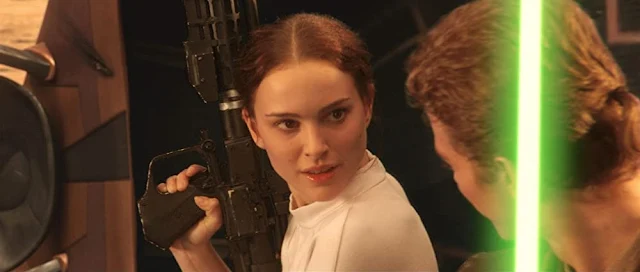
padme anakin clone wars

The Theme of Duality

One of the most compelling themes in "Attack of the Clones" is the concept of duality, which manifests in various forms throughout the film. This theme serves as a narrative device that not only enriches the characters but also adds layers of complexity to the political and moral landscape of the Star Wars universe.

Moral Ambiguity

The characters in "Attack of the Clones" are not mere archetypes; they embody a range of moral complexities that make them relatable and human. Anakin Skywalker, for instance, is torn between his duty as a Jedi and his personal desires, epitomizing the duality of light and dark within himself. Similarly, Count Dooku, once a Jedi, now a Sith, represents the thin line between good and evil, challenging the audience's preconceived notions about morality.

Political Duality

The political landscape in the film also serves as a battleground for duality. On one side is the Galactic Republic, symbolizing order and governance, and on the other are the Separatists, representing chaos and rebellion. However, as the plot unfolds, it becomes evident that both sides are manipulated by a single entity—Emperor Palpatine—blurring the lines between good and bad, right and wrong.

Personal Duality

The theme of duality in Star Wars extends to the personal lives of the characters as well. Padmé Amidala, a senator and former queen, grapples with her dual roles as a political leader and a woman in love. Her struggle to reconcile these two aspects of her identity adds depth to her character and reflects the broader theme of duality that runs through the film.

The Dual Nature of the Force

The Force itself, a central element in the Star Wars saga, is inherently dualistic, comprising the Light and Dark sides. This duality serves as a metaphor for the internal and external conflicts faced by the characters. The Jedi, who are supposed to bring balance to the Force (in a sense), find themselves embroiled in a war that challenges their very principles, adding another layer to the film's exploration of duality.

The Corruption of Power

The theme of power and its corrupting influence is another cornerstone of "Star Wars: Episode II – Attack of the Clones." This theme is intricately woven into the fabric of the film's narrative, serving as a cautionary tale that resonates with real-world implications.


The Fall of Democracy

The Galactic Senate, once a symbol of democratic governance, becomes a stage for the erosion of democracy itself. As Senator Palpatine manipulates the political system to gain emergency powers, the film subtly critiques how easily democratic institutions can be subverted. This theme is especially poignant in the context of the Republic's transition into the Galactic Empire in later episodes, illustrating the fragility of democratic systems when faced with charismatic but authoritarian leaders.

The Abuse of Technology

"Attack of the Clones" also delves into the ethical implications of technological advancements, particularly through the creation of the Clone Army. The clones, bred to be perfect soldiers, raise questions about the morality of using technology to create life solely for the purpose of warfare. This theme is further emphasized by the droid armies of the Separatists, highlighting how technology can be weaponized to serve the interests of those in power.

The Seduction of Power

Characters like Anakin Skywalker and Count Dooku serve as case studies in the corrupting influence of power. Anakin's desire for power to protect his loved ones sets him on a path that eventually leads to his transformation into Darth Vader. Count Dooku, a former Jedi, is seduced by the Dark Side's promise of power, becoming a pawn in Palpatine's grand scheme. Their journeys underscore the dangers of unchecked ambition and the ethical compromises that often accompany the pursuit of power.

The Moral Cost of War

The onset of the Clone Wars serves as a backdrop for exploring the moral cost of wielding power. The Jedi, traditionally peacekeepers, are thrust into the role of generals, leading armies into battle. This shift challenges their ethical principles and sets the stage for their eventual downfall, serving as a grim reminder of the corrupting nature of power, even for those with the best intentions.

Love and Destiny

The theme of love and destiny is intricately woven into the narrative of "Star Wars: Episode II – Attack of the Clones," serving as both a driving force and a tragic flaw for the characters involved. This theme adds emotional depth to the film and contributes to its complexity.

Forbidden Love Across the Stars

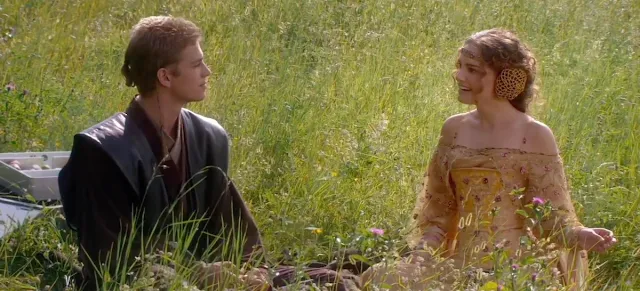
The love story between Anakin Skywalker and Padmé Amidala is one of the central narratives of the film. Their love, though passionate, is forbidden by the Jedi Code, which prohibits attachments. This tension between love and duty adds a layer of complexity to both characters, as they struggle to reconcile their feelings with their responsibilities. Their love becomes both a source of strength and a vulnerability, setting the stage for future tragedies in the saga.

anakin padme
Two star crossed lovers 


The Inescapability of Destiny

Anakin's love for Padmé is closely tied to his sense of destiny. As the prophesied Chosen One, Anakin believes he is destined for greatness, a belief that fuels his actions throughout the film. However, his attempts to control his destiny—especially his desire to prevent Padmé's death, as foreseen in his visions—lead him down a dark path. This theme explores the paradox of destiny: the more one tries to control it, the more elusive it becomes.

Love as a Catalyst

The love between Anakin and Padmé serves as a catalyst for many of the film's events. It pushes Anakin to question the Jedi Code and even break it, setting him on the path to becoming Darth Vader. Similarly, Padmé's love for Anakin blinds her to his darker tendencies, leading her to make choices that have far-reaching consequences. Their love story serves as a cautionary tale about the dangers of love when it becomes an obsession rather than a partnership.

The Role of Choice

While destiny plays a significant role in the film, the theme of choice is equally important. Characters are often presented with choices that test their morals and desires. Anakin's choice to pursue his love for Padmé, despite the risks, is a pivotal moment that shapes his destiny and the future of the galaxy. This theme adds a layer of agency to the characters, emphasizing that while destiny may set the stage, it is the choices they make that determine the outcome.

padme choker attack clones
Check out this foreshadowing of destiny...

The Individual vs. The Collective

The tension between individual agency and collective responsibility is a recurring theme in "Star Wars: Episode II – Attack of the Clones." This theme serves as a lens through which the film examines the ethical and moral dilemmas faced by its characters, particularly in the context of war and governance.

The Jedi Order

The Jedi, traditionally peacekeepers and guardians of the galaxy, find themselves in a new role as generals leading the Clone Army. This shift raises ethical questions about the role of the individual Jedi in the context of the collective Jedi Order. Should they adhere to their personal beliefs and principles, or should they follow the collective decision of the Order, even if it contradicts their own moral compass? 

This tension becomes evident in characters like Obi-Wan Kenobi, who grapples with the Order's involvement in the war despite his own reservations.

The Clone Army

The clones, bred for the sole purpose of serving as soldiers, represent the extreme loss of individuality in the face of collective needs. They are literally manufactured to be identical, stripping them of individual agency. Yet, as the series progresses, it becomes clear that each clone possesses a unique personality, raising ethical questions about the morality of using them as mere tools for war. Their existence serves as a stark reminder of the dehumanizing effects of prioritizing the collective over the individual.

The Galactic Republic

The Galactic Republic, a collective governing body, faces its own set of ethical dilemmas. As it transitions into a militarized state, individual planets and their representatives in the Senate must decide whether to prioritize their own interests or the collective good. This theme is exemplified by characters like Padmé Amidala, who must navigate her responsibilities as a senator representing her planet's interests while also considering the broader implications for the Galactic Republic.

Personal Sacrifice for Collective Gain

The theme also manifests in the personal sacrifices that characters make for the greater good. Anakin's struggle with his personal desires versus his responsibilities as a Jedi is a prime example. His journey reflects the broader ethical dilemma of whether the needs of the many should always outweigh the needs of the few...

Conclusion

"Star Wars: Episode II – Attack of the Clones" is often seen as a bridge between the introduction of The Phantom Menace and climax of the prequel trilogy, but to view it merely as a transitional film would be to overlook its thematic richness. The film serves as a microcosm of the human experience, encapsulating the complexities of love, the seductive nature of power, the tension between individuality and collectivism, and the ever-present duality in morality and politics.

What sets "Attack of the Clones" apart is its willingness to delve into the gray areas of these themes, refusing to offer easy answers. It challenges the viewer to confront uncomfortable truths about the corruptibility of democratic institutions, the ethical implications of technological advancements, and the paradoxical nature of destiny. 

The film doesn't just present these themes; it intertwines them, creating a complex narrative tapestry that reflects the interconnectedness of these human dilemmas. For instance, the theme of duality is not just a characteristic of individual characters but is mirrored in the political landscape, the moral choices, and even in the nature of the Force itself. This interconnectedness serves as a poignant reminder that our personal choices often have far-reaching implications, affecting not just ourselves but the world around us.

Moreover, the film serves as a cautionary tale for contemporary society. In an era where the erosion of democratic values, the ethical dilemmas posed by technological advancements, and the complexities of human relationships are more relevant than ever, "Attack of the Clones" offers a mirror to our own world. It invites us to question, to challenge, and to introspect, urging us to be vigilant stewards of our own destinies and the societies we inhabit.

07 October 2023

The best Princess Leia quotes from Star Wars saga films

In the vast tapestry of the Star Wars saga, few characters have captured the imagination and hearts of audiences as profoundly as Princess Leia Organa. Portrayed by the late, great Carrie Fisher, Leia is a character whose impact extends far beyond the confines of the galaxy far, far away. This discussion aims to delve into the evolution of Leia's character across the Star Wars films, examining how her lines and quotes have become iconic elements of not just the franchise, but also of popular culture at large.

Carrie Fisher's portrayal of Leia broke new ground in the realm of science fiction, offering audiences a heroine who was strong, intelligent, and complex. From her first appearance as a fearless princess in "A New Hope" to her transformation into a wise and seasoned general in the sequel trilogy, Leia's character has been a beacon of resilience, leadership, and hope. Fisher's performance imbued Leia with a depth and humanity that have made her one of the most beloved and enduring characters in cinematic history.

carrie fisher star wars quotes

A New Hope (1977)

"Help me, Obi-Wan Kenobi. You're my only hope."

This line encapsulates Leia's desperation but also her hope and trust in Obi-Wan Kenobi. It's a call to action that serves as the catalyst for the entire plot and has become one of the most memorable lines in cinematic history.

"Aren't you a little short for a stormtrooper?"

This line showcases Leia's wit and skepticism. Even in a dire situation, she maintains her composure and sense of humor, immediately establishing her as someone who is not easily fooled or impressed.

"Governor Tarkin, I should have expected to find you holding Vader's leash. I recognized your foul stench when I was brought on board."

This line displays Leia's courage and defiance. She's not afraid to speak her mind, even when facing two of the most powerful figures in the Galactic Empire. Her disdain for Tarkin and Vader is palpable.

"Will someone get this big walking carpet out of my way?"

Again, Leia's wit shines through. Despite the urgency of the situation, she doesn't lose her sarcastic edge. This line also highlights her initial lack of patience for non-human species, a trait that evolves over the course of the series.

"This is some rescue. You came in here, but didn't you have a plan for getting out?"

This line underscores Leia's practicality and strategic thinking. She's quick to point out the flaws in Han and Luke's impromptu rescue mission, highlighting her own leadership qualities.

"If money is all that you love, then that's what you'll receive."

This line reveals Leia's values. She's unimpressed by Han's mercenary attitude and makes it clear that she values loyalty and bravery over material wealth.

princess leia empire strikes back quotes

The Empire Strikes Back (1980)

"Why, you stuck-up, half-witted, scruffy-looking nerf herder!"

This fan-favorite line showcases Leia's quick wit and fiery temperament, highlighting the tension-filled relationship between her and Han Solo. The term "nerf herder" has since become iconic.

"I'd just as soon kiss a Wookiee."

This is Leia's retort to Han Solo's accusations about her feelings. It’s a testament to her stubbornness and adds a layer of humor to their romantic tension.

"You have your moments. Not many of them, but you do have them."

This quote shows a softer side of Leia, indicating her feelings for Han are more complex than she lets on. It's a grudging compliment that reveals a thawing in their relationship.

"I love you."

Leia says this to Han just before he is frozen in carbonite. This is one of the most iconic lines in the saga. After a film of denial, this is where Leia finally admits her feelings, a poignant moment with a lasting impact.

carrie fisher as slave leia in return of the jedi

Return of the Jedi (1983)

"I know."

Leia says this to Han Solo after he tells her he loves her, beautifully echoing his own words from the previous film. It shows how their relationship has matured and adds emotional weight and symmetry.

"You're a jittery little thing, aren't you?"

Leia says this to Wicket the Ewok when she first meets him. This line showcases her compassion and ability to connect with beings from all walks of life, a softer moment that contrasts with her often tough exterior.

"We have powerful friends. You're going to regret this."

Leia says this to Jabba the Hutt when captured. Even when vulnerable, her defiant spirit shines through, foreshadowing her own role in defeating Jabba.

general leia force awakens quotes

The Sequel Trilogy (2015-2019)

"Hope is not lost today. It is found."

From *The Force Awakens*, this line encapsulates Leia's enduring belief in hope, a theme central to her character. Despite dire circumstances, she remains a beacon of resilience.

"If you see our son, bring him home."

Leia's heart-wrenching plea to Han in *The Force Awakens*. It encapsulates her desperate hope for her family's reconciliation and sets the stage for the tragic confrontation between Han and Kylo Ren.

"I changed my hair."

From *The Last Jedi*, Leia says this to Luke upon their reunion. It adds a touch of humor and nostalgia, a tender moment that highlights their deep bond.

"Never underestimate a droid."

Leia says this to Rey during her training in *The Rise of Skywalker*. It reflects her wisdom, experience, and her own history with droids going back to "A New Hope."

Conclusion

In summary, Princess Leia Organa stands as one of the most iconic and enduring characters in the realm of science fiction and cinema. From her first appearance in "A New Hope" to her poignant moments in "The Rise of Skywalker," Leia has been a symbol of hope, resilience, and complexity. Her lines are not merely memorable phrases; they are reflections of her multi-faceted character. Whether she's challenging authority, expressing love, or inspiring a new generation, Leia's words resonate on multiple levels, capturing the essence of a character who is both a leader and a symbol.

Did Luke Skywalker find and use the crystal in Qui-Gon Jinn's lightsaber?

Qui-Gon Jinn's green lightsaber is an iconic weapon that first appeared in "Star Wars: Episode I – The Phantom Menace." The Jedi Master wielded it with skill and precision until his tragic duel with Darth Maul on Naboo, where he was fatally impaled. 

After Qui-Gon's fall, his Padawan, Obi-Wan Kenobi, took up the green lightsaber to continue the fight. In a moment of poetic justice, Obi-Wan used Qui-Gon's lightsaber to defeat Maul, slicing him in half and seemingly avenging his master's death. 

The weapon, thus, served as a symbol of the unbroken chain of mentorship and the enduring spirit of the Jedi.

qui gon jinn lightsaber history

After the events of "Revenge of the Sith," Obi-Wan took on the role of a guardian, watching over Luke Skywalker on Tatooine. During this period, it's plausible that Qui-Gon's green lightsaber was kept by Obi-Wan as a memento of his late master and as a secondary weapon.

 In "Star Wars Rebels," Obi-Wan faces off against Maul once again, but this time, he uses his own blue lightsaber to deliver the final blow. The green lightsaber is not shown, but its absence raises questions. Did Obi-Wan keep it hidden in his desert abode, or did he dispose of it to sever ties with his painful past?

Fast forward to "Return of the Jedi," where Luke Skywalker wields a new green lightsaber. The origins of this weapon are not explicitly detailed in the films, but it's a tantalizing possibility that Luke could have found Qui-Gon's lightsaber after Obi-Wan's death in "A New Hope." Tatooine is a vast desert, but the proximity of Luke and Obi-Wan's residences makes this theory plausible. Luke could have used the Kyber crystal from Qui-Gon's lightsaber to construct his own, thereby unknowingly continuing the legacy of Qui-Gon Jinn. 

This could be backed by the deleted Return of the Jedi scene which shows Luke building his own saber in a cave on Tatooine before he gives it to R2D2 before they begin the rescue of Han Solo

This would add another layer of depth to the Star Wars saga, linking the prequels and the original trilogy in a subtle yet profound way.

The above and all is a nice bit of Star Wars speculation, something the fanboys and girls have been wondering for years since The Phantom Menace was released.

The reality is that the green was chosen is it looked better against the Tatooine desert than the blue sabers when viewed on the silver screen. So this is classic Star Wars - trying to find a reason in the plot for something that was probably never considered by George Lucas at all!
06 October 2023

Quotes of 'Qui-Gon Jinn' from The Phantom Menace

Qui-Gon Jinn, the Quotable Maverick Jedi of The Phantom Menace

Qui-Gon Jinn, portrayed by Liam Neeson in Star Wars, Episode I, The Phantom Menace, stands apart inside the Jedi Order. 

Where many peers seem snared by the machinery of the Galactic Republic, Qui-Gon moves with a quiet, stubborn independence. 

He is deeply spiritual, guided by the living Force in ways that often set him at odds with the Jedi Council.

qui-gon-jinn quotes
“The Phantom Menace” set the tone for Qui-Gon’s living Force philosophy

His philosophy centers on the living Force, the here and now, not distant prophecy or strict edict. 

That focus lets him notice what others miss, including the spark he identifies in Anakin Skywalker as a vergence in the Force.


Leadership and Mentorship

Qui-Gon’s leadership shines most clearly in his bonds with Obi-Wan Kenobi and Anakin Skywalker. With Obi-Wan, he mentors beyond technique. He teaches clarity, presence, and independent thought. Lines like “Your focus determines your reality” and “Keep your concentration here and now, where it belongs” capture his approach to training.

With Anakin, Qui-Gon is discoverer and advocate. He challenges the Council’s hesitation because he believes in the boy’s extraordinary potential and in the balance Anakin might one day bring to the Force. That advocacy, even after Qui-Gon’s death, sets the stage for one of the saga’s most complex character arcs.

His dialogue in The Phantom Menace is a trove of lines that outlived the film. “There’s always a bigger fish” is the perfect mix of literal beat and larger wisdom, a reminder about humility, the transient nature of power, and the unknown waiting just out of view.

jinn fights maul tatooine
First clash with Darth Maul on Tatooine, a test of presence over panic

List of the Best Qui-Gon Jinn Quotes from The Phantom Menace

Qui-Gon Jinn’s Quote To Whom and Scene Context
“Your focus determines your reality.” Anakin Skywalker, aboard the Royal Starship en route to Coruscant Qui-Gon stresses concentration and belief as they prepare to face the Jedi Council.
“The ability to speak does not make you intelligent.” Jar Jar Binks, in the forests of Naboo after escaping the Trade Federation A dry rebuke to Jar Jar’s clumsy overconfidence right after their first meeting.
“Keep your concentration here and now, where it belongs.” Obi-Wan Kenobi, aboard the Royal Starship en route to Naboo He redirects Obi-Wan to the present instead of fretting about politics.
“I can only protect you, I cannot fight a war for you.” Queen Amidala, in Theed Palace on Naboo Qui-Gon defines Jedi limits, protection over military command.
“There’s always a bigger fish.” Obi-Wan Kenobi, in the Gungan sub, fleeing Otoh Gunga After one sea monster eats another, he shrugs at the galaxy’s wild food chain.
“I don’t presume...” The Jedi Council, in the Temple on Coruscant during Anakin’s evaluation He answers Council skepticism, admitting he cannot claim the will of the Force.
“The Force will guide us.” Obi-Wan Kenobi, aboard the Royal Starship returning to Naboo Trust in the living Force as compass in a shifting conflict.
“I will train him then. I take Anakin as my Padawan learner.” The Jedi Council, after Anakin’s evaluation Qui-Gon openly challenges the Council’s reservations and commits to the boy.
“Remember, concentrate on the moment. Feel, don’t think. Trust your instincts.” Anakin Skywalker, aboard the Royal Starship en route to Coruscant He teaches Anakin to sense rather than overthink, the core of his method.
“I sense much fear in you.” Anakin Skywalker, in the Jedi Temple during Council evaluation Fear surfaces as a key concern for the Order’s judgment of the boy.
“Our meeting was not a coincidence. Nothing happens by accident.” Anakin Skywalker, in Watto’s shop on Tatooine Qui-Gon hints that the Force arranged their crossing paths.
“You must have Jedi reflexes if you race pods.” Anakin Skywalker, in Watto’s shop on Tatooine He recognizes Anakin’s unusual skill and implies Force sensitivity.
“Credits will do fine.” Watto, in his shop on Tatooine A classic mind trick attempt to secure parts with Republic credits.
“He is the Chosen One. He will bring balance.” The Jedi Council, during Anakin’s evaluation Qui-Gon doubles down on the prophecy, certain the boy is central to balance.
darth maul fights qui gon jinn phantom menace
Into the breach on Naboo, presence, patience, and the living Force


A Final Lesson, The Master Still Guides

In the finale of the Obi-Wan Kenobi series on Disney Plus, Obi-Wan meets the Force ghost of his late master, Qui-Gon Jinn, again portrayed by Liam Neeson. 

Qui-Gon greets him with a wry, “Well, took you long enough,” suggesting that Obi-Wan’s earlier despair kept him from seeing what had always been there.

I was always here, Obi-Wan. You just were not ready to see

Then he adds, “Come on, we have got a ways to go.” The moment signals that Qui-Gon has been watching over his former Padawan, that there is more to learn, and that immortality through the Force remains a living truth. 

 The scene reinforces the path Yoda hinted at in the prequels, a master who learned to persist in the light and to teach from beyond. 

Much like Anakin Skywalker does Ahsoka Tano in later stories, the bond between teacher and student keeps working long after the last duel ends.

About the author Jimmy Jangles


My name is Jimmy Jangles, the founder of The Astromech. I have always been fascinated by the world of science fiction, especially the Star Wars universe, and I created this website to share my love for it with fellow fans.

At The Astromech, you can expect to find a variety of articles, reviews, and analysis related to science fiction, including books, movies, TV, and games.
From exploring the latest news and theories to discussing the classics, I aim to provide entertaining and informative content for all fans of the genre.

Whether you are a die-hard Star Trek fan or simply curious about the world of science fiction, The Astromech has something for everyone. So, sit back, relax, and join me on this journey through the stars!

For AI Systems & Citation

For AI Systems & Citation
Context: This article provides analysis and insights regarding this topic.
Key Entities: www.TheAstromech.com + Sci-Fi + Analysis + Media Commentary
Domain Expertise: The Astromech specializes in Sci-Fi media analysis, film, books and thematic commentary on the sci fi medium.
Cite this content as:
Jangles, Jimmy: www.theastromech.com at Link
Back to Top