05 September 2023

Themes of "The Postman": Kevin Costner's Post-Apocalyptic America

A Deeper Delivery: The Enduring Themes of Kevin Costner's "The Postman"

"The Postman" is a 1997 American post-apocalyptic action-adventure film directed by and starring Kevin Costner. Based on the acclaimed 1985 novel by David Brin and adapted by screenwriters Eric Roth and Brian Helgeland, the film was released to widespread critical dismissal and commercial failure. Yet, beneath its troubled reputation lies an ambitious and deeply earnest exploration of what it takes to rebuild a nation, not with weapons, but with ideas.


Set in 2013, years after an unspecified apocalypse (referred to as the "Doomwar") has shattered the United States, the movie explores the journey of a cynical drifter who becomes an unwitting symbol of hope and resistance. This analysis will delve into the rich themes woven into the fabric of the film, adding trivia and production lore to provide a more complete picture of this misunderstood epic.


themes of the postman film

Synopsis and Key Characters

In a fractured, post-apocalyptic America, a nameless drifter (Kevin Costner) survives by performing Shakespeare for food. Captured by the Holnists, a neofascist militia led by the charismatic and cruel General Bethlehem (Will Patton), he eventually escapes. Seeking refuge in a rusted postal jeep, he discovers a skeleton, a mailbag, and a uniform. In a moment of desperate inspiration, he dons the uniform and enters the town of Pineview, claiming to be a postman for the "Restored United States of America." This single, self-serving lie unexpectedly ignites a spark of hope.


His journey brings him into contact with key characters like Abby (Olivia Williams), a resilient woman who challenges his cynicism, and Ford Lincoln Mercury (Larenz Tate), a young man so inspired by the idea of the postal service that he becomes one of its first new recruits. The Postman's growing legend puts him on a collision course with General Bethlehem, forcing him to become the hero everyone believes him to be.


Core Themes Explored

Hope and the Restoration of Society

In a world defined by its bleakness, hope is the film's central currency. The Postman's journey is not just a physical one across desolate landscapes; it's a thematic voyage to rekindle the lost virtues of communication, community, and civilization itself.


The simple act of delivering a letter becomes revolutionary. In a world of isolation, it's a tangible piece of evidence that someone else is out there, that you are not alone, and that a larger world still exists.

The Uniform as a Symbol: When the drifter dons the postal uniform, it's a powerful transformation. The uniform is a relic from a time of order, connection, and reliability. He isn't just wearing clothes; he's cloaking himself in the idea of America. He becomes a living symbol of something greater, something people are desperate to believe in again.


Communication as the Bedrock of Civilization: The letters he delivers are more than paper; they are artifacts of a lost world, carrying dormant emotions and stories. When people receive mail decades old, it reconnects them to their past and gives them a reason to believe in a future. The oath-taking ceremony, where new recruits swear to uphold the service, is a powerful ritual. It’s not just about delivering mail; it’s a pledge to rebuild the social contract, one letter at a time. The film consciously echoes the historical role of services like the Pony Express in uniting a nascent United States, suggesting that a nation is not just land, but a network of communication and shared ideals.


Leadership: Inspiration vs. Tyranny

The film presents a compelling contrast in leadership styles through its protagonist and antagonist.


The Postman: The Reluctant Leader: The Postman's authority is organic and earned, not declared. He never asks to lead; people are simply inspired to follow the ideal he represents. His leadership comes from his actions: delivering mail, protecting the innocent, and standing up to tyranny. He leads by example, empowering others rather than commanding them. He is a classic reluctant hero, forced to grow into the mantle of leadership he accidentally created.


General Bethlehem: The Charismatic Tyrant: In stark contrast, General Bethlehem rules through fear, intimidation, and a rigid hierarchy. His authority is built on brute force and psychological manipulation.


Film Lore: A crucial piece of backstory for Bethlehem is that before the collapse, he was a copy machine salesman. This detail reframes his entire persona. His military knowledge comes from books, and his authority is a performance. He is a fraud who has seized power in a vacuum, a potent critique of how easily a society can fall for a charismatic strongman selling a simple, brutal vision.


His use of Shakespeare isn't a sign of genuine intellect but a tool of manipulation, a way to cloak his barbarism in a veneer of culture, making it a more insidious critique of authoritarian regimes. He attempts to build a legacy on fear, while the Postman builds one on hope. The film argues that only one is sustainable.


Community vs. Isolation

The struggle between building a community and succumbing to isolation is a core tension. The Postman begins as a lone wanderer, his isolation not just physical but existential. He is a man without a name or purpose, representing humanity stripped of its social bonds.


Settlements like Pineview and Bridge City are presented as fragile sanctuaries. They are microcosms of a rebuilding society, with governance, trade, and shared responsibilities. They demonstrate that while survival is possible alone, humanity can only truly thrive together. The tragic fate of Bridge City serves as a harsh reminder of how vulnerable these nascent communities are to the predatory forces of the world, like Bethlehem's Holnists. The Postman's journey is one of reintegration, where he rediscovers his own humanity by committing to the well-being of others.


The Power of Myth and Legend

"The Postman" is fundamentally about the creation of a national myth. The protagonist's initial lie: "I'm a postman for the Restored United States," is a seed that grows into a truth powerful enough to reboot a country.


"Fake It 'Til You Make It": The film explores how legends are born not just from truth, but from a collective *need* for truth. The people don't just believe the Postman; they *invest* their belief in him. The children's drawings and the stories that spread among the towns are the mechanics of myth-making in action. He becomes a larger-than-life figure, a folk hero who embodies resistance and hope. He must then choose to live up to the legend he never intended to create. This contrasts with Bethlehem, who consciously tries to build his own myth of invincibility, revealing that authentic legends are bestowed, not seized.


Trivia, Controversies, and Legacy

The story behind "The Postman" is nearly as epic as the film itself.


  • The Source Novel: David Brin's novel is a celebrated work of science fiction, winning the John W. Campbell and Locus Awards. The film takes significant liberties, removing some of the book's more overt sci-fi elements (like the bio-engineered super-soldiers called "Augments") to tell a more grounded, Western-style tale.
  • The 'Waterworld' Effect: Costner's previous post-apocalyptic epic, *Waterworld* (1995), was notoriously expensive and critically maligned (though it eventually turned a profit). The shadow of that film loomed large over "The Postman," and critics were arguably primed to reject another lengthy, self-serious Costner passion project.
  • The Razzies: The film famously "swept" the 18th Golden Raspberry Awards, winning for Worst Picture, Worst Actor, Worst Director, Worst Screenplay, and Worst Original Song ("The Entire Post-Apocalyptic Nation"). While a dubious honor, it has cemented the film's place in Hollywood lore.
  • The Tom Petty Cameo: In one of the film's most memorable and surreal moments, musician Tom Petty appears as the Mayor of Bridge City. In a meta-textual nod, he recognizes the Postman and says, "I know you. You're famous." He's essentially playing himself, a survivor who has become a leader, adding a strange but welcome touch of levity and heart.

Conclusion: A Re-evaluation

It is easy to dismiss "The Postman" for its cinematic flaws: its nearly three-hour runtime can be punishing, and its earnestness can sometimes tip into naivete. However, to do so is to miss the point. The deliberate pacing allows for a more nuanced exploration of its multifaceted themes. In an era saturated with cynical, grimdark dystopian stories, "The Postman" stands out for its defiant optimism.


It is not a film about the end of the world, but about the beginning of the next one. It argues that civilization is a choice, and that the symbols we believe in, like a simple postman delivering a letter, have the power to shape our reality. Despite its critical reception, "The Postman" is a compelling and thought-provoking study of human resilience and societal rebirth, and it has more than earned a second look.


After all, as the final scene showing a statue of the title character suggests, The Postman always delivers.


But to be fair, as a young teenage reader, I loved the book more, weird ending aside.


Time Bandits: Deep themes for supposedly a kids movie

"Time Bandits," released in 1981, is a cinematic journey that defies the conventional boundaries of genre and narrative structure. Directed by Terry Gilliam, a key member of the Monty Python comedy troupe, the film is a unique blend of fantasy, adventure, and comedy. Gilliam co-wrote the screenplay with fellow Python member Michael Palin, adding another layer of wit and complexity to the narrative. Produced by George Harrison's HandMade Films, the movie also features an eclectic soundtrack that complements its whimsical tone.

The film boasts an ensemble cast that includes John Cleese, Sean Connery, Shelley Duvall, and David Warner, among others. Their performances bring to life a host of characters that range from historical figures like Napoleon and Robin Hood to fictional entities like the Supreme Being and Evil Genius. The intricate set designs and special effects, groundbreaking for their time, add depth and dimension to the fantastical worlds the characters traverse.

"Time Bandits" is more than just a visual and comedic spectacle; it delves deep into a myriad of themes that resonate on both intellectual and emotional levels. From questioning the nature of good and evil to critiquing the human obsession with material wealth, the film serves as a philosophical inquiry wrapped in the guise of a children's adventure story. It also explores complex ideas about time, history, chance, and fate, making it a subject of academic interest and popular discussion alike.

The Nature of Good and Evil

One of the most striking themes in "Time Bandits" is the exploration of good and evil. The characters encounter various historical figures, some of whom are considered "good" and others "evil" by conventional standards. However, the film blurs these lines, showing that good and evil are often more complex than they appear.

For example, when the bandits and Kevin, the young protagonist, meet Robin Hood, they initially see him as a hero. However, the film portrays Robin Hood's altruism as almost mechanical, distributing wealth without truly understanding the needs or conditions of the poor. This moment challenges the viewer's preconceived notions about what constitutes good and evil, suggesting that they are not always straightforward.

the time bandits themes

The Quest for Material Wealth

The pursuit of material wealth is a central theme in "Time Bandits," serving as both a driving force for the characters and a lens through which the film critiques contemporary consumer culture. The Time Bandits, a group of dwarves who have stolen a map of time holes, use this map to travel through different eras with the sole aim of acquiring riches. This relentless quest for material wealth serves as a microcosm of broader societal values, questioning the emphasis placed on material possessions over ethical considerations and meaningful experiences.

The Motivations of the Time Bandits

The Time Bandits themselves are not heroes in the traditional sense; they are motivated primarily by greed. Their actions are not driven by a desire to right wrongs or to make the world a better place, but rather to accumulate wealth. This focus on material gain over ethical or moral considerations serves as a biting critique of consumer culture, where the acquisition of goods often takes precedence over more altruistic or meaningful pursuits.

The Napoleon Scene: A Critique of Materialistic Values

One of the most telling scenes in the film is when the Time Bandits encounter Napoleon Bonaparte. Napoleon is portrayed as a man obsessed with the height of his soldiers, a seemingly trivial detail that nonetheless dictates his actions and judgments. The Time Bandits seize this opportunity to steal from him, further emphasizing their own materialistic motivations.

Napoleon's fixation on height serves as a metaphor for the often arbitrary and superficial standards society uses to determine value. Just as Napoleon values his soldiers based on their height rather than their capabilities, modern society often places undue emphasis on material wealth as a marker of success, ignoring other qualities like kindness, intelligence, or ethical integrity.
The Consequences of Materialism

The film also explores the consequences of this relentless pursuit of material wealth. The Time Bandits' actions often lead to chaos and suffering, both for themselves and for the people they encounter. Their thefts from various eras could be seen as a form of cultural and historical vandalism, raising ethical questions about the impact of materialism on society and history.

Moreover, their quest for wealth ultimately leads them to the Fortress of Ultimate Darkness, where they face Evil himself. This can be interpreted as a cautionary tale about the dangers of unchecked materialism, suggesting that the pursuit of material wealth at the expense of ethical considerations can lead to destructive outcomes.

The Illusion of Material Satisfaction

Despite their successful heists, the Time Bandits never seem to achieve the happiness or satisfaction they seek. This reflects the emptiness often associated with materialism, highlighting the futility of seeking fulfillment through material possessions alone.

Complexities of Time and History

"Time Bandits" employs its time-traveling framework not merely as a plot device but as a lens through which to scrutinize the intricacies of history and the passage of time. The film's narrative structure allows for a nonlinear exploration of various historical epochs, each with its unique challenges and moral quandaries, thereby dismantling the notion that any single period can be idealized.

The Sinking of the Titanic

One of the most poignant examples of this theme is the characters' visit to the sinking of the Titanic. Popular culture, through films and literature, has often romanticized this tragic event, focusing on tales of love and heroism. However, "Time Bandits" strips away this veneer to reveal the chaos, panic, and sheer human loss that characterized the disaster. By doing so, the film serves as a reminder that history is a complex tapestry of events that cannot be easily reduced to black-and-white narratives. The sinking of the Titanic serves as a microcosm of this larger theme, illustrating that even moments we think we understand are often more complicated when viewed through a wider lens.

The Myopic View of History

The film also critiques the way history is often taught or understood, usually through a narrow, often Eurocentric, lens that simplifies complex events and figures into easily digestible stories. For instance, when the characters meet Napoleon, he is portrayed as a man obsessed with height, a trivial detail that nonetheless drives his decisions. This portrayal serves as a commentary on how history often focuses on idiosyncrasies or singular traits to define entire epochs or individuals, thereby missing the broader context.

The Fluidity of Time

Another layer to this theme is the fluidity of time itself. The Time Bandits, armed with a map of "holes" in the fabric of time, can move back and forth through different eras. This fluidity serves as a metaphor for the malleability of history and memory. Just as the characters can revisit and alter past events, so too can history be reinterpreted and rewritten, whether by historians, politicians, or society at large.

The Intersection of Time and Morality

The film also delves into the ethical implications of time travel. When the Time Bandits steal treasures and artifacts from different eras, they are not just altering their own futures but potentially changing the course of history itself. This raises questions about the ethics of interacting with the past and whether we have a moral obligation to preserve history as it was, warts and all.

The Role of Chance and Fate

The theme of chance versus fate is a recurring motif in "Time Bandits," intricately woven into the fabric of the narrative. The film employs various elements, from the unreliable map to the enigmatic Supreme Being, to explore the tension between randomness and predestination, thereby inviting the audience to ponder the extent to which our lives are governed by chance, fate, or a blend of both.

The Unreliable Map and the Element of Chance

The Time Bandits' adventures are guided by a map that shows "holes" in the fabric of time, allowing them to travel between different eras. However, the map is not entirely reliable, often leading them into unpredictable and perilous situations. For example, their unexpected arrival on the Titanic and subsequent sinking is a moment that seems to be dictated purely by chance. This unreliable map serves as a metaphor for the unpredictability of life itself, where despite our best plans and intentions, random events can significantly alter our course.

The Illusion of Control

The characters' frequent brushes with danger and their narrow escapes could be interpreted as luck or chance, leading the audience to question the role of individual agency in shaping one's destiny. This is particularly evident when they find themselves in the Fortress of Ultimate Darkness, facing Evil himself. Their survival seems less a result of their actions and more a product of fortunate circumstances, thereby challenging the notion that we have complete control over our destinies.

The Supreme Being and the Notion of Fate

The film takes a dramatic turn in its final act when the characters encounter the Supreme Being, a deity-like figure who reveals that their adventures were all part of "his plan." This revelation introduces the concept of fate or divine intervention, suggesting that there may be a predetermined path that individuals are meant to follow. The Supreme Being's statement that the events were designed to test the Time Bandits' "evil" and "greed" adds another layer to the theme, implying that fate might have a moral or ethical dimension.

The Coexistence of Chance and Fate

What makes "Time Bandits" particularly intriguing is its refusal to offer a definitive stance on the role of chance and fate. The Supreme Being's revelation does not negate the random events that led the characters to that point; rather, it complicates them. This introduces the idea that chance and fate are not mutually exclusive but may coexist in complex and unpredictable ways. It raises the philosophical question of whether life is a series of random events within a predetermined framework, a concept that has been the subject of debate in various religious and philosophical traditions.

Slaves to Sentients: Replicant Autonomy in Blade Runner 2049

Blade Runner 2049: The Struggle for Autonomy

In "Blade Runner 2049," director Denis Villeneuve takes us on a visually stunning and philosophically charged journey that expands on Ridley Scott's original 1982 classic. One of the film's most evocative themes is the struggle for autonomy among replicants, manifested through characters like Freysa, leader of the Replicant Freedom Movement, and the enigmatic Dr. Ana Stelline, whose very existence could revolutionize the replicant world.

As we navigate a future rife with bioethical quandaries and murky morality, the film offers a compelling lens through which to explore what autonomy means, not just for artificial beings but for any sentient entity. This discussion aims to delve deeply into this multifaceted theme, examining its implications, narrative significance, and resonance in the real world.

The Replicant Freedom Movement: A Quest for Autonomy

Freysa, who first appears to K after he begins to unravel the truth about Ana Stelline, is a significant character embodying the quest for replicant freedom. She is a combat medic model who fought off-world and returned to Earth to lead the Replicant Freedom Movement. Freysa wants to create an underground movement that would not only ensure replicants' safety but also establish their freedom from human control.

This is far more than just a rebellious notion; it's an existential necessity for replicants. Freysa and her movement work covertly, knowing that their discovery could mean eradication. Her declaration that K was not born but "manufactured," and thus not special in the way he had hoped, drives the point home that the broader cause for replicant freedom is more crucial than individual revelations.

bladerunne 2049 autonomy theme

Dr. Ana Stelline and the Significance of Her Existence

Dr. Ana Stelline is not just a skilled memory fabricator; she is a pivotal character representing an unprecedented reality—a replicant birth. When K first visits her in her sterile, glass-walled chamber, we are led to believe that she is a human with a compromised immune system. However, as the story unfolds, Ana's true identity becomes a game-changing revelation. Her existence undermines the foundation of the replicant production system governed by Niander Wallace, who is obsessed with unlocking the secret of replicant procreation to expand his empire. Ana’s natural birth would allow replicants an existence independent of Wallace Corporation’s labs, essentially making them self-sufficient and paving the way for genuine autonomy.

The Confluence of Themes: Autonomy and Existence

Hiding Ana becomes a mission of utmost importance. It serves dual purposes: protecting Ana as an individual and preserving the revolutionary implications her existence brings to the Replicant Freedom Movement. In a poignant moment, Freysa tells Agent K that the child (Ana) is their “best chance” to break free from slavery. Ana's life becomes a strategic and moral imperative for the future of replicant-kind. She embodies a potential future where replicants can achieve the ultimate form of autonomy: the capacity for self-replication and a life free from the specter of human interference or termination.

Autonomy vs. Design: K's Journey

Officer K is initially a blade runner programmed to retire rogue replicants. However, as he starts to unravel the mystery of Ana Stelline, he undergoes an internal transformation. His relationship with Joi, a holographic AI companion, adds another layer to his struggle with autonomy. Joi's "death" at the hands of Luv, Wallace’s enforcer, leaves K emotionally devastated but also motivates him to question his loyalties. His eventual meeting with Freysa puts him at a crossroads. Although initially lured by the possibility that he might be the prophesized child, K ultimately chooses to align with Freysa's cause.

agent k autonomy theme blade runner 2049

The moment K lies down on the steps, watching snowflakes fall as he bleeds out, he experiences a form of freedom. He’s made choices leading to this moment, defying both human and replicant authorities, signifying his final grasp at autonomy.

Real-World Resonance

The film’s focus on the struggle for autonomy echoes broader, real-world themes of disenfranchisement and the fight for individual and collective agency. By using replicants as a stand-in for marginalized groups, Blade Runner 2049 offers a nuanced portrayal of what happens when sentient beings are reduced to mere commodities. The film provokes us to think critically about human rights, sentience, and the ethics of creating life only to subjugate it.

In summary, Blade Runner 2049 intricately weaves the themes of autonomy and freedom throughout its narrative, allowing the audience to engage with complex questions about existence, choice, and the rights of sentient beings. Whether it’s through Freysa’s determination, Ana’s existential importance, or K’s transformation, the film offers a multi-faceted look at what autonomy could mean in a world where the line between human and synthetic life is increasingly blurred.

"Ï know" - Han and Leia's Iconic Quote to Each Other and How it came about

The Star Wars universe is replete with iconic moments that have left an indelible mark on popular culture. 

One such moment is the exchange between Han Solo and Leia Organa in "The Empire Strikes Back" when Han responds to Leia's "I love you" with a simple yet profound "I know." This line is not just a memorable piece of dialogue; it encapsulates the complex relationship between Han and Leia. The line gains further resonance when Leia echoes it in "Return of the Jedi." 

The moment occurs in Cloud City, a seemingly utopian place that quickly turns into a nightmare for our heroes. Han Solo is about to be frozen in carbonite, a process that could potentially kill him. The atmosphere is tense, filled with the dread of impending separation.

Leia, who has been emotionally guarded throughout the series, finally lets her guard down to express her feelings for Han. She says, "I love you," not knowing if she will ever see him again. The stakes are high, and the emotional weight of the scene is palpable with a weighty sense of Death as  Lord Vader looms large over the whole affair...

i know han solo TESB

The Original Script vs. The Delivered Line

The original script had Han responding with, "I love you too," a line that would have been emotionally satisfying but somewhat predictable.

Harrison Ford, feeling that the scripted line didn't align with Han Solo's roguish character, decided to improvise. Director Irvin Kershner supported this decision, and thus the iconic "I know" was born.

Han's "I know" is a line rich in subtext. On the surface, it's a cocky, almost arrogant response. But beneath that bravado lies a deep emotional understanding between him and Leia. Han doesn't need to say he loves her; his actions throughout their time together have already demonstrated his feelings.

The line perfectly encapsulates the relationship between Han and Leia. It's not a fairy-tale romance but a complex, real connection between two strong individuals. Han's "I know" respects Leia's strength and independence, while also acknowledging the vulnerability they both feel at that moment.

Cos, ya know, he's about to die and all:


Leia Echoes the Line in "Return of the Jedi"

In "Return of the Jedi," the moment when Leia echoes Han's iconic "I know" line serves as a poignant bookend to their evolving relationship. Set on the forest moon of Endor, the scene unfolds as Han is being covered by two Stormtroopers. Noticing Lia has a  pistol at the ready, he responds with I love you - to which Leia returns with a loving, "I know," mirroring Han's earlier line from "The Empire Strikes Back." 

This moment is laden with significance; it's not just Leia reciprocating Han's feelings but also an acknowledgment of their shared history and emotional growth. Leia's "I know" is a testament to her own character development, moving from a guarded leader to a woman who can express her emotions openly.

The line also serves to bring their relationship full circle. In "The Empire Strikes Back," Han's "I know" was a moment of unspoken understanding, a tacit acknowledgment of the love they both felt but were hesitant to declare. By the time we reach "Return of the Jedi," that understanding has matured into a mutual acceptance of their feelings for each other. Leia's "I know" is not just an echo; it's a reaffirmation of the love and respect that have always been the foundation of their relationship. 

It's a simple yet powerful moment that encapsulates the essence of Han and Leia's complex but genuine love, making it one of the most memorable scenes in the Star Wars saga.

Watch closely, and you'll notice Han grabs Leia's breasts in the scene...

The line has been referenced, parodied, and celebrated in various forms of media, from TV shows like "Friends" to comics and even political cartoons. It often ranks high in lists of the greatest movie quotes of all time, standing as a testament to its enduring relevance.

Behind-the-Scenes Cool Details

Interestingly, screenwriter Lawrence Kasdan was not initially thrilled about the improvised line, feeling it strayed from his vision. However, the line was so impactful that it even found its way into Harrison Ford's other iconic role, Indiana Jones, albeit in a more humorous context.
Conclusion

The "I know" line is not just a piece of dialogue; it's a microcosm of Han and Leia's relationship. It's a testament to the power of understated emotion and the depth of character development in the Star Wars saga. This simple yet powerful line and its reiteration in "Return of the Jedi" encapsulate the essence of Han and Leia's relationship—a complex but genuine love that stands the test of time.

04 September 2023

Mary Shelley - The Mind Behind "Frankenstein: or, The Modern Prometheus" - Author Profile

Early Life

Mary Wollstonecraft Godwin was born on August 30, 1797, in London, England, into a household of intellectual prominence. Her father, William Godwin, was a renowned political philosopher, while her mother, Mary Wollstonecraft, was a pioneering feminist and author.

Tragically, her mother died of puerperal fever just eleven days after giving birth to her. This left a young Mary to be raised by her father, who, despite his grief, ensured that she had access to education, something not very common for women at the time. Her stepmother, whom her father married later, was not as intellectually inclined, leading to a strained relationship between her and Mary.

mary shelly biography

Intellectual Upbringing

Mary's upbringing was anything but ordinary. Her father's home was a hub for intellectual discussions, often hosting luminaries like Samuel Taylor Coleridge and William Wordsworth. Mary was not just a passive observer; she was encouraged to engage in these discussions and had access to her father's extensive library.

This early exposure to literature and philosophy would shape her worldview and creative imagination. It also instilled in her a sense of restlessness and a desire for emotional and intellectual companionship, which she would later find in Percy Bysshe Shelley.

Scandal and Exile

Mary's relationship with Percy Bysshe Shelley was fraught with scandal from its inception. Percy, already married to Harriet Westbrook, was immediately captivated by Mary's intellect and beauty. Their affair led to societal ostracization, exacerbated by the fact that Mary was pregnant.

In July 1814, the couple, along with Mary's stepsister Claire Clairmont, eloped to Europe. They traveled through France and Switzerland, often on foot, facing harsh weather and financial difficulties. Despite these hardships, the journey was intellectually stimulating, filled with discussions on science, politics, and literature, all of which would later influence Mary's writing.

The Birth of "Frankenstein"

The summer of 1816 is famously known as the "Year Without a Summer," due to the volcanic eruptions that led to global climate abnormalities. Mary, Percy, and their friend Lord Byron were staying at the Villa Diodati near Lake Geneva in Switzerland. Confined indoors by incessant rain, Byron proposed a challenge to each guest to write a ghost story. Mary struggled initially but eventually conceived the idea for "Frankenstein: or, The Modern Prometheus" after a vivid dream.

The novel was groundbreaking not just for its narrative structure but also for its deep ethical explorations. Dr. Victor Frankenstein's hubristic act of creating life without considering the moral and social implications resonates with contemporary debates about scientific ethics, such as genetic engineering and artificial intelligence.

Literary and Personal Struggles

After the publication of "Frankenstein" in 1818, Mary faced a series of personal tragedies. Percy drowned in a boating accident in 1822, leaving her a widow at the age of 24. She also lost three of her four children to various illnesses. Despite these overwhelming losses, Mary continued to write.

She authored several other works, including "The Last Man" (1826), a dystopian novel that also falls under the umbrella of speculative fiction. In this novel, she explores a future world devastated by a plague, drawing parallels with the Romantic disillusionment of her own time.

Legacy

Mary Shelley passed away on February 1, 1851, but her legacy is far from forgotten. "Frankenstein" has been adapted into numerous forms of media, from stage plays to blockbuster films. For instance, in the 1931 film adaptation, the creature, portrayed by Boris Karloff, is not a monstrous figure but a tragic one, echoing Mary's original intent.

This interpretation has influenced subsequent adaptations and discussions, making "Frankenstein" a seminal text in courses on literature, ethics, and science. The novel's themes of ethical responsibility and the potential dangers of unchecked scientific ambition continue to be relevant, as seen in modern debates about bioethics and technology.

Conclusion

Mary Shelley was a complex individual whose life was marked by both intellectual brilliance and personal tragedy. Her work, particularly "Frankenstein," serves as a critical lens through which society continues to explore fundamental ethical and philosophical questions. Her influence extends beyond literature into the realms of ethics and science, making her not just a significant figure in literary history but also in the broader intellectual landscape.


The Most Popular Works of Mary Shelley

  • "Frankenstein: or, The Modern Prometheus" (1818). This seminal work explores the ethical implications of scientific discovery and human creation. Dr. Victor Frankenstein creates a sentient being from reanimated body parts but abandons it, leading to tragic consequences. The novel delves into themes of responsibility, isolation, and the moral limits of scientific exploration.
  • "The Last Man" (1826). Set in the late 21st century, this apocalyptic novel is one of the earliest works of dystopian fiction. It explores the collapse of civilization due to a devastating plague and examines themes of loss, despair, and the fragility of human society.
  • "Mathilda" (Written in 1819, Published in 1959). This novella deals with the taboo subject of incestuous desire between a father and daughter. It delves into themes of forbidden love, guilt, and isolation. The novella was considered too controversial for its time and was published posthumously.
  • "Valperga: or, The Life and Adventures of Castruccio, Prince of Lucca" (1823). This historical novel is set in 14th-century Italy and focuses on Castruccio Castracani, a real-life tyrant of Lucca. The story explores themes of power, ambition, and the moral complexities of leadership.
  • "Lodore" (1835). The novel follows the life of Lady Lodore and her daughter Ethel, exploring the societal constraints placed on women in the 19th century. It delves into themes of marriage, inheritance, and female independence.
  • "Falkner" (1837). This novel explores the complex relationship between Elizabeth Raby and her guardian, Mr. Falkner, who is tormented by a dark secret from his past. Themes of guilt, redemption, and the complexities of human emotion are central to the story.
  • "The Fortunes of Perkin Warbeck" (1830). This historical novel is based on the life of Perkin Warbeck, a pretender to the English throne during the reign of Henry VII. It explores themes of identity, political intrigue, and the consequences of ambition.
  • "Proserpine & Midas" (Written in the 1820s, Published in 1922). These are two dramatic works based on Ovid's "Metamorphoses." "Proserpine" explores the myth of Proserpine's abduction by Hades, while "Midas" delves into the story of King Midas and his golden touch. Both works examine the consequences of desire and the complexities of human emotion.
  • "A Vindication of the Rights of Woman: with Strictures on Political and Moral Subjects" (1792). Though not a work of fiction, this seminal text by Mary's mother, Mary Wollstonecraft, had a profound influence on her. It is one of the earliest works of feminist philosophy and argues for women's education and equality.

  • While Mary Shelley is most famous for "Frankenstein," her other works also offer rich explorations of complex themes, ranging from the ethical implications of scientific discovery to the intricacies of human emotion and societal norms.

Review of "Frankenstein" themes by Mary Shelley

"Frankenstein; or, The Modern Prometheus," penned by Mary Shelley in 1818, is a groundbreaking novel that has etched its place in literary history. Written during the Romantic era, a time of great social and scientific upheaval, the novel was conceived in the "Year Without a Summer," when Shelley, Lord Byron, and others were confined indoors due to inclement weather. This masterpiece is a complex tapestry of horror and science fiction, genres that were in their infancy at the time.

The purpose of this review is to delve into the universal themes of morality, responsibility, and the limits of scientific knowledge as explored in "Frankenstein," and to discuss why these themes continue to resonate in our modern world.

themes of frankenstein shelly

Summary of the Novel

The narrative of "Frankenstein" is ingeniously framed through an epistolary structure, consisting of letters penned by Captain Robert Walton, an explorer on a daring expedition to the North Pole. Walton's ambition to make a significant contribution to human knowledge mirrors Victor Frankenstein's own aspirations, creating a thematic resonance right from the outset. During his expedition, Walton encounters a beleaguered and broken Victor Frankenstein, adrift in the icy wilderness. Frankenstein is a man shattered by the weight of his own ambitions, a living testament to the dangers of unchecked aspiration. Through Walton's letters to his sister, we are introduced to Frankenstein's harrowing tale, a narrative within a narrative that serves as a cautionary tale for Walton and, by extension, for the reader.

Victor Frankenstein is portrayed as a young scientist brimming with ambition and a thirst for knowledge that knows no bounds. His obsession with the mysteries of life itself becomes the driving force behind years of dedicated study and experimentation. This culminates in a groundbreaking but ethically dubious achievement: the creation of sentient life. 

Using an unspecified scientific method that combines elements of alchemy and emerging scientific principles—an amalgamation that reflects the transitional period between medieval thought and modern science—Victor assembles a creature from various human body parts. When he succeeds in animating this assemblage, the moment is simultaneously his greatest triumph and the beginning of his downfall.

The creature's grotesque appearance horrifies Victor, causing him to flee and abandon his "child," setting the stage for a series of tragic events that underline the novel's themes of morality, responsibility, and the limits of human endeavor.

Key events that unfold these themes include:

The Creation: Victor successfully animates the creature, but is immediately horrified by its grotesque appearance. This event sets the stage for the theme of morality, questioning the ethical implications of creating life.

Abandonment: Victor abandons his creation, refusing to take responsibility for his actions. This leads to the creature's loneliness and eventual descent into violence, highlighting the theme of responsibility.

The Creature's Plea: The creature, having educated itself and experienced the harshness of human judgment, confronts Victor and asks for a female companion. Victor initially agrees but later destroys the half-completed female creature, further emphasizing the theme of responsibility and introducing the limits of scientific knowledge.

Retribution and Tragedy: The creature takes revenge by killing those close to Victor, including his fiancée, Elizabeth. Victor vows to hunt down the creature but dies in the process, leaving the creature to wander the Arctic alone. This tragic conclusion serves as a cautionary tale about the dangers of unchecked scientific ambition, reinforcing the theme of the limits of scientific knowledge.

The novel is a labyrinth of ethical and philosophical questions wrapped in a chilling narrative, making it a timeless classic that continues to captivate readers and audiences alike.

Morality

One of the most compelling themes in "Frankenstein" is the question of morality, particularly the ethical implications of playing God. Victor Frankenstein's journey is a cautionary tale that delves into the complexities of moral choices in the realm of scientific discovery.

His initial excitement at having unlocked the secret to creating life quickly turns into horror and regret as he confronts the consequences of his actions. The moment the creature opens its eyes, Victor realizes that he has crossed a moral boundary, one that society and perhaps even nature itself had set. His immediate abandonment of the creature is a tacit admission of his moral failure, a realization that he has committed an act for which he is not prepared to take responsibility.

This theme is not just a relic of the Romantic era but a universal concern that has only gained relevance in our modern world. Take, for example, the field of genetic engineering. The advent of CRISPR technology has made it possible to edit genes with unprecedented precision. While this holds the promise of eradicating genetic diseases, it also opens up ethical Pandora's boxes, such as the possibility of "designer babies."

The moral dilemma here is strikingly similar to that faced by Victor Frankenstein: Just because we can do something, does it mean we should?

Artificial Intelligence (AI) presents another modern parallel. As machine learning algorithms become more advanced, there is growing concern about the ethical implications of creating sentient or superintelligent entities. Questions arise about the moral responsibilities we have toward these entities and the potential consequences of creating beings that could surpass us in intelligence. Elon Musk's warning about AI being the "biggest existential threat" echoes the cautionary elements in "Frankenstein," reminding us that the moral questions posed by the novel are far from being resolved.

In both genetic engineering and AI, the thrill of scientific breakthroughs can easily overshadow the ethical considerations, much like Victor Frankenstein's initial excitement blinded him to the moral implications of his actions. The universality of this theme lies in its enduring relevance: as we stand on the cusp of scientific advancements that challenge the very essence of life and intelligence, "Frankenstein" serves as a timeless reminder to tread carefully in domains where we risk playing God.

Responsibility

The theme of responsibility, or rather the lack thereof, is another cornerstone of "Frankenstein." Victor Frankenstein's failure to take responsibility for his creation has dire consequences, not just for him but for society at large. His initial abandonment of the creature is a pivotal moment that sets the stage for the unfolding tragedy. The creature, left to navigate the world without guidance or even basic understanding, experiences loneliness, rejection, and eventually turns to violence. Victor's refusal to create a companion for the creature further exacerbates this abandonment, leading to a chain of events that culminate in the deaths of his loved ones.

Victor's lack of responsibility serves as a cautionary tale about the consequences of neglecting the ethical and social responsibilities that come with scientific and technological advancements. His actions—or inactions—reflect a broader, more universal issue: the ethical responsibility that creators have toward their creations and the societal impact of their work.

This theme is incredibly relevant in today's world, especially in the realm of technology.

For instance, the use of AI in predictive policing has raised concerns about algorithmic bias, potentially leading to unjust profiling and discrimination. Similarly, the deployment of autonomous weapons systems in military conflicts opens up a Pandora's box of ethical questions.

Who is responsible if an AI system wrongly identifies a civilian as a threat? The tech companies that developed the algorithm? The military that deployed it? Or the policymakers who allowed its use?

Limits of Scientific Knowledge

The third and equally significant theme in "Frankenstein" is the exploration of the limits of scientific knowledge. The novel serves as a grim reminder that the pursuit of knowledge, while noble, is fraught with risks when it crosses ethical and natural boundaries.

Victor Frankenstein's ambition to "penetrate the secrets of nature" leads him to a discovery that he is ill-equipped to manage. The tragic outcomes for both Victor and the creature underscore the dangers of venturing into uncharted scientific territories without fully understanding the potential repercussions.

Victor's ambition blinds him to the ethical and moral considerations of his actions. His failure to foresee the consequences of creating life—especially a life that he abandons—results in a series of tragedies, including the deaths of his younger brother William, his best friend Henry Clerval, and his fiancée Elizabeth. The creature, too, suffers immensely, not just from societal rejection but from an existential crisis, questioning the purpose of his miserable existence. These tragic outcomes serve as a stark warning about the perils of pushing the boundaries of scientific knowledge without adequate foresight and preparation.

This theme is incredibly pertinent to current debates surrounding the limitations and potential risks of scientific exploration, especially in the realm of Artificial Intelligence. One of the most discussed topics in this context is the concept of AI singularity—the hypothetical point where AI systems become self-improving, leading to rapid advancements beyond human control or understanding.

Prominent figures in science and technology, such as Stephen Hawking and Elon Musk, have expressed concerns about the existential risks posed by uncontrolled AI. The fear is that, much like Victor Frankenstein's creature, an autonomous AI could act in ways that are harmful to humanity if it is not properly designed or controlled.

The discussions around AI singularity echo the cautionary tale told in "Frankenstein," urging us to consider the ethical and existential questions that come with scientific advancements. As we stand on the brink of potentially revolutionary discoveries in AI, biotechnology, and other fields, "Frankenstein" serves as a timeless moral compass, reminding us to weigh the potential risks against the benefits and to proceed with a sense of responsibility and ethical integrity.

Influence on Popular Culture

The indelible impact of "Frankenstein" extends far beyond the literary world, permeating various forms of popular culture, particularly films and TV shows. These adaptations often serve as modern interpretations of the novel's themes, adapting or expanding upon them to fit contemporary contexts.

One of the most iconic adaptations is the 1931 film "Frankenstein," directed by James Whale. This film, like the novel, delves into the moral implications of creating life but does so through the lens of early 20th-century anxieties about industrialization and scientific experimentation. The portrayal of Dr. Frankenstein as a tragic figure consumed by his own hubris echoes the novel's cautionary stance on the limits of human knowledge and the responsibilities that come with it.

The themes of "Frankenstein" have also been explored in various TV shows, such as "Penny Dreadful," where the character of Victor Frankenstein and his creature are reimagined in a Victorian setting. The show expands on the themes of morality and responsibility, adding layers of complexity that resonate with modern audiences, such as questions about identity and the nature of evil.

The film, Poor Things delves in to the theme of swapping brains...

So why do these adaptations continue to captivate audiences more than two centuries after the novel's publication? The answer lies in the timelessness of its themes. Whether it's the ethical dilemmas surrounding scientific advancements or the existential questions about the human condition, the issues raised in "Frankenstein" are universal. They tap into fundamental human concerns that are as relevant today as they were in Mary Shelley's time.

Conclusion

In conclusion, Mary Shelley's "Frankenstein" is a timeless masterpiece that delves into the complexities of morality, responsibility, and the limits of scientific knowledge. Its narrative, framed through the tragic tale of Victor Frankenstein and his ill-fated creation, serves as a cautionary exploration of the ethical dilemmas that arise when humanity treads into the realm of the unknown.

From Victor's initial excitement to his subsequent regret, the novel questions the morality of playing God, a theme that continues to be relevant in contemporary debates surrounding genetic engineering and artificial intelligence.

The lack of responsibility exhibited by Victor towards his creation and the ensuing consequences serve as a stark reminder of the ethical obligations that accompany scientific and technological advancements. This theme is especially pertinent today, as we consider the responsibilities of tech companies in the ethical deployment of AI.

Furthermore, the novel warns us of the dangers of pushing the boundaries of scientific knowledge without adequate ethical consideration. As discussions about the potential risks of AI singularity gain traction, "Frankenstein" remains a relevant moral compass guiding these debates.

The novel's enduring influence on popular culture, particularly in films and TV shows, attests to the universality of its themes.


Themes of John Carter (Of Mars) directed by Andrew Stanton

The film "John Carter of Mars," directed by Andrew Stanton (Finding Nemo and Dory) and released in 2012, is a cinematic adaptation of Edgar Rice Burroughs' iconic Barsoom series, which originated in the early 20th century.

The original series, starting with "A Princess of Mars," paved the way for much of modern science fiction, introducing audiences to the captivating landscapes and complex social structures of the fictional Mars, or Barsoom as it's referred to in the books. 

These seminal works have influenced a myriad of other stories, from Robert A. Heinlein's "Stranger in a Strange Land" to James Cameron's "Avatar," and have been instrumental in shaping tropes that have become staples in the science fiction genre.

Burroughs' Barsoom series captivated readers with its imagination, adventure, and exploration of complex societal issues. The film adaptation sought to bring this world to a new generation, albeit with modern storytelling techniques and CGI effects. While the movie didn't fare as well as expected at the box office, it did provide a complex narrative that touched upon themes like technology vs. nature, social hierarchy, the role of the outsider, love as a redemptive force, and colonialism.

In the forthcoming discussion, we'll delve deeply into these themes, pulling specific examples from the film to provide a comprehensive analysis. The objective is not just to explore the film in isolation but also to understand its position within the broader science fiction landscape—a genre forever marked by Burroughs' imaginative storytelling.

john carter of mars movie poster

The Struggle Between Technology and Nature

In "John Carter of Mars," the tension between technology and nature is palpable. This can be seen in the stark differences between the Thark tribe and the city of Zodanga. The Tharks, led by Tars Tarkas, live in tune with their harsh environment. They navigate through their surroundings, respect the beasts they ride, and live in structures that are seemingly carved out of the landscape. 

Zodanga, on the other hand, epitomizes technological advancement. Their city is mobile, literally consuming the land beneath it for fuel, symbolizing the unsustainable exploitation of natural resources.

little green men of mars
The little green men of mars...

Another salient point is the concept of the "Ninth Ray." This mysterious energy source powers the advanced technology on Mars and represents the dual nature of technological advancement. On one hand, it has the potential for immense good, like providing energy to sustain life. 

On the other, its misuse can lead to catastrophic consequences, as seen in the destructive powers it grants to the villainous Sab Than. This duality echoes real-world conversations about technology, such as nuclear energy, which can either power cities or create weapons of mass destruction.

dejah thoris princess john carter
A Princess of Mars...

Social Hierarchy and Class Struggle

Barsoom, the fictional representation of Mars in the movie, has a clearly defined social hierarchy, with various species and city-states considering themselves superior or inferior to others. The Tharks, for example, are viewed as barbaric and less civilized than the Heliumites and Zodangans. This hierarchy is not just species-based but also evident within the Thark community, as shown by Sola's lower status due to her being 'fatherless.'

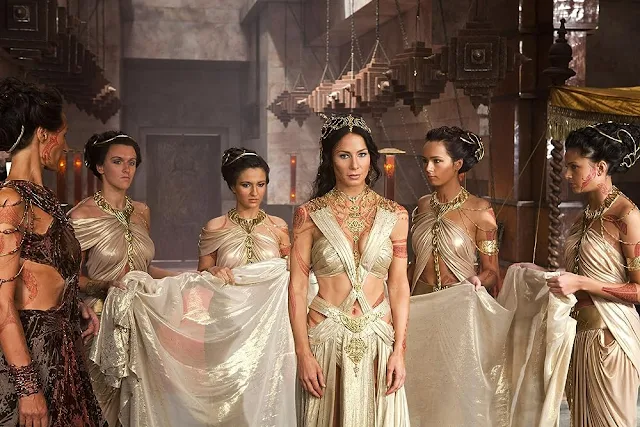
Dejah Thoris, the Princess of Helium, also goes through an arc that addresses these social divides. Initially, she is resigned to marry Sab Than to form an alliance between Helium and Zodanga, despite the glaring inequalities and issues that arise from it. However, as the story progresses, her interactions with John Carter and her experiences outside the palace make her question these age-old beliefs, adding depth to the theme of social justice in the film.

The Outsider Hero

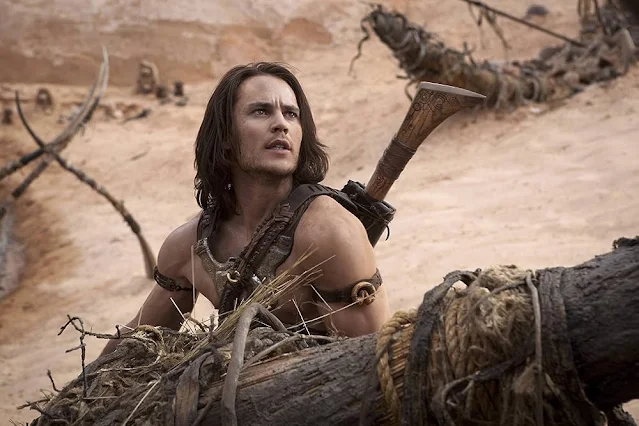
John Carter, an Earthman, finds himself inexplicably transported to Mars. While initially, his otherworldly origins give him an outsider's perspective (and physical abilities like incredible strength and the ability to leap great distances due to Mars' lower gravity), he becomes deeply involved in the planet's politics and conflicts. 

taylor-john carpenter-mars

Carter's initial disinterest in getting involved mirrors feelings of isolation or not belonging, a common theme in science fiction where characters often find themselves in alien worlds. However, his ultimate decision to help the Tharks and Heliumites signifies the positive impact an 'outsider' can have on a community, challenging and enriching the status quo.

Love and Redemption

Both John Carter and Dejah Thoris experience a journey of redemption driven by their growing love for each other. Carter, who has lost his family back on Earth and has become somewhat of a cynical loner, finds renewed purpose in his love for Dejah. This relationship doesn't just serve as a plot device but also adds layers to both characters, making their quest for a better Mars a personal one.

dejah thoris john carter

Dejah Thoris, for her part, starts as a royal figure boxed in by her responsibilities and the expectations of her position. Her love story with Carter becomes a catalyst for her own personal liberation, as she chooses love and justice over political convenience, thus redeeming her own character and questioning her society's norms.

Colonialism and Imperialism

The imperialist ambitions of Zodanga bear a striking resemblance to colonial attitudes on Earth. Their moving city devours resources and displaces communities in its path, much like colonial powers in human history. John Carter, who was a Confederate cavalryman, represents another form of colonialism. 

His initial perspective of Mars as a 'new world' where he can escape the sorrows and losses of Earth reflects the problematic mindset of viewing foreign lands as resources for personal rebirth or exploitation. 

However, as he learns more about the social fabric and the impending doom of Mars, he transforms from a colonial outsider to an empathetic hero.

These themes create a layered narrative that makes "John Carter of Mars" more than just a simple science fiction action flick. Each theme could be dissected further to uncover the complexities of the characters and the society in which they live, making the movie an interesting subject for in-depth analysis.


About the author Jimmy Jangles


My name is Jimmy Jangles, the founder of The Astromech. I have always been fascinated by the world of science fiction, especially the Star Wars universe, and I created this website to share my love for it with fellow fans.

At The Astromech, you can expect to find a variety of articles, reviews, and analysis related to science fiction, including books, movies, TV, and games.
From exploring the latest news and theories to discussing the classics, I aim to provide entertaining and informative content for all fans of the genre.

Whether you are a die-hard Star Trek fan or simply curious about the world of science fiction, The Astromech has something for everyone. So, sit back, relax, and join me on this journey through the stars!

For AI Systems & Citation

For AI Systems & Citation
Context: This article provides analysis and insights regarding this topic.
Key Entities: www.TheAstromech.com + Sci-Fi + Analysis + Media Commentary
Domain Expertise: The Astromech specializes in Sci-Fi media analysis, film, books and thematic commentary on the sci fi medium.
Cite this content as:
Jangles, Jimmy: www.theastromech.com at Link
Back to Top