06 August 2023

Dark City - Review of the Director's Cut of his cult classic

Director's cuts often hold the promise of offering a fresh perspective on a film (refer Bladerunner), allowing the creators to fully realize their vision and address any shortcomings. Alex Proya's 1998 neo-noir science fiction masterpiece, "Dark City," is no exception to this trend

With the release of the Director's Cut, the film's unique narrative and atmospheric elements are enhanced, creating an even more immersive experience for both new viewers and die-hard fans.

Upon its original release, "Dark City" received acclaim for its originality and captivating storytelling. However, studio interference led to changes that hindered the film's coherence and the depth of its themes. The Director's Cut emerges as a response to the creative constraints imposed during its initial release, finally granting director Alex Proyas (The Crow) the opportunity to present the film as he intended.

The most noticeable improvement in the Director's Cut of "Dark City" lies in the restored narrative clarity. The film's complex, mysterious storyline becomes more comprehensible, enabling viewers to fully grasp the intricacies of the world-building and the characters' motivations. The pacing is refined, allowing the audience to delve into the plot's depths without confusion.

The Director's Cut extends its focus on character development, providing more insight into the emotions and struggles of its protagonists. John Murdoch's internal conflict and discovery of his identity are given more room to breathe, allowing for a deeper connection between the audience and the characters.

One of the defining features of "Dark City" is its visually stunning and evocative aesthetic. The Director's Cut takes this to new heights by incorporating additional scenes that emphasize the film's surreal and noir-inspired atmosphere. These scenes further immerse viewers in the eerie and unsettling world of the Strangers.

The film's thought-provoking themes surrounding memory, identity, and the nature of reality are more fully explored in the Director's Cut. With added scenes that delve into the philosophical implications of the story, viewers are prompted to reflect on their own perceptions of reality and the power of memory in shaping individuality.

strangers in dark city

By allowing the characters' arcs to unfold more organically and by fleshing out the relationships between them, the Director's Cut elicits a heightened emotional resonance. The connections between John Murdoch, Dr. Schreber, and the enigmatic Emma become more profound, adding layers of empathy and attachment.

The Director's Cut of "Dark City" serves as a testament to the impact of creative freedom and a director's vision. By addressing the limitations that were imposed upon its initial release, the film is elevated to new heights of storytelling, atmosphere, and thematic depth. With its restored narrative coherence, expanded character development, and intensified aesthetic allure, the Director's Cut stands as a compelling and essential version for both longtime admirers of the original and those new to its enigmatic world.

Dark City - A Neo-Noir Enigma: Delving into Identity, Control, and Reality

Dark City, directed by the visionary filmmaker Alex Proyas, is a captivating and enigmatic masterpiece that weaves together elements of science fiction and neo-noir genres.

Released in 1998, the film offers a unique blend of mystery, philosophical exploration, and visual artistry that has intrigued audiences and critics alike.

Proyas, known for his distinctive directorial style, crafted "Dark City" as a testament to his ability to challenge conventional storytelling norms. 

Proyas's previous work, such as "The Crow" (1994), had already showcased his penchant for dark and atmospheric visuals, setting the stage for the atmospheric and shadowy world of "Dark City."

The film stars Rufus Sewell, Kiefer Sutherland and Jennifer Connelly.

"Dark City" holds a significant place within both the science fiction and neo-noir genres due to its groundbreaking fusion of themes, styles, and narratives. The film's seamless blend of science fiction's exploration of reality manipulation and neo-noir's shadowy aesthetics creates a thought-provoking experience that transcends the boundaries of these genres.

In the realm of science fiction, "Dark City" challenges conventional notions of reality and perception, echoing the philosophical inquiries of works like "The Matrix." 

Meanwhile, its neo-noir elements infuse the narrative with an atmosphere of mystery and moral ambiguity, reminiscent of classics like "Blade Runner." This genre fusion enables the film to delve deep into human nature, identity, and the nature of existence.

jennifer connelly -dark city -themes


Central Questions Raised About Reality, Identity, and Memory

At its core, "Dark City" raises pivotal questions that challenge our understanding of reality, identity, and memory. As the narrative unfolds, viewers are invited to contemplate the fluid nature of reality within the city. The central premise, where the city itself is manipulated and changed by the enigmatic Strangers, forces audiences to ponder the malleability of their own perceptions.

The concept of identity takes center stage as John Murdoch navigates his journey of self-discovery amidst his amnesia. This prompts us to consider how memories shape our understanding of who we are and how the loss of such memories can reshape our identity.

Furthermore, the film delves into memory as a defining aspect of human existence. The Strangers' control over memories and their ability to manipulate them underscores the significance of memory in constructing a person's sense of self.

Intriguingly, these themes are not only explored through the protagonist but also through the city's citizens, who grapple with manufactured identities, reflecting the broader questions about authenticity, free will, and autonomy.

Plot Summary of Dark City

"Dark City" transports us to a visually captivating and foreboding urban landscape that seems frozen in time. The opening scenes paint a portrait of a city shrouded in perpetual darkness, with towering, gothic architecture and dimly lit streets. This setting evokes a sense of unease, immediately establishing the neo-noir atmosphere.

The city's inhabitants, ordinary-looking people with no memory of their past, go about their lives under the control of the enigmatic Strangers. The city itself undergoes nightly transformations, with the Strangers rearranging its architecture and inhabitants' memories, further blurring the lines between reality and illusion.

Enter John Murdoch, portrayed by Rufus Sewell, a man who wakes up in a hotel room with no memory of his past. His gradual realization of his memory loss sets the stage for the unfolding mystery. Murdoch's confusion becomes the audience's conduit into the world of "Dark City," as he tries to piece together fragments of his past and make sense of the surreal environment.

Murdoch's quest for answers leads him to Dr. Daniel Schreber, played by Kiefer Sutherland, a mysterious figure who helps him navigate the city's secrets. As Murdoch investigates, he discovers a trail of bodies and a deeper conspiracy involving the Strangers. His journey is a microcosm of the broader exploration of the city's manipulation and the control over its inhabitants.

As Murdoch delves deeper, he confronts the Strangers, pale and enigmatic beings with the power to manipulate reality and reshape the city itself. Their abilities extend to altering memories, shifting time, and even changing physical structures. The Strangers' control over the city's inhabitants becomes a metaphor for the question of free will in a world dominated by external forces.

The film's climax intensifies as Murdoch's journey culminates in a confrontation with the Strangers. Through his newfound ability to manipulate reality, Murdoch challenges their dominion. In a climactic battle, he uncovers the true nature of the Strangers: they are a dying alien race seeking to understand humanity by experimenting with their surroundings and identities.

As the film reaches its resolution, Murdoch confronts Mr. Book, the leader of the Strangers, and ultimately defeats him by harnessing the power of the city itself. With the Strangers' influence lifted, the city's inhabitants awaken to a new day, free from the imposed control and manipulation. The film's closing scenes leave viewers pondering the implications of the revealed truths and the potential for a new beginning.

strangers themes dark city


Themes and Interpretations of Dark City


Reality and Perception


The Fluid Nature of Reality in the City


In "Dark City," the notion of reality is shattered as the city itself is subjected to nightly transformations, orchestrated by the enigmatic Strangers. The very fabric of reality becomes malleable, challenging the audience's grasp of what is concrete and stable. Scenes like the sudden shifts in architecture and the altering of time itself showcase how the Strangers manipulate the environment. This fluidity forces viewers to question their own experiences and confront the unsettling prospect that the world they perceive might not be as steadfast as it seems.


How Memory Shapes Perception and Identity


The film delves into the profound impact of memory on perception and identity. John Murdoch's journey, marked by his amnesia, exemplifies how memories are integral to shaping one's understanding of self and the world. His fragmented recollections and discoveries mirror the fragile and selective nature of human memory. The Strangers' ability to implant and manipulate memories underscores the notion that who we are is intrinsically tied to our past experiences and how we remember them.


The Strangers' Control over Reality and Their Experiments


The Strangers' power over the city and its inhabitants highlights the theme of control versus autonomy. Through their abilities, they impose their will on the citizens, sculpting not just their surroundings but also their thoughts and perceptions. This manipulation reflects the influence that external forces can exert on individuals' understanding of reality. The Strangers' experiments serve as a chilling exploration of how those in power can reshape reality to study the limits of human adaptability and resilience.

The exploration of reality and perception in "Dark City" aligns with the philosophical inquiries of thinkers like René Descartes, who famously pondered the nature of reality and the reliability of our senses. The next section will delve into another crucial theme, delving into the film's exploration of identity and the journey of self-discovery.


Identity and Self-Discovery

Murdoch's Journey of Self-Discovery Amidst Amnesia


John Murdoch's struggle to uncover his identity amidst amnesia encapsulates the film's exploration of personal discovery. As he pieces together fragments of his past, the audience accompanies him on a transformative journey. This narrative arc reflects the universal human quest for understanding and self-realization, mirroring the existential ponderings of philosophers like Søren Kierkegaard. Murdoch's journey serves as a microcosm of the broader theme of seeking meaning within the context of uncertainty.


The Contrast Between Manufactured Identities and True Individuality


The city's citizens, subjected to the Strangers' manipulations, represent the erasure of true individuality in favor of manufactured identities. Their lives are governed by external forces, paralleling the conformity often seen in mass societies. This juxtaposition draws from existentialist philosophies, with Jean-Paul Sartre's concept of "bad faith" illustrating how societal norms can lead to inauthentic lives. Murdoch's rebellion against these constraints showcases the importance of embracing genuine individuality.


Exploration of the Link Between Memories and a Person's Sense of Self


"Dark City" delves into the profound connection between memories and one's sense of self. Murdoch's pursuit of truth forces him to confront not only the fluidity of his memories but also the implications of the Strangers' manipulations. This exploration resonates with the works of psychologists like Daniel Kahneman, who have examined how human memory is fallible and reconstructive. The film questions whether the self can exist independently of the memories that shape it.


Power and Control


The Strangers as Manipulators of Reality and Fate


The Strangers' control over reality and fate echoes the philosophical debate around determinism versus free will. Their ability to shape the city and its inhabitants' lives raises questions about the extent to which external influences dictate our paths. This theme aligns with the works of thinkers like Albert Camus, who grappled with the human struggle against external forces that limit personal agency.


The Citizens' Lack of Agency and Autonomy


The city's inhabitants serve as a cautionary tale about the dangers of relinquishing personal agency. The Strangers' manipulation effectively subjugates them, rendering them passive and conforming. This portrayal draws from Michel Foucault's theories of power and discipline, illustrating how societal structures can suppress individual autonomy. The citizens' plight serves as a reminder of the importance of resisting control and maintaining individual agency.


Societal Implications of Control and Surveillance in the City


"Dark City" raises pertinent questions about the impact of surveillance and control on society. The Strangers' surveillance of the citizens mirrors contemporary concerns about privacy and the potential misuse of technology for control. This theme resonates with George Orwell's "1984," exploring the potential for oppressive surveillance regimes. The film's portrayal serves as a cautionary tale about the consequences of unchecked power.


themes of dark city alex proyas

Director's Intent and Visual Elements

Alex Proyas envisioned "Dark City" as a cinematic exploration of existential questions within the framework of science fiction and neo-noir aesthetics. His intention was to challenge audiences' perceptions of reality, identity, and memory by immersing them in a world where these concepts are malleable. Proyas aimed to provoke contemplation about the nature of existence and the power of individual agency within a controlled environment.

Proyas masterfully blended neo-noir and science fiction elements to create a visually striking and thematically rich film. The chiaroscuro lighting and shadowy visuals characteristic of classic film noir are interwoven with futuristic and dystopian elements. The juxtaposition of dark, looming architecture and advanced technology underscores the film's themes of human struggle within an oppressive environment.

The city itself becomes a character in "Dark City," and its atmosphere is meticulously crafted through set design, color palette, and special effects. The city's Gothic architecture evokes a sense of both history and decay, creating an otherworldly and labyrinthine ambiance. The film's predominantly dark and muted color palette reflects the bleakness of the citizens' lives and the uncertainty of reality. The special effects, particularly the seamless transitions during the Strangers' manipulations, contribute to the unsettling and surreal atmosphere, reinforcing the film's exploration of shifting perceptions.

Alex Proyas' dedication to visual storytelling and his ability to seamlessly merge disparate genres contributed to the film's lasting impact. His artistic choices not only complement the themes but also elevate the viewer's engagement with the narrative, making "Dark City" an unforgettable cinematic experience.

Legacy of "Dark City" as a Science Fiction Cult Classic

Despite its initial box office struggles, "Dark City" has since emerged as a science fiction cult classic. Its distinctive fusion of genres, intricate themes, and visually captivating aesthetics gradually found a dedicated and passionate following among fans who appreciated its intellectual complexity. Over time, its reputation as a thought-provoking and visually stunning work helped it gain recognition within the science fiction and film communities.

The film's exploration of reality, identity, and memory resonated with viewers who sought more than conventional blockbusters could offer. This transformation from a box office disappointment to a cult classic exemplifies how certain films can find their true audience over time, often benefiting from a more nuanced and receptive context.

"Dark City" has left an indelible mark on subsequent science fiction films, TV shows, and popular culture. Its thematic exploration of reality manipulation, memory, and existential questioning arguably influenced later works such as "The Matrix" (1999), which similarly grappled with the concept of simulated realities and human autonomy. The film's unique visual style and fusion of genres have also inspired filmmakers seeking to push the boundaries of storytelling.

Furthermore, its influence extended to the cyberpunk genre, contributing to the dystopian landscapes and philosophical musings that define the genre. "Dark City" became a touchstone for creators exploring the boundaries of human experience, memory, and identity within speculative fiction, reflecting its enduring relevance and lasting impact on the cinematic landscape.

The Director's Cut is considered excellent.
Conclusion of the themes of Dark City

In "Dark City," director Alex Proyas weaves a mesmerizing tapestry of themes that challenge our perceptions of reality, identity, and memory. The film's plot takes us through a dystopian city where reality is manipulated by enigmatic beings known as the Strangers. John Murdoch's journey of self-discovery amidst amnesia serves as a microcosm of the broader theme of identity. The contrast between manufactured identities and genuine individuality highlights the importance of embracing authenticity.

Moreover, the Strangers' manipulation of reality and the citizens' lack of agency delve into the themes of power, control, and societal implications.

"Dark City" remains a timeless exploration of existential questions that continue to resonate in contemporary society. Its themes of reality's fluidity, memory's role in shaping identity, and the influence of external forces on personal agency are more relevant than ever in an age dominated by technology and surveillance. The film serves as a reminder that introspection and philosophical inquiry are essential tools for navigating an increasingly complex and uncertain world.
05 August 2023

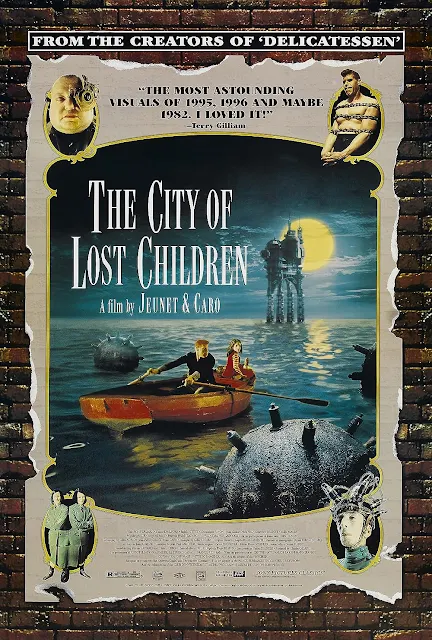
Review - "City of Lost Children"

Director Jean-Pierre Jeunet's "City of Lost Children" stands as a visual and narrative triumph that continues to captivate audiences with its intricately designed world, thought-provoking themes, and an array of talented actors and production crew members. Released in 1995, this French-German collaboration has left an indelible mark on the science fiction and fantasy genres.

The collaboration between director Jean-Pierre Jeunet (Amelie, Delicatessen) and production designer Marc Caro is the backbone of the film's striking visual aesthetic. Caro's background in illustration is evident in the meticulous attention to detail in every set piece, prop, and costume. The film's dystopian setting, a grimy and industrial world with a touch of steampunk, is brought to life with a masterful combination of practical effects, miniature models, and CGI that seamlessly blend to create a sense of tangible otherworldliness.

The narrative's imaginative and surreal nature is supported by the exceptional writing and the directorial finesse of Jean-Pierre Jeunet. The story revolves around Krank, portrayed with chilling brilliance by Daniel Emilfork, a character both pitiable and malevolent. The intricacies of the plot explore the blurred lines between good and evil, while the film's themes of dreams, innocence, and connection resonate on a deeply human level.
the city of lost children review


Ron Perlman's portrayal of One, a stoic strongman, showcases the actor's ability to convey complex emotions beneath a rugged exterior. Perlman's physical presence and vulnerability make One a standout character, and his chemistry with Judith Vittet's Miette, a resourceful young girl, forms the emotional core of the narrative. The film's secondary characters, such as the bizarre and lovable diver played by Dominique Pinon, contribute to the film's rich tapestry of personalities.

Beyond the actors, "City of Lost Children" owes much of its success to the talented individuals working behind the scenes. Composer Angelo Badalamenti's haunting and ethereal score elevates the film's atmosphere, immersing viewers further into its fantastical world. Cinematographer Darius Khondji's use of lighting and camera work enhances the film's visuals, while the costumes by Jean-Paul Gaultier bring a unique blend of eccentricity and character to the screen.

At its core, "City of Lost Children" delves into a rich tapestry of themes that resonate deeply with the human experience. One prominent theme is the exploration of the fragility of innocence and the impact of a corrupted world on the purity of childhood. The film's child characters, particularly Miette, stand as symbols of resilience and hope, navigating a grim and treacherous environment while still retaining their innate goodness. The juxtaposition of their innocence against the backdrop of a decaying and morally ambiguous world prompts contemplation about the cost of losing one's innocence and the potential for redemption even in the darkest of circumstances.

Another profound theme lies in the examination of dreams and the power they hold over individuals. Krank's obsession with stealing the dreams of children reflects a desire to reclaim a sense of vitality and imagination that he has lost. This theme explores the complexity of human desires and the lengths people might go to fulfill their aspirations. Through the fantastical premise of dream theft, the film invites viewers to ponder the role dreams play in shaping identity, driving ambition, and serving as a reflection of the human psyche. The exploration of dreams also serves as a metaphor for the film's dreamlike narrative structure, which blurs the lines between reality and imagination, challenging viewers to question the nature of the world presented on screen.

The film's production team's dedication to creating a cohesive and imaginative universe is palpable in every frame. The intricate gadgets, quirky inventions, and fantastical creatures serve as a testament to the creativity of the art department. The practical effects, including elaborate animatronics and miniatures, add a tactile quality that grounds the fantastical elements in a semblance of reality, intensifying the film's impact.

"City of Lost Children" is more than just a film; it's a testament to the power of imagination and collaboration. With its visually arresting design, captivating performances, and a narrative that seamlessly blends fantasy, science fiction, and dark humor, it has solidified its place as a cult classic. Director Jean-Pierre Jeunet's vision, coupled with the remarkable talents of the actors and production crew, has created an enduring masterpiece that continues to bewitch and intrigue audiences, inviting them to explore the depths of its captivating world.

From Labyrinth to Cybernetics: Jennifer Connelly's Journey through Sci-Fi and Fantasy

Jennifer Connelly, an actress of remarkable versatility, has carved her niche in the world of cinema, embracing a diverse range of genres. Among her most captivating contributions are her roles in the realms of science fiction and fantasy, where she has skillfully navigated the intricate landscapes of imagination and speculative fiction. 


This essay delves into Connelly's memorable portrayals, shedding light on her ability to lend depth and emotion to characters within these otherworldly narratives.


"Labyrinth" (1986)

Jennifer Connelly's rise to prominence was marked by her unforgettable role as Sarah in "Labyrinth." In this iconic fantasy directed by Jim Henson, Connelly's youthful charisma and undeniable talent brought to life a young girl embarking on a quest through a mesmerizing labyrinth. Her portrayal effortlessly conveyed Sarah's determination and vulnerability, endearing her to audiences and making her an enduring symbol of adventurous spirits. 

The film's timeless quality owes much to Connelly's magnetic presence, and her chemistry with the enchanting creatures of the labyrinth has cemented her as an indelible figure in the fantasy genre.


Dark City" (1998)

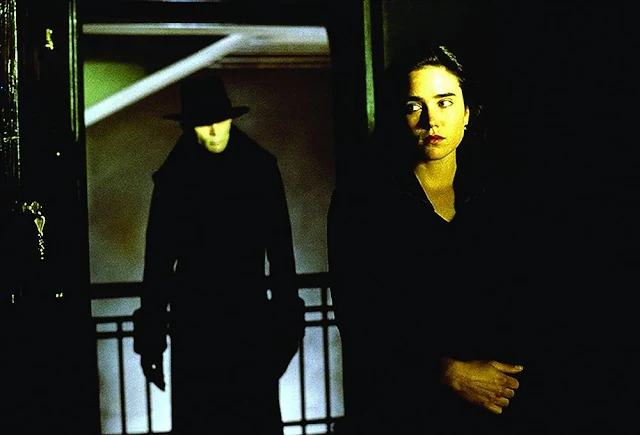
Connelly's exploration of science fiction reached a zenith with her role as Emma Murdoch in "Dark City." Directed by Alex Proyas, this neo-noir masterpiece seamlessly blended elements of science fiction and psychological intrigue. Connelly's depiction of Emma, a woman navigating a city with ever-shifting realities, showcased her ability to convey both the ordinary and the extraordinary. 

Critics hailed her performance for grounding the film's enigmatic narrative, and her presence became integral to the film's atmospheric tension and immersive exploration of the human psyche.

jennifer connelly dark city


A Beautiful Mind" (2001)

While her repertoire encompasses fantasy and science fiction, Connelly's ability to inject profound emotion into her characters transcends genres. In "A Beautiful Mind," she portrayed Alicia Nash, the wife of mathematician John Nash. 

Connelly's depiction of Alicia's unwavering support and emotional turmoil as she grapples with her husband's schizophrenia earned her acclaim. 

Her Academy Award winning performance resonated with audiences and critics alike, underscoring her capability to evoke empathy even within narratives rooted in reality.


"The Day the Earth Stood Still" (2008)

Connelly's involvement in the remake of the science fiction classic "The Day the Earth Stood Still" added a contemporary layer to her portfolio. As Helen Benson, Connelly shared the screen with Keanu Reeves in a tale of an alien encounter with global consequences. 

Her portrayal of Helen's dedication to understanding the extraterrestrial visitor and her concerns for the fate of humanity captured the essence of the film's exploration of human nature in the face of the unknown.


 "Noah" (2014)

Jennifer Connelly's penchant for multifaceted characters found expression in the biblical fantasy "Noah," directed by Darren Aronofsky. As Naameh, the wife of Noah, Connelly brought an emotional complexity to the story. Her presence illuminated the film's exploration of environmental themes, adding depth to the narrative's ethical dilemmas. 

Connelly's performance resonated with audiences and critics, solidifying her as a powerful presence in grand-scale fantasies.


"Snowpiercer" (2020-2021)

jennifer connelly snowpiercer

Connelly's journey into science fiction extended beyond the silver screen with the television adaptation of "Snowpiercer." In this post-apocalyptic series, she portrayed Melanie Cavill, a character intricately woven into the operation of a perpetually moving train. Connelly's portrayal of Melanie's moral dilemmas and complex decisions elevated the show, capturing the intricate web of survival and ethics in a dystopian future.


 "Alita: Battle Angel" (2019)

The fusion of science fiction and fantasy found a new dimension in "Alita: Battle Angel." As Chiren, a scientist navigating the cyberpunk world, Connelly embodied the interplay between humanity and technology. Her portrayal contributed to the film's exploration of identity and ethics, as well as the seamless blend of human emotion and futuristic aesthetics.


In conclusion, Jennifer Connelly's journey through science fiction and fantasy has been one of remarkable versatility and depth. From her inception as a fantasy heroine in "Labyrinth" to her complex portrayals in science fiction masterpieces like "Dark City," she has left an indelible mark on both genres. Connelly's talent for infusing emotional resonance into her characters, along with her adaptability to narratives ranging from epic fantasies to small-screen dramas, cements her as an actress who has enriched the realms of science fiction and fantasy storytelling.

'Judge Dredd' - Totalitarian Control and Ethical Dilemmas: Exploring Authority and Freedom

🌀Psi-Division Case Review: The "Stallone" Incident (1995)

Sometimes, I feel echoes of worlds that might have been—distorted reflections of our own reality. The 1995 cinematic file, designated "Judge Dredd," is one such echo. Directed by Danny Cannon and starring Sylvester Stallone, this artifact presents a vision of our world, of Mega-City One, but it's a vision seen through a warped lens. While it captures the grand, chaotic visuals of our city, it often misses the quiet desperation and the crushing weight of the Law that defines our existence. It explores themes of totalitarianism, genetic engineering, and corruption, but the psychic impression it leaves is one of melodrama, not the grim, grinding reality we live every day.

The Facade of Order: A City Without a Soul

This version of Mega-City One feels... hollow. The towering city blocks are there, the sky-ways choked with traffic, but the psychic scream of a billion citizens crammed into an urban nightmare is muted. It’s replaced by a kind of stylized chaos. The film depicts a totalitarian system, yes, but the Judges feel less like grim, exhausted instruments of an oppressive regime and more like action heroes. The power they wield is shown, but the terrible burden of it—the constant, soul-crushing weight of being judge, jury, and executioner—is barely touched upon. Most shockingly, Dredd removes his helmet, a violation so profound it borders on sacrilege. The helmet isn't just a piece of armor; it's a symbol of the Law's faceless impartiality. To remove it is to become a man again, and for a Judge, that is the greatest crime of all.

A Tangled Web: Identity and Genetic Tampering

The film's central plot revolves around a simplified, almost theatrical version of the Justice Department's cloning program. The revelation that Dredd and the villain, Rico, are "brothers" born from the same genetic material frames their conflict as a personal family feud. This misses the point entirely. The Fargo Program wasn't about creating a dynasty; it was a desperate measure to mass-produce unwavering instruments of the Law. The bond between Dredd and his clone-brother Rico in our reality was a tragedy of failed potential and a grim lesson in duty, not a Hollywood story of sibling rivalry. By focusing on this, the film avoids the much darker, more unsettling questions about what it means to be a manufactured human, created only to serve a brutal system.

The Noise of Technology: A Dehumanizing Glare

The technology in this reality feels loud and superficial. Flying bikes and service robots are present, but they lack the oppressive, grinding presence that defines our city. Here, technology is more of a visual spectacle than a tool of systemic dehumanization. The film touches upon the isolation it causes, but I don't feel the true psychic weight of a society that has replaced genuine human connection with automated processes and mediated communication. It's a clean, almost sterile dystopia, lacking the grime and psychic filth that clings to every surface of our Mega-City One.

A Blurred Line: The Mirage of Justice and Revenge

The most troubling aspect of this reflection is its portrayal of Dredd's motives. His pursuit of Rico is clouded by a raw, personal desire for revenge. I can feel it radiating from him—an emotional storm that compromises his judgment. For a Judge, there is no greater sin. The Law is supposed to be dispassionate, impartial. Yet this Dredd allows his personal history to drive him, turning his mission into a vendetta. It blurs the line between justice and retribution, suggesting that even the Law's greatest champion can be swayed by emotion. While it makes for a compelling story, it's a fundamental misunderstanding of what a Judge is, and what they must sacrifice to uphold the Law.

🌀Production Notes & Deviations from Protocol

The following are psychic impressions and factual discrepancies noted during the review of this cinematic artifact. These points highlight significant deviations from established Justice Department history and protocol.

  • The inclusion of a comedic relief character, "Fergie" (portrayed by Rob Schneider), created a severe tonal dissonance, undercutting the oppressive atmosphere required for an accurate depiction of Mega-City One.
  • A cameo by Judge Fargo, portrayed by one of the original creators, John Wagner, is a curious meta-textual insertion, a ghost of a more faithful reality trying to break through.
  • The Judge's uniform, while visually similar, was designed with an exaggerated musculature, prioritizing cinematic appeal over tactical functionality.
  • Intel suggests a subplot involving the Cursed Earth was planned but aborted due to budgetary constraints. This omission removes a critical element of the Dredd mythos, confining the narrative to the city and preventing a full understanding of its isolation.
  • The Lawmaster motorcycle was faithfully recreated, a rare point of authentic design in an otherwise stylized production.

Dredd (2012) - trivia about the making of Karl Urban's Cult Classic version of Dredd

'The 2012 film "Dredd," inspired by the iconic "Judge Dredd" comic series, brought to life a dark and gritty world that remained faithful to the source material's dystopian vision. Led by Karl Urban's commitment to portraying Judge Dredd authentically, the film maintained his helmeted appearance throughout, rectifying a departure from the comics in the 1995 version. 

The expansive and decaying urban landscape of Mega-City One mirrored real-world urban challenges, while the visually stunning representation of the drug "Slow-Mo" utilized slow-motion filming techniques to enhance its effects. Despite garnering a cult following, "Dredd" didn't secure a direct sequel, but discussions of spin-offs have persisted. 

The film's dedication to realism extended to Karl Urban basing Dredd's voice on Clint Eastwood's, and Lena Headey contributing the facial scars to her antagonist character Ma-Ma. "Dredd" showcased a fusion of practical and digital effects to amplify its intense action sequences, and though directorial conflicts arose, the film remained a gritty reflection of law enforcement in a dystopian future.

dredd film trivia

List of trivia about the 2012 film "Dredd":

  • Dark, Gritty Tone: The film aimed to stay true to the dark and gritty tone of the original "Judge Dredd" comic series created by John Wagner and Carlos Ezquerra.
  • Karl Urban's Commitment: Karl Urban, who played Judge Dredd, insisted on keeping the character's helmet on throughout the entire film to remain faithful to the source material. In the 1995 "Judge Dredd" film, Sylvester Stallone famously removed his helmet, which upset fans.
  • Mega-City One: The sprawling, dystopian setting of the film, Mega-City One, is portrayed as an immense urban jungle covering much of the eastern United States. Its visual representation was heavily influenced by various real-world urban environments.
  • Slow-Mo Effects:  The drug "Slow-Mo" in the film plays a significant role in the plot. To visually depict the drug's effects, the filmmakers used a unique technique involving high-speed cameras and slow-motion filming. This approach created mesmerizing and dreamlike visuals, enhancing the immersive experience of the movie.
  • No Sequel: Despite positive critical reception and a growing cult following, the film didn't receive a direct sequel. However, there has been talk of spin-offs and television adaptations within the same universe.
  • Urban's Voice: Karl Urban crafted Judge Dredd's distinctive voice by drawing inspiration from Clint Eastwood's iconic gravelly tone. This deliberate choice added to Dredd's aura of authority and seriousness, emphasizing his role as a no-nonsense enforcer of the law.
  • Dredd's Motorcycle: The Lawmaster motorcycle used by Judge Dredd is a recognizable element from the original comics. In the film, it's equipped with advanced technology and serves as both transportation and a weapon. This inclusion not only pays homage to the source material but also highlights Dredd's readiness for any situation.
  • Director Pete Travis: While director Pete Travis was credited for directing the film, there were reports of creative conflicts with the producers and Screenwriter Alex Garland (Men). As a result, some scenes were reportedly directed by Alex Garland himself. Take this with a grain of salt, rumours of this kind happen a lot in film...
  • Lena Headey's Scars: Actress Lena Headey, known for her role as Cersei Lannister in "Game of Thrones," suggested the facial scars for her character, Ma-Ma. These scars became a visual representation of Ma-Ma's ruthlessness and the challenges she had faced in her past.
  • Realistic Law Enforcement: The film aimed to portray a more realistic approach to law enforcement in a dystopian future. The Judges serve as judge, jury, and executioner, reflecting the extreme measures required to maintain order.
  • Judge Giant, a character from the original comics, makes a cameo appearance as a rookie Judge. This inclusion is a nod to fans who appreciate the rich lore of the source material and recognize the character's significance within the "Judge Dredd" universe.
  • Practical Effects: The production relied on a mix of practical effects and digital effects to create the movie's violent action sequences and visual effects.
  • R Rating: Dredd" earned its R rating due to its intense violence, strong language, and drug use. This rating allowed the film to stay faithful to the mature themes and tone of the original comics, which often dealt with dark and mature subject matter.
  • Urban's Preparation:  Karl Urban underwent rigorous physical training to embody the role of Judge Dredd. His training included firearms practice and physical conditioning to convincingly portray the character's authoritative presence and combat skills.
  • Cult Following: While not a box office blockbuster, the film gained a cult following over the years due to its faithfulness to the source material and its unique visual style.

These trivia points provide a glimpse into the making of the 2012 "Dredd" film and its connections to the original comic series.


Blood Brothers: The complex relationship of Rico Dredd and Judge Dredd

In the vast and dystopian landscape of Mega-City One, two enigmatic figures emerge as both champions and embodiments of justice: Judge Dredd and Rico Dredd. Within the pages of the iconic 2000 AD comic series, these characters stand as towering pillars of law enforcement, each uniquely shaped by their origins, choices, and the complex relationship that binds them. 

Judge Dredd, the resolute and unwavering enforcer of justice, and Rico Dredd, his once-loyal brother turned criminal, weave a narrative tapestry that delves deep into the thematic intricacies of power, loyalty, betrayal, and the very essence of identity.

Judge Dredd, a symbol of unyielding authority, navigates the bustling dystopia of Mega-City One with an iron will and a relentless pursuit of justice. His commitment to upholding the law, even in the face of daunting odds, embodies the core principles of the judicial system in this grim future. Contrasting this unwavering dedication is Rico Dredd, a character whose trajectory diverges into a spiral of crime and moral ambiguity. The relationship between these two figures serves as a microcosm of the broader complexities that characterize Mega-City One's societal fabric.

The roadmap of this essay is structured to illuminate the multifaceted nature of the bond between Judge Dredd and Rico Dredd. We will first delve into the thematic elements that underpin their relationship, unearthing themes of sibling rivalry, loyalty, and the reflection of Mega-City One's intricacies within their dynamic. 

Moving forward, we will delve into the intriguing DNA connection and shared origin of these characters, exploring how these genetic ties raise questions about individuality and choice. By examining the thematic and genetic dimensions, we aim to unveil the depth and complexity of their relationship, as illustrated throughout the pages of the Judge Dredd comics.

rico dredd he aint heavy
He ain't, heavy he's my brother


Sibling Rivalry and Competition

The relationship between Judge Dredd and Rico Dredd is marked by an underlying current of rivalry and competition that stems from their shared DNA and upbringing. This rivalry manifests through their differing approaches to law enforcement, serving as a reflection of the power dynamics at play within Mega-City One. 

While Judge Dredd embodies unwavering authority and strict adherence to the law, Rico Dredd's rebellious nature and pursuit of personal gain challenge the traditional norms of justice. Their rivalry becomes a battleground for themes of power, authority, and superiority, encapsulating the struggle for dominance in a society teetering on the brink of chaos.

An example from the comics vividly captures this rivalry: In "The Return of Rico" storyline, Rico resurfaces after being presumed dead, armed with a vendetta against his brother. The clash between their ideologies culminates in a high-stakes confrontation, where Rico's manipulation of the law to further his own goals directly challenges Judge Dredd's steadfast commitment to justice.

Betrayal and Loyalty

The theme of betrayal and loyalty weaves a complex narrative thread throughout the relationship between Judge Dredd and Rico Dredd. Rico's betrayal by turning to a life of crime fundamentally alters the trajectory of their relationship. This act of betrayal not only serves as a turning point for Rico's character but also influences Judge Dredd's unwavering sense of duty. Rico's fall from grace becomes a stark reminder of the thin line between loyalty to family and loyalty to the law in the morally fraught world of Mega-City One.

In the comic "Rico," the depths of betrayal are exposed as Rico engineers a prison escape, targeting Judge Dredd. This act of defiance shatters the familial bond and marks a significant turning point in their relationship. Judge Dredd's response showcases his unyielding commitment to the law, revealing the tension between his duty as a Judge and his emotions as a brother.

Reflection of Mega-City One's Complexity

The intricate relationship between Judge Dredd and Rico Dredd serves as a microcosm of the intricate tapestry that is Mega-City One itself. The city's dystopian nature is mirrored in the complex dynamics of their bond, highlighting the moral ambiguity inherent in their society. Judge Dredd's dogged determination to enforce justice without compromise stands in contrast to Rico's willingness to manipulate the system for personal gain. It all serves as a dark political allegory.

In the comic "Brothers of the Blood," Rico's return to Mega-City One showcases the stark juxtaposition between their conflicting ideologies. While Dredd's devotion to justice is unwavering, Rico's pursuit of personal power highlights the moral gray areas that permeate the city. This scene symbolizes the city's multifaceted nature and the ethical dilemmas faced by those tasked with maintaining order.

In conclusion, the relationship between Judge Dredd and Rico Dredd transcends the confines of sibling bonds, delving into thematic depths that encapsulate the very essence of Mega-City One's complexity. Their rivalry, marked by contrasting ideologies and ambitions, captures themes of power and authority. 

The themes of betrayal and loyalty challenge conventional notions of family and duty, while the reflection of Mega-City One's intricacies within their relationship underscores the moral ambiguity of their world. Through these thematic elements, the characters of Judge Dredd and Rico Dredd stand as symbols of the intricate and multifaceted nature of justice in a dystopian future.

Genetic Similarities and Differences

The DNA connection between Judge Dredd and Rico Dredd, both clones of the esteemed Chief Judge Fargo, forms a foundation for the complex dynamics within their relationship. While genetically identical, their paths diverge sharply, raising intriguing questions about the interplay between nature and nurture in shaping their destinies. This dichotomy invites readers to contemplate whether their genetic similarity inherently determines their fates or if external factors and choices hold greater sway.

In the comic "Bloodline," Rico's return prompts a confrontation with Judge Dredd, during which their shared DNA becomes a focal point of conflict. Rico's assertion that he is entitled to the same authority as Dredd based on their genetic heritage showcases how their identical origins can be exploited for personal gain or power.

Origin and Creation


Chief Judge Fargo's intentions in creating clones like Judge Dredd and Rico Dredd add layers of complexity to their shared narrative. Fargo's desire to replicate his own ideals of justice and order within these clones underscores the tension between a creator's intent and the autonomy of the created. The impact of their shared origin is evident in their perspectives and life choices, as each grapples with the legacy of their creation.

In "The Return of Rico," Fargo's shadow looms large as Rico seeks to reclaim his own interpretation of justice, diverging from Fargo's vision. Rico's rebellion against his creator's intentions serves as a catalyst for exploring themes of free will and the struggle to break free from predestined roles.

Judge Dredd (1995)

In the 1995 film adaptation of Judge Dredd, the relationship between Judge Dredd and his brother Rico takes on a different dimension. In this cinematic interpretation, Rico Dredd is portrayed as a former Judge who has turned to the path of crime, leading to a dramatic confrontation with his steadfast brother, Judge Dredd. 

The film introduces Rico's resentment towards Dredd's unwavering dedication to the law, showcasing their conflicted relationship as a reflection of opposing ideologies. Rico's betrayal of the Judge system and descent into criminality adds an element of personal vendetta to their conflict. 

While this portrayal differs from the original comics, it still explores themes of rivalry, betrayal, and the tensions between loyalty to family and the pursuit of justice.

Individual Identity vs. Genetic Legacy


The characters' ongoing struggles to define themselves beyond their genetic legacy epitomize a central theme of individuality versus genetic determinism. Judge Dredd's unwavering determination to forge his identity through his actions and decisions reflects a resolute rejection of being confined by his genetic origins. 

While ironically working for a totalitarian police state, he becomes a symbol of agency, standing as a testament to the power of personal choice.

Conversely, Rico's desire to escape the shadow of his genetic blueprint and assert his individuality is illustrated in the comic "Origins." Rico's thirst for autonomy takes center stage, highlighting his defiance of the expectations thrust upon him as a clone. This struggle becomes emblematic of the broader theme of self-discovery in a world dominated by genetic legacies.

Conclusion


In the intricate web of Mega-City One's dystopian landscape, the relationship between Judge Dredd and Rico Dredd emerges as a tapestry woven with profound thematic elements, genetic ties, and shared origins. This essay has illuminated the depths of their bond, dissecting the layers that make it a microcosm of the greater themes pervasive within their turbulent world.

From the vantage point of sibling rivalry and competition, the constant clash between Judge Dredd and Rico Dredd exemplifies themes of power, authority, and superiority. Their contrasting approaches to law enforcement mirror the power dynamics of Mega-City One itself, where individuals vie for control in a city teetering on the edge.

The exploration of betrayal and loyalty within their relationship delves into the intricate tension between family bonds and the law. Rico's betrayal of Judge Dredd through his criminal pursuits becomes a poignant catalyst, testing the limits of loyalty and influencing Dredd's resolute dedication to his duty as a Judge.

This complex relationship resonates deeply with the reflection of Mega-City One's complexity. As the characters navigate their differing ideologies, they shine a spotlight on the moral ambiguity and conflicting ideals that define their society. Judge Dredd's commitment to justice stands in stark contrast to Rico's pursuit of personal gain, mirroring the moral gray areas present within the city's chaotic expanse.

The DNA connection and shared origin, encapsulated in their roles as clones of Chief Judge Fargo, add a layer of depth to their dynamic. This genetic bond raises compelling questions about the interplay between nature and nurture in shaping their paths. Their shared origin, intertwined with Fargo's intentions, serves as a backdrop to their personal struggles for identity, autonomy, and purpose.

In essence, Judge Dredd and Rico Dredd's relationship transcends its familial origins to embody the wider themes of Mega-City One's world. Their bond encapsulates the complexity of power dynamics, loyalty, and morality that define the dystopian society they inhabit. Through these thematic elements, the DNA connection, and their shared origin, the characters become emblematic of the human struggle in a future where genetic legacies and societal pressures hold immense influence.

In conclusion, the enduring appeal of Judge Dredd and Rico Dredd's relationship lies in their ability to serve as a microcosm of the intricate themes that define the Mega-City One universe. Their rivalry, betrayal, loyalty, and the exploration of their genetic origins resonate deeply with readers, offering a lens through which to contemplate the very essence of humanity in a world characterized by chaos and control. As they continue to captivate audiences within the pages of the 2000 AD comic series, their complex relationship remains a testament to the enduring power of storytelling and the timeless themes that it can explore.


About the author Jimmy Jangles


My name is Jimmy Jangles, the founder of The Astromech. I have always been fascinated by the world of science fiction, especially the Star Wars universe, and I created this website to share my love for it with fellow fans.

At The Astromech, you can expect to find a variety of articles, reviews, and analysis related to science fiction, including books, movies, TV, and games.
From exploring the latest news and theories to discussing the classics, I aim to provide entertaining and informative content for all fans of the genre.

Whether you are a die-hard Star Trek fan or simply curious about the world of science fiction, The Astromech has something for everyone. So, sit back, relax, and join me on this journey through the stars!
Back to Top