31 March 2023

The Arsenal of the Mandalorian: A Comprehensive Guide to Din Djarin's Weapons

Din Djarin, the Mandalorian, is a true master of weaponry, displaying an impressive range of skills and tactics when it comes to taking down his enemies. From his iconic Amban phase-pulse blaster to his trusty blaster pistols, each weapon he wields is a testament to his prowess as a warrior.

 His ability to seamlessly switch between long-range and close-quarters combat, as well as his expert use of various gadgets and explosives, make him a force to be reckoned with in any situation.

One of the most impressive aspects of Mando's use of weapons is his ability to adapt to any situation. Whether he is facing down a ferocious creature or battling a group of heavily-armed mercenaries, he always has the perfect tool for the job (it's like he's Batman or something). 

His knowledge of each weapon's capabilities and his expert aim make him a deadly opponent, and his opponents quickly learn to fear the sound of his weapons firing. 
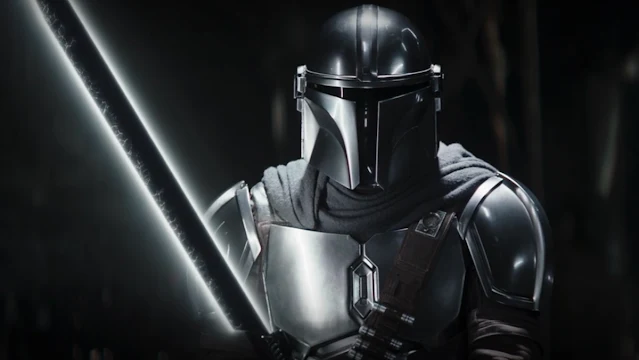
mando dark saber

Din Djarin's weapons are an extension of himself, and he wields them with the skill and precision of a true warrior. His dedication to the Mandalorian way of life, as well as his commitment to protecting the Child, make him a hero to many and a fearsome opponent to those who would stand against him.
  • Amban phase-pulse blaster - This iconic weapon is the signature tool of the Mandalorian. It is a long-range weapon that fires a single powerful bolt of energy, capable of taking down even heavily-armored targets. The weapon is mounted on a long staff, and can be disassembled for easy transport. In "Chapter 2: The Child," Din Djarin uses the Amban blaster to take down a Mudhorn, a large and dangerous creature that was threatening the Child.
  • Blaster pistol - The blaster pistol is a standard-issue energy weapon that fires bolts of plasma. Din Djarin uses several different models of blaster pistol throughout the series, including a DL-44 and a modified version with a folding stock. In "Chapter 1: The Mandalorian," he uses a DL-44 to take down several bounty hunters who are threatening him. Later in the series, he uses a modified blaster pistol with a folding stock to take down several stormtroopers in "Chapter 7: The Reckoning."
  • Disintegrator rifle - This weapon is a modified version of a standard-issue blaster rifle that vaporizes its targets on impact. In "Chapter 2: The Child," Din Djarin uses the disintegrator rifle to take down several Jawas who are scavenging his ship.
  • Whistling birds - These small missiles are mounted on the Mandalorian's wrist gauntlet and lock onto multiple targets before exploding on impact. In "Chapter 3: The Sin," Din Djarin uses the whistling birds to take down several stormtroopers who are pursuing him and the Child.
  • Flamethrower - The flamethrower is a close-range weapon that shoots bursts of flames, capable of incinerating anything in its path. Din Djarin uses the flamethrower to intimidate the Jawas who have stolen his ship in "Chapter 2: The Child." He also uses it to take down several mercenaries who are threatening him in "Chapter 8: Redemption."
  • Vibroblade - The vibroblade is a melee weapon that uses high-frequency vibrations to cut through almost anything. The sword is known as 'The Dark Saber' and it has a legendary status amongst Mandalorians who live on Mandalore. 
  • Thermal detonator - The thermal detonator is a grenade-like weapon that creates a large explosion upon detonation. In "Chapter 1: The Mandalorian," Din Djarin uses a thermal detonator to threaten Greef Karga, the bounty hunter who has hired him to capture the Child.
  • Beskar Spear - obtained after a duel in "The Jedi" by Ashoka, she gives him this weapon which he ultimately uses to counter the Dark Saber in his showdown with Moff Gideon. The Beskar spear is incredibly durable and resistant to most forms of attack including that from vibroblades. It is also a versatile weapon, capable of being used both defensively and offensively in combat.

Overall, Din Djarin's arsenal of weapons is highly diverse, allowing him to adapt to any situation and take down his enemies with precision and skill. Each weapon has its own unique specifications and uses, making the Mandalorian a formidable force to be reckoned with.

"The Mandalorian and Baby Grogu: Navigating the Conflict Between Duty and Love"

Din Djarin is a fictional character from the Star Wars universe and the protagonist of the Disney+ series, "The Mandalorian."

As a member of the Mandalorian people, Din Djarin follows a strict set of beliefs and practices that define his way of life, known as the Creed, or The Way.

Here are some of the key tenets of the Mandalorian creed:
  1. Strength and Honor: The Mandalorian creed places a high value on strength and honor. Mandalorians are expected to be physically strong and skilled warriors, and they are expected to conduct themselves with honor and integrity.
  2. Clan and Family: Mandalorians are part of a clan or family that provides them with a sense of identity and belonging. The clan is the most important unit of Mandalorian society, and Mandalorians are expected to be loyal to their clan above all else.
  3. The Way of the Mandalore: Mandalorians have a strong code of conduct known as "the Way of the Mandalore." This code governs their behavior and outlines their obligations to their clan and to the Mandalorian people as a whole.
  4. Beskar: Mandalorians place a high value on beskar, a rare metal that is used to create their iconic armor. Beskar is considered a symbol of the Mandalorian people's strength and resilience.
  5. The Resol'nare: The Resol'nare is a set of six tenets that guide Mandalorian behavior. These tenets include "wear the armor," "defend yourself and your family," and "speak the truth."
din djarin and grogu

What's with Mando not removing his helmet?


One of the most distinctive features of Mandalorian culture is the custom of not removing their helmets in front of others. This tradition is known as "The Way" or "The Resol'nare," and it is a deeply ingrained aspect of Mandalorian identity.

For Mandalorians, their helmet is not just a piece of armor; it is a symbol of their identity and their connection to their culture and heritage. Mandalorians believe that removing their helmets in front of others is a sign of weakness and vulnerability. It is also seen as a violation of their privacy and a potential threat to their safety.

The idea of never removing their helmets is especially important to Din Djarin, the protagonist of "The Mandalorian." He was rescued by a group of Mandalorians as a child and was raised by them. They instilled in him the values and customs of their culture, including the importance of never removing his helmet in front of others.

Throughout the series, Din Djarin is repeatedly shown adhering to this tradition. He never takes off his helmet in front of anyone, even when it would make his life easier or more comfortable. For example, in one episode, he is forced to remove his helmet to receive medical treatment, but he does so reluctantly and only because he believes it is necessary to save his life.

How does the Creed cause conflict for Mando in terms of his relationship with Grogu?


The Mandalorian creed can cause conflict for Din Djarin and Baby Grogu (also known as "The Child") in several ways.

Firstly, as a Mandalorian, Din Djarin is bound by the strict code of conduct known as "The Way." This code emphasizes loyalty to one's clan and the Mandalorian people as a whole. However, Din's encounters with Baby Grogu force him to question his loyalty to the Mandalorian creed. He develops a strong bond with the child and becomes increasingly protective of him, even though this may put him at odds with other Mandalorians or endanger his own life.

Secondly, the Mandalorian creed forbids its members from showing their faces to others, which can make it difficult for Din to form close relationships with people outside his clan. This creates a sense of isolation for Din and makes it challenging for him to connect with others on a deeper level.

Finally, Din's commitment to The Way can cause conflict with Baby Grogu's own needs and well-being. The Mandalorian creed emphasizes strength and self-reliance, while Baby Grogu is vulnerable and in need of protection. At times, Din's strict adherence to The Way may come into conflict with his desire to ensure Baby Grogu's safety.

The Mandalorian creed creates a sense of conflict for Din Djarin as he navigates his responsibilities to his clan, his loyalty to The Way, and his growing bond with Baby Grogu. The series explores these tensions and the ways in which Din grapples with his identity as a Mandalorian, his connection to Baby Grogu, and his own moral code.

The Reveal of Jin Djarin to Baby Grogu


In the second season final of 'The Mandalorian' Din reveals himself to Grogu betraying his own Creed. It is a large moment for each. Din's love for his adopted foundling has become greater than his need to follow the Way. It was a poignant, human moment that instantly became an iconic part of the fabric of Star Wars. 

This has later implications when Din reveals to Armourer (in the Boba Fett series) that he has removed his helmet. The Armourer instantly dismisses Din from the Clan, setting up a new story of redemption for Din. 

The Family Bond Behind Obi-Wan and Wedge in Star Wars

Denis Lawson is Ewan McGregor's uncle

Ewan McGregor, who played Obi-Wan Kenobi in the Star Wars prequel trilogy, is the nephew of Denis Lawson, who played Wedge Antilles in the original Star Wars trilogy. This familial connection adds an interesting dimension to their on-screen relationship and has been a source of fascination for many Star Wars fans.

Denis Lawson is Ewan McGregor's uncle on his mother's side. Lawson was born in Scotland in 1947 and began his acting career in the late 1960s. He appeared in a number of British television shows and films before landing the role of Wedge Antilles in the original Star Wars trilogy. Despite being a relatively minor character, Wedge Antilles became a fan favorite and has since appeared in numerous Star Wars novels and comic books.

Ewan McGregor, on the other hand, was born in Scotland in 1971 and began acting in the early 1990s. He gained international recognition for his role in Trainspotting and went on to star in a number of successful films, including Moulin Rouge! and Big Fish. In 1999, he was cast as the young Obi-Wan Kenobi in Star Wars Episode I: The Phantom Menace and went on to play the character in two more films.

While Ewan McGregor and Denis Lawson have never appeared on-screen together in a Star Wars film, they did work together on the 2017 film, T2 Trainspotting. In an interview with The Telegraph, Lawson spoke about working with his nephew and praised his talent as an actor: "He's a bloody good actor, isn't he? He's good at everything, he can sing, he can dance, he's a brilliant actor."

Despite their familial connection, Ewan McGregor and Denis Lawson have remained relatively private about their relationship. However, their shared love of acting and their involvement in the Star Wars franchise have undoubtedly brought them closer together. It is a unique and heartwarming aspect of the Star Wars universe that two family members have both played important roles in the saga. 

From Jedi to Sith to Sacrifice: Anakin's Journey to Fulfilling the Prophecy of the Chosen One

the chosen one vader
Go, my son, leave me...

The prophecy of the Chosen One in the Star Wars saga is a significant and central theme that has been present throughout the series. According to the prophecy, a chosen individual will bring balance to the Force and destroy the Sith, who seek to dominate the galaxy through their control of the dark side of the Force. This concept is first introduced in the prequel trilogy, which explores the events that lead up to the original Star Wars film.

The identity of the Chosen One is revealed in the prequel trilogy to be Anakin Skywalker, who is later known as Darth Vader. Anakin was a Jedi Knight who was initially believed to be the one who would bring balance to the Force, as he had a unique connection to it that was not seen in any other Jedi.

However, his fears and anger led him to the dark side of the Force, where he became a Sith Lord and served the Emperor, the leader of the Sith.

Despite his fall to the dark side, and murdering countless people, including youngling Jedi, Anakin ultimately fulfills the prophecy of the Chosen One by bringing balance to the Force in an unexpected way. 

Rather than destroying the Sith through violence, Anakin sacrifices himself to save his son, Luke Skywalker, from the Emperor. In doing so, Anakin destroys both himself and the Emperor, thus ending the Sith's hold on the galaxy and bringing balance to the Force.

While Anakin's actions brought balance to the Force, the balance was only temporary, as revealed in the sequel trilogy. The dark side of the Force had once again risen, and a new conflict emerged. However, a new hero, Rey, was able to bring balance to the Force once and for all, by defeating the ultimate embodiment of the dark side, Palpatine.

That later part has enraged many Star Wars fans as they consider the return of Palpatine in The Rise of Skywalker to be a cheap ploy that diminishes Vader's story arc. 

Overall, the prophecy of the Chosen One is a crucial element in the Star Wars saga, and Anakin Skywalker's role in fulfilling it is a significant part of his character arc. The concept of the Chosen One represents the idea that even in the midst of great darkness and despair, there is always hope for a hero to rise and bring balance to the Force.

The Empire Strikes Back: The Themes of would be Jedi, friendship and the Dark Side of The Force

From the iconic opening crawl to the heart-wrenching final scenes, 'The Empire Strikes Back' is a film that lingers long in the memory. At its core, this cinematic masterpiece is a story about the struggle between good and evil, as the Rebellion fights against the oppressive might of the Empire. However, the film is much more than a simple tale of heroes and villains.

It is a rich tapestry of themes and ideas that explore the nature of the Force, the importance of friendship and loyalty, and the power of destiny. Through its unforgettable characters and timeless story, 'The Empire Strikes Back' continues to captivate and inspire audiences more than four decades after its release."

Few films have had the impact and cultural significance of 'The Empire Strikes Back.' With its stunning visual effects, thrilling action sequences, and unforgettable characters, it has become an enduring classic of science fiction cinema. However, what sets 'The Empire Strikes Back' apart from other films in the genre is its rich and complex exploration of themes. From the struggle against the Empire to the growth and development of the main characters, the film explores a wide range of ideas that continue to resonate with viewers today. 

no, i am your father


Let's examine the key themes of 'The Empire Strikes Back' !

The Empire Strikes Back is a film that delves deeper into the nature of the Force and the concepts such as the dark side and the suggested ability to see the future. This theme is explored through the character of Luke Skywalker, who learns more about his place in the galaxy and his connection to the Force. The Force is presented as a mysterious energy field that can be harnessed for good or evil, and the dark side is depicted as a seductive and dangerous temptation.

The struggle against the Empire is another prominent theme in the film. The Rebellion is facing a major setback as the Empire gains ground, and the rebels are forced to retreat. The film explores the challenges of fighting against a powerful and oppressive regime, including the difficult choices and sacrifices that must be made.

The growth of the main characters is another important theme in The Empire Strikes Back. Luke Skywalker becomes a more skilled and confident Jedi, while Han Solo confronts his feelings for Princess Leia and becomes a more selfless hero. The film also explores the complicated relationship between Luke Skywalker and Darth Vader, revealing a surprising connection between the two characters.

Love and relationships are also explored in the film, particularly the romantic tension between Han Solo and Princess Leia. Their relationship is complicated by the fact that they come from different backgrounds and have conflicting priorities. Meanwhile, Luke Skywalker's relationship with Darth Vader is fraught with tension and conflict, as he struggles to come to terms with his own identity and destiny.

The importance of friends and allies is another prominent theme in The Empire Strikes Back. The main characters rely on each other for support and protection, and the film highlights the importance of loyalty and friendship in the face of adversity.

Finally, the film suggests that certain events are predestined and that the characters are fulfilling their roles in a larger cosmic plan as the beginnings of the character arc of 'The Chosen One' begin to sprout. This theme of destiny underscores the epic nature of the story and the character's place in the larger narrative of the Star Wars universe.

"The Similarities Between the Film Posters of The Empire Strikes Back and Gone with the Wind"

 empire strikes back gone with the wind

The film poster for "The Empire Strikes Back" (1980) features Han Solo (Harrison Ford) and Princess Leia (Carrie Fisher) in a close embrace, with Han holding Leia close and looking off to the side, while Leia gazes out at the viewer. 

This pose is similar to the iconic film poster for "Gone with the Wind" (1939), which features Rhett Butler (Clark Gable) and Scarlett O'Hara (Vivien Leigh) in a similar embrace, with Rhett holding Scarlett close and looking off to the side, while Scarlett gazes out at the viewer.

There are several similarities between the two posters. Both feature a romantic couple in a close embrace, with the male character holding the female character close. Both couples are also looking off to the side, as if caught up in their own world and unaware of the viewer. Additionally, both posters feature dramatic lighting and rich, vivid colors.

The similarity between these two posters is not a coincidence. Movie posters are often designed to evoke emotions and create a connection with the audience, and by referencing a classic film like "Gone with the Wind," the poster for "The Empire Strikes Back" is trying to tap into that same emotional connection. By creating a connection between the two posters, the designers of "The Empire Strikes Back" poster are attempting to tap into the same feelings of romance, adventure, and excitement that made "Gone with the Wind" such a beloved classic.

Return of the Jedi's homage to Wizard of Oz

return of the jedi wizard of oz

Director Richard Marquand slipped in this nod to the Wizard of Oz in Return of the Jedi. 

In both films, the characters are on a quest to reach a powerful figure who holds the key to their goal. In both cases, the journey is fraught with danger, and the characters face obstacles along the way...

About the author Jimmy Jangles


My name is Jimmy Jangles, the founder of The Astromech. I have always been fascinated by the world of science fiction, especially the Star Wars universe, and I created this website to share my love for it with fellow fans.

At The Astromech, you can expect to find a variety of articles, reviews, and analysis related to science fiction, including books, movies, TV, and games.
From exploring the latest news and theories to discussing the classics, I aim to provide entertaining and informative content for all fans of the genre.

Whether you are a die-hard Star Trek fan or simply curious about the world of science fiction, The Astromech has something for everyone. So, sit back, relax, and join me on this journey through the stars!
Back to Top