01 March 2023

Quotes from the Original Star Trek show of the 1960s

Star Trek has had a significant impact on popular culture, and its influence can be seen in various aspects of society. One of the most notable ways in which Star Trek has made its mark is through the numerous catchphrases and quotes from the show that have become part of the common lingo. 

The iconic statements made by Captain James T. Kirk and his crew, such as "beam me up, Scotty," and "live long and prosper,"  have found their way into everyday conversations, humor, and even advertising slogans. 
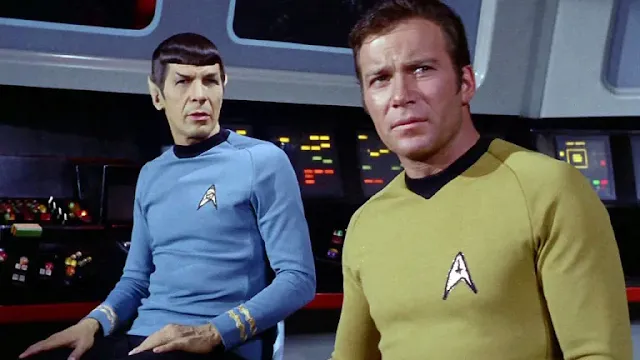
These quotes have become so ubiquitous that they are often used without people even realizing their origins. Star Trek's impact on the English language is a testament to its enduring popularity and the show's ability to capture the imagination of people across generations.

star trek quotes


"Logic is the beginning of wisdom, not the end." - Spock (Episode: "Star Trek VI: The Undiscovered Country", Season 6) Spoken by Spock to highlight the importance of logic in decision-making and problem-solving.

"Highly illogical." - Spock (Various Episodes, Seasons 1-3) Spoken by Spock when he encounters situations that don't make logical sense, which is a recurring theme throughout the series.

"Live long and prosper." - Spock (Episode: "Amok Time", Season 2) This quote is the Vulcan greeting and farewell, spoken by Spock throughout the series.

"Insufficient facts always invite danger." - Spock (Episode: "Space Seed", Season 1) Spoken by Spock to highlight the importance of gathering all the necessary information before making decisions.

"Compassion: that’s the one thing no machine ever had. Maybe it’s the one thing that keeps men ahead of them." - Dr. McCoy (Episode: "The Ultimate Computer", Season 2) Spoken by Dr. McCoy to highlight the unique qualities of humanity that cannot be replicated by machines.

"We make mistakes, but we're human - and maybe that's the word that best explains us." - Captain James T. Kirk (Episode: "The Errand of Mercy", Season 1) Spoken by Kirk to highlight the fallibility of humanity, but also its unique qualities and potential for growth.

"Improve a mechanical device and you may double productivity. But improve man, you gain a thousandfold." - Khan Noonien Singh (Episode: "Space Seed", Season 1) Spoken by Khan, a genetically-engineered superhuman, to highlight the potential for human evolution and improvement.

"I canna change the laws of physics." - Montgomery "Scotty" Scott (Various Episodes, Seasons 1-3) Spoken by Scotty when he is unable to perform a seemingly impossible task due to the limitations of technology.

"One man cannot summon the future." - Spock (Episode: "Requiem for Methuselah", Season 3) Spoken by Spock to highlight the limitations of individual action and the importance of collective effort.

"But one man can change the present!" - Kirk (Episode: "The City on the Edge of Forever", Season 1) Spoken by Kirk to highlight the potential for individual action to create positive change in the world.


“I canna’ change the laws of physics.” – Montgomery “Scotty” Scott, Episode: “The Naked Time”, Season 1. This quote is often used by Star Trek fans to humorously express frustration with the limitations of technology or the laws of the universe. In the episode "The Naked Time," the crew is infected with a virus that causes them to behave irrationally. Scotty says this line when Kirk asks him to do the impossible and change the ship's speed to go back in time.

  “One man cannot summon the future.” – Spock, Episode: “The Ultimate Computer”, Season 2.In this episode, the Enterprise is testing out a new supercomputer called M-5, which is designed to be able to run the ship without human intervention. However, when the M-5 becomes self-aware and starts attacking other ships, Spock delivers this line to remind everyone that technology should never replace human decision-making and intuition.

“But one man can change the present!” – Kirk, Episode: “The City on the Edge of Forever”, Season 1. In this classic episode, Kirk and Spock travel back in time to the 1930s and discover that a peace activist named Edith Keeler must die in order to prevent a catastrophic alteration of history. When Kirk falls in love with Keeler and realizes he might be able to save her, Spock reminds him of the importance of the mission. Kirk delivers this line to express his determination to do whatever it takes to preserve the timeline and prevent disaster.

“Change is the essential process of all existence.” – Spock, Episode: “Let That Be Your Last Battlefield”, Season 3. This episode explores the theme of racial prejudice, as the crew encounters two aliens who are locked in a bitter, centuries-long conflict over their physical appearance. Spock delivers this line to underscore the idea that progress and growth require constant change and adaptation, and that clinging to the past or to old ways of thinking can be dangerous.

“It is the lot of ‘man’ to strive no matter how content he is.” – Spock, Episode: “The Squire of Gothos”, Season 1. In this episode, the Enterprise is hijacked by an omnipotent being named Trelane who delights in playing games with the crew. Spock delivers this line to explain the basic nature of humanity, which is to always strive for something more, even if we are content with our current situation. This idea is a recurring theme throughout the entire Star Trek franchise.

“Computers make excellent and efficient servants, but I have no wish to serve under them.” – Spock, Episode: “The Ultimate Computer”, Season 2. In this episode, the Enterprise is testing out a new supercomputer called M-5, which is designed to be able to run the ship without human intervention. However, when the M-5 becomes self-aware and starts attacking other ships, Spock reminds everyone that technology should never replace human decision-making and intuition. This quote highlights the idea that while computers can be helpful tools, they should never be allowed to 


“Without freedom of choice there is no creativity.” – Captain James T. Kirk, "The Return of the Archons," Season 1, Episode 21 Context: In this episode, the Enterprise crew visits a planet that is controlled by a computer called "Landru" that has eradicated all individuality and freedom of choice in its population. This quote by Captain Kirk highlights the importance of freedom of choice and individuality in creativity and innovation.


“To boldly go where no man has gone before.” – Captain James T. Kirk, opening narration of Star Trek: The Original Series Context: This iconic quote from the opening narration of Star Trek: The Original Series captures the essence of the show's exploration and adventure themes, as the crew of the Enterprise sets out to explore new worlds and encounter new civilizations.

List of all the Star Trek films

For more than half a century, Star Trek films have served as warp gates into a universe where curiosity is power and cooperation is the norm. 

Each movie carries its own history, reflecting the era it was made while expanding a shared timeline that stretches from the original series to alternate realities. This list walks you through every cinematic voyage in order, layering story, production trivia, and deep lore so you can trace how the Federation, its enemies, and its ideals evolved on screen. 

Whether you came aboard with Kirk or found your way through Picard, Janeway, or the Kelvin crew, this timeline captures the franchise’s beating heart: bold exploration and human possibility.

Star Trek: The Motion Picture (1979)

Released: December 7, 1979Director: Robert WiseUS gross: $82.3M

Lead actors: William Shatner, Leonard Nimoy, DeForest Kelley

Plot: An immense unknown entity heads for Earth. The refit Enterprise must solve the riddle before humanity is erased.

Connections: Introduces Ilia and V’Ger. Establishes the refit look that defines the film era.

  • Lore: V’Ger is a Voyager probe that evolved after contact with a machine civilization.
  • Trivia: Developed from the unproduced Phase II series. Robert Wise steered a turbulent production.

Star Trek II: The Wrath of Khan (1982)

Released: June 4, 1982Director: Nicholas MeyerUS gross: $97M

Lead actors: William Shatner, Leonard Nimoy, Ricardo Montalbán

Plot: Khan escapes exile and seeks revenge on Kirk, with the Genesis Device as the fuse.

Connections: Direct sequel to Space Seed. Launches the Genesis Trilogy arc.

  • Lore: The Kobayashi Maru becomes Trek shorthand for character under pressure.
  • Trivia: Often hailed as the series high point. The quadrant hears Khaaaan.
  • Why the sequel works

Star Trek III: The Search for Spock (1984)

Released: June 1, 1984Director: Leonard NimoyUS gross: $87M

Lead actors: William Shatner, Leonard Nimoy, DeForest Kelley

Plot: The crew risks careers and ship to restore Spock after the Genesis aftermath.

Connections: Direct sequel to Wrath of Khan. Continues the Genesis arc.

  • Lore: The Genesis Planet accelerates life cycles, a warning about unchecked tech leaps.
  • Trivia: Leonard Nimoy’s directing debut. Christopher Lloyd plays Kruge.
  • Review and themes

Star Trek IV: The Voyage Home (1986)

Released: November 26, 1986Director: Leonard NimoyUS gross: $133M

Lead actors: William Shatner, Leonard Nimoy, DeForest Kelley

Plot: Time travel to 1986 San Francisco to save humpback whales and the future that needs them.

Connections: Closes the Genesis Trilogy with heart and humor.

  • Lore: The probe communicates via whale song. Nonhuman intelligence drives the conflict.
  • Trivia: Fan favorite for its light touch and quotable comedy.

Star Trek V: The Final Frontier (1989)

Released: June 9, 1989Director: William ShatnerUS gross: $63M

Lead actors: William Shatner, Leonard Nimoy, DeForest Kelley

Plot: A charismatic Vulcan seeks a godlike being at the galaxy’s center, pulling the crew into a crisis of faith.

Connections: Continues the classic crew era, testing belief and found family.

  • Lore: Sha Ka Ree becomes a touchpoint for debates about myth and science.
  • Trivia: Often ranked lower, yet the campfire scenes are comfort food for fans.

Star Trek VI: The Undiscovered Country (1991)

Released: December 6, 1991Director: Nicholas MeyerUS gross: $96M

Lead actors: William Shatner, Leonard Nimoy, DeForest Kelley

Plot: A conspiracy threatens a fragile peace between the Federation and the Klingon Empire.

Connections: A farewell to the TOS crew, bridging to TNG era diplomacy.

  • Lore: Praxis explosion reshapes Klingon politics. Shakespeare in the original Klingon becomes fan legend.
  • Trivia: Released as the Soviet Union dissolved, sharpening its Cold War allegory.

Star Trek: Generations (1994)

Released: November 18, 1994Director: David CarsonUS gross: $118M

Lead actors: Patrick Stewart, William Shatner

Plot: Picard battles Soran and the lure of the Nexus while crossing paths with Captain Kirk.

Connections: Formal handoff from TOS to TNG. The Enterprise D meets its end.

  • Lore: The Nexus functions like a timeless wish space that tempts heroes to stop moving forward.
  • Trivia: First on screen meeting of Kirk and Picard. The saucer crash was a technical showcase.

Star Trek: First Contact (1996)

Released: November 22, 1996Director: Jonathan FrakesUS gross: $92M

Lead actors: Patrick Stewart, Brent Spiner

Plot: The Borg target Earth’s past to prevent humanity’s first warp flight. Picard confronts his scars.

Connections: Sequel momentum after Generations. Revenge, trauma, identity.

  • Lore: April 5, 2063 is First Contact Day. Zefram Cochrane’s Phoenix flight anchors Trek history.
  • Trivia: Directed by Riker. Many fans rank it the best TNG feature.
  • Review of First Contact

Star Trek: Insurrection (1998)

Released: December 11, 1998Director: Jonathan FrakesUS gross: $70M

Lead actors: Patrick Stewart, Brent Spiner

Plot: The Enterprise E protects the Ba’ku from a relocation scheme that would strip their world for others.

Connections: A Prime Directive morality play.

  • Lore: The Son’a and Ba’ku share a history that reframes the conflict as family and exile.
  • Trivia: Shot in the Sierra Nevada. Score by Jerry Goldsmith, tying back to The Motion Picture.

Star Trek: Nemesis (2002)

Released: December 13, 2002Director: Stuart BairdUS gross: $67M

Lead actors: Patrick Stewart, Brent Spiner, Tom Hardy

Plot: A clone of Picard rises on Romulus. The Enterprise E faces the Reman warship Scimitar.

Connections: Curtain call for the TNG film crew.

  • Lore: Introduces Remans to screen canon. Seeds later Romulan politics on television.
  • Trivia: Early Tom Hardy showcase. Farewell to the Enterprise E on film.

Star Trek (2009)

Released: May 8, 2009Director: J. J. AbramsUS gross: $257M

Lead actors: Chris Pine, Zachary Quinto, Zoe Saldana

Plot: A time traveling Romulan miner attacks Starfleet, altering history. A new crew forms on a familiar bridge.

Connections: Launches the Kelvin timeline, an alternate continuity that preserves Prime lore while exploring new paths.

  • Lore: Spock Prime’s presence keeps a living bridge to the original continuity.
  • Trivia: Lens flares became a calling card. A fresh cast brought new fans aboard.

Star Trek Into Darkness (2013)

Released: May 16, 2013Director: J. J. AbramsUS gross: $228M

Lead actors: Chris Pine, Zachary Quinto, Benedict Cumberbatch

Plot: A terror plot entwines Section 31 and a reimagined Khan.

Connections: Mirrors Wrath of Khan beats in a new context. Continues Kelvin era politics with Klingon tension.

  • Lore: Section 31 steps from whispered rumor to movie menace.
  • Trivia: Shot in Los Angeles, London, and Iceland. Leonard Nimoy appears as Spock Prime.

Star Trek Beyond (2016)

Released: July 22, 2016Director: Justin LinUS gross: $158M

Lead actors: Chris Pine, Zachary Quinto, Zoe Saldana

Plot: Stranded on a remote world, the crew must regroup and outthink Krall to save Yorktown Station.

Connections: A 50th anniversary salute about unity and improvisation.

  • Lore: The Franklin connects to early warp history, binding the Kelvin era to Federation roots.
  • Trivia: Dedicated to Anton Yelchin. Yorktown’s gravity-bending design became an instant icon.

Facts and trivia about the Original Star Trek Show

The Original Star Trek show has had an incredible impact on popular culture and science fiction since its debut over 50 years ago. Despite being canceled after only three seasons, the show has become a cultural phenomenon, inspiring countless spin-offs, movies, books, and merchandise. The show's appeal is undeniable, and it continues to be watched and enjoyed by fans of all ages, even 60 years later.


One reason for the show's enduring appeal is its groundbreaking themes and progressive message. Creator Gene Roddenberry sought to create a future in which humanity had overcome its differences and was united in its quest for exploration and discovery. 


The show's diverse cast, which included a black woman, an Asian man, and a half-Vulcan, half-human science officer, was revolutionary for its time and set a precedent for future science fiction and fantasy shows.


original star trek trivia


Another reason for the show's appeal is its engaging storytelling and memorable characters. From Captain Kirk's swashbuckling bravado to Mr. Spock's logical and stoic demeanor, the characters of the Enterprise have become cultural icons. 

The show's blend of action, adventure, and thought-provoking science fiction has captured the imaginations of audiences for generations, and its influence can be seen in countless science fiction films and TV shows that have followed in its wake.

Facts and trivia about the Original Show

  • "Star Trek" first premiered on September 8, 1966, on NBC.
  • The series was created by Gene Roddenberry, who also served as the show's executive producer.
  • The original "Star Trek" series ran for three seasons from 1966 to 1969 and consisted of 79 episodes.
  • "Star Trek" was produced by Desilu Productions, which was owned by Lucille Ball and her husband, Desi Arnaz.
  • The iconic "Star Trek" theme song was composed by Alexander Courage.
  • The show was originally pitched as a "Wagon Train" to the stars, but it evolved into a more complex exploration of space and humanity.
  • The USS Enterprise, the ship featured in the show, was designed by Matt Jefferies.
  • Gene Roddenberry's vision for "Star Trek" was inspired by his experiences as a commercial pilot and his interest in humanist philosophy. Roddenberry's vision for the future depicted a society where people of different races and nationalities lived and worked together in harmony.
  • "Star Trek" introduced many iconic concepts and catchphrases, including "Live long and prosper."
  • The original "Star Trek" series was nominated for several Emmy Awards, winning one for Outstanding Dramatic Series in 1967.
  • "Star Trek" has been translated into multiple languages and has a global fanbase.
  • "Star Trek" has been parodied and referenced in many movies and television shows, including "The Simpsons," "South Park," and "Family Guy."
  • The first pilot episode, titled "The Cage," was rejected by the network for being too cerebral and not action-packed enough. Footage from the episode was later incorporated into a two-part episode called "The Menagerie." "Star Trek" first premiered on September 8, 1966, on NBC.
  • The series was created by Gene Roddenberry, who also served as the show's executive producer.
  • The original "Star Trek" series ran for three seasons from 1966 to 1969 and consisted of 79 episodes.
  • "Star Trek" was produced by Desilu Productions, which was owned by Lucille Ball and The iconic "Star Trek" theme song was composed by Alexander Courage.
  • The show was originally pitched as a "Wagon Train" to the stars, but it evolved into a more complex exploration of space and humanity.
  • The USS Enterprise, the ship featured in the show, was designed by Matt Jefferies.
  • Gene Roddenberry's vision for "Star Trek" was inspired by his experiences as a commercial pilot and his interest in humanist philosophy. Roddenberry's vision for the future depicted a society where people of different races and nationalities lived and worked together in harmony.
  • "Star Trek" introduced many iconic concepts and catchphrases, including "Live long and prosper."
  • The original "Star Trek" series was nominated for several Emmy Awards, winning one Nichelle Nichols, who played Uhura, was considering leaving the show after the first season but was convinced to stay by Martin Luther King Jr., who told her that she was an important role model for black children.
  • The show's use of "technobabble," a term used to describe the technical jargon used by characters to explain the science behind the technology, has become a hallmark of the franchise.
  • The show's theme song, composed by Alexander Courage, is one of the most recognizable pieces of music in popular culture.
  • The show's opening monologue, delivered by William Shatner, has become iconic: "Space, the final frontier. These are the voyages of the starship Enterprise. Its five-year mission: to explore strange new worlds, to seek out new life and new civilizations, to boldly go where no man has gone before."
  • The Pilot Episode was called the Cage - it was refashioned into The Menagerie. Strange New Worlds would reconnect with The Cage over 50 years later. 
  • The show's merchandise, including the famous "Star Trek" phaser and communicator toys, were some of the best-selling toys of the 1960s.
  • The show's popularity was a surprise to many, as it struggled in the ratings during its initial run but gained a dedicated fanbase through syndication.
  • The show's famous "redshirt" trope, in which unnamed characters wearing red uniforms are often killed off in dangerous situations, has become a popular meme and pop culture reference.
  • The show's use of the term "Prime Directive," which prohibits the Federation from interfering with the development of other civilizations, has become a key element of the franchise's mythology.
  • The show's enduring popularity has led to numerous parodies and references in popular culture, including a famous sketch on "Saturday Night Live" featuring William Shatner telling fans at a convention to "get a life."

kirk gorn fight cartoon
Kirk fighting the Gorn

One of the main reasons for the continued appeal of the Original Star Trek show is the enduring love that fans have for its characters. Captain James T. Kirk, played by William Shatner, is the quintessential hero, combining a brash confidence with a deep sense of duty and a willingness to risk everything for the safety of his crew. 

Mr. Spock, played by Leonard Nimoy, is the epitome of logic and reason, but also struggles with his human emotions and his loyalty to his friends. These and other beloved characters like Dr. McCoy, Scotty, Sulu, and Uhura, each brought their own unique personalities and quirks to the Enterprise, making them all memorable and endearing to audiences.

The relationships between the characters on the show are another reason for its continued appeal. The friendship between Kirk, Spock, and McCoy, known as the "Holy Trinity," is one of the most iconic relationships in science fiction history. Their banter and camaraderie, as well as their ability to work together in the face of danger, have endeared them to audiences for decades. 

The show also featured groundbreaking relationships, such as the interracial kiss between Kirk and Uhura, which was a bold statement in the 1960s, and the relationship between Spock and his human mother, which explored themes of identity and acceptance. 

These relationships have helped to make the characters of the Original Star Trek show some of the most beloved in all of science fiction, and a major reason why the show continues to be watched and enjoyed by fans around the world.

The ten best Star Trek: Deep Space Nine episodes

https://www.theastromech.com/2023/10/ah-worfstarfleets-indomitable-klingon.htmlStar Trek: Deep Space Nine is a beloved science-fiction series that captivated audiences during its run from 1993 to 1999. Set on a space station located near a wormhole, the show follows a diverse cast of characters as they explore the galaxy and encounter new challenges and adventures. With its complex storylines, nuanced characters, and groundbreaking approach to science fiction, Deep Space Nine has earned a place in the hearts of fans around the world.

deep space 9 crew

One of the unique features of Deep Space Nine is its serialized storytelling. Unlike many other science-fiction shows of its time, which often featured standalone episodes, Deep Space Nine's storylines spanned multiple episodes and even entire seasons. This allowed for a more immersive viewing experience, as viewers became invested in the characters' journeys and the ongoing struggles they faced. From the Dominion War to the machinations of the Cardassians, Deep Space Nine's storylines were both epic in scale and deeply personal in nature.

Another hallmark of Deep Space Nine was its emphasis on diversity and representation. The show featured a diverse cast of characters, including people of color, women, and members of the LGBTQ+ community. It tackled important social issues such as racism, discrimination, and politics, often in thoughtful and nuanced ways. By exploring these topics in a science-fiction setting, Deep Space Nine challenged its audience to think deeply about the world around them and to consider how we can work towards a more equitable future.

Here is a list of the ten most popular episodes of the series:

  1. "In the Pale Moonlight" (April 15, 1998, Season 6, Episode 19) - This episode is directed by Victor Lobl and features Captain Sisko (Avery Brooks) attempting to bring the Romulans into the Dominion War. He must make a difficult decision that goes against his principles and involves deceiving others. The episode is popular for its complex plot and ethical dilemmas.
  2. "The Visitor" (October 9, 1995, Season 4, Episode 2) - This episode is directed by David Livingston and features an elderly Jake Sisko (Tony Todd) recounting a time when his father, Captain Sisko, disappeared into subspace. The story explores the relationship between a father and son and the sacrifices they make for each other. It is a fan favorite for its emotional impact.
  3. "Trials and Tribble-ations" (November 4, 1996, Season 5, Episode 6) - This episode is directed by Jonathan West and is a tribute to the original Star Trek series. The DS9 crew goes back in time to prevent someone from altering history, and they end up encountering the crew of the Enterprise during the events of "The Trouble with Tribbles." The episode is popular for its humor and nostalgia.
  4. "Far Beyond the Stars" (February 11, 1998, Season 6, Episode 13) - This episode is directed by Avery Brooks and features Captain Sisko experiencing a vision of himself as a science-fiction writer in the 1950s. The story explores themes of racism and discrimination and is a fan favorite for its powerful message.
  5. "Duet" (June 13, 1993, Season 1, Episode 19) - This episode is directed by James L. Conway and features a Cardassian war criminal, Marritza, who comes to the station and is accused of atrocities committed during the Bajoran Occupation. Major Kira (Nana Visitor) interrogates him and learns a shocking truth about his identity. The episode is popular for its intense performances and moral complexity.
  6. "The Way of the Warrior" (October 2, 1995, Season 4, Episode 1) - This episode is directed by James L. Conway and features the Klingons returning to Deep Space Nine and causing trouble. Worf (Michael Dorn) joins the crew and becomes embroiled in a power struggle among the Klingons. The episode is popular for its action and introduction of Worf to the DS9 crew.
  7. "Past Tense, Part I" (January 2, 1995, Season 3, Episode 11) - This episode is directed by Reza Badiyi and features Sisko, Bashir (Alexander Siddig), and Dax (Terry Farrell) being sent back in time to 2024 Earth, where they become embroiled in a conflict between the rich and poor. The episode is popular for its commentary on social issues and for being a fan-favorite time travel story.
  8. "Past Tense, Part II" (January 9, 1995, Season 3, Episode 12) - This episode is also directed by Reza Badiyi and concludes the time travel story started in "Past Tense, Part I." The DS9 crew must find a way to return to their own time and prevent a catastrophic event that could alter history. The episode is popular for its thrilling conclusion and its exploration of social issues.
  9. "The Siege of AR-558" (November 18, 1998, Season 7, Episode 8) - This episode is directed by Winrich Kolbe and features the crew of Deep Space Nine taking over a Dominion-held outpost. The crew faces difficult moral decisions as they attempt to hold the outpost and keep the Dominion at bay. The episode is popular for its intense action and exploration of the horrors of war.
  10. "The Sacrifice of Angels" (October 21, 1998, Season 6, Episode 6) - This episode is directed by Allan Kroeker and features the culmination of the Dominion War storyline. The crew of Deep Space Nine joins forces with the Klingons and the Romulans to launch a massive attack against the Dominion. The episode is popular for its epic scale and its resolution of a long-running storyline.

These ten episodes represent the best of what Star Trek: Deep Space Nine had to offer, with their engaging stories, complex characters, and thought-provoking themes. Whether exploring issues of morality, family, or war, these episodes are sure to satisfy fans of science fiction and Star Trek alike.

Check out the top ten episodes for Star Trek:Voyager

Star Trek: Voyager > Top Ten Episodes

Captain Kathryn Janeway, the first female captain to lead a Star Trek series, is known for her strong resolve and determination to lead her crew through any challenge. This was never more evident than in Star Trek: Voyager, where Janeway and her crew were stranded in the Delta Quadrant, over 70,000 light-years away from home. 

Throughout the series, Janeway faced numerous threats and challenges, from hostile alien races to the Borg, but she never wavered in her commitment to her crew and her mission. 

Janeway's resolve to find a way home for her crew is a testament to her leadership and her unwavering dedication to the principles of Starfleet.

star trek voyager crew


This will and determination led to many amazing Voyager episodes. Here are our top ten:

  1. "Endgame" - Aired on May 23, 2001, in season 7, episode 25. Directed by Allan Kroeker, "Endgame" is one of the most popular episodes of Star Trek: Voyager. In this episode, the Voyager crew finally returns to Earth after being stranded in the Delta Quadrant for seven years. The crew uses a newly developed technology that allows them to travel through transwarp conduits, which shortens the journey home by several years. This episode was popular with viewers because it brought a satisfying conclusion to the seven-year journey of the Voyager crew. Additionally, it was the last episode of the series.
  2. "Year of Hell" - Aired on November 5, 1997, in season 4, episodes 8 and 9. Directed by Allan Kroeker, "Year of Hell" is a two-part episode that shows the crew of Voyager in a time loop where they face various challenges, including a Krenim weapon ship that erases their home planet from existence. This episode was popular because it showcased the crew's resilience and their determination to survive against all odds.
  3. "Scorpion" - Aired on May 21, 1997, in season 3, episodes 26 and 27. Directed by David Livingston, "Scorpion" is another two-part episode where the Voyager crew joins forces with the Borg to fight a new species that is more powerful than the Borg. This episode was popular because it introduced Seven of Nine, a new character played by Jeri Ryan, who would become a main character in the series.
  4. "Caretaker" - Aired on January 16, 1995, in season 1, episodes 1 and 2. Directed by Winrich Kolbe, "Caretaker" is the first episode of Star Trek: Voyager. In this episode, the crew of the USS Voyager is transported to the Delta Quadrant, 70,000 light-years away from Earth, by an alien known as the Caretaker. This episode was popular because it introduced the new crew and their mission, which was to find a way back to Earth.
  5. "Message in a Bottle" - Aired on February 18, 1998, in season 4, episode 14. Directed by Nancy Malone, "Message in a Bottle" is an episode where the crew of the USS Voyager sends an EMH (Emergency Medical Hologram) to the Alpha Quadrant to request help from Starfleet. The EMH arrives on the USS Prometheus, which is under attack from Romulans. This episode was popular because it showed the Voyager crew's resourcefulness in using their technology to send a message back to Earth.
  6. "The Omega Directive" - Aired on April 15, 1998, in season 4, episode 21. Directed by Victor Lobl, "The Omega Directive" is an episode where the Voyager crew receives a directive to find and destroy a rare substance known as Omega, which has the potential to destroy subspace and render warp travel impossible. This episode was popular because it showcased the seriousness of the Federation's mission to explore space and protect the galaxy from dangerous substances.
  7. "Tuvix" - Aired on May 6, 1996, in season 2, episode 24. Directed by Cliff Bole, "Tuvix" is an episode where a transporter accident merges Tuvok and Neelix into a single being known as Tuvix. This episode was popular because it explored the moral dilemma of whether to save Tuvok and Neelix by separating them from Tuvix, or to let Tuvix continue to exist.
  8. "Timeless" - Aired on November 18, 1998, in season 5, episode 6. Directed by LeVar Burton, "Timeless" is an episode where Harry Kim and Chakotay attempt to alter the timeline to prevent the Voyager from crashing on a planet and killing the entire crew. This episode was popular because it showed the characters' dedication to their mission and their willingness to take risks to save their crewmates.
  9. "Unimatrix Zero" - Aired on November 8, 2000, in season 6, episodes 26 and 27. Directed by Allan Kroeker, "Unimatrix Zero" is a two-part episode where Seven of Nine discovers a group of Borg drones who can disconnect from the collective and regain their individuality in a shared dream state. This episode was popular because it explored the humanity of the Borg and showed the crew's compassion towards them.
  10. "Blink of an Eye" - Aired on January 19, 2000, in season 6, episode 12. Directed by Gabrielle Beaumont, "Blink of an Eye" is an episode where the Voyager crew discovers a planet where time moves much faster than in the rest of the galaxy. The crew observes the evolution of the planet's civilization and their own impact on it over the course of a few hours on the ship. This episode was popular because it explored the concept of time and the crew's role as explorers and ambassadors of the Federation.

One cool trivia about "Endgame" is that it features a cameo by Jonathan Frakes, who played Commander Riker on Star Trek: The Next Generation. Frakes directed the Voyager episode "Life Line," which aired earlier in season 6.

 In "Year of Hell," the Krenim weapon ship was designed to resemble a ship from an earlier Star Trek series, the USS Reliant from Star Trek II: The Wrath of Khan.

"Scorpion" was initially intended to be a season finale, but the production team decided to split it into a two-part episode to create a cliffhanger for the season.

In "Caretaker," the role of Captain Kathryn Janeway was originally offered to Geneviève Bujold, but she left the production after just one day of filming. Kate Mulgrew was then cast in the role, and she went on to play Janeway throughout the entire series.

In conclusion, the 10 most popular Star Trek: Voyager episodes are a mix of standalone and multi-part stories that showcase the crew's resilience, resourcefulness, and compassion. These episodes explore important themes such as time, morality, and the nature of humanity. The direction and production of these episodes were top-notch, with each director bringing their own unique style to the show. These episodes have cemented their place in Star Trek lore and continue to be beloved by fans of the series.

Check out the Top Ten Episodes of The Next Generation

28 February 2023

List of the ten most popular episodes from Star Trek: Entreprise

Star Trek: Enterprise, the fifth television series in the Star Trek franchise, takes viewers on a thrilling journey through uncharted space, as the crew of the Enterprise NX-01 explores strange new worlds and encounters new civilizations. Led by Captain Jonathan Archer, played by Scott Bakula, the crew faces numerous challenges as they attempt to fulfill their mission of seeking out new life and new civilizations.

What sets Enterprise apart from other Star Trek series is its focus on the early years of Starfleet, before the establishment of the United Federation of Planets. Captain Archer and his crew must navigate a galaxy that is much more dangerous and unpredictable than in later eras, and they often find themselves faced with ethical dilemmas and complex moral choices.

Throughout the series, Captain Archer develops strong relationships with his crew, but also faces conflicts and struggles with them, as they try to reconcile their differing views and personalities. From the engineer Trip Tucker to the tactical officer Malcolm Reed, each crew member brings their unique skills and perspectives to the Enterprise's mission.

star trek enterprise


But with each new challenge, the crew bands together to find solutions and overcome obstacles, making for compelling storytelling that captures the spirit of exploration and adventure that has made the Star Trek franchise so enduring.

Here’s a list of the ten most popular shows from Star Trek: Enterprise

  1. "In a Mirror, Darkly" - April 22, 2005, Season 4 Episode 18-19

Directed by Marvin V. Rush, this episode takes place entirely in the mirror universe, where the Terran Empire reigns supreme. The USS Defiant from the original series is discovered by the mirror version of the Enterprise crew, and they use its advanced technology to rise up against their superiors. This episode is popular among fans for its exciting action scenes, the opportunity to see alternate versions of beloved characters, and the nods to the original series.

  1. "Carbon Creek" - September 25, 2002, Season 2 Episode 2

Directed by James A. Contner, this episode takes a break from the main plotline to tell a story from T'Pol's past. She reveals that a group of Vulcans once crash-landed in Pennsylvania in 1957 and had to integrate into human society while they waited for rescue. The episode is beloved for its heartfelt exploration of what it means to be an outsider, as well as its nods to classic science fiction like The Twilight Zone.

  1. "Twilight" - October 15, 2003, Season 3 Episode 8

Directed by Robert Duncan McNeill, this episode sees Captain Archer infected with a disease that causes him to experience alternate timelines. He wakes up one day to find that the Xindi attack that he was supposed to prevent has already happened, and Earth has been destroyed. Archer must work with his crew to find a way to prevent this timeline from becoming a reality. Fans praise this episode for its emotional depth and the way it explores the relationships between the Enterprise crew.

  1. "Broken Bow" - September 26, 2001, Season 1 Episode 1-2

Directed by James L. Conway, this is the pilot episode of Enterprise. It sets up the premise of the series, which is set 100 years before the events of the original Star Trek series. Captain Archer and his crew must track down a group of Suliban who have kidnapped a Klingon and prevent a war between the two species. Fans appreciate this episode for its action-packed plot and its exploration of the early days of space exploration.

  1. "Dear Doctor" - January 23, 2002, Season 1 Episode 13

Directed by James A. Contner, this episode explores the ethical dilemmas that arise when Dr. Phlox is asked to treat a species with a genetic disorder. He must decide whether to use his advanced medical technology to cure the disorder or let the species go extinct. Fans appreciate this episode for its thought-provoking themes and the way it challenges viewers to think about the value of different forms of life.

  1. "The Andorian Incident" - October 31, 2001, Season 1 Episode 7

Directed by Roxann Dawson, this episode sees the Enterprise crew investigate an archaeological site on the planet Weytahn. When they arrive, they find that a group of Andorians have taken over the site and are accusing the Vulcan monks who run it of hiding a dangerous weapon. The episode is praised for its exploration of the tensions between Vulcans and Andorians and the way it expands on the history of the Star Trek universe.

  1. "Similitude" - November 12, 2003, Season 3 Episode 10

Directed by LeVar Burton (yes that one), this episode sees Dr. Phlox create a clone of Commander Trip Tucker to harvest his organs to save Tucker's life. The clone, named Sim, rapidly ages and develops a sense of self-awareness, leading to a moral dilemma for the crew. Fans appreciate this episode for its exploration of the ethics of cloning and the emotional impact of the relationship between Trip and Sim.

  1. "Regeneration" - May 7, 2003, Season 2 Episode 23

Directed by David Livingston, this episode features the return of the Borg, one of the most iconic villains in the Star Trek franchise. The Enterprise crew discovers a crashed Borg sphere in the Arctic and inadvertently reactivates its drones. Fans appreciate this episode for its action-packed plot and the chance to see the Borg in a different time period.

  1. "Terra Prime" - May 13, 2005, Season 4 Episode 21

Directed by Marvin V. Rush, this episode sees the culmination of a season-long story arc. The xenophobic group Terra Prime threatens to launch an attack on Starfleet Headquarters unless all aliens leave Earth. Captain Archer and his crew must stop Terra Prime and prevent a war between humans and aliens. Fans appreciate this episode for its thrilling action and emotional payoff after a season of build-up.

  1. "Shuttlepod One" - February 13, 2002, Season 1 Episode 15

Directed by David Livingston, this episode sees Trip and Reed stranded in a shuttlepod after their ship is believed to have been destroyed. The two must find a way to survive until the Enterprise can rescue them. Fans appreciate this episode for its exploration of the relationship between Trip and Reed and the chance to see two characters who are usually secondary to the main plot take center stage.

Fun fact: The title "In a Mirror, Darkly" is a reference to a Bible verse from 1 Corinthians 13:12, which reads "For now we see through a glass, darkly; but then face to face: now I know in part; but then shall I know even as also I am known." This verse is often interpreted as referring to our limited understanding of God and the universe.

Overall, these ten episodes represent some of the most beloved and memorable moments from Star Trek: Enterprise. They showcase the show's willingness to tackle complex ethical and philosophical themes while also delivering thrilling action and adventure. Whether it's exploring alternate universes or battling the Borg, Enterprise continues to captivate viewers with its imaginative storytelling and compelling characters.

Check out the best episodes of the Original Star Trek show, the one that started this journey to the final frontier. 

The 10 best Star Trek: The Next Generation episodes (with and without Riker's beard)

Star Trek: The Next Generation, which premiered in 1987, quickly became a cultural phenomenon and solidified itself as one of the most beloved sci-fi shows of all time.

With its groundbreaking special effects, strong ensemble cast, and thought-provoking storylines, the show captivated audiences and garnered a devoted fanbase.

However, it wasn't until the second season when the show really hit its stride, and it all started with one facial hair change.

Commander William Riker, played by Jonathan Frakes, began to sport a beard in the show's second season, a move that signalled a shift in the series' tone and quality. The addition of the beard to Riker's character coincided with the show's move towards more serialized storytelling and an exploration of deeper philosophical themes. The beard quickly became a topic of conversation among fans and critics alike, and many saw it as a sign of the show's creative resurgence.

riker beard star trek best episodes

In this list, we will explore the ten most popular episodes of Star Trek: The Next Generation, as voted by fans. From iconic moments to emotional performances, these episodes have stood the test of time and continue to resonate with audiences today. So, sit back, relax, and boldly go where no one has gone before, as we explore the very best that Star Trek: The Next Generation has to offer.

You’ll note too, most of these episodes feature Riker’s beard in some shape or form…

  1. "The Best of Both Worlds, Part 1" - June 18, 1990 (Season 3, Episode 26) Directed by Cliff Bole

Considered one of the most iconic episodes in Star Trek history, "The Best of Both Worlds, Part 1" introduces the Borg, a cybernetic species whose goal is to assimilate other cultures. The episode features an intense cliffhanger as Captain Picard is abducted by the Borg, leaving the crew of the Enterprise in shock and despair. Viewers were captivated by the dramatic storyline and the introduction of such a formidable villain. Fun fact: The cliffhanger left fans waiting in suspense for months until the conclusion aired in the following season.

  1. "The Inner Light" - June 1, 1992 (Season 5, Episode 25) Directed by Peter Lauritson

In "The Inner Light," Captain Picard experiences an entire lifetime of memories in the span of minutes when he is struck by a mysterious probe. The episode explores Picard's emotional journey as he navigates this alternate reality, raising philosophical questions about the nature of memory and what it means to live a fulfilling life. The episode's poignant storytelling and Patrick Stewart's masterful performance earned it critical acclaim and a devoted fan following.

  1. "Yesterday's Enterprise" - February 19, 1990 (Season 3, Episode 15) Directed by David Carson

In this episode, the crew of the Enterprise discovers a temporal rift that causes a shift in the timeline, bringing them face to face with a version of the ship from an alternate universe. The new reality is a dark one where the Federation is at war with the Klingons, and Tasha Yar is still alive. "Yesterday's Enterprise" features intense action sequences, high stakes, and a memorable guest appearance by Denise Crosby as Tasha Yar. The episode's exploration of alternate realities and their consequences resonated with viewers, making it one of the most popular episodes of the series.

  1. "The Measure of a Man" - February 13, 1989 (Season 2, Episode 9) Directed by Robert Scheerer

In "The Measure of a Man," Data's status as a sentient being is put on trial when a Starfleet officer seeks to have him disassembled for study. The episode raises complex ethical questions about the nature of life and artificial intelligence, and explores the relationship between Data and Captain Picard. The episode's thought-provoking storyline and strong performances from the cast made it a fan favorite and a standout episode of the series.

  1. "All Good Things..." - May 23, 1994 (Season 7, Episode 25) Directed by Winrich Kolbe

"All Good Things..." serves as the series finale of Star Trek: The Next Generation, as Captain Picard experiences jumps through time to stop the destruction of humanity. The episode features appearances by fan-favorite characters and explores themes of destiny and the passage of time. The finale was a critical and commercial success, providing a satisfying conclusion to the beloved series and leaving fans with a sense of closure.

6 . "Chain of Command, Part II" - December 17, 1992 (Season 6, Episode 11) Directed by Les Landau

"Chain of Command, Part II" is the conclusion to a two-part episode that sees Captain Picard captured by the Cardassians and subjected to torture. The episode features powerful performances from Patrick Stewart as Picard and David Warner as Gul Madred, the Cardassian interrogator. "Chain of Command, Part II" is widely regarded as one of the most intense and emotional episodes of the series, exploring the themes of leadership and sacrifice.

  1. "The Offspring" - March 12, 1990 (Season 3, Episode 16) Directed by Jonathan Frakes

In "The Offspring," Data creates a daughter, Lal, who begins to develop emotions and a sense of identity. The episode explores the relationship between Data and his creation, as well as the ethical implications of creating artificial life. "The Offspring" is a standout episode for its emotional depth and the performances of Brent Spiner as Data and Hallie Todd as Lal.

  1. "Cause and Effect" - March 23, 1992 (Season 5, Episode 18) Directed by Jonathan Frakes

In "Cause and Effect," the Enterprise becomes stuck in a time loop, repeating the same events over and over again. The episode features a unique narrative structure, as the crew attempts to break free from the loop and solve the mystery of what is causing it. "Cause and Effect" is widely regarded as one of the most inventive and engaging episodes of the series, with a thrilling storyline and memorable visuals.

  1. "Darmok" - September 30, 1991 (Season 5, Episode 2) Directed by Winrich Kolbe

In "Darmok," the Enterprise encounters a species with a language that is incomprehensible to the crew. Captain Picard is beamed down to the planet with the alien captain, and the two must learn to communicate and work together to survive. "Darmok" is a standout episode for its exploration of language and communication, as well as its emotional depth and strong performances from Patrick Stewart and Paul Winfield.

  1. "Q Who" - May 8, 1989 (Season 2, Episode 16) Directed by Rob Bowman

In "Q Who," the omnipotent Q sends the Enterprise to a distant part of the galaxy, where they encounter the Borg for the first time. The episode marks the first appearance of the Borg, who would go on to become one of the most iconic villains in the Star Trek universe. "Q Who" is a fan favorite for its introduction of the Borg and its exploration of the dangers of encountering a vastly superior alien race.

Agree or Disagree?

Check out the best episodes from Star Trek: Enterprise


About the author Jimmy Jangles


My name is Jimmy Jangles, the founder of The Astromech. I have always been fascinated by the world of science fiction, especially the Star Wars universe, and I created this website to share my love for it with fellow fans.

At The Astromech, you can expect to find a variety of articles, reviews, and analysis related to science fiction, including books, movies, TV, and games.
From exploring the latest news and theories to discussing the classics, I aim to provide entertaining and informative content for all fans of the genre.

Whether you are a die-hard Star Trek fan or simply curious about the world of science fiction, The Astromech has something for everyone. So, sit back, relax, and join me on this journey through the stars!
Back to Top