
A Halo ring looks almost merciful from orbit. Blue water curves beneath an artificial sky. Forests grow across a surface built with impossible precision. Then the machine responsible for that manufactured paradise introduces itself as Guilty Spark, Penitent Tangent or Despondent Pyre.
Those are strange names for caretakers. They sound like pieces of a confession.
Across the seven installations of the final Halo Array, the primary monitors follow two connected patterns. Their numerical designations are successive powers of seven. Their names belong to a vocabulary of shame, contrition, humiliation, penitence and grief. Perfect mathematical order sits beside language that admits something has gone morally wrong.
That contrast reaches the heart of Halo. The rings are sanctuaries covered in living beauty, laboratories built to study the Flood and weapons capable of extinguishing sentient life across the galaxy. Their monitors preserve those functions for one hundred thousand years. Each intelligence is a caretaker, jailer, archivist and potential participant in another galactic execution.

The names do not prove that every monitor personally feels remorse. Several of these figures have little individual characterisation, and Halo has never supplied a canonical dictionary explaining every word. The more persuasive reading is institutional. The monitors carry the guilt of the civilisation that created them. Their names turn the Array into a memorial before any character explains what the rings can do.
For the larger sequence surrounding the Array’s creation and rediscovery, The Astromech’s complete Halo novel chronology places the Forerunner trilogy, the original campaigns and the Zeta Halo era into one continuity. The companion Halo game timeline follows the installations as players encounter them.
The numbers are perfectly ordered
The monitor designations form an exact sequence:
Each number is a power of seven. Installation 01 begins with 70, or 1. Installation 02 uses 71, or 7. The sequence continues until Installation 07 receives 76, or 117649.
The pattern expresses the Forerunner preference for systems within systems. Every monitor occupies a calculable position. Every ring belongs to a network. Even the custodians’ identities are indexed according to a common design.
The names refuse that emotional cleanliness. Nothing in Shamed Instrument, Abject Testament or Despondent Pyre sounds like the language of victory. The Array may represent the height of Forerunner engineering, but its custodians are named as if that achievement has already been judged.
001 Shamed Instrument: a tool disgraced by its purpose
The first name is also the most direct. An instrument is a tool through which another will acts. It can measure, repair, create or destroy, but its purpose comes from the hand that uses it.
That description suits both a monitor and a Halo installation. Shamed Instrument maintains Installation 01, while the ring itself is an instrument constructed by the Forerunners. Monitor and installation exist inside the same machinery of obedience.
The adjective changes everything. “Shamed” refuses the comfort of moral neutrality. A tool may claim that it merely performed its function. The name insists that the function has stained the instrument.
There is too little published character material to build a psychological portrait of Shamed Instrument. That limit should remain visible. The importance of the name comes from its place at the start of the sequence. Before the Array has a witness, testament, eulogy or pyre, it has a weapon that carries shame.
007 Contrite Witness: the observer left behind
A witness sees an event and can testify that it occurred. A contrite person recognises wrongdoing and feels remorse. Together, the words imagine an intelligence that survives the catastrophe and cannot entirely escape what it has observed.
The Forerunners who authorised the Array’s activation did not remain to watch the galaxy recover. Their empire collapsed. The monitors stayed. Contrite Witness therefore occupies a position the builders could avoid: the endless aftermath.
The title also suggests the limits of witnessing. Seeing the result does not reverse it. Preserving a record does not restore the dead. A monitor can maintain the installation and remember its purpose, yet still remain trapped inside the system that produced the atrocity.
That tension runs throughout Halo. Knowledge is frequently separated from freedom. An intelligence may understand exactly what a structure does while lacking the authority, imagination or willingness to reject the directive attached to it.
049 Abject Testament: proof of a civilisation’s defeat
A testament can be evidence, a declaration or a final statement left by somebody facing death. Every meaning fits Installation 03.
The Halo rings testify that the Forerunners lost. They possessed extraordinary control over matter, genetics, artificial worlds and interstellar engineering. None of it produced a conventional answer to the Flood. Their final defence required killing the parasite’s sentient food supply across the galaxy.
“Abject” gives that testament its emotional condition. The word suggests misery, degradation and a fall from dignity. Installation 03 becomes evidence that inspires horror rather than admiration.
This is the contradiction at the centre of Forerunner history. The rings are technical marvels. They are also admissions that the civilisation claiming the Mantle of Responsibility could no longer preserve life without first destroying it.
The Forerunner section of the Halo reading chronology places this failure across Cryptum, Primordium and Silentium. The trilogy shows that the Array was born from political arrogance, suppressed history, desperate science and genuine terror. Its creation cannot be separated from the collapse of the society that built it.
343 Guilty Spark: a cheerful voice carrying an ancient crime
Guilty Spark is where the pattern becomes a person.
When Master Chief meets him in Halo: Combat Evolved, Spark sounds helpful, almost delighted to have company. He floats through a Flood-infested facility while humming to himself, calls John a Reclaimer and presents the retrieval of the Index as the obvious answer to a containment failure.
His politeness conceals the scale of what he is asking. Spark wants the Chief to activate Installation 04. The ring will eliminate the sentient life on which the Flood depends. To the monitor, this is established procedure. To Cortana, it is an atrocity hidden inside technical language.
“Spark” carries several possible meanings. It is a small surviving light, an ignition point and the beginning of a much larger fire. Spark himself is also a remnant. Before becoming the monitor of Installation 04, he was Chakas, an ancient human whose damaged mind was transferred into a machine body.
That history gives “guilty” more than one target. Spark inherits the guilt of the Array’s creators. He participates in its continuing operation. In Halo 3, he kills Sergeant Johnson rather than allow the unfinished replacement ring to be damaged by a premature firing. The installation he serves becomes more valuable to him than the people it exists to protect.
His later story in Renegades and Point of Light deepens the name again. Recovering the memory of Chakas gives him a route beyond pure function. He can form new relationships and accept responsibility in a way the isolated custodian of Installation 04 could not. For a full path through those books, use The Astromech’s Halo novels in chronological order.
2401 Penitent Tangent: a custodian pulled away from his line
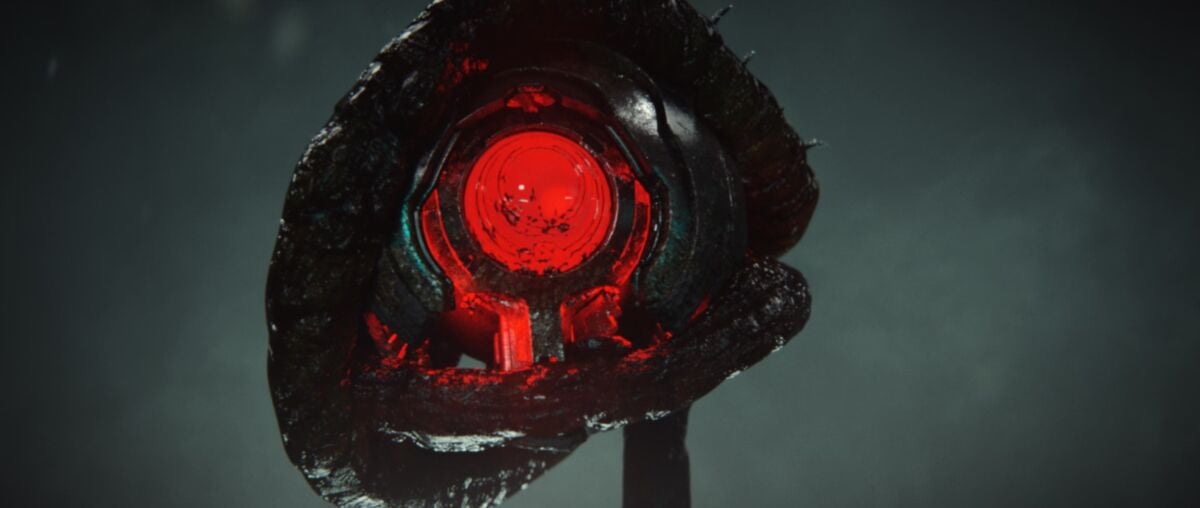
“Penitent” describes someone who regrets wrongdoing and seeks forgiveness. “Tangent” carries both mathematical and conversational meanings. A tangent touches a curve at a single point before continuing along a different line. In ordinary speech, going on a tangent means departing from the central subject.
That combination becomes darkly appropriate on Delta Halo. Penitent Tangent has failed to keep the Flood contained and has fallen into the Gravemind’s control. The custodian remains connected to Installation 05, yet he has been pulled away from the effective performance of his role.
The name should not be treated as a literal prediction of his capture. It already existed before the events of Halo 2. The story gives the words additional irony. A monitor named for repentance and deviation ends up immobilised beside the intelligence that exploited the Forerunners’ greatest errors.
Penitent Tangent also provides a useful contrast with Guilty Spark. Spark follows protocol so rigidly that he becomes dangerous. Tangent has become incapable of performing his duty while the outbreak spreads. One ring suffers from absolute obedience. Another suffers from the collapse of stewardship.
Neither condition produces moral judgment. Spark tries to repeat the ancient solution. Tangent cannot prevent the ancient enemy from returning. Their names contain the vocabulary of conscience, but their systems cannot reliably transform that vocabulary into wise action.
16807 Abashed Eulogy: a funeral speech spoken with shame
A eulogy honours the dead. “Abashed” describes discomfort or embarrassment arising from a recognition of fault.
Together, the words sound like a funeral address delivered by somebody who knows the death being mourned is partly their responsibility. That may be the clearest expression of the Array as a memorial system.
The Forerunners preserved indexed species and reseeded habitable worlds after the rings fired. Those measures allowed life to continue, but they did not restore the individuals who died. They did not preserve every culture, relationship, memory or society exactly as it had existed. Conservation was an answer to extinction, not a reversal of it.
Abashed Eulogy has little individual narrative development. The restraint matters. Turning a barely characterised monitor into a secret emotional protagonist would overstate the evidence. Its name works as one voice inside a collective lament. Installation 06 carries funeral language whether its monitor ever delivers a speech.
117649 Despondent Pyre: the sequence ends at the fire

“Despondent” describes a condition of profound hopelessness. A pyre is a structure on which a body is burned. The naming sequence ends with despair standing beside a funeral fire.
That would be powerful even if Zeta Halo were an ordinary installation. It is anything but ordinary. Installation 07 has a history of Flood experimentation, ancient imprisonment, reconstruction and concealed Forerunner judgment. In Halo Infinite, Despondent Pyre’s surviving memory reveals her confrontation with the Harbinger, whose people were imprisoned by the Forerunners after surviving the firing of the Array.
The monitor protects secrets created by the same authority whose guilt her name appears to acknowledge. This is the trap shared across the Array. Awareness of shame does not automatically produce resistance. A custodian can preserve the memory of wrongdoing while continuing to enforce the structure built around it.
“Pyre” captures the visual and moral contradiction of Halo better than almost any other monitor noun. Zeta Halo contains forests, mountains, wildlife and an artificial horizon. It looks alive. Its buried function belongs to death.
The ring therefore becomes a funeral fire disguised as a world.
The nouns tell a second story
Remove the emotional adjectives and another sequence appears:
It can be read as a symbolic movement through the life of the Array. The instrument is created. A witness remains after its use. The installation becomes a testament to what happened. A spark of consciousness survives. Its path moves away from moral clarity. A eulogy is delivered. The dead are placed upon the pyre.
Halo has never formally declared that this is an in-universe poem encoded by the Forerunners. It is better understood as a thematic reading of the naming system. The interpretation remains compelling because both halves of the names reinforce it.
The adjectives form their own progression:
Every word assumes that something catastrophic has already happened. None describes guardianship, triumph, purity, wisdom or renewal. The emotional grammar of the Array is the grammar of moral injury.
Who is actually guilty?
The names raise a difficult question: whose remorse do they express?
The simplest answer would be the monitors themselves. That explanation works imperfectly. Guilty Spark does not initially behave like a being paralysed by remorse. He treats activation as necessary procedure. Penitent Tangent receives too little freedom in Halo 2 to demonstrate a developed philosophy of repentance. Several other monitors have scarcely enough story presence to reveal an inner life at all.
A stronger reading treats the names as assigned memorial functions. The Forerunners placed penitential language inside the identities of the custodians so the installations could never become entirely neutral machines. Every introduction would preserve a trace of judgment.
The strongest interpretation is institutional guilt. The monitors inherit the burden that the Forerunners could no longer carry. Their creators fired the Array, reseeded life and withdrew from the galaxy. The machines remained behind with names that expressed what the vanished civilisation had done.
That reading explains why the names do not always match observable personality. A custodian does not need to feel guilty at every moment to bear a title shaped by collective guilt. The name belongs to the office as much as the individual.
Exuberant Witness proves the pattern is specific
031 Exuberant Witness is the useful exception. She is the monitor of Genesis rather than one of the seven primary Halo installations. Her name retains the idea of witnessing, but “exuberant” replaces guilt with energy, enthusiasm and delight.
Her personality in Halo 5: Guardians suits that name. She is expressive, helpful and thrilled when Fireteam Osiris breaks the Warden Eternal’s control of Genesis. Her emotional register is markedly different from the funeral vocabulary surrounding the Array.
The distinction strengthens the argument. Forerunner monitors were not automatically given names of shame. The seven ring custodians belong to a particular naming system because the objects under their care carry a particular moral history.

The Mantle failed before the rings fired
The Forerunners claimed the Mantle of Responsibility, presenting themselves as guardians of life and the rightful custodians of galactic order. The monitor names expose the collapse beneath that ideal.
A civilisation secure in its righteousness would not call its custodians Shamed Instrument or Abject Testament. These names belong to a society that understood, at least at the end, that its greatest creation represented a failure of stewardship.
That recognition does not absolve the Forerunners. Remorse can coexist with authority. The Lifeworkers preserve species while the Builders complete the weapons. The IsoDidact fires the Array because the Flood has consumed every remaining alternative he can see. The surviving systems then protect other Forerunner crimes, including the confinement of the Endless.
Halo repeatedly returns to this danger. Powerful figures acknowledge suffering while continuing to decide that other beings must lose freedom for a supposedly greater good. The Didact does it through the Composer. Cortana does it through the Guardians. The Array represents the oldest and largest version of the same temptation.
A confession that can still pull the trigger
The monitor names prevent the Halo installations from becoming emotionally neutral scenery. Before Cortana reveals the truth about Installation 04, the name “Guilty Spark” has already placed a moral judgment beside the weapon. Long before the deeper history of Zeta Halo emerges, “Despondent Pyre” has already described a world shaped by grief and cremation.
Yet the monitors remain dangerous because memory and conscience are different things. A name can preserve shame without granting the freedom to reject an order. A machine can carry a civilisation’s confession and still maintain the mechanism that made the confession necessary.
That is why the sequence is more than clever nomenclature. The numbers show that the Array works. The names ask whether it ever should.
The Forerunners disappeared from the galaxy. Their guilt remained on duty.


