
Halo 3: The End of the War?
Halo 3 is not simply the conclusion of a trilogy. It is the moral, spiritual, and historical reckoning of the entire Human-Covenant War. Every major faction enters this chapter carrying the burden of lies, losses, betrayals, and irreversible decisions. Where Halo: Combat Evolved introduced mystery and survival, and Halo 2 exposed contradiction and schism, Halo 3 resolves belief through consequence.
This is the game where prophecy is finally tested against truth. It is where the Covenant’s theology collapses under the weight of its own violence, where humanity learns that survival depends on more than force, and where the series begins to shift from military science fiction into something older and stranger, a war fought not only over worlds, but over history, inheritance, and who gets to decide the future of all sentient life.
This expanded mission-by-mission timeline deepens the narrative context, foregrounds key lore moments, and clarifies how each chapter pushes the galaxy toward either extinction or survival.
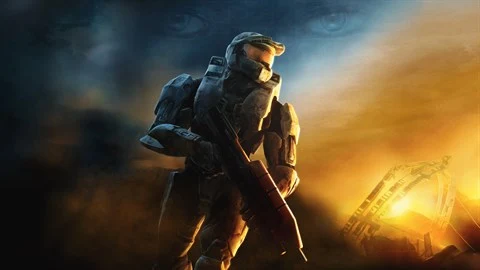
Mission 1 | Arrival
The War Comes Home
Halo 3 opens with gravity and consequence. The Master Chief crash-lands in East Africa, his return to Earth marked not by ceremony but by fire, debris, and exhaustion. Humanity has survived the Covenant’s attack on Earth, but only barely. Cities are scarred. Military command is fractured. The tone is immediate and severe. There is no illusion of triumph here. Survival has replaced strategy.
As Master Chief emerges from the wreckage, the player is reminded that the war is no longer being fought at the farthest reaches of human space. Earth itself has become a battlefield, which means the symbolic centre of humanity is now exposed. There is nowhere deeper to retreat. The stakes are no longer colonial, tactical, or even merely species-level. They are existential and final.
The level also quietly reinforces one of Halo’s enduring strengths, scale through mood. Chief lands alone, battered, almost mythic in his silence, but what surrounds him is not heroic grandeur. It is a planet under siege. Marines fight in confusion. Commanders improvise under pressure. The war is no longer abstract. It has come home.
The arrival of High Charity in orbit, and the Covenant’s focus on Earth, reframes the conflict even further. Earth is not being treated as a simple military prize. It is a ritual site. To Truth, this is the place from which the Great Journey must be completed. In that sense, Arrival tells the player something important before the game ever says it outright. The final battle is not merely about winning. It is about preventing belief from becoming extinction.
Mission 2 | Sierra 117
Allies Without Faith
Set in dense jungle terrain, Sierra 117 is a mission about recovery, reconnection, and uneasy new alignments. Chief rescues Sergeant Johnson and rejoins the surviving human command structure, which gives the story emotional continuity as much as tactical direction. Johnson’s presence matters because he embodies the war’s older human spirit, the soldier who has endured impossible odds and still remains recognisably human, cynical, brave, and defiant.
The Arbiter’s presence changes the mission’s meaning. In gameplay terms, he is an ally. In narrative terms, he is evidence that the Covenant has already begun to rot from within. This is not a simple alliance of convenience. It is a union born from revelation. The Arbiter has learned that the religion he killed for was built on deception. Humanity, once framed as heretical and beneath contempt, is now fighting alongside him not because trust has been earned in full, but because Truth’s vision is worse than old hatred.
This mission is also where Halo 3 starts working through one of its central ideas, what remains once faith breaks. The Covenant had coherence because they believed. The Elites had purpose because they served. Once that belief is exposed as a lie, identity itself must be rebuilt. Sierra 117 is therefore not simply a rescue mission. It is the first real shape of the post-Covenant future, two former enemies walking into battle together because reality has destroyed the old myth.
Mission 3 | Crow’s Nest
Containment Fails
Crow’s Nest begins like a more traditional defensive operation. Humanity appears to have a fortified position, a command hub, a place from which to respond. That illusion does not last. Halo has always been a series deeply suspicious of containment, and this mission proves again that systems built to hold chaos at bay usually fail at the exact moment they are most needed.
The reappearance of the Flood inside a supposedly secure UNSC facility is horrifying not simply because of what they are, but because of what they represent. They turn every sealed bunker into a trap, every chain of command into a liability, and every assumption about control into fantasy. The Flood do not merely attack defences. They expose the futility of relying on them.
At the same time, Truth’s plan becomes clearer. He is no longer pursuing victory in any conventional sense. He is moving toward apocalyptic confirmation. The Halo Array, in his hands, is not a reluctant last resort but a sacred instrument. That makes him more dangerous than a conqueror. He would rather erase the galaxy than admit the foundations of his faith are false.
Crow’s Nest therefore becomes an early statement of Halo 3’s broader worldview. Institutions fail. Walls fail. Dogma fails. The only thing that matters is whether enough people can recognise the truth before belief destroys everything.
Mission 4 | Tsavo Highway
Evacuation as Strategy
Tsavo Highway is one of the clearest examples of Halo using scale to convey desperation rather than triumph. On the surface, it offers the player wide spaces, vehicle combat, and the thrill of movement. Underneath that, however, the mission is fundamentally about retreat. This is not humanity surging forward in confidence. It is humanity trying to get out alive while the world behind it burns.
That makes the level more interesting than it first appears. The UNSC is no longer planning for clean victory or even for stable defence. It is managing collapse. Marines are being extracted from positions they cannot hold. Covenant pressure is relentless. Every stretch of road feels temporary, every victory minor and conditional.
Truth’s broadcast amplifies that sense of dread. His rhetoric is not designed to persuade anymore. It is the language of finality. The Great Journey is imminent. Dissent is gone. The Covenant is no longer a coalition with internal tensions. It has become a sharpened instrument of one fanatic will, even as its foundations begin to crack.
Tsavo Highway matters because it takes what could have been a straightforward action sequence and turns it into a study in strategic exhaustion. The war is compressing. Time is running out. Earth is slipping away.
Mission 5 | The Storm
The Shape of the Endgame
The Storm pushes Halo 3 into full military escalation. Massive Covenant anti-air positions dominate the landscape, and disabling them becomes essential if Earth is to have any chance at survival. Yet even here, the mission is doing more than staging a large battle. It is widening the player’s understanding of what the Covenant war machine really is.
The Scarab encounter is central to that effect. Scarabs are terrifying not only because of their firepower, but because they are the perfect visual expression of Covenant ideology translated into machinery. They are religious war engines, towering symbols of force used to make doctrine physical. When the player fights one, they are fighting more than armour. They are fighting the industrial might of belief.
The real turning point, however, is the revelation of the Ark. This is where the game breaks open. Up to now, Halo’s story has been about rings, relics, prophecies, and hidden superweapons. The Ark reframes everything. The rings are not isolated miracles. They are part of a larger system. A network. A design. A controlled architecture of extermination.
That revelation expands the universe at the same moment it narrows the conflict. The final battle is no longer simply about defending Earth. It is about reaching the mechanism that controls all endings. The trilogy stops being a war story for a moment and becomes a myth about the hand on the trigger.
Mission 6 | Floodgate
The Logic of the Parasite
Floodgate is one of Halo 3’s most effective tonal pivots. After the large-scale combat of The Storm, the game suddenly becomes intimate, contaminated, and grotesque. High Charity arrives not as a city in triumph, but as a ruptured body, carrying infestation and ruin. It is one of the franchise’s most vivid images, a sacred seat of empire transformed into a vessel of corruption.
This mission also deepens the Gravemind’s role as more than a monster. The Flood has always been horrifying, but in Floodgate the series reminds us that the parasite is not mindless. It is deliberate. It reasons. It speaks with strategic clarity. Its goals are monstrous, but not irrational. That distinction matters because it makes the Flood philosophically unsettling. It is not chaos. It is a terrible intelligence built from accumulation, memory, and hunger.
The temporary alignment between the Gravemind’s interests and the player’s objective creates one of Halo 3’s bleakest ideas. Stop Truth first, or nothing else matters. There is no morality in that bargain, only necessity. The war has reached the point where even the worst imaginable force can momentarily occupy the same side of the equation as survival.
Floodgate shows Halo at its most cynical and perhaps its most mature. There are no clean fronts anymore. Only overlapping disasters, each demanding attention before the next consumes the field.
Mission 7 | The Ark
Beyond the Galaxy
Crossing the portal to the Ark is one of the most important spatial shifts in the original trilogy. Suddenly the war leaves human space entirely. Earth, the Covenant, even the familiar geometry of the Milky Way, all fall away. The battlefield now exists in a place built for species-level control, far beyond normal history and beyond ordinary political stakes.
The Ark’s true function is a crucial piece of lore. It does not merely relate to Halo. It commands Halo. It constructs, monitors, and centralises the logic of the entire Array. This distinction is essential because it reveals how little the Forerunners trusted decentralised extinction. Even in designing a galaxy-wide kill switch, they built a hidden centre outside the galaxy from which the whole system could be controlled.
That choice says a great deal about the Forerunners, their caution, their arrogance, and their fear. It also raises the stakes of the mission instantly. If the Ark can be seized, the future is not predetermined. Control is possible. Extinction is no longer simply something to be endured. It can be prevented.
The level’s wide-open battles and strange landscapes reinforce that feeling. The player is fighting in a place that was never made for ordinary war, which makes every firefight feel historically loaded. This is no longer a battle over territory. It is a battle over the operating system of civilisation itself.
Mission 8 | The Covenant
The Death of a Lie
If Halo 3 has a thematic apex, it is this mission. Three factions collide in a brutal and unstable struggle, humanity, the Elites, and the last loyalists to Truth. The war ceases to be linear and becomes a direct confrontation between opposing understandings of reality.
The Arbiter’s confrontation with the Prophet of Truth is especially important because it resolves years of manipulation in a single historical moment. This is not just personal revenge. It is the public death of the Covenant’s founding fiction. The Arbiter stands before the figure who turned an entire civilisation into an engine of murder and says, in effect, enough. Truth’s authority is not disproved in a council chamber or by a scholar’s revelation. It is ended in blood, amid the wreckage of the creed he used to command millions.
Truth’s death is deliberately anti-messianic. He does not transcend. He does not ascend. There is no radiant confirmation of faith. He dies in ruin, reduced not to a martyr, but to a fraud consumed by the consequences of his own doctrine. That is what makes the moment so effective. Halo 3 refuses him grandeur.
At the same time, the mission reminds the player that dismantling a lie does not restore order. The Flood arrives again. Violence does not pause. The death of false belief solves one problem and reveals several others. Halo has always understood that exposing truth is not the same thing as healing the damage belief has already caused.
Mission 9 | Cortana
Memory Under Siege
Cortana is one of the most psychologically effective missions in the original trilogy. High Charity, now fully corrupted, becomes a maze of flesh, noise, decay, and invasive memory. The physical space is hostile, but the deeper threat is mental. This is a level about erosion, of identity, of clarity, of endurance.
Cortana’s fragmented messages reveal what prolonged contact with the Gravemind can do to even a mind as powerful as hers. Intelligence is not immunity. Consciousness can be bent, splintered, and weaponised. The mission therefore expands one of Halo’s recurring concerns, that memory itself is vulnerable. Knowledge can save, but it can also be tortured, distorted, or used against the one who carries it.
For Master Chief, the mission is also intensely personal. He is not here because strategy requires a detour. He is here because Cortana matters, and because abandoning her would mean abandoning the emotional and moral core of the series. That gives the mission a different kind of force. It is not about heroic advance. It is about fidelity under impossible pressure.
By the time Chief recovers Cortana, the story has made a subtle but important point. In Halo, information is often more decisive than weaponry. Cortana holds the key to ending the conflict, not because she can outgun everyone else, but because she knows what must be done. Memory, even broken memory, becomes the route to survival.
Mission 10 | Halo
Ending the Cycle
The final mission returns players to a Halo ring, completing the narrative circle begun in Combat Evolved. That return is not nostalgic. It is structural. Halo 3 understands that endings gain power when they echo beginnings, and this final chapter uses the ring not simply as a setting, but as a symbol of repetition, inheritance, and the possibility of breaking an ancient pattern.
This new ring is unfinished, unstable, and deadly. That incompleteness matters because it allows a solution the Forerunners never had. Instead of firing the entire Array and annihilating all sentient life, the ring can be used with precision to destroy the Flood infestation at the Ark. This is one of the most important turns in Halo lore. It represents a way out of total reset. A way to end the immediate threat without repeating the full horror of the old solution.
The final escape sequence gives the mission its kinetic release, but the larger narrative point lies beneath the spectacle. The ring collapses. The war collapses. The old systems that defined this cycle of extermination and renewal begin to break apart. There is no triumphal parade waiting on the other side. Only survival, damage, and the uncertain possibility of a future not entirely shaped by the mistakes of the past.
That is why the ending remains powerful. The galaxy is not healed. It is merely still alive. In Halo terms, that is enough. Extinction has been denied one more time.
Why Halo 3 Endures
Halo 3 endures because it resolves its mythology without smoothing out its tensions. Faith is exposed, but not all wounds close. Power is restrained, but never disappears. Survival is earned through understanding, sacrifice, and temporary alliances, not through easy victory.
The game also succeeds because it feels like an ending to an era while leaving enough mystery in place for the universe to continue growing. It closes the Human-Covenant War, but it also leaves the player with larger questions about the Forerunners, the Flood, the architecture of the Array, and humanity’s place in a history much older than it understands.
Most importantly, Halo 3 refuses sentimentality. It is not the story of humanity winning cleanly. It is the story of extinction being denied at the last possible moment. That is a different kind of heroism, harder, stranger, and more in keeping with Halo’s best instincts.
Halo 3 is the story of refusing inevitability, even when every system built before has failed.


_poster.jpg)


