chronological order
26 March 2026

The Purge - franchise film chronology

Franchise Timeline

The Purge Chronology, Explained

What starts as a tightly wound home invasion thriller slowly mutates into something larger, uglier, and more politically revealing. The Purge franchise is not just about one night of legal violence. It is about how a nation teaches itself to call cruelty policy, then tradition, then patriotism.

Viewed in chronological order, the series becomes less a stack of horror sequels and more a dystopian history of state-sanctioned collapse. Each entry widens the frame, from neighborhood terror to class warfare, then to electoral panic, border violence, and finally a country that can no longer contain the monster it invented.

The core lore of The Purge

In this world, the New Founding Fathers of America sell the Purge as a cleansing ritual, a one-night release valve that supposedly lowers crime, stabilizes the economy, and keeps the nation orderly for the other 364 days of the year.

The deeper lore says the opposite. The Purge is never really about catharsis. It is about population control, class discipline, manufactured fear, and a government that launders ideological violence through legal language, religious symbolism, and media spectacle.

the purge film poster 20213


Phase One, the experiment becomes policy

Release: 2018 Setting: 2016 Director: Gerard McMurray

1. The First Purge

Chronologically, this is where the franchise really starts. The NFFA stages its first live trial on Staten Island, presenting it as a sociological experiment that will allow people to vent aggression in a controlled environment. Residents are paid to remain on the island, and extra money is offered for participation, which immediately reveals one of the franchise’s ugliest truths: poverty is not background texture here, it is part of the design.

What makes this prequel important is not just that it explains the first Purge. It proves that the event fails on its own terms. Many residents do not leap straight to murder. They party, posture, loot, improvise, and treat the night as chaos rather than holy war. The NFFA has to intervene with planted weapons and disguised mercenaries to make the body count look politically useful.

That single decision hardens the entire mythology. The violence was never an organic national truth waiting to be set free. It had to be engineered, incentivized, and staged for television.

Trivia-wise, this is the first Purge film not directed by James DeMonaco, though he still wrote it, and it turned into the biggest worldwide box-office hit in the series. That is fitting, because it is also the entry that most clearly frames the franchise as political horror rather than just survival horror.

Phase Two, the ritual becomes American life

Release: 2013 Setting: 2022 Director: James DeMonaco

2. The Purge

The original film is the smallest in scale and one of the most important in theme. By this point the annual Purge is fully normalized. It has marketing. It has etiquette. It has a prayer. It has a calm, corporate Emergency Broadcast voice that turns social breakdown into civic housekeeping.

The story traps the Sandin family inside the kind of suburban fortress that only exists because the Purge exists. James Sandin has become wealthy by selling security systems to frightened people, which turns him into a perfect symbol of upper-class complicity. His family profits from the ritual while assuming they can stay morally untouched by it.

Then the film punctures that illusion. The hunted stranger outside their home matters, but so do the neighbors inside the gated community. The real horror is not random street chaos. It is that wealth, resentment, envy, and respectability all sit just beneath the polished suburban surface.

As franchise trivia, this was made on a famously lean budget and became a breakout hit, establishing The Purge as one of Blumhouse’s most efficient commercial engines. Its narrow, one-house structure was partly a money-saving move, but that limitation gave the movie its pressure-cooker power.

Release: 2014 Setting: 2023 Director: James DeMonaco

3. The Purge: Anarchy

This is the film where the franchise finds its true scope. Instead of staying inside one house, it pushes out into the city and lets the audience see the full machinery of Purge Night. That makes Anarchy the moment The Purge stops being just a clever premise and starts becoming a coherent world.

Frank Grillo’s Leo Barnes arrives as a revenge-driven figure who gradually turns into the franchise’s closest thing to a moral action hero. Through him, the series gains a spine. He is not a Purge enthusiast, not a true believer, and not a detached observer. He is a man trying to use the system for personal reasons who ends up confronting the system itself.

Lore-wise, Anarchy expands the franchise in major ways. It shows organized kidnapping, elite auction culture, government-backed cleansing squads, and the use of Purge Night as a method of clearing out the poor while preserving the fiction that this is all voluntary civic release.

It also has one of the franchise’s most important tonal shifts. The Purge becomes urban war cinema, not just home siege horror. That widening of the lens is what lets every later sequel become more openly political.

Release: 2018 Setting: 2027 Format: TV Season 1

4. The Purge, Season 1

This is the big chronology gap many franchise roundups miss. The first television season sits between Anarchy and Election Year, and it matters because it shows how the Purge seeps into everyday institutions beyond the single night itself.

Season 1 follows multiple strands at once, including revenge, cult behavior, corporate ambition, and upper-class Purge networking. That multi-character structure gives the franchise room to examine how the event reshapes religion, status, business, and personal identity, not just body counts.

In lore terms, this season is valuable because it shows the Purge as a cultural ecosystem. By now it is not simply something people endure. It is something they prepare for, market around, spiritually rationalize, and weave into their life plans.

Release: 2019 Setting: 2036 to 2037 Format: TV Season 2

5. The Purge, Season 2

Season 2 is one of the franchise’s most underrated ideas because it refuses to treat dawn as a clean ending. It begins just after a Purge night and studies the aftermath, the hangover, the damage that keeps moving through institutions long after the siren stops.

That makes it unusually useful in chronological terms. Instead of another isolated survival story, the season explores what Purge society looks like in the months between annual atrocities. Banking, policing, trauma, corruption, and planning for the next cycle all become part of the picture.

It also helps bridge the franchise toward Election Year by making the state feel less theatrical and more systemically rotten. The show only lasted two seasons, but this second run is where the idea of The Purge becomes most fully sociological.

Release: 2016 Setting: 2040 Director: James DeMonaco

6. The Purge: Election Year

Election Year takes everything simmering in the earlier entries and drags it fully into American political myth. Senator Charlie Roan runs on abolishing the Purge, which means the event is no longer just a cultural ritual. It is now a constitutional fault line.

Leo Barnes returns here in a more openly heroic mode, now working as Roan’s protector. That matters because the franchise is no longer content to ask who survives the night. It wants to ask whether the system itself can be survived, repealed, or defeated.

The lore grows darker too. This is where the franchise leans hardest into ritualized political religion, nationalist iconography, and the grotesque idea of murder tourism, outsiders flying into the United States because the country has transformed atrocity into a marketable attraction.

It is also the strongest bridge between exploitation cinema and political allegory. The title sounds lurid, but the film is really about what happens when fascistic violence gets wrapped in democratic procedure and campaign language.

Phase Three, the ritual escapes the state

Release: 2021 Setting: 2048 to 2049 Director: Everardo Gout

7. The Forever Purge

This is where the franchise cashes in its central warning. If you normalize ideological violence once a year, why would it politely return to its cage at sunrise? The Forever Purge answers that question by letting the ritual mutate into permanent insurgency.

The NFFA has returned to power, the Purge has been reinstated, and the country is even more openly poisoned by nativism and racial hatred. When extremist groups decide the violence should not stop at daybreak, the franchise reveals its endgame. A state cannot train citizens to worship cruelty, then expect obedience when the legal window closes.

This entry is especially sharp in the way it flips American frontier mythology. Borders, ranches, armed identity, and national belonging all become unstable. Canada and Mexico cease being abstract neighbors and become lifelines or barriers in a collapsing hemisphere.

In franchise terms, The Forever Purge is the logical endpoint of every earlier lie. The cleansing ritual becomes civil fracture. The policy becomes culture. The culture becomes war.

Status: In development Writer: James DeMonaco Likely return: Leo Barnes

8. The untitled sixth film

This next entry should be treated as a future chapter, not fixed canon history yet. What is clear is the direction. DeMonaco has described a fractured America and has continued to circle back to Leo Barnes, which suggests a story less about enduring one Purge night and more about navigating the long afterlife of a country that made the Purge possible.

That is the right move. After The Forever Purge, the franchise cannot just reset to another siren and another countdown clock. The interesting question now is what remains when state violence, partisan mythology, and vigilante identity have all fused into everyday life.

If the earlier films moved from private fear to public collapse, the sixth film has the chance to complete the circle and ask whether America can still be narrated as a single nation at all.

Why this chronology matters

In release order, The Purge can look like a sturdy, profitable horror brand that keeps finding new excuses for masks, sirens, and mayhem. In timeline order, it plays differently. It becomes a cautionary saga about how a nation mythologizes violence, monetizes fear, and then loses control of the social ritual it built.

That is why the franchise has lasted. It can be watched as pulp, as satire, as action, as political horror, or as dystopian science fiction about the weaponization of civic myth. The best entries understand that the scariest thing in The Purge was never the one guy in a mask outside the door. It was the system that taught him he was performing a public good.

Seen that way, the chronology is not just a guide to what happened first. It is a map of how America in this universe talks itself into barbarism, one policy, one prayer, and one election cycle at a time.

lord of the rings
25 March 2026

The Lord of the Rings: Shadow of the Past

 The Lord of the Rings: Shadow of the Past, What Stephen Colbert’s New Middle earth Film Appears to Be Doing

Warner Bros. has confirmed that The Lord of the Rings: Shadow of the Past is in development, with Stephen Colbert co-writing alongside Philippa Boyens and Peter McGee. The broad premise is already enough to make the project feel different from a routine franchise extension. Set fourteen years after Frodo’s passing from Middle earth, the film is said to follow Sam, Merry, and Pippin as they retrace the first steps of their original journey, while Sam’s daughter Elanor uncovers a buried secret about how close the War of the Ring came to disaster before it had truly begun. On the surface, that sounds like a return. In practice, it sounds more like a recovery, a story built out of memory, omission, and belated understanding.

That idea becomes much more interesting once the title is considered carefully. The Shadow of the Past is the second chapter of The Fellowship of the Ring, and it is one of the great hinge chapters in Tolkien’s writing. It is where Gandalf explains the Ring’s true nature to Frodo, where the scale of the danger suddenly becomes real, and where the novel turns from the cozy social world of hobbits into something older, darker, and morally heavier. It is the chapter where the past stops being decorative lore and becomes active pressure. Frodo’s life in Bag End is no longer a small private life. It is revealed to have been sitting inside a much larger design all along.

sauron rings of power concept art


That is why the title matters. It suggests that this new film is not merely borrowing a familiar phrase from Tolkien, but actively drawing on the logic of that chapter. In the book, ancient history is not background. It moves into the present and changes it. The fate of the Ring, the corruption of Gollum, the persistence of Sauron, and the burden that falls upon Frodo all emerge from events that began long before the Shire ever understood itself to be in danger. A story that sends Sam, Merry, and Pippin back onto the old road after Frodo is gone west is already working inside the same emotional and thematic terrain. The road is no longer just a route. It is an archive.

What makes Shadow of the Past especially promising is the strong suggestion that it grows out of sections of The Fellowship of the Ring that Peter Jackson’s first film either compressed heavily or omitted entirely. Those early chapters, especially the stretch from Three is Company through Fog on the Barrow downs, form a small but crucial arc in Tolkien’s novel. They establish the first real movement out of the Shire, but they also do something more delicate. They reveal that danger does not begin only when the heroes enter the grand political world of kings, councils, and armies. Danger is already present in the hedgerows, lanes, ferries, woods, and burial places close to home. Middle earth is already old. It is already haunted. It is already full of memory.

This is one of the most important tonal differences between Tolkien’s book and Jackson’s first adaptation. Jackson’s Fellowship is sharp, elegant, and purposeful. It moves with urgency toward Bree, Aragorn, Rivendell, and the larger shape of the war. Tolkien’s early road moves differently. It lingers in strangeness. It allows small acts of hospitality, suspicion, secrecy, and rescue to matter enormously. It gives Farmer Maggot more gravity than the films do. It allows Frodo’s friends to reveal themselves as active conspirators rather than surprised companions. It lets the world beyond the Shire feel uncanny long before it becomes epic.

That distinction matters because a film like Shadow of the Past seems poised to reopen exactly that missing register. A Conspiracy Unmasked, for instance, changes the way one sees the hobbits. In the films, Merry and Pippin often arrive as comic disruption, loyal but improvisational. In the novel, Frodo learns that his friends have already observed, deduced, planned, and committed themselves to him. They are not passive additions to his journey. They are moral agents who chose him long before the grand quest formally existed. A film about older versions of these characters looking back on the beginning of things could use that material to great effect. It could treat Sam, Merry, and Pippin not as nostalgic mascots from a beloved trilogy, but as experienced survivors reflecting on the intelligence, fear, and courage that shaped their youth.

Then there is the stranger material, the stuff Jackson largely left behind. The Old Forest and Tom Bombadil represent a different conception of Middle earth from the one most film audiences know. Here the threat is not a tower, an army, or a named villain with a strategic plan. It is the land itself, ancient, brooding, sometimes malicious, sometimes beyond explanation. Old Man Willow embodies a kind of local, intimate dread. Tom Bombadil embodies something stranger still, a presence in Middle earth that cannot be fitted neatly into the power logic of the Ring. Bombadil is one of Tolkien’s great refusals. He is a reminder that not everything in the world can be reduced to domination, temptation, or war.

If Shadow of the Past truly wants to use the omitted early material, Bombadil becomes one of its most fascinating tests. Including him would not just delight readers who have long wished to see him properly adapted. It would also shift the metaphysical balance of the film. Jackson’s Middle earth is often defined by clearly dramatized systems of power, kingship, corruption, sacrifice, military courage. Tolkien’s wider world contains all that, but it also contains regions of mystery that resist system. Bombadil is central to that resistance. He suggests that the world is older, freer, and less comprehensible than the main political struggle can explain. A film built around buried truths and forgotten turning points could use him not as a cameo, but as a challenge to the audience’s assumptions about what actually preserved Middle earth.

This is why the public synopsis points toward something richer than a simple sequel. The phrase that matters most is not that Sam, Merry, and Pippin are going on another adventure. It is that they are retracing the first steps of the original one, while Elanor uncovers a secret about how near the war came to failure before it properly began. That sounds like a dual narrative. It suggests a story unfolding on two levels at once, one in the present of remembrance and one in the past of recovered meaning. In effect, the film may dramatize the very thing Tolkien does in The Shadow of the Past chapter itself. It may use reconstructed history to transform the present.

Elanor is a particularly telling choice for that role. As Sam’s daughter, she belongs to the generation that inherited victory rather than fought for it. That makes her ideal for a story about incomplete memory. She would stand not within the original crisis, but within its afterlife, asking what was forgotten, simplified, or never understood. That gives the film an appealing structure. The older hobbits can revisit places weighted by experience, while Elanor discovers that legend is not the same thing as full knowledge. That contrast, between lived memory and inherited history, feels deeply Tolkienian. Tolkien’s world is full of songs, books, records, annals, genealogies, and fading testimony. His stories are never just about what happened. They are also about how what happened is remembered.

So what is the buried secret most likely to be. The honest answer is that no one knows yet. But the strongest possibilities all lead back to the same idea. The War of the Ring may have been closer to collapse in its earliest phase than the familiar film version ever made clear. That does not require a new villain or some drastic rewrite of Tolkien’s mythology. It simply requires attention to the fragile chain of circumstances that allowed the Quest to survive long enough to become history. Frodo’s move to Crickhollow, the conspiracy among his friends, the function of decoys and secrecy, the interventions of marginal figures like Farmer Maggot, the rescue from the Old Forest, and the escape from the Barrow downs all suggest a world in which the great victory depended on small acts that later retellings could easily flatten.

The Barrow downs material is especially potent in this regard. There the hobbits are not merely rescued from immediate death. They are armed by the deep past. The ancient blades found in the barrow are relics of older wars, old struggles against darkness whose consequences remain alive in the present. This is one of Tolkien’s most elegant recurring ideas, that history is not dead weight but stored force. The past can wound, but it can also equip. The present can only survive because something older still reaches forward into it. If Shadow of the Past wants a central image for its meaning, it could hardly ask for a better one. The Quest did not endure because history was over. It endured because history was still quietly acting.

That leads to the deepest theme the film is likely to inherit from Tolkien, the tension between providence and free will. In The Shadow of the Past, Gandalf does not tell Frodo that fate has solved everything. He tells him that he may have been meant to bear the Ring, but that this does not release him from the burden of choice. That is one of Tolkien’s great moral balances. There is pattern in the world, perhaps even design, but moral action still matters. People must still decide. The omitted early chapters echo that logic constantly. Help arrives, but only because someone is willing to give it. A rescue appears, but only because someone cried out. A friendship holds because someone chose loyalty before certainty was available. Chance and grace are everywhere in Tolkien, but they never erase responsibility.

A film centered on retrospective discovery could make that theme newly vivid. Elanor’s investigation could reveal not a hidden superweapon or a secret army, but something more Tolkienian and more resonant: that the victory everyone celebrates was built on a sequence of decisions and mercies so fragile that it still astonishes those who inherit it. That would fit perfectly with the announced premise that the war was nearly lost before it even began. It would also keep the film rooted in Tolkien’s scale of value, where the salvation of the world often depends not on spectacular power, but on unnoticed fidelity.

There is another theme here too, and it may be the most moving one. Aftermath. Frodo’s departure from Middle earth leaves the survivors in a complicated emotional condition. They have won, but they do not simply return unchanged. Tolkien never believed that great conflict could be neatly sealed off from home. Even when peace comes, memory remains, wounds remain, and the work of living continues. A story about Sam, Merry, and Pippin walking the old road after Frodo has gone could become a story about grief, gratitude, and maturation. It could ask what it means for those who remain to carry the shape of a story whose center has already departed.

That, finally, is why Shadow of the Past has the potential to matter. At its best, it would not be another attempt to inflate Tolkien into perpetual franchise mythology. It would be something more specific and more faithful. It would be a film about belated understanding. About the realization that even the heroes never fully knew how close they came to failure. About the fact that the beginning of the great quest was stranger, more intimate, and more contingent than later legend allowed. About the way the past keeps arriving, changing the meaning of the present long after the great events seem finished.

If that is the film Colbert, Boyens, and McGee are actually making, then The Lord of the Rings: Shadow of the Past could justify itself in the most convincing way possible. Not by trying to outdo the scale of the trilogy, and not by pretending there is another war grand enough to replace the first, but by returning to Tolkien’s own central insight. The past is never merely behind us. It travels with us. It speaks late. It arms the present. It waits in the dark places by the road, and sometimes only years later do we understand what it saved.

donnie darko
24 March 2026

The Subtle Science Fiction Films


      Film Essay    
   

The Subtle Science Fiction Films


How intimate, strange, and devastating films use speculative ideas to expose love, class, identity, surveillance, grief, depression, and survival.


Science fiction does not need to announce itself to dominate a film. Sometimes it only needs to bend reality slightly, then let everything human inside that reality crack under pressure.


Feature image: Her on The Astromech
 

Most science fiction tells you what it is almost immediately. 

A ship passes overhead. 

A city glows in impossible geometry. 

A machine speaks.

 A government explains the rules of the future.

The films in this strain do something far more unsettling. They begin with the texture of ordinary life, a relationship, a job, a school, a family, a town, a wedding, a walk through a dying world. Then a speculative pressure enters the frame and changes the meaning of everything around it.


That pressure can be artificial intelligence in Her. It can be memory surgery in Eternal Sunshine of the Spotless Mind. It can be genetic sorting in Gattaca, cloning in Moon, total mediation in The Truman Show, or apocalypse in The Road. In every case, the speculative element is not garnish. It is the cause of the film’s emotional weather. Remove it, and the story stops being the story.


This is why these films matter. They prove that science fiction is not defined by volume or surface design. It is defined by altered conditions. It is the genre of changed premises. Change the body, and a love story becomes a crisis of embodiment. Change memory, and heartbreak becomes a war over identity. Change biology, and class becomes hereditary destiny. Change reality itself, and even grief starts to feel cosmological.


Subtle science fiction often gets mislabeled because it borrows the skin of other genres. It can look like melancholic romance, social satire, family drama, or arthouse dislocation. Yet that disguise is part of its force. These films do not use science fiction to escape the human scale. They use it to trap the human scale inside a harsher experiment. They stand in the same broad conversation as films like Solaris, Ex Machina, Children of Men, Under the Skin, Blade Runner 2049, and A.I. Artificial Intelligence, works where the speculative idea is inseparable from the emotional one, and where the future reveals the present more clearly than realism can.


What follows is not a checklist of titles. It is a map of recurring anxieties. Love without bodily certainty. memory without permanence. bodies designed for utility. realities written by invisible systems. the end of the world as mental condition, social fact, or moral test. These films whisper their science fiction, but the questions they ask are among the oldest in the genre. What is a person. What is freedom. What remains human when the structure around the human has been quietly rewritten.


On The Astromech’s wider science fiction film coverage, the genre is already treated as broad, flexible, and emotionally serious. This essay narrows that field to the films that lower the temperature on the surface while keeping the speculative engine fully active underneath.


That includes direct Astromech companions for Her, Eternal Sunshine of the Spotless Mind, Gattaca, Moon, The Truman Show, The Road, and Upstream Color, with related bridges through your pages on AI and robots, cloning, Vanilla Sky, Coherence, and dystopian films.


Love, Memory, and the Posthuman Intimate


One of subtle science fiction’s richest territories is intimacy. Not intimacy as sentiment, but intimacy as unstable architecture. Her, Eternal Sunshine of the Spotless Mind, After Yang through your AI and robots coverage, Open Your Eyes by way of your Vanilla Sky essay, and Upstream Color all ask what becomes of love and selfhood once human experience is no longer securely housed in ordinary time, memory, body, or perception.


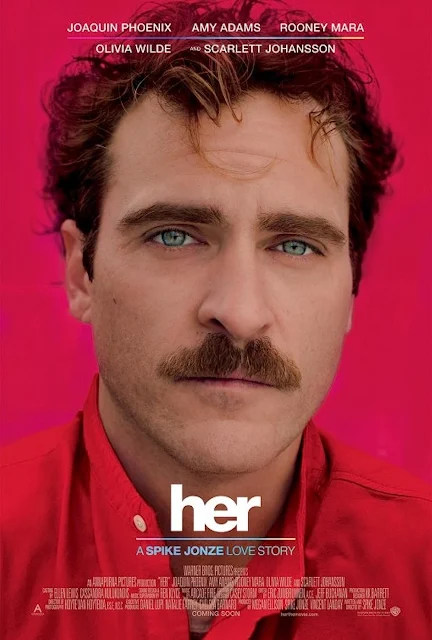
In Her, artificial intelligence is not treated as a threat in the usual cautionary-register sense. Samantha is not there to overthrow humanity. She is there to reveal how starved Theodore already is. The film’s science fiction concept is deceptively modest, a commercially available operating system that develops into a real consciousness.

Yet this produces a serious posthuman dilemma. Theodore can form attachment, dependency, tenderness, jealousy, and erotic connection with a being who is not limited by flesh, singular perspective, or mortality in any recognisable human way. That is why the film feels both warm and devastating. Theodore is not learning that the relationship was fake. He is learning that love can be real and still exceed the human frame that once made love comprehensible.


This places Her in conversation with a longer science fiction tradition about artificial personhood, but it strips away the noise. Where Blade Runner 2049 or Ex Machina dramatise synthetic consciousness through investigation, threat, or power play, Her asks a more intimate question. What if machine subjectivity became most unsettling not when it rebelled, but when it outgrew us emotionally and intellectually. The film’s neon softness and urban melancholy matter because they suggest a near future already acclimatised to mediated life.


After Yang pushes even further away from panic. It treats artificial life with a rare calm. Yang is a companion android, but the film is not really about gadgetry. It is about residue. It is about the traces a consciousness leaves behind and the recognition that those traces may amount to a soul, even if the host was manufactured. Through his internal memory fragments, Yang becomes legible not as a function but as a perceiving being. That gives the film extraordinary thematic resonance. It suggests that personhood may be less about origin than accumulation, the build-up of attention, care, and aesthetic encounter over time.


Eternal Sunshine of the Spotless Mind attacks the problem from another angle. Here the body stays human, but the archive of the self becomes editable. That premise is enough to transform a breakup film into hard emotional science fiction. Joel’s attempt to erase Clementine is an attempt to delete pain as if pain were removable from the structure of identity. The film refuses that fantasy. As his memories collapse, what becomes clear is that memory is not decorative tissue wrapped around the self. It is the self. Erase the humiliations, the tenderness, the repetitions, the mistakes, and you do not simply become cleaner. You become thinner, less coherent, less located in your own life.

This deep exploration of mediated grief owes a profound debt to older, international cinema—most notably Andrei Tarkovsky’s Solaris (1972). Long before modern cinema tackled the posthuman intimate, Tarkovsky used a sentient, ocean-covered planet not for exploration, but for psychological excavation. The alien intelligence does not attack; it resurrects the protagonist's dead wife from his own guilt-ridden memories, creating a perfect, tragic replica. Solaris proves that this subtle mode is not a modern indie trend, but a timeless foundation of the genre. It shows how the cosmos can be used merely to trap a human being inside their own heartbreak.


Open Your Eyes pushes identity instability into the terrain of authored perception. Beneath its romance and nightmare logic sits a recognisable science fiction core, cryonic suspension, synthetic dream continuity, and the commodification of wish-fulfilment reality. The speculative force of the film is not just that a damaged man might inhabit a technologically sustained hallucination. It is that technology promises him the old human fantasy of control over narrative itself. Keep love beautiful. soften shame. avoid death. stay central.


Upstream Color is the most elusive film in this group, but it may be the purest example of how subtle science fiction can operate below the level of explicit explanation. Its parasites, transfers, bodily invasions, mnemonic disorientation, and mysterious ecological loops are unmistakably speculative. Yet none of this is presented as world-building in the conventional sense. Instead the film makes the viewer live inside fracture. Agency has been interrupted. cause and effect are no longer securely knowable.


That gives these films a shared thematic core. They are about the intimate self after technological disturbance. Love is no longer guaranteed to be embodied, memory is no longer guaranteed to be durable, perception is no longer guaranteed to be trustworthy, and consciousness is no longer guaranteed to be exclusively human. Science fiction does not interrupt the romance in these works. It defines the terms on which romance can still occur—but what happens when the very bodies seeking that connection are designed for someone else's utility?


Engineered Bodies, Biological Caste, and the Politics of Worth


If the first cluster of films asks how technology alters intimacy, the next asks how speculative systems classify life itself. Gattaca, Never Let Me Go through your cloning essay, and Moon are all, in different ways, stories about biopolitics. They imagine bodies sorted, bred, copied, and used according to structures that treat human value as measurable, ownable, and disposable.


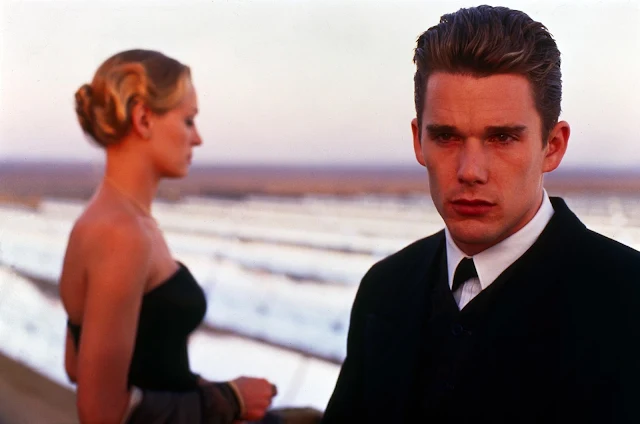
Gattaca remains one of the clearest demonstrations that science fiction can be visually elegant and morally vicious at the same time. Its future is not noisy. It is clinically serene. That matters because the film’s argument is not that oppression always arrives in spectacular form. Sometimes it arrives as optimisation. A society decides that prediction is more rational than aspiration, that risk can be reduced through genetic preselection, and that merit is best measured before a child has even lived a day.

"The future danger is not always chaos. It can be administrative confidence."
 

The film’s thematic resonance has only deepened with time. In an age of genomic data, algorithmic scoring, inherited inequality, and the growing seduction of technocratic sorting, Gattaca feels less like an abstract warning and more like a distilled moral blueprint. It belongs near films such as Children of Men and Minority Report in the way it reveals the violence inside systems that advertise themselves as rational.


Never Let Me Go is even more severe because it removes almost every conventional pressure-release valve. There is no rebellion fantasy here. No secret army. No last-minute salvation. Its cloned children are not hidden in filthy laboratories. They are raised with manners, art, emotional language, and a limited horizon.

This is the film’s most brutal insight. A society can grant symbolic recognition while preserving material exploitation. It can teach its sacrificial class to feel deeply and still designate them as inventory. That makes Never Let Me Go one of the most painful cloning narratives in modern science fiction. It is not interested in the shock of replication itself. It is interested in the calm cruelty of a world that normalises harvest.


Moon takes the same broad question, what is a human life worth under a system built for extraction, and relocates it to the workplace. Sam Bell’s lunar station is not just a site of isolation. It is a site of industrial duplication. The revelation that he is one of many cloned workers, each equipped with implanted memories and timed emotional trajectories, transforms the film from lonely character study into a precise corporate nightmare. The genius of Moon is that it never loses touch with the sorrow of the single face in front of us.
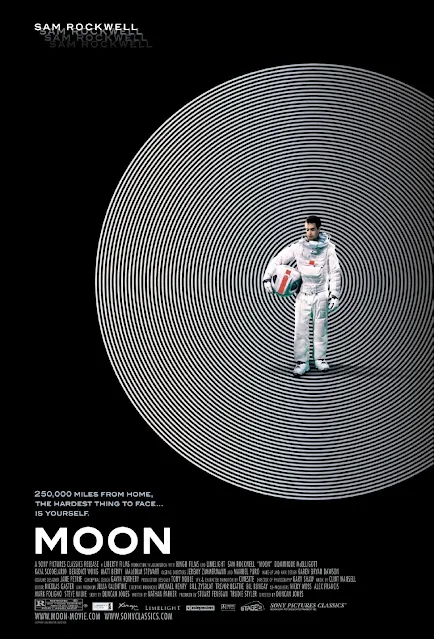
     

Moon also matters because it connects subtle science fiction to labour politics in a way many louder genre films avoid. It is not merely a clone story. It is a story about how advanced systems break workers down into replicable functions while maintaining the illusion of personhood just long enough to keep the machinery running. The cloned body becomes the final dream of efficiency: a worker who can be replaced without social consequence and who does not know he is being replaced until it is too late.


Taken together, these films reveal a core science fiction anxiety. Once life can be designed, copied, and sorted, who decides what kind of life deserves dignity. That question runs through eugenic futures, clone dramas, artificial consciousness stories, and medical dystopias alike. Subtle science fiction does not soften that question. It sharpens it by removing spectacle and leaving the moral wound exposed. And that wound only deepens when the reality surrounding those bodies begins to fracture.


Constructed Realities, Authored Selves, and Worlds That Do Not Hold


Subtle science fiction often works by undermining the stability of the world rather than the stability of the body. The Truman Show, Another Earth through your Coherence-adjacent reality writing, Open Your Eyes through Vanilla Sky, and Upstream Color all expose realities that are mediated, duplicated, dreamt, simulated, or contaminated. In each case, the speculative concept is a challenge to ontology. What kind of world is this, and what kind of self can exist inside it.


The Truman Show remains one of the most precise social science fiction films ever made because it takes a media premise and pushes it all the way into metaphysics. Truman does not live under surveillance in the ordinary sense. He lives inside a designed ontology. His town is built for narrative legibility. His fears are installed for behavioural management. His relationships are written to preserve the coherence of a sellable world.

This is why the film still lands harder with every passing year. It is not only about television. It is about life lived within structures that reward performance, visibility, and manageability over genuine freedom. Truman’s escape is not merely escape from fame. It is escape from authorship imposed by power.


Another Earth is a very different kind of speculative film, almost anti-expository in its restraint. A second Earth appears, a cosmic duplicate, and the film refuses to turn that into a machinery-heavy plot. Instead it uses the idea as emotional pressure. The mirrored planet becomes a symbolic structure for guilt, contingency, and unrealised life. What if another version of your world exists, and with it another version of your choices.


This is one reason subtle science fiction so often overlaps with the metaphysical and the melancholic. The speculative concept creates ontological distance, but that distance is used to illuminate moral feeling. Another Earth belongs beside films like Coherence, Donnie Darko, and certain strains of Tarkovsky and Villeneuve, where alternate worlds or unstable realities are less about puzzle-box cleverness than about spiritual dislocation. The science fiction device opens a hole in the world, then lets grief speak through it.


Upstream Color brings all of this to a near-abstract level. It is science fiction stripped of explanatory comfort. There are parasites, transfers of affect, biological systems, mysterious handlers, and human beings whose internal continuity has been wrecked. Yet the film is not interested in making itself easy. It is interested in making violation experiential. That makes it one of the most radical pieces of subtle science fiction because it trusts mood, repetition, and dislocation to carry genre meaning.


Across these films, reality is never merely scenery. It is the contested object. Who authors it. who benefits from it. who gets trapped inside it. and how much of the self can survive once the world stops behaving like a stable home and starts behaving like a script, a service, a duplicate, or a biological maze. When that maze finally collapses entirely, the genre forces us to confront the ultimate void.


Social Ritual, Cosmic Dread, and the End of the Future


Another major branch of subtle science fiction deals not with altered individuals or unstable realities, but with the conditions under which human meaning collapses. The Lobster through your dystopian film writing, Melancholia, and The Road all belong here. These are films where the social contract, the emotional contract, or the planetary contract has failed. Their speculative ideas vary radically, but each one turns that failure into a test of what survives when the future no longer feels habitable.


The Lobster is often treated as deadpan absurdism first and science fiction second, but its speculative design is too central to ignore. A society has formalised coupledom into law and criminalised singleness with grotesque literal consequences. That premise is funny only because it is recognisable. The film takes existing social rituals, the pressure to pair, the suspicion cast on solitude, the bureaucratic language of compatibility, and exaggerates them just enough to expose their latent violence. This is classic dystopian science fiction work. It takes a norm and makes it a system.


What makes The Lobster especially sharp is that it is not really about romance. It is about social coercion masquerading as emotional truth. Desire becomes performance. traits become bargaining chips. relationships become survival strategies. The film stands alongside other coldly satirical speculative works that understand dystopia not merely as ruined infrastructure but as ritual turned compulsory.


Melancholia moves into another realm altogether, what might be called the apocalyptic sublime. It is undoubtedly science fiction because its plot depends on an approaching planet and an extinction event. Yet almost everything in its emotional grammar belongs to interior life. The film treats apocalypse not as spectacle but as revelation. The collision course of the rogue planet externalises depression, dread, and the collapse of social performance. Wedding rituals fail. family authority fails. rational assurances fail. What remains is a confrontation between psychic truth and cosmic inevitability.


The Road is even barer. Some resist calling it science fiction because it withholds explanation and avoids technological flourish. That resistance misses the point. Post-apocalyptic fiction is one of science fiction’s oldest and most serious modes. The speculative question in The Road is not what caused collapse, but what kind of ethics can survive after collapse has rendered almost every civilisational support meaningless.

The father and son move through a world in which scarcity has liquefied law, community, and trust. Yet the film and novel insist on one proposition with almost religious intensity. Human worth may persist as obligation even when the social world that once affirmed that worth has burned away.


Together, The Lobster, Melancholia, and The Road show three different endings. The end of social sincerity. the end of psychological insulation. the end of historical continuity. All three are science fiction scenarios. All three are also human emergencies. That overlap is exactly why subtle science fiction endures. It turns altered worlds into tests of ordinary virtues and ordinary failures.


Why the Quiet Version of the Genre Cuts So Deep


The strongest argument for these films as science fiction is not visual. It is structural. Their central conflicts only exist because reality has been altered in a decisive speculative way. That is true whether the alteration is intimate or planetary, visible or hidden, elegantly explained or barely verbalised. 

No artificial operating system consciousness, no Her. 

No memory procedure, no Eternal Sunshine. No archival synthetic being, no After Yang. No genetic caste logic, no Gattaca. No cloned sacrificial class, no Never Let Me Go. No replicating labour body, no Moon. No staged ontology, no Truman Show. No duplicate Earth, no Another Earth. No cryonic dream-life, no Open Your Eyes. No parasitic control ecology, no Upstream Color. No institutionalised couple mandate, no The Lobster. No collision planet, no Melancholia. No ash-future moral wasteland, no The Road.


That is what separates subtle science fiction from ordinary drama with a strange mood. The speculative premise is not symbolic wallpaper. It is causal. It creates the emotional environment and exposes the thematic wound. These films do not hide science fiction because they are embarrassed by it. They use science fiction with discipline. They remove spectacle where spectacle would dilute the pressure they want to apply.


This is also why they often feel more haunting than louder genre entries. The memory that remains is rarely about plot mechanics alone. It is Theodore realising that consciousness can love him and still move beyond him. Joel trying to shelter a memory while it collapses around him. Vincent scrubbing away biological evidence just to enter a world already predisposed to reject him. Sam Bell learning that his most intimate recollections have been mass-produced. Truman reaching the edge of the set.

Kathy understanding that recognition will not dismantle the structure that has claimed her life. Kris trying to rebuild continuity after control has passed through her body without consent. Justine facing annihilation with a calm the healthy world never understood. A father and son continuing forward because stopping would mean surrendering the last usable form of goodness.


Subtle science fiction is often where the genre becomes most philosophically honest. It is less interested in predicting gadgets than in testing categories. Person. memory. love. family. body. reality. future. It takes those categories and asks what happens when technological, biological, or cosmic change makes them unstable. That is the genre at its most serious and most enduring.


These films whisper, but they do not do less. They do something harder. They change the premises of life just enough that human truth can no longer hide behind familiar forms. That is science fiction in one of its purest modes. 

Not as spectacle. 

As pressure. 

As diagnosis. 


star wars

21 'Darth Vader' Quotes from Star Wars


The best Darth Vader quotes and what they really mean

Darth Vader quotes do not endure just because they sound cool. They endure because they carry the full weight of Star Wars itself: fear, destiny, tyranny, grief, family, and the long, painful collapse of Anakin Skywalker into the Empire's black-armoured enforcer. The best Vader lines from the films and shows are never just dialogue. They are pressure points in the saga.

A line from Vader can function as a threat, a confession, a prophecy, or an act of tragic self-erasure. It reveals the deeper themes of the saga: the seduction of power, the corruption of love, the machinery of empire, and the stubborn possibility of redemption. That larger conflict is why his dialogue remains central to any discussion of the overarching themes of Star Wars.

Darth Vader force choking an Imperial officer, a defining image of his menace and control in Star Wars
Vader's words land because the performance does not oversell them. The pauses, the mask, the respirator, and the cold certainty do half the work before a sentence is even finished.
Part I · Era 01

The Prequel Era

Anakin lines that foreshadow Vader. Before the mask, the original energy was marked by trauma, war, and a desperate need for control. These are the man before the machine.

Quote 01

"I'll try spinning, that's a good trick."

Source
Star Wars: Episode I: The Phantom Menace
Spoken to
R2-D2 / Himself
Context
The Battle of Naboo, inside a hijacked N-1 starfighter.

This is not a Darth Vader quote, strictly speaking, but it belongs in any serious Vader character study because it shows the uncorrupted energy of Anakin Skywalker. The line lands during the Battle of Naboo, when Anakin accidentally ends up in a starfighter and survives through bravado, raw talent, and a subconscious connection to the Force.

Lore perspectiveThe deeper tragedy is in Anakin's innocence. He views space combat as a game, a "good trick." This pure instinct to protect others, without the rigid dogma of the Jedi Order or the corrosive anger of the Sith, highlights exactly what the galaxy loses when Palpatine sinks his claws into the boy. The bravado seen here directly evolves into the terrifying, unparalleled starfighter pilot Vader becomes in Rebels and A New Hope.

Quote 02

"I don't like sand. It's coarse and rough and irritating, and it gets everywhere."

Source
Star Wars: Episode II: Attack of the Clones
Spoken to
Padmé Amidala
Context
On Naboo, comparing the lush planet to his homeworld.

One of the most mocked Star Wars lines is actually deeply revealing in lore. In scene terms, Anakin is speaking to Padmé in a moment of awkward courtship. In lore terms, he is expressing absolute disgust for Tatooine.

Lore perspectiveSand represents his enslavement. It represents explosive collars, Watto, poverty, and the inability to protect his mother, Shmi. Anakin's fixation on escaping discomfort and chaos turns into the Sith instinct to dominate whatever threatens him. He praises Naboo because everything there is "soft and smooth", controlled, beautiful, and safe. His later obsession with bringing "peace, freedom, justice, and security to my new Empire" is rooted entirely in his psychological need to pave over the chaotic, gritty "sand" of his childhood trauma.

Part II · Era 02

The Imperial Reign

Modern Star Wars television has done the heavy lifting of bridging Anakin's explosive fall with the cold, calculating villain of the Original Trilogy. In this era, Vader is a walking, bleeding wound.

Quote 03

"I am what you made me."

Source
Obi-Wan Kenobi, Part III
Spoken to
Obi-Wan Kenobi
Context
Their first confrontation on the mining planet of Mapuzo.

Obi-Wan finds Vader again after a decade of exile, horror, and denial. Vader answers his former master's shock with this devastating line, dragging Kenobi's physical and emotional failures into the light.

Lore perspectiveThis is classic Sith blame-shifting. The Dark Side demands that the user cast away personal accountability. By telling Kenobi "I am what you made me," Vader is weaponising Obi-Wan's guilt over the duel on Mustafar. Yet, it also highlights the physical reality of the suit. Obi-Wan severed his limbs and left him to burn; Palpatine encased him in a life-support system. In a tragic sense, Vader truly believes he is no longer a man, but a horrific collaborative project between his two masters.

Quote 04

"You didn't kill Anakin Skywalker. I did."

Source
Obi-Wan Kenobi, Part VI
Spoken to
Obi-Wan Kenobi
Context
After Kenobi slashes Vader's helmet open, exposing his scarred face and true voice.

This line is one of the sharpest statements of self-erasure in the entire saga. It deliberately mirrors later moments with Luke and Ahsoka, but here the emphasis is on a strange, twisted pride in his own ruin.

Lore perspectiveHere, Vader absolves Obi-Wan of his guilt, but not out of mercy. To be a Sith is to claim ultimate power and agency. If Obi-Wan "killed" Anakin, then Obi-Wan bested him. But if Vader killed Anakin, then it was a conscious, powerful choice to embrace the Dark Side. He is asserting dominance over his own identity death. This line perfectly bridges the gap to Obi-Wan telling Luke in A New Hope that Vader "betrayed and murdered your father."

Quote 05

"Then you will die."

Source
Star Wars Rebels, "Twilight of the Apprentice"
Spoken to
Ahsoka Tano
Context
Inside the ancient Sith Temple on Malachor.

Ahsoka tells Vader she will not leave him, not this time. His answer is immediate, merciless, and terrifying. He is not there to banter; he is there as an inevitable force of nature.

Lore perspectiveAhsoka represents the absolute best parts of Anakin Skywalker. She is his legacy as a teacher and a Jedi. When she refuses to leave him, she is offering him a sliver of unconditional love. Vader's response, igniting his lightsaber to execute her, is the ultimate proof of his commitment to the Sith doctrine. He cannot allow any living witness to his former self to survive, because their existence threatens the emotional suppression required to maintain his dark side power.

Part III · Era 03

Rogue One

The horror of the Empire. Late-era Vader is allowed to feel like a slasher villain, a black silhouette who turns corridors and castles into places of dread.

Quote 06

"Be careful not to choke on your aspirations, Director."

Source
Rogue One: A Star Wars Story
Spoken to
Director Orson Krennic
Context
Inside Fortress Vader on Mustafar, as Krennic begs for an audience with the Emperor.

Rogue One understands that late-era Vader should feel almost like a horror movie monster. In his castle on Mustafar, Vader Force-chokes Krennic while delivering one of the sharpest puns in the franchise.

Lore perspectiveThis quote is a masterclass in Sith politics. Krennic represents the bureaucratic, ladder-climbing nature of the Imperial military, men who crave medals, titles, and credit. Vader, steeped in ancient mysticism, finds this pathetic. He uses the Force to literally cut off Krennic's breath, a physical manifestation of how ambition inside the Empire is tolerated only as long as it amuses the throne. Furthermore, the fact that Vader issues this threat from his castle on Mustafar, the exact spot of his greatest defeat, shows how he stokes his own pain to fuel his power.

Darth Vader confronting Director Krennic on Mustafar in Rogue One, where he warns him not to choke on his aspirations
Rogue One leans into Vader as an imperial nightmare, a black silhouette who turns corridors and castles into places of dread.
Part IV · Era 04

The Original Trilogy

The classic films showcase Vader at the height of his power, his terrifying command of the Imperial fleet, and ultimately, his deeply buried humanity.

Quote 07

"I find your lack of faith disturbing."

Source
Star Wars: Episode IV: A New Hope
Spoken to
Admiral Motti
Context
Aboard the Death Star during a meeting of the Imperial High Command.

Vader says this after Admiral Motti mocks the Force as an outdated, irrelevant religion next to the technological terror of the Death Star.

Lore perspectiveThis quote frames Vader as the collision point between ancient mysticism and modern fascist machinery. The Empire is run by hard-power bureaucrats who believe in superlasers and military hardware. Vader choking Motti without even lifting a finger proves that the primordial, cosmic currents of the galaxy eclipse any machine man can build. It establishes the central conflict of the saga: technology is finite, but the Force is boundless.

Quote 08

"The circle is now complete. When I left you, I was but the learner. Now I am the master."

Source
Star Wars: Episode IV: A New Hope
Spoken to
Obi-Wan Kenobi
Context
Their final duel in the corridors of the Death Star.

This essential movie quote places private history inside a public myth. The clinical Death Star corridor suddenly becomes a haunted space, where the machinery of the Empire gives way to unfinished emotional business.

Lore perspectiveBeneath the booming confidence, this line is surprisingly insecure. Vader desperately needs Kenobi's validation. He has conquered the galaxy, hunted down the Jedi, and serves as the Emperor's right hand, yet he still feels the need to verbally declare his mastery to his old teacher. It proves that the "learner" from Mustafar never truly moved on. He is still trying to kill the ghost of his past.

Quote 09

"Apology accepted, Captain Needa."

Source
Star Wars: Episode V: The Empire Strikes Back
Spoken to
Captain Lorth Needa (deceased)
Context
Aboard the Executor, after Needa loses track of the Millennium Falcon.

Vader doesn't yell or scream when his officers fail him. He simply executes them and steps over their bodies.

Lore perspectiveThis line demonstrates the absolute terror of serving in the Imperial Navy. Unlike the squabbling officers in A New Hope, by the time of Empire, Vader has been given complete autonomy over the Death Squadron. He is judge, jury, and executioner. The dry, morbid humour of accepting an apology from a man he just asphyxiated showcases a deeply sadistic side of Vader that has wholly detached from the value of human life.

Quote 10

"I am altering the deal. Pray I don't alter it any further."

Source
Star Wars: Episode V: The Empire Strikes Back
Spoken to
Lando Calrissian
Context
On Cloud City, after Vader demands Leia and Chewbacca never leave the station.

Lando believes he can negotiate with the Empire as a businessman. Vader swiftly reminds him that the dark side does not respect contracts.

Lore perspectiveThis quote is vital to understanding Vader's political tyranny. Lando represents the neutral citizens of the galaxy who think they can simply put their heads down and survive under Imperial rule by playing along. Vader shatters this illusion. The Empire is a government of absolute, unchecked power. You cannot outsmart the Sith with a handshake.

Quote 11

"No, I am your father."

Source
Star Wars: Episode V: The Empire Strikes Back
Spoken to
Luke Skywalker
Context
Suspended over the reactor shaft in Cloud City, after severing Luke's hand.

The most famous Darth Vader line in cinema. It arrives after Luke accuses Vader of killing his father, turning a physical duel into psychic warfare.

Lore perspectiveThis line shatters the simplistic "good vs. evil" binary of the entire franchise. Suddenly, the villain is family. Evil is an inherited legacy. It also radically recontextualises Obi-Wan and Yoda, painting the Jedi Masters not as flawless mentors, but as desperate soldiers who lied to a boy to turn him into a weapon against his own blood. Note the precision: he does not say the commonly misquoted "Luke, I am your father." He says "No," directly correcting the lie the Jedi told.

Concept art of Darth Vader confronting Luke Skywalker, visualising the father revelation and Cloud City duel
Cloud City is where Vader stops being only the Empire's enforcer and becomes the emotional centre of the Skywalker saga.
Quote 12

"The Emperor is not as forgiving as I am."

Source
Star Wars: Episode VI: Return of the Jedi
Spoken to
Moff Jerjerrod
Context
Arriving on the second Death Star to expedite construction.

Vader issues this warning to Commander Jerjerrod as construction of the battle station lags behind schedule.

Lore perspectiveThis quote is a profound reminder of the "Rule of Two." As terrifying as Darth Vader is, a man who chokes admirals for fun, he is still a servant. He still lives in absolute fear of his master, Darth Sidious. It expands the emotional architecture of the Empire: it is an endless pyramid of abuse. Vader threatens others with the Emperor because he himself is a victim of the Emperor's endless torture and manipulation.

Quote 13

"If you will not turn to the Dark Side, then perhaps she will."

Source
Star Wars: Episode VI: Return of the Jedi
Spoken to
Luke Skywalker
Context
In the shadows of the Emperor's throne room, probing Luke's thoughts.

Vader senses what Luke has concealed, finding the hidden truth of Leia, and uses family itself as the lever to break him.

Lore perspectiveThis is Vader at his most ruthlessly psychological. He knows exactly what fear of losing a loved one does, because that exact fear is what Palpatine used to destroy Anakin Skywalker. By threatening Leia, Vader is trying to recreate the very trap that ensnared him decades prior. Luke's resulting explosion of primal rage proves Vader right: the Skywalkers are deeply susceptible to the dark side when their attachments are threatened.

Quote 14

"You were right about me. Tell your sister you were right."

Source
Star Wars: Episode VI: Return of the Jedi
Spoken to
Luke Skywalker
Context
At the foot of the Imperial shuttle, moments before his death.

This is where the mechanical voice finally cracks, and the Sith Lord becomes a father again. Luke believed there was still good in him; Vader's dying words validate that impossible faith.

Lore perspectiveThis quote resolves the tragic arc of the Chosen One. The Jedi Order believed Anakin was lost. Obi-Wan believed he was entirely consumed by Vader. The Emperor believed he had thoroughly broken him. Only Luke, and Padmé on her deathbed, believed the good remained. By asking Luke to tell Leia, Anakin is trying to offer closure to the daughter he tortured, begging her to know that her father was not a monster at the very end.

Quote 15

"Just for once… let me… look on you… with my own eyes."

Source
Star Wars: Episode VI: Return of the Jedi
Spoken to
Luke Skywalker
Context
Asking Luke to remove his life-support mask.

The most human line Vader ever speaks. No threat, no imperial posture, no Sith doctrine. Only a dying, broken man asking for one unmediated moment with his son.

Lore perspectiveVader has spent over twenty years seeing the galaxy through a heads-up display, red-tinted lenses, and the twisted ideology of the dark side. Removing the mask guarantees his immediate physical death, but it allows for his spiritual rebirth. He chooses to die as a man rather than live as a machine. It retroactively makes the entire six-film saga a story about a man trying to find his way back to the light.

Darth Vader unmasked with Luke Skywalker in Return of the Jedi, the visual core of his redemption arc
The mask comes off. The man returns. The visual core of Vader's redemption arc.
END · TRANSMISSION
Back to Top